December 07, 2021 ✒ Andrew Kantor
First, an eight-year study by researchers at the University of Washington found that “Older people who get cataracts removed have lower dementia risk.” Why does it do that? It could be by increasing stimuli to the brain, as people can see better and more. Or it could be that fewer cataracts mean more blue light, which might help maintain a proper circadian rhythm. More work needs to be done. The lead researcher cut to the chase: “There is so much that we do not know yet.” =AND= Viagra might be a treatment for Alzheimer’s. Cleveland Clinic genomic researchers had computers process the records of more than 7 million patients, and discovered that “sildenafil is associated with 69% reduced incidence of Alzheimer’s disease.“ How so? It’s not about increasing blood flow, or giving these patients more reasons to pay attention to life. The Are you considering providing Merck’s anti-Covid molnupiravir pills to patients? The Georgia Department of Public Health would like to hear from you. It’s put together a Covid-19 Molnupiravir Pharmacy Interest Survey you can fill out to let DPH know you’re standing by. Brought to you by SETEC Astronomy Imagine you’re an employer, and to save on drug costs you join a coalition — a drug-pricing coalition that works with PBMs to negotiate better pricing. Let’s call it “Aon”. After a bit, you ask Aon if you’re saving money being part of the coalition. “Sure thing,” you’re told. “You’re saving plenty — an average of about 18 percent.” “Oh really,” you say. “Let me see the details. The numbers.” “No,” says Aon. “That’s secret. Trust us, you’re saving money.” A confidentiality agreement between Aon and third-party vendors stipulates that if employers hire vendors to audit the coalition’s data, vendors “shall never include [a drug’s average wholesale price], ingredient cost, or member cost share or any other information that could be used to derive the [coalition’s] proprietary pricing information” in reports they provide to employers. And those agreements also forbid employers from permitting any third party (e.g., an accounting auditor) “to access, attempt to access, test or audit” the PBM’s electronic systems and databanks. So are they saving money? How much are they paying PBMs through Aon? No one’s telling. And in related news…. PBMs have reached an agreement with the feds over a lawsuit. The PBMs didn’t want to follow a Trump administration rule that required them to disclose the rebates they pay drugmakers. Instead, the Biden administration has tweaked that rule: Now the PBMs have to disclose the information to the government, but not to the public. German and Austrian researchers found that — for some reason — cancer cells contain bitter-taste receptors. Yep, the same kinds of cells that let us appreciate coffee, good chocolate, and the YouTube comments section. Their results suggest that bitter taste receptors should also be considered as additional targets for chemotherapeutic agents in the future and should be investigated in this regard. Blood pressure is up. The American Heart Association is reporting that “U.S. adults’ blood pressure levels increased during the COVID-19 pandemic”. During the pandemic (April to December 2020), average increases in blood pressure each month ranged from 1.10 to 2.50 mm Hg higher for systolic blood pressure and 0.14 to 0.53 mm Hg for diastolic blood pressure compared to the same time period in 2019. Before the pandemic, blood pressure measures were largely unchanged when comparing study years. Discipline is harsher. During the pandemic so far, parents were more likely to use corporal punishment with their kids (“such as shaking or spanking a child”) and do it as a reaction to general levels of stress, rather than “the stress they are feeling in the moment.” So found a study out of an Ohio State University. “As the stress built up during the day, they may be more likely to lash out and use aggressive discipline that isn’t good for kids.” Thinking is harder. The more people begin to worry during the pandemic, the more likely they are to make slower, risk-confused, and poorly planned decisions* — that’s what a group of Canadian researchers found after surveying more than 1,500 Americans. [T]hose who experienced more pandemic-related worry had reduced information processing speed, ability to retain information needed to perform tasks, and heightened sensitivity to the odds they were given when taking risks. The pandemic group performed more poorly on the simple cognitive tasks than the pre-pandemic group. Fats are bad for you, right? Particularly saturated fats. Not so fast! Once again, there’s always nuance … at least according to epidemiologists at the University of Cambridge. Their findings are that it’s not the amount of saturated fats, but what foods they come from. We found that people who ate more saturated fats from red meat and butter were more likely to develop heart disease. The opposite was true for those who ate more saturated fats from cheese, yoghurt, and fish — which were actually linked to a lower risk of heart disease. Why? Well, there are different saturated fats, for one (e.g., palmitic acid in red meat vs. pentadecanoic acid in dairy). And the foods themselves contain other nutrients that might affect how those fats are processed. Back in 2016, it emerged that our ‘low-fat, don’t worry about sugar‘ mindset came from a Harvard Study that turned out to have been … less than objective: “Sugar industry secretly paid for favorable Harvard research.” In the 1960s, the sugar industry funded research that downplayed the risks of sugar and highlighted the hazards of fat, according to a newly published article in JAMA Internal Medicine. Only now are we realizing how bad sugar is, and that fats are not the boogeymen we thought. (You can just search for “sugar fat harvard 2016” and find a ton of these articles.) But wait! In 2018, another article came out saying that reality is a bit more complicated, and those 2016 stories were a bit oversimplified. In reality, it claims, the sugar industry isn’t to blame; those Harvard scientists were already blaming fats. ‘The long-deceased Mad Men–era Harvard scientists who stand accused of having been “paid off” to “shift the blame” to fat were, in fact, already on record in support of low-fat diets as a way to fight heart disease for nearly a decade before the sugar men came calling. Why yes, the pandemic is stressful — plus PBM secrecy, good and bad fats, and more
Two dementia surprises
theory hypothesis: Sildenafil may interfere with the molecular connections between the amyloid and tau plaques that are the hallmark of Alzheimer’s. (It’s only an hypothesis at this point because the study only found an association, not a mechanism.Wanna give out the new Covid meds?
Drug-pricing secrecy
Cancer tastes bitter
Captain Obvious takes several deep breaths and counts to 10
* Like being willing to accept artificial maple syrup on morning pancakes.
Picking your fats
An interesting aside: Sugar, fats, and Harvard
December 04, 2021 ✒ Andrew Kantor
“Caffeine,” say University of Waterloo researchers, “improves reaction to moving targets.” What does that mean? Let’s say you have a busy highway (one where the vehicles are actually moving — sorry, Atlanta). And let’s say you have a bunch of grad students who try to run across the highway, Frogger-style. According to these visual-science researchers, the students who have had about 250-350mg of caffeine will have better reactions times an hour later and will be less likely to end up as roadkill. Metaphorically, of course. Researchers found that participants who had ingested the caffeine capsules showed significantly greater accuracy and faster speed when identifying smaller moving stimuli, inferring caffeine positively influences participants’ stimulus processing and decision-making. Smoking, vaping, and drinking alcohol — even moderately — can lower your immunological response to a Covid-19 vaccine. (Side note: There is apparently no standard term for ‘vaping device.’ These researchers use the term “heat-not-burn tobacco product” (HNB).) Anti-depressants work, we know that. Exactly how they work, though, is still a bit of a mystery. Now Vanderbilt University neurologists say they’ve found the mechanism. The details are waaaaaaaaay too detailed to go into here, but the gist is that it’s about regulating an ion transporter channel (a pore) in nerve cells called the HCN channel. A molecule called cAMP can open and close that channel, and antidepressants increase cAMP signaling. “This appears,” they said, “to carry promising implications for new drug development.” =AND= You might remember that the Oxford-AstraZeneca Covid-19 vaccine had a scary side effect: occasional blood clots. Now a team of Brit and U.S. scientists have figured out why that happens. The adenovirus used to carry the vaccine’s payload can, in rare cases, bind to a particular platelet protein*. That triggers an immune response that ends up causing platelets to clump and cause those clots. It can’t be stopped, but knowing the problem is critical to preventing it. When you’re in a relationship and having a spot of trouble, a study by an international group of psychology researchers found the best way to use pronouns to your advantage. “Older MS patients who discontinue medications experience worsening of their disease” Let’s say you’ve got sheep with damaged lungs — happens to all of us. A way to treat them, found Aussie veterinary researchers, could come from eucalyptus plants. Specifically, it’s a flavonoid in eucalyptus called pinocembrin that sounds like a wonder drug: “[It] has been reported to have antioxidant, anti-inflammatory, anti-microbial and anti-cancer properties.” At least some of that appears to be true. Sheep with lung fibrosis were given pinocembrin, and … wow. “We saw striking anti-inflammatory effects and modest anti-fibrotic remodelling after four weeks of administering pinocembrin,” the researchers said — we’re talking “a 50 percent reduction in certain inflammatory cells in the lungs.” How might that apply beyond sheep? How about this: In humans, pulmonary fibrosis involves scarring and thickening of lung tissue with lung transplantation the only known cure. “Are Voice Assistants a Reliable Source of Health Information?” No. [A]lthough the voice assistants often guided users to reputable sources such as the CDC and the American Cancer Society, they also directed users to non-reputable sources, such as popsugar.com and mensjournal.com.The pronouns of love, MS drug shocker, dodging those moving targets, and more
Artful dodging

Covid tidbit
Medical mysteries (maybe) solved (seriously)
* Platelet factor 4, if you must know; and yes, this was oversimplified.
Pronoun relationship primer
Captain Obvious thinks that’s kind of the point
Sheep breathing easier
Saving you a click
December 03, 2021 ✒ Andrew Kantor
And the latest ‘thing that can treat Covid’ is … licorice! Specifically, suggest Chinese researchers, the triterpenoids in it — they’re known as licorice-saponin A3 (A3) and glycyrrhetinic acid (GA). [W]e found GA and A3 from licorice potently inhibit SARS-CoV-2 infection by affecting the entry and replication of the virus. Our findings indicate that these triterpenoids may contribute to the clinical efficacy of licorice for Covid-19 and could be promising candidates for antiviral drug development. They published their results in the Journal of Advanced Research, with lots of charts and images and stuff. Looks science-y, so it’s probably true There’s still time to register! TOMORROW, for TECHNICIANS: GPhA’s Immunization Delivery Training for Pharmacy Technicians — a 6.0 hour CE program consisting of both home-study and live training. It’s tomorrow, Saturday, December 4, from 9:00 am to noon at the GPhA World Headquarters classroom in Sandy Springs. (Of course it’s PTCB-recognized!) Click here for the details and to register now. SUNDAY, for PHARMACISTS: APhA’s Pharmacy-Based Immunization Delivery: A Certificate Program for Pharmacists this Sunday, December 5, 8:00am to 5:00pm. It’s part of the 20-hour certificate program (including self-study). That’s also in the GPhA classroom. Get the details and register today. It’s not news that there are chemicals in plastics that cause health problems. Some, in fact — phthalates — causes heart problems. Now a team from the University of California at Riverside has figured out how. That knowledge brings phthalates from “may cause health issues” to “probably does cause health issues.” The phthalate (in this case, dicyclohexyl phthalate, or DCHP) binds to a receptor in the gut — a receptor normally used for absorbing cholesterol. By interfering with the receptor, the DCHP causes cholesterol to rise, rather than be absorbed. And that is why the EPC considers DCHP ‘a high-priority substance for risk evaluation.’ And also why you don’t want your mice near the stuff. (Yeah, so far these tests have been done on mice, not humans.) How do you get smokers to quit during pregnancy? Pay them. Yep, that’s what a new study in The BMJ found. Fewer than half of smokers quit once they’ve got a bun in the over, so it’s a real problem. Counseling and support didn’t do much, but it seems once the greenbacks* were on the table, the results changed — more than twice as many smokers quit, in fact. Relative to only the face-to-face visits and associated attendance fees, [adding] financial incentives was associated with higher rates of continuous abstinence throughout pregnancy (16% v 7%) […] and a reduction in the risk of poor neonatal outcomes. Sure, you may think you need “the strong stuff” after coming home from fracture surgery. But according to Aussie researchers… “Our randomized trial found that after going home from fracture surgery, strong opioids were not better for pain relief compared to a milder, potentially safer opioid alternative.” What do you get when you combine acidified nitrite and ethylenediaminetetraacetic acid? A news story on your university’s website, for one. That combo, which University of Cincinnati researchers dubbed AB569, has a nifty effect: As an ointment, it kills “virtually all pathogenic bacteria” in burn wounds — including the antibiotic-resistant ones. And there’s “no observed acquired resistance.” But wait, there’s more. It also helps the wound heal: “AB569 not only kills the bug, it also enhances the wound-healing process. At the same time, AB569 topical application significantly increases the anti-inflammatory mediators…that allow improved epidermal restoration and the healing process to occur more rapidly and efficiently.” A Dutch study finds that Covid-19 can damage the placenta and cause stillbirths. (Assuming your Dutch is rusty, here’s the story in English, courtesy of Google Translate.) The Brits have approved a monoclonal antibody, GlaxoSmithKline’s sotrovimab; like the others, it’s to keep people with mild Covid-19 from getting severe Covid-19. (They’ve previously approved Regeneron’s casirivimab and imdevimab combo.) This poor woman. ”Some nice young man took my picture today. I wonder what he’ll do with it.” Pay to quit, how plastics kill, licorice vs Covid, and more
Sure, Why Not: Licorice edition

Immunization training THIS WEEKEND
One word: plastics
Smoking cessation is simpler than we thought
* Actually euros — and they come in lots of colors
Just bite the bullet
Kills the bugs, heals the burn
Covid tidbits*
* To be honest, I’m a bit Covid-ed out — “Covid causes this,” “Covid does that” — so I’m just going to use a lot more ‘tidbits’ in the future.
The face of dementia

December 02, 2021 ✒ Andrew Kantor
It seems 2021 has seen a record number of scientific papers published on the subject of … cannabis? (Apparently that’s “according to the results of a keyword search of the National Library of Medicine/PubMed.gov website.”) Know someone who’s a bit extraordinary — at least in the field of pharmacy? (Georgia pharmacy, to be specific.) Why not nominate her, him, it, or them for a 2022 GPhA award? Yep, it’s that time of year — time to start choosing the best of the best in Georgia pharmacy, and that means we need your nominations for the 2022 awards, which will be presented in style at the 2022 Georgia Pharmacy Convention in Amelia Island, Fla. What awards, you ask? The details are at GPhA.org/awards, but here’s the list: Yes, these are GPhA awards, but nominations come from you, the members. That’s what gives them meaning. And it starts now. Visit our awards page at GPhA.org/awards for more information on award criteria, and to make your nominations. The deadline for submissions is February 1, 2022. British researchers wanted to see who was most at risk of developing Covid-19 after exposure to the SARS-CoV-2 virus. Most of what they found isn’t all that surprising — risk factors include being Asian, living in an overcrowded home, visiting indoor public places, being overweight, and some others. A couple of interesting findings, though: Age, sex, pet ownership, alcohol use, and “other medical conditions, diet or micronutrient supplement use” had no effect on risk … with one exception: atopic diseases. It seems that ‘People with allergic conditions such as hay fever, rhinitis, or atopic eczema may have a lower risk of Covid-19 infection, especially if they also have asthma.’ In the latest ‘largest study to date’ (in this case it’s of psychedelic microdosing), researchers at the University of British Columbia found that microdosing on psychedelics like psilocybin or LSD — i.e., giving yourself a dose large enough to have an effect, but too small to impair you — “can be a valuable tool for those struggling with anxiety and depression.” They used an anonymous self-reporting system to track 8,500 people from 75 countries. And they found a lot of people “who are microdosing to treat their mental health conditions and enhance their wellbeing—rather than simply to get high.” The point? People are doing this, it’s working, so it bears investigating. The first case of the omicron variant in the U.S. has been reported. You know what that means. “Fire and brimstone coming down from the skies, rivers and seas boiling, 40 years of darkness, earthquakes, volcanoes, the dead rising from the grave, human sacrifice, dogs and cats living together, mass hysteria ….” Medical engineers at Indiana University had developed a way to “reprogram biological tissue” and turn it into … well, a different kind of biological tissue. For example, “change skin tissue into blood vessels and nerve cells.” Oh, and it’s tiny. Nanoscale. It’s literally put inside a patient’s body and told to turn one kind of tissue into another — “a non-invasive nanochip device that can reprogram tissue function by applying a harmless electric spark to deliver specific genes in a fraction of a second.” While it will eventually get into the hands of a James Bond villain, the IU researchers envision something more altruistic: “For example, if someone’s blood vessels were damaged because of a traffic accident and they need blood supply, we can’t rely on the pre-existing blood vessel anymore because that is crushed, but we can convert the skin tissue into blood vessels and rescue the limb at risk.” They plan to seek FDA approval for the technology within a year, while construction on their volcano fortress continues in the event of rejection. Using electronic cigarettes more than twice a day, an NYU study has found, increases a guy’s chance of having erectile dysfunction. (Smoking was already known to have this effect, but the researchers say the result is regardless of the person’s smoking history.) Compared to those who never used ENDS [electronic nicotine delivery systems], daily users were more than two times more likely to report having ED (2.2 times in the full sample and 2.4 times in the restricted sample). Oh, and the subjects had “normal body mass index and [were] without cardiovascular disease,” so don’t go blaming your bad date on not going to the gym. An FDA advisory panel recommended an emergency-use authorization for Merck’s antiviral pill to treat mild Covid-19. The vote, though, was a close 13 to 10. The pill only reduces the risk of hospitalization or death by about 30%, and it has to be used early. There are also potential side effects for pregnant women and kids, plus it has to be taken for five days straight. Oh, and Pfizer’s better pill, ritonavir, is coming down the pike. “Daily prune consumption has a protective effect on men’s bone health” reads the headline. Heck, a study out of San Diego State University said so. Odd, though, that a study about prunes would warrant a press release by a big-name PR firm like FleishmanHillard. What’s up with that? Ah: Turns out that the study showing prunes are good for you was sponsored by the California Prune Board.Nanobot body changers, don’t believe the prunes, a drop of acid’ll do ya, and more
Pass the research on the left hand side
It’s time to nominate someone!
* Note that, by tradition, the winner of this award is expected to buy a round drinks for the other student pharmacists attending the convention.
Who’s most at risk (and a surprising finding)
A microdose of acid helps the depression go down
Panic in the streets

“Change the function of living body parts”
Freud would have something to say
ICYMI: molnupiravir’s halfhearted endorsement
Always read the fine print
December 01, 2021 ✒ Andrew Kantor
The headline says it: HHS has (somewhat quietly) allowed pharmacists to administer antivirals for Covid-19 when they become available. As usual, there are important caveats. [A] notice in the Sept. 14 Federal Register [link] explains that HHS Secretary Xavier Becerra is expanding the authorization of a “qualified person” able to order and administer antivirals to include licensed pharmacists; licensed or registered pharmacy interns and qualified pharmacy interns may administer — but not order — COVID-19 antivirals. THIS IS IMPORTANT! Tracy Dabbs, emergency preparedness pharmacist with the Georgia DPH will be hosting two informational sessions — via Zoom — for GPhA members regarding molnupiravir, Merck’s antiviral product for the treatment of Covid-19. You’ll get available product information and have your questions answered. Omicron is still out there keeping headline writers busy. No one knows just how much more contagious it is — or if it’s more deadly. Vaccine makers are working on boosters for it. Meanwhile, everyone ought to get a current booster, wear a mask, keep away from crowds, wash your hands … you know the drill. If you get an electronic prescription for a controlled that you can’t fill, you’re not allowed to transfer it. Silly, right? If it was on paper you could just hand it back to the patient. The DEA apparently thinks so too — it’s considering changing the rules to allow those initial e-prescriptions to be transferred just like their old-fashioned paper versions. DEA regulations currently do not include any provision for a pharmacy to transfer an [electronic prescription for a controlled substance] to another pharmacy. The regulations also do not describe how a pharmacy should handle an EPCS that it receives but cannot fill. At present, a pharmacy that receives an EPCS that it is unable to fill can only notify the patient that the prescription cannot be filled. But first — the comment period! So stay tuned…. Oooh, check this out: Histamine apparently can help some tumors resist immune checkpoint inhibitors. When those don’t work, the tumor can evade drugs. So reduce the histamine and the tumors can’t hide as well — so they’re more susceptible to drugs that include those immune checkpoint inhibitors. Hmm. I wonder if there are any available drugs that can block histamines. Some sort of … anti-histamine, perhaps? Why yes, found a team of American and Chinese researchers in a study: [P]atients who happened to be taking antihistamine treatment responded better to immune checkpoint inhibitor therapy than those not on antihistamines. They went on to uncover how it works (the histamine binds to the HRH1 receptor, as you probably guessed) and will continue to investigate. Once again, it seems like proton pump inhibitors interfere with other medications. In the latest case, research out of Australia’s Flinders University found that PPI use was associated with worse survival in patients with advanced cancer treated with atezolizumab plus chemotherapy, but not in those that received chemotherapy alone It seems that PPIs decreased the effectiveness of the immune checkpoint inhibitor. Back in July we learned that PPIs can help create create antibiotic resistance, and in January we found out that breast-cancer patients taking PPIs had cognitive issues. Aussie researchers have found that habitual coffee drinkers seem to experience slower cognitive decline, and even less buildup of those nasty Anzheimer’s plaques. Higher baseline coffee consumption was also associated with slower Aβ-amyloid accumulation over 126 months, and lower risk of progressing to “moderate,” “high,” or “very high” Aβ-amyloid burden status over the same time-period. Bonus: The paper twice mentions that ‘coffee is one of the most popular beverages consumed.’ Unexpected consequences: Between slowdowns* at the ports, the need for glass bottles for vaccines, and the fact that people have been drinking more during the pandemic … well, now there’s a shortage of glass bottles for liquor. Figures. CNN headline: “World’s First Living Robots Can Now Reproduce” New Scientist headline: “Living robots made from frog cells can replicate themselves in a dish”. Cooler than you think: These human-made multicellular organisms called “xenobots” reproduce in a totally new way. They don’t split like an amoeba, or make sweet, sweet love — they work together to collect cellular material and build new xenobots like some kind of microscopic golem. “One [xenobot] parent can begin a pile and then, by chance, a second parent can push more cells into that pile, and so on, generating the child.” This is how they make wide receivers Easier time with controlleds, antivirals are coming, a new way to make babies, and more
Pharmacists will be able to give Covid antivirals
None of this is news
E-transfer of controlleds
Antihistamines vs cancer
PPIs mess with lung cancer treatment
Today’s ‘Coffee is good for you’ story
That boxed wine is looking pretty good right now
* A lesser person would have said “bottlenecks.”
Reproduction by piling on

November 30, 2021 ✒ Andrew Kantor
So. Many. Headlines. “How worried should we be?” “What scientists know of new Covid variant” “What We Know So Far About Omicron” “What scientists know about the new variant” etc., etc., etc. The water-cooler version — at the moment*: Although talking heads on news shows are making assumptions, there just isn’t enough information for smart people to draw any solid conclusions yet. UGA infectious disease expert John Drake, though, gives a good overview in Forbes. Omicron has more differences than other variants (twice as many as Delta, in fact), notably in the spike protein. That’s what’s got folks worried. Still, the word to keep repeating: Could. Could. Could. The good news: Early info says that vaccinated people are mostly protected and only get mild cases. Vaccine makers are confident they can tweak their vaccines to protect against Omicron. There’s even some good news for the unvaccinated. The bottom line comes from this Business Insider headline: “The new coronavirus variant, Omicron, raises red flags among scientists — but there are more mysteries than answers about its public threat.” Merriam-Webster has chosen “vaccine” as its 2021 Word of the Year. Pharmacists! Pharmacy techs! With more booster shots coming, you need to be the best immunizer ever — just like you pinky-promised in your third-grade clubhouse. Good news: GPhA is offering the hot courses you need in early December, giving you plenty of time to plan. For TECHNICIANS there’s GPhA’s Immunization Delivery Training for Pharmacy Technicians — a 6.0 hour CE program consisting of both home-study and live training. It’s on Saturday, December 4, from 9:00 am to noon at the GPhA World Headquarters classroom in Sandy Springs. (Of course it’s PTCB-recognized!) Click here for the details and to register now. For PHARMACISTS we’ve got APhA’s Pharmacy-Based Immunization Delivery: A Certificate Program for Pharmacists on Sunday December 5, 8:00am to 5:00pm. It’s part of the 20-hour certificate program (including self-study). That’s also in the GPhA classroom. Get the details and register today. Remember: Because these are in-person programs, space is limited! Merck and Pfizer both have antiviral pills to treat Covid-19 in the works. But now a new blow to Merck’s molnupiravir has Pfizer ready to take that market and run with it. In short, after further testing, it seems that molnupiravir doesn’t cut the risk of hospitalization and death by 48% (for people with a milder version of the disease). Instead, it only cuts that risk by a measly 30 percent. So instead of betting your life on a coin flip, now you’re betting it on a game of three-card monty. Pfizer’s ritonavir (aka Paxlovid), on the other hand, showed a 89% efficacy in preventing hospitalization and death … and it’s already got a $5.3 billion deal with the feds. Monitoring cholesterol is a smart idea, but the test involves getting blood drawn while staring at a wall full of ancient informational posters* and making small talk with an exhausted phlebotomist. You wouldn’t be reading this if there wasn’t a potential alternative. Biomedical engineers in China have created a cholesterol-monitoring system that does its work through the skin. As the lead researcher put it, “Just put your hand on, and the system will tell you the cholesterol data.” Upside: Because “skin cholesterol fluctuates less in a short period of time,” using this device could give more accurate readings. Down(ish) sides: It’s too big for home use, and it uses reagents that need to be refilled … for now The healthcare provisions of the $1.7 trillion “Build Back Better,” legislative package, at least for Georgia’s poor, and at least according to U.S. Rep. Carolyn Bourdeaux writing in Georgia Health News. Glioblastomas are notoriously hard to treat, but good news (potentially — it’s always potentially): neuro-oncologists at the Dana-Farber Cancer Institute have found a treatment they say works. Better yet, it’s not a new drug; it’s a combo of existing medicines: dabrafenib and trametinib. The drug combination, which blocked an overactive cell-growth signaling pathway, shrank tumors by 50% or more in one-third of 45 patients with hard-to-treat high-grade gliomas, including glioblastomas, the most aggressive brain tumor. HUGE caveat, though: It only worked on patients with a particular mutation in their tumors (“v600E in the BRAF gene”). Still, finding a treatment that has such remarkable results even for some glioblastomas is a major breakthrough. There are good reasons to want to change someone’s gut biome — those bacteria, we’re learning, have wide-ranging effects throughout the body, and replacing them can even treat some conditions. Downside: That treatment typically involved a fecal microbial transplant, and let’s just say that doesn’t involve a pill. But what if, mused UC San Francisco biologists, rather than replace the gut bacteria we simply genetically engineered them to become different bacteria. With CRISPR kits just about on sale at Dollar Tree these days, there’s no reason not to try. So they did. And they did it in a mammal, too. In the landmark study, published this month in the journal Cell Reports, the researchers were able to remove chunks of genes from the Escherichia coli bacteria living in the guts of mice and change the overall makeup of the bacterial communities populating their digestive systems. Not only could this be used to create beneficial gut bacteria, it could also be used in cases of food poisoning to reprogram the bad bacteria to behave itself. If you’ve been worried about your bees’ memories — and who isn’t? — good news from British, Chinese, and Finnish scientists. They’ve discovered that bees with more of the Lactobacillus apis bacteria in their guts have better memories. What’s next? Need I ask? “Further research will be required to determine if and which bacteria species might have the same effect in humans.”Poop-free gut fix, Word of the Year yawner, and yes, Omicron … and more
Omicron omicron omicron
* GPhA Buzz is sold by weight, not by volume. Some settling of contents may occur.
Beating out “ENOUGH”
What better way to spend a weekend than preparing for the future?
Covid pills: And then there was one
Lipid test, no blood needed
* “Don’t let the consumption get the best of you! Visit the Arizona territory!”
Today’s “game-changer”
Brain tumor breakthrough?
Why use poop when we have CRISPR?
Helping bees remember
November 24, 2021 ✒ Andrew Kantor
Grandma may not want to hit the Peloton, but she needs to keep up on her housework. The more housework older people do — and the more intense (e.g., finally cleaning behind the toilet*) — the better their results on memory tests. That’s according to new research out of Singapore. Cognitive scores were 8% and 5% higher, respectively, in those doing high volumes of light or heavy housework compared with those in the low volume groups. The researchers caution that “This is an observational study, and as such, can’t establish cause.” But don’t tell the grandfolks that part. Do any patients actually use gabapentin for what’s it’s approved for — seizures and nerve pain? The answer is yes — about 1 percent of them. A new study out of the University of Florida found that “Of almost 130 million outpatient visits where gabapentin was prescribed, more than 99% were for off-label uses.” The big issue is that many patients are also on a CNS depressant, and that combination is dangerous. Patients, though, might not realize it. The author’s recommendation: “[P]eople who are on the drug [should] talk to their pharmacist about any safety concerns, especially if they are simultaneously taking other medications.” High-five to Mercer student pharmacist Savannah Cunningham (you may have seen her name a few times; she founded the GPhA Student Leadership Board). Her op-ed is featured in the November 23 Pharmacy Times: “The Importance of Getting Involved in Professional Pharmacy Associations During Pharmacy School.” Check it out! How can we fight antibiotic-resistant bacteria? There’s always the one kid who shouts “Lasers!” but this time she might be right. There’s not a lot to do in Saint Louis*, so radiologists at Washington University there worked to make a kind of laser — think “femtosecond pulse” — that can kill bacteria and spores without damaging human cells. Imagine if, prior to closing a surgical wound, we could scan a laser beam across the site and further reduce the chances of infection. I can see this technology being used soon to disinfect biological products in vitro, and even to treat bloodstream infections in the future by putting patients on dialysis and passing the blood through a laser treatment device.” “I have printed … life!” Kinda loses some of the Frankenstein kick, but in this case it’s real. Northeastern University chemical biologists have created a 3-D printer that uses a “biological ink” made by genetically engineered E. coli bacteria. The goal, they say, is to use “living cells, microbes, as factories to make useful materials.” So yes, it’s a printer that uses living ink to print … things. Things that are alive and that will do other things. [T]he scientists have used the gelatinous material to print small shapes, such as a circle, a square, and a cone. They have also successfully programmed it to build materials with specified attributes with other applications that could be useful in medicine. As a fan of science-fiction, I’m just gonna leave that out there. Biomedical engineers at Yale claim to have created a pill to treat diabetes, that, they say, not only controls immediate blood glucose levels, but also “restores pancreatic function, and re-establishes normal immunity in the pancreatic environment.” Not surprisingly, it uses nanotechnology — in this case, to coat the pill and protect it from stomach acids. And get this: That nanoparticle is made of polymerized bile acid, meaning (the lead researcher said) “that the carrier itself has therapeutic effects.” Side note: Seeing as he’s from Yale, the lead developer has already launched a company to sell that delivery system. Feel like getting angry about something that isn’t politics? How about this story about how Envigo, the nation’s leading breeder of beagles for research, got slammed by the Department of Agriculture for its mistreatment of animals. Normally I’d have a quote explaining some of that mistreatment, but … no. However, here’s what Envigo had to say: “The highest quality of animal welfare is a core value of our company and is central to our business.” (It’s not clear whether that came from CEO Adrian Hardy or the company press office.) That’s either an outright lie, or the company is doing a lousy job with what’s “central to its business.”Printing life, shooting lasers at bacteria, why grandpa needs to do more housework, and more
Cinderella remembers
* Or removing that green(?) thing from the back of the fridge
Gabapentin isn’t meant to be a Swiss Army knife
Shout-out to Savannah
Welcome to the future
laser Blast
* Gateway Arch, Budweiser tour, repeat
“When you’re done printing your paper, can I print a dog?”
A pill to stop diabetes
The evil that men do
November 24, 2021 ✒ Andrew Kantor
A federal jury in Cleveland has ruled that CVS, Walgreens, and Walmart did not do enough to stop the flow of opioids into two Ohio counties. It may seem small, but this verdict — which the companies are appealing, of course — “could set the tone for U.S. city and county governments that want to hold pharmacies accountable for their roles in the opioid crisis.” Attorneys for the three pharmacy chains maintained they had policies to stem the flow of pills when their pharmacists had any concerns and would notify authorities about suspicious orders from doctors. They also said it was the doctors who controlled how many pills were being prescribed for legitimate medical needs. Why yes, there will in fact be a lot more to come. The counties claim $2 billion in damages; no award has been set yet. Be aware that a study of 30,827 patients (published by the European Society of Cardiology) found that “Aspirin use is associated with a 26% raised risk of heart failure in people with at least one predisposing factor for the condition.” So if you’re already at risk for heart failure, it’s time to look at the Tylenol … unless you also have liver issues. Motrin for the win … unless you’re pregnant. Meh, just deal with it. Yes, really. They won’t call them pheromones, but Israeli neuroscientists found that babies (human ones) give off a scent — they call it “hexadecanal” or simply “HEX” — that makes women more aggressive and men more … docile. After frustrating study participants in a game against what they thought was a human opponent, women who were smelling the HEX, when given the chance to blast their opponents with noise, “responded 19 percent more aggressively in the follow up noise-blast test.” Men, meanwhile, ever the thoughtful and calm gender, were even more so when they smelled HEX, and “responded 18.5 percent less aggressively than men who didn’t [smell it].” You may have heard that a patient died after taking the controversial Alzheimer’s drug Aduhelm — “Concerns grow” were the headlines. You may think, “That’s a tragedy, but one patient’s reaction isn’t cause for panic.” Agreed. But how about “41 percent of patients in key clinical trials […] experienced brain bleeding or swelling“? Attention, human organs! If you’re unaffected by Covid-19, please step forward. Not so fast, adrenal glands! (The German researchers who did the study say that Covid-19 itself, while it damages the adrenal glands, didn’t necessarily stop them from functioning. However, it “could trigger a predisposition for adrenal dysfunction.”) But Georgia is doing OK at the moment: The FDA’s clozapine safety program — the Risk Evaluation and Mitigation Strategy (REMS) — is causing a heck of a lot of confusion, our friends at NCPA report, that the agency is temporarily suspending some requirements “allowing pharmacists to dispense clozapine without a REMS dispense authorization.” Fun fact: [C]ontinuity of care, patient access to clozapine, and patient safety are among the FDA’s highest priorities. If you have questions or concerns about the clozapine REMS program or its website, please contact FDA at druginfo@fda.hhs.gov or (855) 543-3784. (Correction: An earlier version of this story incorrectly reported that “fear and surprise, surprise and fear, are among FDA’s highest priorities*.” We regret the error.) Korean researchers have created microrobots that can be inserted in the nose, and are able to make their way to the brain where they deliver stem cells (using, of course, nanoparticles). The robot is controlled from the outside via magnetic fields — no, a self-driving one isn’t in the works — “facilitating quick and accurate delivery to the target point.” Working with the aboriginal people of Australia, those shifty Danes have found an Australian desert plant of the Eremophila genus— aka figworts — that has an particularly interesting flavanoid. It “appears to inhibit cancer cells’ ability to defend themselves against chemotherapy.” [T]hey tested the substance on human cancer cells in combination with SN-38, which is the active substance of the drug irinotecan that is used to fight e.g., aggressive lung cancer and colon cancer. The results showed that a combination of the natural substance and chemotherapy was able to inhibit the cancer cells’ ability to fight the medicine. These particular plants only grow in Australia, where they’ve been used for medicine for years. “Everything Is a Multivitamin” from the Atlantic. In 1994, the federal government — pressured by the supplement industry (including front-man and totally sane person Mel Gibson) — declined to regulate vitamins and supplements. That meant the market entered an Ayn Rand-esque world where anything goes, from hair-growth supplements to hangover cures, to productivity boosters, no proof or even quality checks required. Nothing about how supplements are marketed or packaged makes them easy to understand or compare for the people buying them. The regulatory changes passed in 1994 mean manufacturers are not required to disclose much at all, including potential side effects and drug interactions. With no research, and with many supplements “substantially different than what it claims to be,” you’re on your own. Angry women, bots in the nose, it’s the pharmacies’ fault, and more
Federal jury: Pharmacies to blame
Before you take that aspirin…
Babies make women mad
Next time, maybe lead with “bleeding brains”
Covid goes everywhere
What you need to know about the pandemic in one chart (well, two)
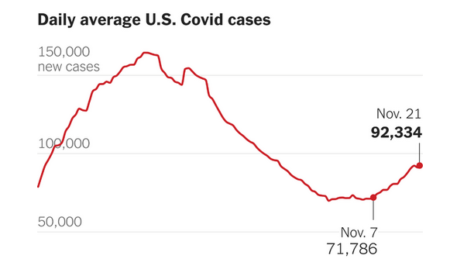

FDA eases clozapine REMS
* Those are actually DEA priorities.
Just keep away from the 5G tower
Latest ancient medical thing that shows promise today
The Long Read: Supplementary Reading edition
November 23, 2021 ✒ Andrew Kantor
It’s hard to believe that, in 2021, someone actually has to say this … no, eating cow dung will not prevent Covid-19. State-fair prep, or stocking the pharmacy shelves? You decide. Like most people, you’ve probably woken up in the middle of the night thinking, “Can sheep carry the SARS-CoV-2 virus?” Your sleepless nights can end: Researchers at Kansas State University have done the work. “[S]heep show low susceptibility to SARS-CoV-2 infection,” they say in a newly released preprint. Which animals are most likely able to carry the virus? A group of researchers from across the U.S. (who had a bit of extra computing power on their hands) investigated the “zoonotic capacity of SARS-CoV-2 for more than 5000 mammals.” So, what critters should you worry about? The more you know. This is from the annual report on drug pricing and spending from the Commonwealth Fund, and it gives the usual news: The U.S. pays more for prescription drugs than the next 32 modern nations combined. That’s adjusted for population. And no, we don’t use more drugs than other countries. The big driver: brand-name drugs. “Pharmaceutical spending is higher in the U.S. despite its greater use of less-costly generic drugs, which are cheaper in the U.S. than in other countries. That’s right: Generics in the U.S. are cheaper than in other countries. See you next year. People who think they might be at risk of an opioid overdose might soon have some wearable help, thanks to engineers from the University of Washington. They developed a proof-of-concept device, worn on the stomach, that senses the particular “life-threatening pattern of respirations that occur when people experience opioid toxicity,” and — if they also stop moving — injects naloxone. You’ll hardly know it’s there. Taking a cue from modern bridges and highways (which use sensors to predict an impending collapse), University of Arizona orthopedic researchers have created “an ultra-thin wireless device that grows to the surface of bone” to monitor damage or healing. This could be particularly helpful in patients with conditions such as osteoporosis, since they frequently suffer refractures. Knowing how quickly and how well the bone is healing could also inform clinical treatment decisions, such as when to remove temporary hardware like plates, rods or screws. Is that wound becoming infected? Why guess, when engineers in Singapore have created a wearable sensor that can be put on an open wound and — by looking for deoxyribonuclease given off by harmful bacteria — sound an alarm? “The hope is that detecting infections more quickly will lead to treatment that can uproot an infection before it progresses,” although it’s not clear why they wouldn’t just treat the wound as if it’s infected in the first place. (Future versions could, they say, release antibiotics automatically.) “Why researchers are turning to music as a possible treatment for stroke, brain injuries and even Parkinson’s” from the Conversation. Music is believed to have long lasting effects on the brain, too. So much so that a musician’s brain is actually better connected than people who haven’t played music. (May not apply to drummers, though.)The sheep are safe, latest dopey Covid cure, what you’ll be wearing, and more!
Let the cow chips fall

Cross one worry off your list
That said…
Another year, another “The U.S. pays the highest drug prices in the world” story
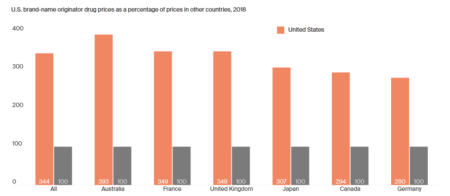
Covid tidbits
Pharma fashion
Intercepting an overdose
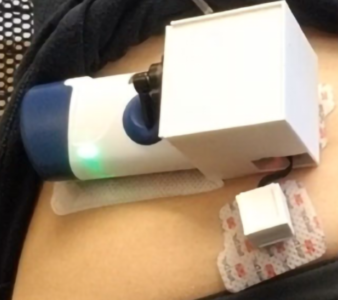
Bone phone
Infection detector
The Long(ish) Read: Music and the Brain edition
November 20, 2021 ✒ Andrew Kantor
One of the main treatments for severe Covid-19 is dexamethasone. Problem: A new study from the University of Calgary finds that the steroid, well, doesn’t work for women. As one researcher put it, “It’s possible the mainstay therapy for severe Covid-19 that we’re giving everybody is only benefiting half the population. This is a big problem.” Not enough big science words, you say? No problem: “[I]n males, we see an exaggerated neutrophil interferon response, that is significantly restrained when a patient is given dexamethasone. But with females, relative to males, their neutrophil interferon response was much more tempered, so dexamethasone had little effect.” Meet Kaitlyn Moss, Mercer University student pharmacist. She’s one of the recipients of the Georgia Pharmacy Foundation’s Neil L. Pruitt, Sr. Entrepreneurship Scholarship. “I’m from a small town called Perry, Georgia,” she said, and the scholarship “will help me to achieve my goals as I strive to be an advocate for the profession of pharmacy as well as a voice for my community.” Be a part of something good. Support the Georgia Pharmacy Foundation and the future of pharmacy — right here at home. The only samples of the smallpox virus remaining on Earth are stored by the two countries most trusted to keep them safe: the U.S. and Russia. They’re kept in secure labs, where no one c— Several vials labeled “smallpox” have been found at a vaccine research facility in Pennsylvania, the US Centers for Disease Control and Prevention said Tuesday. “There is no indication that anyone has been exposed to the small number of frozen vials,” the CDC said in a statement. “The frozen vials labeled ‘Smallpox’ were incidentally discovered by a laboratory worker while cleaning out a freezer in a facility that conducts vaccine research in Pennsylvania. One of the nasty things about herpes (HSV 1 or 2) besides the fact that it’s herpes — is that it’s permanent. One wrong smooch and it’s in your nervous system forever, even if symptoms never show. If we’re gonna eradicate it, or at least have a vaccine, we first have to figure out how the heck it burrows its way so deep into the nervous system. Good news: Microbiologist/immunologists at Northwestern think they’ve figured it out. To get to the nucleus (where it can inject its genetic code), the herpes virus “kidnaps a protein from epithelial cells [kinesin] and turns it into a defector to help it travel into the peripheral nervous system.” “By learning how the virus is achieving this incredible feat to get into our nervous system, we can now think about how to take away that ability. If you can stop it from assimilating kinesin, you would have a virus that couldn’t infect the nervous system. And then you have a candidate for a preventive vaccine.” How did the FDA go about ensuring the Pfizer covid-19 vaccine was safe and effective? A group of scientists and professors “from some of the country’s top schools” filed a Freedom of Information Act Request with the agency asking for documentation. ‘Sure thing,’ said the FDA. ‘We’ll need 55 years to get that to you.’ It may not be a game changer yet, but it is a “remarkable milestone” — neurologists at Brigham and Women’s Hospital are about to start a phase 1 human trial (!) of a nasal Alzheimer’s vaccine/treatment. It’s designed to both prevent the disease and to slow its progression. The vaccine uses the immune modulator Protollin, an investigational intranasal agent that stimulates the immune system. […] Protollin is designed to activate white blood cells found in the lymph nodes on the sides and back of the neck to migrate to the brain and trigger clearance of beta amyloid plaques — one of the hallmarks of [Alzheimer’s disease]. The trial will involve 16 participants between 60 and 85 with early signs of Alzheimer’s. The goal right now: determine whether the vaccine is safe and effective. You damage its DNA. Seriously. Israeli neuroscience researchers found that when DNA damage accumulates, zebrafish (research-wise, tiny humans that swim) catch some Zs. So what? So a lot. Even in 2021, we’re still not sure what function sleep serves; there are plenty of theories, but rarely a solid breakthrough. “[This] study is ‘pivotal in providing evidence regarding sleep and its role in DNA damage and repair’.” It’s all about an enzyme called Parp1. [The] data suggest that DNA damage, Parp1, and the physiological urge to sleep all increase during the day. Then, “Parp1, at a specific threshold, drives sleep and says to the brain: You have to sleep. Otherwise, we have too much DNA damage and the cell maybe will start to degenerate.” […] How Parp1 signals the need to sleep is something the group is seeking to unravel next. While some researchers are trying to cure cancer, slow climate change, or help explore the cosmos, others have more … modest research topics: “How to hug, according to science”. Article includes the helpful tip “You’re probably going to want to use your arms.”Hugging for science, FDA’s 55-year delay, men-only Covid meds, and more
Sorry, ladies
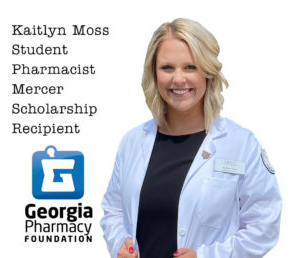
The Georgia Pharmacy Foundation is doing good
“Secure.” You keep using that word. I do not think it means what you think it means.
Big step to a herpes vaccine
Mark your calendars
First trial of an Alzheimer’s vaccine
How do you put a zebrafish to sleep?
Now we know
Crisscross or neck-waist?
Do you want to send your members the daily Buzz email newsletter (customized for your state and organization, perhaps)? Let’s talk — just drop me a note at andrew@gphabuzz.com!


- Primary Care Is in Trouble. So Doctors Band Together To Boost Their Market Power.
- Cosmetic Surgery Investigation Prompts Warnings for Patients, and a Push for Tighter Safety Standards
- Listen to the Latest ‘KFF Health News Minute’
- Banks Are Becoming Bulwarks Against Scams for Vulnerable Seniors
- More Kids Are in ERs for Tooth Pain. Trump Cuts and RFK Jr.’s Anti-Fluoride Fight Aren’t Helping.
- Newsom Picks a Dogfight With Trump and RFK Jr. on Public Health
- January 2025
- December 2024
- November 2024
- October 2024
- September 2024
- August 2024
- July 2024
- June 2024
- May 2024
- April 2024
- March 2024
- February 2024
- January 2024
- December 2023
- November 2023
- October 2023
- September 2023
- August 2023
- July 2023
- June 2023
- May 2023
- April 2023
- March 2023
- February 2023
- January 2023
- December 2022
- November 2022
- October 2022
- September 2022
- August 2022
- July 2022
- June 2022
- May 2022
- April 2022
- March 2022
- February 2022
- January 2022
- December 2021
- November 2021
- October 2021
- September 2021
- August 2021
- July 2021
- June 2021
- May 2021
- April 2021
- March 2021
- February 2021
- January 2021
- December 2020
- November 2020
- October 2020
- August 2020
- July 2020
- March 2020
- February 2020
- January 2020
- December 2019
- November 2019
- October 2019
- September 2019
- August 2019
- July 2019
- June 2019
- May 2019
- April 2019
- March 2019
- February 2019
- January 2019
- December 2018
- November 2018
- October 2018
- April 2017
