
January 11, 2020 ✒ Andrew Kantor
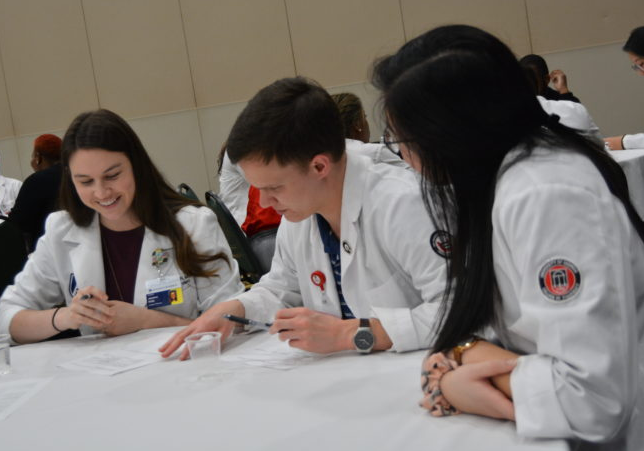
January 12 is National Pharmacist Day in the U.S.A.! This year, let’s try to tone the partying down a bit, shall we? We don’t need a repeat of you-know-what. But seriously, have fun and remember to tell your friends and enemies, “Be nice to me. Today is my day.” Fun facts: Got all that? Where’s it good to be a pharmacist? Georgia ranks in the middle — #20 out of the 50 states. That’s based on ratings from 24/7 Wall Street, which scored the states on seven measures of quality of life and quality of job (e.g., cost of living, number of pharmacy burglaries, average salary, etc.). Weak spots: “Total burglaries and armed robberies of pharmacies” and the total number of pharmacists. Strong spot: Cost of living. Student pharmacists from UGA worked with student nurses, student social workers, and med students as part of UGA’s Interprofessional Education Day. “to better understand the roles their counterparts play in caring for patients and to discover how they can work together as a team.” They took on the fictional case of a man with high blood sugar: Offering perspectives from their professions, the students worked to optimize the patient’s care as he was admitted to a hospital, assessed, treated, then returned to his family and community. Take the 25 most expensive drugs, i.e., the ones Medicare spent the most on. (This is what Harvard researchers did.) Count their active ingredients: There are 27 total. See how long those ingredients have been around. What they found: 41% of those active ingredients aren’t even close to new — they’re an average of more than 21 years old (as of 2019). “Many active ingredients in the 25 brand-name drugs with the highest Medicare spending were discovered decades ago, with a substantial minority having been previously marketed in alternative formulations or products.” So why the high price tags? Lack of generic competition, patents, and molecular tweaks. The immune system produces the antibacterial molecules to fight infection, right? Not always, it seems. When it comes to the gut, it’s nerve cells that unleash the army of cytokines. The foot soldiers in the war against intestinal pathogens, it turns out, are the immune system molecules interleukin-18 or IL-18. Interleukins are part of the immune system’s arsenal. Using electrons for radiation treatment is so 2019. Penn researchers have shown that when using protons instead — in a technique called FLASH radiotherapy — a single high dose (taking less than a second) is equivalent to a patient having several weeks’ worth of treatment. A single mutation in a single gene can make prostate tumors a lot more aggressive, and fixing that gene (or reconstituting the protein it encodes) “ultimately kills prostate cancer cells.” So finds a new study out of Temple University, which could — obviously — lead to new treatments for the deadlier kinds of prostate cancer. A single piece of popcorn stuck in a British man’s teeth eventually led to his needing open-heart surgery. (Mouth bacteria got into his bloodstream and caused endocarditis.) Suicide is a huge problem in this country (in the top 10 causes of death). But here’s an interesting find: For people without a college education, a one dollar increase in the minimum wage seems to lead to a noticeable drop in suicides — we’re talking “a 3.5 to 6 percent reduction in the suicide rate for every dollar increase in the minimum wage.” California is considering a plan to produce its own brand of generic drugs — at a lower cost — to compete with pharmaceutical companies. Well, sort of. The plan is better described as “California would pay companies to make certain generic drugs at lower cost.” But that doesn’t sound as interesting. Kansas is poised to become the 37th state to expand Medicaid. The proposal, which is likely to pass, would cover families of three earning up to $29,435 a year.Deadly popcorn, instant radiation treatment, Georgia’s a good place for pharmacists, and more
Tomorrow it is!
Not a bad place to be
UGA practices teamwork
Oldies but goodies
Infection surprise
Small events, big results
One-second radiation treatment
One broken gene
One piece of popcorn
One dollar for mental health
Elsewhere
January 10, 2020 ✒ Andrew Kantor
Like a celebrity before plastic surgery, the flu season may not look so bad right now, but it’s gonna get ugly: So says the CDC. While deaths are still low, hospital visits are at the same level they were during the 2017-18 flu season, which was the worst in a decade. Keep giving those flu shots! This coming Tuesday, GPhA’s new course will show you how to grow your practice while you help your patients. “Healthy Patients = Healthy Business” is a new three-part course that will teach you how to help your patients with diabetes … and how that can be great for your practice, too. It covers the latest info about medication, exercise, and diet — and how to promote your diabetes-control services to your community. Taught by national diabetes expert and Georgia pharmacy owner Jonathan Marquess, “Healthy Patients = Healthy Business” will give you a deep dive into your role in keeping diabetes in check. The first session is this Tuesday, January 14. Sign up today! Patients with Alzheimer’s who take antipsychotic meds have a higher chance — we’re talking 29 percent higher — of sustaining head injuries. (And if you want to dive deeper, quetiapine was a lot worse than risperidone.) And that includes the largest single-year drop ever — 2.2 percent from 2016 to 2017, according to the American Cancer Society. Why? A lot can be attributed to better treatments for lung cancer, but that was just last year. Over the past 26 years, cancer death rates have been declining for breast, colorectal, lung, and prostate cancers — the ACA says “The drop translates to approximately 2.9 million fewer cancer deaths than would have occurred had mortality rates remained at their peak.” Cool beans! But now a study out of Canada’s University of Guelph finds that not only can BPS also hinder heart function, it can do it even faster. So maybe your best bet is to stick with glass. Each chemical on its own was found to depress heart function by dampening heart contractions causing slower blood flow. However, BPS had a quicker impact – within five minutes of exposure. There are new clinical guidelines available for the treatment of nosebleeds from the American Academy of Otolaryngology-Head and Neck Surgery. Topping the list: “At the time of initial contact, the clinician should distinguish the nosebleed patient who requires prompt management from the patient who does not.” That’s tea, of course, and a new study says that “Drinking tea at least three times a week is linked with a longer and healthier life.” It was a seven-year study, in fact, of more than 100,000 people. Compared with never or non-habitual tea drinkers, habitual tea consumers had a 20% lower risk of incident heart disease and stroke, 22% lower risk of fatal heart disease and stroke, and 15% decreased risk of all-cause death. Vaccines can’t be given until a person is at least six months old — some have to wait a year. Why’s that? Blame Mom: Her antibodies can prevent the vaccine from properly triggering a kid’s immune system. Forget that, said Penn State researchers. They modified the RNA of a flu vaccine and gave it to baby mice. Bingo! Even with Mom’s antibodies at work, the babies still got protection. The process can work for other diseases, but the question is whether it will work for humans. Stay tuned. Looking at records of human body temperature going back to 1862, researchers have found that people are getting colder: The researchers observed that the body temperature of men born in the 2000s is on average 1.06 F lower than that of men born in the early 1800s. Similarly, they observed that the body temperature of women born in the 2000s is on average 0.58 F lower than that of women born in the 1890s. These calculations correspond to a decrease in body temperature of 0.05 F every decade. But … why? Their theory: Less inflammation means a lower metabolic rate. “Inflammation produces all sorts of proteins and cytokines that rev up your metabolism and raise your temperature.” Today’s average body temperature is 97.9°F (or 36.6°C, if you’re still using that quaint metric system). Vaccines for babies, nosebleed news, cancer-deaths drop, and more
The worst is yet to come
Diabetes-treatment opportunities
Antipsychotics and dementia can be dangerous
Cancer death is dropping
“BPA-free” may not be so great
 BPA (Bisphenol A) is something you don’t want in your plastic if you — or, more notably, your kid — is going to eat or drink from it. Some manufacturers are going “BPA-free” by using bisphenol S (BPS) instead.
From compression to packing to education
A drink with jam and bread
Earlier vaccines
…and you’re so cold
January 09, 2020 ✒ Andrew Kantor
CVS, Rite Aid, Walgreens, and Walmart are suing at least 500 physicians in Ohio, claiming that they — the doctors — bear some responsibility for the opioid epidemic. If the pharmacies are found liable in the opioid lawsuit there, those companies want the physicians to be responsible as well. But they’re walking an interesting line, claiming, essentially, that pharmacists are effectively bottle-fillers, and are not responsible for the medications: [T]he pharmacy chains are trying to argue in the new legal papers that “we’re not gatekeepers, we’re just toll collectors,” said Elizabeth Chamblee Burch, a University of Georgia law professor who has followed the national opioid litigation closely. As we’ve covered before, Georgia has one of the worst maternal-mortality rates in the world — worse than Uzbekistan. And now a group of lawmakers — the Georgia House Study Committee on Maternal Mortality — has released its first recommendations for improving the health of pregnant women. For example, while post-partum issues can occur up to six months after birth, Georgians on Medicaid only get 60 days of coverage. The committee’s top recommendation (from the report): “Extend Georgia’s Medicaid coverage for eligible pregnant women to one-year postpartum to allow for continued access to health care services.” Ah, the blood-brain barrier — usually a good thing, sometimes a roadblock to treatment, sometimes the cause of a disease. UGA assistant professor Yao Yao (in the department of pharmaceutical and biomedical sciences) scored himself and his team a $1.88 million grant from the National Institutes of Health to study that barrier, and to hopefully find a path to new treatments for stroke and other diseases. Nice going! At least 15 deaths and 505 hospitalizations in Georgia, according to GPH. More children (27) have died nationwide than in any recent season. A new combination, nanoparticle vaccine appears to protect mice against six strains of flu. Zinc and folic acid can be useful and important supplements … but not for male fertility. So finds a new study in the Journal of the American Medical Association. Live birth rates were 34% when men in the couples received daily doses of folic acid and zinc […] versus 35% in a placebo group. More than a third of U.S. spending for health insurance, doctor visits, hospital stays, and long-term care is not on care at all — it’s on paperwork. Forget the cost of meds or visits. We’re pouring money into administration. According to the study, health administration costs in 2017 were more than fourfold higher per person in the United States than in Canada — $2,479 versus $551 per person. And U.S. spending on insurers’ overhead was $844 per person compared with $146 per person in Canada. A long-term study of more than 250,000 women found no significant link between talc-based baby powder and ovarian cancer. “We found a small, but nonstatistically significant, risk. We cannot establish causality. If there is a true association [between talc powder use and ovarian cancer], the increase would likely be very small.” The Mysterious Vaping Illness that cropped up last summer? Turns out it’s been around a bit longer — it just wasn’t on anyone’s radar. Researchers examined posts on an online discussion board for e-cig users from January 2008 to July 2015, and they found that the lung-disease symptoms have been reported for at least the past seven years. A new study in Health Affairs, which looked at 12 southern states (including Georgia), found that people living in Medicaid-expansion states were less likely to experience a “health status decline” than those who live in states that did not expand Medicaid eligibility. In other words, as one author put it, “Medicaid expansion improved health. But improvements are as much, if not more, a result of stemming of health declines as they are a result of moving people to better states of health.” The Ohio State Medical Board has received a petition to make ‘being a Bengals or Browns fan’ an eligible condition to receive medical marijuana.Chains sue docs, saving Georgia’s mothers, the high cost of paperwork, and more
Pharmacy chains sue docs

Reducing Georgia’s maternal death rate
Shout-out to Yao Yao

Quick flu updates
Want a baby? Zinc’s not gonna help
Good news for toner makers
Latest baby powder news
Older than we thought
Medicaid: Slowing the decline
Elsewhere: That’s Just Embarrassing edition
January 08, 2020 ✒ Andrew Kantor
On January 4 we said that Publix had filled its one millionth free prescription. In fact, it had filled its one hundred millionth free script. We apologize for the error. This is a major story, and we’ll have more detail later today and tomorrow. The gist: Despite the passage of HB 233 last year, banning most PBM “steering,” the practice continues. So the House Insurance Committee and House Special Committee on Access to Quality Healthcare called a special meeting before the start of the legislative session to address it. The gist: Despite the passage of HB 233 last year, banning most PBM “steering,” the practice continues. So the House Insurance Committee and House Special Committee on Access to Quality Healthcare called a special meeting before the start of the legislative session. Pharmacists, patients, and physicians offered testimony on the issue, and on the negative impact PBMs and Medicaid CMO practices are having on patients, prescription drug prices, community pharmacies, and Georgia tax payers. Following the hearing, the House GOP announced its intention (via a press release) to “Reverse Corporate Takeover of Georgia Healthcare.” That is a Very Big Deal, and that is what we’re going to be explaining in detail shortly. Watch your inbox! Pharmacists continue to rank pretty darned high in terms of public trust, although they slipped a spot this year. Nurses, as always, top the Gallup Poll by a wide margin, and this time engineers slipped into the #2 spot, nudging medical doctors and pharmacists to #3 and #4, respectively. (Who’s at the bottom? Car salespeople, of course, just below members of Congress.) When it comes to the best healthcare professions, U.S. News ranks pharmacist #27 out of 29. (Only rehabilitation counselor and radiation therapist rank lower.) The top healthcare jobs? Dentist, physician assistant, and orthodontist. When it comes to the 100 top overall jobs (not just healthcare), pharmacist isn’t on the list. (Software developer is #1; restaurant cook is #100.) If it makes you feel any better, “association communications director” isn’t there either, but cartographer is #65. But*… Pharmacist is ranked #21 for best paying job, so at least you have that. (Anesthesiologist is #1.) Italian researchers have found two new cannabinoids in marijuana — one is a related to (but more potent than) THC, while the other is related to CBD. They might help explain the different kinds of high people can get, and might open or clarify some channels of research into the plant. [T]etrahydrocannabiphorol (THCP), is allegedly 30 times more potent than THC, they claim. Whether that means it gets you 30 times as stoned—or if it’s even psychoactive at all—is still unknown. But in mice, it appeared THCP was more active than THC at lower doses. The scientists also found cannabidiphorol (CBDP), a cousin to CBD, the popular wellness additive. What happens after a teen or 20-something overdoses? Not enough, it seems: More than two-thirds didn’t get any kind of significant follow-up treatment. They found that among 3,606 youths who survived an opioid overdose and remained enrolled in Medicaid in the seven-year period, 2,483 – 68.9% – did not receive addiction treatment within 30 days of their overdose, 1,056 (29.3%) received behavioral health services alone and only 1 in 54 (1.9%) received medication-assisted treatment. Almost 4,100 people aged 15-24 died of opioid overdoses in just 2017, according to the National Institute on Drug Abuse. The network is promoting Gywneth Paltrow’s show “The Goop Lab,” in which she touts both flotsam and jetsam, like energy healing, psychic mediums, female cleanses, how bras causes cancer, and how jade eggs can absorb energy from the moon* … I can’t write any more. Needless to say, there’s plenty of backlash from the reality-based medical community. Why isn’t there a link? Because the poster and the trailer both push the bounds of decency. No, seriously. Google if you need to. Next round of PBM legislation, pharmacists you can trust, new version of THC, and more
Correction
Georgia House to introduce legislation to increase PBM and MCO oversight
On the one hand…
On the other hand…
* If I said “On the gripping hand…,” I wonder how many of you would get the (somewhat obscure) reference.
THC and CBD get two cousins
After the overdose
Why, Netflix, why?
* No joke.
January 07, 2020 ✒ Andrew Kantor
So, you know about those Zantac/ranitidine recalls over a carcinogen found in the drug? Turns out it might be caused by the drug sitting too long, or in too warm an environment — i.e., not the manufacturing, but simply the chemistry of ranitidine. Forget “Spend more time at the gym” or “Keep in better touch with friends” or “Cut back on cheese” — make a real New Year’s resolution: Earn yourself a certificate that makes you a better pharmacist! Impress your patients, your employer, and those friends you’re keeping in touch with when you show them your brand-new, ACPE-approved certificate from APhA: Delivering Medication Therapy Management Services: A Certificate Training Program for Pharmacists offers a full-day of training on medication therapy management, from soup to nuts: developing a program, implementing it, marketing it, delivering it, and sustaining it. It’s coming fast: Sunday, January 12, from 8:00 a.m. to 5:00 p.m. at GPhA Headquarters in Sandy Springs (map). CLICK HERE FOR MORE INFO and register today! We can’t believe we missed this story: After a successful trial in mice, a vaccine “designed to prevent neurodegeneration associated with Alzheimer’s disease” is about ready for human trials. The research revealed the vaccine led to significant decreases in both tau and amyloid accumulation in the brains of bigenic mice engineered to exhibit aggregations of these toxic proteins. If you woke up this morning and thought, “My gosh! It’s cold and flu season! Where can I get my elderberries*?” fear not — the AJC has you covered with “Three Georgia-made ways to stock up on elderberries for cold season.” A federal judge in Cleveland has ordered CVS, Rite Aid, Walmart, Walgreens, and other pharmacies to provide 14 years of data on the opioid prescriptions they filled “and hand it to plaintiffs seeking billions of dollars from the companies for their alleged role in the opioid abuse crisis.” Gene therapy relies on a virus — well, a ‘stripped-down viral vessel’ — to deliver its payload into cells. But a new study seems to indicate the virus may not be as benign as expected. It seems that the carrier (adeno-associated virus or AAV) can insert some of its own genes into cells — kind of like the UPS man not only delivering a package, but also using your bathroom. There’s good and bad to this. By getting into the cells, the AAV might make the treatment it carries more effective … but it also might mess with the cells’ DNA and cause cancer. “Wellness in rural Georgia: Hope, hard work and some frustration” from Georgia Health News.
Zantac culprit found? Plus a dementia vaccine, elderberry finder, and more
Ranitidine surprise
Start the new year with an MTM certificate
Dementia vaccine?
Berry finder
* And really, who among us hasn’t?
We’re about to get a lot more info about the opioid crisis
Gene delivery danger
The Long(ish) Read: Rural Healthcare edition
January 04, 2020 ✒ Andrew Kantor
It’s a new year, and that means it’s time for the first annual drug hikes. Drugmakers have already raised the prices of more than 330 medications in just the first few days of January. The average increase is about 5 percent; the current U.S. inflation rate is about 2.1 percent. The companies did not provide any reason for the increases. Will you be taking your Georgia licensing exam later this year? Do you know someone who will? (Maybe a graduate? Maybe a pharmacist moving to Georgia?) Then brush up on the practical skills you need to have. GPhA’s crazy-popular program — the “Practical Skills Refresher Course” — is coming in 2020 on four days in four locations. It’s a concentrated, four-hour refresher on terminology, measurements, and the procedures you’ll put into practice. You can just imagine how useful this will be. NEW: Labs! For 2020 we’ve added “Practical Skills for the Lab” — lab time with an instructor to watch you and provide feedback, in a simulated testing environment. If you’re a student pharmacist or a transfer to Georgia, you want this course. You NEED this course. Click here for more info and to register NOW! Publix announced it had filled its one millionth free prescription. That’s under a program that provides “14-day supplies of four oral antibiotics, as well as 90-day supplies of maintenance medications used to treat high blood pressure and diabetes” to any Publix customer, period. Novo Nordisk is offering a free one-time supply (up to three vials or two packs of pens) of insulin to anyone in immediate need; after that it will sell them the drug for $99 for the same amount. So you know people — users and companies — have been treating CBD like any other supplement (complete with a mix of claims for what it can do)? But the FDA hasn’t made clear where CBD falls in the legality spectrum. Is it a supplement (i.e., it won’t be regulated) or is it a medication (subject to approval)? Because of that, unhappy CBD users have filed class-action lawsuits. Their claim: CBD isn’t just a supplement. In two major lawsuits recently filed against Charlotte’s Web and CV Sciences, two of the largest CBD manufacturers in the country, consumers allege that the companies engaged in “false, fraudulent, unfair, deceptive, and misleading” marketing of their CBD products by claiming they were run-of-the-mill dietary supplements, like vitamin D or iron. […] In all of the cases, they are asking a judge to force the companies to return all of the profits they’ve made from those sales, which could decimate the nascent industry. The brain’s pleasure center and its biological clock are apparently — well, if not besties, at least good friends. And that means eating junk food, which increases dopamine, “disrupt normal feeding schedules, resulting in overconsumption,” according to a new study. Or, if you want to sound smarter: “We’ve shown that dopamine signaling in the brain governs circadian biology and leads to consumption of energy-dense foods between meals and during odd hours.” So this is both interesting and a bit scary: Apparently HIV treatment can ‘reset’ smallpox (and possibly other) vaccinations. What the study authors said: “[A]ntigen-specific CD4+ T cell memory to vaccinations/infections that occurred before HIV infection did not recover after immune reconstitution and a previously unrealized decline in pre-existing antibody responses was observed.” What it means: If people are treated for HIV after they’ve been vaccinated for smallpox, that treatment causes their T-cells “forget” how to target the smallpox bacteria. (Unanswered: Does it apply to other diseases? Does re-vaccination work?) New Year price hikes, free meds from Publix and Novo, losing your immunity, and more
Happy New Year: Drug makers raise prices again
Practical Skills Refresher Course — now with labs!
Free drugs
CBD twist
The dopamine and the clock
Vaccination reset
January 03, 2020 ✒ Andrew Kantor
The FDA has sort of banned flavored e-cigarettes. We say “sort of” because the details are … detailed. It comes down to this: On Thursday, the FDA released its “Guidance for Industry” (PDF) for what it called ENDS products: electronic nicotine delivery systems. It says, in broad strokes…. It also says that this is a guidance document — meaning it’s technically not a new law; it just “describe[s] the Agency’s current thinking on a topic.” In this case, it’s how the agency will enforce the Tobacco Control Act* with respect to e-cigarettes. As for why it’s only looking at flavored products: By not prioritizing enforcement against other flavored ENDS products in the same way as flavored cartridge-based ENDS products, the FDA has attempted to balance the public health concerns related to youth use of ENDS products with considerations regarding addicted adult cigarette smokers who may try to use ENDS products to transition away from combustible tobacco products. Grats and a virtual high-five to Wellstar’s assistant VP of operations, A.J. Brooks of Vinings, who was named one of Cobb Life’s “20 Under 40.” Aurobindo Pharma is recalling its mirtazapine tablets (lot number 03119002A3) because it might actually be double the labeled strength. Here’s an odd finding: Secondhand smoke can increase your risk of diabetes, but much more so if you’re exposed to high levels and then it stops. (Yes, you read that right.) While no smoke is best, people exposed to “a stable, consistent level of secondhand smoke throughout the life course” were in fact less likely to develop type 2 diabetes than those with a short-term exposure. Those little buggers are everywhere*, and bacteria doesn’t mean infection. We’ve got enough of an antibiotic problem as it is, so: “Rx for Doctors: Stop With the Urine Tests.” If you have a monkey you want to vaccinate against tuberculosis, you should consider giving the vaccine intravenously, not intradermally. Apparently (according to a study published in Nature), injecting Ye Olde BCG vaccine into a vein provides a lot more protection. Don’t, however, do this to a human … yet. “[T]he experts warned that rigorous safety testing would be needed before live bacteria can be injected into human bloodstreams.” “Drug companies are courting jails and judges through sophisticated marketing efforts.” [T]he relationship between drug companies and the criminal-justice system seems to have intensified: free samples to detention facilities; comped lunches during which jail and prison doctors learn about medications; and payments to physicians to tout certain medications at conferences for criminal-justice professionals, including those without health-care licenses such as sheriffs and drug-court judges.E-cig crackdown is official, minding p’s and q’s, a better way to vaccinate, and more
FDA: We’re gonna crack down on flavored vaping products
* But there’s no tobacco, you say. The law also includes “other products that meet the statutory definition of a tobacco product.”
Flu numbers update
Shout-out to A.J.

Mirtazapine recall (aka “Double, double, toil and trouble”)
The timing of the smoke matters
Bacteria in urine? Remain calm
* Once again we’re happy to plug Rob Dunn’s Never Home Alone
A better way to vaccinate for TB
The Long Read: Captive Audience edition
December 31, 2019 ✒ Andrew Kantor
That’s what you need to know about the flu in Georgia at the moment. Well, that and the fact that it’s affecting school-age children most of all — and now that the holiday germ-swap is over, more cases are probably going to appear. The FDA says cannabis is only approved to treat a handful of conditions (e.g., nausea from chemotherapy, some forms of epilepsy). People who use it say it helps with a lot more, but just hasn’t been sufficiently studied. And Twitter bots? Well, they say it can treat anything. It’s almost as if it’s a bad idea to get your news and information from social media posts. Are you frustrated hearing about the opioid crisis? Then help end it! GPhA is offering a new course in 2020: Opioid Stewardship 101: Optimizing Non-Opioid Analgesic Therapy. It teaches the ins and outs of using non-opioids to treat both acute and chronic pain — which medications are best for which kinds of pain and how best to deliver them, and it’s taught by Danny Basri of WellStar Kennestone. The course is one hour long, ACPE-approved, and it’s part of our growing catalog of CPE webinars — it also meets an education requirement for the Georgia Pharmacy Foundation Champions of Opioid Safety program. Check it out, yo! Thursday, January 30, 2020 Just $20 for GPhA members ($50 for non-members) Gabapentinoids (e.g., Lyrica, Gralise, Neurontin), if combined with opioids, can cause serious breathing problems. New labels are coming, but we figured you should know right away. Women may need only a single dose of the HPV vaccine to prevent infection. (The key word is “may.”) Really, that’s the whole story. Studies continue. If you’re prone to migraines, here’s a pro tip: Avoid nitroglycerin.HPV vaccine, nitroglycerin and migraines, and more
A, B, and widespread
The truth is somewhere in the middle
Start the new year with a new CPE course from GPhA
7:00 – 8:00 p.m. (from your favorite Internet connection)Bad combo
HPV vaccine: One is enough?
Wile-E-Coyote, this is for you
December 28, 2019 ✒ Andrew Kantor
Let’s say one of your New Year’s resolutions is to produce an offspring. Here’s a tip, courtesy of some Aussie science: Avoid fats (even healthier ones like olive oil) and go for the egg whites — it “may be the perfect formula for men’s fertility” according to researchers at the University of South Australia. The study is the first to identify that a diet high in any type of fat – including healthy mono-saturated fats such as olive oil – negatively impacts testosterone production over as little as five hours, yet one supplemented with egg whites, and to a lesser extent whey protein, can positively affect serum testosterone. Just because alcohol and benozdiazepines are a bad combination doesn’t mean a lot of heavy drinkers aren’t being prescribed Valium and Xanax. Quite the opposite, in fact. And… Over the past decade or so, teens have been overdosing on benzos … quite a bit. In fact, it was up 54 percent just from 2000 to 2015. Here’s a scary stat: An international study found that, when delivering epinephrine to kids going into anaphylactic shock, even in hospitals most people made a mistake in delivery. At least one error was made in 25 (68%) of 37 simulations. The most common errors were failure to specify the administration site (the vastus lateralis muscle), preparing an incorrect dose, ordering an incorrect dose, ordering an incorrect epinephrine concentration, preparing an incorrect concentration and ordering IV administration. Israeli researchers have found that the bacillus Calmette-Guérin (BCG) vaccine — used for TB and bladder cancer — might be able to reduce the risk of developing Alzheimer’s. They looked at the records of 1,371 bladder cancer patients; 65 of them had developed Alzheimer’s, but… Those who had not received BCG as part of their treatment had a significantly higher risk of developing Alzheimer’s than did BCG-treated patients: 8.9% (44 patients) as opposed to 2.4% (21). The downside: “The exact way the BCG vaccine affects cancer has not been deciphered but it is known to have an impact on the immune system.” When you remove non-medical vaccine exemptions, what d’ya know — vaccination rates go up. (And so do medical exemptions, but only slightly.) The important note is that, when California eliminated voluntary exemptions, it brought the vaccination rate up to 95 percent across most of the state — enough for herd immunity to take effect. … but it’s also hard to resist: Check out LiveScience’s “10 Strangest Medical Cases of 2019“. “Transcendental Meditation prevents abnormal enlargement of the heart, reduces chronic heart failure” according to a study out of Maharishi International University and UCLA. Italy’s high court* says it can be grown at home. On January 1, Illinois will become the 10th state to legalize it recreationally.Epi errors, strange medicine, TB meds vs. Alzheimer’s, and more
See you in September?
Benzo news
Epi errors, lots of them
Unexpected weapon against Alzheimer’s
Vaccine shocker
Yes, it’s clickbait
Time to break out Magical Mystery Tour
Elsewhere: Marijuana update
December 27, 2019 ✒ Andrew Kantor
Mavidon, September 26: “We’re voluntarily recalling our LemonPrep products. They might be contaminated with drug-resistant bacteria.” Mavidon, December 23: “You know what? Better make that all our products.” Mavidon is notifying customers, [hospitals,] and clinics to STOP using Lemon Prep, Pedia Prep, Wave Prep, Cardio Prep Single use cups, Collodions, Collodion Remover, Medical Adhesive Remover, Acetone, and all products manufactured by Mavidon IMMEDIATELY due to contamination with Burkholderia cepacia. Wellstar was named one of the top-50 “Best Workplaces for Diversity” by workplace culture tracker Great Place to Work. It’s one of only three Georgia companies to make the list*, and the only one in healthcare. (In fact, it also made the list of Best Workplaces in Health Care & Biopharma.) Patients on chemo, especially for breast cancer? Tell them to avoid supplements: Use of dietary supplements that boost levels of antioxidants, iron, vitamin B12 and omega-3 fatty acids appeared to lower the effectiveness of chemotherapy, researchers report in the Journal of Clinical Oncology. Because if we don’t, you know everyone will be shocked — shocked! — by how many people are addicted to nicotine in 10 years. “Vaping is taking off among younger children and ‘tweens’.” Eisai’s new insomnia drug, Dayvigo, has been approved by the FDA. The approval was briefly delayed while the agency argued over how to pronounce the company’s name. “80% of parents admit they don’t properly dispose of prescription opioids” (at least among those who were not told how important it is). However, if you do a bit of education (researchers found) or give special drug-disposal packets* at the same time, you cut the number down a lot. Skip the eggs and white bread and go for oatmeal — those shifty Danes have figured out that making that simple swap can lower your risk of stroke. [T]he researchers calculated that a person who replaced one serving of eggs or white bread with oatmeal would have a 4% lower risk of stroke compared to someone who stayed with eggs or bread for breakfast. They haven’t figured out why that works yet, but cholesterol might factor in. Of course, there’s always the cause/effect question: ““Perhaps patients who eat oatmeal take better care of themselves in other ways.” You know all that talk about ‘We have to pay drug makers what they ask for, because that money funds research’? Maybe we should ask that some of that research go into antibiotics. Big drug companies have stopped researching them because they won’t make enough money, and smaller companies can’t raise the investment to get started for that same reason. Coming up with new compounds is no easy feat. Only two new classes of antibiotics have been introduced in the last 20 years — most new drugs are variations on existing ones — and the diminishing financial returns have driven most companies from the market. In the 1980s, there were 18 major pharmaceutical companies developing new antibiotics; today there are three.Wilfred was wright, Wellstar gets high grades, younger kids are vaping, and more
Total Recall: Mavidon edition
Nice job, Wellstar
* Delta and the Alston & Bird law firm were the others
Supplements can interfere with chemo
Perhaps now would be a good time to stop this
Sleep tight
Conveniently these two stories go together
* Which can be as simple as a Ziploc bag with coffee grounds
Wilfred Brimley was right
The Long Read: Who’s gonna make new antibiotics? edition
Do you want to send your members the daily Buzz email newsletter (customized for your state and organization, perhaps)? Let’s talk — just drop me a note at andrew@gphabuzz.com!

- Doctors Warn of a Deadly Complication From Measles Outbreaks
- Medicare Advantage ‘Dark Money’ Group Attempts To Win Higher Payments for Insurance Companies
- Families Scramble To Pay Five-Figure Bills as Clock Ticks on Promised Preauthorization Reforms
- As Lung Disease Threatens Workers, Lawmakers Seek Protections for Countertop Manufacturers
- Republicans Fret Over RFK Jr.’s Anti-Vaccine Policies While MAHA Moms Stew
- Primary Care Is in Trouble. So Doctors Band Together To Boost Their Market Power.
- January 2025
- December 2024
- November 2024
- October 2024
- September 2024
- August 2024
- July 2024
- June 2024
- May 2024
- April 2024
- March 2024
- February 2024
- January 2024
- December 2023
- November 2023
- October 2023
- September 2023
- August 2023
- July 2023
- June 2023
- May 2023
- April 2023
- March 2023
- February 2023
- January 2023
- December 2022
- November 2022
- October 2022
- September 2022
- August 2022
- July 2022
- June 2022
- May 2022
- April 2022
- March 2022
- February 2022
- January 2022
- December 2021
- November 2021
- October 2021
- September 2021
- August 2021
- July 2021
- June 2021
- May 2021
- April 2021
- March 2021
- February 2021
- January 2021
- December 2020
- November 2020
- October 2020
- August 2020
- July 2020
- March 2020
- February 2020
- January 2020
- December 2019
- November 2019
- October 2019
- September 2019
- August 2019
- July 2019
- June 2019
- May 2019
- April 2019
- March 2019
- February 2019
- January 2019
- December 2018
- November 2018
- October 2018
- April 2017
