
November 19, 2019 ✒ Andrew Kantor
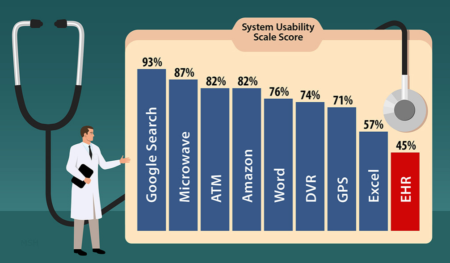
Three more cases of measles have been confirmed in Cobb County, bringing the annual total to 11 — which is more in 2019 than in the entire previous decade. And yes, at least two of them were unvaccinated. We still need your support to reach our $10,000 goal and cross the finish line! The Georgia Pharmacy Foundation provides scholarships, offers a free CE series to help Georgia pharmacists stay mentally healthy, and recently launched a free path to becoming a Champion for Opioid Safety. The foundation’s annual giving campaign is coming to an end soon. As a community, we have raised $4.500 and still need to raise $5,500. If you haven’t already, we urgently ask you to donate today so we can provide the best opportunities for our members and our communities across the state. Donate now $50 or $100 to help us cross the finish line: GPhA.org/foundation2019. After promising a ban on flavored vaping products (and raising the purchase age to 21), Donald Trump changed his mind and decided to ‘study the issue more.’ The opioid crisis has led to more tapering of prescription dosages, but in many cases that tapering is happening much faster than health official recommend. So finds a new study out of UC San Diego. “Tapering plans should be based on the needs and histories of each patient and adjusted as needed to avoid adverse outcomes. Unfortunately, a lot of tapering occurs due to policy pressures and a rush to get doses below a specific and sometimes arbitrary threshold. That approach can be detrimental in the long run.” Physicians said that electronic health records were harder to use than Microsoft Excel, giving EHRs an “F” rating for useability. Mice who eat a high-fat, low-carb diet — aka a ketogenic diet — appear to resist the flu better than those on a traditional diet, according to a Yale study. [The diet] activates a subset of T cells in the lungs not previously associated with the immune system’s response to influenza, enhancing mucus production from airway cells that can effectively trap the virus, the researchers report. It’s ramping up in the South, and this year’s strain is “a little bit unusual.” Among school-aged children, influenza B is the most common strain. Among adults 65 and older, nearly 75% of the viruses are H3N2. For other adults, flu is equally divided between H1N1 and H3N2 strains. The Trump administration said again (on Friday) that it will allow Americans to purchase prescription medication from other countries, although it’s unclear what other countries those would be. Canada has made clear it will not allow the bulk sale of medications to the U.S., and there has been no talk of importing from anywhere else. Flu-resistant mice, fast opioid tapering, steep EHR learning curve, and more
More measles in Georgia
Help us cross the finish line
No ban on flavored e-cigarettes
Go easy on those brakes
So much for health records going digital
Keto vs the flu
Speaking of the flu…
Seller’s market
November 16, 2019 ✒ Andrew Kantor
In yesterday’s story “Dawgs getting bigger,” — about GPhA members who were among the 2019 Bulldog 100 Club (“the 100 fastest-growing businesses owned or operated by UGA alumni”) — we made a huge omission: Cassie Riley, owner of Jennings Mill Drug Company in Watkinsville, who also made the list. Georgia joined Arkansas, Louisiana, Mississippi, Alabama and West Virginia in earning an “F” rating for preventing pre-term births. (We had received a “D” in previous years, but the rate of pre-term births has been rising and finally hit the tipping point.) Gwinnett County had the highest rating within the state with a “C-“. Almost 1 in 8 births in Georgia is a preemie. The U.S. is one of only three countries — Afghanistan and Sudan are the others — where maternal deaths are on the rise, and Georgia’s maternal death rate is the highest in the country. Factors causing preterm births include a lack of health insurance, as well as limited access to supportive care before, during and after pregnancy. The health of the pregnant woman and whether she has conditions such as hypertension or diabetes is another factor, health officials say. […] Access to obstetrical care also is a problem in Georgia. Apparently Dollar Tree (and Family Dollar) were selling OTC drugs “produced by foreign manufacturers found to have serious violations of federal law.” The FDA was Not Happy At All. Bottom line: “Assured Brand” drugs are anything but. Take embryonic stem cells. Tweak them to produce insulin (this being 2019, when such things are apparently routine). Put cells into device that’s implanted under a patient’s skin. Share results — the prototype appears to produce insulin, and could be a big step toward a different kind of diabetes treatment. Last week, Donald Trump claimed the FDA was about to ban flavored vaping products and raise the vaping age to 21. HHS Secretary Alex Azar said the same thing. Then … nothing. Well, almost nothing. Trump met with leaders from the vaping industry on Monday, and now there’s talk about allowing some flavors and exempting smaller shops from the ban. The FDA’s Mitch Zeller said that “the agency is working on an e-cigarette policy, but declined to give more information about when it will be released, what the policy will be, or even if the administration still intends to remove flavors from the marketplace.” So the Senate would like to know what’s going on. Senator Lisa Murkowski (R-Alaska) said: “To feel like we’ve made some headway in reducing the availability of these flavors out on the market, but then to have very conflicting signals coming out from the FDA and the White House about whether or not menthol and mint are included in this, is, unfortunately, an escape.” Researchers at the Intermountain Healthcare Heart Institute in Salt Lake City found that simple “nudges” in the form of texts, emails and phone calls, not only help patients fill that first statin prescription, but also continue to help them take their medications over the long term. “What we have in mucus is a therapeutic gold mine.” The story: MIT researchers have found that some of the sugar molecules found in mucus “can prevent bacteria from communicating with each other and forming infectious biofilms, effectively rendering them harmless.” In other words, the body’s 2,100 square feet of mucus (!) is more than a physical barrier to germs — it kills them, too. Surgeon General Jerome Adams: “Marijuana has a unique impact on the developing brain. It can prime your brain for addiction to other substances.” But… there is actually no scientific consensus about marijuana. Some studies (on rats) have shown that early exposure to THC can result in “greater self-administration of heroin when the animals reach adulthood.” The National Institute on Drug Abuse noted that marijuana may have a gateway effect, but that most people who use the drug don’t progress to other, harder substances — and that “alcohol and nicotine appear to have a similar impact.” A new study in JAMA Psychiatry reports that, in states where recreational marijuana is legal, cases of “cannabis use disorder” (i.e., “increased tolerance, repeated attempts to control use or quit, spending a lot of time using, social interpersonal problems due to use, and giving up other activities to use”) increased notably. The takeaway, say researchers: When you legalize, also have programs for prevention and treatment of abuse. “The general public should be informed about both benefits and potential harms of marijuana products to make informed decisions.” A doctor protesting in Lebanon:Mucus is a gold mine, Dollar Tree oopsie, e-cig rules confusion, and more
We’re sorry, Cassie!
Latest maternity numbers
I wouldn’t buy that for a dollar
Insulin from stem cells
E-cig rules still up in the air
Simple adherence trick
A sentence you probably never thought you’d hear
Gateway spin
That said….
Your funny pic of the day

November 15, 2019 ✒ Andrew Kantor
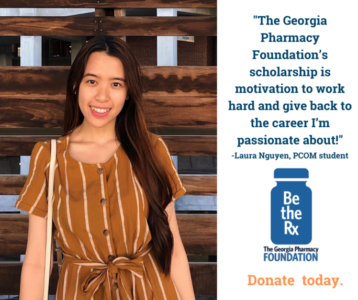
Congratulations to GPhA members Michael Azzolin (of PharmD on Demand), Kevin Florence (of ADD Personal Care Pharmacy) and Ben Ross (of Forest Height’s Pharmacy) for making this year’s Bulldog 100 Club — “the 100 fastest-growing businesses owned or operated by UGA alumni.” Keep on’ growing! Georgia pharmacists, on average, earn $118,710 a year — that ranks #37 out of 51 (the 50 states plus DC). So sayeth the latest Occupational Outlook Handbook. But don’t feel like you have to rush to move to Alaska or California, where salaries are highest. The overall range isn’t huge: It only goes from $112,290 in Montana* to those with (we assume) their own personal foot masseuses in Alaska ($139,880) or California ($139,690). The data don’t take into account the cost of living in each state, either. Laura Nguyen discovered her passion for pharmacy at a young age when she cared for her diabetic grandmother. The help she received from her grandmother’s pharmacist decoding all that medication inspired Laura to become a pharmacist herself. Being the 2019 recipient of the Georgia Pharmacy Foundation’s Regina Baird Scholarship is a strong motivator to keep working hard, she said — and to give back to the profession she’s become so passionate about. She has a couple of years before she graduates, but Laura is already volunteering to help others: She’s president-elect for the American Pharmacists Association – Academy of Student Pharmacists and a PCOM representative on GPhA’s Student Leadership Board. Read more about Laura here. And help other student pharmacists manage their debt with your tax-deductible donation to the Georgia Pharmacy Foundation. Thanks to everyone who has already contributed to the foundation’s Annual Giving Campaign. We’ve raised $4,500 toward our $10,000 goal! Help us hit our target — donate today! An American dies from an antibiotic-resistant infection every 15 minutes. And it’s getting worse. Possibly the best potential weapons are bacteriophages: viruses that each target an individual bacteria. Identify the pathogen, then find the phage that kills it. A University of Florida team was able to treat E. coli infections — you know, like in the current outbreak from contaminated beef — by finding the ‘matching’ phage. The US-based team was able to show that using their Escherichia coli/Salmonella spp./Listeria monocytogenes-targeting bacteriophage cocktail, which they named “Foodborne Outbreak Pill” (FOP), they were able to achieve a similar therapeutic effect as that of ampicillin therapy (antibiotic therapy). And a team from King’s College London and UC San Diego have found that phages can attack and treat alcoholic liver disease by killing the hepatitis bacterium (E. faecalis) that causes it. Insulin prices are sky-high because the three companies that make most of it can charge what they want. So, taking a page from its HIV-eradication playbook, the World Health Organization is going to start testing and approving generic versions of insulin so more affordable options are available for people around the world. Unfortunately, that probably won’t do much to help the millions of Americans who have trouble affording it. But the health agency’s move is unlikely to immediately affect the sky-high price of the hormone in the United States. The American market is regulated by the F.D.A., and merely applying for approval is prohibitively expensive for many small companies. And — unlike some poorer countries — the FDA is unlikely to accept WHO approval in lieu of its own testing. Having a quarter of the world’s pigs wiped out by swine flu means more than a longer wait for the next McRib appearance. It also means the world’s supply of heparin is at risk. Idea for a new revenue stream: Why not rent out therapy llamas*? Llama owners will tell you that their pets have a sixth sense about people who are needy, ill or frail. Carol Rutledge says that her therapy llama, whose name is Knock, will walk voluntarily to the bedside of a hospice patient and stand in silence while the patient reaches for him. “It wrenches at your heart,” she said. “‘I live on the street now’: how Americans fall into medical bankruptcy” In Savannah, Georgia, a 35-year-old man who requested to remain anonymous to avoid being associated with a bankruptcy, recently found himself homeless and jobless due to prolonged hospital stays and hundreds of thousands of dollars in medical debt. […] “I have amassed over $400,000 in medical bills I need to pay, and still have at least six months before I get a disability hearing. So I owe over $400,000 in medical bills, have lost my house and I live on the street now, with no end in sight,” he said. When pigs die, support llamas, WHO’s plan for insulin, and more
Dawgs getting bigger
37
* North Dakota is an outlier, with pharmacists there eking out a living at $103,250
Meet Laura
Thank you!
Phages to the rescue
WHO to make insulin affordable
Some pigs
“Charismatic megafauna”
* Alpacas are cuter, but not nearly as sociable. Trust me.
The Long Read:
November 14, 2019 ✒ Andrew Kantor
Georgia took the next step towards making low-THC oil available in the state with the appointment of a board to oversee the cultivation of marijuana. Currently, about 15,000 people have a license to use the cannabinoid oil for certain medical conditions, but no legal way to actually get it. The fix, based on a law signed in April: We have now reached step 2, as… [Governor Brian] Kemp, House Speaker David Ralston and Lt. Gov. Geoff Duncan appointed seven members to a commission that will issue licenses for companies to grow and sell medical marijuana oil. Who’s on the board? Congrats to Chris Coleman of Chancy Drugs in Valdosta, whose team earned second place at the Pharmacy Compounding Centers of America International Seminar for its creative compounded preparation. If worst comes to worst, you can always get a double-lung transplant! Provide the best patient care — Earn an APhA medication therapy management certificate through GPhA. Delivering Medication Therapy Management Services: A Certificate Training Program for Pharmacists offers a full-day of training — providing MTM, implementing the services in your practice, encouraging patients, and a lot more — not to mention giving you a total of 21 CPE hours (including the home-study part). It’s Sunday, January 12 from Just $349 for GPhA members It’s nice to know that if your pharmacy is burglarized, Georgia state troopers are willing to chase the suspects for several hours — and even into Alabama. The Trump administration’s proposed budget is out, and has some notable items regarding healthcare: Understatement of the week: The changes are expected to encounter fierce resistance from industry lobbying groups, and members of Congress traditionally nervous about backing cuts to health-care programs. Want to read the whole thing in detail? Click right here. Amneal Pharmaceuticals is recalling its ranitidine tablets and syrup. If your favorite prairie vole wears pajamas that are fire retardant, the chemical in them “increases anxiety and affects socioemotional behaviors” and could have other long term effects. The combined generics company will not, sadly, be “MyJohn.” Instead, the companies have chosen “Viatris” (rhymes with Beatrice?). If you say so: “The name Viatris communicates the strength of our companies’ combined heritage and our shared goal to provide the highest-quality medicines to the most patients possible,” according to Fireproof prairie voles, vaping lung transplant, Georgia gets closer to making THC oil, and more
Another step toward THC oil in Georgia
Georgia compounder takes second place
Good news for vapers
MTM: Improve your practice, your résumé, and your patients’ lives
8:00 a.m. to 5:00 p.m.
at GPhA Headquarters in Sandy Springs [map].
$499 for non-members! Click here for more — CPE details, instructors, and more … then sign up today!Giving chase
Meanwhile in Washington

* Grandma is not gonna be happy
This stuff is still out there?
No wonder they’re so twitchy
Mylan and Upjohn choose a name
MyJohn Viatris CEO Michael Goettler.
November 13, 2019 ✒ Andrew Kantor
A new, last-resort way to treat someone for opioid addiction has emerged: Implant electrodes in his brain. The device, known as a deep brain stimulator, is designed to alter the function of circuits in the man’s brain. It has been used with varying degrees of success in the treatment of Parkinson’s disease, dystonia, epilepsy, obsessive-compulsive disorder and even depression. We know you’re worried about how much the ranitidine recalls are costing drug makers, and you should be. If one generics maker is an indicator, it ain’t cheap. India’s Dr. Reddy’s Laboratories gave a good idea of how much it had to set aside to cover the recall of its 33 different ranitidine products. It reported its North American sales in the most recent quarter were down about $25 million compared to the preceding quarter. If you shop on Amazon, you can support the Georgia Pharmacy Foundation without spending a dime. Just use Amazon Smile! It’s is a automatic way to support your favorite non-profit, and Amazon pays for it. It’s simple: Amazon will donate 0.5% of your purchases to the foundation (that’s 50¢ for every $100 you spend), and you won’t pay a cent. Buy your stuff, and let Jeff Bezos and Amazon support the foundation. Everyone wins! New data from the National Center for Health Statistics show that far too many people are skipping their meds because of cost — and that includes people with private insurance or Medicaid. Your favorite mice might not have to worry about getting a Staphylococcus aureus infection next time they’re in the hospital. A new vaccine developed at the University of Maryland was more than 80 percent effective against S. aureus. On the 21st day post-infection, the surviving animals—both those immunized, and controls—showed no signs of ill health, such as ruffled fur, or other abnormalities of appearance, and all had regained pre-infection weight. The latest info from the American College of Cardiology shows that, since new cholesterol guidelines were issued in 2013, Americans’ cholesterol levels have dropped noticeably, thanks to increased use of statins. Among people taking cholesterol medication, the average level of that “bad” cholesterol — what’s known as LDL cholesterol — dropped 21 points over the study period […]. It was declining even before the 2013 guidelines but continued to inch down afterward. In this case, “it” is cannabinoid hyperemesis syndrome, “a rare illness afflicting a small portion of heavy cannabis consumers.” The Boston Globe’s description — “a rare vomiting syndrome” — should be enough to dissuade you. The condition […] can be horrific for patients, causing intense abdominal pain, nausea, and days-long vomiting episodes that are strangely relieved by hot showers or baths. The illness can be cured by quitting pot. If you have a patient complain of an earache, before you send him to the Debrox shelf maybe you should grab a flashlight….Shocking addiction treatment, rare vomiting syndrome, costly Zantac recalls, and more
When all else fails, there’s electricity
The cost of the Zantac recalls
Make Jeff Bezos donate to the Georgia Pharmacy Foundation!
Co-payments mean skipped meds
Staph vaccine could be coming
Cholesterol: We’re making progress
If other people call it “hell,” you probably want to avoid it
Do you hear that?
November 12, 2019 ✒ Andrew Kantor
UPS has acquired a manufacturing pharmacy license from the Georgia Board of Pharmacy. What does it mean? Maybe not much — it might just be a paperwork thing, “required if UPS wanted to add an insert to a shipping package.” Or it could be a step toward creating a different relationship with drug manufacturers, or competing with distributors. Flu activity in Georgia is still low (5 on a scale of 0-10), but it’s increasing. Most of the U.S. is still at “minimal,” except Louisiana and Puerto Rico, which are both at level 10. Want to know if you’ll get sick? Ask the Weather Channel. A new version of the company’s app uses IBM’s AI technology to predict whether you’ll get the flu. (Technically it uses the weather, anonymized health data, your searchers and social data “to assess local influenza risk up to 15 days in advance,” but that’s not nearly as fun to say.) After a bit of quiet, one new case of measles has been confirmed in the U.S. — and it’s in Georgia. (DPH doesn’t say where, just that it’s notifying people who may have been exposed.) A small pharmacy in Connecticut has an unusual twist: It tests the medications it dispenses to patients — and, frighteningly, often finds discrepancies … and dangers. Its founder started the company when he realized that some generic version of his meds worked for him, but others didn’t. Although Valisure “makes money the same way other pharmacies do — buying drugs from wholesalers and taking a cut of the price when it sells them,” it also… …checks the chemical makeup of drugs before it ships them to consumers, and rejects more than 10 percent of the batches because their tests detect contaminants, medicine that didn’t dissolve properly or pills that contain the wrong dose, among other issues. “Other issues” like pills that were supposed to dissolve in 15 hours but took more than 48, or, most recently, that ranitidine was contaminated with (or possibly is converted to) a carcinogen. Improve your practice, your résumé, and your patients’ lives — earn an APhA medication therapy management certificate through GPhA. Delivering Medication Therapy Management Services: A Certificate Training Program for Pharmacists offers a full-day of training — “a systematic approach for developing, implementing, delivering, and sustaining MTM services.” The deets: MTM Certificate Training At GPhA Headquarters in Sandy Springs (map). Just $349 for GPhA members Compared to other modern nations, the latest OECD report on healthcare finds that the U.S….. “A horrifying survey of ‘pediatric naturopathic oncology’ practice” [O]f the 99 naturopath practices surveyed that treat cancer, 47.5% also treat pediatric cancer. That’s right, nearly half of the naturopaths also ply their quackery on children with cancer.Pediatric quackery, flu and measles in Georgia, when pharmacies test meds, and more
What is Brown up to?
Flu watch

What’s your flu risk?
Measles encore
Testing, 1-2-3
Start the new year with an MTM certificate
Saturday, August 10; 8:00 a.m. to 5:00 p.m.
($499 for non-members)! Click here for more!Latest healthcare numbers

The Long Read: If It Quacks Like a Duck Edition
November 09, 2019 ✒ Andrew Kantor
The latest ratings from Leapfrog have only 25% of Georgia hospitals getting an ‘A’ grade — in the last survey (spring 2019) it was about 33 percent. That puts Georgia at #34 in the rankings nationwide. This flu season is probably gonna be a doozy. Australia (which gets it first) is calling it “particularly unusual,” “off the charts,” and a “horror season.” Now is when you need your APhA immunization certificate. It means you’re giving your patients the best possible advice and treatment, and it helps you differentiate yourself. GPhA is offering “APhA’s Pharmacy-Based Immunization Delivery: A Certificate Program for Pharmacists” on Sunday, December 8, from 8:00 a.m. – 5:00 p.m. in the GPhA classroom (6065 Barfield Road, Sandy Springs [map]). This is always one of our hottest courses, so get to GPhA.org/2019immunization fast before the class fills! And don’t forget to check out all of GPhA’s CPEasy on-demand courses at GPhA.org/cpeasy! The latest figures: 2,051 cases in 49 states, including 39 deaths (three in Georgia). Now upgraded to “very strong culprit” is vitamin E acetate, which may be added to THC-based vaping products. Bad: A new subtype of HIV has been discovered. Good: It should respond to existing therapy. “It’s just a new kind of HIV that’s out there and the good news is we have a test that can identify it, and we don’t expect there to be any differences in response to treatment.” Donald Trump now says that the federal government will raise the legal age for buying vaping products to “21 or so.” He previously said that regulators planned to ban all flavored e-cigarettes. While that has not happened, e-cig leader Juul said it would stop selling its popular mint-flavored vaping pods, although it continues to sell its tobacco and menthol flavors. If a patient comes to you asking for advice on nose hair, Medical News Today will help you be prepared. If you know a pufferfish that’s stressed, poison might be the right solution. Specifically tetrodotoxin, the fish’s neurotoxin that makes it so deadly. Turns out that it might not just be for killing “daredevil diners” — it seems to relieve stress as well. Ten people in Oklahoma were hospitalized when they were given insulin instead of a flu shot. “All these people are symptomatic, lying on the ground, needing help, but can’t communicate what they need.”Nose-hair yankin’, vaping law changin’, flu season preppin’, and more
Georgia hospitals don’t do so well
Flu season is here: Be ready to immunize!
Mysterious Vaping Illness update
New HIV
Vaping age change?
Just yank ’em
Whatever doesn’t kill you
ICYMI
November 08, 2019 ✒ Andrew Kantor
Taxpayers funded the research that went into the company’s HIV-prevention drugs, and Gilead charges up to $20,000 per year per person for them. And that, says HHS, means taxpayers should be getting some of that money back. The FDA has approved a new high-dose quadrivalent flu vaccine, Fluzone High-Dose, specifically for people over 65. It will be available for the 2020-21 North American flu season. (The trivalent version is currently available.) People with a severe form of type 1 diabetes may need a transplant of islets of Langerhans – clumps of cells that produce glucose-regulating hormones. But transplanting those islets is tough, and most of the them die before ‘taking hold.’ Now Swiss researchers, in between making great chocolate and cheese*, have found a way “to create new, more robust islets that would withstand the stress of transplantation better than natural islets” by using cells from a placental membrane, which — you know what? You can read the details here. Donald Trump is considering a trade war with Switzerland — starting by putting tariffs on Swiss pharmaceuticals. That would, of course, mean drugs from Roche and Novartis would cost Americans more. Although such a move is far from certain, any tariffs are likely to hurt U.S. patients in particular. Why start yet another trade war? “Washington is reportedly bothered by the high export surplus of Switzerland in the trade in medicines.” (Translated from the German article.) Lost in all the other news out of Washington is this bright spot: A bi-partisan (!) bill that would work to fight Lyme disease. The Kay Hagan Tick Act would require HHS to develop a national strategy to fight it and other tick-borne diseases, including funding both federal and state efforts “to improve data collection and analysis, support early detection and diagnosis, improve treatment, and raise awareness.” Fun fact: There is a human vaccine against Lyme disease, LYMErix, but it was pulled from the market in 2002 because of low demand and potential side effects. You can get it for your dog, though! Even a little is good for you. [R]unners had a 27% lower risk of early death from any cause during the follow-up periods, and a 30% and 23% lower risk of early death from cardiovascular problems or cancer respectively. Patient has cancer. What to do? How about taking some immune cells from the patient and (as we are living in a science-fiction universe) use CRISPR to edit the cells’ DNA to ‘teach’ them to recognize and fight the cancer cells? After two to three months, one patient’s cancer continued to worsen and another was stable. The third patient was treated too recently to know how she’ll fare. The plan is to treat 15 more patients and assess safety and how well it works. “The absurdly high cost of insulin, explained” [T]he US is a global outlier on money spent on the drug, representing only 15 percent of the global insulin market and generating almost half of the pharmaceutical industry’s insulin revenue. According to a recent study in JAMA Internal Medicine, in the 1990s Medicaid paid between $2.36 and $4.43 per unit of insulin; by 2014, those prices more than tripled, depending on the formulation. While some states are looking for Medicaid waivers that will allow them to cover fewer people while expanding Medicaid, the District of Columbia is going the opposite way: It requested — and got — a waiver to allow Medicaid to cover more, specifically more mental health services. The waiver… …broadens treatment services available to Medicaid beneficiaries living in the District of Columbia diagnosed with serious mental illness and/or serious emotional disturbance. At the same time, CMS is approving the District’s request to begin providing new services for its beneficiaries diagnosed with substance use disorder.War with Switzerland, run like your life depends on it, CRISPR vs cancer, and more
HHS sues Gilead
Bigger, better flu vaccine for seniors
Cool medical news: Diabetes transplants
* And cool knives
When the only tool you have is a hammer, everything’s a nail
Tick bill moves along
Run
CRISPR vs cancer
The long read: “They are doing it because they can” edition
Elsewhere: Medicaid expansion
November 07, 2019 ✒ Andrew Kantor
The University of Maryland School of Pharmacy is launching the first program in the country to offer a master’s degree in medical cannabis. [The program] covers everything from drug policy to clinical care. While students aren’t directly exposed to the marijuana plant, which is illegal under federal law, they will learn about the science behind the compounds that are found in it, like THC and CBD. “We’ll talk about how they’re metabolized. We’ll talk about potential drug-drug interactions that might take place between THC and a drug, or CBD and a drug.” Marijuana is decriminalized in Maryland, meaning possession of fewer than 10 grams only gets you a ticket. Course study break (artist’s conception) This one is “the most serious type of recall” — the Medtronic MiniMed Model 500 Remote Control and 503 Remote Transmitter. An unauthorized person […] could potentially record and replay the wireless communication between the remote and the MiniMed insulin pump. This person could instruct the pump to either over-deliver insulin to a patient, leading to low blood sugar (hypoglycemia), or stop insulin delivery, leading to high blood sugar and diabetic ketoacidosis, even death. Rats and mice that are addicted to nicotine might be helped with a little chemistry: pioglitazone to be specific. The diabetes drug “abolishes the characteristic signs of nicotine withdrawal” according to a new Italian study. So if you have some pets suffering from withdrawal, you know where to turn. The Georgia Pharmacy Foundation launched a new, free path to equip pharmacists to become Opioid Safety Champions this year. It’s one of the many ways the foundation provides opportunities for pharmacists across Georgia. Your donation today will strengthen this program as well as help us continue to provide high-quality CE for pharmacists. Thanks to everyone who contributed to the foundation’s Annual Giving Campaign so far — we hit $4,200 since Oct. 1! We still need to raise an additional $5,800 by the end of the year. Whether you give $50, $100, or $500, a donation can make a big impact on pharmacists and the communities you serve. Become an Opioid Safety Champion: GPhA.org/opioidsafety CVS — working with UPS and a drone-logistics company — has delivered the first prescription meds by autonomous drone. Of note: This was the first prescription med delivery (other companies have been testing OTC-med delivery), and the drone was autonomous, although a human was watching just in case. The CVS receipt was delivered separately by tractor-trailer. Although there’s a coolness factor at play here, the official reason for experimenting with drone delivery is to be able to serve patients who need meds, don’t have a healthcare provider nearby, cannot wait for mail delivery, and are unable to get to a store. The FAA is considering requiring that naloxone be carried on all passenger aircraft. (Currently it’s allowed, but not required.) Teens who vape prefer mint and mango flavors. We have no clue what you might do with this news, but it just seemed like an interesting watercooler fact. And the folks at USC took the time to do the study, so might as well share it. (Do they even have watercoolers anymore?) Expanding Medicaid — giving more people access to healthcare — reduces hospitalizations overall. Researchers estimated that the Medicaid expansion led to a 3.47% reduction in annual discharge rates for ambulatory care-sensitive conditions that range from diabetes and heart failure to infections or pneumonia.A degree in pot, fighting nicotine withdrawal, teens and mango, and more
M.Pot

(H/T to Blair Curless, who pointed us to the story.)
Another Medtronic insulin-pump recall
Help for smoking rodents
Opioid Safety Champions — and champions like you

High times
Naloxone in the air
Mango? Really?
Today’s obvious story
November 06, 2019 ✒ Andrew Kantor
W00t! Here’s a healthcare stat where Georgia isn’t on the bottom: When it comes to fatness* and its consequences, the Peach State ranks 19th — meaning there are 18 fatter states, putting us … well, not in the middle, but not at the bottom. (The fattest states: Mississippi, West Virginia, Kentucky; the thinnest: Utah, Colorado, Massachusetts.) That study considered both obesity and its outcomes (“health consequences”). Looking strictly at obesity, Georgia does a bit better, ranking #24. We score worse for outcomes because of the large number of uninsured people and untreated conditions. Apparently it’s a possibility, as parent company Walgreens Boots Alliance seems to have heard of an offer from a private investor and is exploring its options. In recent months, Walgreens has held preliminary discussions with some of the world’s largest private equity firms about putting together what would be the biggest ever leveraged buyout, the sources said. The flu season is upon us, so now is a great time to get your immunization skills up to snuff. We’re talking of course about APhA’s “Pharmacy-Based Immunization Delivery: A Certificate Program for Pharmacists” presented by GPhA. We’ve got one last class in 2019: Sunday, December 8, from 8:00 a.m. – 5:00 p.m. in the GPhA classroom Why yes — Penn State researchers. They’ve created tiny doughnuts — torus-shaped nanoparticles that can hold medication and be directed to a target by magnetic field. Why a doughnut? Unlike other nano-meds, which are simply carried along with the bloodstream, the torus shape allows the particles to be propelled and steered toward where the meds are needed, then instructed to dump their payloads. Science! Puerto Rico is part of the United States. Takeaways from the University of Michigan’s National Poll on Healthy Aging: Gut bacteria — the wrong gut bacteria — can apparently lead to colorectal cancer. “In fact, the new study goes beyond merely finding associations and suggests that certain bacteria in our guts may cause colorectal cancer.” First Canada said no, it was not going to allow the U.S. to import drugs em masse from its wholesalers. Now Canada’s U.S. ambassador is pointing out that, even if his country did allow exports to the U.S., it wouldn’t do much to lower prices anyway. “Not only are we too small of a market, Canada cannot increase its domestic pharmaceutical drug supply to meet U.S. demand,” the statement said. “Canada remains dedicated to working with the U.S. to improve our citizens’ health and well-being, recognizing that Canada’s priority is to ensure a steady and solid supply of medications at affordable prices for Canadians.” Despite the fact that Canada won’t be allowing exports, the Trump administration “called on the head of the Department of Health and Human Services, Alex Azar, to speed up the administration’s efforts to allow cheaper medicines to be imported from Canada.” Fun fact the Canadians pointed out: Florida spends more on prescription drugs than all of Canada. “Doctors Are Still Denying People Pain Meds and the Results Are Deadly” Despite warnings from federal health agencies not to cut every patients’ opioids, “patients, doctors, and advocates report that dose cutbacks are continuing—and a new survey shows that physicians remain hesitant to help these patients.” Indeed, many large medical organizations, insurers, and state legislatures are still acting as though the now-outdated CDC guidelines are mandates to be applied to all patients.Nano-doughnut drug delivery, Canada still says no, Walgreens going private?, and more
Georgia’s not that big
Could Walgreens go private?
Get your immunization certificate
in Sandy Springs. It’s only $349 for GPhA members and gives 20 hours of CPE credit (including the home study). Get the details and sign up today at GPhA.org/2019immunization— space is limited!Did someone say “doughnuts”?

Geography lesson
“We obviously have work to do to help older adults understand safe and appropriate use of these medications”
Gut punch
Did you hear us the first time?
The Long Read: The pain-med pendulum
Do you want to send your members the daily Buzz email newsletter (customized for your state and organization, perhaps)? Let’s talk — just drop me a note at andrew@gphabuzz.com!

- Doctors Warn of a Deadly Complication From Measles Outbreaks
- Medicare Advantage ‘Dark Money’ Group Attempts To Win Higher Payments for Insurance Companies
- Families Scramble To Pay Five-Figure Bills as Clock Ticks on Promised Preauthorization Reforms
- As Lung Disease Threatens Workers, Lawmakers Seek Protections for Countertop Manufacturers
- Republicans Fret Over RFK Jr.’s Anti-Vaccine Policies While MAHA Moms Stew
- Primary Care Is in Trouble. So Doctors Band Together To Boost Their Market Power.
- January 2025
- December 2024
- November 2024
- October 2024
- September 2024
- August 2024
- July 2024
- June 2024
- May 2024
- April 2024
- March 2024
- February 2024
- January 2024
- December 2023
- November 2023
- October 2023
- September 2023
- August 2023
- July 2023
- June 2023
- May 2023
- April 2023
- March 2023
- February 2023
- January 2023
- December 2022
- November 2022
- October 2022
- September 2022
- August 2022
- July 2022
- June 2022
- May 2022
- April 2022
- March 2022
- February 2022
- January 2022
- December 2021
- November 2021
- October 2021
- September 2021
- August 2021
- July 2021
- June 2021
- May 2021
- April 2021
- March 2021
- February 2021
- January 2021
- December 2020
- November 2020
- October 2020
- August 2020
- July 2020
- March 2020
- February 2020
- January 2020
- December 2019
- November 2019
- October 2019
- September 2019
- August 2019
- July 2019
- June 2019
- May 2019
- April 2019
- March 2019
- February 2019
- January 2019
- December 2018
- November 2018
- October 2018
- April 2017
