
October 22, 2019 ✒ Andrew Kantor
This item was originally going to be about the opioid trial beginning in Cleveland, but just as we hit “Save” came the news: Amerisource Bergan, Cardinal Health, McKesson, and Teva have reached a $260 million settlement with the two Ohio counties that filed the suit. Still out there, though, is the broader list of lawsuits from hundreds of municipalities across the country. This first trial was considered a litmus test to see how the bigger suit might play out. (In that larger suit, you may recall, Purdue Pharma has a $4.5 billion-with-a-B tentative settlement on the table.) If you’ve only vaguely been following the case, the New York Times has the clear-cut guide to the whos, hows, and whys of the entire brouhaha. Enjoy. The details (and sign-up link) are at GPhA.org/regions. And yes, we need you to register in advance (so we’re sure there’s enough food)! Don’t miss this great networking evening! Click here for details and to register — you must register to attend! While Canada, most of Europe, China, and India have already recalled or banned Zantac and its generic cousins — and major drug chains have pulled it from the shelves, here in the U.S. the FDA is still investigating. So Sanofi decided to recall the drug on its own. The latest figures from the CDC show that kids — specifically kindergarten kids — are decently vaccinated with the DTaP and MMR vaccines: 94.9% for the former and 94.7% for the latter. Still, says the agency, 2.5% of kindergartners had an exemption from at least one vaccine, and a further 2.8% “were not up to date for MMR and did not have a vaccine exemption.” “Monkeys demonstrate more cognitive flexibility than humans” “Male and Female Mice Have Different Brain Cells” “Where is my Xanax Rx?” from The Conversation.Opioid settlement (maybe), Zantac off US shelves, monkey brains, and more
11th-hour opioid settlement?
Reminder: Region meetings continue this week
Zantac finally recalled in US
Vaccination coverage: Great, but not perfect
Two health stories that are both interesting and can be used as fodder for bad jokes
The Long(ish) Read: Why physicians don’t prescribe benzos
October 19, 2019 ✒ Andrew Kantor
That isn’t clickbait — it’s real. More than 100 questions from the state’s licensing exam were leaked, so the state is requiring the 1,400 people who took it since July to re-take the exam. And yes, some have lost their jobs over this because they can’t prove they passed. Check out these pics from the Athens and Ellijay Region Presidents’ Meetings on Thursday: When is your meeting? Check GPhA.org/regions to find out and sign up — it’s coming up in the next week or two! The FDA has found asbestos in Johnson & Johnson Baby Powder. How much? A whopping 0.00002% at most — but that was enough to trigger a recall of that lot (#22318RB). (Talc and asbestos are often found together when mined, so cleaning out traces of the latter is critical.) A test of baby foods found 95 percent of them contained toxic metals, including arsenic, cadmium, lead, or mercury. Bad manufacturing? Not at all. Heavy metals are naturally occurring in soil and water and are found at elevated levels in fields polluted by pesticides, contaminated fertilizer, airborne contaminants and industrial operations. Food crops uptake these metals naturally. Buying organic products won’t help at all, the researchers point out. The best they can do is avoid fruit juice and rice, carrots, and sweet potatoes, all of which tend to absorb more of the contaminants. There seems to be an odd connection between one particular kind of blood-pressure meds — angiotensin receptor blockers — and a higher risk of suicide. “But certainly if I had a choice as a patient, I would be choosing the ACE inhibitor over the ARB.” They don’t appear to do any good for people whose hearts are healthy. Guidelines have changed, expanding the number of people statins are recommended for. Taking advantage of that use expansion, Irish researchers looked to see if more statin use led to healthier people. (Spoiler: Not really.) [T]heir analysis suggested that none of those classified as low or moderate risk in primary prevention would reach acceptable levels of risk reduction (“absolute benefit”) to justify taking a daily statin. Some insurers (e.g., UnitedHealthcare) are covering genetic tests to help patients (maybe) determine which psychiatric drugs are most likely to work for them. But do those tests really work? Maybe.California scandal, bad news for babies, statins aren’t for everyone, and more
California pharmacy-school cheating scandal
Regions meetings are under way


Bad news for J&J
And bad news for baby-food makers
ARBs and suicide
No heart problems? No statins needed
Did you know…
October 18, 2019 ✒ Andrew Kantor
PTCB has launched two of what it called “advanced assessment-based certificate programs“: Technician Product Verification and Medication History. To earn the first, techs must demonstrate that they have “the knowledge and skill necessary to perform the final check of medications.” To earn the second, they must “demonstrate they can conduct accurate in-depth reviews of patient histories and identify potential errors.” The organization plans to release three more such certificate programs* next year, and — by late 2020 — an entirely new credential for techs: Advanced Certified Pharmacy Technician (CPhT-Adv). Rats that smoke are at an increased risk of developing type 2 diabetes. That smokers have higher rates of diabetes isn’t news — what is news is the connection from nicotine to brain to pancreas. [C]consumption of nicotine is linked, through a brain circuit, to the activity of the pancreas. Nicotine use leads the pancreas to release less insulin, which raises the level of blood sugar; higher levels of blood sugar are associated with a higher risk of diabetes. (There’s lot more detail about just how an encoded protein affects the signal between brain and pancreas … but that’s for you to read.) Emphasis on “could.” AmerisourceBergen, Cardinal, and McKesson have agreed on a $50 billion deal to settle their role in the opioid crisis. Sticking points: If there’s no deal, the trial starts Monday. If you know any fruit flies that spend a lot of time in front of a screen (e.g., phone, tablet, computer) warn them: Apparently the blue light emitted doesn’t just damage retinas, it appears to damage brain cells as well. The flies exposed to blue light showed damage to their retinal cells and brain neurons and had impaired locomotion – the flies’ ability to climb the walls of their enclosures, a common behavior, was diminished. Wait, wait — it gets crazier: Some of the flies in the experiment were mutants that do not develop eyes, and even those eyeless flies displayed brain damage and locomotion impairments, suggesting flies didn’t have to see the light to be harmed by it. (Emphasis ours.) Got patients taking the interstitial-cystitis drug Elmiron, aka pentosan polysulfate sodium? Note that it appears to be toxic to the retina. It’s unclear how much Elmiron is too much, so patients who show no signs of toxicity should be screened for retinal damage at least once a year. “More than half of Wisconsin vaping samples tested by FDA contain [THC]” “U.S. vaping-related deaths rise to 31” “Juul halts all U.S. sales of many flavored nicotine liquids” “When Medical Debt Collectors Decide Who Gets Arrested“. When it comes to medical bills, debtors prison is still a thing.Screen time and brain damage, nicotine and diabetes, debtors prison is a thing, and more
New technician certifications from PTCB
* Hazardous Drug Management, Controlled Substance Diversion Prevention, and Billing and Reimbursement
The road from nicotine to diabetes
Opioid lawsuit could be settled
Screen-time blues
Bladder drug, retinal damage
Quick vaping headlines
The Long Read: debtors prison in America
October 17, 2019 ✒ Andrew Kantor
The state is now ranked #40 for women and children’s health, dropping three spots from last year. The 2019 United Health Foundation report said among Georgia’s challenges are its high percentage of uninsured women, its low rate of prenatal care before the third trimester, and its low percentage of high school graduation. The state also has high rates of infant mortality and low-birthweight babies. The best and worst are the usual suspects: Northeast states at the top (Rhode Island, Massachusetts, New Hampshire, Vermont, Connecticut); Mississippi at the bottom followed by Arkansas, Oklahoma, Louisiana, and Nevada. For people who need a vitamin D supplement but don’t (or can’t) take pills, good news: A three-year study found that an oral spray of vitamin D is just as effective as a capsule. You know the whole tainted-blood-pressure-meds mess? The FDA has pointed it Finger of Blame™ toward India — specifically at Ahmedabad*-based Torrent Pharmaceuticals. The agency “found manufacturing violations at Torrent’s Taluka-Kadi, Indrad, Gujarat facility in India that contributed to the production of tainted valsartan, losartan and irbesartan.” That doesn’t mean Torrent is the source of all the bad medicine, but it seems to at least be contributing to the problem. Here’s an odd finding about weight gain from sugar: Mice gained a lot more calories from drinks with added sugar than from food with added sugar. …The mice that had the same level of added sucrose in their food pellets but drank plain water “were leaner and metabolically healthier than their counterparts exposed to liquid sucrose,” write the authors. Besides the obvious conclusion about diet, this finding is interesting because, the authors note, it calls into question other mice studies on the effects sugar. If those mice only got it in solid form, could the studies be flawed? And on that note… A UConn study found that sweetened fruit drinks and waters “dominated sales of drinks intended for children in 2018, making up 62% of the $2.2 billion in total children’s drink sales. While we’re up in Connecticut, another UConn study finds that “more aggressively controlling daily blood pressure in older adults can improve brain health.” While the researchers did not identify any significant differences in cognitive outcomes or walking speed between the two study groups, they did observe a significant reduction in the accumulation of brain white matter disease in those receiving the intensive treatment for blood pressure control. […] In fact, after three years, the accrual of white matter lesions in the brain were reduced by up to 40% in the those patients receiving the intensive blood pressure therapy compared to those who were on standard therapy. A few years ago, FluMist was effectively pulled from the shelves because it turned out not to be effective. Bad news for AstraZeneca, but the company recovered, changing the formula and fixing the issue. Last year the nasal spray was again approved for kids. But now there’s a new problem. The company couldn’t grow enough of the vaccine, so it will only be able to ship about three lots of FluMist — about 758,000 doses, and a third of what it shipped last year. (For comparison, AstraZeneca shipped 40 lots of FluMist in the 2013-2014 season.) The FDA has approved a transdermal patch to treat schizophrenia, containing a once-daily dose of asenapine. Mexico looks like it’s about to legalize marijuana. The Mexican Supreme Court ruled that prohibiting the recreational use of the drug violates the constitution and gave lawmakers there until October 24 to legalize it.FluMist problems, Georgia’s not great for moms, spraying the D, and more
Georgia sinks in health rankings
D is for spray
Hypertension meds finger pointing
* Rhymes with Dzhafarabad
When it comes to sugar, you are what you drink
“Aggressive” hypertension control is good for older brains
A different FluMist problem
Patching it up*
* Yeah, that was a pretty weak headline
Elsewhere: South of the Border
October 16, 2019 ✒ Andrew Kantor
A man we’ll call Michael had spent a decade running a retail pharmacy that had grown to administer as many as 600 flu shots per season. The hours were long. The pressure was high. He lost a loved one and needed to cope with growing anxiety and depression. He began to forge prescriptions for controlled substances. A year later, his license was suspended. Michael was referred to PharmAssist, a volunteer-run program by the Georgia Pharmacy Foundation that provided him with free access to peer support, which helped him fight his inclination to medicate. His license has been reinstated and he now works in a pharmacy job helping others. Most importantly, Michael knows he is not alone. To read his full story, click here. Check your mailbox! The Georgia Pharmacy Foundation is coming to your mailbox this week! Please donate to make a difference in the lives of pharmacists and people across Georgia today. The foundation needs your support to raise an additional $10,000 by the end of the year. Click here to make a tax-deductible donation. Speaking of the foundation, here are some pics from the Lunch & Learn at PCOM from last week, when the foundation sponsored a seminar on managing finances for future pharmacists: Keep your fingers crossed: So far, despite outbreaks on both sides of the state, Georgia has kept its cases of hepatitis A to a minimum. The AJC has the story of how. Last week we told you about the Clayton County assistant principal who took CBD oil but tested positive for THC. Well, it seems like he’s not the only one. “CBD or THC? Common Drug Test Can’t Tell the Difference,” explains the New York Times. According to the 2012 journal article, [the particular testing process] was unable to discern between CBD and THC. If a person who used only CBD were given a drug test that employed this device, method and chemical, the results would falsely report the presence of THC. What happens when there’s one drug is a mainstay for fighting pediatric cancer, but it’s just not profitable enough for more than one company to make? That’s the case of vincristine. Until earlier this year, there were two suppliers of vincristine: Pfizer and Teva Pharmaceutical Industries. In July, Teva made a “business decision to discontinue the drug,” according to the Food and Drug Administration. Since then, Pfizer has been the sole supplier, and the company lately has experienced manufacturing troubles. If you sell Rompe Pecho cough syrup, stop, says the FDA. It’s not safe. Dispose of it and tell your patients to do the same. If your Medicare patients start seeming a bit more concerned, here’s why: The price-comparison tool has been … altered, making it a lot harder for seniors to choose a plan that has the prescription coverage they want. [T]he plan finder can no longer add up and sort through the prescription costs plus monthly premiums and any deductibles for all those plans. A mere human can try, but it is a cumbersome process fraught with pitfalls. One plan might have the lowest premium but not the lowest drug prices. Another could exclude a plan’s preferred pharmacy that offers lower prescription prices. Evolution works in mysterious ways. For bacteria, it seems it’s not always about competition — they learn to cooperate instead. And that can have implications for fighting antibiotic resistance.When THC tests fail, cough syrup warning, the hep A fight goes on, and more
This Georgia pharmacist’s license was suspended
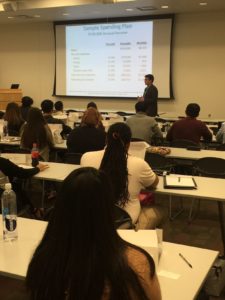
Foundation teaching

Georgia winning (Hep A losing)
THC tests failing
Cancer drug rationing
Cough syrup warning

Medicare patients worrying
Bacteria cooperating
October 15, 2019 ✒ Andrew Kantor
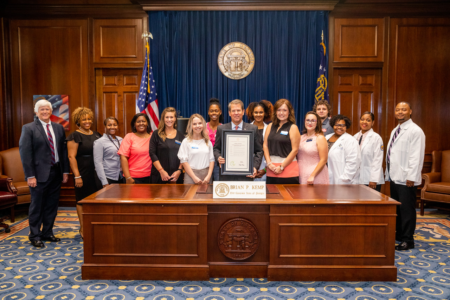
Happy National Pharmacy Technician Day! Today’s the day we celebrate our technician heroes — the men and women who pharmacists and patients rely on every day. This is the day you need to make an extra effort to thank the techs you know and love for everything they do on the other 364* days of the year. Heck, take ’em to lunch! Pay for their certification! On behalf of the members, volunteers, and staff of GPhA: Thank you, Georgia Pharmacy Technicians! And you know who else says thank you? Governor Kemp, that’s who. In case you missed it, here he is again proclaiming October 15 to be Georgia Pharmacy Technician Appreciation Day, along with a whole lot of techs who took the time to come to the capitol: Don’t forget — if you haven’t registered for your local region meeting, there’s still time! See the schedule and sign up at GPhA.org/briefings! Each one includes… Find your region — and your meeting — today at GPhA.org/briefings! The judge has ordered a timeout in the Purdue vs. the world opioid trial, telling everyone to try to settle the bleepin’ thing by November 6 under bankruptcy rules. Why bankruptcy rules and not a trial? Unlike the tobacco settlement, that would require states to use the money for opioid programs, rather simply “diverting the money to plug holes in their budgets.” No, we’re not going to stoop so low as to make a “bone” joke, but Viagra looks like it might have an extra benefit: It might make bone-marrow transplants more effective. Apparently, when combined with Plerixafor, it makes it easier to obtain the stem cells from donors to restore blood formation in patients. Viagra enhances the mobilization of blood-forming stem cells from the bone marrow so they can be collected from the blood for transplants. The FDA has approved Eli Lilly’s Reyvow, which apparently relieves the worst migraine symptoms in about two hours. “Last Week Tonight” with John Oliver did a segment on compounding pharmacies, and APhA wasn’t thrilled. The issue: The segment used a mix of old news and a handful of examples against compounding pharmacies. Of note, though: The point Oliver made was not that compounding pharmacies are bad, but that without goverment regulation — which he pointed out was pretty lax in some states — there are bad apples who will put patients in danger. “Oversight is so lax that compounding pharmacies have become the Wild West of the drug industry.” Meanwhile… The talk show “The Doctors” had a segment erroneously titled “Pharmacy Denies Cancer Drugs?” — in fact, it was the patient’s PBM that was the problem, not the pharmacy. (Note: You can’t watch the video if you have an ad blocker.) Amusingly, the title has been changed to “Patient Denied Doctor’s Prescribed Cancer Drug?” I wonder if the show heard from pharmacists….Vaping illness gets a name, Viagra gets a new use, John Oliver talks compounding, and more
Hug a technician!
* Or 365
Region meetings are underway
Vaping illness bullet points
Quick Purdue Pharma update
Viagra and bone marrow
A new migraine drug
As seen on TV


October 12, 2019 ✒ Andrew Kantor
Check it out: Members of GPhA’s Academy of Pharmacy Technicians’ — including APT board members — came to the Gold Dome to meet with Governor Kemp, who proclaimed October 15 to be Georgia Pharmacy Technician Appreciation Day! The first long-term results of implanted electrodes — designed to deliver mild electrical stimulation to fight depression — are in. In short: “About a third experienced full remission of symptoms in the months after surgery, and half reported measurable, noticeable reduction in their distress. They were doing just as well years later, the report found.” In long? Well, read the article. No more quarantining people who’ve visited Africa — the FDA has approved a rapid-diagnosis test for Ebola that “could help providers to more quickly isolate patients and begin treatments that can be potentially life-saving.” With more people looking to break their opioid addictions, HHS has issued new guidelines for getting off. The gist: Cold turkey is bad. What’s of note is that earlier guidelines had physicians taking their patients off the pain-killers abruptly, which as you might imagine did not go well. Link goes to the news story, click here for the official HHS guidelines (PDF). Half of people who are seen in outpatient settings get the correct recommended antibiotics. The other half? Not so much. The flu season, that is. And this year’s winner for the first state to hit “moderate” activity? Let’s hear it for Louisiana. (On a scale of 1 to 10, with 10 being “we’re all gonna die,” Louisiana is already at a 7. Georgia and a handful of states are at 2; most of the nation is still at 1.) MIT researchers have developed a drug capsule that can survive the stomach and then release its meds in the small intestine via microneedles. In tests in pigs, the researchers showed that this capsule could load a comparable amount of insulin to that of an injection, enabling fast uptake into the bloodstream after the microneedles were released. Pharmacists in New York can now “prescribe” fruits and vegetables to people with hypertension, and the state’s SNAP program will pay for them. Specifically, they can give patients with blood-pressure meds $30 per month in “Health Bucks” — paid by New York’s food stamp program — that can be used at farmers markets in the city. Techs meet the guv’na, flu season starts, when shock treatment works, and more
Techs with the governor

Shock treatment
Quick! It’s an Ebola test!
New opioid withdrawal guidelines
Great news about antibiotics
And so it begins
Hypodermic needles are so 2019
Elsewhere: Big Apple Edition
October 11, 2019 ✒ Andrew Kantor
Nikki Bryant, owner of Adams Family Pharmacy, was named one of Georgia Trend’s “40 Under 40” for her work providing medical services to Webster County as the only healthcare provider there. (Back in August she was featured in Mercer News for that very work!) Great going, Nikki! A second Georgian has died from the Mysterious Vaping Illness. State health officials know the person vaped nicotine, but they’re unsure about THC use. Nationwide, the death total is at least 18, with more than 1,000 hospitalizations (including 14 to 20 in Georgia). Once again, Georgia ranks third worst — behind only Texas and Oklahoma — for health insurance coverage. (Florida and Alaska round out the bottom five; Massachusetts, Vermont, Hawai’i, Rhode Island, and Minnesota are the best for coverage.) Remember after Hurricane Michael, when the Georgia Pharmacy Foundation ran a fundraising effort for pharmacists in South Georgia? The area is still trying to recover, and federal disaster funds haven’t been distributed yet. We hope the money the foundation raised made a difference to both the pharmacists who received it and the communities they serve. Bonus: The article features an interview with Bainbridge mayor, pharmacist, and GPhA member Edward Reynolds. The Georgia Pharmacy Foundation is trying to raise $10,000 more by the end of this year — money that will be used to support mental health, education, and opioid-awareness programs. Please help by making a tax-deductible donation to the foundation at GPhA.org/foundation today! British infectious-disease doctors say that most of the patients who say they have Lyme disease “in fact have a syndrome that is more in keeping with chronic fatigue syndrome.” What if, instead of spot checks, we took advantage of new technologies and focused on “time in range”? A smart strategy for treating patients might be targeting the workplaces of people most at risk: those who sit a lot, or who tend to work irregular hours, have a lot of stress, and don’t get enough sleep. “Getting these workers to ramp up physical activity could be the first step to preventing the disease,” say the Swedish researchers who came to that conclusion. Johnson & Johnson was hit with a $6 billion-with-a-B verdict for (the jury decided) not warning patients about the risk of gynecomastia from Risperdal. Yes, of course the company is appealing. “Humans Have a ‘Salamander-Like’ Ability to Regenerate Damaged Body Parts, Study Finds” The scientists who identified this previously unknown human capacity are hopeful their findings could lead to powerful new therapies to treat common joint disorders and injuries, including osteoarthritis. More radically, this healing mechanism “might be exploited to enhance joint repair and establish a basis for human limb regeneration,” the authors wrote in the paper.The salamander inside you, when Lyme isn’t Lyme, Nikki strikes again, and more
Congrats (again) to Nikki Bryant
Another vaping death
Still near the bottom
This is why we have the foundation

GPhA’s Rhonda Bonner distributes a Hurricane Michael relief check to Scott Herzog earlier this year
Is that really Lyme disease?
A different way of looking at blood sugar
And speaking of diabetes….
ICYMI: J&J verdict
The long read: Channeling the inner amphibian
October 10, 2019 ✒ Andrew Kantor
That’s you, Region 5: Thursday, October 10 at 6:30 at the Maggiano’s The other regions have their meetings starting next week. Sign up now for yours at GPhA.org/briefings! Each one includes… Find your region — and your meeting — today at GPhA.org/briefings! Not for arthritis (because, you know, it killed people), but for hemophilic arthropathy. Now that Vioxx’s relationship with cardiovascular danger is well understood, they say, doctors could mitigate future problems by ensuring that patients at high risk don’t get it, and by consistently monitoring those who do. HHS wants to loosen the Stark Law — the one that prevents physicians from self-referral. Unlike when the law was first passed 30 years ago, hospitals have argued, these days health systems are expected to work together more, and the law gets in the way. Rats that drink even a little during pregnancy — say, at a rat barbecue or birthday party — still might cause harm to their fetuses. The rats’ blood alcohol concentration only reached 0.05%, and yet their male offspring became almost diabetic, with insulin levels reaching higher than expected to maintain normal blood sugar levels. The latest CDC numbers show the country has set a record for combined cases of chlamydia, gonorrhea, and syphilis, “including an alarming jump in the rate of newborn deaths caused by congenital syphilis.” It attributed the increase to several factors, including a decline in condom use among young people and men who have sex with men; increased screening among some groups; and cuts to sexual health programs at the state and local level. In what the study authors call a landmark study, researchers at the Stanley Center (MIT/Harvard) say they’ve found six genetic markers that indicate a higher risk of PTSD. The global project looked at a samples from a whopping 30,000 PTSD cases and 170,000 controls. Of the gene locis identified, three are present in all genders and three are in men only. (Men of European ancestry are more likely to have the markers than either men of African ancestry or women of any ancestry.) Specifically, against the flu and pertussis. Vaccination rates are low for both, and that puts babies in danger. California is making HIV-prevention meds (pre- and post-exposure) available without a prescription. California’s law allows pharmacists to provide up to a 60-day supply of PrEP, after which a patient would need to consult a physician to continue its use. The law will also prohibit insurance companies from requiring prior authorization to cover the drugs’ cost.PTSD genes, possible Stark Law changes, Vioxx comback, and more
Region meeting start tomorrow!
at 3368 Peachtree Rd. in Atlanta.
Could Vioxx make a comeback?
Neither Arya nor Tony could be reached for comment
Pregnant rats shouldn’t drink
So that’s what happens when you cut sex-ed programs
A predisposition to PTSD?
Remind your pregnant patients: Get vaccinated
Elsewhere: California
October 09, 2019 ✒ Andrew Kantor
This American Pharmacists Month, will you consider helping advance the profession in our state and help Georgia pharmacists provide high quality care? The Georgia Pharmacy Foundation aims to raise $10,000 this year. The foundation provides scholarships, offers free CE series to help Georgia pharmacists stay mentally healthy, and recently launched a free path to becoming a Champion for Opioid Safety. See how you can benefit from our programs and make a tax-deductible donation today at GPhA.org/foundation. Yikes! A Clayton County assistant principal taking CBD oil tested positive for THC and was suspended. Despite the evidence, a tribunal recommended he be dismissed — but lucky for him the county rejected it. Was it a problem with the oil or with the test? We just don’t know. From 2000 to 2018 there were 1.7 million attempted suicides among people 10 to 25 years old just by poisoning. Almost a quarter of those had a serious outcome, and the rates have been climbing. It’s up to 21 deaths over 18 states, including Georgia — and well more than 1,000 people hospitalized. The DCH Health System in Alabama was attacked with ransomware, and health officials finally caved to the demands and paid the hackers responsible. It was then given the key to decrypt its data. DCH won’t say how much it paid in ransom, but it’s still recovering and its three hospitals are still accepting only critical patients until the data systems are back online. The FBI is warning health systems that those kind of attacks are becoming “more targeted, sophisticated, and costly.” A PhD candidate in the Netherlands has developed a shirt to monitor COPD patients and others with lung diseases. The ‘smart shirt’ tracks how often and how much the patients’ lungs expand and contract, and is more convenient (and stylish) than the usual gear. Engineers (and physicians) at UC Davis have developed a breath test for opioids. It’ll be useful for testing pain patients (to see if they’re taking their meds) and, more importantly, for law enforcement to detect illegal drug use. “How birth control pill prescriptions by a pharmacist could broaden access and keep costs down” — not to mention reduce unplanned pregnancy.Flunking a THC test, Alabama gives in, a shirt for COPD, and more
Be part of the solution
CBD oil leads to THC finding
OTC meds, teens, and suicide
Vaping update
Alabama pays ransom
A more-fashionable lung test

The air in there
The Long Read: Pharmacists and parenthood
Do you want to send your members the daily Buzz email newsletter (customized for your state and organization, perhaps)? Let’s talk — just drop me a note at andrew@gphabuzz.com!


- Doctors Warn of a Deadly Complication From Measles Outbreaks
- Medicare Advantage ‘Dark Money’ Group Attempts To Win Higher Payments for Insurance Companies
- Families Scramble To Pay Five-Figure Bills as Clock Ticks on Promised Preauthorization Reforms
- As Lung Disease Threatens Workers, Lawmakers Seek Protections for Countertop Manufacturers
- Republicans Fret Over RFK Jr.’s Anti-Vaccine Policies While MAHA Moms Stew
- Primary Care Is in Trouble. So Doctors Band Together To Boost Their Market Power.
- January 2025
- December 2024
- November 2024
- October 2024
- September 2024
- August 2024
- July 2024
- June 2024
- May 2024
- April 2024
- March 2024
- February 2024
- January 2024
- December 2023
- November 2023
- October 2023
- September 2023
- August 2023
- July 2023
- June 2023
- May 2023
- April 2023
- March 2023
- February 2023
- January 2023
- December 2022
- November 2022
- October 2022
- September 2022
- August 2022
- July 2022
- June 2022
- May 2022
- April 2022
- March 2022
- February 2022
- January 2022
- December 2021
- November 2021
- October 2021
- September 2021
- August 2021
- July 2021
- June 2021
- May 2021
- April 2021
- March 2021
- February 2021
- January 2021
- December 2020
- November 2020
- October 2020
- August 2020
- July 2020
- March 2020
- February 2020
- January 2020
- December 2019
- November 2019
- October 2019
- September 2019
- August 2019
- July 2019
- June 2019
- May 2019
- April 2019
- March 2019
- February 2019
- January 2019
- December 2018
- November 2018
- October 2018
- April 2017
