
October 08, 2019 ✒ Andrew Kantor
Thanks to a drop in measles cases over the last month, the U.S. is still considered measles-free by the World Health Organization. Despite that official recognition, the CDC says there were 1,249 confirmed cases of measles so far this year, the most since 1992. Another study that shows being optimistic is good for your health. [T]he most optimistic people were 35% less likely than the least optimistic to have cardiovascular events like heart attacks or strokes, and 14% less likely to die for any reason, researchers report in JAMA Network Open. Just a heads up that there’s still time to sign up for GPhA’s 2019 fall Regional Presidents’ Briefings. Hang out for an evening with other pharmacy professionals from your corner of the state for a bit of networking, and hour of CPE, and a great dinner. It includes… Find your region — and your meeting — today at GPhA.org/briefings! Region 5 members please take note that the meeting is being held at the The FDA is (figuratively) shouting from its rooftop: “Don’t vape THC! It’s killing people and we don’t know why!” Check out the recipients of the 2019 Nobel Prize in Medicine. “Pharmaceutical Companies Are Luring Mexicans Across the U.S. Border to Donate Blood Plasma” Companies offer high payments and bring-a-friend bonuses to Mexicans who cross the border on temporary visas to donate blood plasma. The U.S. offers weaker health protections for donors than most countries.FDA channels Capt. Obvious, pharma companies recruit Mexicans, why you need to think positive, and more
We’re still (officially) measles-free
Always look on the bright side of life
Reminder: Sign up for your region meeting
Maggiano’s in Buckhead, not the Perimeter Mall location!Play stupid games, win stupid prizes
And the winners are….
The long read: Money and blood
October 05, 2019 ✒ Andrew Kantor
Governor Kemp is going to have his photo taken with as many pharmacy technicians as we can get to the capitol on Wednesday, October 9 at 11:45 a.m. for Pharmacy Technician Appreciation Day. We need you there! Show your pride to Governor Kemp and all of Georgia! Meet at 11:15 a.m at the gift shop in the capitol to get organized, get pumped, then go see the governor! Questions? Call or text Emily Durham, she’s chair of GPhA’s Academy of Pharmacy Technicians, at (480) 326-4765 or drop her a note at emilyd@mixwithintegrity.com. At least 86 hospitals in Georgia have been hit with Medicare readmission penalties for 2020, ranging from a tiny 0.01% (Taylor Regional Hospital in Hawkinsville) to a full 3.00% (Chestatee Regional Hospital in Dahlonega). They aren’t alone; 83 percent of U.S. hospitals were hit with one. The penalties, in place since 2012, will affect Medicare patient stays for the entire 2019–2020 fiscal year. Despite both congressional and White House efforts, drug prices continue to rise, jumping 10.5 percent overall in the first half of 2019. That led Donald Trump to vent his frustrations on the pharma industry at a speech in Florida. Trump wished drug company stocks would drop, promised to push forward on sweeping plans to crack down on drug makers’ high prices, and promised that he doesn’t “care about the [drug] companies.” The impromptu rally remarks included some of Trump’s most vicious attacks against drug makers since his first speech as president-elect in 2017, when he claimed the industry was “getting away with murder.” A new study in JAMA Psychiatry finds that 16-year-old girls using oral contraceptives “reported higher depressive symptom scores” than their peers. Interestingly, that wasn’t the case for 19, 22, or 25 year olds. Did you know that all airlines are supposed to carry five drugs on every flight: atropine, dextrose, two doses of epinephrine, and lidocaine? But, citing costs and shortages, airlines are now getting waivers so they don’t have to carry them. (Best part: The airlines’ spokesperson who says “U.S. carriers adhere to all F.A.A. regulations, including carrying emergency medical kits on board the aircraft” without mention the waivers.) 1,080 cases of the Mysterious Vaping Illness, and 19 deaths. NSAIDs, specifically aspirin, might be able to protect lungs from air pollution — at least, short-term spikes in particulates. For the long-term, better to move out of the city. The FDA has approved a second HIV pre-exposure prophylaxis drug, also from Gilead (which already makes the PreP drug Truvada). This one is called Descovy, and, while it’s considered a more modern med, it’s not yet approved for women. Bacteria and fungi, it seems, can slip past the sphincter of Oddi and get into the pancreas. And one particular fungus, Malassezia (née Pityrosporum), can cause dandruff when on the head … but is linked to cancer when in the pancreas. Administering an antifungal drug got rid of the fungi in mice and kept tumors from developing. And when the treated mice again received the yeast, their tumors started growing once more. “Carcinogens Have Infiltrated the Generic Drug Supply in the U.S.,” from Bloomberg.Gov honors techs, Trump unloads on pharma, fungus in the pancreas, and more
CALLING ALL TECHS!
Georgia hospitals penalized
With drug prices still rising, Trump pulls no punches
Not-so-sweet 16
Five for flying
Latest vaping stats
Aspirin and the air
PreP, take 2
Fungus, the pancreas, and cancer
The Long Read: Generics and Carcinogens edition
October 04, 2019 ✒ Andrew Kantor
GPhA is planning its 2020 educational offerings and needs to know what kind of courses you’re looking for. Can you take 10 minutes to answer the survey — if you finish, you’ll be entered to win a $100 Visa gift card. Just click here to take the 2019-20 CPE Needs Survey and tell us what you need to continue to grow your practice. It’s that simple! To be eligible, you must complete your survey on or before October 25, 2019. Lung damage from the Mysterious Vaping Illness looks like chemical burns. (Study from the Mayo Clinic, published in NEJM.) “To be honest, they look like the kind of change you would expect to see in an unfortunate worker in an industrial accident where a big barrel of toxic chemicals spills, and that person is exposed to toxic fumes and there is a chemical burn in the airways.” Check out some shots from the October 1 Policy on Tap event, where student pharmacists got a lesson in the political side of pharmacy — and why our advocacy efforts are so critical. Representative David Knight spoke to the students, as did GPhA’s Greg Reybold and pharmacist (and, it seems, part-time lobbyist) Jennifer Shannon of Lily’s Pharmacy. (A special shout-out to Mercer student pharmacist Liddy Cronan, who helped plan the event and who raised $500 for PharmPAC from her fellow students!) Kroger and Walmart are the latest pharmacies to pull ranitidine from their shelves over cancer fears, following CVS, Rite Aid, and Walgreens. Meanwhile, Canada, China, India, and most of Europe have ordered a recall. The FDA is still investigating. Researchers from Virginia Commonwealth University think so. While IV vitamin C didn’t help with organ failure, it did reduce hospitalization (and ICU) days. Do you have customers with dull skin? Don’t just feel sorry for them — think about stocking “Neutrogena Bright Boost” to give them “bright and radiant skin.” It’s “based on technological advances and expert research” after all.Beer and policy mix, chemical burns from vaping, bright and glowing skin, and more
Tell us what CE you need!
That’s just terrifying
Policy on Tap


Rep. David Knight talks to the students

Liddy Cronan (left) presents a check a $500 PharmPAC check to GPhA’s Greg Reybold. Also pictured are GPhA CEO Bob Coleman and Mercer student pharmacist Anna Gree
Everyone but the FDA is dropping ranitidine
Could Vitamin C fight sepsis?
Or maybe a ticket to Pripyat
October 03, 2019 ✒ Andrew Kantor
Georgia, it seems, ranks pretty low when it comes to vaccinations — 48th out of 50 states* (plus D.C.). That means, as the flu season starts, you’ve got your work cut out for you. Let’s get that ranking up! Hey, don’t forget to register for your upcoming region meeting (officially “Regional President’s Briefing”)! They’re a great way to network with local pharmacy folks, get an hour of CE, hear an update on GPhA’s advocacy plans, and eat an awesome meal for just $10 — thanks to our sponsors. And a reminder: Region 5’s meeting is at the Maggiano’s in Buckhead, not Perimeter Mall! Less reading, more signing up! Head over to GPhA.org/regions right now and sign up for yours! The company agreed to pay $20.4 million to settle its role in the Very Big Opioid Case in Ohio. Here’s your six-bullet-point update on the whole case: Longtime GOP donor and oncologist Stephen Hahn is going to be named as the next head of the FDA, despite calls (from “four former FDA commissioners and an array of advocacy organizations”) that Acting Commissioner Ned Sharpless get the job permanently*. Although he has some controversies in his past, Hahn has a reputation for being “gregarious and hard-working” and quick to “accept responsibility for the actions of people under his supervision.” What happens when you’re addicted to nicotine, don’t want to smoke, and can see the writing on the wall? “Straight-up panic.” Back in March 2019, a security vulnerability was found in an obscure but widespread operating system called “Wind River VxWorks.” Widespread meaning it’s in everything from printers, phones, industrial systems, routers, MRI machines, elevators, and even NASA’s InSight Mars lander. Patches were issued in May, updates were had, but … well, that doesn’t always get to everyone. Today (well, yesterday) the FDA is warning that hospital networks and medical devices are at risk: These cybersecurity vulnerabilities may allow a remote user to take control of a medical device and change its function, cause denial of service, or cause information leaks or logical flaws, which may prevent a device from functioning properly or at all. “Patients,” says the agency, “should talk to their health care providers to determine if their medical device could be affected and to seek help right away if they notice the functionality of their device has changed.” “Deer infected with tuberculosis can pass disease to hunters, CDC warns” The Obama Administration had a chance to get flavored e-cigarettes off the shelves. Then the lobbyists came calling. [O]ver the course of 46 days, a deluge of more than 100 tobacco industry lobbyists and small business advocates met with White House officials as they weighed whether to include the ban as part of a new tobacco control rule. The end result: Senior Obama administration officials nixed the ban and much of the evidence supporting it, according to documents reviewed by the Los Angeles Times. Vapers panic, deer get revenge, J&J settles, and more
Low-hanging vaccination fruit
* The worst states are the usual suspects: Mississippi, Texas, and Florida
Don’t forget: Time to sign up for your region meeting
J&J settles in opioid lawsuit
Mildly controversial pick for FDA commish
* Not everyone loves Sharpless, though. There’s some frustration at his “lackluster response” to e-cigarette use.
Doomsday prep, vaper style
Medical device hacker threat
Deer fight back

The Long Read: Missed Opportunities Edition™
October 02, 2019 ✒ Andrew Kantor
If you’re filling a prescription for opioid-use disorder meds (e.g., buprenorphine), there’s a new rule in place: Prior to billing the department Click here for a PDF from DCH with the 411. Why the reminder? Because a study found that half of pharmacies refused to dispense naloxone to teenagers, incorrectly believing there is an age requirement. Once again: There is no minimum age to purchase naloxone. UGA scored an $8 million award from the National Institutes of Health to develop a universal flu vaccine — and, depending on how research goes, it could be up to $130 million over seven years. How big is that? UGA says that seven-year grant will be the largest award the university has ever received, and enough to pay football coach Kirby Smart’s salary for almost three years. UGA faculty will lead one of NIH’s new prestigious Collaborative Influenza Vaccine Innovation Centers (CIVICs) and collaborate with teams from 14 other universities and research institutes to create and test new vaccines that may one day replace seasonal vaccines administered every year during flu season. When it comes to HIV, Georgia is the third-riskiest state in the nation. That’s based on the number of HIV diagnoses (Georgia is the second worst in the country, i.e., #49), the death rate from AIDS (#46), whether HIV-positive people can get treatment (#42), and other factors. It’s not alone; seven of the 10 lowest-ranking states are in the South, although the two worst are Nevada and Ohio. Researchers in Hong Kong have developed what might be an entirely new type of antibiotic. (Well, it actually is an entirely new type of antibiotic — the question is whether it will be able to work in humans.) Instead of disrupting a bacteria’s DNA synthesis, the technique uses a molecule small enough to interfere with how two proteins interact — kinda like a little brother sitting between those teenagers on the couch. If they can’t interact, the bacteria can’t reproduce. All right, it’s not that exciting, but they did issue first-of-their-kind joint warning letters to four online networks for “illegally marketing unapproved and misbranded versions of opioid medicines, including tramadol, that are potentially dangerous.” For patients with severe asthma, using a single inhaler with three drugs* might be the answer. If nothing else, it saves them the trouble of having two separate devices. (Above link goes to the news story. Want the paper in the Lancet? Click here.) It turns out that when people have access to healthcare, they end up healthier. Who knew? Poor people in Michigan with asthma and diabetes were admitted to hospitals less often after they joined Medicaid under the Affordable Care Act. More than 25,000 Ohio smokers got help through the state’s Medicaid expansion that led them to quit. And around the country, patients with advanced kidney disease who went on dialysis were more likely to be alive a year later if they lived in a Medicaid-expansion state. “When the price of an essential medicine rose to an unacceptable level, there was only one thing for pharmacist Marleen Kemper to do – start making it herself.” (Twist: This is in The Netherlands.)USP update, millions for UGA, Georgia’s low HIV ranking, and more
Important DCH info
and dispensing OUD medications, pharmacists must make sure the DEA and XDEA are on the hard copy
of prescriptions. In addition, pharmacists must validate the prescribers XDEA by visiting
https://www.samhsa.gov/bupe/lookup-form or by calling 1-866-287-2728.Please keep these in mind
Huge grant for UGA
For HIV, Georgia ranks among the worst
A new front on the War on Antibiotic Resistance™
FDA. DEA. Together for the first time
One inhaler, three drugs
* Beclometasone dipropionate (corticosteroid), formoterol fumarate (β 2 agonist), and glycopyrronium (muscarinic antagonist), if you must know
Captain Obvious and the ACA
The long read: critical compounding
October 01, 2019 ✒ Andrew Kantor
The selections that officials made last week for the next Southern Hemisphere vaccine suggest that two of four viruses in the Northern Hemisphere vaccine that doctors and pharmacies are now pressing people to get may not be optimally protective this winter. Those two are influenza A/H3N2 and the influenza B/Victoria virus. Newcastle U researchers have found what they think might be the way bacteria become resistant to antibiotics: not by changing their shape, but by losing their shape altogether. They literally shed their cellular walls, which are what antibiotics use as a target. “Imagine that the wall is like the bacteria wearing a high-vis jacket. This gives them a regular shape (for example a rod or a sphere), making them strong and protecting them but also makes them highly visible—particularly to human immune system and antibiotics like penicillin. “What we have seen is that in the presence of antibiotics, the bacteria are able to change from a highly regular walled form to a completely random, cell wall-deficient L-form state- in effect, shedding the yellow jacket and hiding it inside themselves.” It’s being recalled in Europe, Canada, China, and India, and now CVS says it won’t sell Zantac or its generic versions because of cancer fears. The FDA still has not issued a recall, though, and hasn’t even recommended that patients stop taking it. Late-breaking: Add Bangladesh to that list of countries banning ranitidine. Late-breaking: Walgreens, too. Got patients with the gout? One physician says we’re doing a “crummy” job of managing it. Getting patients to understand what gout is and why adherence is critical … well, that would go a long way. “The disease is getting worse all the time unless you are taking urate lowering therapies.” There are eight “touchpoints” that can determine if someone is likely to overdose on opioids, according to a study from the Boston University School of Medicine. People who hit any one of them are more likely to OD within a year: People with diabetes need to treat any hypertension — quickly. The longer they wait to get it under control, the greater their risk of heart attack or stroke. When systolic blood pressure goes above 130 mmHg, it’s time to do something. A small clue in the hunt for the culprit of the Mysterious Vaping Illness: Products labeled “Dank Vapes” are among the “brands” of THC-containing products that appear to connect victims. At least some victims. In Illinois and Wisconsin. We put the word brands in quotes because Dank Vapes isn’t so much a brand as it is “a label that THC sellers can slap on any product and is not a specific formulation.” And the kicker: “It is unknown who makes the THC products or where they come from.” Why is it unknown? Because most people who got sick bought their carts from “informal sources.” The paper’s title: “Combination therapy using fibrinogen γ‐chain peptide‐coated, ADP‐encapsulated liposomes and hemoglobin vesicles for trauma‐induced massive hemorrhage in thrombocytopenic rabbits.” The translation: Japanese researchers have developed an artifical blood that works with any blood type and can be stored for more than a year. Flu vaccine oopsie, eight signs of future OD, is anyone still selling Zantac? and more
Quick flu news
Antibiotic-resistance breakthrough
CVS pulls Zantac
Let’s talk about gout
“Spoiler alert: It’s genetic. Diet accounts for only about 1% of uric acid variability.”Bad touch (x 8)
Diabetes and hypertension: Don’t delay
If people weren’t dying this might almost be funny
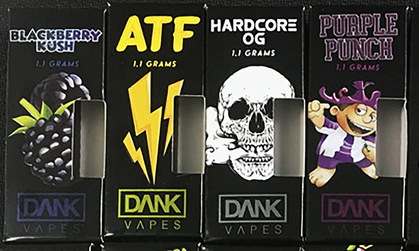
Big news, lousy title
September 28, 2019 ✒ Andrew Kantor
This one affects Rite Aid, Walgreens, and Walmart. The Canadian drugmaker that makes the generic ranitidine sold by those stores has been ordered to recall it. And now France has joined other European countries and is ordering all brand-name and generic Zantac recalled. In the U.S., the FDA is still investigating. Do you have patients with penicillin allergies — or who think they might? Check this out: UGA CoP professor Chris Bland and colleagues around the Southeast have developed a free, online CE program for pharmacists and techs: “Clarifying penicillin allergies: allergy interviews, skin testing, and de-labeling.” It’s ACPE-accredited, it’s online, it’s free, and it will get you an hour of CE (“upon successful completion,” of course). What’s not to love? You want more? OK, fine: The program was also “granted exempt approval by Samford’s IRB to assess knowledge and perceptions related to penicillin allergies.” (Is that important? It sounds important.) Click here for a PDF with the details, then click here to enroll. The other day we mentioned that Massachusetts was banning all vaping products for four months. You know what else t did? Issued a standing order for pharmacies to provide free or low-cost nicotine patches or gum to addicts. Under the order, pharmacies are authorized to create prescriptions to make nicotine-replacement therapy coverable by insurance, even if the customer doesn’t have a prescription from a doctor. Could the FDA get around to looking at CBD oil, if not actually regulating it? Maybe. FDA acting chief information officer Amy Abernethy recently announced on Twitter that: “[FDA] is expediting its work to address the many questions about cannabidiol (CBD). This is an important national issue with public health impact, & an important topic for American hemp farmers and many other shareholders.” While normal people realize this is football season, if you’re in the mood for basketball for some reason, the Atlanta Hawks have “Medical Professionals Night with the Hawks” — Friday, December 13th at 7:30 p.m. Tickets range from $25 to $155, and include a T-shirt (while supplies last) and $10 worth of food and beverage credit. Just in case you thought rising healthcare costs don’t have much impact on people with employer-sponsored coverage … think again. Healthcare premiums for employers rose about five percent this year — that’s money that doesn’t go to salaries (or is passed on to customers). Georgia Health News reports. On average, workers this year are contributing $6,015 toward the cost of family coverage, with employers paying the rest of the $20,576 cost, the survey found. Since 2009, average family premiums have increased 54% and workers’ contribution have increased 71% — several times more quickly than wages (26%) and inflation (20%). Oh, sheesh, “Daily aspirin or not?” is becoming like “Are eggs good or bad?” or “Margarine or butter?” Wait a day and the advice changes. See you tomorrow! Another day, another report that U.S. drug prices are the highest in the world. Seriously, why do people keep doing these studies? We know! We know!Aspirin flip-flop, more Zantac recalls, Captain Obvious strikes again, and more
More Zantac recalls
Free penicillin-allergy CE (from UGA and friends)
Back to patches and gum
FDA, CBD?
Hawks tix for medical pros
Health costs hit employers
Today’s aspirin advice
* Look, it can’t just be the anti-inflammatory effect — there are plenty of other NSAIDs. So we’re going with “magic.”
Sky still blue
September 27, 2019 ✒ Andrew Kantor
Yes, you read that right. And it’s according to Acting FDA Commissioner Ned Sharpless. The issue is enforcement — the FDA has been using its “enforcement discretion” until now, but that is going to change. Sharpless then clarified that all e-cigarettes currently on the market are illegal because they haven’t been assessed by the FDA. But Sharpless said the agency is still weeks away from finalizing any policies that would increase enforcement and remove products from the market. GPhA is offering a second date for our full-day compounding-rules workshop, and it’s still only $149 for members for the eight (8!) hours of CE. The workshop is Saturday, October 5, 2019, from 7:30 a.m. – 4:30 p.m. at GPhA’s HQ classroom in Sandy Springs. GlaxoSmithKline has stopped distributing ranitidine (aka, generic Zantac) in the U.S. over carcinogen fears. In India and Hong Kong, though, the company is actually recalling the products. Sanofi, which makes the brand-name Zantac, stopped selling it in Canada, “but doesn’t have any plans to stop distributing Zantac elsewhere.” German and Italy have ordered a recall of some generic ranitidines as well. A popular drug, tasty fruit flavoring, mysterious deaths … no, we’re not talking vaping — this was in 1937. So what has Obamacare done for diabetics? Apparently it got care to almost two million of ’em. When applied to the nonelderly population of 2015 to 2016, 1.9 million additional people (1.2 million with low income) were estimated to have gained health insurance after ACA implementation. The Federal Trade Commission is as annoyed with them as everyone else. The difference: The FTC can do something, at least when those commercials cross the line into deception. And now it has, sending letters to seven of those law firms telling them to cut it out. According to the letters, some of the lawsuit ads may make deceptive or unsubstantiated claims about the risks of taking blood thinners and drugs for diabetes, acid reflux, and high blood pressure, among other conditions. Now if only they could get rid of those overplayed Liberty Mutual commercials…. A Proctor & Gamble scientist found a way to recycle the plastic in deodorant containers and shampoo bottles — polypropylene, or “number 5 in the little recycling triangle.” Previously, the plastic would contain the smell of whatever was originally in it, and ended up a gray mess. Now the result is clean, white pellets, and the process cuts energy use by 84 percent. The first full-scale processing plant just came online. According to Silvao Gallus, head of the laboratory of lifestyle epidemiology at the Mario Negri Institute in Milan, yes it can — but only if it’s genuine Italian pizza and not “made according to foreign interpretations.” “We found that pizza consumption in Italy was protective for many chronic diseases that are known to be influenced by diet: digestive tract cancers and infarction.” Yes, the studies were real (click here for one in the International Journal of Cancer). And yes, we assume his tongue was firmly in his cheek. Gallus was awarded the 2019 IgNobel Prize for Medicine for his work.Curing cancer with pizza, FDA says e-cigarettes are illegal, Zantac drama continues, and more
E-cigarettes are illegal
Quick e-cig updates
Don’t miss our compounding workshop!
Get the details and sign up at GPhA.org/changin today!Maybe you want to take that Zantac off the shelves
All this has happened before, all this will happen again
Diabetics and the ACA
You know those ads looking to sue pharma companies?
Shampoo bottles can now be recycled
Can pizza prevent cancer?
September 26, 2019 ✒ Andrew Kantor
GPhA is hosting the 2019 fall Regional Presidents’ Briefings, where pharmacy professionals from your corner of the state will gather for a fellowship*, education, and a great dinner at a local eatery. You’ll even get an hour of CPE! Find your region — and your meeting — today! Sign up now at GPhA.org/briefings! That’s actually the story right there. A study finds that seniors with diabetes who live through a hurricane “had a nearly 40 percent higher all-cause mortality risk in the first month after the storms,” mostly from heart disease and nephritis. Artificial intelligence might be as good as human physicians at making diagnoses — at least those based on images. So finds a new British study … although it’s still fairly preliminary and there are plenty of questions. Still, the writing is on the wall — we’re just not sure what language it’s in. Yet another blood-pressure med has been recalled for possible carcinogen contamination: This time it’s Torrent Pharmaceuticals’ losartan — specifically Losartan Potassium Tablets USP and Losartan Potassium/hydrochlorothiazide tablets. Click for the details. This one is from Black+Decker. Called “Pria,” it’s designed primarily to dispense meds. A caregiver loads it … sorry, her — with pills, and Pria will dispense them on time, alerting the patient, we assume, with a loud siren of some sort. It also allows video calling, and can notify caregivers if someone doesn’t take his pills. It can also answer important questions, like “What’s the weather today?” and “How many ounces are in a cup?” All this can be yours for just $600, plus $10 a month. Sertraline seems to be better at helping with anxiety than with depression. The researchers found sertraline had no effect on depressive symptoms through six weeks, and only a mild impact through 12 weeks. The drug had a much stronger effect, however, on the overall mental state of patients. Walmart is expanding its “Live Better, U,” dollar-a-day tuition program to healthcare. It’s offering to pay tuition, fees, and for books for employees looking to get a bachelor’s degree in any of seven health-related fields, or if they want to become pharmacy technicians or opticians. The company already offered the program for some business degrees. Amazon is experimenting (in the Seattle area for now) with a virtual care program for employees — an alternative to an ER or urgent care visit. “Amazon Care” can provide an “in-app video visit with a doctor, nurse practitioner, or registered nurse … for advice, answers, diagnosis, treatment or referrals.” Juul Labs fired its CEO and is suspending all its advertising. Massachusetts is banning all sales of vaping products for four months. The ninth person has died from the Mysterious Vaping Illness, and the CDC expects hundreds more cases to surface. Remember that whole “sonic illness” thing with U.S. diplomats in Cuba? Turns out it might just have been a reaction to an anti-Zika insecticide.Robot dispensers, sonic illness solved, why diabetics should fear hurricanes, and more
Region meetings are a-comin’
It includes…
* Trip to Mount Doom is optional
Hurricanes kill diabetics
The computer will see you now
At this point they might want to try yoga
Another home robot for meds

Sertraline may not do what you think
News from the big retailers
Today’s e-cig quickies
This came across my health news and, even though it isn’t exactly pharmacy related, I still thought it was interesting
September 25, 2019 ✒ Andrew Kantor
USP <795>, <797>, and <825> are being postponed, but USP <800> WILL take effect in Georgia December 1. The United States Pharmacopeia — USP — is postponing the implementation of the compounding standards in its chapters 795, 797, and 825, which were to be effective on December 1. No new effective date has been set. General Chapter <800>, however, will become official on December 1, 2019. Although USP says that 800 “is informational” only, Georgia law requires that pharmacists comply with USP-NF standards — so USP <800> will be required by Georgia law as of December 1, 2019. GPhA will of course keep you informed of any changes to these standards. (Want to learn what’s involved with those standards? Check out GPhA’s course, “Compounding: The times they are a-changin’,” on Saturday, October 5. It covers <795>, <797>, and <800> and offers 8 hours of CPE.) Georgia has among the highest maternal death rates in the country — probably the highest, “on par with Uzbekistan” . But a study committee’s first order of business isn’t to brainstorm ways to lower that mortality rate. Instead, it’s to question the accuracy of the data. The line of questioning prompted objections from some. “In any event, regardless of the best or most favorable number for Georgia or the worst for Georgia, for women of color, it’s still a crisis,” said state Rep. Carolyn Hugley, a Columbus Democrat who is on the study committee, triggering a smattering of applause from the packed committee room. It’s the first company to recall the ranitidine hydrochloride because of possible contamination with a carcinogen. It’s not just for the sake of those around you — it seems that gum disease can raise your chance of getting hypertension. And there appears to be a causal connection: “We observed a positive linear relationship, with the hazard of high blood pressure rising as gum disease became more severe.” Moderate-to-severe periodontitis was associated with a 22% raised risk for hypertension, while severe periodontitis was linked with 49% higher odds of hypertension. Could gluten in infancy lead to diabetes later? A Norwegian study says it can: “Each 10 g of gluten consumed daily during infancy is associated with a 46% increased risk for developing type 1 diabetes during the next 12 years.” (Interesting side note: The study found that gluten consumption during pregnancy had no effect.) Trump administration: ‘We’re going to ban flavored vaping products.” Mom-and-pop vape shops: ‘Uh-oh.’ Political advisors: ‘There are a lot of vapers in swing states….’ Federal prosecutors: ‘Hey, Juul, got a minute to chat?‘ A small group of lawmakers has been sounding the alarm on fentanyl since the drug started causing a spike in overdose deaths in 2013. But they were unable to pick up traction in Congress […] watching bills to address fentanyl languish and expire, sometimes, they said, at the behest of powerful interests including the pharmaceutical industry.USP postpones (some) rules, dirty teeth and blood pressure, gluten-diabetes connection, and more
Compounders, take note:
Georgia looks at maternal death rate
Novartis recalls generic Zantac
Brush your teeth!
A gluten-diabetes link
Quick e-cig news
The long read: Warnings ignored
Do you want to send your members the daily Buzz email newsletter (customized for your state and organization, perhaps)? Let’s talk — just drop me a note at andrew@gphabuzz.com!

- Doctors Warn of a Deadly Complication From Measles Outbreaks
- Medicare Advantage ‘Dark Money’ Group Attempts To Win Higher Payments for Insurance Companies
- Families Scramble To Pay Five-Figure Bills as Clock Ticks on Promised Preauthorization Reforms
- As Lung Disease Threatens Workers, Lawmakers Seek Protections for Countertop Manufacturers
- Republicans Fret Over RFK Jr.’s Anti-Vaccine Policies While MAHA Moms Stew
- Primary Care Is in Trouble. So Doctors Band Together To Boost Their Market Power.
- January 2025
- December 2024
- November 2024
- October 2024
- September 2024
- August 2024
- July 2024
- June 2024
- May 2024
- April 2024
- March 2024
- February 2024
- January 2024
- December 2023
- November 2023
- October 2023
- September 2023
- August 2023
- July 2023
- June 2023
- May 2023
- April 2023
- March 2023
- February 2023
- January 2023
- December 2022
- November 2022
- October 2022
- September 2022
- August 2022
- July 2022
- June 2022
- May 2022
- April 2022
- March 2022
- February 2022
- January 2022
- December 2021
- November 2021
- October 2021
- September 2021
- August 2021
- July 2021
- June 2021
- May 2021
- April 2021
- March 2021
- February 2021
- January 2021
- December 2020
- November 2020
- October 2020
- August 2020
- July 2020
- March 2020
- February 2020
- January 2020
- December 2019
- November 2019
- October 2019
- September 2019
- August 2019
- July 2019
- June 2019
- May 2019
- April 2019
- March 2019
- February 2019
- January 2019
- December 2018
- November 2018
- October 2018
- April 2017
