
August 10, 2019 ✒ Andrew Kantor
Fun facts from a study of 15,793 kids in JAMA Otolaryngology–Head & Neck Surgery: What do you do when your drug patent is about to expire and generics manufacturers are nipping at your heels? Why, launch your own “authorized” generic to compete with yourself and keep competitors out. Lawmakers who created the modern generic-drug industry in the 1980s never imagined anything like this — brand-pharma companies maximizing profits by appearing to compete with themselves. But it goes on all the time. Forget about learning to spell sphygmomanometer — soon you might be able to use a special kind of selfie to check blood pressure. Transdermal optical imaging measures blood pressure by detecting blood flow changes in smartphone-captured facial videos. Ambient light penetrates the skin’s outer layer allowing digital optical sensors in smartphones to visualize and extract blood flow patterns, which transdermal optical imaging models can use to predict blood pressure. The company plans to open fewer traditional stores and focus on its “HealthHUBs,” which are locations that “include more health services like blood testing and sell more health products like sleep apnea masks.” One in seven people, apparently. At least according to Gallup. For those who use CBD, 40 percent said they do so for pain, 20 percent for anxiety and 11 percent for sleep. The survey found women are more likely to use CBD products for anxiety, and most men for insomnia. Cases of West Nile Virus spiked — nay, skyrocketed — in 2018, according to the CDC. Which is yet another reason to promote repellants, insecticides, and vigilance. What do we mean by “skyrocketed”? “WNV [West Nile Virus] neuroinvasive disease incidence was nearly 25% higher in 2018 than the median incidence during 2008–2017.” “Why the World’s Priciest Mushroom May Be Headed to a Pharmacy Near You“Branded generics, blood pressure selfies, CBD gets popular, and more
Opioids and tonsillectomies
Free market at work
Facing your blood pressure
CVS hits the brakes
Who’s using CBD?
Today’s scary West Nile stat
The long read: zombie fungus
August 09, 2019 ✒ Andrew Kantor
Just a friendly reminder that on November 27, a big part of the Drug Supply Chain Security Act (aka “track-and-trace”) takes effect. Wholesalers can only accept pharmaceutical products* from a trading partner, including pharmacies, that have a DSCSA-compliant product identifier. No ID? Well, that’ll be a problem. You need to be sure you’re ready. For starters, check out the info from the FDA; it even includes a 45-minute CE course. (If you’re a independent pharmacist, you probably want to set aside some time to go through it. Just sayin’.) Too much caffeine — defined as three or more servings* — can trigger migraines in some people. Bonus: Today I learned that people who get migraines are called “migraineurs.” A nurse in Buffalo, N.Y., addicted to Dilaudid, diluted cancer patients’ syringes with tap water, giving them a rare blood infection. “This is not the first time we have investigated and charged a healthcare professional who suffers from addiction,” [FBI Special Agent Gary] Loeffert said in the release from the prosecutor’s office. “Accessibility to these highly sought-after drugs makes it easier for medical professionals to feed their addiction.” Let’s be blunt about this: A study finds that the more fast food restaurants you encounter on your way to work, the fatter you’re likely to be. The study: “Impact of multiple food environments on body mass index.” Significant results were found between BMI and the availability of food stores around residential neighborhoods and the commuting corridor. Optimistic people, it seems, sleep better and longer. “Many young Americans regret social media posts made while high” “Is pot safe when pregnant? Study seeks answer, draws critics“Caffeine and migraines, pot and pregnancy, track and trace, and more
Track-and-trace changes — don’t say we didn’t warn you
Migraines and caffeine
* What the heck is a “serving” anyway? One cup of coffee? One mug?
Diluted Dilaudid
Just keep driving
The sun will rise tomorrow!
Captain Obvious meets recreational marijuana
The Long Read: Marijuana and pregnancy
August 08, 2019 ✒ Andrew Kantor
No one has yet been appointed to Georgia’s medical marijuana board — the group that is supposed to oversee in-state cultivation of medical marijuana. Elsewhere: Louisiana began distributing medical marijuana “as the state became the first in the Deep South to dispense therapeutic cannabis, four years after state lawmakers agreed to give patients access to it.” Naloxone is dispensed only once for every 69 prescriptions of high-dose opioids. “We may never get to 1-to-1 … but we think that ratio of 1-to-70 is too low,” said Dr. Anne Schuchat, the principal deputy director of the CDC. A bit of good news, though: “Naloxone dispensing from retail pharmacies increased from 2012 to 2018, with substantial increases in recent years” according to the CDC. This time she’s in her local paper, the Johns Creek Herald, for her work to pass our PBM-restriction laws this past legislative session. (Also pictured are GPhA’s Greg Reybold and Bob Coleman.) Novartis deliberately gave the FDA “manipulated” data about its Zolgensma gene therapy, but don’t worry — the agency is still expected to approve the treatment. The company may have to pay a fine for its actions, however (and there could even be criminal charges). It had announced 200 store closings in the U.K., and now per its recent SEC filing… “Following a review of the real estate footprint in the United States […] the Company also plans to close approximately 200 locations in the United States. The company said it’s rolling out its CarePass program to the entire country. For $5 per month (or $48 a year), patients can have their prescriptions delivered in one or two days. This wasn’t big news to many pharmacies that already offer same-day delivery (often at no charge) … and they don’t usually send a press release about it. There’s a good chance there will be a single opioid settlement, much like the tobacco settlement, for the entire country. The drug distributors are thinking $10 billion. State attorneys general are thinking more like $45 billion. But that’s for states. It’s possible the 34,000 cities and counties and towns that are already part of the lawsuit won’t go along with that deal — they might want their own. But even if they’re all lumped into a single nationwide “negotiating class,” they’re still arguing with the states over who should control the money. Proponents of access to marijuana say so, and a new study finds that yes, that seems to be the case. As with anything marijuana related, though, this kind of study is still preliminary; researchers simply don’t have a lot of long-term data yet to work with. Investigators found that legalization and access to recreational marijuana reduced annual opioid mortality in the range of 20% to 35%, with particularly pronounced effects for synthetic opioids.CVS expands, Walgreens contracts, Georgia delays, and more — happy International Cat Day!
A ‘frustrating delay’ in Georgia’s medical cannabis oil program
Not enough naloxone going out
Shout-out to Jennifer Shannon … again

Novartis manipulated data, but that’s OK
Walgreens closing 200 U.S. stores
CVS expands delivery program
Quick opioid-settlement notes
Could marijuana reduce opioid deaths?
August 07, 2019 ✒ Andrew Kantor
Compounding: The FDA has won its court battle to keep vasopressin off the list of bulk drug substances for which there’s a clinical need. So you can’t bulk compound it — full-stop. What if opioid users didn’t need to carry Narcan with them? What if they could wear a device that could detect an overdose and automatically deliver a dose of naloxone? It could happen. Purdue researchers are on it: Lee’s team has built a wearable device designed to detect when a person’s respiration rate decreases to a certain level – converted from electrocardiography (EKG) signals – and then release naloxone, which blocks the opioid from binding to brain receptors. And yes, in theory it could also deliver, say, epinephrine in the event of an allergic reaction. The time to get high for the first time, apparently. American teens and adults may be more likely to try illegal or recreational drugs for the first time over the summer than at other times of year, a new study suggests. There’s little doubt that CBD oil can do good, but at some point maybe we need to scale back the list of miracles it can perform. From the BBC, “CBD oil: Have the benefits been overstated?” Getting statins after a heart attack to prevent a second one is good medicine. But whether that actually happens depends on where you live… and even your gender. [Researchers] found that patients from New England were the most likely to receive a high-intensity statin (73%), while those from the West South Central U.S., which included states such as Arkansas, Oklahoma and Louisiana, were the least likely (41%). Patients in larger hospitals (with 500 or more beds) were also more likely than those in the smallest hospitals (with fewer than 100 beds) to get high-intensity statins: 59% versus 39%. Women were less likely than men to get high-intensity statins: 49% versus 56%. Something to keep in mind: It takes longer to recover from opioid abuse than from alcohol abuse. In fact, say the authors of a paper in the Journal of Addiction Medicine, “[Opioid problem resolution] beyond recovery-year 1 may need enhanced support to address deficient self-esteem and promote well-being.” Even if someone quits smoking, their leg arteries can be affected for decades, significantly increasing their risk for peripheral artery disease. In fact, “The study also showed that smoking increases the odds of developing PAD more than it raises the risk for heart disease and stroke.” People who eat dark chocolate are less likely to be depressed than those who eat its lesser-quality counterpart, milk chocolate. And we won’t even talk about white “it isn’t even chocolate” chocolate. Individuals who reported eating any dark chocolate in two 24-hour periods had 70 per cent lower odds of reporting clinically relevant depressive symptoms than those who reported not eating chocolate at all. […] However researchers found no significant link between any non‐dark chocolate consumption and clinically relevant depressive symptoms. Forget the peel. The real value — those beneficial bacteria — are in the apple’s core. According to the study, which was published this month in the journal Frontiers of Microbiology, a single apple contains about 100 million bacterial cells — but if you toss out the core, you’re only consuming about 10 million of these precious cells. The study also found that, while there may not be a nutritional difference between organic and conventional apples, “freshly harvested, organically managed apples harbor a significantly more diverse, more even and distinct microbiota, compared to conventional ones.” Eating too much (i.e., more than 50g per day) might be associated with a higher risk of dementia. (Oddly, higher consumption also correlates with lower age, lower income, and lower BMI. So go figure.) The above link was to the published paper. For the news story, click here.Summertime highs, smoking and your legs, auto-naloxone, and more
No more compounding vasopressin
Automatic naloxone?
Summertime, summertime, sum-sum-summertime

Gosh, you really think so?
Statin roulette
Opioids: Recovery can be slow

Yet another smoking risk
Good news from the dark side
Core values
On the other hand, if you prefer spicy food…
The long read: clozapine
August 06, 2019 ✒ Andrew Kantor
The Macon pharmacist — and owner of our Corner Drug Store — was featured on channel 13 (WMAZ) recommending CBD oil to patients looking for an alternative pain medication. “Once I found out there was a professional line that you could get and bring it to my pharmacy, and show my patient that you don’t have to suffer. You don’t have to take all of these opioids. You can try it out and see how it works for you,” said Frazier. Georgia is the sixth worst state for healthcare in 2019 according to the latest report from WalletHub, with lack of access being especially bad. Our high uninsured rate (third worst in the country) and low number of healthcare sites and practitioners for the population hit hard — Georgia ranked #49 out of 51. With all the talk from the White House and HHS (and presidential candidates) about allowing importing drugs from Canada, it seems no one bothered to, you know, ask the Canadians. And they are Not Happy At All. There are all sorts of issues with the plan, starting with the fact that many Canadian wholesalers are not allowed to export drugs in the first place. Further, like the U.S., Canada is facing drug shortages — and it has no desire to make those worse. Finally, some Canadians point out the obvious: If we want Canadian drug prices here, there’s a simple solution: “If the U.S. was going to import anything from Canada,” said Michael Law, professor of health policy at the University of British Columbia, “it should import some controls over the prices of prescription drugs.” Forget LDL — the “bad” cholesterol. Those shifty Danes have uncovered another culprit: remnant cholesterol, aka remnant lipoprotein. And the study out of the University of Copenhagen found that levels of this “ugly cholesterol” are much higher than previously believed. “Our results show that the amount of remnant cholesterol in the blood of adult Danes is just as high as the amount of the bad LDL cholesterol. We have previously shown that remnant cholesterol is at least as critical as LDL cholesterol in relation to an increased risk of myocardial infarction and stroke, and it is therefore a disturbing development.” —Professor and Chief Physician Børge Nordestgaard* Our friends at NACDS are offering PGx101’s Pharmacogenomic Certificate Training in Columbus and Atlanta. “[It] teaches the principles of pharmacogenomics as well as its practical implications in disease states such as cardiology, oncology, neurology and infectious diseases, among others.” The course provides 20 hours of CPE credit — 12 hours of home study and eight hours of live training. Columbus area: Saturday, August 28 from 8:30 a.m. – 4:30 p.m. at Four Points by Sheraton Columbus – Polaris. (Click here for details.) Atlanta area: Saturday, September 28 from 8:30 a.m. – 4:30 p.m. at Integrity Compounding Pharmacy in Sandy Springs. (Click here for details.) Almost half of a percent of the U.S. population has a sesame allergy. Sounds small, but that’s 1.6 million people. (This comes from a new study out of Northwestern and Mount Sinai schools of medicine.) There is debate over the effectiveness of taking statins for primary prevention of CV events, but there’s a big downside for patients who stop taking them: a 33% increased risk of admission for cardiovascular event. Question: “Can cherry juice improve cognitive function?” Answer: According to a small study funded by the Cherry Marketing Institute, yes, yes it can. Take from that what you will. Forget chemo, radiation, or immunotherapy — patients with lung cancer just need ginger. Oy. (What’s particularly scary about this story is that it smells like science, with phrases like “[6]-Shogaol also induced cell cycle arrest (G1 or G2/M) and apoptosis as well as the cascades associated with the programming cell deaths.”) “He lost his insurance and turned to a cheaper form of insulin. It was a fatal decision.“Canada gets annoyed, Georgia ranks low again, why not to stop statins, and more
Shout-out to Matt Frazier

Another sobering stat for Georgia
The Annoyed White North
Cholesterol: The ugly joins the good and the bad
* The most Danish name ever
Get yerself a pharmacogenomics certificate
Sunny day, sweeping the clouds … achoo!
Once you start statins, don’t stop
Cherry bomb
Today’s head-slapper
The long read: death without insulin
August 02, 2019 ✒ Andrew Kantor
The UGA clinical assistant professor — and South University grad — was named Residency Preceptor of the Year by the first-year pharmacy residents at Phoebe Putney Memorial Hospital. For overweight adults who might be insulin-resistant, it seems that simply reducing calories isn’t as good as alternate-day fasting. After a year, alternate-day fasters lost slightly more weight, but their insulin resistance dropped considerably more. And… Kids with type 1 diabetes should have regular mealtimes (and eat lots of fruits and veggies), and they should avoid snacking. That’s can go a long way to meeting their glycemic targets. On Sunday, August 4 we’ve got the perfect program for the starting school year (and the looming monster flu season): “APhA’s Pharmacy-Based Immunization Delivery: A Certificate Program for Pharmacists” in the GPhA classroom in Sandy Springs. Get your immunization certificate from APhA so you’re ready to serve your patients better (not to mention add a good line to your résumé). It’s only $349 for GPhA members ($519 for non-members). Click here for more info on getting your immunization certificate. Then on Saturday, August 10 we have the big all-day MTM program: “APhA’s Delivering Medication Therapy Management Services: A Certificate Training Program for Pharmacists.” For $349 (GPhA members; $499 for non-members) you’ll learn all about providing and billing for MTM services — all the hows and whys. It’s also at the GPhA headquarters Click here for more info on getting your MTM certificate. What, you think of college students when you think of binge drinking? Think again — and keep an eye on grandma. It seems that more than 10 percent of people over 65 admit to binge drinking. And before you accuse us of being sexist for saying “keep an eye on grandma,” that’s what the lead researcher of the study suggested: “It is possible,” he said, “that the increase in binge drinking is partly driven by increases by older women.” (Bingeing by older men has remained stable; but “older women are catching up.”) If you’re not keeping an eye on Candida auris — the hard-to-kill fungal infection that has been appearing more often, especially in hospitals — you should start. Because of climate change, fungi are learning to adapt to the warmth that used to kill them. That means that human body temperature, which used to be deadly, won’t be for much longer. “C. auris,” researchers say, “has adapted to the point that it can now thrive inside humans.” Getting enough vitamin A — but not too much — seems to be a good way to reduce your chance of getting cutaneous squamous cell carcinoma (aka the second most common type of skin cancer). So found researchers at Brown University — they looked at two studies involving 121,700 women and 51,529 men. The researchers found that people in the category with the highest average daily total vitamin A intake were 17% less likely to get skin cancer than those in the category with the lowest total vitamin A intake. Just in case you weren’t clear. It’s real care, it’s just done virtually. The company is starting to roll out its RediClinic Express kiosks in Pennsylvania, with plans to expand. They will initially offer care for such illnesses as strep, flu, urinary complaints, preventive and wellness visits and travel health consultations for patients 18 months old and older. But… according to JD Power, “Only 1 in 10 patients use telehealth.” The big reason? Lack of awareness. Interested in being a volunteer leader at the American Pharmacists Association? Good timing. APhA is accepting applications for several positions; the deadline is October 1, 2019. Offices you can run for: Click here to visit Pharmacist.com for the details and to apply.Old folks are drinking, fungi are evolving, Rite Aid is expanding, and more
Congrats to Daniel Chastain!

Eating and insulin
Coming up fast: Two hot certificate programs
classroom in Sandy Springs.Granny got her gin
The fungal canary in the human coal mine
“A” is for “fighting melanoma”
Ketamine is not an opioid
Rite Aid expands into virtual care
APhA seeking nominations
* APhA Academy of Pharmacy Practice and Management
** APhA Academy of Pharmaceutical Research and Science
August 01, 2019 ✒ Andrew Kantor
It looks like Georgia’s planned Medicaid waiver request may not be happening. Georgia apparently wants to expand Medicaid partially — i.e., it wouldn’t cover all the lower-income people envisioned by the Affordable Care Act — but it still wants the federal government to pay 90 percent of the cost. Utah’s plan, similar to that, was just denied by CMS. (If a state expands Medicaid to everyone earning up to 138% of Earlier this year we told you that proton-pump inhibitors could have serious side effects over the long term (cardiovascular disease, kidney damage, etc.). Now a new study out of Austria finds that they can also increase the risk of developing allergies. [With PPI use] the normal chemical reactions involved in digestion do not work as well, meaning larger protein molecules and other potentially harmful substances are able to pass through to the intestine. This can trigger an allergic response from the immune system. Surescripts contracts with a company called ReMy Health to deliver patients’ medication data to prescribers — but not to pharmacists. Still, Amazon’s PillPack got hold of that data, and Surescripts says it did so illegally. PillPack says it had patient consent, and further that Surescripts (which is owned by PBMs including CVS and ExpressScripts) is acting like a monopoly. Amazon sued. Surescripts called the FBI. Grab the popcorn! How do you enact price controls without enacting price controls? You hitch a ride on your neighbor to the north’s. HHS has taken the next first step to allowing states and other groups in the U.S. to take advantage of Canada’s drug-price controls by buying their meds from the Great White North™. And The agency also said that it would allow drug makers to bring drugs that they sell more cheaply in foreign countries into the United States for sale here, potentially enabling them to sell below their contracted prices in the U.S. Canada is a bit cool on the idea (ha!) because of the size of the U.S. market, which might put a strain on their supply. And some agreements on the other side of the World’s Longest Friendly* Border™ don’t allow for exporting drugs anyway. Three pharmacy companies — Endo, Teikoku Pharma, and Teva — will pay a whopping* $70 million to the state of California as a penalty for colluding to keep generic drugs off the market. “Facebook is funding brain experiments to create a device that reads your mind.” And yes, it’s from a legit magazine — MIT Technology Review. That’s the question five organizations have tackled — and they’ve created a list of 50 recommendations to reduce stress and burnout within the pharmacy profession. These ideas apply to everyone from pharmacy schools to employers to corporations, and are designed to be implemented quickly — to “provide immediate, viable, and sustainable solutions.” The goal is to improve: A “consensus conference” of 85 people within the profession — representing pharmacists and employers across practice “Employers should provide pharmacists with mandatory, scheduled, uninterrupted meal breaks away from the pharmacy workflow to promote pharmacist well-being and improve patient safety.” “All faculty, staff, student pharmacists, and preceptors should complete formal training that addresses behavioral health awareness (e.g., Mental Health First Aid and Question. Persuade. and Refer.).” You can click here to see all 50 recommendations as well as details about the process of creating it.Facebook mind reading, Canadian imports move closer, Amazon vs Surescripts, and more
Roadblock for Georgia Medicaid expansion
the poverty level, Obamacare requires the feds to pay
90% of the cost. But if a state only wants partial expansion, CMS
can choose to pay only 67%. That’s what happened to Utah.)More bad news for PPIs
PillPack vs Surescripts
Canadian imports get closer
besides allowing imports…* With a few exceptions
Spare some change?
* That is sarcasm. Teva alone had $18.9 billion in revenue in 2018.
This isn’t terrifying at all
How can pharmacists’ lives and practices be improved?
“Well-being”? Can you be more specific?
Who came up with these recommendations?
settings, schools of pharmacy, and professional organizations.What organizations organized this?
What are some examples of recommendations?
All right, where can I see the full list?
July 31, 2019 ✒ Andrew Kantor
The rules are changing on December 1 — you need to be ready. As luck (and planning) would have it, GPhA’s got an awesome one-day (8 CE-hour), three-part course to get you up to snuff on the new USP <795>, <797>, and <800>. We’ve got great instructors lined up, and it’s only $149 for members ($299 for non-members, and still a bargain). It’s Saturday, September 14, 2019, from 7:30 a.m. – 4:30 p.m. at GPhA’s HQ classroom in Sandy Springs. The times, Bob Dylan pointed out, they are a changin’. Be ready! Visit GPhA.org/changin and sign up! Specifically, in DeKalb County. Say it with me, folks: “DEET. Permethrin. Picardian.” African swine fever is a problem in China these days, and now Congress is looking into it because it’s threatening the already iffy supply of heparin. The anticoagulant, used in open heart surgery, is derived from pig intestines — and more than half (about 60 percent) comes from China. The American Academy of Pediatrics, the FDA, and even drug manufacturers all said cough and cold medicines shouldn’t be used by young children. And guess what? Physicians listened and cut their prescription rates. Compared with 2002 to 2008 […] in 2009 to 2015 prescriptions for non-opioid cough and cold medicines dropped 70% for kids under 2 years old, the study found. And recommendations for cough and cold drugs with opioids dropped by 90% among kids under 6 years old. The drug company is combining it’s Upjohn division with Mylan to create a gigantic generics company (Mupjohn?). If you’re into the economics end: The two parties are looking at a stock transaction, in which Mylan investors will get 43% of the combined company and Pfizer investors the rest. Upjohn plans to issue $12 billion in new debt to wrap up the deal, and the proceeds will go to Pfizer. … is giving this new company (Upmy?) the job of producing EpiPens, which have been in short supply thanks to manufacturing issues. The smoke stresses the bacteria, causing it to mutate faster, “resulting in hardy and persistent variants better able to resist antibiotics.” At least that’s the conclusion of a study out of the University of Bath. Being out in the green is good for you — and under tree canopy is especially. So finds a new study in JAMA Network Open. Of note, the study found that time in green space improved both mental and physical health of people in Australia — where 90% of the fauna* is out to kill you. Even then, it’s still better than being indoors. Some concentrated antibody solutions can separate when the temperature changes, reducing their effectiveness. “Highly concentrated protein solutions can separate into different phases, like a vinaigrette salad dressing separating into layers over time. Phase separation is one of the pathways that makes these drugs unstable and unsuitable for use.”West Nile is back, the smoking MRSA gun, green is good for you, and more
Compounders, take heed!
What’s going to be covered?
West Nile is here
Swine fever and heparin
Thanks for listening
Pfizer splits
Near the top of the to-do list
Cigarette smoke might make MRSA even worse
Get out of my car … and under those trees
* The flora isn’t safe either. Meet the gympie gympie.
The longish read:
July 30, 2019 ✒ Andrew Kantor
The Georgia Composite Medical Board has a website with information for pharmacists on the vaccine protocol agreements you need to have with physicians if you’re planning to give vaccines. It includes a checklist, sample agreements, and an affidavit — as well as basic instructions. That’s the latest number of cases of Legionnaires’ Disease cases coming from the Atlanta Sheraton. Sanofi says its going to be at least a month behind shipping flu vaccine this year. Not a good thing, considering how bad the season is supposed to be. We’ll let the headline speak for itself: “Vitamin D supplementation may slow the progression of type 2 diabetes in newly diagnosed patients (PDF).” It appears to improve glucose metabolism, but researchers aren’t yet clear how it works. Here’s a link to a more-detailed news story. You can imagine the pharma marketing departments coming up with names like “Levitra” and, after a few drinks, “Xeljanz.” But what about the generic names — vardenafil and tofacitinib? Who comes up with those? Answer: Stephanie Shubat and Gail Karet. Rather than taking daily doses of preexposure prophylaxis — aka PreP — meds (e.g., Truvada), a new protocol used in Europe is gaining traction here. It requires only four pills per sexual encounter, rather than a daily regimen. [Health officials] believe this approach will make PrEP more palatable to people who are ambivalent about the medication because of the cost, fear of potential side effects, mistrust of pharmaceutical companies or a general dislike of taking drugs. “How to protect yourself from flesh-eating bacteria this summer.” Meh. They make you feel fuller quickly, so … sort of? New York expanded its existing decriminalization* of recreational marijuana, and expunged the records of people who had been convicted of possessing small amounts. Washington State removed the ‘personal or philosophical objection’ — aka the “I don’t want to” exemption — for the MMR vaccine. Christian Scientists, the only major religious group that forbids vaccinations, can still receive a religious exemption, as can members of the handful of smaller sects that also prohibit vaccination. New Hampshire became the latest state to have its Medicaid work requirements struck down by a federal judge.Who names generic drugs, bananas and weight loss, flu shot delay, and more
Vaccine protocol info site
11
Flu shot delay
Vitamin D and diabetes
Behind the names
New HIV prevention strategy
Useful info if you’re going swimming
Are bananas good for weight loss?
Elsewhere
* It had already been decriminalized there; the new law reduces the fines and expunges those records.
July 26, 2019 ✒ Andrew Kantor
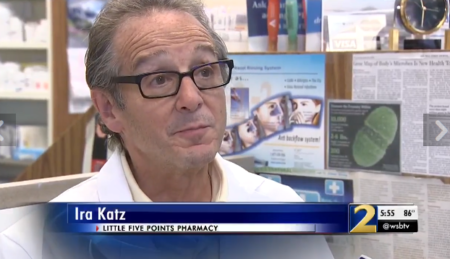
GPhA member and 2019 Bowl of Hygeia honoree Ira Katz is in the news again, this time talking to Atlanta’s channel 2 about the Epi-Pen shortage. Check out the story and video here. The Trump administration has overruled HHS Secretary Alex Azar, and says it — and he — will begin working with states that want to import drugs from Canada. Azar has been a staunch critic of the idea, even referring to it as a “gimmick,” but… Azar, though, was reportedly overruled. The administration’s blessing could now pave the way for states such as Vermont, Florida, Colorado and Maine to begin drug importation. Canada, however, isn’t keen on the idea. “According to a recent Reuters report, Canadian officials have told U.S. officials that there are other, better ways to lower drug costs.” The big Senate drug-pricing bill? It’s already been hit with a flood of amendments from GOP senators that would gut some of its major provisions, including the big one: capping the price increases Medicare would pay to the rate of inflation. The strangest argument: Limiting price increases on existing drugs will somehow stifle innovation on new drugs. So we’ll let the politicians sort it out and see what they end up with. Pharmaceutical companies, and their PhRMA lobbying group, are opposed to the Senate plan for reducing drug prices because they would earn less money. Governor Kemp has named State Senator Blake Tillery of Vidalia to the Patients First Act Stakeholder Advisory Council, which is tasked to “request waivers to administer Medicaid and the Affordable Care Act differently in Georgia than they are administered in other states,” according to a press release from Tillery’s office. “Many in our district find health insurance cost-prohibitive,” he said. “The folks who can afford coverage are paying two and three times the amount of their home mortgage just on premiums. That’s simply not sustainable.” GPhA is also a member of the council (full list here). If by any chance you have products by Herbal Doctor Remedies on your shelves, they’ve been recalled. All of them. Why? you ask. Perhaps some of the product names will give a clue why the FDA had issues with the company: “These products have been marketed without FDA approval and were manufactured outside of the controls required by current Good Manufacturing Practices.” Cancer surgery can result in some cancerous cells breaking free and wreaking havoc in other places in the body. Biomedical engineers at Vanderbilt University have developed “cellular soldiers” — nanoparticles that attach to white blood cells, then hunt and kill escaped cancer cells. “We’ve tested this both in the bloodstream and in hundreds of blood samples from cancer patients being treated in clinics across the country. In all cases, within two hours, the viable cancer cells are cleared out. This has worked with breast, prostate, ovarian, colorectal and lung cancer cells.” If you or someone you know has backyard chickens, do be careful. Six Georgians have already been infected with salmonella. Among other tips, the CDC recommends not allowing chickens into your house and “Don’t kiss backyard poultry or snuggle them and then touch your face or mouth.”Chicken snugglers in danger, drug-pricing bill hits speed bumps, Ira’s in the news again, and more
Ira in the news
“Gimmick” no more
Well that didn’t last long
No surprise there
Tillery joins healthcare working group
Herbal recall
Cancer hunter-killers
Bad touch!
Do you want to send your members the daily Buzz email newsletter (customized for your state and organization, perhaps)? Let’s talk — just drop me a note at andrew@gphabuzz.com!


- Doctors Warn of a Deadly Complication From Measles Outbreaks
- Medicare Advantage ‘Dark Money’ Group Attempts To Win Higher Payments for Insurance Companies
- Families Scramble To Pay Five-Figure Bills as Clock Ticks on Promised Preauthorization Reforms
- As Lung Disease Threatens Workers, Lawmakers Seek Protections for Countertop Manufacturers
- Republicans Fret Over RFK Jr.’s Anti-Vaccine Policies While MAHA Moms Stew
- Primary Care Is in Trouble. So Doctors Band Together To Boost Their Market Power.
- January 2025
- December 2024
- November 2024
- October 2024
- September 2024
- August 2024
- July 2024
- June 2024
- May 2024
- April 2024
- March 2024
- February 2024
- January 2024
- December 2023
- November 2023
- October 2023
- September 2023
- August 2023
- July 2023
- June 2023
- May 2023
- April 2023
- March 2023
- February 2023
- January 2023
- December 2022
- November 2022
- October 2022
- September 2022
- August 2022
- July 2022
- June 2022
- May 2022
- April 2022
- March 2022
- February 2022
- January 2022
- December 2021
- November 2021
- October 2021
- September 2021
- August 2021
- July 2021
- June 2021
- May 2021
- April 2021
- March 2021
- February 2021
- January 2021
- December 2020
- November 2020
- October 2020
- August 2020
- July 2020
- March 2020
- February 2020
- January 2020
- December 2019
- November 2019
- October 2019
- September 2019
- August 2019
- July 2019
- June 2019
- May 2019
- April 2019
- March 2019
- February 2019
- January 2019
- December 2018
- November 2018
- October 2018
- April 2017
