May 07, 2019 ✒ Andrew Kantor
In case you were curious, drug makers raised the list prices of their meds by an average of 2.9% in the first quarter of the year. The U.S. annualized inflation rate is about 1.6%. Some drugs, including Cosentyx, Daytrana, and Xtampza ER were raised almost 10 percent. The large number of drugs that increased in price by over 9.0% is not a coincidence. As the conversation regarding drug prices has heated up over the past couple of years, manufacturers have slowly taken a pledge to keep price increases below 10% annually—but they continue to push the limit and raise prices by 9.9%. Notes: These are list prices, not ‘real’ prices. The average covers both generics and name-brand meds. Still widespread, but waning. Georgia is one of about seven states where it’s still regionally active (as opposed to “widespread,” which is worse. Most states are only seeing sporadic cases now. And yes, it was (is) the longest flu season in at least a decade. These can become collector’s items — make sure you order yours! To give you an idea of how complex autism is, two new drugs seem to act as treatment for some symptoms. One blocks the hormone vasopressin (to treat adults), while the other is vasopressin in nasal-spray form (to treat teens). Despite working in opposite ways, both drugs appear to help autistic people improve their social interactions. And it’s good to see this caveat: “Both of these studies suggest that the mechanism is worth further study, but I think we want to be careful not to overinterpret the findings.” —Lawrence Scahill, director of clinical trials at the Marcus Autism Center in Atlanta. The DEA says that Saturday’s nationwide drug take-back day netted the largest amount of unwanted pills yet: 469 tons of meds from 6,258 collection sites. Could turning off a single gene prevent pancreatic cancer? The answer is “maybe,” because we all know that genes don’t act alone. Still…. When the researchers removed the ATDC gene, none of the cancer-prone mice developed cancer. Even with health insurance from their employers, almost one in five Americans has had to make a sacrifice to pay medical bills. We’re not just talking about not taking vacations. We’re talking about not buying food, or taking another job, or borrowing from friends and family. And more than half “report that they or someone in their household have skipped or delayed some type of medical care or prescription drug in the past 12 months because of the cost.” (Again, these are people who have health insurance.) A new test for Alzheimer’s appears to be able to detect the disease up to 20 years before it begins to manifest — potentially early enough to begin treatment. “Through the combination of both analyses, 87 of 100 Alzheimer’s patients were correctly identified in our study,” summarises Klaus Gerwert. “And we reduced the number of false positive diagnoses in healthy subjects to 3 of 100.” Knowing that many of our members are frequent players of water polo, we wanted to share this story: “Perils of water polo head injuries“.New autism drugs, new Alzheimer’s test, ‘turning off’ pancreatic cancer, and more
What’s up with prices
Quick flu update
Don’t miss out on the convention T-shirt

Vasopressin, autism, and two new drugs
Another take-back day, another record
One gene, one cancer
Can’t we do better?
Alzheimer’s test might come soon enough to act
That’s Professor Klaus Gerwert from the Department of Biophysics at Ruhr University – Bochum, one of the study’s authors
Really important medical news
May 03, 2019 ✒ Andrew Kantor
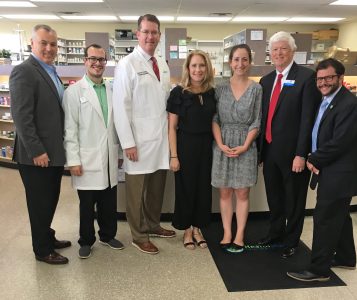
Charlotte Kaye of U.S. Senator David Perdue’s office recently spent an afternoon visiting Briarcliff Pharmacy, a local independent pharmacy to learn on a first hand basis how prescriptions are processed and the software used to do so. While visiting she had the opportunity to learn more and ask questions about spread pricing and many of the the current problems facing independent pharmacy, including DIR fees, steering, medication pricing, insurance processing, and host of others. Charlotte is not new to GPhA members who have attended the NCPA fly-in’s. She had graciously hosted us in Senator Perdue’s office both this year and last. It was great to have her reciprocate and spent time with pharmacists inside a store. Left to right: Steve Montgomery, APCI; Brian Fernandez, PIC at Briarcliff Pharmacy; Jonathan Marquess, GPhA past president and president/CEO, the Marquess Group; Sally Wright, MD; Charlotte Kaye, legislative correspondent, Senator David Purdue; Bob Coleman, CEO, GPhA; Larry Alaimo, regional director of franchise operations, McKesson. People with gout (or “the gout” if you’re my dad) have a 50 percent (!) greater risk of cancer — especially prostate cancer. It’s that %$#&@* uric acid. At low levels it’s an antioxidant, but at higher levels it leads to inflammation… and cancer. Penn State: “We switched their saturated fat with walnuts to see if they’d notice a difference, and it lowered their blood pressure.” “When participants ate whole walnuts, they saw greater benefits than when they consumed a diet with a similar fatty acid profile as walnuts without eating the nut itself,” [Penn State professor Penny] Kris-Etherton said. “So it seems like there’s a little something extra in walnuts that are beneficial. Good news if you know any rats who are addicted to fentanyl: Scripps Research has developed a potential vaccine that “has been shown to reduce fentanyl choices and increase food choices with effects lasting several months.” (or “How we combined two stories into one”) A new study out of the U.K. finds that living alone increases a person’s risk of “common mental disorders.” But if you’re picturing the crazy old man down the street, think again: “This association was observed in all age groups including young adults and both sexes.” Meanwhile, here in the States, Walgreens announced that it’s going to train its pharmacists in “mental health first aid” as part of Mental Health Month. And then, in case that training pushes those pharmacists over the edge, the company is also giving similar training to 300 human resources employees. “Man Claims Cheap Dog Deworming Medicine Cured His Terminal Cancer” (Admit it. You’re going to read that if only to give your eye-rolling muscles some exercise.) Want more? How about taking baking soda to cure your rheumatoid arthritis*? Once again we are faced with scientists who have obviously never seen a horror movie: “System restores some pig brain function hours after death.” Researchers isolated the brain of a postmortem pig from a meatpacking plant and circulated a specially designed chemical solution. They observed many basic cellular functions once thought to cease seconds or minutes after oxygen and blood flow cease, the scientists report. “How Drug Companies Helped Shape A Shifting, Biological View Of Mental Illness“Zombie pigs, relax with walnuts, the loneliest number, and more
We love it when legislators give us this kind of time

The gout-cancer connection
Crack some walnuts

Vaccine helps addicted rodents
A lonely Englishman walks into a Walgreens….
Who needs science when we have … anecdotes!
Actually, that one has some basis in science even if it smacks of Medicine by Dr. Facebook.
Odd medical news: some (zombie) pig
The long read: Is mental illness entirely biological? Pharma thinks so.
May 02, 2019 ✒ Andrew Kantor
Suicide among kids is going up, and no, it’s not just because of “13 Reasons Why.” Over the past decade, “the rate of attempted suicide by poison has more than doubled among people under 19” according to new research — and that’s part of an overall increase in suicide in the country. Drawing on 19 years of data from 55 poison centers across the country, researchers found that among people 10 to 15, attempted suicides by poison were relatively flat until 2010. From 2011 to 2018, however, the numbers began to skyrocket, increasing by 141 percent overall. The occurrence among girls was particular pronounced. Among girls 10 to 12, for example, the poison-suicide attempts increased by 338 percent. As for “13 Reasons Why,” there’s definitely a correlation with an increase in teen suicides (especially among boys, oddly), but researchers don’t know if there’s a causation. The Interagency Coordination Group on Antimicrobial Resistance warns that in the next 25 to 30 years, 10 million people a year could die from drug-resistant diseases. (At least 700,000 people already do.) So it’s no wonder that people all over the world are stressed, worried, and angry. And Americans are among the most stressed of all — #9 in the world behind Greece, the Philippines, Tanzania, Albania, Iran, and Sri Lanka. (Good news: We’re about average when it comes to worry and anger.) Not a “surge,” says measles-vaccine maker Merck, but a noticeable uptick. The company is increasing production. The other day we said that the current outbreak is the largest in the U.S. in 20 years. Well now it’s the largest in 25 years … and it’s only May. Oh, and children under 5 count for half the cases. For millennials, it’s all downhill after age 27. Doctors have identified a different kind of dementia, similar to Alzheimer’s but slower acting. The disease, called LATE (Limbic-predominant age-related TDP-43 encephalopathy), may often mirror the symptoms of Alzheimer’s disease, though it affects the brain differently and develops more slowly than Alzheimer’s. Doctors say the two are frequently found together, and in those cases may lead to a steeper cognitive decline than either by itself. Instead of scraping and scrubbing, what if your dentist could release a swarm of microrobots into your mouth to clean the plaque? (Is it safe?) Dental robot swarms, over-the-hill millennials, a new kind of dementia, and more
No, suicide isn’t painless
On the other hand, death is waiting
That’s a bit of a downer
Vaccine demand is going up
Speaking of measles
That’s a pretty short hill to climb
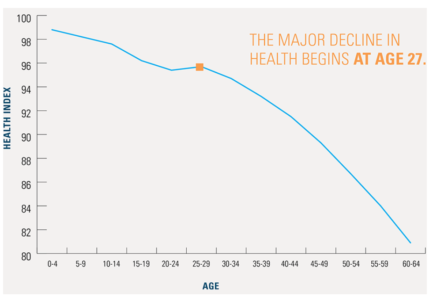
It’s not just Alzheimer’s
Unusual health news: dental edition
May 01, 2019 ✒ Andrew Kantor
The College of Pharmacy received a $20,000 scholarship from the National Association of Chain Drug Stores Foundation “to provide first-year student pharmacists an immersive experience in cultural competency through a partnership with the Clarkston Refugee Clinic.” Tough luck! We’re featuring a sand castle building contest at the Georgia Pharmacy Convention! (Seriously, what were you thinking? It’s June 15 on Amelia Island, Florida — way too hot for a snowman.) Why not sign up a team today? The proceeds will support the Georgia Pharmacy Foundation, and your friends and family will have a blast on the beach! Last year’s runner-up Just because kids and their parents are confident they know how to use asthma inhalers correctly doesn’t mean they actually can — so finds a study out of the University of Chicago. Perhaps a few extra minutes with asthma patients are in order, and not simply, “Do you know how to use this?” The FDA is adding boxed warnings to a bunch of common sleep meds, including Lunesta, Sonata, and zolpidem (Ambien, Ambien CR, Edluar, Intermezzo, Zolpimist) because of the risk of death or injury due to “complex sleep behaviors*.” At least 20 people have already died, in fact. Serious injuries cited by FDA include falls, burns, near drowning, exposure to extreme cold temperatures leading to loss of limb, carbon monoxide poisoning, drowning and hypothermia. Folic acid is critical for a healthy baby, but new research says it might also reduce the mother’s risk of gestational diabetes. Another reason to make sure your pregnant patients are taking it. …may live longer. A new study links a poor sense of smell with “higher long-term mortality among older adults” especially if the person is otherwise healthy. Yeah, the data are a few years old, but the study is brand new: The drug-poisonings death rate (yes, that often means overdosing) for adolescents in the U.S. has been going up, with opioids playing a large part.Inhaler overconfidence, sleep-med warnings, the scent of longer life, and more
Congrats to Josh Kinsey and Mercer’s CoP!
Do you want to build a snowman?

“Confidence is a fool’s shield”
The FDA points out that drowsiness is a common side effect
* That’s almost a British level of understatement, isn’t it?
Moms should drop some acid too (folic, that is)
He who smelt it…
Drug poisonings are up
April 30, 2019 ✒ Andrew Kantor
Planning to come to the Georgia Pharmacy Convention? Act fast — the low-price GPhA room block at the Omni is almost full. If you want the best hotel rate while you’re on Amelia Island, head to GPhAconvention.com and register now! That measles vaccine you got back in the Long Long Ago? It might not be working as well as you think. “Up to 10 percent of the 695 confirmed measles cases in the current outbreak occurred in people who received one or two doses of the vaccine,” according to the CDC. So if you got your vaccination before 1989, you might want to consider getting a … let’s call it a refresher. Old Medtronic insulin pumps are a hot commodity. Why? They can be hacked to become a DIY artificial pancreas — a homemade system that “automatically calculates insulin doses based on real-time glucose data.” It’s called “looping.” The Edison [minicomputer] receives data wirelessly from his continuous glucose monitor, runs an algorithm to predict future blood sugar, and tells the insulin pump how much to dispense every five minutes to prevent highs and lows. So finds a study in the European Heart Journal: “Longer duration of exposure to antibiotics in the middle and older adulthood was related to an increased risk of future CVD events among elderly women.” Raw turkey. Ground beef. French cheese. And of course, romaine lettuce. It’s like a wave of food poisoning, and the CDC agrees that yes, there are definitely more reports coming in. Is the culprit more organics foods? Lax oversight? Or simply better reporting of cases? On the off-chance it really is lupus, and the patient is young, the FDA has approved the first treatment: belimumab (its friends call it Benlysta), an IV infusion previously approved only for adults. If your father smelt of elderberries, it might be his way of fighting the flu. Researchers from the University of Sydney in Australia concluded that “elderberry exhibits multiple modes of therapeutic action against influenza infection.”Hacking insulin pumps, measles vaccines wear off, elderberries and the flu, and more
The room block is almost gone

How good is your measles vaccine?
Hackers, insulin pumps, and homemade pancreases
Long-term antibiotics might be bad for older women
What’s with all the food poisoning?
Lupus treatment for kids
Elderberries: More than a Monty Python joke
April 27, 2019 ✒ Andrew Kantor
Great news if you know a mouse who might be exposed to Crimean-Congo Hemorraghic Fever! A team from UGA’s College of Pharmacy department of pharmaceutical and biomedical sciences (with help from the CDC) has developed a vaccine to protect our furry friends from the disease. Bonus for non-pharmacists: The story includes the straight-out-of-Star-Trek phrase “replicon particle.” States that expanded Medicaid have seen a reduction in deaths due to overdoses and substance abuse. Three more cases of measles have been reported in Georgia, bringing the total to six of this entirely preventable disease. The U.S. set a new record for measles cases earlier this week, with the highest number since the disease was declared eradicated. Teens will do things you don’t want them to do — that’s the nature of the beasts, says a new study from the universities of British Columbia and of Calgary. Rather than trying to stop them entirely (hint: It won’t work), parents and caregivers should focus on helping them stay safe and reduce harm. “Teens told us that they generally tuned out abstinence-only or zero-tolerance messaging because it did not reflect the realities of their life,” said [lead researcher Emily] Jenkins. “Either they or their peers were already using substances, or substance use was happening in their own family circles.” Short-acting statins like lovastatin (Mevacor) or simvastatin (Zocor)? Take ’em in the evening. Longer-acting ones like atorvastatin (Lipitor) or rosuvastatin (Crestor)? Take ’em in the morning. This advice brought to you and your patients by Medical News Today. Durex has recalled some of its Real Feel and Latex Free condoms because they failed the “burst test.” (Article contains the list of recalled lot numbers.)“Burst test” failure, you can’t stop teens, good news for mice from UGA, and more
UGA CoP research shout-out
More healthcare, fewer ODs
Another day, a few more measles cases
Saying No doesn’t work
Statins: Timing helps
Product recall*
* Every snarky headline we considered would have been rejected
April 26, 2019 ✒ Andrew Kantor
If you said Augusta, you win! Bob stopped by for a visit with Barry Bryant (owner of Barney’s Pharmacy), Curtis Marshall of Medical Villa Pharmacy, and Courtney Russ of Surrey Center Pharmacy on his way to host Wednesday’s Region Briefing: Imagine if you took the trouble to write up the federal guidelines for opioid prescriptions in the wake of the opioid crisis, and then people completely misinterpreted them? They said some health care players had used the guidelines to justify an “inflexible application of recommended dosage and duration thresholds and policies that encourage hard limits and abrupt tapering of drug dosages,” when the guidelines did not actually endorse those policies. The Federal Trade Commission filed an antitrust lawsuit against the company, saying it uses illegal means to maintain a virtual monopoly in electronic records and prescribing services. People who take Prolia (denosumab) for osteoporosis are at a increased risk of vertebrae fractures if they discontinue the drug. The warning about that, though, is buried among all the other drug info, and now one consumer group is asking the FDA to require a “black box” warning instead. The risk of this serious adverse effect could be mitigated with a prominent boxed warning and an updated risk evaluation and mitigation strategy (REMS)that together would increase physician and patient awareness about the risks associated with treatment cessation. It also would discourage abrupt cessation of treatment…. A study finds that patients with irritable bowel syndrome can be successfully treated with cognitive behavioral therapy … over the phone or via the Web. “Company creates tampon-shaped speakers so unborn babies can listen to music“Treating IBS via Skype, tampon speaker, Bob on the road again, and more
Where in the world is
Carmen Sandiego Bob Coleman?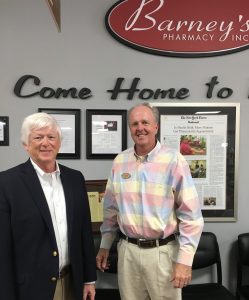

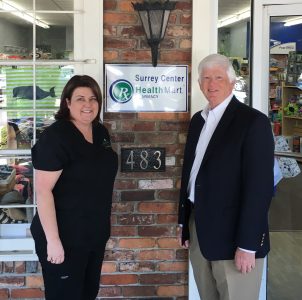
That’s not what we said
Feds say Surescripts is a monopoly
Does Prolia need a black box warning?
Talk it out
No, it’s not The Onion — coming soon to a baby products aisle near you
April 25, 2019 ✒ Andrew Kantor
Thanks to all the Mercer folks who wrote to tell us that its student pharmacists will also be taking part in the upcoming National Prescription Drug Take Back Day on Saturday, April 27. Mercer students will be at the university’s Atlanta location — 3001 Mercer University Drive — helping folks dispose of their unneeded meds. And you can find other drop-off locations at takebackday.dea.gov. Bob Coleman hosted the Region Briefing with some of the area’s top pharmacy pros. It looked a little like this: Walgreens and Rite Aid have both announced that, while they will still sell tobacco products in their stores (in states where it’s legal to do so), they will be raising the age for purchasing them to 21. Walgreens said it will also work to help people quit smoking: “Through ongoing training and certification for pharmacists and technicians, we also continue to help and support people looking to quit the use of tobacco in their lives.” Rite Aid said it is “dedicated to providing value to both our customers and our investors” and has trained its pharmacists to provide counseling to people who wish to quit smoking. CVS stopped selling tobacco products in 2014. Don’t ignore the symptoms. Depression, stress, and the risk of burnout and suicide is spiking for healthcare professionals, especially pharmacists. Maybe it doesn’t describe you — but look to the nearest member of your team. The Georgia Pharmacy Foundation has a new, free home-study webinar called Burnout, Depression, and Suicide: Impact on Patients and Pharmacy Staff. It’s four separate sessions, each offering 1.0 hours of CPE credit for pharmacists and technicians, and each designed to be taken in the comfort of home (or your favorite hotspot). It could be the most important thing you’ll learn this year. Click here or visit GPha.org/burnout for details. Drug distributor Rochester Drug Cooperative and two of its former execs were charged with felonies related to their role in the opioid crisis — the first time a distributor has been charged for failing to report suspicious sales activity (“conspiring to distribute drugs and defrauding the government”). The company agreed to pay a $20 million fine and enter what’s essentially a five-year probation. “We made mistakes,” Jeff Eller, a spokesman for the company, said in a statement. Girls may be better gamers (trust me on this), but a new study says it might be hurting their social skills. Oddly, the impairment seems to affect pre-teen girls, but not pre-teen boys.Rochester arrest, gamer girls in danger, tobacco at Walgreens and Rite Aid, and more
Mercer taking back drugs too
Meanwhile, in Augusta…


Walgreens, Rite Aid raise tobacco buying age
The most important thing you’ll learn this year
Feds target distributors
Sometimes it actually is lupus
Odd health news: Gamer girls may be making social sacrifices
April 24, 2019 ✒ Andrew Kantor
It just goes on and on my friends. (It’s the longest in a decade, says the CDC.) What are you waiting for? The Georgia Pharmacy Convention is less than eight weeks away! Don’t risk missing out on the biggest networking event of the year — not to mention the perfect family vacation, plus all those sweet, sweet CPE hours*. Register now! (Or if you really need to find out more, go to GPhAconvention.com for everything you need to know.) But wait, there’s more! We’re offering two of our most popular certificate courses on Amelia Island just before and just after the convention. How convenient is that? Note: These courses are not part of the convention and are not included in your convention registration. Separate registration is required. According to the college, 56 out of the 78 student pharmacists who looked for a post-grad residency match (aka, a PGY-1 residency) received them. That, brags the college, is 72 percent, compared to a mere 61 percent average across the country … and it puts UGA among the top 10 in the U.S. Apparently users of marijuana, even new users, actually weigh less than non-users, according to a review of 33,000 people by researchers at Michigan State University. “We found that users, even those who just started, were more likely to be at a normal, healthier weight and stay at that weight. Only 15% of persistent users were considered obese compared to 20% of non-users.” They caution, however, that pot should not be thought of as a weight-loss tool. It’s only April, and the U.S. is about to set another record for the number of measles cases — a disease that was virtually eradicated only 20 years ago. Luckily, though, social media outlets — the source of most misinformation about vaccines — are beginning to crack down on anti-vaxxers. Using public examples from the World Health Organization and the CDC, Facebook said it would lower the ranking of pages and groups that the company deems to be sharing vaccine misinformation. Additionally, ads that contain similar messaging about vaccines will be taken down and/or disabled. These measures extend across both the Facebook and Instagram platforms. Many teens who vape are blissfully unaware that they’re taking nicotine — and just how addicting it is. Well, it “was associated with a significantly increased risk of mortality from cardiovascular disease.” The Sackler family would now like to settle all 2,000+ cases pending against Purdue Pharmaceuticals at once, please and thank you. (Note that these are different cases than in the Really Big Opioid Lawsuit in Ohio.) It seems “Bubble Boy” disease may be cured. Gene therapy developed at St. Jude Children’s Research Hospital has cured infants born with X-linked severe combined immunodeficiency (SCID-X1). The children are producing functional immune cells, including T cells, B cells and natural killer cells, for the first time. The results appear in the April 18 issue of the New England Journal of Medicine.Good-bye, Bubble Boy — plus skinny pot smokers, ignorant teens, and more
This is the flu season that never ends
Tick tock
* Are you really gonna wait till the last minute before you have to renew and end up taking whatever boring dregs you can find to meet your requirements? You’re better than that.
UGA sets pharmacy residency match record
The Doritos marketing folks are clearly not doing their job
Measles up, but misinformation may be down
Ignorance is bliss … or not
Skipping breakfast can kill you

Opioid suit update
Another Seinfeld episode ruined by the real world
April 23, 2019 ✒ Andrew Kantor
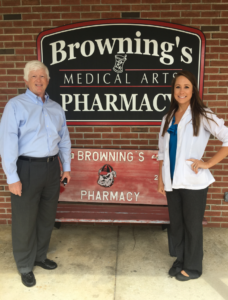
While he’s traveling around the state, GPhA’s Bob Coleman likes to stop in at the pharmacies in the towns he’s visiting. Here he is in Waycross with Holly Tanner at Browning’s Pharmacy, Jaime King at the Medicine Cabinet, and Donnie Griffin at Griffin’s Prescription Shop: When neighborhood pharmacies close, it’s bad news for people with heart conditions. Research from the University of Chicago finds that adherence rates for statins plummet when a pharmacy closes. Looking at more than 3 million people with statin scripts, the researchers checked the adherence rates of the 93,000 of them whose pharmacy closed. The researchers found that statin users in the closure cohort experienced “an immediate and significant decline in statin adherence” in the three months post-closure that was “largely due to the complete discontinuation of medication.” Among statin users, about 23.8% of people in the pharmacy closure cohort did not refill their prescription at any point during the 12-month follow-up period, compared with only 12.8% in the non-closure cohort. Remember that the first of two National Prescription Drug Take Back Days is coming this Saturday, April 27. That’s when the DEA makes a big push to get people to return their unneeded drugs, no questions asked. (Shout-out to PCOM student pharmacists who are helping out with the event in Snellville!) You can go to takebackday.dea.gov and scroll down to find a drop-off location near you. We all know by now that the gut microbiome affects health in all sorts of ways, and tweaking it can have profound affects. But just as willow-tree bark can cure a headache (but it’s really the acetylsalicylic acid — aka aspirin — that does the work), researchers are applying that same logic to gut bacteria. They’re looking to isolate what exactly the bacteria do to cause those positive effects. If they figure that out, maybe it could be put into pill form. For example: Scientists think one possibility is that gut bacteria, by fermenting starches in food such as oats and pulses, produce compounds called short chain fatty acids (SCFAs). One of these SCFAs is acetic acid – the main component of vinegar. Once produced, these SCFAs activate specific receptor proteins in our body and these receptors, once activated, can provide health benefits. “Increased Screen Time in Preschool Tied to Worse Inattention.” So if you want your kids to have the best inattention, keep them away from those screens. It seems that 29 of 36 smartphone apps that are supposed to help users with depression or smoking cessation sent data to Facebook or Google to help target ads. Only 12 of those 29 disclosed the fact. “As a result, users are denied an informed choice about whether such sharing is acceptable to them.” The researchers suggestion? Don’t trust the apps’ policies. Instead, you “should reasonably assume that data will be shared with commercial entities whose own privacy practices have been questioned.” The company is partnering with Tyto Care, maker of a $300 at-home ‘handheld examination device’ that can “examine the heart, lungs, skin, ears, throat and abdomen as well as measure body temperature to enable remote diagnosis of acute care situations.” The company already acquired a medical-alert service, and has a program “to help adult children remotely check in on the health and safety of their aging parents,” notably to calm them down after they pay $200 for a Geek Squad “tune up.” After eight years, Australians are learning to wash their hands. “Between 2009 and 2017, increases were observed in national health-care facility participation and overall hand hygiene compliance.” “The Giants at the Heart of the Opioid Crisis” — the distributors. [T]he daunting financial muscle that has driven the spread of prescription opioids in the United States comes from the distributors — companies that act as middlemen, trucking medications of all kinds from vast warehouses to hospitals, clinics and drugstores.A lollipop for the Aussies, Bob on the move, ensuring the best inattention, and more
Keeping up with Bob


Neighborhood pharmacies are critical to adherence
Don’t call them “unused”
Active ingredient
The science is interesting, the grammar is horrible
Privacy, schmivacy
Best Buy dips more toes into healthcare
Elsewhere: I think this means they get a lollipop
The long read: sharing the blame
Do you want to send your members the daily Buzz email newsletter (customized for your state and organization, perhaps)? Let’s talk — just drop me a note at andrew@gphabuzz.com!

- Doctors Warn of a Deadly Complication From Measles Outbreaks
- Medicare Advantage ‘Dark Money’ Group Attempts To Win Higher Payments for Insurance Companies
- Families Scramble To Pay Five-Figure Bills as Clock Ticks on Promised Preauthorization Reforms
- As Lung Disease Threatens Workers, Lawmakers Seek Protections for Countertop Manufacturers
- Republicans Fret Over RFK Jr.’s Anti-Vaccine Policies While MAHA Moms Stew
- Primary Care Is in Trouble. So Doctors Band Together To Boost Their Market Power.
- January 2025
- December 2024
- November 2024
- October 2024
- September 2024
- August 2024
- July 2024
- June 2024
- May 2024
- April 2024
- March 2024
- February 2024
- January 2024
- December 2023
- November 2023
- October 2023
- September 2023
- August 2023
- July 2023
- June 2023
- May 2023
- April 2023
- March 2023
- February 2023
- January 2023
- December 2022
- November 2022
- October 2022
- September 2022
- August 2022
- July 2022
- June 2022
- May 2022
- April 2022
- March 2022
- February 2022
- January 2022
- December 2021
- November 2021
- October 2021
- September 2021
- August 2021
- July 2021
- June 2021
- May 2021
- April 2021
- March 2021
- February 2021
- January 2021
- December 2020
- November 2020
- October 2020
- August 2020
- July 2020
- March 2020
- February 2020
- January 2020
- December 2019
- November 2019
- October 2019
- September 2019
- August 2019
- July 2019
- June 2019
- May 2019
- April 2019
- March 2019
- February 2019
- January 2019
- December 2018
- November 2018
- October 2018
- April 2017
