
April 02, 2019 ✒ Andrew Kantor
Buzz is on semi-hiatus this week, so we’ll have fewer stories than usual…. Walgreens is grappling with the issue of selling cigarettes: What customers want vs. what’s good for them. “The safety of our patients is very important, but we also have to do what our customers are requiring us to do,” Walgreens Boots Chief Executive Stefano Pessina said in a recent interview. “We see that when we don’t sell tobacco, we have a lot of [negative] reactions.” Interesting side note: Massachusetts, New York City, and San Francisco ban cigarette sales in pharmacies. The FDA is going to tell us this summer when it updates its official definition.The FDA decides what is “healthy” and more
Do as I do, not as I say
What is “healthy”?
The long read: Sackler Family edition
March 29, 2019 ✒ Andrew Kantor
Yesterday, HB 233, the second of our PBM anti-steering bills, passed the full Georgia Senate by a vote of 53-0. That means both our bills have been passed by both houses — and we hope both will be headed to the governor’s desk soon for his signature. This is big, big news for everyone in Georgia. It helps ensure patients get the best possible medical care, and protects their right to choose their healthcare providers. We appreciate everyone who made calls and sent e-mails. Your voices were heard. And to the Georgia legislators who took the time to understand the issues, see through the spin, and realize why these bills are critical for everyone in Georgia: Thank you. Make sure to attend a spring Region Meeting in your area to learn more about the events of years legislature and about both bills — check GPhA.org/regions for the one near you — where you’ll hear the details from Greg Reybold or Bob Coleman. Until then, keep your fingers crossed. Georgia’s patients are counting on it. Next week Buzz will be on a semi-hiatus as your humble writer* moves house and home and helps establish an alpaca ranch†. We’ll still be publishing, but you might notice fewer stories at the beginning of the week while boxes are unpacked. Fear not — we’ll be back on Thursday at full strength, breathing fresh air, and sharing the most interesting pharma and healthcare news. As Georgia considers asking for some sort of Medicaid waiver from the feds, this is worth noting: A federal judge has struck down down Medicaid work requirements in Arkansas and Kentucky. The argument is simple: The judge said Medicaid is about providing healthcare; it’s not intended as an anti-poverty program. Work requirements, by removing thousands of low-income people from the program, goes against that healthcare goal. And as Georgia Health News reports, that’s not the only complication the state is facing. Christmas is in December — that’s too long to wait to register for the Georgia Pharmacy Convention on Amelia Island! It’s the biggest event all year for Georgia pharmacists, techs, and students, and registration is open. But the hotel room block is limited, so you want to register and book your room ASAP! Head over to GPhAconvention.com to see all there is to offer: Courses, sessions, the Expo Hall, amazing keynoters, and all the fun the Omni Amelia Island Plantation Resort has to offer for you and your family! (And don’t forget to order your commemorative convention T-shirt while supplies last!) It seems that smoking does not increase your chance of contracting Alzheimer’s. The money quote: “Once adjusted for the competing risk of death without dementia, smoking was not associated with incident dementia.” (But the authors also point out, “Current smoking increased incidence of death without dementia.”) Consumers read labels, and they’re more likely to prefer a drug that’s labeled as “natural” even if that term has little scientific meaning. [Researcher Brian Meier] wanted to do the study after constantly “hearing frequent comments from friends and family that were stated in this way: ‘it’s natural so it cannot hurt you.'” The State of New York is suing the Sackler family, owners of Purdue Pharma, for its role in the opioid crisis. That’s the family itself, not the company. The lawsuit, filed by the state attorney general Letitia James, is one of the very few in a wave of opioid litigation across the country that name the Sacklers. It targets eight family members: Richard, Jonathan, Mortimer, Kathe, David, Beverly and Theresa Sackler, as well as Ilene Sackler Lefcourt.The Senate’s unanimous vote, potential Medicaid snags, how consumers can be fooled, and more
Unanimous!
Buzz takes a short break
* Who are we kidding?
† Seriously.No Medicaid work requirements
What are you waiting for?

It’s still bad, but at least you’ll be aware of how bad it is
Arsenic is “natural”
Elsewhere: family business
March 28, 2019 ✒ Andrew Kantor
With everything that’s been happening in the legislature with our two big bills, this is the perfect time for our annual spring Region Meetings! That’s where pharmacy professionals from each corner of the state will gather for a great dinner at a local eatery and an update on the legislative situation. You even get an hour of CPE. Visit GPhA.org/regions to see when your meeting is being held, then sign up for it ASAP — the first ones are April 16 (Albany and Acworth areas) and they continue throughout April Sign up now — you must register to attend! Congrats to our friends at the Georgia Department of Public Health — it received national accreditation from the Public Health Accreditation Board. To receive accreditation, a health department must undergo a rigorous, multi-faceted, peer- reviewed assessment process to ensure it meets or exceeds a set of quality standards and measures. What about when U.S. taxpayers pay for that research, the U.S. government patents the drug, and you just manufacture it — and refuse to pay royalties? You wanna explain how you can justify a $2,000 a month price tag? [CDC researchers] work — almost fully funded by U.S. taxpayers — created a new use for an older prescription drug called Truvada: preventing HIV infection. But the U.S. government, which patented the treatment in 2015, is not receiving a penny for that use of the drug from Gilead Sciences, Truvada’s maker, which earned $3 billion in Truvada sales last year. What do you do when you’re faced with an losartan shortage due to impurities in the supply chain? The obvious, if you’re the FDA: You increase the acceptable level of impurities. The US Food and Drug Administration (FDA) said late Wednesday that it will not object to certain manufacturers temporarily distributing losartan with one impurity above the interim acceptable intake limit until that impurity can be eliminated. A male birth-control pill has passed its phase 1 safety trials. (Note: This is not an efficacy trial — that comes later.) Yes, really. Household dust can contain endocrine disruptors, which leads to development of fat cells. “Interestingly, the greater the extent that the dust was able to promote fat cell development, the greater the BMI of the people living in those homes. We demonstrated a relationship between the chemicals present in the indoor environment and metabolic health,” [Duke University researcher Christopher Kassotis] said during a press conference. Keep at it, dude. Keep at it. Patients who could be taking statins — perhaps should be taking them — aren’t being given the option. (Fear of side effects seems to be the issue.) “Medicare’s Uncapped Drug Costs Take A Big Bite From Already Tight Budgets” In a standard Medicare drug plan, beneficiaries pay 25 percent of the price of their brand-name drugs until they reach $5,100 in out-of-pocket costs. Once patients reach that threshold, the catastrophic portion of their coverage kicks in, and their obligation drops to 5 percent. But it never disappears. It’s that ongoing 5 percent that hits hard.The big problem with dust, who’s paying for pharma research, one step closer to a male pill, and more
Remember: Region meetings are coming!
DPH gets accredited
So high drug prices are needed to pay for research, huh?

Moving the goalposts
Trust me, I’m on the pill
Your dust may be making you fat

Statins often not on the menu
The long read: Medicare and the 5 Percent Problem
March 27, 2019 ✒ Andrew Kantor
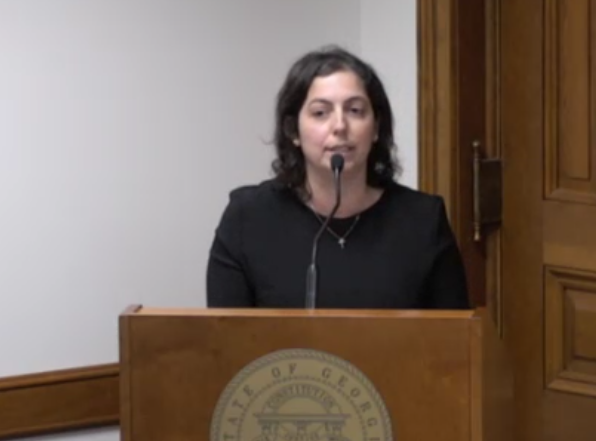
Check it out: Our priority bill, HB 323, was approved by the full Senate by a vote of … wait for it … 49 to 0! And then, while we were busy celebrating, we heard that our other priority bill, HB 233, passed the Rules Committee and is on to the full Senate for a vote Thursday! We cannot thank Representative David Knight enough — the guy went above and beyond, spoke passionately and knowledgeably about our bills and why they are so critical, and was absolutely instrumental in helping them pass. He deserves a huge Georgia Pharmacist thank you (perhaps on Twitter or Facebook). If you haven’t already, reach out to your state senators and ask them to support HB233 on Thursday’s floor vote. (If you don’t know who your state senator is, you can locate him or her at openstates.org.) Wait wait, check this out: We wouldn’t ask you to sit through an entire committee hearing, but you should check out the part where the HHS committee hears comments from PBMs and then independent pharmacists on our bills. Here’s the link, but you want to start at about 23:50 in the video for all the discussion about our anti-steering bill, HB 233, or skip to 33:10 to hear various testimony about the bill, or heck, just cheer on pharmacist hero Jennifer Shannon, who appears at 39:45. It’s not just mom: Fathers who smoke during pregnancy* also increase children’s risk of heart defects according to a meta-analysis of 125 studies of 137,574 congenital heart disease cases. The CDC says there have been at least 314 cases of the measles in the U.S. since January 1, including three in Georgia. There were only 372 cases reported in all of 2018. (2014 was still the big outbreak year with 667 cases thanks in large part to unvaccinated Amish communities in Ohio.) Remember: This is a deadly, preventable disease that was on the verge of being wiped out entirely in the country. And I think we all know who to blame. And speaking of immunizations… GPhA is offering “APhA’s Pharmacy-Based Immunization Delivery: A Certificate Program for Pharmacists” this coming Sunday, March 31 in Macon (on the campus of Mercer University) from 8:00 a.m. to 5:00 p.m. Earning that certificate is a great way to differentiate yourself and give your patients the best care. Check out GPhA.org/2019immunization and register fast. The American Academy of Pediatrics and the American Heart Association have both said, “Enough with the soft drinks already!” They put out a joint statement saying we need programs to cut kids’ consumption of soda and other sugary drinks — taxes on drinks (which do cut consumption), better education, limits on marketing, and more. Excess consumption of added sugars, especially from sugary drinks, poses a grave health threat to children and adolescents, disproportionately affecting children of minority and low-income communities. Public policies, such as those detailed in this statement, are needed to decrease child and adolescent consumption of added sugars and improve health. Fun fact: Our emphasis on “low fat” instead of “low sugar” comes in large part from a 1967 study paid for by the sugar industry that blamed fat for obesity. Fat was cut from foods and replaced with sugar. The rest is history. Oh, fine. It’s not as severe as in some recent years, but it’s widespread — and this year saw two strains making the rounds. The CDC expects flu cases to remain high for at least several more weeks. “Why drug prices are so difficult to bring down.” The short answer: Because there are so many competing interests: corporate shareholders, venture capitalists, elected officials, consumers, drug companies, insurers, universities receiving funding… you get the idea.Big news about our bills, potential ACA fallout, measles outbreaks, and more
HB323 passes Senate! HB233 headed for a vote!
Stick to chewing gum, dad
* You know what we mean.
Measles at highest level in years
Don’t have a Coke (but smile)
ACA bullet points
The flu is still here
The long read: America’s drug-pricing problem
March 26, 2019 ✒ Andrew Kantor
Based on your e-mails and phone calls, the Senate HHS committee not only heard your voice but took decisive action as well. Our priority bill, HB233, was unanimously approved by the committee late yesterday afternoon! Next stop is the Senate rules committee and then hopefully the floor. And even better: Shortly before the committee’s vote we learned that HB323 cleared the rules committee and will be headed to the full Senate for vote. All in all, a pretty incredible day — but the battle is not won until the bills are signed into law by the governor, so we can’t rest yet. As soon as possible today, please: As a reminder: § HB 323 restricts PBM and insurer patient “steering,” strengthens anti-mandatory mail order, adds audit protections, prohibits PBMs from making knowing misrepresentations, and restricts patient data mining. § HB 233 is a companion bill that prohibits pharmacies from profiting off self-dealt prescriptions “steered” from their PBM and insurance affiliates. If you don’t know who your state senator is, you can locate him or her at openstates.org. As always, we greatly appreciate your help! It is important and is working! Your voice is being heard. —Bob Coleman, CEO Give you a vaccination, maybe. UPS is looking to get into the healthcare delivery business. Mercer University is the first student pharmacy group to sign up for the Pharm-a-Sea sandcastle contest at the Georgia Pharmacy Convention! After a trip to Family Dollar for supplies, rumor has it the team captain said, “This is gonna be a cakewalk. It’s not like UGA or PCOM will be any real competition. We’ll have to keep our eye on South, though.” “Why patients are no longer pooh-poohing faecal transplants” For those with hard to treat C. diff infections, a fecal transplant can offer a near-instantaneous cure. In the beginning, there were prescription opioids. When we cracked down, the epidemic became heroin. And now is the third wave: fentanyl. [T]he records revealed that more than 36,000 Americans died with fentanyl in their systems during the study period [2011–2016]. The majority of those deaths — 18,335 — occurred in 2016 alone. Yes, that’s right: In 2016 alone, fentanyl overdoses killed at least 18,335 Americans. For comparison, that’s more than were killed in the worst year of the Vietnam War, 1968, when 16,899 American servicemen were killed in action. A lot of older folks may not understand the severity of opioid misuse. Learn how to help them understand with a free webinar, “Improving Older Adults’ Health Literacy to Prevent Opioid Misuse.” It’s presented by the Substance Abuse and Mental Health Services Administration, and it’s being held March 28 from 2:00 to 3:30 p.m. Click here for more info and to sign up. “Eating Breakfast with Parents Tied to Better Body Image for Kids” “Robots enable bees and fish to talk to each other” — clearly a project by scientists who have never seen a single sci-fi horror movie. Seriously, read the first graf*: Through an imaginative experiment, researchers were able to get two extremely different animal species located far apart to interact with each other and reach a shared decision with the help of robots. Finland often tops the list of ‘best’ countries — happiest people, most freedom, longest lifespan, best education, yada yada yada* … including best healthcare. So “What It’s Like to Live in the Country Where Giving Birth Costs $60?”Brown vaccinations, the ravages of age over breakfast, bees and fish plotting against us, and more
What can brown do for you?
Mercer brings shade to sandcastle contest
We really can’t beat the Guardian’s headline
Opioid crisis: the third wave
Help prevent opioid abuse in seniors
At least I don’t look like them
A science story that isn’t about pharma but is still interesting
* Journalist speak. Let it go.
Elsewhere/The Long Read: Healthcare in Finland
* Yes, Norway, you’re always up there too. Stay calm.
March 22, 2019 ✒ Andrew Kantor
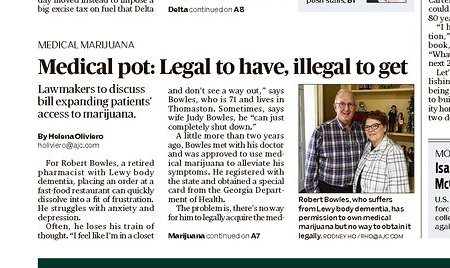
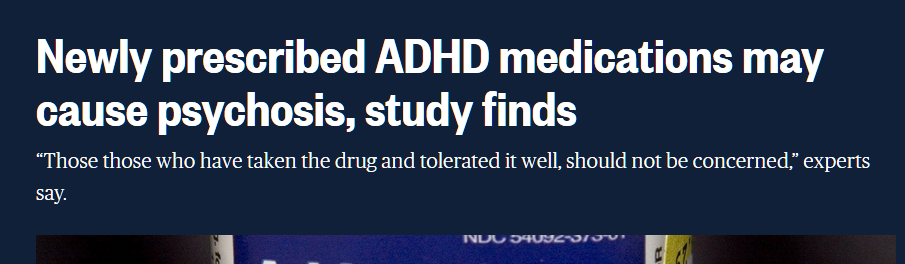
That’s right: It’s time for our 2019 spring region meetings! Get together in your neighborhood for a great dinner and an update on the what’s happening in the legislature. Go to GPhA.org/regions to find yours and sign up today! It includes… Go to GPhA.org/regions to find yours and sign up today! GPhA Past President Robert Bowles is featured with his wife on the front page of the Atlanta Journal-Constitution. Bowles, who suffers from Lewy body dementia, is one of the more than 8,400 Georgians with a Low THC Oil Registry Card. As we’ve pointed out many times (and the AJC does now), that means he’s legally allowed to possess and use low-THC oil, but not allowed to purchase it in Georgia or bring it in from out of state. [C]ard-carrying Georgians grappling with illnesses risk arrest by tapping into an underground medical marijuana supply network, cultivating marijuana in their backyard or buying it off the street. That headline makes about as much sense as NBC’s (see below). The actual news is that methylphenidate users are less likely than Adderall users to suffer from psychosis, according to a study that looked at real-world insurance claim data. But even with amphetamine the absolute risk was still very, very low … but that doesn’t make good scare headlines. Facing a falling stock price (down 15 percent over the last year), Gilead Sciences has raised the prices of its six biggest antiviral drugs — Atripla, Biktarvy, Descovy, Genvoya, Odefsey, and Truvada — by 4.9 percent. It’s not like anyone actually reads the privacy policy, and a new investigation (published in the BMJ) found that “79% of sampled apps shared user data” to “developers and parent companies (first parties) and service providers (third parties).” Wrote the authors, “Sharing of user data is routine, yet far from transparent.” South India–based Dr. Reddy’s got approval to sell a generic version of Suboxone Film — possibly the most effective treatment for opioid use disorder. That victory will bring generic versions of the therapy to the U.S. nearly four years sooner than expected, helping cut into the bill for a drug that can cost about $500 a month at a recommended dose. In fact, the maker of the brand-name version “has raised the price of the most popular 8-milligram dose four times since 2016, a 22 percent increase.” Inflation over that period was about six percent. They’re a potential fix for antibiotic resistance. They actually work. They’re a perfect combination of old (researched for more than a century) and new (finally getting the recognition they deserve). And they look bleepin’ cool. Here’s the latest, from Orthopedics Today. (This is a photo, not an artist’s rendering!) We’ve covered anti-virals from frog mucus. Antibiotics from dragon’s blood. Antiinflammatories from scorpion stings. Now add to the list using caterpillar fungus to treat osteoarthritis. The fungus — called Cordyceps militaris — colonizes the caterpillars of Haepialus moths, as well as other insects. University of Nottingham researchers have focused, specifically, on the potential benefits of cordycepin, a compound derived from this fungus, which, they say, has a unique anti-inflammatory effect that makes it an important candidate in the treatment of osteoarthritis. Anti-epileptic drugs, including carbamazepine, phenytoin, pregabalin, and valproic acid, increase the risk of pneumonia in patients with Alzheimer’s. (In contrast, those drugs don’t pose a pneumonia risk in younger folks.) Kentucky governor says he exposed his nine kids to chickenpox rather that get them vaccinated.Caterpillar fungus, overly chatty health apps, clickbait Adderall headlines, and more
Region meetings are here!
Cannabis oil issue hits close to home
Ritalin users are less likely to be psychotic
What, you thought high drug prices were to pay for innovation?
Yes, healthcare apps share user data
Suboxone Film price could drop 70 percent with new generic
We never miss an article about phages

Things you can do with caterpillar fungus
Alzheimer’s-pneumonia risk
Facepalm
March 21, 2019 ✒ Andrew Kantor
Week 9 of Georgia’s legislative session saw limited progress for GPhA’s priority legislation but plenty of activity. With both our priority bills yet to be heard in their assigned committee, PBMs, insurers, and managed care organizations moving aggressively to try to kill HB 233 — that’s the one that would prohibit pharmacies from profiting off self-dealt prescriptions “steered” from their PBM and insurance affiliates. Read the details here, and contact Lieutenant Governor Geoff Duncan. Thank him for his support of HB 323, express your support for HB 233, and ask him to help HB 233 be heard in committee. His phone number is (404) 656-5030. It’s the 10th fattest city in the country. More than 100 kids and 18 staff members at Pine Street Elementary School in Rockdale have come down with norovirus, forcing the school to close. The FDA has approved the first drug specifically for post-partum depression: brexanolone (but its friends will call it Zulresso). The upside is that it works within 48 hours. The downside is that it needs to be delivered by infusion at a medical center … and, of course, it’s expensive (list price is $34,000). The latest study of the effects of electronic cigarettes finds they seem to increase the odds of “cardiovascular events” (e.g., heart attacks), as well as depression and mental illness. Why are we telling pharmacists about this? Because most teens get their e-cigs from pharmacies, that’s why. That’s not clickbait; you really won’t believe this. Scientists have given ketamine (horse tranquilizer, depression miracle drug) to alligators … and then gave them headphones. The goal: to understand the hea— wait, who cares why they did it? They gave ketamine and headphones to alligators. Science, baby! (Surprisingly, “alligator with headphones” is not an image available from our stock photo library.) “Frequent stress increases diabetes risk.” People with a particular sleep issue — rapid eye movement (REM) sleep behavior disorder, in which normal sleep paralysis is interrupted by violent acting out of dreams — are much more prone to develop Parkinson’s disease. The good news is that there’s a long period between the two, giving plenty of time to hopefully intervene. Canada is unusual among wealthy nations: Its national health insurance doesn’t cover prescription drugs, so people there pay higher prices than most other countries (with — cough cough — one notable exception). So what do you do when your citizens are having trouble affording meds? Obviously create a national drug agency to negotiate prices en masse, create a national formulary of essential drugs that will be made available to all citizens, and set aside $1 billion to help people afford specialty drugs. That’s the plan; the upcoming debate will be about how to pay for it. Capping tax deductions for the rich is already on the agenda. Meanwhile, back down here, a new survey finds that 11.4 percent of U.S. adults are rationing their medication because of cost.Old alligators/new tricks, norovirus decimates Georgia school, big news in Augusta, and more
The PBMs push back, and we need your help: Legislative update, week 9
Big news for Augusta
It’s worse than a Royal Caribbean cruise
Making Mama a bit happier
More dangers of e-cigs
A ketamine story you won’t believe
Remain calm
Sleep and Parkinson’s
Elsewhere: Canada looks to add prescription drug coverage
March 20, 2019 ✒ Andrew Kantor
In the rankings of Georgia’s healthiest counties. It’s followed by Oconee, Cherokee, Fayette, and Gwinnett for the top five according to the annual County Health Rankings report. And the least healthy? Warren, Twiggs, Quitman, Clay, and Miller. It’s that time of year — time for the next DEA National Prescription Drug Take Back Day! The next one is April 27, and it would be great if you would spread the word. Even if you can’t take back unwanted meds, you can click here to use the collection site locator and find the nearest one to point patients to. Skin: For most of you it’s the body’s largest organ, but it gets so little attention when it comes to disease. But could aging skin lead to inflammation and thus other issues? A small study out of the University of California San Francisco says yes, and moisturizing can help. Proctor & Gamble unveiled a new program to take back used razor blades and cartridges (any brand!) in order to keep them out of landfills. Because apparently they take up a lot of space or something. You can even sign up to be an official P&G recycling station! Once again we learn that coffee — not caffeine, but coffee — is a miracle drink. This time, experiments show it might slow the growth of prostate cancer cells. (Technically they “synergistically inhibit the proliferation and migration of prostate cancer cells,” but you get the idea.) Every 10 minutes (on average) a child under 6 goes to an emergency room in the U.S. because of medicine poisoning. In 86% of emergency department visits for medicine poisoning, the child got into medicine belonging to a parent or grandparent. Fish oil (prescription fish oil, not the OTC stuff) appears to help prevent heart attacks — not just one, but potentially multiple CV events. The big caveat: The study was funded by the maker of the medication in question, Amarin’s Vascepa.Georgia’s healthiest county, coffee scores another win, taking care of your skin, and more
Forsyth wins again
Drug Take Back Day is coming
Skin: in the game
Bring out your dead (blades, that is)
Coffee come through … again
Scary stat
Fish oil
March 19, 2019 ✒ Andrew Kantor
It’s official: Low-dose aspirin is no longer recommended for people over 70 to prevent heart disease because there are better ways of treating the issues that aspirin can prevent. In fact, it might not be the best course for anyone because of the risk of bleeding in some people. In fact… “Clinicians should be very selective in prescribing aspirin for people without known cardiovascular disease,” John Hopkins cardiologist Dr. Roger Blumenthal, who co-chaired the new guidelines, said in a statement. “It’s much more important to optimize lifestyle habits and control blood pressure and cholesterol as opposed to recommending aspirin.” A new study finds that most cardiology guidelines actually don’t rely on a high enough standard of evidence. So take it all with a grain of salt (which may or may not be bad for blood pressure). Who: You, your family, friends, and colleagues GPhA price is a mere $17.00 — that’s less than two bucks per inning! CLICK HERE to get your tickets before they sell out! FREE BEER will not be available, but you’re welcome to purchase your own! Previous convention shirts have become collector’s items*, so you’ll want to claim yours now! Head over to the GPhA Store (what, you didn’t know we had a store?) and buy one to wear to Amelia Island for the 2019 Georgia Pharmacy Convention! This time it’s from Legacy Pharmaceutical Packaging. Click here for the NDC numbers — and there are a bunch. A bipartisan bill in the U.S. Senate would limit opioid prescriptions for acute pain to seven days. The National Association of Chain Drug Stores came out strongly in favor of it. Total prescriptions are down in the U.S., but the average prescription length is increasing. In Georgia, the difference is notable but not huge. Short duration opioid prescriptions (three or fewer days) Longer duration opioid prescriptions (greater than 30 days) In both years, the average amount of opioids prescribed in Georgia was 500-649 MME (morphine milligram equivalents) per person. The American Academy of Pediatrics and the CDC both say that — for next year — either the nasal or traditional flu vaccine is OK for kids. The AAP and CDC did not recommend using the nasal spray (live attenuated influenza vaccine, LAIV) in 2016-’17 or 2017-’18 due to poor effectiveness against H1N1 strains. LAIV manufacturer AstraZeneca has since changed the formulation of the vaccine to include a new strain (A/Slovenia) that it suggested would produce better antibody responses than the previous H1N1 strain (A/Bolivia). Good for you? Bad for you? The final answer is … a little of both? “Older Americans Are Awash in Antibiotics” The drugs are not just overprescribed. They often pose special risks to older patients.Aspirin, eggs, losartan, opioids, the Braves, and more
Aspirin, you had a good run
BUT WAIT!
Georgia Pharmacy Day at the Braves!
What: The NL East Champion Braves vs. Milwaukee Brewers
When: Sunday, May 19 @ 1:20pm EDT
Where: SunTrust Park, Atlanta
Why: Just for fun!Get your 2019 convention T-shirt!

* Not our conventions, but I’m sure some others have become collector’s items.
Another losartan recall
Seven is enough
And speaking of opioids…
2019 flu shot: Arm or nose are both OK again
The definitive study on eggs
The long(ish) read
March 16, 2019 ✒ Andrew Kantor
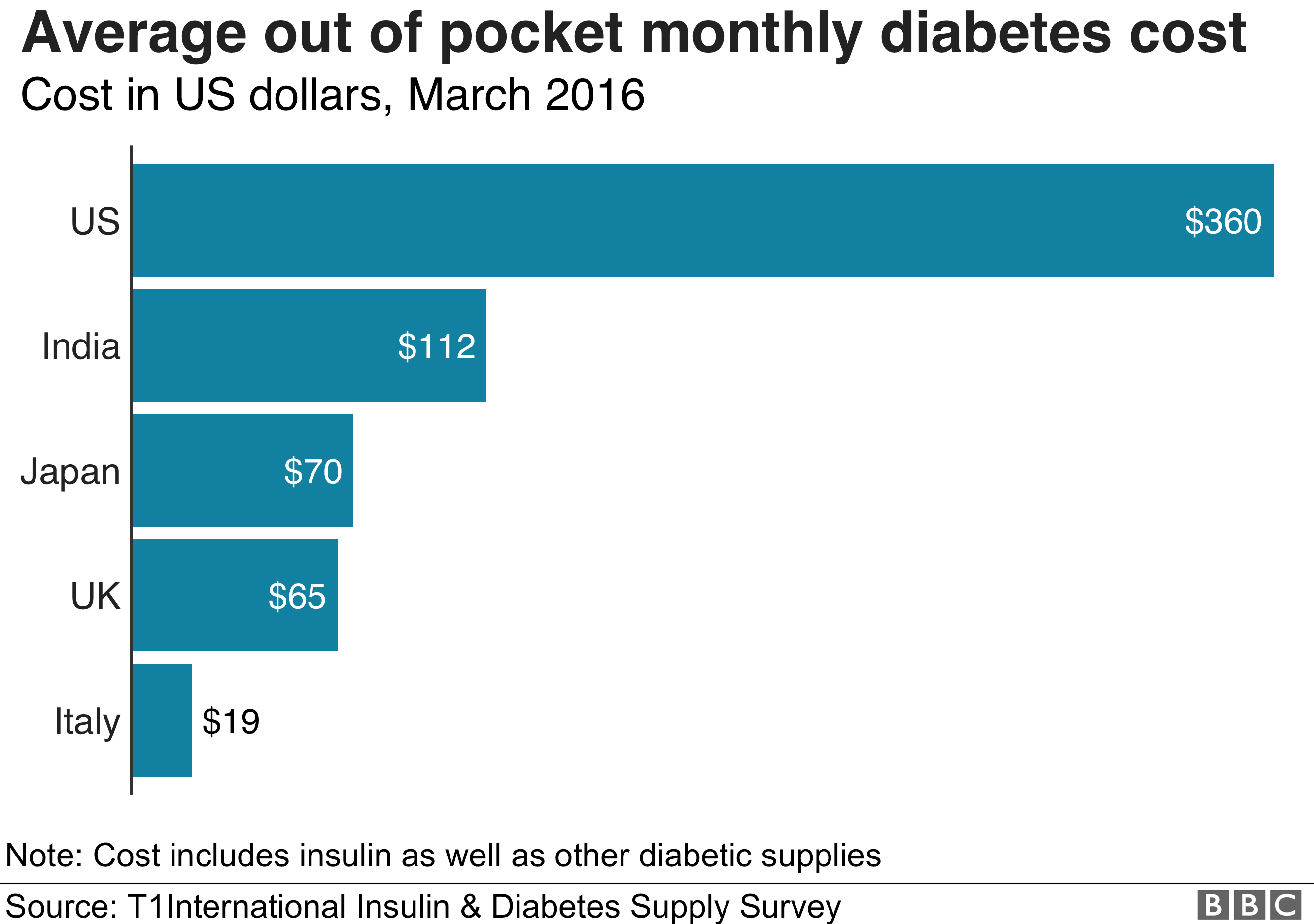
There’s apparently a big increase in hepatitis A infections in the state, as Georgia Health News reports. Since January 2018, 170 acute hepatitis A infections, including one death, have been identified in the state. That’s more than six times the number of infections reported in 2017. You can get one this coming Monday (March 18). Just come to 2 Peachtree Street in downtown Atlanta (aka the State of Georgia Building — map here) at 9:45 a.m. First will be the operations meeting, then you’ll get a tour of the Emergency Operations Center, and even get to chat with employees. No registration necessary — just come on down! It’s right by the Five Points Metro station, and parking is available nearby. Artist’s conception It’s not just having a parent with Alzheimer’s that can mean you have a higher risk — even grandparents or cousins with the disease can be a warning sign. It’s a combination of the closeness of the relatives and the number. Patients taking tramadol for osteoarthritis might die sooner. Sorry, we mean: “[O]steoarthritis patients prescribed tramadol had higher mortality rates at 1 year compared with those who received naproxen, diclofenac, celecoxib, and eterocoxib.” Keep that in mind. What, did you forget about this? Fun fact: The case is still in court and the merger hasn’t been approved. There’s a new hearing scheduled for April 5. Judge Richard Leon of the U.S. District Court for the District of Columbia issued the order on Thursday, saying that he wanted the hearing to discuss which witnesses, if any, should testify before he decides whether to approve the government’s deal with the companies. If you’re a roundworm, or know someone who is, you should be concerned about vitamin B12*. A lack of the vitamin can inhibit your ability to metabolize certain amino acids, and that can mean a toxic buildup that will damage your mitochondria. More importantly, getting enough B12 means your body is “able to dramatically increase resistance to multiple stressors—like heat and free radicals—as well as to pathogens.” The headline: “Chlorhexidine Versus Routine Bathing to Prevent Multidrug-Resistant Organisms and All-Cause Bloodstream Infections in General Medical and Surgical Units.” The translation: Disinfecting with chlorhexidine is no better or worse than washing with soap and water. DDT was the Best Thing Ever for eradicating mosquitoes en masse. (Take that, malaria.) (And Yellow Fever.) Then it turned out to be Not So Great After All — it disappeared in the ’70s, courtesy of Silent Spring, … although it left us with the question of which was worse, mosquito-borne disease or the potential for environmental damage. But we’re still looking at consequences and weighing the costs. The latest: A new study of 15,528 women spanning 60 years finds that women who were exposed to DDT before age 14 are more likely to develop breast cancer. “We don’t know exactly how DDT can cause breast cancer, but we do know that it is an endocrine disruptor.” Specifically, “The human cost of insulin in America” — from selling possessions to pay for it, to crossing into Canada or Mexico, to stockpiling bottles with a few drops left.Hep A, DDT, CVS, DPH, and more
Hep A hits Georgia
How’d you like a tour of the DPH’s Emergency Operations Center?

All in the (extended) family
A tramadol consideration
CVS and Aetna haven’t merged yet
It probably applies to humans too
* Did you know it’s also called “cobalamin”? Me neither.
Why not just say that?
A hop in the WABAC* machine
* Yes, that’s the correct spelling. We’re picky about those things.
The long read: insulin in America
Do you want to send your members the daily Buzz email newsletter (customized for your state and organization, perhaps)? Let’s talk — just drop me a note at andrew@gphabuzz.com!

- Doctors Warn of a Deadly Complication From Measles Outbreaks
- Medicare Advantage ‘Dark Money’ Group Attempts To Win Higher Payments for Insurance Companies
- Families Scramble To Pay Five-Figure Bills as Clock Ticks on Promised Preauthorization Reforms
- As Lung Disease Threatens Workers, Lawmakers Seek Protections for Countertop Manufacturers
- Republicans Fret Over RFK Jr.’s Anti-Vaccine Policies While MAHA Moms Stew
- Primary Care Is in Trouble. So Doctors Band Together To Boost Their Market Power.
- January 2025
- December 2024
- November 2024
- October 2024
- September 2024
- August 2024
- July 2024
- June 2024
- May 2024
- April 2024
- March 2024
- February 2024
- January 2024
- December 2023
- November 2023
- October 2023
- September 2023
- August 2023
- July 2023
- June 2023
- May 2023
- April 2023
- March 2023
- February 2023
- January 2023
- December 2022
- November 2022
- October 2022
- September 2022
- August 2022
- July 2022
- June 2022
- May 2022
- April 2022
- March 2022
- February 2022
- January 2022
- December 2021
- November 2021
- October 2021
- September 2021
- August 2021
- July 2021
- June 2021
- May 2021
- April 2021
- March 2021
- February 2021
- January 2021
- December 2020
- November 2020
- October 2020
- August 2020
- July 2020
- March 2020
- February 2020
- January 2020
- December 2019
- November 2019
- October 2019
- September 2019
- August 2019
- July 2019
- June 2019
- May 2019
- April 2019
- March 2019
- February 2019
- January 2019
- December 2018
- November 2018
- October 2018
- April 2017
