
February 28, 2019 ✒ Andrew Kantor
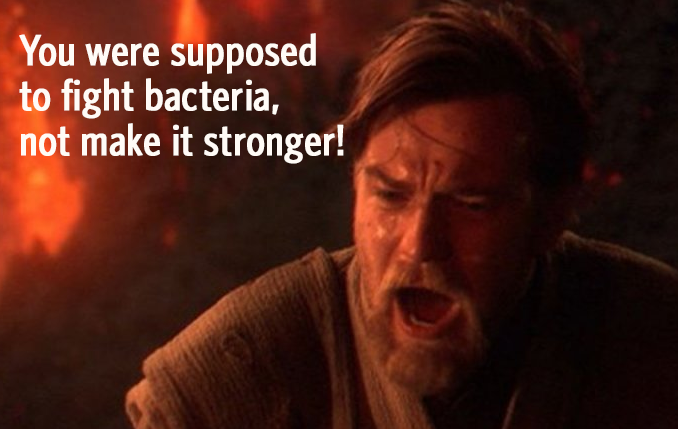
Pharmaceutical execs testified before the Senate Finance Committee Tuesday. Much was hyped before it began. (Trust me — the guy who reads pharma news all day.) Senators grilled, execs answered politely. Fireworks there weren’t. Here’s what happened in two quotes. “If you don’t take meaningful action to reduce prescription drug prices, policymakers are going to do it for you.” —Senator Robert Menendez And after the hearing: “This is a $460 billion industry. You think three hours of an orchestrated show before Congress will lead to different behavior? I don’t think so.” —Ronny Gal, securities analyst with Sanford C. Bernstein & Company. Triclosan, which is added to a lot of consumer products (e.g., soap, toothpaste), turns out to actually make the germs stronger — it “may inadvertently drive bacteria into a state in which they are able to tolerate normally lethal concentrations of antibiotics.” Ruh-roh. Patients who take radioactive chemotherapy can be a danger after they die … to crematorium workers. In older men, not getting enough vitamin D can reduce the strength of their handgrips, leading to those horrid wimpy handshakes we’ve all experienced. In case you didn’t know, Anthem and Cigna are still fighting over who owes what after their failed merger. Cigna, which would have been acquired by Anthem, says it’s the injured party and is demanding about $15 billion. Anthem, which runs Blue Cross and Blue Shield plans in more than a dozen states, insists it’s owed $20 billion because Cigna dragged its feet to sabotage the deal. According to a study out of UNC-Chapel Hill that looked at insurance claims of 19 million patients, Americans spend hundreds of millions of dollars every year to treat hemorrhoids. And while “It is important that patients receive high-quality and cost-effective interventions that give them good quality of life,” the study authors raised concerns about “potential overuse” of treatments. “Depression more common for women working longer hours, study says” “America seems to be in the midst of a full-blown panic attack. Is there anything we can do about it?” from the New Republic.Radioactive crematoria, coming to grips with vitamin D, trouble down under, and more
Tuesday’s drug hearings in two quotes
That wasn’t the plan
Radioactive after death
Vitamin D: Getting a grip
Divorce court, drugmaker style

The quiet crisis
Captain Obvious strikes again
The long read: Why are we so anxious?
February 27, 2019 ✒ Andrew Kantor
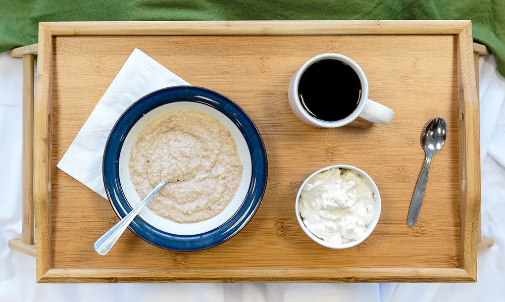
The government (that’d be the U.S. government) has asked the judge overseeing the CVS/Aetna merger if he would mind, you know, getting on with the approval. When last we left our hero, he was annoyed at being treated as a “rubber stamp” and wanted more info about the merger’s potential effects. PBMs earned themselves $123 million in spread pricing in Kentucky last year, according to an investigation by the state’s Cabinet for Health and Family Services (“Opening the Black Box”) — and that’s a 13 percent increase over 2017. Thanks to an agreement between GPhA and Georgia’s managed care organizations, PBM spread pricing is being eliminated here in favor of pass-through pricing. Students and faculty at the University of Findlay College of Pharmacy in Ohio have embarked on an effort to gather data from recovering pharmacists throughout the country. If you or someone you know is a recovering pharmacist, will you consider participating in their research project? Please CLICK HERE for a simple and straightforward survey. It will only take a minute to complete, your responses will be anonymous, and data is strictly confidential. And if you’re dealing with addiction, remember that you can contact PharmAssist, offered through to the Georgia Pharmacy Foundation, at (404) 558-1983. Buying human insulin over the counter is more common than you might think, especially at Walmart (because it sells a generic version). When people can’t afford the prescription version, that’s where they turn — to the tune of an estimated 18,800 vials (!) per day. That’s how FDA commish Scott Gottlieb described the U.S. healthcare payment system. “The sick people are helping to subsidize the healthy people. That’s not how insurance is supposed to work. So we’ve got a wacky system where the discounts aren’t flowing to the people.” Spain is the world’s healthiest country, according to the latest data, with Italy, Iceland, Japan, and Switzerland rounding out the top five. (Norway ranks #9.) The U.S. is at #35, just behind Costa Rica and one spot ahead of Bahrain. U.S. hospital patients are at risk of malnutrition because — for some unfathomable reason — they don’t want to eat hospital food. Bonus: Check out this comparison of hospital meals around the world. Could be worse. Could be Russia. “It’s Time for Pharmaceutical Companies to Have Their Tobacco Moment,” writes the New York Times (like, the Times itself — the editorial board). The industry’s own explanations — that other entities in America’s byzantine health care system are to blame for most price increases, and that its products are expensive and risky to make — are tough to swallow, given drug companies’ conspicuous profit margins. “CBD Is Everywhere, but Scientists Still Don’t Know Much About It” Russian hospital food, Kentucky finds the PBM spread, Gottlieb waxes wacky, and more
Nudge nudge
Elsewhere: PBMs in Kentucky
Know a recovering pharmacist?
Human insulin sales are big
The word of the day: Wacky
For once, Norway isn’t the best country
Not even the Jell-o?
The big read: Pharmaceutical companies
The long read: What’s with CBD?
February 26, 2019 ✒ Andrew Kantor
The FDA is proposing some changes to sunscreen regulations. There are apparently about 16 ingredients used in them. Two are safe and effective (zinc oxide and titanium dioxide). Two are NOT (PABA and trolamine salicylate), and the other 12 … well, the agency would like more data. Oh, and it’s also considering allowing sunscreens to claim an SPF up to 60, instead of the current 50. The GPhA Board of Directors sets the goals of the association — what services to offer, what policies to support, how best to spend the association’s resources, and more. You can be a part of that. You can be one of the 11 members of the board. (Yes, there are requirements and responsibilities; you can read them at GPhA.org/2019board.) For the 2019-2020 board, GPhA is looking to fill three seats, each with three-year terms: Nominate yourself or someone else to run for a seat on the board. We encourage applications from all pharmacy practice settings. (If you have questions, feel free to contact Governance Manager Merrily Bennett at mbennett@gpha.org.) Click here to go directly to the nomination form. The deadline for applications is 11:59 p.m. EST on March 11, 2019. The election itself will begin May 23, 2019 and last until 11:59 p.m. on June 13, 2019. The results will be announced on June 14 at the second general session of the Georgia Pharmacy Convention. Don’t just stand there, offer to lead. Be a bigger part of Georgia pharmacy — serve on the board. It’s good for his blood pressure. To the tune of “Breakfast at Tiffany’s“: You’ll say we’ve got nothing in common, And I said, “What about high insulin prices?” The U.S. has the highest drug-overdose rate among wealthy nations. In the early 2000s it was Finland and Sweden, but now we’re double their rate — and that means we have the lowest life expectancy. Ugh. A plant in Japan — ashitaba — might help you live forever. (Not really, but it does appear to help cells with autophagy; i.e., cleaning up cellular debris and detritus.) It’s more effective than resveratrol (which gets all the hype), and it gave fruit flies a 20-percent lifespan boost. What’s more contagious than measles? Anger. The culprit? “Computer-mediated communication” — aka, social media. (Good news: Happiness is, too.) In short, scientists put single-celled organisms in a bucket.* Then they added predators (also unicellular). Within 750 generations (i.e., a blink of an eye*), those original organisms had evolved into multicellular life forms. Artist’s conception Google is adding drug dropoff locations to Google Maps. A search for queries like “drug drop off near me” or “medication disposal near me” will display permanent disposal locations at your local pharmacy, hospital or government building. Questionable sunscreen ingredients; run, Grandpa, run; evolution in a bucket, and more
Potential sunscreen changes
There’s still time to apply for the GPhA Board of Directors
Chase grandpa around the block

Common ground in Congress
No common ground to start from,
and we’re falling apart.
You say the world has come between us,
Our lives have come between us.
Still I know you just don’t care.
She said, “I don’t really like them, and as I recall
we both promised to end them.”
And I said, “Well, that’s one thing we’ve got.”American exceptionalism
Cellular vacuum
Spread the smiles instead
OK, this is just really cool

* Metaphorical
ICYMI:
February 22, 2019 ✒ Andrew Kantor
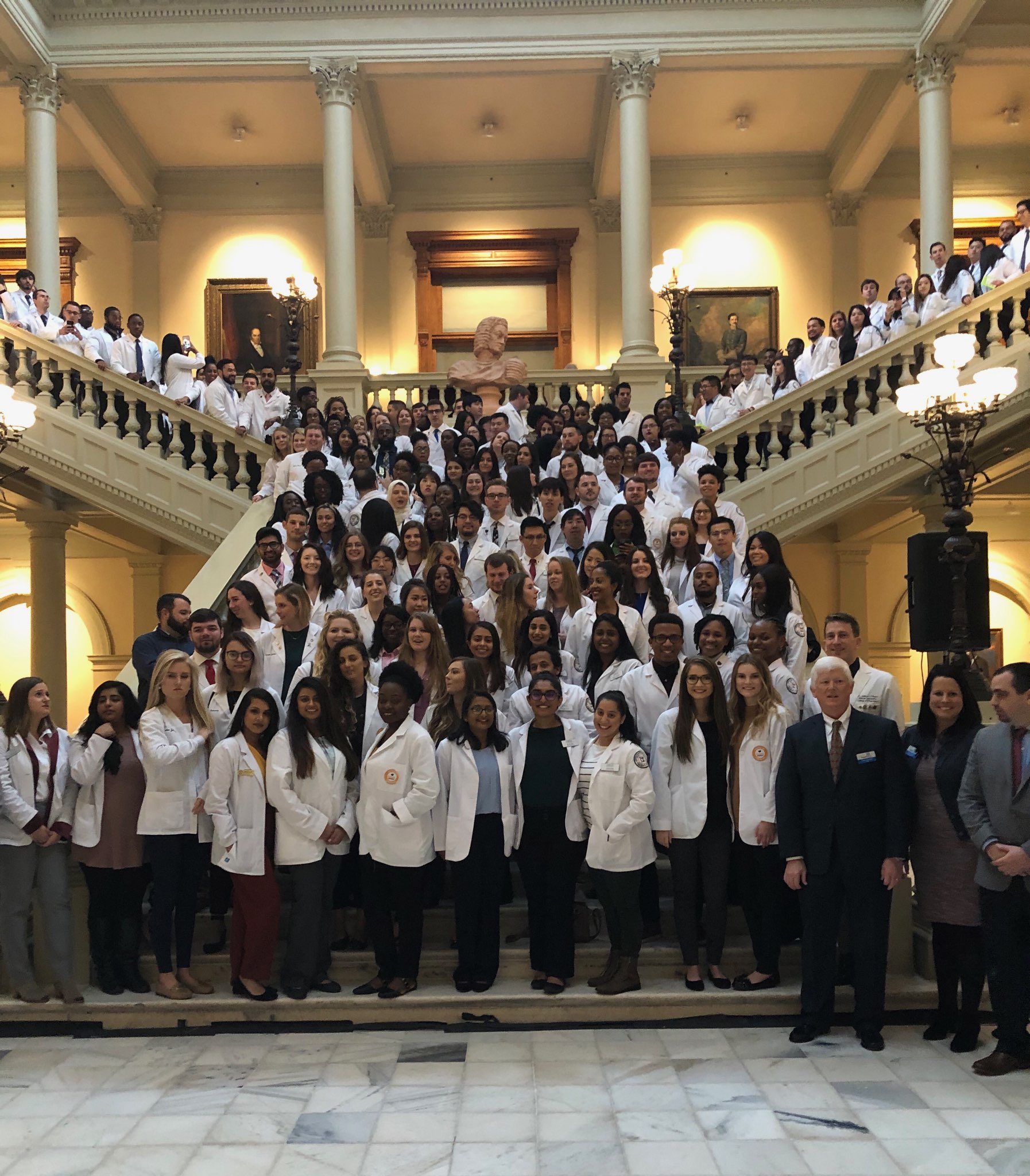
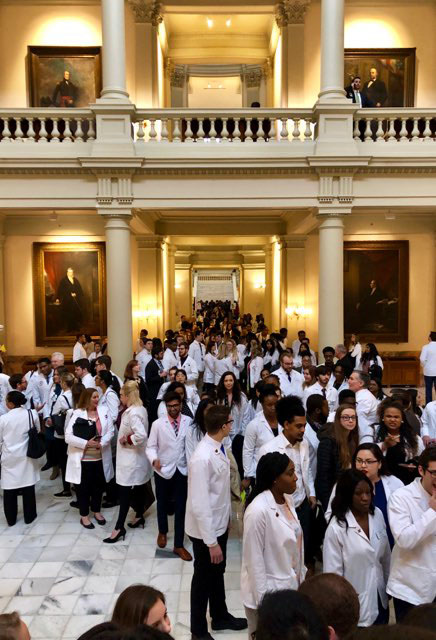
Check out these photos of student pharmacists from Mercer and South universities as they hit the halls of the Gold Dome on Wednesday to talk to legislators about HB233 andHB323: From Mercer’s Dalton Vining: From Mercer’s Elizabeth Heard: From Mercer’s Gabriel Ramirez: And my favorite, from Mercer’s Donna Thomas: Congrats to Dominique Taylor, student pharmacist at Mercer University College of Pharmacy — she’s winner of APhA’s 2019 Mary Munson Runge Scholarship. (It’s in honor of Mary Munson Runge, a pioneer for women in pharmacy and the the first female and African American president of APhA.) Nice going, Dominique! 127 confirmed cases in the U.S., more than both 2016 and 2017. While half of them are in Washington State, Georgia is one of nine other states to report the measles. Tell your patients to vaccinate their kids! Speaking of which, FDA Commissioner Dr. Scott Gottlieb said the federal government may have to step in if states don’t do more to get kids vaccinated. Georgia is one of 47 states that allow a religious exemption*; like most states, though it does not allow philosophical exemptions. Georgia has the third-highest percentage of rural hospitals facing closure — 26 of them across the state (41.3%) are at a high risk of closing for financial reasons. Only Alabama and Mississippi rank lower. Pharmacist is the top-paying job for women in the U.S. Other facts from the USA Today report: Women make up about 62.7 percent of the profession, but they typically earn 83.2 percent of their male counterparts. After 28 students at Sandtown Middle School got sick, the GBI got involved … and it found that at least one of the items the kids ate showed the presence of THC. They’re looking at “homemade Rice Krispy treats and heart-shaped lollipops” from Valentine’s Day. If a business and healthcare writer can’t navigate the healthcare system to get his daughter’s medication, how can ‘civilians’ expect to? It’s available, but @ExpressScripts will only pay for it if it’s compounded in PA. But that means her secondary insurance, MediCal, won’t pick up the co-pay ($125 a month). I gave up yesterday and went ahead with the co-pay but it still won’t process through CVS Specialty Pharm How’d he finally get it? By having his wife, a lawyer, threaten an injunction for medical negligence. Sheesh. Epidiolex arrived today after 19 calls + 338 min on phone. Still not clear on hold up. It’s not a miracle drug – my daughter is on 4 meds, still has weekly seizures, but had 4 in past week off this med, so it helps. Six states — Arizona, California, Ohio, Rhode Island, Vermont Virginia, and Washington — now require that physicians give patients with opioid prescriptions a prescription for naloxone as well. The federal government is also considering such a “co-prescribing” recommendation.
Religion and vaccinations, Mercer at the Dome, Georgia’s hospital crisis, and more


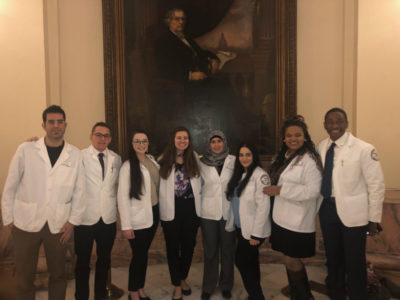

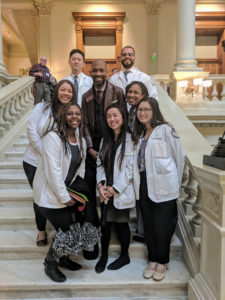

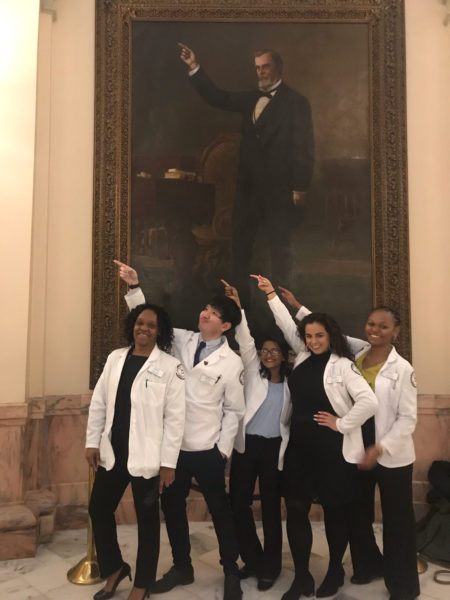

Scholarship shout-out
Measles so far
* Interestingly, the only major religious denomination that forbids vaccination is the Church of Christ, Scientist. Judaism, Islam, Hinduism, Buddhism, and other Christian denominations “have no theological objection to vaccination.”
Georgia faces rural-hospital crisis
Women pharmacists: Looks like you made a good choice
Meanwhile, in Fulton County…
Why can’t he get his daughter’s Epidiolex?
Elsewhere
February 21, 2019 ✒ Andrew Kantor
The Georgia Senate’s Health and Human Services Committee backed a bill that would allow Gov. Brian Kemp to ask the federal government for a Medicaid waiver and expand the program to some more low-income Georgians. The committee was not allowed to consider an alternative bill from Senate Minority Leader Steve Henson. He wants Georgia to cover people earning less than $16,754 a year,* but Kemp and GOP senators set the income limit at $12,141 a year**. The difference is notable because someone working full-time (40 hours a week) at Georgia’s minimum wage ($7.25 an hour) would bring in $14,500 a year — and thus earn too much to qualify for Medicaid under the approved plan. Georgia has the third-highest rate of uninsured people in the country. “[W]e have some of the biggest populations, with some of the most serious disease states, in pharmacy practice as a whole.” Sure, you learned how to give immunizations, but having an APhA certificate helps you differentiate yourself — and makes sure your patients are getting the best treatment. That’s why GPhA is offering “APhA’s Pharmacy-Based Immunization Delivery: A Certificate Program for Pharmacists” on March 31 in Macon (on the campus of Mercer U). This is always one of our hottest courses, so get to GPhA.org/2019immunization fast before the class fills! If you have bladder-cancer patients who take BCG, you’re not alone in realizing there’s a major shortage of the drug — and no comparable substitute. A report published in JAMA found that everyone along the chain was responsible for giving too many people too much fentanyl. After reviewing the data, the researchers concluded that prescribers, pharmacists, drug companies and the FDA — all of whom had agreed to special rules and monitoring for use of the powerful opioid — had allowed it to fall into the hands of thousands of inappropriate patients. In ad spending, that is. In January, Pfizer spent $6 million more on ads for Xeljanz than AbbVie did for Humira. (Most of that was to explain that “Xeljanz” is a drug and not the name of the 2020 Zarflaxian candidate for galactic emperor.) It doesn’t matter what you learned from watching “Twilight.” The FDA cautions people: Drinking the blood* of the young will not cure your ills. Maryland passed a law that would require generic-drug makers to justify big price hikes on common drugs. The Supreme Court just said “No” because it would affect trade beyond the state’s borders.Disappointment for vampires, Medicaid expansion takes a step, sharing the fentanyl blame, and more
Senate committee approves Medicaid waiver bill
* 138% of the Federal Poverty Level — that’s $34,638 for a family of four
** 100% of the FPL — that’s $25,100 for a family of fourA career option you may not have considered
Sign up now: Don’t miss your APhA immunization certificate
Cancer-drug shortage
Everyone’s to blame (including pharmacists)
Humira falls from 1st place
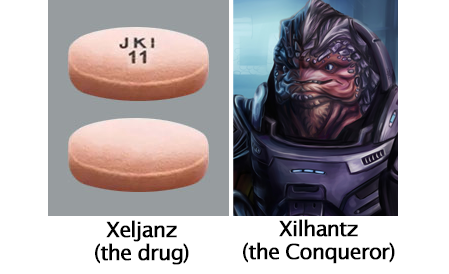
Besides, you’d have to avoid sunlight
* Technically it’s receiving plasma, but that would ruin the joke.
Elsewhere: Maryland’s price-gouging bill struck down
February 20, 2019 ✒ Andrew Kantor
Unlike most of the country, this year Georgia has been hit by the A(H3N2) flu strain. Now, though, the other strain — A(H1N1) — is starting to appear. The gut biome (and its wide effect on health) is getting more and more attention, including research on the, er, outgoing end. But no one wants to call himself an “excrement researcher” (or worse). So scientists at the University of North Carolina have a better idea — and one that was published in the journal Gastroenterology: in fimo. “[S]o many scientific words are based in Latin and there hasn’t been one for the experimental study of excrement, even though the scientific study of human waste is now at the forefront of biomedical research.” Both chains are moving from plain ol’ pharmacies to broader “health-focused” stores, and CNBC explains what that means. The sun* might actually help fight both type 2 diabetes and cardiovascular disease “by lowering blood insulin and lipid levels,” according to a study in The Journal of Clinical Endocrinology & Metabolism. America’s aging population has some health issues — and pharmaceutical needs — that insurers are still refusing to pay for. Sometimes there are over-the-counter solutions, but not always. And for prescription meds the the out-of-pocket costs might be too high for those on a fixed income. Unfortunately, medications that treat these conditions may cost people hundreds of dollars a month if their insurance doesn’t pick up any of the tab. Teva says it expects to own 25 percent of the epi-pen* market by the end of the year. A bill proposed in Georgia would allow for up to 10 facilities to grow cannabis and produce low-THC oil. So let’s say the bill passed and you had $50,000 lying around. And let’s say you felt like applying for one of those licenses (and had another $100K to pay if you actually got one). How hard can it be grow marijuana? Harder than you think. If you woke up today and thought, “What should I tell patients who ask me about toenail fungus?” — well, Men’s Health magazine has your back. Bad enough the Brits are stockpiling meds while they await a messy Brexit. Now fake-med sellers are taking advantage. (And right next door, the Irish deputy PM said, “Pharmacists and people in general should not be stockpiling medicines because actually stockpiling in itself sometimes causes problems with supply.”) “Inside the Los Angeles Clinic That Uses Ketamine to Treat Depression”A different flu hits Georgia, complexities of pot farms, a new Latin term, and more
Double whammy for Georgia
Our number two story
What are Walgreens and CVS up to?
Come to the light!
* That’s the big yellow ball in the sky, for those of you who work too many hours
Let grandpa have his fun
Great Expectations
* I could have written “generic epinephrine injection market” but that’s too many words to type.
Do you want to build a pot farm?
This little piggy used cornmeal
Elsewhere: Could be worse, could be Britain (take 2)
The long read: The ketamine club
February 19, 2019 ✒ Andrew Kantor
You need to read Greg Reybold’s legislative update for week 5 of the session. The two major bills we’re supporting were introduced, and they can be game changers for the profession. The most notable parts of these bills: And more. Click here to read Greg’s full update, which includes info on other health-related bills. The CDC has “opioid overutilization criteria” that’s used to help spot potential opioid abusers. But one researcher ran the numbers to see how accurate those criteria were. What she found: In each of three six-month cycles, less than one percent of patients met that overutilization criteria. But over those 18 months, the actual proportion of patients who were diagnosed with opioid use disorder (or who overdosed) “increased from 3.91% in the first cycle to 7.55% in the last.” So it seems that either the mark was set too high, or prescription data isn’t a great way to intercept abusers. Researchers found that the risk of cardiovascular events “was 96 percent lower among men who could do 40 or more push-ups during timed tests compared to the men who could do fewer than 10.” The FDA has finalized a rule giving info on several bulk drug substances that compounders (who aren’t registered as outsourcing facilities) can and cannot use. There are six bulk drug substances that now can be used by non-outsourcing compounders, and four that cannot. Six bulk drug substances that are ON the 503A bulks list: Four substances that are OFF the 503A bulks list: The final rule goes into effect on March 21. Click here for details from the FDA including a link to the final rule The flu is still widespread. That is all.Anti-steering bill introduced, can you do 40 pushups?, new compounding compounds, and more
GPhA’s huge bills introduced
Are CDC’s criteria too lax?
Drop and give me 40
Compounders: Changes to the 503A bulks list
This again
February 18, 2019 ✒ Andrew Kantor
About 8,400 Georgians have a license to possess and use low-THC cannabis oil. But the law still prohibits them from actually buying it or even bringing it into the state, i.e., they can only get it via the black market. A bill introduced in the Georgia House (HB 324, “Georgia’s Hope Act,” by Rep. Micah Gravley, R – Douglasville) would aim to change that. It would allow the licensing of up to 10 facilities to grow marijuana for low THC-oil production, and an additional 10 licenses for distributing the oil to those 8,400 patients. GPhA’s position: We do not have a position on the issue of state-licensed THC oil production, but we maintain that, should such a law be passed, pharmacists are part of the team that oversees the use of the oil by patients. Overall: 47% (per the CDC) For people 6 months–17 years: 61%. Scary: For those over 50, it was only 24%. But these numbers are for the A(H1N1) strain that’s affecting most of the country. In Georgia, it’s the A(H3N2) that’s making the rounds. For the Peach State, this year’s vaccine is only 44% effective overall; the CDC doesn’t have age breakdowns yet. Test2Learn is offering pharmacogenomic certificate training next Saturday, February 23. It’s $497, but that can earn you 20 hours of ACPE-accredited CE hours and a certificate in pharmacogenomics that can go on your wall … and your résumé. The course is from 9:00 a.m. to 5:00 p.m. at Integrity Compounding Pharmacy (8601 Dunwoody Place, Suite 750, Sandy Springs [map]). Besides the “principles of pharmacogenomics,” the course teaches — well, it teaches a lot. Your best bet is to click here for the full details of what it covers. We particularly like this part: Program participants have the unique opportunity to utilize an aggregated genomic data set, or their own personal data, for the in-person educational module. Check it out! We’ll just quote Bloomberg here: “New cases of HIV among gay and bisexual men fell by almost a third to the lowest on record, according to the world’s first study to measure the impact of Gilead Sciences Inc.’s Truvada pill on reducing the AIDS-causing virus in a large population.” Pro tip: If you think your company might someday be charged with racketeering for bribing physicians to prescribe your drug … don’t make a rap video about pushing that very drug. (And don’t have it feature a dancing nasal spray bottle.) Insys’s very bad idea, Georgia contemplates marijuana, the flu numbers so far, and more
Georgia considers marijuana licenses
Flu vaccine effectiveness in 17 seconds
Pharmacists and techs: Earn a certificate in pharmacogenomics
Truvada is working — big time
Bad ideas

February 15, 2019 ✒ Andrew Kantor
We’ve got an amazing bill in the legislature this year: HB233, which would ban PBM steering. That’s right: It would prevent PBMs from requiring or “incentivizing” patients to use PBM-owned pharmacies, or even promoting those pharmacies to patients. Now we need your help. Sign up to be part of a Pharmacist Advocacy Team. You’ll join our advocacy team and about a dozen other pharmacists at the Gold Dome to meet with legislators and explain why this bill is critical for patients. Our lobbyists do a great job, but nothing is more powerful than a roomful of constituents in white coats. We’ve got three teams available. Please sign up for one of them — your voice is critical! The bill would make it easier for physicians to get exceptions from insurance company “try and fail” requirements. Further… The bill would require a health plan to grant or deny an exception to its drug protocols within 24 hours in an urgent health care situation, and in two business days for a non-urgent case. And yes, GPhA supports this bill! Apparently it’s become harder for patients to get buprenorphine (to treat opioid-abuse disorders) than to get the opioids themselves. From 2007 to 2018, Medicare part D patient access to buprenorphine fell from 89 percent in 2007 to 35 percent in 2018 […] In contrast, patients had a far easier path to opioids. During the same period, Medicare part D plan coverage of opioids jumped from 93 percent to 100 percent coverage, without restrictions, according to researchers. Electronic cigarettes: They’re a gateway to smoking. No, they’re a way to quit smoking. No, they’re a gateway. No, they’re a tool for quitting. Gateway! Tool! If you’re not sure which is correct, you’re not alone. It’s almost as if there’s nuance to the issue and not just a simple answer. Instead of “Medicare for All,” one U.S. senator wants to take a less-aggressive approach: Medicare at 50 because people over 50 tend to have higher medical bills and can struggle to afford insurance. [The Congressional Budget Office] estimated that the premiums for the public plan would be about $7,600 annually — significantly lower than the average $15,300 premium on the Obamacare markets that a 64-year-old currently faces. What’s notable about this bill is that it has broad bipartisan support: 69 percent of Republicans polled favor allowing Medicare buy-in at age 50 instead of waiting till age 64. We all know healthcare gets more expensive every year. Interesting note: Over the last 11 years, private insurance companies have seen costs go up 4.4% a year per enrollee, while Medicare’s costs only went up 2.4% per year, and Medicaid paid a mere 1.6% more each year. Say what you want about the government buying $1,000 screwdrivers, but when it comes to healthcare it’s doing something right. So you go out for a nice steak dinner with a glass of wine, right? Bad idea. A new Dutch study says that getting too much protein from animals is tied to non-alcoholic fatty liver disease. And that glass of wine? That can up your risk of breast cancer, the WHO reminds us. Fine, fine, you say — you’ll take a Diet Coke instead. Not so fast. A new study out of the Albert Einstein College of Medicine* finds that diet sodas can increase the risk of stroke, especially in older women. We’ve all been there — cuddling with a significant other who decides to play a little footsie… with feet that feel like sandpaper. Yeow! Fear not: Arm and Hammer is introducing Heels & Feet Moisturizer (“plus gentle exfoliators”). Coming to your pharmacy soon?Opposite Day for opioid treatment, a dinner of death, Georgia step therapy bill, and more
GPhA needs your help
Georgia House committee votes to reduce step therapy
It’s Opposite Day*
* No it isn’t
The two faces of E-cigs
Medicare at 50?
Speaking of Medicare….
Ruining your dinner
* Why did they name a medical facility after a physicist?
Be less abrasive

February 14, 2019 ✒ Andrew Kantor
While our own Greg Reybold is the best place to keep up with pharmacy-related bills in the legislature, Georgia Health News has a great piece covering the major healthcare bills being considered. Do you know a Georgia pharmacy professional who deserves recognition for his or her work? Perhaps an amazing young pharmacist, an outstanding innovator, or someone who is a paragon of pharmacy excellence? Or maybe someone who has spent a lifetime in service of others and the profession of pharmacy? Whomever it is, we need you to tell us! It’s time to nominate people for the 2019 Georgia Pharmacy Awards. And the deadline is this Friday, February 15. These are awards created by your association, but its your input — your nominations — that give them meaning. And it starts with nominations. Visit our awards page at GPhA.org/awards for more information on award criteria and to make your nominations. Deadline for submissions is February 15, 2019. Piedmont Fayette Hospital in Fayetteville was named one of the top one percent (!) of hospitals in America by HealthGrades — that places it as one of the 50 best hospitals in the country. Emory University Hospital and Emory University Hospital Midtown, both in Atlanta, were named to the top two percent, while Emory Saint Joseph’s (Atlanta), Piedmont Hospital (Atlanta), Piedmont Newnan Hospital (Newnan) and Wellstar Kennestone Hospital (Marietta) all made the top five percent. The FDA is planning to start taking a harder look at dietary supplements — and that’s not just sending out occasional warning letters. Besides stronger enforcement of “don’t put secret prescription meds into products” rules, it’s considering tighter restrictions and clearer disclosures. An FDA committee has endoresed full approval of esketamine, which, you can tell from the name, is based on everyone’s favorite animal tranquilizer (and potential depression treatment), ketamine. If it gets FDA approval, esketamine “is expected to be used in combination with antidepressants, but the latter can take a month or two to take effect. Esketamine, on the other hand, might have an effect within hours or days.” Although he was “disturbed to hear” of commercial-insurance patients having to use step therapy when they switch providers, when it comes to Medicare Part B plans, HHS Secretary Alex Azar says he supports step therapy and prior authorization, claiming it keeps costs down.Georgia’s awesome hospitals, FDA’s supplement crackdown, ketamine could be approved, and more
Healthcare laws in the legislature
Tick tick tick — awards nominations close tomorrow!
Georgia hospitals ranked among the best
Mind if we check out your supplements?
FDA could approve ketamine-ish drug
HHS wants to use step therapy for Part B
Do you want to send your members the daily Buzz email newsletter (customized for your state and organization, perhaps)? Let’s talk — just drop me a note at andrew@gphabuzz.com!

- Doctors Warn of a Deadly Complication From Measles Outbreaks
- Medicare Advantage ‘Dark Money’ Group Attempts To Win Higher Payments for Insurance Companies
- Families Scramble To Pay Five-Figure Bills as Clock Ticks on Promised Preauthorization Reforms
- As Lung Disease Threatens Workers, Lawmakers Seek Protections for Countertop Manufacturers
- Republicans Fret Over RFK Jr.’s Anti-Vaccine Policies While MAHA Moms Stew
- Primary Care Is in Trouble. So Doctors Band Together To Boost Their Market Power.
- January 2025
- December 2024
- November 2024
- October 2024
- September 2024
- August 2024
- July 2024
- June 2024
- May 2024
- April 2024
- March 2024
- February 2024
- January 2024
- December 2023
- November 2023
- October 2023
- September 2023
- August 2023
- July 2023
- June 2023
- May 2023
- April 2023
- March 2023
- February 2023
- January 2023
- December 2022
- November 2022
- October 2022
- September 2022
- August 2022
- July 2022
- June 2022
- May 2022
- April 2022
- March 2022
- February 2022
- January 2022
- December 2021
- November 2021
- October 2021
- September 2021
- August 2021
- July 2021
- June 2021
- May 2021
- April 2021
- March 2021
- February 2021
- January 2021
- December 2020
- November 2020
- October 2020
- August 2020
- July 2020
- March 2020
- February 2020
- January 2020
- December 2019
- November 2019
- October 2019
- September 2019
- August 2019
- July 2019
- June 2019
- May 2019
- April 2019
- March 2019
- February 2019
- January 2019
- December 2018
- November 2018
- October 2018
- April 2017
