
January 18, 2019 ✒ Andrew Kantor
In an analysis of the CVS/Walmart spat, one analyst (George Hill at RBC Capital Markets) said — according to Business Insider — that it’s “an early sign of how CVS will use its massive negotiating power to its own benefit.” The goal is to direct more people who use CVS and Aetna insurance products into the company’s drugstores, Hill said. CVS, surprisingly, didn’t disagree. In fact, it said, that’s exactly the plan. CVS has said that directing Aetna customers into its stores to receive healthcare is a major element of the strategy for the combined company, because that can keep them healthier at a lower cost. Here at GPhA — where we fought hard against the merger, knowing it would be bad for patient choice and thus for patient care (and received some major concessions through the good efforts of the insurance commissioners office) — we can only say, “Not a big surprise.” Quick and simple: We’re offering APhA’s MTM certificate program. Real soon. A new study published in the British Medical Journal looked at more than 19 million outpatient antibiotic prescriptions. It found that almost a quarter of all those scripts were inappropriate, and a lot more may have been. Only the remaining 13.8% were absolutely recommended for the reported diagnosis. And who is writing all these prescriptions? A different investigation found that it’s dermatologists who write the most (although they are writing fewer long-term scripts). Get out your favorite flipping coin — ours is a 1975 U.S. quarter. Today we learn that eggs are (flip that coin!) … good for you. That’s right, the Finns report that an egg a day can help stave off diabetes. Some brands that use Teflon fiber contain PFAS — which you may have heard of in relation to non-stick cookware. (Hint: It’s not good) So, assuming you sell floss, you might consider which types you carry. (And just between us, as we told you a couple of years ago, flossing really doesn’t have any proven benefit.) Former GPhA CEO Scott Brunner — currently a senior VP at NCPA — is moving to the International Academy of Compounding Pharmacists (IACP). He’ll take over as IACP’s new CEO effective March 4. Note: An earlier version of this story reported that Brunner was going to the International Association of Culinary Professionals (IACP). We regret any confusion. Note: An even earlier version of this story reported that Brunner was going to the International Association of Chiefs of Police (IACP). We regret any confusion. As reported in the Irish Medical Journal, a man there was hospitalized after he tried to play pharmacist and treat his own back pain. “He had devised this ‘cure’ independent of any medical advice.”CVS admits its plan, who’s prescribing all those antibiotics, bad ideas in self-medication, and more
CVS: Let me share with you my nefarious plan
Get yourself an MTM certificate
A LOT of inappropriate antibiotics
Don’t tell Humpty Dumpty*
* Why does everyone assume he’s† an egg?
† And why do they assume it’s a he?What’s in your dental floss?
Brunner to IACP
Elsewhere: Emerald Isle edition
January 17, 2019 ✒ Andrew Kantor
800-662-HELP is the number, but you rarely hear it. It’s the number of the Substance Abuse and Mental Health Services Administration — the people to call for addiction help. But researchers found that the number is hardly ever publicized*, especially compared to the National Suicide Prevention Lifeline number. (Georgia pharmacists and technicians who need help with addiction can call the PharmAssist Recovery Network at (404) 558-1983, any time day or night.) Yep, you read that right. Trained “glycaemia alert dogs” can tell their diabetic owners when the owner’s blood sugar goes out of range. The dogs weren’t perfectly accurate, and the data are still preliminary, but… When asked to recall the incidence of hypoglycaemia, currently and before having a trained dog, all clients reported a reduction in either frequency of low blood sugar, unconscious episodes or paramedic call outs and six clients believed all three had been reduced. Eight people reported that they had never been unconscious since having a trained dog (although they had previously), whilst three reported paramedic call outs pre- but not post-dog acquisition. Adam Fein at Drug Channels looked at the info in the recent 2018 National Community Pharmacists Association Digest [link] as part of his annual review of pharmacy economics. He did not find good news for indy pharmacists. [W]e estimate that in 2017, the average pharmacy owner’s salary fell to a level comparable to that of an employed pharmacist. Owning a pharmacy, with all of its hassles and additional obligations, now brings the same reward as being an employee. That’s a big reason to work towards expanding your healthcare offerings: medication therapy management, diabetes monitoring and education, promoting immunization, joining community-pharmacy networks … you get the idea. Georgia Tech researchers have developed a long-acting, self-administered contraceptive patch. What’s the big deal? The “self-administered” part. If it leaves the lab, the microneedle patch would give women the option of long-term birth control without having to visit a doctor for an injection or an implanted device. In the movies, developing a cure for the Deadly Disease That Will Soon Wipeout Mankind can take only hours: “Now that we have a sample of the virus, we can create a vaccine!” Reality? It doesn’t work that way. But the Coalition for Epidemic Preparedness Innovations — funded in part by the Bill and Melinda Gates Foundation — just gave $10.6 million to the University of Queensland “to develop a ‘molecular clamp’ vaccine platform.” A what? It’s a technology that enables “targeted and rapid vaccine production against multiple viral pathogens.” In other words, a step towards creating vaccines quickly when a new pathogen is discovered … or starts to spread. Turns out that the Sackler family, owner of OxyContin-maker Purdue Pharmaceutical, may have been much more involved in the marketing of Oxycontin than it admitted. In fact, according to court filings… …one of them, Richard Sackler, advised pushing blame onto people who had become addicted. “We have to hammer on abusers in every way possible,” Mr. Sackler wrote in an email in 2001, when he was president of the company, Purdue Pharma. “They are the culprits and the problem. They are reckless criminals.” Walmart pharmacies will no longer accept prescription drug coverage from CVS Caremark because the two companies can’t agree on pricing. You know this is gonna confuse the heck out of a lot of patients. They’re about to learn A) what a PBM is, and B) that CVS pharmacies and CVS Health are two different things. Caremark controls about 25 percent of the prescription-drug-coverage market, just behind Express Scripts. Yesterday we mentioned that the Georgia legislature may consider allowing farmers to grow hemp (not marijuana!). South Carolina Pharmacy Association CEO Craig Burridge wrote to point out a cool fact about the plant: “It’s a great rotational crop as well. It’s a plant that actually puts more nitrogen onto the soil than it takes out, and that’s good for other crops.” To keep our lawyer from having a fit: GPhA has no official stance on the legalization of hemp growing. We just thought it was an interesting tidbit. A bill introduced by a Republican representative in Arkansas would allow pharmacists there to dispense oral contraceptives without a prescription. Arkansas, you see, has the highest rate of teen pregnancy in the nation, although the bill would only allow OTC birth control for women 18 and older.Dogs that smell blood sugar, birth control Georgia Tech style, the number you never hear, and more
Who you gonna call?
* The exception? When a celebrity overdoses
Dogs can be trained to smell hypoglycemia
The price of independence
Georgia Tech creating long-term contraceptive patch
Quick, find a cure!
The polite term is “mislead”
ICYMI: Walmart won’t accept Caremark
Quick follow-up, South Carolina style
Elsewhere: Birth control in Arkansas
January 16, 2019 ✒ Andrew Kantor
A big Buzz shout-out to GPhA member Snehal Doshi, PharmD, vice president of pharmacy services for Marietta-based WellStar Health System, who was interviewed by Becker’s Hospital Review about “what pharmacy leaders need to succeed.” (Bonus: Last year, Becker’s named him one of its “Rising Stars in Healthcare.”) And so it begins: The House Committee on Oversight and Reform sent letters to 12 pharmaceutical companies asking some probing questions about how they price their drugs, when and why they raise prices, and how much of that money really does go to research. Speaking of the House, what exactly are the ideas on the table for tackling drug prices? Dylan Scott at Vox has a breakdown of the seven major ideas and their pluses and minuses, from “speedier approval of generics” to “patent-system reform.” Drug prices are a thorny problem. What we do know for sure is people want something done about drug costs. The current proposals on the table range from the realistic to the purely aspirational. Georgia’s new and returning legislators are ready to consider changing the state’s hemp laws. One proposal: Now that hemp is legal to grow under federal law, allow it under Georgia law as well. (Georgia is one of only about 10 states that don’t allow hemp to be grown.) Although it’s somewhat related to marijuana, hemp is an entirely different plant, and it contains little or no of the psychoactive THC. What it does contain is CBD, the PG-13 compound* that could also have medicinal benefits. More importantly to legislators, though, is that legalized hemp-growing could be good for the state’s struggling farmers. (Hemp can be made into fabrics, paper, plastics, and dozens of other products.) For diabetics who can’t afford the test strips they need to keep their blood sugar in line, a strange market has developed: reselling leftover, unused strips at deep discounts. Whether patients simply receive more strips than they use, or if they switch brands of strip-reader, the result is a glut of leftovers. For a patient testing their blood many times a day, paying for strips out-of-pocket could add up to thousands of dollars a year. Small wonder, then, that a gray market thrives. The middlemen buy extras from people who obtained strips through insurance, at little cost to themselves, and then resell to the less fortunate. The FDA will soon have to stop approving new drugs as it runs out of the money it’s received from user fees. Even though those fees come from industry rather than government, the agency isn’t able to accept the payments. And, while the CDC says the national romaine lettuce crisis is officially over, now some chocolates might be contaminated with hepatitis A. This comes as FDA food inspections are cut back because of the shutdown (although the agency said the inspections have resumed using unpaid workers). How might you prevent a kid from getting a food allergy? Change his gut bacteria. In fact, researchers found, a single bacterium — Anaerostipes caccae — apparently protects against those food allergies, period. We found that germ-free mice colonized with bacteria from healthy, but not [cow-milk allergic], infants were protected against anaphylactic responses to a cow’s milk allergen. At least 7 million cases so far, several deaths, lots of sick folks in Georgia, still time to get your shot, yada yada yada. You know the drill. Just making sure you don’t forget. Reader’s Digest has eight, “One Good Thing” has 17, “Crafts by Amanda” has 20, “DIY & Crafts” has 30, but our prize goes to “GameVortexGeck0” in Instructables who provides a whopping “68 Ways to Reuse Old Prescription Medicine Bottles.”Georgia considers hemp, Congress’s plans for drug pricing, black-market test strips, and more
Leadership advice from a member
House begins investigating drug pricing
The best-laid plans (for reducing drug costs)
New legislature, new look at hemp
*Admit it — it’s a pretty good metaphor.
The emerging market for diabetes test strips
FDA and the shutdown
The right gut bacteria means no food allergies
ICYMI: Yes, the flu is spreading
Slip out the back, Jack
January 15, 2019 ✒ Andrew Kantor
Imagine you woke up today and thought, “I wonder what the five most addictive substances on Earth are,” but you were feeling too lazy to click on an entire article explaining the methodology. Wouldn’t you be happy to read this: 1) Heroin, 2) cocaine, 3) nicotine, 4) barbiturates, 5) alcohol. You’re welcome! Don’t forget, it’s that time of year — time for you to nominate a pharmacy professional for one of GPhA’s prestigious awards: Get more information on what each of these awards represents, then nominate someone to receive one — all at GPhA.org/awards! Johnson & Johnson became the latest major drugmaker to raise its prices for 2019, after foregoing increases for the last part of 2018. The company said its average increase will be 4.2 percent, although most prices went up by six to seven percent. (The U.S. inflation rate is about 2.3 percent.) And no, despite what you may have heard, drug prices did not decline in 2018. Quite the opposite. A recent analysis of brand-name drugs by the Associated Press found 96 price increases for every price cut in the first seven months of 2018. At the start of last year, drug makers hiked prices on 1,800 medicines by a median of 9.1 percent, and many continued to increase prices throughout the year. For the first time, death from opioid overdoses have surpassed those by automobile accidents in the U.S. And, according to the CDC, they’re particularly skyrocketing among women. Taking a benzodiazepine to sleep can mean sleeping through a smoke alarm or mass murder. Now some researchers are developing a new kind of drug called DORAs. They put people to sleep … but also let them wake up when they need to, and not feel woozy all day, either. (That’s the news story. Click here for the published paper.) Hospitals are now required to post their prices online where patients can access them. So they’re doing that — but in a way that no one can understand. The data, posted online in spreadsheets for thousands of procedures, is incomprehensible and unusable by patients — a hodgepodge of numbers and technical medical terms, displayed in formats that vary from hospital to hospital. It is nearly impossible for consumers to compare prices for the same service at different hospitals because no two hospitals seem to describe services in the same way. Nor can consumers divine how much they will have to pay out of pocket. Louisiana wants to try a new way of paying for hepatitis C drugs: The Netflix model, in which the state pays a provider a flat rate per year for all the hep-C meds it needs. “The Lost World of Benzedrine — Favored by artists and mathematicians, the drug powered a great deal of innovation in the 20th century.”The most addictive drugs, prices keep going up, hospital pricing games, and more
Might as well face it you’re addicted to ___
Remember: Nominate someone for a 2019 GPhA award
Drug pricing ups and ups
Opioid deaths hit new milestone
New sleeping pills
Hospitals play games with new pricing rule
Elsewhere: Louisiana’s idea for hep-C drugs
The long(ish) read: “Bennies”
January 11, 2019 ✒ Andrew Kantor
Check it out: NCPA’s Doug Hoey has the big op-ed in Thursday’s Morning Consult: “Everything Old Is New Again?” It’s about how the services that community pharmacies have offered for a long time are being touted as “new.” Heck, if you haven’t used them, they’re new to you, right? Quoth Hoey: Recently, we watched the much-ballyhooed announcement that Walgreens will partner with FedEx to offer next-day delivery service by mail order. The move comes six months after CVS announced the same service. Both charge $4.99 for this “new” benefit. That sound you hear is the collective yawn of community pharmacists across the nation. A new service? Hardly. The University of California San Diego is opening the nation’s first center specifically to research and apply the use of bacteriophages to combat antibiotic-resistant infections. “Extensive Facebook Use Linked to Poor Health, Decision-Making” As Democrats begin the year in control of the House, they’ve already begun introducing bills to lower drug prices. But will the White House be willing to support them? From the AP story: The lawmakers want to: —Open up generic competition to patent-protected U.S. brand-name drugs that are deemed “excessively priced.” —Allow Medicare to directly negotiate with drugmakers. —Let consumers import lower-priced medications from Canada. (At least one of those bills — allowing Americans to import drugs from Canada for personal use — has some high-powered Republican support.) According to FDA commish Scott Gottlieb — and a lot of others — that’s exactly what’s going on. Wisconsin’s governor moves to expand Medicaid there. Assuming he’s successful, Wisconsin would be the 38th state to do so.Congress hits the ground running (sort of), biological fear mongering, how Facebook hurts your health, and more
Old ideas, new packaging
First U.S. phage-therapy research center opens
We’re gonna let this headline speak for itself
New Congress begins to tackle drug pricing
Are biological makers trying to scare patients away from biosimilars?
Elsewhere: Cheesehead edition
January 10, 2019 ✒ Andrew Kantor
The new GPhA Academy of Pharmacy Technicians had its first board of directors meeting Wednesday, via teleconference — a great way to make the most of everyone’s time (and save them the trouble of navigating Atlanta’s lovely highways). We’re always a little apprehensive about using new technology, but this went off without a hitch. And admit it — it looks cool, too: The reborn Academy of Pharmacy Technicians has been in the works for several months, and we’re excited to see it come to life. GPhA represents all pharmacy professionals, and APT helps us be sure to connect with the thousands of pharmacy techs across the state. As for the day’s business: Emily Durham was elected chairperson of the academy, and Bre Lowery was elected co-chair. We expect we’ll be hearing a lot more from them soon! When it comes to paying for smoking, Georgia ranks highest in the country — that is, smoking costs Georgians more than any other state when you take into account the out-of-pocket cash, lost wages due to illness, and the cost to treat smoking-related illness. That’s according to new data from WalletHub. Get this: The average Georgian smoker spends more than $87,000 over his or her life just paying for cigarettes (and cigars), and will incur more than $120,000 in healthcare costs because of it. Getting a jump on a potential new FDA requirement, Eli Lilly is giving the public access to the list price and average out-of-pocket cost of its Trulicity diabetes med — as well as info about patient-assistance programs. Television ads for the drug direct viewers to a website with the detailed info; the company said it would offer the same transparency with its other drugs soon. Isotretinon, known as Accutane to most of us, helps clear up acne. Fun fact: Scientists aren’t entirely sure why it works. Now they know more — apparently it actually changes the skin’s microbiome to be more like that of acne-free people. Microbiomes. Is there anything they can’t do? Back in September we told you how several major hospital chains had formed a company, Civica Rx, to produce their own generic drugs — an obvious way to cut costs. Now, less than a year after that initial announcement, 12 more health systems have joined the group, bringing the total to about 750 hospitals across the country. The anti-diarrhea medicine helps reduce the symptoms of opioid withdrawal for users who can’t get into a treatment program or don’t have access to (read: can’t afford) Suboxone. That’s led more and more of them to turn to the OTC aisle to self-medicate. Hot on the heels of California and New York City announcing plans to essentially offer free health treatment for all their residents, Washington’s governor is proposing to add a “public option” to that state’s healthcare exchange as a step toward universal healthcare.Lilly gets transparent, more hospitals to make their own meds, the Imodium connection, and more
Technicians’ academy board meets for first time

The cost of smoking: Georgia edition
Lilly to publish prices
Acne treatment: So that’s why it works
More hospitals join to produce their own generic meds
Opioid addicts turning to Imodium
Elsewhere: Washington moves toward universal coverage
January 09, 2019 ✒ Andrew Kantor
What to know: The U.S. cancer rate, that is — for 25 years in row. California’s new governor, Gavin Newsom, signed an executive order on his first week at the job: It directed California’s massive Medicaid system to negotiate prescription drug prices for all of its 13 million recipients, changing their benefits from a managed-care or HMO approach to one that allows the state to handle all the purchases. But wait, there’s more: It also allows private companies to ‘piggyback’ on those negotiations, giving the buyer’s block even more clout to demand lower prices. The City of New York will guarantee healthcare for all its residents. Every one, including undocumented immigrants. Not a riddle — a new mosquito-borne virus to be afraid of: the Rift Valley fever virus.Free healthcare on the coasts, Georgia flu update, and more
How worried should you be about the flu in Georgia?
Down, down, down
Elsewhere: California’s big drug-pricing change
Elsewhere: NYC guarantees healthcare
What’s worse than Zika?
January 08, 2019 ✒ Andrew Kantor
Inside the van, that is — the one that’s bringing those mail-order prescriptions. And “Extreme Temperatures May Pose Risks To Some Mail-Order Meds.” #anotherreasontouseyourlocalpharmacy It’s that time again — time for you to nominate a pharmacy professional for one of GPhA’s prestigious awards: Get more information on what each of these awards represents, then nominate someone to receive one — all at GPhA.org/awards! Even though it’s been approved this year for kids (after two years of not being approved), new research* says that FluMist doesn’t work as well as a shot. Plus with the shot you get a lollipop. The Supreme Court is hearing a case this week against Merck. Here’s the gist: Fosamax, Merck’s osteoporosis drug, can cause fractures. Merck knew this, and asked the FDA if it could change the label to warn patients. The FDA said no. Thousands of patients ended up with fractured femurs. They sued Merck. The drugmaker said, essentially, “We tried to warn you, but the FDA wouldn’t let us.” The patients, however, say that the company didn’t try hard enough to change the labels (it could have reworded them, they say, to make the FDA happy), and thus Merck broke state product-warning laws. Why is this a Big Deal? First, it puts federal law against state laws. And second, because ‘the FDA wouldn’t approve our warning’ is a common strategy against these suits — in fact, the capital-C Court already ruled that such a defense was legit. But if this case turns out differently … well boy howdy will that open a can of worms. Doing biomedical research? Guard your data from ““Nontraditional collectors of information,” says the government. By which it means “Chinese data thieves.” In some cases […] Chinese graduate students or visitors have taken intellectual property from American laboratories and given it to Chinese scientists or arms of the Chinese government, which published and commercialized the findings.Another strike against mail-order, nominate a deserving pharmacist, why not to choose FluMist (maybe), and more
Baby it’s hot inside
Nominate someone for a 2019 GPhA award
FluMist is still iffy
* Caveat: 20 percent of the research team works for AstraZeneca
The big Merck lawsuit, explained
Researchers, beware the Yellow Peril!
Captain Obvious files: “What happens when you remove fluoride from tap water?”
January 05, 2019 ✒ Andrew Kantor
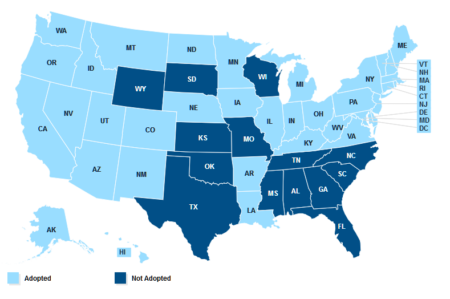
No, this isn’t part of the Very Big Opioid Lawsuit in Ohio. Georgia Attorney General Chris Carr is filing his own, state-level suit against 14 drug makers and distributors, demanding that they reimburse Georgia for what it’s spent treating people. The list of defendants: Actavis, Allergan, AmerisourceBergen, Cardinal Health, Endo, J M Smith, Mallinckrodt, McKesson, Par Pharmaceutical, Purdue Pharma, Qualitest, SpecGx, Teva, and Watson Pharmaceuticals. The deets, according to Carr: The lawsuit also alleges that the named opioid distributors supplied, sold and placed into the stream of commerce prescription opioids, without fulfilling their legal obligations to monitor, detect, report, investigate or otherwise prevent the fulfillment of suspicious orders. This behavior led to the predictable diversion of these dangerous drugs for illegitimate and/or non-medical purposes. As one of those rare people who actually likes dandelions, it’s good to see that they’re chock full of potentially beneficial chemicals — antioxidants, antihyperglycemics, and even anti-inflammatory compounds. File under “More research needed.” A couple of stories on the topic. First, a new CMS rule took effect requiring hospitals to post their list prices online. The big deal is in a small part of the rule: Those prices must be machine-readable. So what? you say. It means that people can develop comparison tools: “How much is knee replacement at hospitals within 50 miles of the 30328 ZIP Code?” Second, Georgia’s non-profit hospitals aren’t exactly transparent about their finances, even when they’re publicly owned. But that might be about to change: A powerful group of state lawmakers appears concerned about the secrecy and business practices of some nonprofits that operate Georgia hospitals, especially the nonprofits that run hospitals owned by public hospital authorities. “Moderate Drinking Not Harmful for Seniors With Heart Failure” Maine became the 36th state (plus D.C.) to adopt Medicaid expansion for its residents, giving about 70,000 more Mainers (Mainians? Mainites?) access to healthcare. Voters there approved the expansion a year ago, but the state’s Republican governor refused to enact it. He was ousted in November, and newly elected Gov. Janet Mills signed Executive Order 1 on her first day in office. Even better, she made the coverage retroactive to July 2, “so Mainers who applied for Medicaid in 2018 but were denied benefits and incurred expenses that should have been covered by Medicaid will be reimbursed.”Dandelion power, Georgia suing drug companies, hospital transparency, and more
Georgia sues drug companies over opioids

“And dandelions and devil grass are better!”
* Because they bend you over and turn you away from all the people in the town for a little while and sweat you and get you down where you remember you got a nose again. And when you’re all to yourself that way, you’re really proud of yourself for a little while; you get to thinking things through, alone. Gardening is the handiest excuse for being a philosopher. Nobody guesses, nobody accuses, nobody knows, but there you are, Plato in the peonies, Socrates force-growing his own hemlock. A man toting a sack of blood manure across his lawn is kin to Atlas letting the world spin easy on his shoulder.”
Hospital transparency
Let Grandpa have his hooch
Elsewhere: Lobster edition
January 04, 2019 ✒ Andrew Kantor
No, this is not a repeat from a month ago. This time it’s Aurobindo Pharma that’s recalling the tablets. Click here for the full list of NDCs and lot numbers affected. Today salt is (flips coin) not bad for you. We say again, “there’s little proof” a low-sodium diet helps with cardiovascular health. See you tomorrow. Older patients who start taking antidepressants are apparently at greater risk for hip fracture, according to a Swedish study. Analysis revealed that adults taking antidepressants sustained more than twice as many hip fractures than nonusers in the year prior to (2.8% vs. 1.1%) and following (3.5% vs. 1.3%) treatment initiation. The researchers did not observe a dose-response relationship. Courtesy of MedPageToday: Bristol-Myers Squibb is cracking open its piggy bank to buy Celgene for $74 billion. In case you’re wondering how the government shutdown is affecting the folks at the FDA, here’s the gist: What, you want the gory details? Knock yerself out. One session of hookah (aka shisha) smoking is as bad as an entire pack of cigarettes. Pharmacies — and stores that contain pharmacies — in New York City are no longer allowed to sell any tobacco products. The City already banned pharmacies from selling e-cigarettes. And in Hawai’i, terminally ill patients with fewer than six months to live are now allowed to use prescription drugs to take their own lives.The latest on salt, the shutdown, med recalls, and more
Valsartan recalled
The spice* can flow
*Technically a seasoning, but work with me here.
Maybe they start dancing
Dueling headlines: promises, promises

ICYMI: Mergers and acquisitions edition
What’s up with the FDA these days?
Don’t listen to the caterpillar*
*If you don’t get the reference, you need to bone up on your liberal arts education.
Elsewhere: east and west
Do you want to send your members the daily Buzz email newsletter (customized for your state and organization, perhaps)? Let’s talk — just drop me a note at andrew@gphabuzz.com!

- Doctors Warn of a Deadly Complication From Measles Outbreaks
- Medicare Advantage ‘Dark Money’ Group Attempts To Win Higher Payments for Insurance Companies
- Families Scramble To Pay Five-Figure Bills as Clock Ticks on Promised Preauthorization Reforms
- As Lung Disease Threatens Workers, Lawmakers Seek Protections for Countertop Manufacturers
- Republicans Fret Over RFK Jr.’s Anti-Vaccine Policies While MAHA Moms Stew
- Primary Care Is in Trouble. So Doctors Band Together To Boost Their Market Power.
- January 2025
- December 2024
- November 2024
- October 2024
- September 2024
- August 2024
- July 2024
- June 2024
- May 2024
- April 2024
- March 2024
- February 2024
- January 2024
- December 2023
- November 2023
- October 2023
- September 2023
- August 2023
- July 2023
- June 2023
- May 2023
- April 2023
- March 2023
- February 2023
- January 2023
- December 2022
- November 2022
- October 2022
- September 2022
- August 2022
- July 2022
- June 2022
- May 2022
- April 2022
- March 2022
- February 2022
- January 2022
- December 2021
- November 2021
- October 2021
- September 2021
- August 2021
- July 2021
- June 2021
- May 2021
- April 2021
- March 2021
- February 2021
- January 2021
- December 2020
- November 2020
- October 2020
- August 2020
- July 2020
- March 2020
- February 2020
- January 2020
- December 2019
- November 2019
- October 2019
- September 2019
- August 2019
- July 2019
- June 2019
- May 2019
- April 2019
- March 2019
- February 2019
- January 2019
- December 2018
- November 2018
- October 2018
- April 2017
