
January 03, 2019 ✒ Andrew Kantor
Georgia and Colorado lead the nation in cases of flu this year, and the CDC says the season is just now getting started. For a while it was just Georgia leading the pack, but now Colorado has “high activity” along with Alabama, Kentucky, Louisiana, Maryland, New Jersey, New Mexico and South Carolina. Here comes the science: Most of the country is getting hit with the influenza A(H1N1)pdm09 viruses, except the South where the A(H3) version is what’s going around. Good news: Antivirals are working just fine — “All viruses tested show susceptibility to the neuraminidase inhibitors.” “More than three dozen drugmakers raised the prices on hundreds of medicines in the U.S. on Tuesday.” The current U.S. inflation rate is about 2.3%, while these increases averaged about 6.3%. There was no particular reason for the price hikes — many were for older, generic drugs. London-based generic drugmaker Hikma “raised the price of pain drug morphine by 10%, anesthetic ketamine by 20%, and blood-pressure medication enalaprilat by 30%.” “These are small increases that enable us to continue operating a sustainable business that serves hospitals, doctors and patient needs for high quality medications,” said a company spokesman. Hikma took in $495 million in the second quarter of 2018, with a 10.7% profit margin — up more than 39% from the year before. You’re obviously welcome to read all 600 words, but here’s the gist of an article in Healio: People who are depressed tend to have lower rates of diabetes-meds adherence. No, says a federal judge, the Trump administration can’t cut Medicare payments to 340B hospitals. Judge Rudolph Contreras ruled that the administration illegally reduced Medicare payments to hospitals through the 340B Drug Pricing Program by 30 percent — or about $1.6 billion a year — through a rule took effect in January. Those hospitals serve a large number of low-income people, and the White House wanted to cut the 340B program, claiming that reducing federal funding would somehow lower costs for patients. When it comes to data security at healthcare facilities, there are three major problems according to a new report: A New York law that took effect yesterday requires pharmacies in the Empire State to take back unneeded* medication by offering a way to drop those meds off. Drug makers cover the cost of the program. Montana, perhaps taking its cue from Ohio, is looking at prohibiting PBM spread pricing with a bill introduced into the state legislature.The flu’s still spreading, the endpoints are leaking, the prices are rising, and more
Flu news: Georgia keeps its lead
As expected, drugmakers raise prices with the new year
Depression and adherence
Medicare can’t cut 340B payments
You had me at “endpoint leakage”
Elsewhere: New Yawk edition
* We really hate it when they say “unused” medication, because taking back used meds would be gross
Elsewhere: Big Sky edition
December 28, 2018 ✒ Andrew Kantor
They’re about four or five percent lower in Georgia and across the country, thanks in part to low unemployment and less marketing by the government. About 233,584 Georgians get their insurance via the Obamacare exchange. Have your friends said you should be certified? They’re right! And being certified by APhA— for providing diabetes care and medication therapy management — means being up to date on two critical skills that can help you improve your practice, treat your patients, and support your community. GPhA’s got you covered in 2019 with both certificate programs before spring begins and at a great price. (Pro tip: Do both.) MTM Certificate Training: February 17, 2019; 8:00 a.m. to 5:00 p.m. Diabetes Management Certificate Training: March 3, 2019; 8:00 a.m. to 5:00 p.m. Both courses are held at GPhA Headquarters in Sandy Springs (map), and each is $349 for GPhA members and $499 for non-members, which includes a GPhA membership. Want more information on pricing and learning objectives? (Hint: The correct answer is “Yes!”) We’ve got that covered, too: Click here for more on the GPhA/APhA MTM certificate program — CPE, instructors, and more. Click here for more on the GPhA/APhA diabetes certificate program — CPE, instructors, and more. There’s your excuse: It seems that a bad mood can be caused by that old enemy, inflammation. Ergo, being grouchy might be a symptom of being sick. Go on, send this to your friends. You know you want to. And it’s part of the newly released updated guidelines for treating the seasonal flu, courtesy of the Infectious Diseases Society of America*. The number of dementia cases in the U.S. doubled from 1990 to 2016. Being sick makes you angry, new flu guidelines, dementia on the rise, and more
ICYMI: ACA enrollments almost match last year
Get certified!
I’M NOT ANGRY, I’M SICK
The word of the day is “Chemoprophylaxis”
* So you know just exactly what the facts is
No, you’re not imagining things
December 27, 2018 ✒ Andrew Kantor
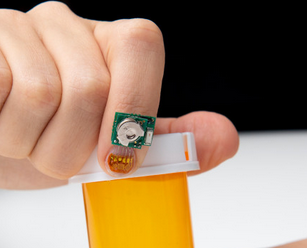
CVS and Aetna told a judge they don’t need oversight while their merger is reviewed. They pinkie-promised to monitor themselves and let the judge know if they do anything wrong. Instead, the company promised to submit quarterly reports to the court or give 30 days notice if it wants to change or end one of the commitments. The judge essentially agreed with the request: Judge Richard Leon in Washington said in an order late last Friday that he would essentially allow Aetna to operate independently on key decisions like pricing, hiring employees and products brought to market. Near the top of the Gallup “survey of honesty and ethical standards” that is. Once again, nurses took the lead, but pharmacists are virtually tied with physicians for second place. (Who’s at the bottom of the list? Members of Congress, of course.) Wait, what? Turns out — per a paper in JAMA Pediatrics — that after Washington State legalized marijuana, teen use of weed fell. They found that marijuana use among eighth-graders fell from almost 10 percent to just over 7 percent. In 10th grade, pot use declined from nearly 20 percent to less than 18 percent. There was no change among 12th graders, the study found. In this case, “How to swallow a pill.” (The article does warn, however, that “it’s not a given that one of these methods will work for you or be safe for you, especially if you have a hard time swallowing pills.”) Fingernails are surprisingly informative: they tell a lot about how we use our hands and fingers. So IBM developed a prototype sensor that attaches to the nail, collects information, and can help diagnose the progression of Parkinson’s and other diseases. The sensor then talks to a smartwatch that runs machine learning models to detect tremors and other symptoms of Parkinson’s disease. That model can detect what a wearer is doing (opening a doorknob, using a screwdriver, etc.). The data and the model are accurate enough to track when wearers write digits with their fingers. Question: Why did the Golimumab cross the placental barrier? Another study finds that, with the exception of cancer treatment, opioids don’t do a lot for chronic pain — at best, they’re a little better than OTC meds or even placebos. Overall, his team found, opioids were no better than non-steroidal anti-inflammatory drugs (NSAIDs) like ibuprofen. They were also roughly equal to antidepressants, anti-seizure drugs (which are sometimes used for nerve pain) and synthetic cannabinoids.Trusting pharmacists, Harvard teaches how to swallow, tracking Parkinson’s via fingernails, and more
We’re a trust fund, baby, you can trust us
Speaking of trust, pharmacists still near the top
After legality, marijuana use … drops?
Harvard Medical School answers the tough questions
Fingernail sensor tracks Parkinson’s
To get to the other side
If it doesn’t work, up the dosage
ICYMI
December 21, 2018 ✒ Andrew Kantor
Yep, this year we’re the number-one state for the flu (so far), according to the CDC. We’re also the only state with “high” activity. That includes four deaths (one child, three seniors) and more than 159 hospitalizations. Georgia moved out of the worst-10 states for health (according to UnitedHealth Group’s United Health Foundation) — we now rank #39 out of 50, up two spots from last year. Hawaii, Massachusetts, Connecticut, Vermont and Utah are the five healthiest states of the year, while the five least healthy are Arkansas, Oklahoma, Alabama, Mississippi and, coming in last, Louisiana. After a brief pause because of pressure from the White House, nearly 30 drugmakers are planning price hikes for January. (How do we know this? California has a new law requiring them to disclose upcoming increases.) Still ongoing is the big price-fixing case against 16 generic-drug manufacturers (we covered that on December 9). But now those companies want the judge in the case to impose a gag order on the investigators because they’re sick of reading about the case in the news. What don’t they want the public to know? Biologic drugs in Europe cost patients a fraction of what they do here. The reason: Europe has more competition, better negotiators, and a system designed to support patients instead of drugmakers. Notably, the U.S. has approved a total of six biosimilars; in Europe, it’s at least 50 — and that keeps prices down. Meanwhile American patent laws (“patent thickets, in which drugmakers win numerous patents to block competitors entirely”) stifle competition. If you have a patient with an upset stomach or nausea, don’t just direct him to the Pepto Bismol. Point out that he might have an intestinal worm. Electricity can help heal wounds, but who wants to be plugged in all day? To the rescue: self-powered electric bandages. While it’s not fully clear how the pulses help, scientists noted that they increase the viability of fibroblasts (a kind of skin cell) and encourage them to line up, which is key to the healing process. The pulses also produced additional biochemical materials that contribute to tissue growth. New York was planning to impose a surcharge on opioid makers — money to help fund addiction and recovery programs. But drug manufacturers didn’t believe they should pay for that treatment, and they challenged the law. Now a judge has ruled in their favor, saying the law violated the Constitution’s Commerce Clause.Intestinal worms, electric bandages, where Georgia ranks #1, and more
Georgia leads the nation in flu
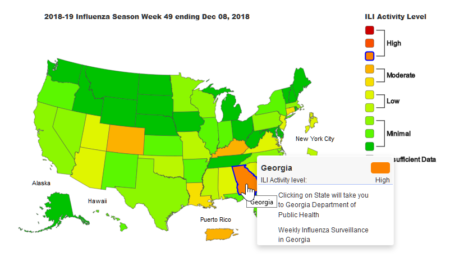
… but we’re a bit healthier this year
Drug prices: That didn’t last long
Apparently not all publicity is good publicity
It’s cheaper to move to Europe than to get biologics in the U.S.
Occam’s Razor be damned!

Zap it
Elsewhere: New York can’t impose opioid surcharge
December 20, 2018 ✒ Andrew Kantor
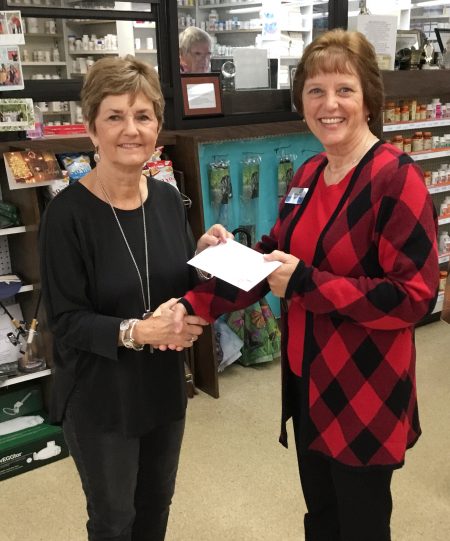
Scott Hartzog of Seminole Hartzog Pharmacy and Susan Mills of Roberts Pharmacy — both in Donalsonville — were the first pharmacists to receive relief checks from the Georgia Pharmacy Foundation to help them recover from Hurricane Michael. Read the story from GPhA’s Rhonda Bonner here, and here she is presenting them with the checks: Pfizer and GlaxoSmithKline are combining to create an “over-the-counter drug giant.” Both companies have been trying to get rid of their consumer-drug businesses, so their solution is a new company that’s 68 percent Glaxo and 32 percent Pfizer (Glaxzer? Pfaxo?). The headline says it all: The Georgia Pharmacy Foundation named Mike Crooks of Marietta to fill a vacant seat on its board. Mike works for Alliant Quality and thus with Georgia Medicare and CMS, making his interest in serving on the board “an opportunity too good to be true” — so said foundation chair Jim Bartling. Mike will hold the seat until 2020, when the foundation has its next board elections. An FDA advisory committee has a simple idea: Give patients prescriptions for naloxone when they get prescriptions for opioids. The downside: cost. “I think co-prescribing is an expensive way to saturate the population with naloxone. The at-risk population is not necessarily the ones that are being prescribed new narcotics,” Mary Ellen McCann, associate professor of anesthesia at Harvard Medical School, who voted against the decision, said. “I’m concerned about a person going in with a broken arm and ending up with $30 of a codeine product and a (naloxone) autoinjector at $4,000 plus.” Teens who vape are getting hooked on nicotine. Who knew it was so addictive? “Judge urges CVS, Aetna not to integrate operations just yet” “Pharmacist Groups Urge Federal Judge to Stop CVS-Aetna Merger” “CVS Urges Judge Not to Halt Integration of Aetna” Novartis is teaming up with Canadian marijuana producer Tilray to distribute medical cannabis products around the world. In case you’re wondering, yes, if Donald Trump shuts down the government over border-wall funding, it will affect the FDA. But not completely because much of the department is funded by user fees, not the government. “The FDA would continue specific activities within the scope of its user fee funded programs, including those for prescription drugs, generic drugs, biosimilars, medical devices, animal drugs, and tobacco products,” according to the agency. However: FDA would be unable to support some routine regulatory and compliance activities. This includes some medical product, animal drug, and food related activities. FDA will also pause routine establishment inspections, cosmetics and nutrition work, and many ongoing research activities.South Georgia pharmacists get some cash, Pfizer and GSK combine their efforts, Captain Obvious strikes again, and more
Foundation distributes Hurricane Michael relief checks
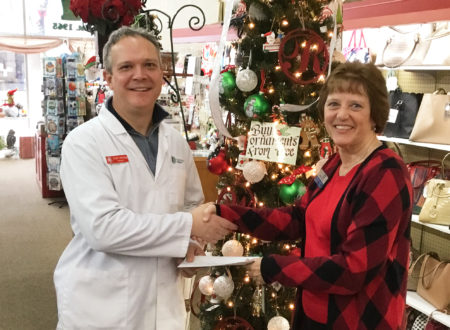
Pharmaceuticals, assemble!
Mike Crooks named to foundation board
…and a side order of Narcan
No one could have seen this coming
So. Much. Urging.
The pot heard ’round the world
Will the FDA shut down with the government?
December 18, 2018 ✒ Andrew Kantor
“Pharmacists understand the importance of screening and talking with patients about suicide, but without proper training, that is a really intimidating task for anyone.” U.S. Senator Elizabeth Warren, tired of skyrocketing generic drug prices, is introducing a bill that would have the federal government manufacture generic drugs when there is a “failure in the market.” What’s a failure? There would be three standards for determining a “market failure”: if no company is producing the generic drug; if just one or two companies are making the drug and there is a shortage or a recent price hike higher than medical inflation; or if the drug is on the World Health Organization’s “essential medicine” list and the price is deemed too high while being produced by only one or two companies. The FDA has proposed allowing generic-drug manufacturers to update their warning labels with new info even before the brand-name drug did. Why not give people the latest info? it figured. Because, said generic makers, it could confuse people, make them think the generic is different than the brand-name drug, and open the generic manufacturers to liability. The FDA withdrew the suggestion. The agency says ‘no worries’ — it’s totally preparing for the coming huge volume of imported drugs that need to be inspected, even if it doesn’t quite have the staff to handle it. “We have to be more strategic with what we’re doing when it comes to products of foreign origin imported into the US” because there are many more imports now and this will continue to grow but FDA’s resources “aren’t necessarily going to keep up,” [Division of Import Operations Director John Verbeten] said. FDA will soon reach up to 50 to 60 million lines of imported products and has to “figure out a way to deal with all of that volume,” he added. “It can’t be regulation through shipment-by-shipment anymore.” U.S. Senator Cory Booker is planning to introduce legislation that would require pharmaceutical companies to disclose their payments to pharmacists, doctors, and anyone else who serves on a state Medicaid board. This follows a report that found “that drug companies swarm state Medicaid board meetings when their drugs are under consideration, and have given payments and perks to three out of five doctors recently serving on those boards.” Neither bird nor plane, it’s a vaccine delivery by drone. The remote South Pacific nation of Vanuatu* is composed of islands, so delivering packages ain’t easy … unless you think in three dimensions. Bonus: Vanuatu is home to cargo cults, so the drones actually play into their religion. (If you don’t know about cargo cults, it’s worth a dive down that rabbit hole.)Generic labels won’t change; two senators, two bills; drone delivery; and more
Can pharmacists help lower the U.S. suicide rate?
Generics: If you can’t beat ’em….

FDA withdraws new labeling idea
Speaking of the FDA….
Transparency for state Medicaid boards?
Elsewhere: Look, up in the sky!
* By law†, Vanuatu must always be referred to as “the remote South Pacific nation of Vanuatu”
† Not really, but it seems that way
December 17, 2018 ✒ Andrew Kantor
Georgia Power coal ash might be contaminating the ground water. The Georgia Pharmacy Foundation has major plans for 2019, and it needs your help so it can help the pharmacy community. Pharmacist burnout. The opioid crisis. Student debt. Those are the three issues the foundation is tackling in 2019, but now is the time to make a tax-deductible donation. The goal is to raise $10,000 by December 31, and that goal is well within reach! Help the mission. Help the foundation serve pharmacists, technicians, and student pharmacists. All you need to do is click here or visit GPhA.org/foundation to make your donation. Thank you! “The time has come for pharmacists to step up and invest in our communities. The foundation can and will do more than ever to be a part of this.” —Jim Bartling, Chairman, Georgia Pharmacy Foundation Cigna is using artificial intelligence to figure out which patients are most likely to overdose on opioids. [T]he company […] began building a predictive model, using machine learning and predictive analytics, that identifies customers likely to overdose within the next month. A combination of 16 datasets are used to inform the algorithms, including data about patients’ behavioral health claims, chronic disease history and interactions with pharmacies. How exactly did Purdue Pharma market OxyContin? The company wants to keep that a secret out of fear of lawsuits, but a panel of three Kentucky judges ruled unanimously that the records — from a case Kentucky settled with the company in 2015 — should be unsealed. A warm GPhA welcome to the newly formed National Hispanic Pharmacists Association! Sadly, we’re not talking about munching on that delicious string of Christmas lights. The FDA is warning that “some decorative glitters and dusts promoted for use on foods may, in fact, contain materials that should not be eaten.” In other words, just because you bought that “luster dust, disco dust, twinkle dust, sparkle dust, highlighter, shimmer powder, pearl dust, and petal dust” over the Internet doesn’t mean it’s safe to eat. If the label simply says “non-toxic” or “for decorative purposes only” and does not include an ingredients list, you should not use the product directly on foods. The uterus plays a role in … memory? In a study on the rat model, senior author Prof. Heather Bimonte-Nelson and colleagues demonstrated that removing the uterus — a surgical procedure known as hysterectomy — has a definite impact on spatial memory. We’ve talked about anti-virals from frog mucus and antibiotics from dragon’s blood — now check this out: using scorpion venom as an anti-inflammatory. Researchers in Cuba have found that the venom of the blue scorpion, whose scientific name is Rhopalurus junceus, endemic to the Caribbean island, appears to have anti-inflammatory and pain relief properties, and may be able to delay tumor growth in some cancer patients. But the best line about one farmer who deliberately gets himself stung to relieve pain: …he sometimes keeps a scorpion under his straw hat like a lucky charm. It likes the shade and humidity, he says, so just curls up and sleeps. There’s no way you missed this, right? A judge in Texas ruled the Affordable Care Act unconstitutional. But no, that doesn’t mean that 12 million people just lost their health insurance. The case will have to wind its way through the Appeals Court and almost certainly to the Supreme Court. The big question: If one part of a law is unconstitutional, does that render the entire law moot? (And, if so, can you guess how many laws that would affect?) It’s a he said/she said mess, but Reuters looks into the case to see what Johnson & Johnson knew, when it knew it, and how bad the information really was.Don’t eat those sprinkles, scorpion bites, AI predicting overdoses, and more
Are you in the Rome or Cartersville areas?
Before the year ends, support the foundation’s mission
AI predicts OD
Come and see: Kentucky judge says seal can be broken
¡Bienvenidos colegas hispanos!
FDA warns people not to eat inedible decorations
Hint: Make sure the label says “edible.” And preferably not in Chinese.You must remember this/it’s in your uterus
The sting of the scorpion

ICYMI: ACA edition
The long read: J&J Baby Powder and asbestos
December 14, 2018 ✒ Andrew Kantor
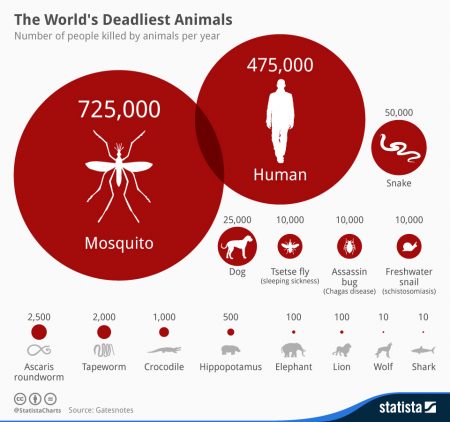
Kimberly Clark has recalled its U by Kotex Sleek tampons “after reports of the tampons unraveling or coming apart upon removal.” Georgia Republicans want the state to allow hemp farming and the distribution of cannabis oil. Hemp farming* would let companies in the state produce products with CBD — which is legal throughout the country but not in Georgia. It “could be processed into droplets, capsules and creams that are already widely available to the public in nutrition stores” — in other words, bring those businesses into Georgia. Cannabis oil is a trickier nut to crack. Current state law allows about 6,000 Georgians with certain medical conditions to possess the oil, but not buy it or import it. (I.e., the only way to get it is to break the law.) The proposal would set up regulations for producing and distributing that low-THC oil allowed by Georgia law. HHS Secretary Alex Azar told HIV treatment conference attendees that allowing Medicare Part D insurers to remove drugs from their formularies (if the prices increase too much) — and implement step therapy — will lower costs and not make it harder for patients to get the drugs they need. In fact, he claimed, being able to remove drugs from their formularies would somehow “expand patient access to antiretrovirals and other expensive drugs, by driving down prices.” In 2016, fentanyl was the “deadliest drug in America.” Meaning it was most often listed as the cause of an overdose death. What, you want the rest of the top ten? They are: heroin, hydrocodone, methadone, morphine, oxycodone, alprazolam, diazepam, cocaine, and methamphetamine. “Oxycodone ranked first in 2011, Helping someone quit smoking? Consider nicotine mouth sprays. A new study finds they are a solid tool for the arsenal. Animal-related injuries cost Americans more than $1 billion a year — that’s for treatment, lost wages, and all those other costs. What animals, you ask? Those with more than two legs, mostly: Nearly half (2,648,880; 41%) of the injuries were caused by non-venomous insect and spider bites, while dog bites accounted for around one in four (1,658,295; 26%). Around one in eight (13%; 812,357) were caused by hornet, wasp, or bee stings. What about the death rate? Only 0.02% died as a result of their injury — and the highest death rate was from rat bites. (Snake/lizard was #2, and dog was #3.) And if that’s got you thinking, “Hmm, I wonder what the deadliest animal in the world is?” we have the answer to that, too: I was going to make this today’s Long Read™, but I realized this is probably not news to most of you. But it’s still a well-written explainer: “The Little-Known Way Pharma Companies Hook People On Their Costly Drugs” from Time and Kaiser Health News. (Spoiler: They do it by paying for medication when insurance companies don’t.) Deadly bites, deadly drugs, could Georgia change its cannabis laws?, and more
Tampon recall
Georgia considering changing its cannabis laws
*Hemp is related to marijuana, but is a different plant — it contains little or no THC.
I don’t think it works that way
ICYMI
heroin during 2012–2015, and fentanyl in 2016,” says the CDC.A little spritz’ll do ya
If it was a snake it would have bit me
Paying the way
December 13, 2018 ✒ Andrew Kantor
Monali Majmudar of Atlanta (currently the medical science liaison for vaccines at Syneos Health) is running to be an APhA–APPM Executive Committee Member-at-Large. Henry Young of Athens (currently both professor at the UGA CoP and director of its Pharmaceutical Health Services, Outcomes, and Policy Graduate Program) is running to be the APhA–APRS Economic, Social and Administrative Sciences Section chair. Click here for the deets from APhA. Members will be able to vote starting on March 22, and the elections will close at noon on May 14. Everyone’s favorite pre-licensing-exam refresher course, that is. If you or someone you know is going to be taking the Georgia wet labs exam (e.g., recent grad, new transplant), boning up on those skills right before the exam is a great idea. That’s why we’re offering GPhA’s “Practical Skills Refresher Course” four — count ’em, four — times this year, just before each exam. Now’s the time to read up and sign up. Do both at GPhA.org/practicalskills! Whether it’s the bacteria itself, or the antibiotics used to fight them, kids who get infections often develop conditions like ADHD, schizophrenia, depression, and bipolar disorder. A new Danish study adds more data to what’s already known about conditions such as pediatric autoimmune neuropsychiatric disorders associated with streptococcal infections (PANDAS), which results in kids with OCD-like symptoms caused by recurring strep. “Walgreens Takes On Amazon And Worries The Healthcare Sector“. With the South the new center for HIV infection in the U.S., the National Institutes of Health is providing funding to institutions down this way “to test new ways of implementing HIV treatment and prevention tools in counties with some of the highest rates of new HIV cases nationwide.” These CFARs (Centers for AIDS Research Sites) may include Emory University, the University of Alabama at Birmingham, UNC, Duke, and the University of Miami. Besides renewing government subsidies to farmers, the new farm bill that’s expected to pass will legalize the growing of hemp. Hemp is related to marijuana, although it has little if any THC. What hemp does have, besides fiber for use in hipster clothing, is CBD, the other cannabinoid (the one that doesn’t give you a high, but seems to have a variety of medicinal uses). Assuming the farm bill passes, it will make hemp legal to grow in all 50 states. BUT WAIT. Before you plant a garden or plan to sell CBD gummies, know that Georgia law isn’t quite so clear-cut. As Greg Reybold explained in the December/January Georgia Pharmacy, Georgia actually considers hemp to be marijuana because — while it’s a different species — it’s still in the genus Cannabis. Further, Georgia bans any product that even contains a trace of THC. So, until you consult with your attorney (and possibly a biochemist), you probably want to steer clear. If you call GPhA for help and the staff member who answers the phone seems a bit … off, please understand that “nonprofit work may actually be contributing to mental illness.” The FDA has approved the first trial of a non-human organ transplant: a skin transplant from a genetically engineered pig designed for severe burns. McDonald’s said it will look to cut antibiotics in any beef used in its products. Despite what politicians might say, there’s not a single, simple answer. There are always trade-offs, as several experts discuss in this New York Times piece.How peds infections can lead to mental illness, plus legal hemp, pig transplants, and more
Two Georgians running for APhA offices
It’s baaaaaaaack
Infections, kids, and mental illness
Next thing you know, it’ll think about invading Russia in the winter
NIH giving money to fight HIV in the South
Farm bill will legalize hemp in the US … but not Georgia
We do it for you
Some pig
News from the other war: the one on antibiotic resistance
The long read: Cutting drug prices
December 12, 2018 ✒ Andrew Kantor
The FDA is warning people, particularly men*, not to vape two e-liquids from the HelloCig company: “E-Cialis HelloCig E-Liquid” and “E-Rimonabant HelloCig E-Liquid” because they contain sildenafil and tadalafil. Seriously, do they really have to warn people not to smoke a product called “E-Cialis HelloCig E-Liquid”? In this case, according to The Hill, it’s a “civil war*” over prescription opioids. Translation: Patients who need painkillers are paying the price because of people who abuse painkillers. How do you balance fighting the crisis with giving people the meds they need? “A veritable war now exists between the needs of people in pain on one side and the popular crusade to limit — and even ban — opioid use on the other. With the zeal of moral crusaders, most clinicians and policymakers fall into one of the two camps. “There almost seems to be a competition to see who can most egregiously demonize prescription opioids without sufficient scientific justification and without regard to the consequences.” It’s time to register for the 2019 Day at the Dome! That’s when you get to go behind the scenes and be involved with our advocacy efforts at the state capitol You’ll join hundreds of other students and work with GPhA’s legislative staff to knock on lawmaker’s doors and talk about the biggest pharmacy issues we’re facing. This is an incredible opportunity to see (and be part of) this other side of the pharmacy profession: where the laws are made, and how you can affect them. Now is the time to register and get more info. Do both of those at GPhA.org/dayatthedome. Yes, you’re going to make a difference! Apparently so, if you believe those shifty Danes. “A study of patients in Denmark who were recently diagnosed with heart failure found that a flu shot cut their risk of premature death by 18 percent, compared with not getting a shot.” Too many people may be taking too many powerful meds, and risking some serious interactions. But who can lead the charge to cut down on inappropriate medication? If you said “terrazzo workers,” you’re definitely reading the wrong newsletter. It’s pharmacists, natch — so says a paper published in JAMA. It gives us great pleasure to announce the newly elected members of the board of directors of GPhA’s Academy of Pharmacy Technicians. Representing chain pharmacies: Representing independent pharmacies: Representing clinic/health-system pharmacies: At large: We look forward to working with the new board members as they set the agenda and direction for the academy. From The Atlantic: “Did Free Pens Cause the Opioid Crisis?” (How sales reps used even small gifts as a psychological tactic to increase prescriptions.) Unfortunately, doing puzzles and having intellectual conversations won’t help with cognitive decline after age 65. Might as well stick to “Wheel of Fortune” and “Judge Judy.” ###Opioid war becomes civil, how pens caused the crisis, terrazzo workers can’t help, and more
Just let Darwin do his job
*Women are obviously too smart to try these products
Add “civil war” to the list of overused terms
*We used to call them “disagreements” or even “strong disagreements” but that doesn’t make a good headline
Attention student pharmacists!
A flu shot can prevent … heart failure?
Time to “deprescribe”
APT board members elected
Michael Birdsong, Kroger Pharmacy, Gray
Lawana Walker, Barney’s Pharmacy, Evans
Breanna Lowery, Carl Vinson VAMC, Dublin
Emil Durham, Integrity Compounding Pharmacy, Cumming
Pamela Haynes, Medical Park Pharmacy, Gainesville
Robbie Howard, Atlanta Technical College, Lithonia
Jack Shepherd, Oconee Fall Line Technical College, DublinThe long read: Small gifts, big crisis
You must remember this
Do you want to send your members the daily Buzz email newsletter (customized for your state and organization, perhaps)? Let’s talk — just drop me a note at andrew@gphabuzz.com!

- Doctors Warn of a Deadly Complication From Measles Outbreaks
- Medicare Advantage ‘Dark Money’ Group Attempts To Win Higher Payments for Insurance Companies
- Families Scramble To Pay Five-Figure Bills as Clock Ticks on Promised Preauthorization Reforms
- As Lung Disease Threatens Workers, Lawmakers Seek Protections for Countertop Manufacturers
- Republicans Fret Over RFK Jr.’s Anti-Vaccine Policies While MAHA Moms Stew
- Primary Care Is in Trouble. So Doctors Band Together To Boost Their Market Power.
- January 2025
- December 2024
- November 2024
- October 2024
- September 2024
- August 2024
- July 2024
- June 2024
- May 2024
- April 2024
- March 2024
- February 2024
- January 2024
- December 2023
- November 2023
- October 2023
- September 2023
- August 2023
- July 2023
- June 2023
- May 2023
- April 2023
- March 2023
- February 2023
- January 2023
- December 2022
- November 2022
- October 2022
- September 2022
- August 2022
- July 2022
- June 2022
- May 2022
- April 2022
- March 2022
- February 2022
- January 2022
- December 2021
- November 2021
- October 2021
- September 2021
- August 2021
- July 2021
- June 2021
- May 2021
- April 2021
- March 2021
- February 2021
- January 2021
- December 2020
- November 2020
- October 2020
- August 2020
- July 2020
- March 2020
- February 2020
- January 2020
- December 2019
- November 2019
- October 2019
- September 2019
- August 2019
- July 2019
- June 2019
- May 2019
- April 2019
- March 2019
- February 2019
- January 2019
- December 2018
- November 2018
- October 2018
- April 2017
