June 11, 2022 ✒ Andrew Kantor
Dads who smoke have male children who are more prone to “addiction-like behaviors, cognitive deficits, and anxiety-like behaviors.” Welcome to epigenetics*, where the chemicals in cigarettes are enough to affect dad’s germ cells or seminal fluid to the point of genetic changes. Those changes are then passed on to his “nicotine-sired male offspring.” University of Pennsylvania School of Nursing researchers found that the cigarettes affected the SATB2 gene — when it expresses less, leading to the kids’ problems. (In severe cases, it could potentially lead to “SATB2-associated syndrome.”) Some exhibit booths were particularly popular: Photo: Catherine Daniel Photo: Catherine Daniel Photo: Rebecca DeSantis For the first chunk of the pandemic, Black and Latino Americans were hit hardest, but now the tide has turned. Over the past year, “Covid has killed a smaller percentage of Black, Latino, or Asian Americans over the past year than white Americans.” Over the past year, the Covid death rate for white Americans has been 14 percent higher than the rate for Black Americans and 72 percent higher than the Latino rate, according to the latest C.D.C. data. Why the change? Vaccination campaigns. Over the last year, the message has gotten through to Black and Latino communities; the media they listen to is far less anti-vaccine, and more more likely to urge precautions (and to give accurate information). Thus today they have a higher vaccination rate than white Americans. The fact that aspirin can help prevent colon cancer isn’t new, but now — thanks to UC Irvine researchers — we may know how. Aspirin actually interferes with the cancer cells’ evolution. By slowing the cells’ division (and reducing the birth rate), it actually prevents the cells from evolving the mutations needed to grow unchecked. Here’s a surprise: Men who eat/drink more dairy foods, especially milk, have a greater risk of prostate cancer. And no (say the researchers at Loma Linda University who discovered this), it has nothing to do with calcium. They don’t know what the cause is. [M]en who consumed about 430 grams of dairy per day (1 ¾ cups of milk) faced a 25% increased risk of prostate cancer compared to men who consumed only 20.2 grams of dairy per day (1/2 cup of milk per week). To add to the mystery, there was little difference between full-fat and skim milk, while cheese and yogurt were safe. Their speculation: It might be the sex hormone content of dairy milk. “Up to 75% of lactating dairy cows are pregnant, and prostate cancer is a hormone-responsive cancer.” By eating two or more portions of fish per week, apparently. A study of almost 500,000 people (out of Brown University) found … … that people whose typical daily intake of fish was 42.8g (equivalent to about 300g per week) had a 22% higher risk of malignant melanoma than those whose typical daily fish intake was just 3.2g. Those eating more fish also had a 28% increased risk of developing abnormal cells in the outer layer of the skin only — known as stage 0 melanoma. The obvious question: Why? “We speculate that our findings could possibly be attributed to contaminants in fish, such as polychlorinated biphenyls, dioxins, arsenic and mercury.” If you have coronary heart disease, drinking a glass of beetroot juice every day could reduce the chance of persistent inflammation by increasing your levels of nitric oxide. British researchers found that… The high nitrate juice also appeared to restore the function of the endothelium, the cells that line the inside of all blood vessels. The endothelium is crucial to keep blood vessels functioning normally, but this is lost in inflammation. Next up: Seeing whether beetroot juice can prevent heart attacks in healthy people. “Women feel less stressed on weekends” This one comes out of Brown University, where engineers there call it “a bacteria-triggered, smart drug-delivery system.” It’s a hydrogel that’s sensitive to the enzymes released by bacteria. Those β-lactamases cause the polymer to degrade, releasing “therapeutic nanoparticles.” (There had to be nanoparticles — this is 2022 after all.) Bonus points for giving some comeuppance: “β-lactamases are actually a major cause of antibiotic resistance as they destroy β-lactam antibiotic […] But we’ve taken this bacterial defense mechanism and used it against the bacteria.”Fish-eating danger, smoking hits dads’ genes, beetroots for life, and more
Smoking up your genome
* A/k/a, “Lamarck was right.”
Convention zooms along



White folks’ turn
Aspirin stops cancer’s evolution
Dietary advice
Got cancer?
Do you want melanoma? Because this is how you get melanoma
You have to decide if it’s worth it

Captain Obvious enjoys breakfast in bed
The latest smart bandage
June 10, 2022 ✒ Andrew Kantor
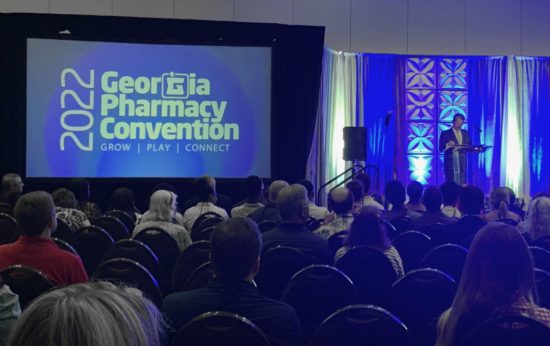
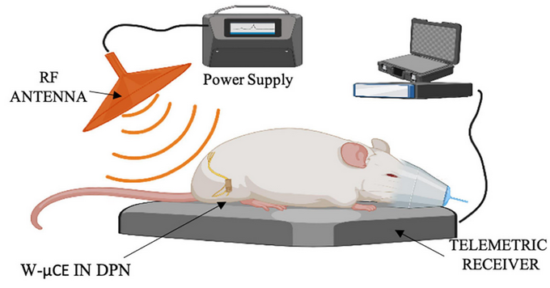
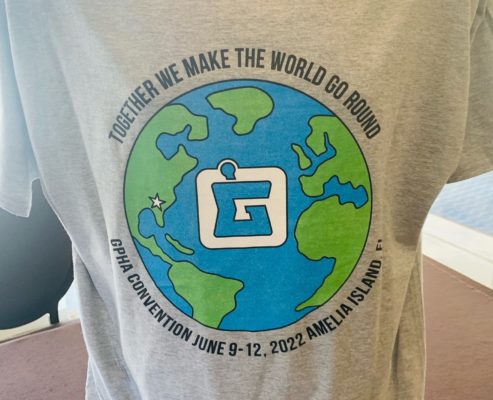
Pharma companies are setting the prices of their new drugs higher and higher. From 2008 through 2020, the average launch price of new drugs increased by more than 20% per year. Meanwhile, the number of super-expensive drugs (costing more than $150,000 per year) increased by 9% from 2008 to 2013 … but 47% in 2020–21. And despite what the drug makers say, the researchers (from Brigham and Women’s Hospital) found that patients are paying. “[P]atients are not benefiting from [drug manufacturer] rebates and one in four report that out-of-pocket costs prevent them from taking their prescription drugs as prescribed.” The Georgia Pharmacy Convention opened yesterday with a full slate of sessions and events, dozens upon dozens of excited pharmacists, technicians, and students, and an address by Governor Kemp: Photo: Catherine Daniel By tradition, one seat in each session is left vacant for Elijah: Photo: Catherine Daniel Wildlife is abundant, as always: Photos: William Huang The Final Five from Thursday’s Draw Down voted to split the pot … and then donated it to the Georgia Pharmacy Foundation: Photo: Teresa Tatum No. In fact, the opposite is more likely. Looking at the records of 1.5 million older Danes*, researchers from Aarhus University “found that people with shingles had a 7% lower risk of dementia than people who did not have shingles.” If you give a mouse a cookie, he might get fat. And if you give a mouse rapamycin, it might increase the amount of beta-amyloid protein plaque in his brain. That is not good. University of Texas researchers expected to see the immunosuppressant (aka sirolimus) to reduce those plaques because there was evidence that it improved learning and memory. Instead, the opposite was true: Rapamycin reduced the amount of a protein called Trem2, which enables microglia to clear out the plaque. Less Trem2, more beta-amyloids — the hallmark of Alzheimer’s. The good news is that the same research also found a way to increase Trem2 levels and clear out more plaque, but that research is just beginning. An FDA panel has given its thumbs-up to Novavax’s non-mRNA Covid-19 vaccine for people 18 and over. If it gets approval from the FDA itself and the CDC, it would be the fourth approved vaccine in the U.S. The marketing tactic: It’s based on technology similar to the flu shot, so it can’t contain Bill Gates’s 5G-activated microchips. It’s 90% effective against infection, and 100% effective against serious disease — how long the protection lasts isn’t known yet. After a heart attack, the heart doesn’t regenerate without outside assistance. One treatment is to inject it with cells that can (in theory) help rebuild it. But we say “in theory” because only a tiny percentage of those cells actually stick. Enter researchers from Britain’s University of Manchester, who have found a way to make a lot more of those cells stay in place and do repair work. They’ve created a gel that can be injected directly into the beating heart; it acts as a scaffold for new tissue to grow on. The result, they hope, could be a way to prevent heart attacks from becoming heart failure. University of Michigan pharmaceutical engineers have developed a new, less-expensive way to deliver time-release peptides. It works with more drugs, and it can reduce the time between injections. Microencapsulation with a polymer — turning some injectable drugs into millions of tiny time-release capsules — isn’t new. But using it for some peptides is tough (i.e., expensive). But the U of M team has found a new way to encase drugs that’s easier and cheaper, works with more meds, and can release the payload over the course of almost two months. “Give me the big science words!” I hear you say. No problem: [The team] discovered that if they made the polymer first and equilibrated the peptide with the polymer microspheres in water under certain conditions, they could achieve a very similar result as the conventional organic-solvent based method of drug encapsulation. Someone who starts having frequent bad dreams might be developing Parkinson’s. Okay, that was the scary headline — lots of bad dreams means your risk of Parkinson’s is twice as high as people who don’t have bad dreams, according to British neurology researchers. But the reality isn’t quite so bad. Yeah, “twice as high” is accurate, but it’s such a small number: 4.3% of people with bad dreams developed Parkinson’s, compared to 2.something percent of others. So the takeaway is along the lines of, “If I suddenly start having a lot of bad dreams and have Parkinson’s in my family, maybe I should worry. Or maybe I should just take a break from the news.” Why take blood pressure meds when you can have an implanted nerve stimulator that zaps your body into compliance? Biomedical engineers at the University of Houston have developed an implantable wireless device that stimulates the peroneal nerve, which “elicits an acute reduction in blood pressure.” And not a small reduction, either: “[S]ystolic blood pressure can be lowered 10% in one hour and 16% two hours after nerve stimulation.” What’s next? Further research is necessary to investigate whether BP regulation can be achieved chronically and whether continuous activation of the [deep peroneal nerve] is needed to maintain the beneficial effects of this bioelectronic treatment. It’s either a science experiment or something from the next “50 Shades of Gray.” No*. Shockingly, the stories on Facebook aren’t based on anything but wishful thinking. Who do you think will complain about this year’s convention T-shirt more — flat-Earthers, or people who know that Ireland (and Iceland) exist? Nightmares and Parkinson’s, first convention photos, a gel for heart repair, and more
Reach for the sky
Convention opens!


Does shingles increase the risk of dementia?
* Shifty, almost certainly
Unexpected Alzheimer’s danger
And then there were four
Building back the heart
Better peptide delivery
Perchance to dream
When drugs don’t work, bring in the electricity
Does apple cider vinegar help with weight loss?
* Or at best ‘probably not’.
It’s always something
June 09, 2022 ✒ Andrew Kantor
Moderna has updated its Covid-19 vaccine booster to a bivalent version that (it says) produces a stronger response against the Omicron variant. They’ve given it the memorable name “mRNA-1273.214,” and it’s the company’s current frontrunner for the fall 2022 season. Will Pfizer follow suit? The FDA’s vaccine team will meet June 28 to decide what to recommend for back to Monkeypox isn’t only spread through close physical contact — apparently it can also be airborne. The CDC is recommending mask-wearing while around potential carriers (e.g., people who didn’t wear a mask while around a potential carrier). The good news is that transmission that way is still rare. Swedish researchers have discovered a new coronavirus that seems common in the country’s bank voles. They’ve named it the Grimsö Virus, and it’s from the same family as SARS-CoV-2 and MERS. Of course the chances of it jumping to humans is just about zero, so there’s nothing to worry about. No siree. You’re much too cute to start a new zoonotic pandemic, aren’t you? Looking to get your hands on some Covid-19 antivirals? Georgia’s DPH would like to give ’em to you, free, of course. If you’re not already part of the federal retail pharmacy program, there’s a simple form to fill out. It’s that easy. Questions or concerns? Email the the Covid-19 therapeutics team at covid19-therapeutics@dph.ga.gov “Information on the association between tea drinking and semen quality is limited,” said Chinese scientists, and they were not going to let that stand. To the sperm bank! It took 15 months, 1,385 men, and 6,466 sperm samples, but they came up with an answer: Yes, being a regular tea drinker, especially over the long term, improves both sperm concentration and total sperm count. (It’s the frequency of tea drinking that matters, not the strength of the tea.) And if you want the most motile sperm, go for green tea. Women who take hormonal contraceptives are, it seems, less likely to attempt suicide. That’s the result of a Finnish study — one that was expected to replicate the findings of a 2017 paper that found the opposite. Instead, this latest data — which comes from the health records of 587,000 women — found “that individuals not taking contraceptives had a 37 percent increased risk of attempting suicide.” And for those over 19, the difference is even greater. So why the difference from then till now? The previous study, done by a group of those shifty Danes, looked at younger women using hormonal contraception for the first time. (They had to turn 15 during the study.) Because younger women are more likely to attempt suicide, that may have skewed the results. Trigger warning: This is a story about politics — but it’s interesting, relevant, and worth thinking about. (And it’s come up over and over in my medical news feeds.) In a perfect world your reaction would be “Let’s fix this,” but it’s not a perfect world. So regardless of your opinion, I hope you won’t send angry emails. The gist: Going through voting and mortality data over the past 20 years, researchers from Harvard, Houston Methodist, Washington University, and Dow University (Pakistan) found that… [P]eople in counties* that voted for Republican presidential candidates were more like to die prematurely than those in counties that voted for Democratic candidates, and the gap has grown sixfold over the last two decades. (Emphasis ours.) This is a recent phenomenon: “[I]n 2001, there was almost no difference in death rates between Democratic and Republican areas […] though now Republican rural counties experience much higher rates of death.” There was no particular cause of death that stood out; it was across the board. And there’s no single reason for it — it’s a combination of health policy and behavior. Above link is to an editorial by the lead author; here’s the paper itself. Voters in South Dakota voted overwhelmingly to reject a ballot measure designed to derail Medicaid expansion there. (To be clear: They haven’t voted to expand it, they voted not to make it harder to expand.) California is looking to start its own generic drug company, with making insulin at the top of the list — “the goal is to dramatically slash insulin prices and make it available to ‘millions of Californians’.” The state is going to investigate what it will cost to work with a manufacturer to make and distribute insulin — it’s not clear whether such a program can actually save money. And possibly the biggest roadblock: PBMs. To be successful, California — and the company it partners with — must navigate a complicated pharmaceutical distribution system that relies not only on drug manufacturers but also middleman companies that work hand in hand with health insurers. Tea for fertility, monkeypox in the air, Swedish voles of (potential) doom, and more
Moderna’s better booster
Petri dish school season.What, me worry?
The unfriendly skies
A new coronavirus

Order your antivirals from DPH
Filling the knowledge gap
Contraceptives reduce suicide
The politics of health
* It doesn’t matter whom the people themselves voted for, just the county they live in.
Elsewhere
South Dakota: Don’t put up roadblocks
California: If you want it done right…
June 08, 2022 ✒ Andrew Kantor
The FTC has changed its mind and will begin an investigation into PBM practices after all. It took a new tie-breaking board member appointed by President Biden, plus a rewritten proposal, to turn a 2-2 vote into a 5-0 vote. The PBMs in question will be required to hand over previously unreleased information on their business practices, including fees and clawbacks charged to unaffiliated pharmacies, patient-steering, audits of independent pharmacies, reimbursement, and more. (For what it’s worth “investigate the PBMs” has bipartisan support — including, notably, from Georgian (and pharmacist) Buddy Carter. Represent!) Here’s an odd connection: People with light skin are more prone to migraines. It apparently has to do with protection from UV rays — less melanin, less protection, more migraines, as Polish researchers discovered. And we mean significantly more: “The risk of migraine was 3.5 times increased in light-skinned women and 3.7 times increased in light-skinned men.” That might explain why bright light can trigger migraines, in fact. Thus, suggest the authors, “migraineurs* should pay more attention to using sun-blocking products.” If you don’t feel like going to one of the dozens of Bastille Day celebrations, why not pop in to the Georgia Board of Public Health’s open meeting? It’s June 14 from 1:00 to 3:00pm via Zoom, and includes talk about what you might expect: the Mysterious Hepatitis Outbreak, Covid-19, avian influenza, monkeypox, and even the infant formula shortage. Viva la something or other! Why all the fuss about menthol cigarettes? Because, as a new study explains, they really do increase kids’ smoking. It’s a two-pronged threat (found UC San Diego researchers): The flavor masks the taste of nicotine, and the coolness of the menthol “can allow smoke to be inhaled deeper and held for long, which can result in a greater absorption of nicotine per puff”. Researchers at the University of Texas think they’ve found a new way to kill some cancers — what they call “a fundamental vulnerability in cancer cells.” It’s a compound they call “ERX-41” that apparently attacks the endoplasmic reticulum of cancer cells. (It inactivates a protein called lysosomal acid lipase A, if you want the detail.) The point is, attacking the tumors’ endoplasmic reticula keeps them from producing proteins they need to survive, and this is a new way to fight cancer. Even better, ERX-41 seems to work — at least in the lab — against triple-negative breast cancer, glioblastoma, pancreatic cancer, and ovarian cancers. Of course it’s still early, but finding a completely new vulnerability in hard-to-treat tumors is good news. People who think they’re buying health insurance might instead be tricked into “health care sharing ministries” that don’t actually guarantee any kind of coverage. Local twist: The spokesman for one of these not-insurance companies, Jericho Share, is former Georgia Insurance Commissioner John Oxendine. Pro tip: Forget Google. The only marketplace to use is healthcare.gov. New cancer killer, the problem with menthol, FTC’ll take on PBMs, and more
Sleeping giant awakens
Migraine and light skin
* Migraineurs? First time I’ve heard that one.
Get your Georgia health update
Why menthol matters
Target: endoplasmic reticulum
The Long Read:
June 08, 2022 ✒ Andrew Kantor
Stopping drug diversion usually relies on those pesky, flawed humans — tracking and tracing, keeping tabs on one another, and ratting out their co-workers, D.A.R.E.-style. But you know what’s better at catching human crooks? Computers. At least, that’s what researchers at Piedmont Athens Regional Medical Center in Athens found. They used a machine-learning algorithm (i.e., they showed the computer what drug movements should and shouldn’t look like), then tested it on 10 hospitals. “[T]he machine learning model demonstrated 96.3% accuracy, 95.9% specificity, and 96.6% sensitivity detecting transactions at high risk of diversion.” And it was fast, auditing ADC and EMR records in 10 to 30 minutes, rather than the “four to 20 hours of manual reconciliation” that would normally be required. It’s the latest “game-changer” — the diabetes drug tirzepatide works even better than the previous game-changer, semaglutide, for weight loss in non-diabetics. Tirzepatide users in a trial “lost as much as 21% of their body weight — 50-60 pounds in some cases.” Oh, and for people just starting their diabetes journey — half of them went into remission while taking it. ICYMI: Researchers at Memorial Sloan Kettering Cancer Center were curious how a checkpoint inhibitor might fare with rectal cancer. They ran a small study — 18 patients. But the results were … shocking: The cancer vanished in every single patient, undetectable by physical exam, endoscopy, PET scans or M.R.I. scans. 100% success, zero adverse reactions after a six-month course of the drug. Obviously it will need to be replicated, and there’s always the chance the cancer could return. But at the moment, there are 18 very happy patients. There’s good news and bad news about reducing your sodium intake if you have heart failure. The bad news: It probably won’t increase your lifespan, nor will it keep you out of the hospital. The good news: Cutting back will probably improve the quality of your life. Canadian researchers conducting “The largest randomized clinical trial to look at sodium reduction and heart failure” found that … [R]educing salt intake did not lead to fewer emergency visits, hospitalizations or deaths for patients with heart failure, [but] the researchers did find an improvement in symptoms such as swelling, fatigue and coughing, as well as better overall quality of life. Their advice: “Avoid anything in a bag, box, or can.” You may have known that dogs can detect Covid-19 infections, but did you know they can A) detect asymptomatic cases and B) do it faster than rapid PCR tests? There’s been a rise in melatonin poisonings among kids — “a six-fold increase from about a decade earlier” — and there’s no single reason for it. Melatonin has risen in popularity as a sleep aid, especially with pandemic stress levels, so there’s more of it around, which is probably at the heart of it. That’s led to little kids taking it unsupervised, possibly because it can come as gummies, and we all know that gummies = candy. And teenagers might be using it to attempt suicide. Parents may think of melatonin as the equivalent of a vitamin and leave it on a nightstand. “But really it’s a medication that has the potential to cause harm, and should be put way in the medicine cabinet.” The Consumer Product Safety Commission is warning people not to use Mobility Transfer Systems Adult Portable Bed Rails because they “can create an entrapment hazard and pose a risk of serious injury or death.” Three people have already died. The manufacturers refuse to recall them or even offer a remedy. (Other companies, including Essential Medical Supply and Compass Health have recently recalled similar products because they killed people.) “Taking a break from social media improves psychological well-being, depression, and anxiety” Fun facts: Using either Twitter or TikTok can cause depression, while TikTok use can also raise anxiety. Oh, and quitting Facebook just for a week led to overall “higher levels of well-being” and “had positive effects on life satisfaction and emotion.” A whopping 62 percent of duty-related law enforcement deaths in 2020 were from Covid-19. Why? Lots of contact with people (including overcrowded jails) and high vaccination-refusal.Dogs: The quicker picker-upper, plus cancer shocker, AI detectives, and more
Robocop: Drug Diversion
Big drug successes
Tirzepatide and weight loss
Dostarlimab and rectal cancer
Monkeypox sitrep
Cutting salt with heart failure
Dogs: the faster better Covid test
Melatonin troubles
Adult bed-rail danger
Still true
Interesting Covid statistic
June 04, 2022 ✒ Andrew Kantor
The best vaccines we have against Covid-19 — the mRNA shots from Pfizer and Moderna — only provide about six months protection from severe illness. (Protection against contracting Covid period begins to wane after about a month.) That’s based on data from 7 million unvaccinated and vaccinated people conducted by Penn State researchers. The hope had been that, while total protection (i.e., antibodies) might wear off quickly, the vaccines would prevent serious disease for a heck of a lot longer. Old idea: Alzheimer’s starts when amyloid beta plaques begin to build up outside brain cells. New idea: The breakdown starts inside the cells. Neuroscientists from NYU found that the problem starts when lysosomes (i.e., the garbage collectors) in mouse-brain cells stopped working well: Instead of destroying the waste, the lysosomes fused with the autophagic vacuoles that contain it — as if your teenager fused with your trash bags instead of taking them to the curb*. These creepy lysosome/vacuole … things then “pooled together in ‘flower-like’ patterns, bulging out from the cells’ outer membranes and massing around each cell’s nucleus” while amyloid beta filaments began to form. Bottom line, they say: This “lysosomal dysfunction” might be a better avenue for treatment research. Aromatherapy (University of Pittsburgh anesthesiologists found) “reduces post-surgical opioid use by half in hip replacement patients.” But not all patients — specifically, the really anxious ones. Because the scent of lavender and peppermint doesn’t reduce pain directly. Instead, the smell reduces anxiety, depression, and “catastrophizing,” all of which can increase pain. Calm the patient, cut the pain. And hey, you can’t argue with the results: Total opioid use in the first 48 hours after surgery was 50% lower in the aromatherapy group than in the placebo group. “Too much self-confidence can endanger health,” say Austrian researchers. [I]ndividuals who overestimate their health visit the doctor 17.0% less often than those who correctly assess their health, which is crucial for preventive care. It’s only a flesh wound. The pharmaceutical companies’ have maintained that they need to charge Americans high prices for drugs to pay for research and development (either directly or because their high profits attract investment). Annnnd that’s been debunked. Again. This time by the Brookings Institution. In a detailed analysis of finances, it found that pharma R&D spending really doesn’t lead to new drugs — most innovation these days comes from smaller companies that are bought by the big ones. But the biggest finding is that revenue growth doesn’t mean R&D growth. Instead, the money goes to (wait for it) investor payout and stock buybacks. Between 2000 and 2018, net revenues among the 27 [largest pharmaceutical] companies grew over 240% from $300 billion to almost $725 billion. During that same time period, R&D spending as a percentage of net sales grew modestly from 12% to 17%. Investor payouts and stock buybacks, however, grew from $30 billion (10% of net sales) to $146 billion (20% of net sales). Oh, and the idea that lower profits would mean fewer new drugs? Turns out that most of the “new” drugs being developed are just variations on the themes: “new indications to labels, developing new formulations, changing dosage strengths, and new combinations of existing drugs.” Tall people have a bunch of advantages over hobbits, dwarves, pixies, and Nac Mac Feegle of the world — better views of parades comes to mind — but there’s a price to pay, healthwise. A big big big review (“multi-population phenome-wide association study”) of more than 250,000 veterans found that taller people are at greater risk for atrial fibrillation (but lower risk for coronary heart disease), varicose veins, leg and foot ulcers, skin and bone infection, and peripheral neuropathy. Taller women are more likely to have asthma. Twist: It’s not just about physical size causing problems directly. In some cases it’s indirect — the same genes that code for tallness also increase the disease risk. A woman born with a deformed ear has had it surgically replaced with one that was 3-D printed using her own cells. Let that sink in: They printed her an ear using human cells. It will grow and attach, and it won’t be rejected because it’s made from her own cells. With more research the technology could be used to make many other replacement body parts, including spinal discs, noses, knee menisci, rotator cuffs and reconstructive tissue for lumpectomies. Further down the road […] 3-D printing could even produce far more complex vital organs, like livers, kidneys and pancreases. In the latest twist on the “Alcohol, good or bad?” story, we have a study out of Germany of people over 60. It found not only do older people who drink “report having a better quality of life before and after surgery” — it’s the people who drink a lot who report the best outcomes. We’re talking “potentially unhealthy alcohol intake.” Before surgery, those who drank more reported better overall health, less pain or discomfort, and were more likely to perform self-care […] After surgery those who drank more reported significantly better mobility, self-care, and usual activities. “This is an exciting topic for further studies.” Yesterday we told you how drinking 2-3 cups of coffee a day reduces the risk of acute kidney injury. Today we’re telling you that Aussie researchers found that “millions of COVID-19 patients may have undiagnosed acute kidney injury.” Existing data indicates approximately 20 per cent of patients admitted to hospital with Covid-19 develop AKI, rising to roughly 40 per cent for those in intensive care. Well that’s convenient.Lavender vs opioids, old folks drinking (and that’s OK), tales of the tall, and more
Some bad Covid news
Could Alzheimer’s start somewhere else?
Stop and smell the non-opioids
Grandma: You’re not as healthy as you think

Pharma’s story debunked — again
ICYMI
The air up there
Now ear this
You probably shouldn’t tell your older patients this
Covid patients need caffeine
Uh-oh

June 03, 2022 ✒ Andrew Kantor
The headline says it — Georgia Governor Brian Kemp will be speaking at the Georgia Pharmacy Convention on Thursday, June 9, at the general session. That will be followed by a fundraising luncheon for his reelection campaign. You won’t want to miss hearing the governor speak! If you haven’t registered for the convention, you can still do it on-site. And be sure to attend the fundraising luncheon: Click here for information and a registration form. Here’s an odd twist to an odd virus: Having a food allergy decreases your risk of Covid-19. The NIH researchers who conducted the study think allergic inflammation might reduce the levels of the ACE2 receptor that SARS-CoV-2 likes to bind to. (They also considered that people with food allergies might go out less often and have less exposure, but that turned out not to be the case.) Giving antipsychotics to dementia patients in nursing homes was a bad idea — it made it much more likely for them to fall, among other issues. For the last decade there’s been a push to cut back. And … it worked. Sort of. Researchers from the University of Michigan found that the VA nursing homes they studied simply switched the patients “to other behavior-changing drugs that have little evidence that they can reduce troubling dementia-related behaviors.” What other drugs? Antiepileptics, antidepressants, and opioids. Over nine years… the use of antiepileptic or mood stabilizing medications rose by 17 percentage points, to over 40% of veterans receiving these types of medications. Most of this increase was driven by increased prescribing of gabapentin — an epilepsy drug which is often prescribed for pain with little evidence to back up its use in dementia — which doubled during the nine-year period. Patients with atopic dermatitis may have a simple treatment: Cut down on the salt. Well, the sodium. Dermatologists at UC San Francisco found that even a 1-gram increase in sodium caused a noticeable jump* in risk. While the cause(s) of Alzheimer’s is (are) still a mystery, we do know a few things for sure in terms of genetics. One has to do with a gene called APOE. There are three variants you might inherit: APOE2, APOE3, and APOE4. While having APOE2 protects you from Alzheimer’s, APOE4 increases your risk. (APOE3 doesn’t hurt or help.) Why? Don’t know. But here’s a big finding that Stanford researchers made: There’s a mutation of that nasty APOE4 variant that neutralizes the risk; it’s called R251G. So, while we don’t know the whys yet, knowing that this R251G variant does something to curb Alzheimer’s is a Very Big Deal. “If we, as a field, can figure out exactly how the R251G mutation reduces risk, then maybe we can come up with a small molecule drug that gets into the brain and mimics what R251G is doing.” Flu vaccines convince the body to attack the virus as it enters the body, but (obviously) don’t always work. So UC Riverside bioengineers have a new weapon: A drug that prevents the virus from accessing a protein it needs to replicate. The influenza B virus uses a process called SUMOylation to force proteins to do its bidding. So the engineers created a — wait for it — SUMOylation inhibitor that effectively stops the process. Of course this is all in the lab, so “more work is needed for a thorough understanding” of the process before it can be made into a flu cure. The Aussies discourage smoking (successfully!) by requiring cigarette boxes to be plain olive drab with the brand name in a standard font … and a horrifically graphic anti-smoking image. Instead, UC San Diego researchers think there’s another benefit. They found that smokers who received cigarette packs with graphic warning labels hid their packs 38% more often. That, they If you want to see some examples, click the tiny thumbnail below. I kept it small so as not to frighten the squeamish. Or, really, the non-squeamish. Today’s reason to drink coffee is courtesy of researchers from the University of Colorado, Johns Hopkins, and the University of Minnesota. Their study — of more than 14,000 adults over 24 years — found that drinking 2-3 cups of coffee a day reduces the risk of acute kidney injury. As is often the case, though, it’s not clear if the effect comes from coffee or from caffeine. Regardless, overall, people who drank coffee “still had an 11% lower risk of developing AKI compared with those who did not.” Why? Don’t know. “Further evaluation of the physiological mechanisms underlying the cardiorenal protective effects of coffee consumption is necessary.” Teaching autistic kids to drum might help treat their symptoms. Really, that’s the water-cooler synopsis. British researchers found that just an hour a week of drum practice (preferably during daylight hours) improved the kids’ dexterity, rhythm, and timing “in addition to improved concentration and social interactions.” [T]he emphasis that drumming places on timing, hand-eye coordination, and the need to continuously monitor and correct mistakes […] enhance the attention, inhibition and thinking skills that are keys to “social outcomes and physical and mental health well-being.” Governor at convention, ugly cigarette boxes, drumming for autism, and more
Governor Kemp to speak at convention

Covid protection … from food allergies
Take away the frying pan, give them the fire
Salt and the skin
Gene variant stops Alzheimer’s
A different kind of flu treatment
Cigarettes: Out of sight, out of mind
think hypothesize, might reduce the perception (of those around them) that smoking is acceptable. And that, they think, might be one reason the Aussies’ packages are so successful at cutting smoking.Caffeine quickie
Today’s non-pharma health story: Bang on the drum all day

June 02, 2022 ✒ Andrew Kantor
Americans pay too much for brand-name drugs, but we also pay through the nose for generics — and a new white paper out of USC explains why. Rather, it explains who is to blame. “If you filled a prescription for a generic medicine recently, there is a good chance you overpaid, and PBMs and other intermediaries are making record profits.” And here we thought PBMs were saving us money, while making the sun shine, the birds sing, and unicorns prance through the forests. But apparently they’ve been lying to us: “[P]ricing practices and distortions across the market have allowed them to inflate prices of generics in recent years, at the expense of patients and payers.” Get this: In 2018, Medicare could have saved $2.6 billion if it sent Jimmy from the mailroom to the local pharmacy down the block to pay cash for 184 common generic meds. Is it time to renew your workers’ compensation or business liability insurance? Talk to Hutton Madden first: (404) 375-7209 or hutton.madden@phmic.com. Omega-3 fatty acids can lower blood pressure, but how much should you take? The answer, per a review published by the American Heart Association, is about 3 grams a day. Now you know. (More may be beneficial to people with high blood pressure, but that’s not what this study was about.) If you have athletic mice that used to be jocks but are turning into couch potatoes (or worse, nerds), it might be thanks to antibiotics. It’s Ye Olde Gut Bacteria at work again. Turns out that antibiotics change the gut biome and actually affect motivation. Mice that were bred for running by UC Riverside researchers (don’t ask me how) and given antibiotics spent 21 percent less time on the wheel; “normal” mice weren’t affected. In addition, the high-runner mice did not recover their running behavior even 12 days after the antibiotic treatment stopped. “A casual exerciser with a minor injury wouldn’t be affected much. But on a world-class athlete, a small setback can be much more magnified.” The researchers’ plan: Determine which bacteria makes the difference, so they can implant it in lazy folks and get them to exercise. The article includes this helpful image: But someone should tell insurance companies. They’ve been refusing to pay for anti-obesity meds when prescribed by physicians, even though obesity is the path to diabetes, joint and back pain, heart disease, and more — and some people simply can’t lose weight on their own. “The evidence is now overwhelming that there are physical changes in weight regulating pathways that make it difficult for people to lose weight and maintain their weight loss. It’s not that they don’t have willpower. Something physical is holding them back.” Medically necessary or not, the insurers say they know better — meds like Saxenda, they say, are “vanity drugs.” Research is coming out that secondhand, er, vapor, may not be as safe as we’ve thought. The American Stroke Association explains. In addition to nicotine, the aerosols include heavy metals such as lead, nickel, and zinc; cancer-causing substances such as benzene; and diacetyl, which has been linked with a condition nicknamed “popcorn lung” in people who vape. If people who vape already have a nickname like “popcorn lung,” you really do have to think twice. Forget for a moment all the obviously bad stuff in e-cigarettes, like solvents and nicotine. E-cig makers are dumping all sorts of other chemicals into their products that (at best) belong in your food hole, not your air hole. Stanford Medicine scientists found ‘supplements’ like melatonin, essential oils, tea, vitamins, and caffeine in non-nicotine vaping cartridges. Those ingredients might be fine if eaten, but breathing them is a whole different matter. In most cases we don’t know what inhaling them will do; in some cases we know it’s Not Good. Why do people with both type 1 and type 2 diabetes seem to have tooth decay? Weak enamel — the hard part of your (that is, their) teeth. Apparently, Rutgers dental researchers found, “diabetes can interfere with the ongoing process of adding minerals to teeth as they wear away from normal usage.” Realizing that nothing else is working to stop the opioid epidemic, Canada is decriminalizing the possession of up to 2.5g of drugs — yes, all drugs — in British Columbia. The idea is to “break down the stigma that stops people from accessing life-saving support and services.” Oh, and the millions of loonies it’s saving the government doesn’t hurt. (Oregon did something similar in 2020, but there isn’t much data yet on how it’s working.) Mexico has banned all — yes, all — electronic cigarettes. The U.S. has the worst health among rich, developed nations — shortest life expectancy, worst cardiovascular health, highest maternal mortality … the list goes on, and the gap is growing. But why? Lack of affordability, high rates of violence, and drug overdoses are a part, but that can’t explain it all. A supplement to the latest issue of the Journals of Gerontology tackles that question in a series of papers, “Why Does Health in the U.S. Continue to Lag Behind?” (Spoiler: “There’s no simple answer.”)Antibiotics make you lazy, what not to inhale, Canada’s drug gamble, and more
J’accuse
Or you can just take your chances

The 3-gram solution
Antibiotics vs jocks

Vanity, vanity, all is not vanity
Let’s talk vaping
And also with you
Down the wrong pipe
Diabetes and tooth decay: It’s the enamel
Elsewhere
Up north
Down south
The Long Read: We Can Do Better edition
June 01, 2022 ✒ Andrew Kantor
The question: “Is there an association between prenatal exposure to anti-seizure medications and neurodevelopmental disorders?” Yes. There’s a link between a mother’s taking topiramate or valproate (and some combinations of other anti-seizure meds) and an increased risk of a child having autism or intellectual disability. This comes from a 15-year study of 4.5 million children from Denmark, Finland, Iceland, Norway, and Sweden by a group of international researchers. So yes, it’s a pretty big deal, as the only caveats were not identifying the mothers’ type of epilepsy, and not having background data on the fathers. We replaced these drivers’ normal blood with blood chock full of CBD! Let’s see if they (or others on the road) notice! In fact, say Aussie cannabinoid researchers*, “1500mg, the highest daily medicinal dose of cannabidiol (CBD), has no impact on people’s driving or cognitive abilities.” “We do, however, caution that this study looked at CBD in isolation only, and that drivers taking CBD with other medications should do so with care.” Rescue inhalers don’t work on some people with severe asthma, but it was never clear why. Rutgers immunology researchers now think they have the answer. In short, some people with severe asthma have genes that express differently in the lining of their bronchial airways. When exposed to corticosteroids, these genes secrete two growth factors in the airway — they “work directly against the action of the corticosteroids.” Next step: Developing a treatment that could stop the expression of those genes, allowing the steroids to do their job. It’s time to start thinking about flu season. Hey, don’t look at me — this comes from the good (if overly enthusiastic) folks at NCPA. They’re offering a free CE webinar, “Vax Chat: Pneumococcal and Influenza Vaccine Updates and Use of Immunization Information Systems (Registries)”. This CE program is packed with content on the latest changes to recommendations, leveraging your workflow impact, and how to enhance your registry usage. It’s coming up fast — Wednesday, June 8, from 8:00–9:00pm edt via Zoom. It’s free and gives 1.0 hours of CE credit, but you need to register. The paper: “CRISPR-Cas9 editing of the arginine–vasopressin V1a receptor produces paradoxical changes in social behavior in Syrian hamsters”. The news story: “Scientists accidentally made a vicious mutant attack hamster”. The gist: In an attempt to create a friendlier, more cuddly hamster, Georgia State University neuroscientists used CRISPR/Cas9 gene editing to shut down both vasopressin and its receptor, Avpr1a. The goal was ‘unregulated friendliness.’ But in fact, it had the opposite effect: they were incredibly aggressive, territorial, and violent towards other hamsters of the same sex. “Paradoxical changes” indeed. We know that psilocybin can fight treatment-resistant depression, but it’s got some significant downsides. But now a small Canadian company has a psilocybin analog, and it’s filed an application with the FDA to begin clinical trials. The advantage (per Toronto-based Cybin) is that its CYB003 acts faster, ends more quickly, and avoids side effects like headaches, gas, bloating, and diarrhea. So … less of a trip and more of a visit. “Hit me with the science!” you say. Sure thing: “Psilocybin is dephosphorylated to form its metabolite, psilocin, which can cross the blood-brain-barrier. Given its structural similarity to serotonin, psilocin can easily activate the serotonin 5-HT2A receptor. CYB003 is a deuterated psilocybin analog designed to achieve less variability in plasma levels, faster onset of action, shorter duration of effect and potentially better tolerability.” How good is it? It’s so good that you can even drink it with sugar and you’ll still live longer. Chinese scientists, publishing in the Annals of Internal Medicine, used data from more than 171,000 British subjects over seven years to determine this. Instead of drawing blood to monitor a newborn’s electrolytes in the NICU, researchers from Georgia Tech, Korea’s Pukyong National University, and Washington State University are working on a “Smart bioelectronic pacifier” that will use saliva instead of blood. At this point it’s just an idea that seems possible with current technology, but there’s much testing and tweaking to be done. “The creators still have a high bar to beat in terms of accuracy and patient safety, both of which are of critical importance.”Deranged mutant killer monster hamsters, a legit cause of autism, needle-free babies, and more
Prenatal anti-seizure meds appear to cause autism
CBD and driving
Why asthma treatment (sometimes) doesn’t work
You are permitted to roll your eyes and let out a deep sigh
The most foul, cruel, and bad-tempered rodent you ever set eyes on
I AM SO #%$@❉⅋☣ SICK OF THIS ❉⅋☀%$@ PANDEMIC
Artificial shrooms
Coffee is so good for you…
Today’s non-pharma medical story: No more sticking needles in babies
May 31, 2022 ✒ Andrew Kantor
Over time, “the average magnitude and duration of monkeypox epidemics will increase.” That’s what British scientists wrote in 1988 in a paper called “The transmission potential of monkeypox virus in human populations.” With smallpox eradicated, they saw an opening for monkeypox — the smallpox vaccine is only about 75 percent effective against its milder cousin. (The paper wasn’t a warning, though. Its point was that monkeypox was a minor threat, so it was safe “to cease routine smallpox vaccination in monkeypox endemic areas.”) On that note, though, the CDC has raised its general travel warning level from 1 (“Have fun!”) to 2 (“Have slightly less fun”). It offers this bit of advice: “Travelers should AVOID: Close contact with sick people, including those with skin lesions or genital lesions.” Indeed. Do you not like to swallow? You’re not alone, but now a new “drug-delivering gel” might make it easier for people who have a hard time with pills or capsules. The gels, made from plant-based oils such as sesame oil, can be prepared with a variety of textures, from a thickened beverage to a yogurt-like substance. “What about suspensions?” I hear you ask. Those require clean water, which isn’t available everywhere. Besides, this gel — developed at MIT and Brigham and Women’s Hospital — can be used with meds that don’t dissolve in water, plus it’s shelf stable without refrigeration. (And they even worked with “a consulting firm that specializes in consumer sensory experiences” to choose the best-tasting oils.) Here’s one of those stories worth a raised eyebrow and setting aside for future reference: Women, it seems, respond differently to cannabis in several ways than men do. Most notably, they get a stronger high and a better sex life, thanks (it seems) to the way THC affects and interacts with certain hormones (e.g., estrogen and prolactin). T-cells and natural killer cells can attack cancer, but tumors can cleave those cells off their surfaces, like barnacles off a ship. An international team, though, has developed a cancer vaccine that works against a wide variety of tumors — it interferes with that cleaving process, leaving the tumor vulnerable to the body’s attack. It’s been tested (successfully) on mice and rhesus macaques, so human trials are around the corner. Tuberculosis has a nasty habit of ‘shrugging off’ antibiotics (as Rockefeller University put it), but biologists there have made a breakthrough. They’ve figured out just how the Mycobacterium tuberculosis bacteria does that shrugging. They ultimately identified 1,373 genes that, when silenced, rendered Mtb vulnerable to antibiotics and another 775 genes that had the opposite effect—when the latter genes were silenced, the bacteria developed stronger resistance. So not only might this lead to better drug therapies, the military can also use it to create weaponized TB. Huzzah! Michael Crichton — famous for The Andromeda Strain and Eaters of the Dead (plus some books about dinosaurs) — was a medical doctor before beginning his literary career. Are you the next Crichton? Probably not, but you might be the next winner of the New England Journal of Medicine’s annual short-medical-fiction contest. Entries will be evaluated by NEJM editorial staff, and finalists will be judged by a panel of all-star writers of medical fiction: Perri Klass, Abraham Verghese, and Daniel Mason. The winning entry will be published in the Journal.Cracking TB’s defenses, monkeypox warnings, flex your fiction muscles, and more
They told us this would happen
CDC doubles the warning
An oil-based new gel helps the medicine go down
Men, women, and pot
Breaking through defenses
A different kind of cancer vaccine
TB shrugged
Fancy yourself a writer?
Do you want to send your members the daily Buzz email newsletter (customized for your state and organization, perhaps)? Let’s talk — just drop me a note at andrew@gphabuzz.com!


- Banks Are Becoming Bulwarks Against Scams for Vulnerable Seniors
- More Kids Are in ERs for Tooth Pain. Trump Cuts and RFK Jr.’s Anti-Fluoride Fight Aren’t Helping.
- Newsom Picks a Dogfight With Trump and RFK Jr. on Public Health
- Florida Hasn’t Expanded Medicaid. Lawmakers Want To Add Work Requirements Anyway.
- Journalists Explain a Spat Over Sugary Coffee and How Measles Fools Doctors
- This Doctor-Senator Who Backed RFK Jr. Now Faces a Fight for His Job — And His Legacy
- January 2025
- December 2024
- November 2024
- October 2024
- September 2024
- August 2024
- July 2024
- June 2024
- May 2024
- April 2024
- March 2024
- February 2024
- January 2024
- December 2023
- November 2023
- October 2023
- September 2023
- August 2023
- July 2023
- June 2023
- May 2023
- April 2023
- March 2023
- February 2023
- January 2023
- December 2022
- November 2022
- October 2022
- September 2022
- August 2022
- July 2022
- June 2022
- May 2022
- April 2022
- March 2022
- February 2022
- January 2022
- December 2021
- November 2021
- October 2021
- September 2021
- August 2021
- July 2021
- June 2021
- May 2021
- April 2021
- March 2021
- February 2021
- January 2021
- December 2020
- November 2020
- October 2020
- August 2020
- July 2020
- March 2020
- February 2020
- January 2020
- December 2019
- November 2019
- October 2019
- September 2019
- August 2019
- July 2019
- June 2019
- May 2019
- April 2019
- March 2019
- February 2019
- January 2019
- December 2018
- November 2018
- October 2018
- April 2017
