
May 14, 2022 ✒ Andrew Kantor
It seems that the inflammation that accompanies acute pain might be there for a reason — it might prevent it from becoming chronic pain. Thus treating inflammation might make things worse in the long run. A new study out of Canada (with Italian and Dutch help) found that patients with more inflammation will have changes in thousands of gene expressions — and those changes seem to prevent the pain from persisting. But for those whose inflammation was controlled … no gene changes, and higher risk of longer-term pain. Based on mouse experiments and a database analysis of drug use and medical conditions, the team found preliminary evidence that blocking the inflammatory response with medication can prolong musculoskeletal pain. (Emphasis ours.) Or put another way, “[T]hose with a positive outcome had a more intense inflammatory response at their initial visit.” A phase 1 trial of a vaccine for eastern equine encephalitis, western equine encephalitis virus, and Venezuelan equine encephalitis — developed by the National Institute of Allergy and Infectious Diseases and Emory University — “was found to be safe, well-tolerated and induced a neutralizing antibody response in adult volunteers.” That is all. Like a lot of psychiatric meds, choosing the right dose of lithium is a lot of hit-or-miss. There are too many factors affecting how well (and how long) it works. But now Swedish molecular biologists have narrowed it down to six measurements that can be used to choose a dose: age, sex, eGFR (kidney function), serum lithium concentration, and comedication with diuretics and/or RAS-acting agents. [T]he amount of lithium taken and lithium concentrations in the blood do not seem to be completely proportional, which goes somewhat against current thinking. There are some other factors (e.g., “one genetic locus on chromosome 11”), but this initial model “explained around 50-60 percent of the variance in lithium clearance, which is better than previous models and could be used to inform treatment decision.” When you add a pharmacist to the discharge process, patients are more likely to get the right amount of antimicrobial meds — notably avoiding overuse, but at the same time reducing negative effects. Was this a problem? Why yes, yes it was (say pharmacy researchers in Michigan). So many patients were getting inappropriate prescriptions at Michigan hospitals that, once pharmacists got involved, the number of “optimal antimicrobial prescriptions” jumped 500%. Parkinson’s damages neurons, so there’s a potential 21st century way to treat it: Build new neurons from stem cells. Arizona State University researchers were able to implant ‘engineered non-neuronal cells’ in rats and coax them into becoming functioning neurons that were… … able to take up residence in the brain, send out their fibrous branches across neural tissue, form synapses, dispense dopamine and restore capacities undermined by Parkinson’s. It’s only a proof-of-concept at this point, but still — wow. A two-year study of 5,000 American children found this surprise: Playing video games makes you smarter. The results showed that those who played more games than the average increased their intelligence between the two measurements by approximately 2.5 IQ points more than the average. If you’re surprised, realize that today’s games often require more information processing than, say, Space Invaders. Even the seemingly simple* Minecraft requires some serious brainpower just to barter with the game’s villagers: As the U.S. mourns more than a million dead from Covid-19, take a moment to think of North Korea, which has — according to its state media — suffered its first Covid outbreak and first death. But don’t you worry. Dear Respected Leader® Kim Jong Un is on the case. He spoke to the country’s Political Bureau… Pointing out that more dangerous enemy of us than the malicious virus are unscientific fear, lack of faith and weak will, he affirmed that we will surely overcome the current sudden situation and win victory in the emergency epidemic prevention work. The country has enacted its Maximum Emergency Epidemic Prevention System. (No, I am not making that up: MEEPS.) People with low levels of omega-3 fatty acids are more likely to suffer from acne — that’s what German researchers found while looking for nutritional connections to every teen’s nightmare. [B]y measuring nutritional parameters in their blood, [the team] found that 94% of the patients had below-recommended levels (8-11%) of omega-3 fatty acids. Their recommendation is to “ask about dietary habits with acne patients when discussing diagnosis and treatment for their condition.” University of Utah researchers were able to, in essence, bring the eyes of dead people back to life. Not just vague ‘cellular activity,’ but actual neural signalling. “[W]e were able to revive population responses from photoreceptor cells even up to five hours after death in the human central retina, an important part of our central nervous system. We were able to make the retinal cells talk to each other, the way they do in the living eye.” Fun reading: The headlines about this range from the matter-of-fact (“U of U researchers revive neuron cells from the human eye”) to the over-the-top (“One step closer to immortality: Dead eyes brought back to life in Frankenstein-like study”.) Pain today for less tomorrow, plus acne-preventing nutrient, gaming to get smart, and more
Inflammation prevents chronic pain
Equine encephalitis vaccine passes first hurdle
Choosing a lithium dose
Pharmacists can rein in overly enthusiastic prescribers
Parkinson’s breakthrough
Raise your INT stat

North Korea’s nightmare begins
Omega-3 vs acne
This is not creepy at all
May 13, 2022 ✒ Andrew Kantor
People who are hospitalized severe Covid-19 can seem to recover fully, but they’ll actually have a higher risk of death over the next 12 months — like 61 percent higher. (So found University of Florida researchers.) The solution, according to those same researchers, is fairly simple: Keep them on steroids. Because it works: This risk [of death] is reduced […] by 51% if anti-inflammatory steroids are prescribed upon discharge. We need to think of Covid-19 as a potentially chronic disease that requires long-term management. No fancy language or slick graphics. Here’s why you need to be at the Georgia Pharmacy Convention (June 9–12, Omni Amelia Island Resort): Click here for info and to register. If someone tests positive for Covid-19, he or she’s gonna want to get Paxlovid. But how? It’s not always easy to find. Help ’em out. Good: NPR explains “3 ways to get COVID pills, if you’ve just tested positive.” It also includes links to resources, like finding a test-to-treat location. Less good: You have to scroll waaaay down to get past the yada yada to the actually info. Scroll to “A prescription is the key” — that’s where it starts. The latest Covid weirdness actually comes from Paxlovid — some people taking it report a metallic taste that can last for hours. They call it (as the headline says) “Paxlovid mouth,” and it can affect 6 percent of people taking it. Pfizer knows about it and says “that most cases of Paxlovid mouth were ‘mild’ and ‘nonserious’.” It’s probably caused by a combination of a bitter drug and the fact that it’s secreted by the salivary glands. This is more a confirmation of earlier studies, but it bears repeating: If you have cholesterol issues, you want to choose your coffee brew more carefully — especially if you’re a guy. Coffee made without a paper filter contains more diterpenes; that’s what gives French press java its slightly oily appearance (and great taste). But diterpenes also raise serum cholesterol, so some folks should avoid it. The latest study focused on espresso in particular, and Scandinavian researchers found something interesting: While both French press and espresso raised cholesterol, espresso raised it more in men than in women. (Filtered coffee actually raised women’s cholesterol more than men’s, but it was only a small amount.) Side note: If you haven’t tried an Aeropress for coffee, you’re missing out. Are you thinking of facilitating a National Diabetes Prevention Program group class? If so, remember that you need to complete a recognized training training program. Good news! That very program is being offered by Emory’s Diabetes Training and Technical Assistance Center (sponsored by Georgia’s DPH). It’s a combination of self-training and live virtual sessions, and the whole process takes about four weeks. Curious or interested? Start with the promotional flyer from the DTTAC to see the training dates for June. Then complete the DPH Application form and complete and return the DPRP Capacity Assessment form to Tamiko Pickett at Tamiko.Pickett@dph.ga.gov. Got questions? Contact Tamiko Pickett and she’ll help you out. Patients with paroxysmal supraventricular tachycardia (PSVT — a kind of arrhythmia) found that an experimental etripamil nasal spray worked faster than oral CCBs when they had a sudden attack. Speed counts, obviously, and being able to reduce symptoms within 15 minutes (the median from the study) “could potentially avert some of the many emergency department visits made by patients with PSVT.” The alternative to either dosage form is surgery — catheter ablation — which a lot of patients prefer to avoid. “Before we end up putting somebody on daily therapy or doing an ablation, they may use this and be happy with it if they have a few episodes a year.” If current treatments for Crohn’s diseases — typically anti-inflammatories or immunosuppressants — don’t work for a patient, a new option might be on the table. AbbVie says its Rinvoq (upadacitinib to you and me) works a treat against Crohn’s disease in a phase-3 maintenance study. Those results, it said, “will be included in future regulatory submissions,” but that wouldn’t prevent any off-label use, would it? “Limiting Resident-Physician Work Hours Improved Patient Safety Outcomes” (It strikes the good captain that you could remove the words “Resident-Physician” and “Patient” and still be accurate. Pharmacists, pharmacy techs, pilots, truck drivers, mountain climbers, bomb makers….) We know that fecal transplants from young mice can rejuvenate old ones. You can even do the same with blood. So what else can we extract from the young so older people, er, mice can live longer and better? How about cerebrospinal fluid? As a matter of fact, it works — and the paper comes from the student of the researcher who did the blood-transfusion study: “A week of infusions of young cerebrospinal fluid improved the memories of older mice.” Don’t expect a New You anti-aging center to open up anytime soon, though: Infusing the fluid of a young human into an older patient is probably not possible; extracting the liquid generally requires a spinal tap, and scientists say that there are ethical questions about how to collect enough cerebrospinal fluid for infusions. ‘Paxlovid mouth’ scourge, who should avoid espresso, spinal fluid for life, and more
Chronic Covid?
Convention, simply
Help them get Paxlovid
… but warn them of “Paxlovid mouth”

Latest coffee news
Get yer diabetes prevention training here
With calcium-channel blockers, nasal spray beats pills
Rinvoq for Crohn’s disease
Captain Obvious gets his shut-eye
Drain the young
May 12, 2022 ✒ Andrew Kantor
Congress didn’t renew money for Covid vaccines and treatment. [Insert partisan comment of your choice here]. So guess who was left holding the Pharmacist Peter Kreckel of Lemont Furnace, Pa., feels your pain, and he waxes frustradedly in “Pharmacy’s New “Dirty Little F-Word.” The government has said that Covid-19 vaccines are free, and we as pharmacists are obligated to administer them at no charge. We community pharmacists have been—and still are—the heroes of the vaccine administration efforts. At least 1,000,000 dead in the U.S. since late 2019 (probably more, but that’s the official number). Perspective: That’s more than three times the number of Americans killed in World War II. More than 107,000 Americans died of drug overdoses in 2021 — that’s 15% higher than 2020, and a new record. More than a dozen trials of nasal-spray Covid vaccines are being run, although none involve mRNA vaccines (they’re too delicate to be delivered that way). Still, going through the nose has advantages when you’re dealing with a respiratory virus. As one medical director put it in a rather detailed metaphor: “If you think of your body as a castle, an intramuscular vaccination is really protecting the inner areas of your castle so once invaders come in, that immunity protects against them taking the throne. But if you train your immune system to work at the gates of the castle, then the invaders not only have trouble getting in, but they may have trouble spreading inside.” Oh, and in case you’re curious, the only nasal vaccine currently in use is Flumist. So, how was your first day at work, Jorge? “Well, I picked some prints for my office, had coffee with the staff, then got kicked out when they found out my old employer was investigating my bookkeeping practices.” If you happen to see a lot of commercials for Dupixent (“Heal Your Skin From Within”) that’s because it’s the new king of pharma ads on television. Next up are Stelera (“Move Toward Relief” — which is an immunology drug, not a laxative) and Jardiance* (“We’re On It” — which seems rather generic). Why are we telling you this? Partly because it’s interesting to see what’s hot, and partly because we do like a little padding on a slow news day. Oh, and don’t forget the obligatory reminder that direct-to-consumer drug ads are only legal in the U.S. and New Zealand. Old assumption: Influenza causes inflammation, and that can damage the heart. New study: The flu virus infects heart cells directly, causing damage — specifically electrical malfunctions and the scary-sounding “heart scarring.” Researchers at an Ohio State University figured this out with mice, but they don’t yet know much more. That’s where further research comes in. “Now we need to figure out what direct infection does: Is it killing heart cells? Does it have long-term ramifications? Do repeated infections have heart complications that build up over time? There are a lot of questions now for us to answer.” Eating blueberries can cut your risk of dementia … according to a University of Cincinnati study funded by the U.S. Highbush Blueberry Council. How might you help people overcome drug addiction? The answer might be buprenorphine — but not a tablet or troche. Instead, a monthly extended-release injection could overcome a lot of obstacles … if there weren’t a whole lot of regulatory issues in the way. Bonus: Includes our favorite phrase, “game changer”.Big Blueberry strikes again, a CFO’s bad day, pharmacists left hanging, and more
On the hook
bag syringe?Briefs of death
From Covid-19
From overdoses
Nasal vaccines are on their way
Moderna CFO’s very abrupt day
The new ad king
This is your heart on the flu
Add a grain of salt to those berries
The Long Read: Addiction Blocker edition
May 11, 2022 ✒ Andrew Kantor
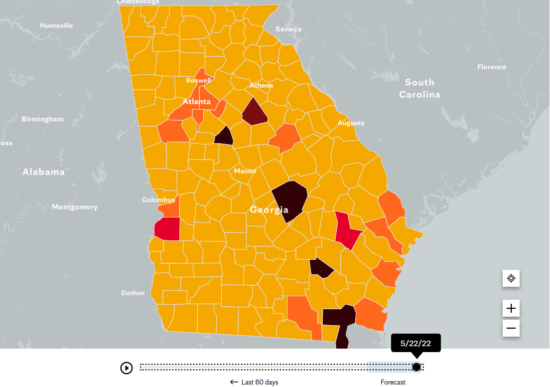
When you kiss that special someone, do you want him, her, or it thinking, “Mmm, you taste like petrolatum and octyldodecanol”? Or would you rather be told, “Mmm, you taste like a superfood!”? (And we don’t mean salmon or broccoli.) Next time you smooch with Suzy Chapstick (kids, ask your parents), she might taste like dragon fruit, blueberry, or clover honey — the “three bold flavors” Chapstick is introducing. And no, you don’t have to choose! The flavors are “Designed to be used alone or layered with another variety.” Mmm. Mercer University held its pinning ceremony on Monday, watching with wistful joy as 111 unsuspecting students celebrated their transition from the warm embrace of the classroom to the cold, cruel world of practical pharmacy experience. Congratulations, future PharmDs — here’s hoping that transition is smooth and your careers are awesome! Maybe. It’s only supposed to work if taken early (to prevent serious illness), but anecdotal evidence is emerging — slowly — that it might reduce the symptoms of long Covid. The obvious problem: Anecdotes and case studies alone won’t be enough. So far, the reports of post-Paxlovid improvements have been too inconsistent, too scant “to gauge what’s really happening.” And while it’s being tested (unofficially) here and there, no actual trials are planned … yet. There’s now plenty of Paxlovid to go around, but it’s not being used. The bottleneck: Prescriptions. As in, people aren’t going to the doctor to get them. The solution might be telehealth: It would not only make it easier for sick people to get prescriptions, when combined with delivery it would keep them quarantined at home when they’re most contagious. It could be that patients with lupus nephritis shouldn’t be taking maintenance prednisone. That’s the argument from Johns Hopkins University professor of medicine Michelle Petri. “Steroid use is no longer necessary for non-renal lupus,” she said, simply because any benefits are outweighed by the downsides. It’s especially true for high doses, she said, which “can lead to an increase in avascular necrosis.” Not to mention the cost to the patient. “If we could eliminate maintenance prednisone, we could eliminate significant insurance costs of caring for our lupus patients,” Petri said. “We need to push the prednisone taper.” Covid-19 cases will more than double in the next two weeks, according to Mayo Clinic modelling. Georgia is expected to see a rise, but it won’t be among the worst hotspots. (Pro tip: Avoid Missouri.) Within the state, though, Bacon, Butts, Charlton, Laurens, and Morgan counties are projected to see a notable jump in cases. No. Well … not among the over-55 crowd, at least according to Aussie cardiology researchers. They took 1,400 patients who had suffered acute coronary syndrome and tested whether “motivational and supportive weekly text messages on medications and healthy lifestyle” would convince them to take their meds. (Success would be greater than 80% adherence with up to five medications.) No joy. It “had no effect on medical adherence but small effects on lifestyle risk factors*”. Not every case of cognitive impairment is actually a case of cognitive impairment. It could just be poor eyesight. It’s pretty obvious when you think about it (which researchers at the University of South Australia did): Too many cognitive tests rely on vision, and that “could be skewing results in up to a quarter of people aged over 50 who have undiagnosed visual problems.” “[I]f a mistaken score contributed to a diagnosis of mild cognitive impairment, it could trigger psychological problems including depression and anxiety. People with [age-related macular degeneration] are already experiencing multiple issues due to vision loss, and an inaccurate cognitive assessment is an additional burden they don’t need.” Its Aduhelm treatment for Alzheimer’s didn’t work. Its questionable fast-track FDA approval is under federal investigation. It disappointed Wall Street and just ousted its CEO. But that doesn’t mean Biogen won’t take a second shot at an anti-amyloid beta drug. This one is lecanemab, and it’s still under investigation, but Biogen and its old partner, Eisai, have submitted a Biologics License Application with the FDA. And what d’ya know — they requested a priority review. At least if it’s another debacle, it’ll be over quickly. The warning comes from an Ohio State University, but it probably applies all over: There’s fake Adderall out there, and it’s killed at least two OSU students. (It’s laced with fentanyl, so it’s obvious they didn’t get it from their local community pharmacies.) Covid could double, kiss like superfood, when texting doesn’t help, and more
Pharmacy owners, stock your shelves
Congrats, Mercer P3s!




Paxlovid in the news
Could it treat long Covid?
The Long Read: Telehealth edition
Pushing the ‘prednisone taper’
Covid crystal balls
Can texting patients improve adherence?
I once was cognitively impaired but now I see
Biogen and Alzheimer’s: Once more, with feeling
Warning: fake Adderall
May 10, 2022 ✒ Andrew Kantor
What’s a simple way to counterfeit-proof a bottle of pills? Coat each pill with tiny beads of colored candy: nonpareils. Each individual pill (!) would have a unique pattern of colored dots, kind of like a QR code. A patient could take a photo of a pill from the bottle and verify with the manufacturer that it’s legit. If nonpareils are applied at random to a pill immediately after manufacture, the specific pattern they form is unlikely to ever be repeated by random chance; this means that the pattern (or “CandyCode”) can be used to uniquely identify the pill and distinguish it from all other pills. With eight colors and about 92 beads on each pill, the inventor — UC Riverside bioengineering professor William Grover — says that it would allow 10^17 combinations “enough for 41 million pills for each person on earth.” Most of you want to build a referral network with prescribers, hospitals, nursing homes, and the like. And most of you probably want to avoid prison. That’s why attorney Jeff Baird of Brown & Fortunato will be presenting “Building a Legally Compliant Referral Network” at the Georgia Pharmacy Convention. Stay on the right side of Stark and federal anti-kickback statutes — learn the laws and regulations from the nationally acclaimed speaker that Surgeon General Jerome Adams called, “Who are you? How did you get this number?” GPhA is bringing insight from Jeff Baird straight to you, live and in-person Saturday, June 10, at the Georgia Pharmacy Convention in (on?) Amelia Island, Florida! So yes, that’s reason #624 to attend the convention — get registered today at GPhAConvention.com! With DIR reform finally on the books, you might be wondering, “OK, what exactly does it mean?” We all know that new laws and regulations are never simple. Our friends at NCPA are here to help. First there’s a six-page analysis put together by its policy team. That should answer most of your questions. But just in case, NCPA is holding a free Zoom-based webinar on May 17, at 8:00 p.m. EDT, “where we’ll outline the new CMS DIR rule and its impact on your pharmacy.” You can register here. …interferon. Apparently, if given early during a Covid infection, it can dramatically cut the risk: In a study of more than 1900 people, those who received a single shot of a drug called peginterferon lambda within 7 days of developing symptoms of Covid-19 were half as likely to be hospitalized or to endure lengthy emergency room visits as those who received placebo. The grains of salt: It’s coming out of Brazil, which is not exactly the epicenter of good Covid-related science. It’s also a study done and reported by the drug’s maker, Eiger BioPharmaceuticals. (“Until we see a peer-reviewed publication, I am cautious re[garding] press release[s] from companies,” as one infectious disease specialist put it.) “Social media break improves mental health” Asking people to stop using social media for just one week could lead to significant improvements in their wellbeing, depression and anxiety. Take a wild guess: What particular healthcare practitioners can reduce medication-related problems with nursing home residents? Why yes, “regular visits from pharmacists to aged-care residents can reduce problems due to medicines and improve health outcomes,” according to a study out of the University of South Australia. There, residents only had a medication review every two years, unless specifically required. And yet… At each visit, pharmacists found 60 per cent of residents had problems with their medicines. [Over one year] They made 309 recommendations to change residents’ medications or monitor their medications with a view to change; and, for almost two thirds of the population, recommended reduced medicine use. Well what d’ya know — even though they can simply flush unneeded meds down the toilet, only about 43 percent of people do that. But sending them opioid disposal kits increased that to 60 percent. So found emergency med researchers at Penn Medicine. Even better — that 43 percent knew they were part of a study, so they aren’t your average Joes on the street. Those Average Joes (previous studies found) only throw out unneeded meds 20 to 30 percent of the time — so the mailed envelopes can double or triple that rate. Sudden Infant Death Syndrome is awful for too many reasons, including the fact that there’s rarely any warning. But now SIDS researchers in Australia may have made a major breakthrough: They seem to have found a biomarker that can predict it. Simply put, the enzyme butyrylcholinesterase (BChE) is essential for the autonomic system. When it’s not working or there’s not enough, babies can die. Measuring BChE specific activity (BChEsa) is the key, even if it can’t explain why it’s happening: BChEsa, measured in dried blood spots taken 2-3 days after birth, was lower in babies who subsequently died of SIDS compared to surviving controls and other Non-SIDS deaths. We conclude that a previously unidentified cholinergic deficit, identifiable by abnormal -BChEsa, is present at birth in SIDS babies and represents a measurable, specific vulnerability prior to their death.Safety with sprinkles, big SIDS breakthrough, get your DIR answers, and more
Fraud-fighting sprinkles
Get connected … legally
DIR questions? NCPA has answers
The newest Covid treatment is …
Captain Obvious is tweaking his Instagram filters
It’s almost as if you’re medication experts or something
Disposal envelopes work after all
Today’s non-pharma medical story: SIDS breakthrough
May 07, 2022 ✒ Andrew Kantor
No longer can PBMs hit you with retroactive direct and indirect remuneration fees, thanks to a new final rule from CMS. Well, no longer … starting January 1, 2024. That’s when those fees must be reflected in the negotiated price the patient pays at the pharmacy counter. CMS’s final rule also put an end to a proposed loophole that would have given authority to the Medicare Advantage Part D plans and PBMs to determine how much, if any, of the pharmacy price concessions they would pass through to patients at the point of sale during the coverage gap in the Medicare Part D program. Quoth APhA CEO Scott Knoer, “Eliminating the retroactive use of DIR fees is a step in the right direction, but it’s only the tip of the iceberg.” Nothing against Ritalin, but before starting a kid on medication for ADHD, there are some other options — and the newest on the list is micronutrients, aka, vitamins. A study out of Oregon Health & Science University found that giving kids a supplement of “all known vitamins and essential minerals” made them “three times more likely to have better concentration and improved moods.” They were given pretty strong doses — up to the maximum tolerable limit — but the results were encouraging: After eight weeks, more than half of the micronutrient group showed improvement in their concentration and mood. Children taking the micronutrients also grew 6 millimeters more than those taking a placebo. Oddly, they didn’t determine which micronutrients had this effect, but that’s for further study. On the next episode of “Good for You or Bad for You?” we learn that “Dairy products linked to increased risk of cancer.” Well, that’s the headline. The detail is that it applies to Chinese people — a population with a high level of lactose intolerance and a low level of dairy consumption. Nevertheless, the study out of Oxford “Like Cambridge But Drearier” University found that yes, more dairy meant more cancer. For example… People who consumed dairy products regularly had significantly greater risks of developing liver and breast cancer. For each 50g/day intake, the risk increased by 12% and 17% respectively. Of course, “Further studies are needed to validate these current findings, establish if these associations are causal, and investigate the potential underlying mechanisms involved.” It might be time to consider not simply cutting back on antibiotics, but saving them as a last resort. That’s not just because of resistance (although it’s a factor). It’s because even a single course can do lasting damage to the gut biome. These community changes can be profound, with some people’s microbiomes taxonomically resembling those of critically ill ICU patients after taking the drugs. And the microbes that survive the treatment tend to carry resistance genes, potentially enabling pathogens to acquire the means to evade our best pharmacological weapons. As one microbiologist put it, we need to stop thinking of antibiotics as doing no harm; we need to balance the need with the damage we’re learning they cause. “[T]aking antimicrobials is a gamble every single time you do it, even if it’s fully warranted.” The latest Covid vaccine twist: “FDA restricts J&J’s COVID-19 vaccine due to blood clot risk.” The risk is rare, but it’s there*. Thus the FDA has gone from recommending only some people get the J&J shot, to strongly recommending that only some people get it. (Still eligible: people who are allergic to the mRNA vaccines, and people who don’t want one.) Smoking dried cannabis flowers — the buds, not the leaves — can apparently combat fatigue. And that’s true (University of New Mexico psychologists found) even when that fatigue comes from chronic pain, cancer, Parkinson’s Disease, or multiple sclerosis. This was the first large-scale study to show that, on average, people are likely to experience a 3.5 point improvement of feelings of fatigue on a 0-10 scale after combusting Cannabis flower products, conventionally referred to as “buds”. The twist: It didn’t matter what kind of cannabis plant it came from — it was independent of THC or CBD levels, “suggest[ing] that other minor cannabinoids and phytochemicals such as terpenes may be more influential.” Boston University researchers: “Smoking Plus Vaping No Healthier Than Smoking on Its Own”. And yes, that means exactly what you think it does: [S]moking cigarettes and e-cigarettes didn’t reduce the risk of heart attack, heart failure, stroke or any cardiovascular disease. Next up: ‘Eating Pop-Tarts with arsenic does not reduce chance of death.’ If, like most of us, your patients lie awake at night worrying about flesh-eating bacteria, you’ll want to be ready to answer their questions. Fear not. The good folks at Baylor College of Medicine have you covered with “What to know about flesh-eating bacteria.” Why bother with a pesky pulse oximeters when you can get a tattoo that shows your blood-ox level? Well, sort of. Engineers at Tufts have created “a silk-based material placed under the skin that glows brighter or dimmer under a lamp when exposed to different levels of oxygen in the blood.” At this point the sensor only reads oxygen, but the Tufts team hopes to expand the concept to reading more, including glucose, lactate, and electrolyte levels. (And if you’re curious, the tattoos aren’t permanent — they can last up to a year.) Why have a doctor carve away a chunk of your flesh for a biopsy, like some medieval barber/surgeon? Soon enough you might go Star Trek and get a skin cancer test via a little handheld doohickey. Starting with the same scanning tech as airport security, researchers at New Jersey’s Stevens Institute of Technology improved it, then used artificial intelligence to process the images and determine if a skin blotch was cancerous. Using their device, [they] could identify cancerous tissue with 97% sensitivity and 98% specificity — a rate competitive with even the best hospital-grade diagnostic tools.DIR-fee victory, a pulse-ox tattoo, waking up with buds, and more
Retroactive DIR fees: eliminated
Vitamins for ADHD
Dairy is deadly?
Reconsidering antibiotics
Feds cut back on J&J vax
Hey bud, wake up
Captain Obvious knows 1+1 doesn’t equal 0
You are what they eat
Medical engineering
Tattoo you
Skin cancer scanner
May 06, 2022 ✒ Andrew Kantor
Of all the things to overbill the government for, apparently (by its own admission!) PillPack chose insulin — and it got caught. The Amazon subsidiary will have to pay out $5.6 million from Jeff Bezos’s spare change jar. From April 2014 through Nov. 2019, PillPack’s general practice was to dispense insulin pens to patients using full cartons. PillPack would dispense and bill for the full carton and falsely underreport the days of supply to make it appear that the dispensing did not violate the program’s days-of-supply limit. Sure, you might come to the Georgia Pharmacy Convention for the great resort and tax-deductible* vacation, but there’s a ton of CE to be had, too. Prefer courses with detailed titles? We’ve got “Novel Trends with biologicals for the treatment of inflammatory disorders.” Prefer something with a name that’s more fun? How about “ Oh My Aching Head—Tension, Sinus, or Migraine?” From accounting principles to vancomycin, the Georgia Pharmacy Convention has the best, most up-to-date education you’ll find — hours and hours of CE available for pharmacists and technicians. Register today at GPhAConvention.com and we’ll see you at the beach (and in the classroom). If you want to avoid dementia, you’ll want to up the levels of antioxidants in your blood — specifically lutein, zeaxanthin, and beta-cryptoxanthin. NIH researchers followed 7,283 people for an average of 16 years (!) and found a pretty direct correlation between levels of those antioxidants and dementia risk. Every standard deviation increase in lutein and zeaxanthin levels, approximately 15.4 micromols/liter, was associated with a 7% decrease in risk of dementia. For beta-cryptoxanthin, every standard deviation increase in levels, approximately 8.6 micromols/liter, was associated with a 14% reduced risk of dementia. Caveat: It’s possible that the causation is more complex, e.g., people with higher levels of those chemicals are also people who live healthier lifestyles in other ways. (Interesting side note: Readers with amazing memories might remember a story from January where we reported that higher levels of lutein and zeaxanthin also helped reduce macular degeneration. So this seems to be good stuff.) “PBMs in the Senate hot seat as bipartisan transparency measures may take root.” Echoing recent and similar questions from the FTC, front and center at the Senate hearing were the anti-competitive practices of PBMs, like artificially inflating the list prices of certain drugs while collecting a growing portion of rebates, and increasing out-of-pocket costs for consumers along the way. According to the computer at the University of Waterloo, patients who take diuretics and RSA inhibitors for hypertension should probably not take ibuprofen: “[I]n people with certain medical profiles, the combination can cause acute kidney injury, which in some cases can be permanent.” This isn’t based on human testing — it comes from “computer-simulated drug trials.” And it makes sense, with dehydration from the diuretic being a danger in itself to kidneys “and then the RAS inhibitor and ibuprofen hit the kidney with this triple whammy.” “It’s not that everyone who happens to take this combination of drugs is going to have problems […] If you happen to be on these hypertension drugs and need a painkiller, consider acetaminophen instead.” If you want to get a drug to the small intestine, you need to get it past the stomach. That’s a problem, what with all that acid. What’s an engineer to do? How about “create a new class of material”? [It] is able to both withstand the harsh acidic conditions of the stomach and then dissolve predictably in the comparatively gentle environment of the small intestine. And they wouldn’t be real engineers if they didn’t give it a wonky name — in this case, “polyzwitterionic complex” or pZC. The UMass Amherst folks hope “that pZCs could help transform the delivery of medicines, from familiar oral antibiotics to new classes of delicate protein therapeutics.” On the horizon, potentially replacing dialysis and transplants, is an artificial kidney — no easy feat, but one that’s already in process. At the moment it’s a backpack-sized device, but the University of Washington nephrologist leading the charge considers it “the first phase of a progression that will he hopes will lead to something small and implantable.” How soon? “[T]he first preclinical trials for an artificial kidney could happen as soon as 18 months from now,” he says. When you’re worrying about drug-drug interactions, you obviously worry about how they interact directly — how they affect each other. But Korean researchers realized there’s more: You also need to worry about how they affect gene expression. That is, even if the drug’s chemistries don’t interact, they could cause genes to express themselves in complementary or conflicting ways. Thus they developed a computer model to predict those kind of interactions — hopefully (once its out of the lab) helping figure out why certain combinations cause unexpected side effects. With the pandemic came the rise of virtual doctor visits. But now some pharmacies are cutting off telehealth patients from ADHD meds because they’re afraid of stimulant abuse. It doesn’t help when an online mental health company like Cerebral runs ads talking about ‘easy ADHD treatment,’ then writes a lot of stimulant prescriptions. And while “the risk of inappropriate prescriptions was likely minimal,” larger pharmacies are becoming wary — especially of newer telehealth providers — as they try to balance patient need with the risk of abuse. An optometrist explains how Abbvie’s Vuity drops treat presbyopia (aka “age-related blurry near vision”). (Spoiler: “Since presbyopia limits the ability of the lens to change shape, these eye drops compensate by causing the pupil to get smaller.”) Ibuprofen danger, presbyopia drug, Amazon in troublllllllllle, and more
Bad PillPack! No cookie!
So much CE in one gorgeous place
Antioxidants do it again
Our thoughts and prayers are with the PBMs
Ibuprofen, BP drugs, and kidneys
Cool medical science
Passing the acid test
Better than dialysis
There’s more to drug-drug interactions
Telehealth speedbumps
The Long Read: A Drug for Farsightedness edition
May 05, 2022 ✒ Andrew Kantor
The idea of annual Covid shots is going from “Who knows?” to “Probably gonna.” The latest evidence comes from a letter by three FDA bigwigs — Peter Marks, Janet Woodcock, and Robert Califf — in JAMA. They suggest that, starting as soon as this fall, we may need to plan on annual Covid vaccinations. And like the flu shot, each year’s Covid vaccine would be based on the (sub)variants in circulation. Administering additional COVID-19 vaccine doses to appropriate individuals this fall around the time of the usual influenza vaccine campaign has the potential to protect susceptible individuals against hospitalization and death, and therefore will be a topic for FDA consideration. The key word, of course, being “consideration.” That you’ll want your immunization skills to be at their very best. No one wants the person with the needle to be “good enough,” so show you’re better — show them the awesome certificate you get for completing APhA’s Pharmacy-Based Immunization Delivery certificate training program. (And you can enjoy the 20 hours of CE you get for completing it.) It’s coming up in just a few weeks: Sunday, May 22, 2022 from 8:00 a.m. – 5:00 p.m. at GPhA’s World Headquarters in Sandy Springs. Get the details and sign up today at GPhA.org/immunization! Drugs delivered through the spinal cord, like morphine, can take a while to affect the brain. Meanwhile, some drugs used in emergencies (like dexmedetomidine) work faster because they activate the glymphatic system. Finnish researchers have found a way to have that cake and eat it too — to take advantage of the glymphatic system when delivering morphine. The solution (literally) is saline: A strong saline solution “accelerate[s] the glymphatic influx of cerebrospinal fluid at the brain level,” so the Finns combined that with opioids. Result: [B]y combining the two methods used in fairly different patient groups you can almost quadruple the morphine concentration in the spinal cord and enhance pain relief.” Why do women get depression more than men? Because they’re weak, that’s why. No, seriously — that’s what U.S. and Finnish researchers concluded after investigating the correlation between low grip strength and higher odds of depression. Depression typically occurs during social conflicts, such as physical or sexual abuse. Physically strong individuals can often single-handedly resolve conflicts in their favor, whereas physically weaker individuals often need help from others. We argue that depression is a credible cry for help. Because men generally have greater strength than women, we argue that men may be more likely to resolve conflicts using physical formidability and women to signal others for help. (On a personal note, I think that conclusion falls somewhere between poppycock and balderdash, but what do I know?) Help kids find cheeses. A preliminary study out of Ontario’s University of Guelph found that kids who ate more cheese had lower LDL cholesterol. Interesting twist: The researchers were looking at dairy in general (including milk and yogurt), but only cheeses made a difference. ‘Further research is warranted.’ And before you ask: No, this study was not sponsored by Big Cheese (Gros Fromage Canadien). We checked. If you just read the news story, this seems like a typical FDA warning letter — in this case to Miami University of Ohio for “falsifying data.” But if you read the actual letter, you get a much fuller picture of why MU was scolded for its heparin testing: Test results in an ‘uncontrolled’ folder (i.e., not password-protected). No software audit trail. And our favorite, “All users shared one master login.” Pro tip: While the biggest problem here seems to be a lazy user who didn’t feel like re-running an analysis — the various issues FDA highlights are worth noting because they’re easy traps to fall into: “Oh, just use my login….” Here’s an unexpected benefit to wearing a less-than-perfect face mask: variolation. Well, maybe. Like getting a bit of smallpox from an 18th century time traveller, people today may have “an incidental but potentially beneficial form of immunization achieved by inhaling smaller doses of the virus than would be inhaled without a mask.” At least that’s the mathematical model Canadian researchers came up with. But it makes sense, and it reinforces the idea that a so-so mask is better than no mask at all. Excellent question! It hasn’t been answered yet, so British and Aussie researchers decided to change that. What kind of (bad) reactions did people taking magic mushrooms have? they asked. In a nutshell, here’s what they found: Of the 9,233 people surveyed, eight required hospitalization, and all but one said they had returned to normal within 24 hours. “No drug is entirely risk free, but relative to most recreationally used drugs, psilocybin mushrooms demonstrate a good safety profile based on the rate of emergency medical treatment seeking in this sample.” Researchers from the University of Minnesota Medical School are answering the important questions, like What kind of diet gives you the really bad gut gas? The answer: Eating meat. A plant-based diet — more fiber, less protein — “resulted in a lower hydrogen sulfide production compared to an animal-based (i.e., Western) diet.”Women’s weakness(?), why kids need cheeses, psilocybin safety, and more!
Get ready to do this every year
That’s a good time to remind you…

Faster, better opioid delivery
Depressed women are … crying for help?
Hanker for a hunka cheese
An FDA warning to learn from
Bad mask, good result
How risky is psilocybin?
And then there’s this
Gassing up
May 05, 2022 ✒ Andrew Kantor
The question: “Is seasonal influenza vaccination associated with lower rates of adverse cardiovascular events?” The answer: Why yes, yes it is. The flu puts enough of a strain on the heart that being vaccinated — whether it lessens the impact or prevents the flu entirely — cuts the risk of heart attacks. That’s according to data out of Houston Methodist Hospital. Adults who received the vaccine were 37% less likely to be hospitalized for the flu and 82% less likely to be admitted to the ICU because of it. Among people admitted to the hospital with the flu, those vaccinated were 59% less likely to be admitted to the ICU. Vaccinated patients admitted to the ICU spent four fewer days in the ICU than unvaccinated patients. Some people take the supplement serine, hoping it might help treat Alzheimer’s. That might be a very bad idea, according to some findings out of UC San Diego. Researchers there found that elevated levels of an enzyme called PHGDH appear to be an early warning sign of Alzheimer’s. While the mechanism isn’t clear, they do know that higher PHGDH leads to higher levels of serine. So if PHGDH is involved in Alzheimer’s, it might mean that serine is as well. Thus, “Anyone looking to recommend or take serine to mitigate Alzheimer’s symptoms should exercise caution.” If you get a bad enough case of Covid to put you in the hospital, you could emerge with ‘brain fog’ as bad as if you had aged 20 years — and it could last more than a year. (So found British brain-science researchers after conducting cognitive tests on discharged patients.) That means 20-year-olds could end up shopping for Miatas, 50-year-olds will be shooing whippersnappers off their lawns, and 60-year-olds will start reminiscing about when movies were a nickel. The prevailing wisdom was that Covid exposure meant Covid protection — not full protection, but at least as much as from a single shot of a Pfizer or Moderna vaccine. But that may not be true with the omicron variant, as South African scientists are discovering. At least two sub-variants of Omicron — BA.4 and BA.5 “can evade neutralizing antibodies generated by infections from BA.1,” and that’s leading to a surge in cases there. The good news: Vaccination does work against those sub-variants, so the only people this is likely to affect are the unvaccinated. Cases and hospitalizations are both going up again, following (not surprisingly) the loosening of masking requirements. Deaths, however, are going down (but typically lag hospitalizations by two weeks). If deaths don’t start rising, though, it could be a good sign that Covid is mostly under control — really bad if you get it, but usually not fatal. People with a higher body mass index are more likely to … wait a sec. How did BMI become the measure of ‘correct’ weight? Why do we use it so often, and how reliable is it? The Conversation has some answers: “Here’s everything you need to know about BMI — and why using it as the sole measure of your health is nonsense, starting with a quick history lesson.” (Fun fact: “BMI started as a way to describe the average white man in the 1800s.”) Average white man, Average White Band … whatever Dopamine doesn’t just make you feel rewarded — it also seems to be important for your ability to recognize emotions. If you have patients taking dopamine agonists like haloperidol or clozapine, that could be an issue. British psychologists found that those drugs affect — and often impair — “social cognition.” But the effects aren’t straightforward. For example, they gave haloperidol to healthy people who had varying levels of dopamine in their blood: In people with low dopamine, the drug increased their ability to recognize emotions, while in people with high dopamine, the drug impaired their ability. The usual mantra: More research is necessary … but it seems that when someone’s dopamine levels are … adjusted, the effects might be more than expected. There’s a new drug in town — the first nonstimulant ADHD med since Strattera (in 2002) has been approved for adults. Supernus’s Qelbree* got a green light for kids and teens last April, and now becomes only the fourth non-controlled ADHD med for grown-ups. One of the quirky issues with medical marijuana — in Georgia and elsewhere — is that, while it’s completely legal (for adults) in 18 states and legal for medical use in 37, the feds still classify it as schedule 1, up there with heroin. Of course, ever since our nationwide discussion in the 1860s, federal law supersedes state law. That means the DEA could technically bust a guy with a joint sitting on his porch in Colorado. It also leads to Georgia’s odd situation, where cannabis is legal for some folks to possess for medical use, but not legal for them to obtain (because it would have to cross state lines). And that’s why this story in the FDA Law Blog is interesting. The DoJ, it seems, considers marijuana enforcement a low priority. “I do not think it the best use of the department’s limited resources to pursue prosecutions of those who are complying with the laws in states that have legalized and are effectively regulating marijuana.” —Attorney General Merrick Garland There are eight exceptions coming out of the 2018 “Cole Memo,” but this item is already too long, so you’ll need to read more on your own…. Covid can make you older, why BMI?, dopamine side effect, and more
Flu shots cut heart attacks
The serine-Alzheimer’s connection
Covid tidbits
Age is just a number
Having Omicron may not protect you
Going up
Weight weight, don’t tell me

Emotional dopamine
Adults with ADHD rejoice!
The Long Read: Marijuana Legality edition
May 03, 2022 ✒ Andrew Kantor
CMS has suspended Georgia’s plan to leave the federal ACA marketplace in favor of one run by private companies. The gist of the decision: Private companies would steer consumers to the companies’ own plans, not explain options well, and “some shoppers would walk away with inadequate coverage or drop coverage altogether.” To get a waiver, the Kemp administration needed to show that Georgia’s plan “provide coverage to at least a comparable number of residents as without the waiver,” which CMS said it did not. CMS is considering a premium drop for Medicare Part B plans for a simple reason: Half of this year’s big 15 percent increase was due to the agency expecting to pay through the nose for Biogen’s Alzheimer’s drug Aduhelm. But that’s off the table (except for clinical trials), so “the rationale for an increase that high is gone.” On the other hand, mid-year changes simply aren’t done*, so it’s possible any premium cut could be postponed till 2023. If someone in your house tests positive for Covid-19 and takes Pfizer’s antiviral Paxlovid to try to stay out of hospital, you might think, “Hey, lemme get in on that to protect myself.” Don’t bother. Pfizer reports that Paxlovid doesn’t protect people from being infected — it just protects the infected from being hospitalized. Hanging around with unvaccinated people — intentionally or not — increases the risk of contracting Covid-19 even if you’re vaccinated. So found public health researchers at the University of Toronto. “What we kind of concluded is that the decision to not be vaccinated — you can’t really regard it as a self-regarding risk (because) you’re creating risk for other people around you by interacting with them.” It’s like riding in a car with someone not wearing a seatbelt. You might think it’s their personal choice … until you’re in an accident with 265 pounds of unbelted Uncle Joe sitting behind you. The bad news (if you, er, partake): A large study out of Stanford found that “People who use marijuana have an increased risk of heart disease and heart attack” because THC seems to cause inflammation in the lining of blood vessels. “Our studies of human cells and mice clearly outline how THC exposure initiates a damaging molecular cascade in the blood vessels. It’s not a benign drug.” But the good news is that there’s an easy way to stop that inflammation: genistein, which is found in soy and fava beans (and available as a supplement). [G]enistein works quite well to mitigate marijuana-induced damage of the endothelial vessels without blocking the effects marijuana has on the central nervous system, and it could be a way for medical marijuana users to protect themselves from a cardiovascular standpoint.” A nice Chianti couldn’t hurt, either. There could soon be an antidote to carbon monoxide poisoning. CO kills by binding to hemoglobin, preventing it from carrying oxygen. The only ‘cure’ is fresh air — and maybe a hyperbaric chamber in extreme situations. A UC Santa Cruz chemistry team, though, is finding ways to break up the CO and the hemoglobin. They’re creating molecules that are even more attractive to the monoxide — chemicals that will not only bind to the ‘unattached’ CO, but that are sexy enough to attract the CO that’s already bonded. This is just proof of concept at the moment, but with 20,000 people a year ending up in the ER with carbon monoxide poisoning, a simple, EpiPen-like antidote would be great. Artist’s conception Vegetarian kids grow bigger and stronger than kids who eat meat … not. Actually (Canadian researchers found), “those who eat a vegetarian diet had similar measures of growth and nutrition compared to children who eat meat.” In fact, “Vegetarian diet was associated with higher odds of underweight weight status.” Here’s an odd story: Someone sent a fake press release via PR Newswire (one of the world’s largest press release distributors) saying Opiant Pharmaceuticals and Hikma Pharmaceuticals had agreed to a licensing deal for Opiant’s experimental opioid overdose treatment. Opiant’s stock price shot up 25% before being halted, and then the company announced that the release was fake. Who did it? No one knows, but whoever it was probably made a nice chunk of change. Danger from the unvaxxed, smaller vegetarian kids, monoxide cure coming, and more
ICYMI: Georgia not leaving Healthcare.gov
Medicare Part B may get cheaper

The company you keep
Protection … eventually
Avoid the unvaccinated

Marijuana and heart attacks
It comes in like a wrecking ball

Let them eat their meat
Real companies, fake press
Do you want to send your members the daily Buzz email newsletter (customized for your state and organization, perhaps)? Let’s talk — just drop me a note at andrew@gphabuzz.com!


- Listen to the Latest ‘KFF Health News Minute’
- Banks Are Becoming Bulwarks Against Scams for Vulnerable Seniors
- More Kids Are in ERs for Tooth Pain. Trump Cuts and RFK Jr.’s Anti-Fluoride Fight Aren’t Helping.
- Newsom Picks a Dogfight With Trump and RFK Jr. on Public Health
- Florida Hasn’t Expanded Medicaid. Lawmakers Want To Add Work Requirements Anyway.
- Journalists Explain a Spat Over Sugary Coffee and How Measles Fools Doctors
- January 2025
- December 2024
- November 2024
- October 2024
- September 2024
- August 2024
- July 2024
- June 2024
- May 2024
- April 2024
- March 2024
- February 2024
- January 2024
- December 2023
- November 2023
- October 2023
- September 2023
- August 2023
- July 2023
- June 2023
- May 2023
- April 2023
- March 2023
- February 2023
- January 2023
- December 2022
- November 2022
- October 2022
- September 2022
- August 2022
- July 2022
- June 2022
- May 2022
- April 2022
- March 2022
- February 2022
- January 2022
- December 2021
- November 2021
- October 2021
- September 2021
- August 2021
- July 2021
- June 2021
- May 2021
- April 2021
- March 2021
- February 2021
- January 2021
- December 2020
- November 2020
- October 2020
- August 2020
- July 2020
- March 2020
- February 2020
- January 2020
- December 2019
- November 2019
- October 2019
- September 2019
- August 2019
- July 2019
- June 2019
- May 2019
- April 2019
- March 2019
- February 2019
- January 2019
- December 2018
- November 2018
- October 2018
- April 2017
