
January 20, 2022 ✒ Andrew Kantor
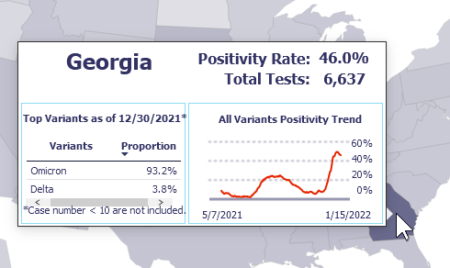
The Supreme Court upheld the Biden administration’s CMS Covid vaccination requirement, which means health workers in Georgia now have until Feb. 14 to get their first (or only) COVID -19 vaccine dose, and March 15 to get the second dose. Does that apply to pharmacies? Yep, if either participate in Medicare or Medicaid programs, or if you provide contracted services to an facility that does. NCPA has the details. Note: CMS says a facility with more than 80 percent of staff vaccinated and a plan to achieve 100 percent staff vaccination rate within 60 days of Feb. 14 will not be subject to enforcement actions. It’s this coming weekend! Get yourself an awesome (and awe-inspiring) APhA certificate to show your patients (and boss) that you’re at the top of the immunization game. On Sunday, January 23, 2022, from 8:00 am – 5:00 pm, GPhA is offering “APhA’s Pharmacy-Based Immunization Delivery: A Certificate Program for Pharmacists” at our world headquarters in Sandy Springs. Immunization training is hotter than ever (as you might imagine), so grab one of the few remaining slots: Get to GPhA.org/immunization-2021 fast! Between the quality of the tests and the (unknown) quality of the parents giving them, German biologists concluded that those quick antigen Covid tests are iffy at best when it comes to detecting the virus in kids. How iffy? Overall, they found, “overall diagnostic sensitivity and specificity in paediatric populations” was just 64.2% for OTC antigen tests compared to 99.1% for the gold-standard PCR tests. Sure, 64.2% accuracy is fine for a third-string quarterback, but if you’re sending Junior to school (or kissing him goodnight) you want a bit more accuracy. They call it a potential skin cancer vaccine, but “a shot to increase your protection against UV rays” is more accurate. Still, cool stuff. They are researchers at Oregon State University College of Pharmacy, and they used mRNA technology to get mice’s skin cells to produce more antioxidant proteins. Those proteins can help clear out the damage done by sunlight exposure — sort of creating built-in sunscreen. Following uptake of the mRNA into the cell and the cell’s machinery going to work, the cell should be at a high antioxidant level and able to take care of oxidative stress and DNA damage arising from ultraviolet radiation. Hormone therapy can help treat prostate cancer patients. In fact, found Case Western Reserve University researchers, for men with intermediate- and high-risk prostate cancer (no matter their age), adding hormone therapy to radio therapy (no matter the dose) shows consistent improvement. But what’s the best way to combine them? The hormones should be given with the radiation, not before radiation (as is done in some places), and it should continue until the radiotherapy is done — months, typically. When you have a lot of people in the ICU with Covid-19, you know a bunch will live and a bunch will die. Now British and German researchers have shown that a computer can determine who is most likely to survive — weeks in advance. The machine learning system uses a patient’s plasma proteome from a blood sample. Considering the levels and measurement time of 321 proteins, it’s able to calculate who’s likely to be discharged out the front door, and who won’t. Following on its annual flu tracker, Walgreens has launched its first pandemic tracker — one that lets you see how Covid-19 and its variants are spreading. It’s based on data from the PCR tests taken in its stores, and is (they say) updated “in near real-time” with variant information. A new report using HHS data found that more than 5 million Medicare beneficiaries — 3.5 million who are 65 and over, plus 1.8 million under 65 — “struggle to afford prescription medications.” And those under 65 with Medicare — who are typically disabled (or with end-stage renal disease)? It’s even worse for them. A new review paper published in the journal Nutrients says that three to five cups of coffee a day … Oh and by the way, it was funded by the coffee industry’s “Institute for Scientific Information on Coffee.” Your grain of salt …for the 2,000 hamsters in Hong Kong who had to be killed because they were suspected of carrying Covid-19. (And the 150 customers forced into quarantine.) mRNA sun protection, hormones vs prostate cancer, when mandates apply, and more
Vaccine mandates and you
Just a few days to get your immunization certificate!
For kids, fast tests, but not good tests
mRNA sunscreen
Hormones for prostate cancer
Computer predicts Covid survival
Walgreens launches Covid tracker
Medicare and affordability
Latest coffee news: good for guts

A moment of silence
January 19, 2022 ✒ Andrew Kantor
Sure, some people have side effects after getting a Covid vaccine, but researchers at Beth Israel Deaconess Medical Center found that more than 35 percent of people getting a placebo vaccine reported side effects after a single shot, and overall two-thirds of people had placebo-based reactions, “with headache and fatigue most common.” More kids are becoming fussy eaters — i.e., suffering from parosmia — thanks to Covid. First it takes away their sense of taste, and then it distorts it. Instead of smelling a lemon, for example, someone suffering from parosmia may smell rotting cabbage, or chocolate may smell like gasoline. And thus the kids don’t want to eat, frustrating parents and even leading to nutritional problems. Which, to be fair, is probably better than what would happen if the gasoline smelled like chocolate. January 20 is Cervical Cancer Awareness Day, so why not attend a 90-minute virtual conference on the subject, featuring Ashley Hannings (associate director of the UGA College of Pharmacy), Jeffrey Hines (medical director for health equity at Wellstar Gynecologic Oncology), and others. The conference is from noon-1:30pm, and it gives 1.5 hours of that sweet, sweet CE credit. Questions? Read more here (2-page PDF) or email Jana Mastrogiovanni at jana@cancerpathways.org. A potential treatment for diabetes is giving patients an islet transplant — replacing pancreatic islets that have been destroyed by the immune system. Problem: Rejection, just as with any organ transplant, and immunosuppressive drugs don’t work well. But now researchers at Northwestern have found a possible way around that. And yes, they used nanotechnology, like all the cool kids. In short (overly short, to be fair), they embedded rapamycin in nanoparticles, allowing them to target the immunosuppressant right where it needed to be, avoiding side effects while still being effective. Using these rapamycin-loaded nanocarriers, the researchers generated a new form of immunosuppression capable of targeting specific cells related to the transplant without suppressing wider immune responses. Through the end of this month, the Georgia DPH is still giving away some PPE-ish equipment. It’s out of sharps containers, but there’s plenty of other stuff — masks, gowns, coveralls — available as it “right-sizes” its inventory. So what’s available? Click here for the order form. And keep this in mind, per the DPH: Dogs can detect the SARS-CoV-2 virus in long-Covid patients a year and a half after their infection. That’s what French researchers found when they had trained dogs sniff sweat samples of people who claimed to have long-term symptoms vs. a group of controls. The dogs barked “Yes!” for 51.1% of the long-Covid patients, and none of the control group. The takeaways: The first of about 86 people in a clinical trial has received a dose of a potential vaccine for non-small cell lung cancer. “If successful, this cutting-edge immunotherapy could provide an effective, much-needed new treatment to help more people survive their lung cancer.” We older folks remember when the sequencing of the human genome was a Very Big Deal. The Human Genome Project took 13 years to be “complete” (and another 18 to be ‘really really complete’). Now a patient can get a personal genome sequencing to look for genetic disease in a matter of weeks. But who wants to wait weeks? Stanford geneticists have just set the Guinness World Record — no joke! — for the fastest DNA sequencing technique “which was used to sequence a human genome in just 5 hours and 2 minutes.” Although this was a one-off in an effort to set a record, the techniques and hardware they used proved the concept of their “mega-sequencing approach” and should soon be scaled and available outside the lab. A fourth shot of an mRNA Covid-19 vaccine doesn’t do much to prevent Omicron infection. At least, that’s according to preliminary results out of Israel*. “Despite increased antibody levels, the fourth vaccine only offers a partial defense against the virus. The vaccines, which were more effective against previous variants, offer less protection versus omicron.” Of course, as with everything else Covid-related, this could change — and a fourth shot and does offer some additional antibodies. Patients with diabetes? A physician from Atlanta’s Morehouse School of Medicine explains why they shouldn’t cut fruit from their diets, even if it does have a lot of sugar.Free PPE, fussy kids (for a reason), five-hour genome, and more
Placebo (side) effects
How can you have any pudding if you won’t eat your meat?
Free virtual CPE on cervical cancer
Making islet transplants possible
Need some PPE and such?
Barking up the long Covid tree
Lung cancer vaccine trial starts
Your genome will be ready shortly
The number of the counting shall be three (for now)
* To be fair, Israel and South Africa have been the go-to sources for both variant and vaccine information.
An apple a day, and so on
January 18, 2022 ✒ Andrew Kantor
People with asymptomatic Covid-19 have a lower viral load — i.e., they’re less infectious — than those who have symptoms. That’s what Boston University researchers found when they studied about 1,600 students and employees who tested positive during the university’s routine testing. The results demonstrated that symptomatic individuals had, on average, higher viral loads than those who were presymptomatic or asymptomatic, thereby suggesting that they are more infectious. Fun side note: They quarantined everyone for the same amount of time, regardless of symptoms, so people couldn’t lie about how they felt so they could get out early. The hands are a-wringing over a new TikTok trend called the “sleepy chicken challenge” where you cook your chicken breasts in … NyQuil. Why? Because. Don’t do it (“NyQuil is not seasoning!”) warn docs, and certainly don’t breathe the vapors — haven’t you heard of distillation? But before you can start rolling your eyes, hang on. GPhA Buzz’s research division checked on this “trend,” and found that, well, it doesn’t seem to exist. Sure, there may have been one or two #sleepychicken videos, but it’s not worthy of any kind of Satanic panic. Even a mild Covid-19 infection often “results in a startling rate of persistent symptoms.” So found a big ol’ group of researchers from across the country; they described “profound multi-cellular dysregulation in the brain caused by even mild respiratory SARS-CoV-2 infection.” In other words, mild Covid can mess with your brain. How much? At the level of chemotherapy: Taken together, the findings presented here illustrate striking similarities between neuropathophysiology after cancer therapy and after SARS-CoV-2 infection, and elucidate cellular deficits that may contribute to lasting neurological symptoms following even mild SARS-CoV-2 infection. Unvaccinated pregnant women who contract Covid-19 have a much higher chance of having a still birth, a premature baby, or a baby who dies within a month — that’ s what Scottish researchers A separate but related study found that “the earlier in pregnancy a mother was infected with SARS-CoV-2, the earlier a baby was likely to be born.” Oh, and what about fears of getting vaccinated? They found no indication that vaccination during pregnancy, including receiving a shot within 28 days of giving birth, increased preterm births or deaths of infants in the weeks before and after birth. Want more? Here’s everything you want to know about masks — including how to find the good ones. The CDC is warning people not to eat or drink around their bearded dragon. No, that’s no a euphemism: Pet bearded dragons are responsible for a salmonella outbreak in 25 states that’s hospitalized at least 14 people. Georgia isn’t one … yet. But it’s happened in Alabama, Florida, and South Carolina. For what it’s worth, the danger is in their fewmets — dragon droppings, as Madeleine L’Engle fans know — not the animals themselves. Former hedge fund manager Martin Shkreli — who, as CEO of Turing Pharmaceuticals, raised the price of rare-disease treatment Daraprim by more than 5,000 percent — has been banned from working in the pharmaceutical industry again, and has to pay $64.6 million in fines. Correction: An earlier version of this story reported that he had raised the price of insulin. That, in fact, is legal and common practice. We regret the error. After 24 years of lobbying by the Association for Dressing and Sauces, the FDA has finally — finally! — agreed to drop its ‘identity’ regulation for French dressing.Dragon droppings of doom, Covid causes preemies, NyQuil vapor worries, and more
Growers and show-ers
Suppose they gave a trend and nobody came
Mild symptoms, long Covid
Tell your pregnant patients
Mask news
Beware: dragons
ICYMI: No mo’ bro
The FDA makes a bold move
January 15, 2022 ✒ Andrew Kantor
Feeling burnt out? You’re not alone. High-five (with a Purell chaser) to GPhA Region 5 President Shirin Zadeh, who talked to TV station 11 Alive about pharmacist burnout during the pandemic. Pharmacists were seeing high burnout levels from their profession long before the COVID-19 pandemic. As the pandemic has continued, the situation has only worsened. “Pharmacists have been dealing with this for a long time and COVID just took it to another level.” [she said] Remember Zika? The virus that got all the press a few years ago and had pregnant women worried about travelling? Ah, those days of innocence. Anyway, turns out the Zika virus might be turned to a tumor killer. Brazilian researchers found that injecting the virus into mice with brain tumors activated the mice’s immune systems to attack the tumor “without causing neurological damage or injuring other organs.” [C]ytokines suppressed tumor growth after treatment, and defense cells migrated to the brain region affected by the tumor, alerting the immune system to its existence. This could be pretty big news: A “huge study of U.S. military personnel” found that there’s a darned good chance that multiple sclerosis is triggered by the Epstein-Barr virus. That means a vaccine is a possibility, and the phrase “game changer” could actually apply. “Now that the initial trigger for multiple sclerosis has been identified, perhaps multiple sclerosis could be eradicated.” Side note: We wrote back in June that there’s evidence that long Covid might be caused by the same virus. So an Epstein-Barr vaccine could have much wider implications. And that’s why knowing that Moderna has started human trials of just such a vaccine is even better news. Got an arthritic cat? Good news: The FDA has approved the first treatment for it — a monthly monoclonal antibody injection of frunevetmab called Solensia. The most common side effects seen in cats treated with Solensia included vomiting, diarrhea, injection-site pain, scabbing on the head and neck, dermatitis and itchy skin. In other words, you might not even notice them. Here’s an interesting connection that only Big Data lets researchers suss out: Kids who have an infection in early life — specifically with inflammation involved — are more likely to suffer from psychiatric disorders later in life. It’s all about metabolism, say the German researchers who wrote about it (and that’s why BMI might also be connected with psychiatric issues). “[T]hese findings suggest that higher levels of infection, inflammation, and metabolic alterations commonly seen in people with depression and psychosis could be a cause for, rather than simply a consequence of, these disorders.” When you hear that Omicron typically causes “milder” Covid-19, or that being vaccinated means chances are you’ll have a “mild” bout … well, that’s mild in the clinical sense (Axios points out). In other words, it doesn’t put you in the hospital. But it doesn’t mean it’s just a sniffle. “To a health care professional, ‘mild’ means you’re not getting hospitalized. Omicron symptoms can range from absolutely no symptoms to a really mild cold to something where you are in bed with shakes and chills, and have a horrible cough and are fatigued and headachy for weeks. Those are all ‘mild’.” No matter what you might have learned from TV, a new paper out of St George’s University of London found that, even if you’re older, it’s (probably) safe to light the candles and play that Barry White.Surprising tumor killer, vaccine against MS, when mild isn’t mild, and more
Burnout shout-out

Zika: unexpected tumor killer
An end to MS?
Faster, pussycat, er … run, run!
Inflammation now, depression later
“Mild.” You keep using that word. I do not think it means what you think it means.
You are now free to move about the bedroom
January 14, 2022 ✒ Andrew Kantor
UGA researchers, diving where angels fear to tread, have discovered bacteria carrying the MCR-9 gene in the sewer water of an undisclosed “urban setting” in Georgia. MCR-9 is the gene that makes bacteria resistant to colistin, an antibiotic of last resort, so finding it — and in an unexpected bacteria no less — “means that the problem could be considerably more widespread than initially thought.” Considering that antibacterial resistance is already considered a widespread problem, that’s really not a good sentence to read. A shout out to the unnamed pharmacist in Savannah who alerted authorities to a questionable oxycodone prescription. That alert, through the usual twists and turns, led to the cracking of a multi-state prescription drug conspiracy. What with provider shortages, probably more pandemics, and patients really really liking you, a Columbia University report says “pharmacists in the U.S. are well-trusted by patients and projected to play an increasingly integral role in care management.” Looking toward the field of pharmacy in 2030, a majority of pharmacists see a transition from transactional care to more direct patient care responsibilities. Yeah, yeah, plenty of people are thinking it’s better to catch the ‘mild’ variant, which hopefully will provide immunity against something worse. Don’t be an idiot, say people who know about these things. “It is not a bad cold. It’s a life-threatening disease.“ In other words, less dangerous doesn’t mean not dangerous. Anthony Fauci, Janet Woodcock, and health officials in general figure, “Most people are going to get Covid.“ But if that makes you think, “Better Omicron than, say, Upsilon or Omega,“ see above. “Most people” doesn’t mean “Every people.” What’s one way to help people overcome opioid withdrawal? How about … cut out part of their brains? UCLA researchers knew that people treated for narcolepsy didn’t become addicted to the drugs that most people would. What was the difference? Those patients were missing most of the brain cells that produce hypocretin. Flip it: They also found that people addicted to heroin have a lot more hypocretin-producing neurons. Hmm. Cue the mice experiments! Turns out (they reported) that yes, it’s all about the hypocretin. Their findings confirmed this hypothesis showing that the lack of hypocretin producing neurons reduced both the physical and emotional symptoms of opioid withdrawal The FDA is warning that people who use buprenorphine meds that dissolve in the mouth might report “tooth decay, cavities, oral infections, and loss of teeth.” Long-term use of hypertension meds, notably ACE inhibitors, interferes with renin cells in the kidneys, causing (say UVA researchers) “hardened kidney vessels.” Taiwanese researchers have found that being exposed to laxatives in utero might mess with babies’ microbiomes and cause kids to develop allergies and autoimmune diseases later in life. Want to avoid macular degeneration? Eat dried goji berries. So suggest biologists at UC Davis, who found that eating berries increased the eyes’ levels of lutein and zeaxanthin — pigments that “are like sunscreen for your eyes.” “The higher the lutein and zeaxanthin in your retina, the more protection you have. Our study found that even in normal healthy eyes, these optical pigments can be increased with a small daily serving of goji berries.” The New York Times answers the question, “Is Omicron Peaking?” with a resounding “Maybe.” “We really try not to ever make any predictions about this virus, because it always throws us for a loop. But at least the wastewater is suggesting a steep decline, and so we hope that means cases will decline steeply as well, and then hospitalizations and deaths will follow.”Pharmacists’ time is coming, Georgia’s deadly sewage, goji berries for your eyes, and more
What’s in Georgia‘s sewers could destroy the world

Thank you, whoever you are
Get ready for your close-up
Don’t go looking for Omicron
Omicron will find you
Cut that out
Problems, problems
With Buprenorphine
With blood pressure meds
With laxatives
Talkin’ ’bout degeneration
The Long Read: Peaky? Blinders
January 13, 2022 ✒ Andrew Kantor
After all the fuss about whether Medicare would have to pay for Biogen’s unproven Aduhelm Alzheimer’s medication, the ruling is finally out: Nope. Probably. Medicare officials said coverage should be limited to patients participating in approved clinical trials. (I thought those people would get it free, but what do I know?) This is one of the rare times Medicare won’t cover an FDA-approved drug. But considering the huge controversy over that approval, it’s not entirely surprising. Biogen was Not Happy At All, considering it was planning to charge Medicare $28,200 a year per patient, each of whom would have to take it for the rest of their lives. Georgia ranks #7 in the U.S. for hospital beds in use, with 83.8% occupied, according to the latest HHS data. More than a quarter hold Covid-19 patients, and the country continues to set records for infections. People with heart disease are likely to have anxiety, and one in five are taking antidepressants or other psychiatric meds. Not surprising. The problem, according to the shifty Danes who did the research, is that “Antidepressants and other psychiatric medications are associated with an almost doubled risk of premature death in patients with heart conditions.” So they can be anxious and face (per the study) 1.67 higher odds of death, or they can take psychiatric meds and face 1.73 higher odds of death. “[Patients] should also ask that their anxiety is recognised as important and equal to their heart disease.” The CDC has released some additions to the ICD10 list of diagnostic codes, including three covering Covid-19: (Our favorite ICD10 code remains W55.52XD: “Struck by raccoon, subsequent encounter.”) We all know that social media is full of Covid-19 misinformation. It’s almost as if you could flip a coin to decide whether something you read was likely to be true or false, right? Actually, the good news, according to a group of data-researcher types, is that — at least in the first half of the pandemic — there was more sharing of accurate information than of the bogus stuff. Or as they put it, “URLs shared were more likely to be credible than non-credible.“ The bad news? Sharing of false Covid info was low compared to sharing of false information about other health topics. Taken together, our findings suggest that the “infodemic” is, in fact, a general feature of health information online, that is not restricted to Covid-19. A group of 270 physicians and scientists have written to Spotify, asking that it remove “The Joe Rogan Experience” podcast because of all the Covid-19 misinformation he continues to spread — including that vaccines only work because of “mass formation psychosis.” Here’s a scary stat: It ain’t the kids you have to worry about so much. The number of opioid overdose deaths in older Americans increased 1886% between 1999 and 2019. There’s no missing decimal — that’s 1,886 percent. The Northwestern researchers who did the study suggest that these are flower children who are … wilting: “people who in their youth, were using recreational drugs and, unlike in previous generations, they’ve continued using into their older age.” [A]geism is one of the contributing factors for the increase in fatal opioid overdoses among older adults. […] doctors often don’t screen for drug misuse during appointments with older people because “it doesn’t fit the stereotype of what it means to be old.” Speaking of “old,“ the article begins with this bit of shade-throwing: “A common stereotype for an ‘older adult‘ might include early-bird specials, dentures and tickets to the matinee show.“ …and your insulin from Mexico. The CDC is advising Americans to avoid traveling to Canada because of … you know. (Today’s crazy fun fact: You can meet your Canadian friends in Peace Arch Park, because the 1814 Treaty of Ghent prevents either the U.S. or Canada from cutting off access. If Canada does, it has to give up part of southern Ontario and Quebec. If the U.S. does, it has to give up parts of Maine, Michigan, and Wisconsin.) Could docosahexaenoic acid — aka DHA — be able to protect athletes from severe head injuries? Virginia Tech researchers think “Maybe.” That’s in part because they found that DHA is “usually inadequate in collegiate athletes’ diets” and until recently NCAA rules prohibited it as a supplement. Research is preliminary, but there are some good signs, apparently: For example, some biomarker concentrations and neurocognitive measures were better in the participants who took DHA supplements compared with those who took a placebo. Next up will be more participants, more results, and MRI scans, for starters.Joe Rogan pushback, Boomers on ice, when the raccoon strikes twice, and more
Aduhelm smacked down
Not much room at the inn
Heart disease on one side, anxiety on the other
ICD10 codes updated
Misinformation misinformation
In other news….
It’s the Boomers OD’ing
Get your maple syrup in Vermont
Omega-3 and head injuries
January 12, 2022 ✒ Andrew Kantor
People who use opioids for cancer pain are less likely to become abusers than those who use opioids for other kinds of pain. That’s what Canadian researchers discovered after analyzing (technically analysing) prescription information for nearly 1.7 million British Columbians. In fact, they found, “Patients receiving chronic prescription opioid treatments for non-cancer pain are about eight times more likely to start injection drug use.” (Emphasis ours.) With all the studies focused on illicit use, this is one of the few that considered what might make a legit opioid user turn to the hard stuff. TODAY, January 12, the CDC, FDA, and NIH are offering a free one-hour webinar, “What Clinicians Need to Know About the New Oral Antiviral Medications for COVID-19.“ It’s from 2:00 to 3:00pm EST. They’re going to “describe the recent EUAs and NIH treatment guidelines, patient prioritization, and resources for healthcare providers.“ Perhaps most importantly, they’ll cover when to prescribe antiviral medications, how to discuss risk/reward with patients and answer patients’ questions, and how to prioritize patients if medications are in short supply. Click here for details; you’ll also be able to get the slide sets before the call starts. For the live version, simply click here to launch Zoom a few minutes before it starts. If it asks for a passcode, that’s 180866. No cost, no CE, no registration. Just the info you need. (A recorded version will be available on the webpage a few hours after the live event ends.) Forget antibodies, anti-virals, and certainly vaccines — the way to beat Covid is to drink your own urine. This comes from anti-vaxxer and ex-con Christopher “No credentials whatsoever” Key (who considers himself the “vaccine police”). “The antidote that we have seen now, and we have tons and tons of research, is urine therapy,“ he proclaimed soon after his release from jail. ”OK, and I know to a lot of you this sounds crazy, but guys, God’s given us everything we need.” To be fair, urophagia or urine therapy isn’t new. Supposedly it was practiced by Gandhi, Idi Amin, Steve McQueen, Keith Richards, and Jim Morrison. Make your own judgement. Normal cells have normal electrical patterns, but cancer cells have erratic patters. In fact, those erratic patterns cause normal cells to become confused about their jobs — they turn into tumors, then eventually disrupt nearby cells, like microwaves affecting pacemakers. Metastasis. So, thought Tufts researchers, can we do something to those electrical patterns and stop metastasis? As a matter of fact, yes. The tool: existing, FDA-approved ion channel blockers. So far they’ve tried it in vitro and in animal models, but disrupting the ion channels “can in fact significantly reduce tumor cell invasion in a dish and metastasis in an animal model of breast cancer.“ Eight is (hopefully) enough: The Biden administration is requiring all health insurers to cover the cost of up to eight at-home Covid-19 tests per month, beginning this coming Saturday. “The new coverage requirement means that most consumers with private health coverage can go online or to a pharmacy or store, buy a test, and either get it paid for up front by their health plan, or get reimbursed for the cost by submitting a claim to their plan.“ =AND= Keep it in your nose: Although there’s evidence that a throat swab is better at detecting Omicron than a nasal swab is, the FDA is “warning” consumers not to swab their throats with at-home Covid tests. Not because it’s dangerous, but because if you don’t do it correctly you might not get correct results. (In Europe, though, it’s common to swab both.) And we all know the FDA won’t suddenly change course on it’s advice. It’s possible (say Chinese researchers), that vitamin D supplements might help with migraines. “Help” meaning it could reduce the number of “headache attacks,“ but not their duration or severity. Still, that would be great news for migraine sufferers. So why only possible? The study — a meta-analysis — was based on only six randomized controlled trials with about 300 total patients, which the researchers admit is small evidence. Still, it’s enough to trigger our favorite mantra: More research is needed. Yay, another twist to SARS-CoV-2 infections. Apparently not only does Covid-19 make diabetes worse, and diabetes make Covid-19 worse, but CDC data show that “SARS-CoV-2 infection might also induce newly diagnosed diabetes.“ So if you have patients with diabetes, pre-diabetes, or a few boxes of Krispy Kreme under their arm … you might want to offer that warning. Sure, Covid is airborne, but apparently about as airborne as a Russian fighter jet. Simulations carried out by the industrious folks at the University of Bristol’s Aerosol Research Centre find that “Coronavirus loses 90% of its ability to infect us within five minutes of becoming airborne.“ This contradicts U.S. research that found the virus was detectable after three hours. But (and it’s a big one), the U.S. research “involved spraying virus into sealed vessels called Goldberg drums, which rotate to keep the droplets airborne.” The Brits, on the other hand, have a whole research center dedicated to aerosols, so their experiment was closer to the real world. What does it mean? “It means that if I’m meeting friends for lunch in a pub today, the primary [risk] is likely to be me transmitting it to my friends, or my friends transmitting it to me, rather than it being transmitted from someone on the other side of the room.”Fountains of gold, getting electric with tumors, cutting back on migraines, and more
Opioids, pain, and cancer pain
Oral antivirals: important webinar TODAY from federal health authority types
The crisis is over

Tackling metastasis
Covid testing quickies
Vitamin D and migraines
The diabetes—Covid cycle
The air in here
January 11, 2022 ✒ Andrew Kantor
If and when you give patients the Covid-19 antivirals molnupiravir or Paxlovid, NCPA explains that your reimbursement will (likely) be the SUM of your regular contracted dispensing fee plus an “enhanced dispensing fee” claimed in the incentive fee field. Claims should include the professional service code “PE” in order to trigger the PBM logic to pay an incentive fee. And yes, we chuckled at the phrase “PBM logic.” Join the fellowship — at least for a few hours, when the Academy of Employee Pharmacists is hosting an afternoon of it at the Scofflaw Brewing Company in Atlanta. Even better, student pharmacists are invited as long as they promise to keep the hooliganism to a minimum. It’s Saturday, January 22 from 2:00 to 7:00pm and costs a mere $10, which includes two drink tickets. You need to register so they know how many to expect — click here to do just that. “Cyprus Finds Covid-19 Infections That Combine Delta and Omicron“ — they’re calling it “deltacron.” =BUT= After fan pushback about just how lame that storyline was, we get, “Experts cast doubts over reported ‘deltacron’ variant, say likely due to lab contamination“. … to Pamela Shipley, named the new regional president for Kaiser Permanente’s Georgia operation. People who are vaccinated are unlikely to get Covid bad enough that it sends them to the hospital (or kills them), but the question still out there has been “What about long Covid?” Cheating death is great, but it’s less great if you’re gonna spend a year with brain fog, headaches, shortness of breath, and bitterness toward the world. Good news, then: Israeli researchers found that, if you’ve had at least two mRNA vaccinations, you also have a much lower risk of long Covid. [F]ully vaccinated (2 or more doses) individuals were less likely than unvaccinated individuals to report any of these symptoms by 64% [fatigue], 54% [headache], 57% [weakness], and 68% [muscle pain] respectively. No word on brain fog, but let‘s assume that’s covered too. Idorsia’s insomnia drug, Quviviq (pronounced “That Q drug that helps me sleep”) has received FDA approval. That is all. It seems that being infected by a common cold could give some protection from Covid-19. Which, when you think about it, kinda makes sense — some colds are caused by coronaviruses. “We found that high levels of pre-existing T cells, created by the body when infected with other human coronaviruses like the common cold, can protect against COVID-19 infection.“ Of course, it doesn’t protect you completely, but it’s another brick in the wall — a wall that hopefully includes vaccination, smart socializing, and hand washing. Always hand washing. Oh, and this is cool: The researchers also say their findings provide a blueprint for a second-generation, universal vaccine that could prevent infection from current and future SARS-CoV-2 variants, including Omicron. In Quebec, they found a way to convince people to get vaccinated: Requiring proof of vaccinations at critical locations. “First-dose vaccinations quadruple in Quebec ahead of restrictions at liquor and cannabis stores, eh“. The next step toward achieving 100% vaccination: Similar restrictions at hockey games and Tim Hortons.Hitting Canadians where it hurts, the variant that wasn’t, good long-Covid news, and more
The sum of all bills
AND MY AXE!
The writers are getting lazy
Quick shout-out
Long-Covid protection
You may now go to sleep
Something to sneeze at
Just don’t threaten their maple syrup
If you’ve isolated for five days, the CDC says it’s OK to go swimming 15 minutes after eating
January 08, 2022 ✒ Andrew Kantor
Even the Atlantic (“World’s Most Depressing Magazine”) found a way to poke some fun at the agency’s desperate and clunky attempt to be both accurate and palatable, in Katherine Wu’s “America’s COVID Rules Are a Dumpster Fire.” You can leave isolation after five days, without a negative test, if you’re not severely sick; you’re not immunocompromised; you’re not in a correctional facility, in a homeless shelter, or on a cruise ship; and you feel that your symptoms are mostly gone, if you had any at all. If you’re going to be giving immunizations (and trust me, you probably will), you want to be the best you can be — and you want your patients (and your boss) to know that. So… earn yourself an APhA certificate that lets you differentiate yourself, and that helps you fill that empty space on your wall. “APhA’s Pharmacy-Based Immunization Delivery: A Certificate Program for Pharmacists” is coming up fast — Sunday, January 23, 2022, from 8:00 am – 5:00 pm at GPhA’s World Headquarters in Sandy Springs. It is the big certificate course, and it’s the one you want. Get to GPhA.org/immunization-2021* for the details and to register. NOW. Some people use cannabis for fun, or to annoy their parents. Others use it medicinally. But what are they expected it to treat? Those shifty Danes decided to find out. They got survey results from 2,841 cannabis users, more than half of whom said they used it to replace a prescription drug. Almost two-thirds used CBD oil, and the rest used “hash, pot, or skunk.” Drilling down, the researchers found… Women may find their periods are late or erratic after their injection, according to a study out of Oregon Health & Science University that’s based on anonymous data of about 4,000 women collected from an app called Natural Cycles. Some said their periods were late. Others reported heavier bleeding than usual or painful bleeding. Some postmenopausal women who hadn’t had a period in years even said they had menstruated again. One caveat (the authors acknowledge) is that the data is likely biased toward thin, white, college educated women who are not using hormonal contraception. Oh, and it doesn’t matter whether they got the Pfizer, Moderna, or J&J vaccine. Things get back to normal within one or two months, so it’s not a big deal — just an interesting one. If you have patients taking cholinesterase inhibitors for dementia — especially donepezil — a side effect to be aware of is an overactive bladder. (So found University of Houston pharmaceutical researchers.) Worth mentioning to patients taking ChEIs for the first time. Almost anyone who meditates will tell you that it makes a big difference, mentally and physically. Exactly why, though, isn’t clear. Well, wasn’t clear. University of Florida medical researchers think they’ve started to figure out the science. Studying participants at a mediation retreat, they looked at what genes were expressed, how that affected other genes, and what kinds of protein interactions occurred. They found a “meditation-specific core network“ affected by meditation, including “220 genes directly associated with immune response“ and “68 genes related to interferon signaling.” And most notably, while this improved the subjects’ immune response it didn’t affect any genes related to inflammation. I felt obligated to include a generic ‘meditation’ image, and this one was a bit different than the usual This one’s from the Baylor College of Medicine. It’s yet another vaccine, called “CORBEVAX,“ and it uses old, cheap, “easy-breezy“ technology — that works. It’s only authorized in India so far, but at a mere $1.50 a dose, it’s perfect for countries that can’t afford those fancy-schmancy mRNA shots. “CORBEVAX is a game changer. It’s going to enable countries around the world, particularly low-income countries, to be able to produce these vaccines and distribute them in a way that’s going to affordable, effective and safe.” If, like most people, you’ve been asking yourself, “How will Omicron affect the hamsters?”, new research led by Beth Israel Deaconess Medical Center will let you breathe a sigh of relief. “Omicron,” they found, “is less pathogenic than prior SARS-CoV-2 variants in Syrian golden hamsters.”Meditation genes, cannabis reasoning, good hamster news, and more
What are the latest CDC guidelines?
APhA’s immunization program — almost here
** Yes, we know it’s 2022 now. But we’ve gotten accustomed to that URL and feel weird changing it.
Why we toke
Unexpected side effects
…Of the Covid-19 vaccine
…Of dementia drugs
How meditation works

Another Covid game-changer
Worry no more
January 07, 2022 ✒ Andrew Kantor
Covid is at an all-time high in the U.S., and testing is critical to slow the spread. So Kroger and Walmart have raised their prices for test kits. They (and Amazon) had an agreement with the Biden administration to sell the tests at cost, but now that the agreement is over, there’s no reason not to make a profit off the pandemic. “All-time high”? Yep. “The U.S. has set a seven-day-average record for Covid cases every day over the last week.” And that’s not counting the people who test themselves at home. Oh, and “A record-high number of kids are getting hospitalized with Covid-19,” too. Chemotherapy may kill cancer cells, but it can also do a number on healthy cells. (You know this already.) If you’re an engineer hoping to solve this, there’s one technology that comes to mind: nanoparticles. That’s just what chem/bio engineers at Penn State came up with — nanomaterials based on “hairy cellulose nanocrystals” that allow the chemo drugs to attack tumors, but then capture them before they circulate to the rest of the body. By being small and hairy, they’re able to capture a lot of the drug, too. “We envision that this effective, non-toxic nanoparticle could be a building block for the next generation of devices to capture excess drugs and remove unwanted molecules from the body, such as psychedelics and toxins.” Conventional wisdom: Antibiotic overuse caused bacteria to evolve resistance, eventually resulting in MRSA — methicillin-resistant Staphylococcus aureus. New evidence: MRSA actually came from … hedgehogs. British researchers, working with those shifty Danes, surveyed specimens from the wild hordes of hedgehogs roving the countrysides of Denmark and Sweden. Their finding: MRSA’s antibiotic-resistant genes were around in the 19th century. “Our study suggests that it wasn’t the use of penicillin that drove the initial emergence of MRSA, it was a natural biological process. We think MRSA evolved in a battle for survival on the skin of hedgehogs, and subsequently spread to livestock and humans through direct contact.” He’s laughing at your superior intellect West Virginia will become the first state to ask federal health officials to administer a second booster — a fourth dose — of Covid-19 vaccines to essential workers, people over 50, or those with underlying conditions. We’re still not quite sure where Covid-19 originated — almost certainly it jumped from an animal to a human … somewhere. But Chinese researchers say they’ve figured out where the omicron variant came from: a mouse. It might have been a wild mouse, it might have been in a lab, but the large number of differences Omicron has show (they say) that it mutated on something other than a human. Their idea: Omicron developed when mice caught Covid-19 from humans, were infected long enough for it to mutate with some mouse-specific changes, then spread it back to people — “reverse zoonotic transfer.” Their study appeared in the Journal of Genetics and Genomics. Masks, if not worn properly, make glasses fog. So people buy anti-fogging sprays and cloths — it’s apparently easier than fitting the mask correctly. Problem, per Duke environmental researchers: Those sprays often have high levels of per- and polyfluorinated alkyl substances, aka PFAS. Exposure to some PFAS […] is associated with impaired immune function, cancer, thyroid disease, and other health disorders. Mothers and young children may be especially vulnerable to the chemicals, which can affect reproductive and developmental health. Solution: a bit of diluted dish detergent or baby shampoo. Wipe, let dry, rub clear with a soft microfiber or all-cotton cloth. Looking for an alternative to colistin — an antibiotic of last resort — researchers at Rockefeller University devised not just a new antibiotic candidate, but a way to search for even more … and do it in a fraction of the time. Like many antibiotics, colistin comes from nature (from bacteria, in fact). But instead of testing a gadzillion bacteria looking for other interesting compounds, these researchers worked backwards. Knowing which genes produced colistin, they searched a database of bacterial genomes for something similar to those. It’s a lot faster to have a computer search a database than to grow and test a lot of germs, for sure. They sifted through more than 10,000 bacterial genomes and ended up with “35 groups of genes that they predicted would produce colistin-like structures.” They narrowed that down and [insert science here] ended up with a compound they called “macolacin.” In lab experiments, macolacin was shown to be potent against several types of colistin-resistant bacteria including intrinsically resistant Neisseria gonorrhoeae, a pathogen classified as a highest-level threat by the Centers for Disease Control and Prevention. Colistin, on the other hand, appeared to be totally inactive against this bacterium. So not only do they have the basis for a new drug candidate, but also a new “evolution-based genome mining method” to search for yet more. It’s the constant state of existential dread: A study in the Archives of Sexual Behavior shows a marked decline in the sexual activity of people aged 14 and 49 between over the last decade. (Or maybe it’s the video games.) It might depend on whether you’re thinking Old or New Testament: Researched published in the Journal for the Scientific Study of Religion “suggests that religious believers who relate to God in an uncertain or anxious manner are more likely to experience symptoms of psychological distress, including anxiety, paranoia, obsession and compulsion.” Ignore the Kardashians: “People who are obsessed with celebrities tend to score lower on measures of cognitive ability”.Accusing the hedgehogs, antibiotics in the genome, don’t worship the angry god, and more
Cashing in
Release and catch, chemo-style
It was Erinaceus all along

Elsewhere: Just Keep Jabbing edition
City mouse, country mouse, Omicron mouse
Or just spit
The next last resort
Science news
Do you want to send your members the daily Buzz email newsletter (customized for your state and organization, perhaps)? Let’s talk — just drop me a note at andrew@gphabuzz.com!

- Primary Care Is in Trouble. So Doctors Band Together To Boost Their Market Power.
- Cosmetic Surgery Investigation Prompts Warnings for Patients, and a Push for Tighter Safety Standards
- Listen to the Latest ‘KFF Health News Minute’
- Banks Are Becoming Bulwarks Against Scams for Vulnerable Seniors
- More Kids Are in ERs for Tooth Pain. Trump Cuts and RFK Jr.’s Anti-Fluoride Fight Aren’t Helping.
- Newsom Picks a Dogfight With Trump and RFK Jr. on Public Health
- January 2025
- December 2024
- November 2024
- October 2024
- September 2024
- August 2024
- July 2024
- June 2024
- May 2024
- April 2024
- March 2024
- February 2024
- January 2024
- December 2023
- November 2023
- October 2023
- September 2023
- August 2023
- July 2023
- June 2023
- May 2023
- April 2023
- March 2023
- February 2023
- January 2023
- December 2022
- November 2022
- October 2022
- September 2022
- August 2022
- July 2022
- June 2022
- May 2022
- April 2022
- March 2022
- February 2022
- January 2022
- December 2021
- November 2021
- October 2021
- September 2021
- August 2021
- July 2021
- June 2021
- May 2021
- April 2021
- March 2021
- February 2021
- January 2021
- December 2020
- November 2020
- October 2020
- August 2020
- July 2020
- March 2020
- February 2020
- January 2020
- December 2019
- November 2019
- October 2019
- September 2019
- August 2019
- July 2019
- June 2019
- May 2019
- April 2019
- March 2019
- February 2019
- January 2019
- December 2018
- November 2018
- October 2018
- April 2017
