
November 05, 2021 ✒ Andrew Kantor
Four shalt thou not need (yet), neither stop thou at two, excepting that thou then proceed to three. Once the number three, being the third number, be reached, then thou shalt be immune from thy viral foe. (“New Data Suggests mRNA Vaccines Work Best As A Three-Dose Regimen”) Ketamine’s been getting a lot of press for its ability to treat severe depression almost instantly. (And we’re still learning about how that actually works.) Its newest trick: Stopping suicide. A study out of Columbia University… found that one dose of ketamine not only reduced the severity of depression in people with suicide ideation […] but also made them feel safer and less likely to harm themselves because it rapidly diminished their suicidal ideation. Oh, and they point out that suicidal thoughts are not related to severity of depression, so this isn’t simply extending ketamine’s already-known benefit; it’s (probably?) a separate feature. A JAK inhibitor is pretty standard for rheumatoid arthritis, but it doesn’t always work. Here’s the thing: JAK inhibitors have the same result but not the same mechanism. That means (Spanish rheumatologists discovered) that… …people with difficult-to-treat rheumatoid arthritis who do not have success with one [JAK inhibitor] can achieve success either cycling to other JAKi medications or switching to a biologic drug. So it’s not switching, it’s cycling. Once again, deep breath. You made it through yesterday’s ivermectin story, you can make it through today’s piece on Medicaid expansion in Georgia. So here’s the deal: The plan coming together would essentially extend Medicaid coverage to the 269,000 Georgians who are currently in the ‘coverage gap’ — they earn too much to qualify for Medicaid, but too little to qualify for subsidized Obamacare plans. (Let’s be clear: They earn less than $12,880 a year.) The carrot: Those people “would qualify for ACA marketplace subsidies for four years starting in January.” Starting in 2023, their out-of-pocket costs would be close to zero. The other carrot: The feds would raise its coverage for Medicaid from 90% to 93% from 2023 through 2025, so states would pay an even smaller portion. The stick: Georgia and the other dozen or so states that did not expand Medicaid would lose “billions in special federal Medicaid funding […] that helps hospitals with disproportionately high rates of uninsured or Medicaid patients.” Hospitals, who have been champions of Medicaid expansion, are Not Happy At All about that stick, and you can bet they’ll be leaning on Georgia legislators because of it. “Study reveals ‘drastic changes’ in daily routines during UK lockdowns“. Next up, “Prisoners report incarceration changed their schedules.” If you have a mouse with pancreatic cancer, good news out of Georgetown: Immunotherapy may now be an option. (Typically, pancreatic cancer has been immune to it.) Their experimental drug — BXCL701 (a dipeptidyl peptidase inhibitor (as you probably guessed)) — works with immunotherapy drugs to turn them up to 11 “by increasing the number of immune cells in the immediate vicinity of the tumor, leading to a reduction in tumor growth, and in some mice, eliminating their cancer.” The big caveat: The researchers received funding from the company that developed BXCL701. Your grain of salt The UK has approved Merck/Ridgeback’s molnupiravir “as a treatment for people with mild to moderate COVID-19 who are at increased risk of developing severe disease.” That is all. Well, almost: It’s fancy brand name is “Lagevrio,” which is also a new Olive Garden entreé.Mixing those JAKis, weakening pancreatic cancer, three the magic number, and more
The number of the vaccines shall be three
With obvious apologies to Monty Python.
Learning more about ketamine
JAK inhibitors? Mix it up a bit
You can do it
Captain Obvious mixes it up
Making pancreatic cancer vulnerable

Elsewhere
November 04, 2021 ✒ Andrew Kantor
Alzheimer’s doesn’t spread the way we thought it did. That’s the big takeaway from an international study out of Cambridge University. Old thinking: Alzheimer’s starts in one part of the brain, then spreads like a cancer. New revelation: The disease’s tau proteins are already clumping throughout the brain when the disease starts. [T]he mechanism controlling the rate of progression in Alzheimer’s disease is the replication of aggregates in individual regions of the brain, and not the spread of aggregates from one region to another. Or, oversimplified, the disease spreads slowly from a lot of points, rather that quickly from a single location, “and so trying to stop the spread between regions will do little to slow the disease.” The key, they say, will be to stop those many regions from expanding. Pharmacists! Pharmacy techs! With booster shots coming, you need to be the best immunizer ever — just like you swore to be when you were a little kid. Good news: GPhA is offering the hot courses you need in early December, giving you plenty of time to plan. For technicians there’s GPhA’s Immunization Delivery Training for Pharmacy Technicians — a 6.0 hour CE program consisting of both home-study and live training. It’s on Saturday, December 4, from 9:00 am to noon at the GPhA World Headquarters classroom in Sandy Springs. (Of course it’s PTCB-recognized!) Click here for the details and to register now. For pharmacists, we’ve got APhA’s Pharmacy-Based Immunization Delivery: A Certificate Program for Pharmacists on Sunday December 5, 8:00am to 5:00pm. It’s part of the 20-hour certificate program (including self-study). That’s also in the GPhA classroom. Get the details and register today. Remember: Because these are in-person programs, space is limited! How many people achieve type 2 diabetes remission? About 5 percent, according to Scottish researchers, after studying the medical records of 162,316 people. Notably, the people in remission usually didn’t take any glucose-lowering meds, but they did lose weight, including via bariatric surgery. (They also tended to be older and have a lower HbA1c.) What does this mean? It means remission is possible, and when it comes to type 2 diabetes, weight management might be just as important than drugs. With Merck/Ridgeback’s molnupiravir looking like it’ll be the first Covid-19 treatment in pill form, there is a little bit of worry out there — as there always is. In this case, it’s because of how the pill works. Molnupiravir, a mutagen, increases the virus’s mutation rate until it turns into … well, let’s say not one of the X-Men. It’s only supposed to affect viral RNA, but “One study has suggested that the drug, though intended to disrupt only viral RNA, could also incorporate into and cause mutations in human DNA.” UNC biochem/biophysics professor Ron Swanstrom cut to the chase: “The question that I don’t have an answer for, and it’s unknown, as far as I’m concerned: is it a totally acceptable risk that means nothing? Or is it a more significant risk, but we won’t know the outcome for 10 years?” Georgia compounding pharmacists Austin Hull and Shawn Hodges prepared to meet with Senator Jon Ossoff — they’re in D.C. as part of the Alliance for Pharmacy Compounding’s “Compounders on Capitol Hill” advocacy event. Here’s an odd correlation: Kids whose mothers took antidepressants during pregnancy scored lower on standardized math tests (but not on language tests). That’s what those shifty Danes found when they looked at the records of 575,369 school kids and their moms. To be clear, the effect was real, but … The magnitude of the difference in the mathematics test score was small and of uncertain clinical importance, and the findings must be weighed against the benefits of treating maternal depression during pregnancy. And here’s a not-so-surprising correlation: A British study found that, while having enough vitamin D won’t make a difference in your life, having low levels increases your risk of “all-cause mortality outcomes.” It can also increase your chance of heart attack or stroke specifically, but that risk was “generally non-significant*.” How much do you need in your blood? At least 40 nmol/L, or, for we normal people, 11.5 ng/mL. Some interesting updates to the ‘ivermectin for Covid’ story. Try to keep calm and just say, “Hm. That’s interesting.” (Why this particular drug is somehow political, I have no idea. Why not molnupiravir?) Background: The idea of using ivermectin for Covid-19 started with an Egyptian study that found ivermectin was a powerful potential treatment for asymptomatic people. Unfortunately, that study turned out to have some serious issues, “including dozens of patient records that seemed to be duplicates, inconsistencies between the raw data and the information in the paper, patients whose records indicate they died before the study’s start date.” It was withdrawn by the publisher, but not before it was being used in meta-analyses. (Hold that thought.) The same thing then happened with a different study — this one out of Lebanon and published in May. It was just retracted after similar issues of questionable patient data came to light. The latest: So now the authors of one of those aforementioned meta-analyses have re-done their work and published a preprint correction. Their conclusion: The results suggest that the significant effect of ivermectin on survival was dependent on largely poor quality and potentially fraudulent studies. That doesn’t mean ivermectin doesn’t work — just that the existing studies aren’t good enough to give an answer. We need better studies to know what’s what. But wait: The authors of that Lebanese paper say they submitted the wrong file. After revising the raw data we realised that a file that was used to train a research assistant was sent by mistake for analysis. Re-analysing the original data , the conclusions of the paper remained valid. Now they’re considering re-submitting the paper. If it’s valid, of course, its results could swing the pendulum the other way as meta-analyses take it into account. Science, baby! It doesn’t seem to infect brain cells after all. German and Belgian neurogenetics researchers found that conditions like loss of smell were from the virus attacking structural cells in the nose, not the sensory neurons. “Olfactory sensory neurons,” they wrote, “would become affected without getting infected.” The Mayo Clinic is rolling out Galleri, a new test it says can detect more than 50 cancers; it’s expected to be widely available in time for the holidays*. And yes, that phrase comes up: “In the year 2021 this is so far beyond anything else we’ve been able to do. This is a game-changer,” said Dr. Greg Plotnikoff. Galleri was actually announced in June, but now a national rollout is imminent. It won’t be available in a blister pack by the register, though. For one, it’s intended for people at an elevated risk for cancer. For another, it’s $949 in the U.S., prescription only, and not covered by insurance. Despite that, Galleri already has its own spiffy, patient-focused website. And Plotnikoff is all in — he’s “prescribed the test for patients and family members with risk factors, saying cancers caught early are in more treatable stages.”Diabetes remission, antidepressants vs math, uh oh — an ivermectin story, and more
We were wrong about how Alzheimer’s spreads
Best immunization weekend ever
Remission potential
Wariness about molnupiravir
A quick pic from the Hill
“You’re so bad at math, I bet yo mama took SSRIs”
D: Enough is enough, but not enough is not enough
* Because they used stratified Mendelian randomization analyses, it must be true.
Trigger warning: ivermectin update
Good Covid news
Mayo Clinic’s cancer test
* And way less risky than giving someone a 23-and-Me kit.
November 03, 2021 ✒ Andrew Kantor
“FDA warns that getting alcohol-based hand sanitizer in the eyes can cause serious injury” Yesterday we told you that “Full vaccination still beats infection” — catching Covid-19 gives some immunity, but not as much as being vaccinated. Today we have the extension/complication. Here’s what Johns Hopkins suggests I tweet: “…study finds vaccinated people who had COVID19 before shots have more antibodies longer.” The gist is that people who get infected, then get two doses of an mRNA vaccine have more-durable antibodies against SARS-CoV-2 than people who were simply vaccinated. It’s almost as if we’re still learning about this virus and how best to fight it. (Oh, and to make it even more complex, antibody levels are hardly the end-all measurement of protection. You’ve still got memory T-cells doing their job even when antibody levels drop….) The title of the paper is “Time of day of vaccination affects SARS-CoV-2 antibody responses in an observational study of healthcare workers.” It’s been tweeted and written about. But here’s the thing: Everyone mentions that vaccination time affects antibody response, but you have to dig into the paper to find what the heck the difference is. Talk about burying the lede! Let me save you some trouble: Researchers at Oxford and Harvard found that people who get an mRNA Covid-19 vaccination after 1:00 pm seem have a greater antibody response. It’s not so much more that it makes a lot of difference, but they felt it’s worth noting. You’re welcome. So you know Toxoplasma gondii — the bacteria often found in cats’ litter boxes that can cause toxoplasmosis, especially in pregnant women? Turns out (say radiology researchers from the UK and China) that it might be able to treat some cancers. One of T. gondii’s tricks is weakening the host’s immune system so it can invade. So the researchers tweaked some so it couldn’t grow, then injected it into mouse tumors. Not good news for the tumors — it triggered an inflammatory response and it made the tumors more responsive to other drugs. The usual mantra: More testing is needed. In Yet Another Opioid Lawsuit, a California judge has ruled in favor of AbbVie, Endo, Johnson & Johnson, and Teva (and against Santa Clara, Los Angeles, and Orange counties (and the city of Oakland)). “[E]ven if the drugmakers’ marketing contained any misleading statements, the counties put forward no evidence to show that their promotional activities caused any medically inappropriate prescriptions to be written.” “If you want to party,” a Samoan once said to me, “You want to be with Samoans!” Moments later, he was dancing and juggling torches. So when it turns out (per a study published Proceedings of the National Academy of Sciences) that the traditional Samoan medicine for pain relief — the leaves of the matalafi tree — are as good at relieving inflammation as ibuprofen, I’m tempted to believe it. …for some conditions. Specifically, it really can reduce the chance of getting a cold, and it can make it go away sooner — and we’re talking a significant difference, according to a group of Aussie, Canuck, and Yankee researchers. When zinc was used for prevention, there was a 28% lower risk of contracting symptoms consistent with the common cold and a 68% lower risk of contracting a flu-like illness. It doesn’t work well, though, if someone is purposely infected. So it’s about preventing the infection in the first place. But it does shorten the duration of symptoms “by around 2 days.” Cool beans. One caveat: They don’t know which formulations, doses, and administration routes are best: “At the moment there just isn’t enough research to say whether a zinc nasal spray, versus a nasal gel, versus a lozenge, versus oral zinc is any better or worse than the others.” (Zinc is good stuff, as the Simpsons explains.) We told you back in 2019 how deer were giving TB to hunters. Now the latest proof that Bambi’s revenge: Researchers in Iowa found that “Up to 80 percent of deer sampled from April 2020 through January 2021 in the state were infected” with Covid-19. They got it from humans, but the question is: Can they give it back? “If deer can transmit the virus to humans, it’s a game changer. To have a wildlife species become a reservoir after transmission from humans is very rare and unlucky, as if we needed more bad luck.”Bambi’s revenge, litter-box gold, Samoan pain killer, and more
URGENT FDA COMMUNICATION
Infection vs vaccine, take two
Afternoon delight, vaccine style
Something good in the litter box
Holy bleep, the drugmakers won one!
Samoans know pain (and how to treat it)

Don’t want a cold? Zinc actually works
Deer really are out to get us
November 02, 2021 ✒ Andrew Kantor
I didn’t realize that, in this day and age, researchers didn’t know how penicillin worked. Apparently they don’t — or, rather, didn’t. A team of researchers led by the University of Sheffield has figured it out — and in doing so may have found a path to preventing resistance. You know what penicillin (and other β-lactam drugs) do? They create holes in the cell walls. The cells grow … and so do the holes — like blowing up a balloon with pinpricks in it. It goes about as well for the bacteria as it does for the balloon. They’ve even identified the enzyme responsible for the hole-making, letting them “get to the heart of understanding how existing antibiotics work and give us new avenues for further treatment.” …is benfooxythiamine. So say a group of British and German researchers, who found that the drug inhibits one of the critical processes of the SARS-CoV-2 virus (the metabolic pentose phosphate pathway, since you asked) required for its reproduction (sorry, replication). Benfooxythiamine is a transketolase inhibitor, and if you’re thinking you’ve never heard of it before, you’re not alone. It’s not exactly out there pressing the flesh and hanging out with the cool kids, although it’s been around for a while and mentioned occasionally as an antiviral. The antiviral mechanism of benfooxythiamin varies from remdesivir and molnupiravir, other Covid-19 treatments. As a result, viruses that are resistant to these therapeutics could be sensitive to benfooxythiamin. Add it to the growing list of tested treatments that could work in the real world. Someday. Getting infected with SARS-CoV-2 will give you some protection from the virus, for sure. But how well does ‘natural immunity’ compare to a vaccination? The latest data show, essentially, that having Covid-19 gives you about as much protection as a single dose of an mRNA vaccine. Compared to someone who’s been fully vaccinated, though… Unvaccinated patients with prior infection were 5.49 times more likely to have laboratory-confirmed COVID-19 than those who were fully vaccinated. So if you’ve had Covid, you’ll still want to get at least one shot before your protection wears off. There are plenty of stories about how the new Covid variants are nothing to worry about (as long as you’re vaccinated), but here’s a twist: There’s an older variant out there, A.30, with a spike protein different enough that it seems to evade both the Pfizer/BioNTech and Moderna vaccines The good news: It’s “in all likelihood extinct now” and only showed up in five reported cases. The bad news: A.30 shows that “true immune escape” is in the realm of possibility for the virus — and gets more likely the longer it hangs around. And also, as soon as a character says, “It must be extinct by now,” you know what’s gonna happen. They social-distance when the colony is dealing with the Varroa destructor mite. (So found a group of British and Italian researchers, publishing in Science Advances.) Their ability to adapt their social structure and reduce contact between individuals in response to a disease threat allows them to maximise the benefits of social interactions where possible, and to minimise the risk of infectious disease when needed. Finding new uses for old meds is a big deal these days. The latest comes from researchers at Duke and UC Irvine, who found an old experimental cancer drug called kenpaullone can treat mice who are in pain; it “enhances the expression of the gene KCC2, which is essential for silencing pain signals.” So far they’ve tested it on mice with pain from nerve injury and bone cancer, and yep, it worked — getting the KCC2 gene to work harder cut back on pain. That’s opened other possibilities for rockin’ KCC2 (yes, CRISPR is mentioned), but first, obviously, is more testing. Yet another review of pharmaceutical manufacturer spending finds — shockingly! — that they “spent more money on selling and marketing existing drugs than on research and development for new drugs.” Selling and marketing expenses exceeded research and development costs by $36 billion, or 37 percent, for the group as a whole, the analysis found. Some samples from 2020: Yet they continue the worn-out mantra that allowing Americans to pay the same drug prices as the rest of the world would somehow stifle development, when in reality, it would cut their marketing budgets. So next time you see that same drug commericial for the 200th time, remember, you’re paying for it! The CDC’s new standard for lead levels in children’s blood is lower enough that more than twice as many 1 to 5 year olds are expected to be diagnosed with high levels. The kids “should receive prompt medical care to reduce their lead levels and mitigate any damaging health effects of the exposure,” while public health officials will need to track and eliminate down the source of the problem. No amount of lead is safe, especially for younger kids, and the acceptable level has been reduced over the decades, from 10 mcg/dl in 1991, to half that in 2012. The new standard is 3.5 micrograms.Smart honeybees, holy penicillin, drugmaker chutzpah, and more
So that’s how it works
Today’s ‘breakthrough’ Covid treatment…
Full vaccination still beats infection
The old variant
Honeybees know what’s up
Old cancer drug, new painkiller
It’s the same old song
Getting the lead out*
* I know, cliché, but I couldn’t think of a better headline.
October 30, 2021 ✒ Andrew Kantor
The FDA gave an emergency-use authorization for Pfizer-BioNTech’s Covid-19 vaccine for children ages 5 to 11, making it available to 28 million children in the U.S. There was one abstention in the final decision, so might as well explain that. Dr. Michael Kurilla, an infectious disease expert with the NIH, abstained because he was concerned that, when the vaccine began to wear off, thanks to certain people* it “may negatively impact public perception of vaccines.” Fully vaccinated people can still easily transmit the good ol’ delta variant to the people they’re in contact with — including others who’ve been vaccinated. That’s the result of a study out of the UK’s Imperial College London. Not surprisingly, transmission was much lower to people who had been vaccinated (and they also recovered faster). The big takeaway: Delta is pretty darned transmissible. Until Merck’s (or someone else’s) Covid-fighting pill is approved, one of the best treatments for early-stage, mild Covid-19 is monoclonal antibodies. Good news: WellStar will be expanding access to monoclonal antibody infusion treatments, starting at Wellstar Cherokee Health Park, then expanding over the coming weeks. The Georgia Pharmacy Foundation does a heck of a lot of good — but it (obviously!) needs your help to do it. Pay it forward, how about? Give to the foundation, and you’re giving back (and forward) to Georgia pharmacy. “My name is Caleb Rich and I am from Swainsboro, Georgia. I have wanted to be a pharmacist from a young age, and to see my goal coming to fruition is extremely fulfilling. A few of my passions in pharmacy include patient advocacy, direct patient care, and disease state management. I hope to pursue a residency position after graduation and eventually work in ambulatory care. Thank you to the Georgia Pharmacy Foundation for playing a part in my journey.” Feeling a little sick of the pandemic? Penn State researchers know how to cure what ails ya: memes. Yep. The word used to actually mean something, but now it just means “Pictures with funny captions.” Regardless, looking at those pictures… …generated higher levels of positive emotions such as feeling calm, relaxed, content, amused, delighted, cheerful. Participants who experienced these positive emotions, in turn, were more likely to feel confident in their ability to cope with the Covid-19 pandemic. To be fair, this doesn’t make me less stressed Participants who viewed memes with COVID-related captions were also less likely to feel nervous, stressed, and anxious about Covid-19. So: Feel better? The death rate from Parkinson’s disease has jumped over the past two decades — we’re talking 63% higher from 1999 to 2019. Researchers found mortality increased significantly across all age groups, both sexes, various racial and ethnic groups and different urban-rural classifications. However, death rates were twice as high in men as in women. They’ve got all sorts of different breakdowns of the data, but the one thing missing is why. They just don’t know. Could it start in the nose? The University of Ottawa just got a $9 million grant “to investigate whether scent-processing nerves that connect the inside of the nose to the brain may play a role in the development of Parkinson’s disease.” Britain could be the first country to license electronic cigarettes as prescription medication to help smokers quit. The UK’s equivalent to the FDA is inviting e-cig makers “to submit their products to go through the same regulatory approvals process as other medicines available on the health service.” Destressing with memes, Parkinson’s questions, e-cig scripts, and more
Vax for kids: It’s official
* You know who they are
Delta: the big easy
WellStar’s got antibodies
If you’re doing well, how about doing good, too?

Well would ya look at that

But wait, there’s more

Parkinson’s mystery
Speaking of Parkinson’s…
Elsewhere: UK Smokes edition
October 29, 2021 ✒ Andrew Kantor
The latest data seem to show that Moderna’s Covid-19 vaccine offers a little better protection than Pfizer’s. (Honestly, the protection from either is so high, it’s mostly nitpicking.) So what did Moderna do differently? It could be simple, the Atlantic muses. What if it’s simply because the Moderna shot is bigger? Comparing Pfizer with Moderna, you see another dose difference: Each shot of Pfizer contains 30 micrograms of mRNA, while each one of Moderna contains 100. In other words… Each shot of Moderna delivers more than three times as much of the active ingredient, compared with Pfizer, and seems to induce a higher antibody count and lead to more durable protection against infection and hospitalization. Know anyone who got an E. coli infection after eating at the Georgia National Fair earlier this month? The DPH and the North Central Health District would like to hear from you. Adding to the growing list of ways to deliver drugs — vaccines, in this case, Georgia Tech chemical and biomolecular engineers have created a device they say may allow the widespread use of better mRNA and DNA-based vaccines. Their device is a “handheld electroporator” called the ePatch. It’s based on an electric grill lighter, and (without batteries) creates an electric field in the skin using drug-carrying microneedles as an electrode, delivering the drug painlessly into the skin surface. mRNA and DNA vaccines come in two flavors: one can be given the traditional way, but it needs ultra-cold storage; the other can be stored more easily, but it must be delivered by large, expensive electroporation devices. The Georgia Tech device splits the difference, and could allow those easy-to-store vaccines to be delivered with a simple, inexpensive device. Of course, it will be at least Covid-24 before the device is commercially viable. Back in August, we told you that the anti-depressant/ADHD drug fluvoxamine was shown (by Canadian and other researchers) to be a treatment for Covid-19. Now those same researchers have said it even louder (i.e., they published the final results), so it’s all over the news. 81 Georgia hospitals were among the 2,499 in the U.S. that will be penalized by Medicare in 2022 for “excessive patient readmissions”; 65 others in the state were not penalized. Penalties range from a 3% cut (Coliseum Medical Centers in Macon and Piedmont Columbus Regional Northside in Columbus) to 0.02% (AU Medical Center in Augusta and Dodge County Hospital in Eastman). Democrat or Republican — the pharmaceutical industry has been — well, not pouring in the money, because it’s a lot more targeted than that. So let’s say “aiming the fire hose of cash” at Congress. It’s an investment by the companies to ensure those delicious federal dollars keep flowing. Those executives aren’t going to pay themselves! Pharmaceutical companies and their lobbying groups gave roughly $1.6 million to lawmakers during the first six months of 2021, with Republicans accepting $785,000 and Democrats $776,200. In unrelated news, giving into pressure from Republicans and moderate Democrats, the Biden administration says it is giving up on plans to lower drug prices in its budget proposal; Medicare will continue to pay whatever prices drugmakers decide to charge. “Need for liver transplants due to heavy drinking soared during the pandemic, study finds“ On the off chance that you’ve been thinking fast foods aren’t bad for you — you’re wrong. Again. The government tries to limit bad plastics, but the fast food industry just substitutes others. It’s almost as if they don’t care how healthy you are. The problem is ortho-phthalates, which are commonly used in food packaging and easily end up in our food for consumption. And that’s a big problem because these chemicals are linked to a host of health concerns including endocrine disruption, metabolic and reproductive effects across genders and age groups, and even attention problems in kids.Hospitals’ wallets get hit, the obvious Moderna advantage, Tech’s fancy injector, and more
With vaccines, more is more
Fair infections
Georgia Tech’s got a new injector
ICYMI: Fluvoxamine is still a Covid treatment
Hospitals penalized again
Pharma invests in its future
Captain Obvious drinks in moderation
Fast food: no surprises
October 28, 2021 ✒ Andrew Kantor
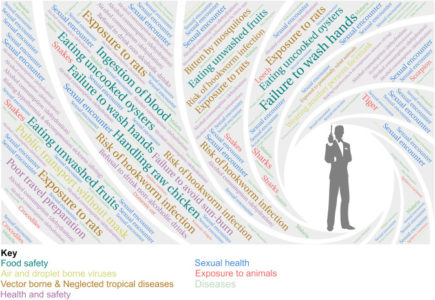
e Both UGA and Georgia Tech said they will require employees who work “on or in connection with a federal contract” or in a “covered contractor workplace” to be vaccinated or lose their jobs. And considering how much federal money comes in, that’s effectively most of the campuses — e.g., “employees who perform support functions such as human resources, billing, legal review, and other support functions.” Non-employees “will also be required to follow Centers for Disease Control and Prevention guidance on masks while in covered contractor workplaces, which will likely include a large portion of campus.” UGA employees will have until November 24 to get their final vaccine. Lilly joins in the cash grab with donanemab, its rival for Biogen’s Aduhelm. It’s got an accelerated review from the FDA, limited data, and is only in a phase 2 study. But just because there’s limited data — it may not even work! — doesn’t mean the company isn’t hoping for a conditional approval in late 2022. What makes acute pain turn into chronic pain? (We’re talking physical, not existential.) UC Irvine researchers think they’ve found it. They knew it had to do with nerve damage, but the details weren’t clear. Now they (hopefully) are. The difference is an enzyme called N-acylethanolamine acid amidase (NAAA) — it “a critical control point in the progression to pain chronicity.” Stop the NAAA, stop the progression to chronic pain. Luckily, they say, NAAA “can be effectively targeted by small-molecule therapeutics that inhibit this enzyme.” Coming soon, they hope, will be a new class of drugs for use after trauma or surgery: NAAA inhibitors. If it’s from Trader Joe’s (Citterio brand), it’s responsible for an outbreak of salmonella that has sickened at least 20 people in eight states. Aussie and U.S. researchers found what seems like a simple way (if you’re a molecular biologist) to turn existing antibiotics into drugs that can kill superbugs. When it’s fighting bacteria, the body naturally recruits immune cells called neutrophils to attack the infection, using a chemical attractant — like calling middle schoolers using a can of Axe Body Spray. So what did these biomedical researchers do? They sprayed the drugs with metaphorical Axe Body Spray, giving the drugs themselves the same attractant to “enhance the recruitment of immune cells and improve their killing ability.” “We’ve been working on using dual-function antibiotic-chemoattractant ‘hybrids’, which improve the recruitment of neutrophils and increase the engulfing and killing of the bacteria. […] [W]e’ve shown in mouse models that the treatment is 2-fold more effective than just using the antibiotic alone at one-fifth lower dose.” Meh, probably not … if you’re vaccinated. It might be a little more transmissible, but current vaccines work a treat. The unvaccinated? Yeah, you might want to rethink your position. There’s an aluminum shortage going on. “So what?” you say. “What’s that doing in a pharma/health newsletter?” Well, what if you need crutches? Watch the dominos fall! In Elsevier’s journal Travel Medicine and Infectious Disease we have “No time to die: An in-depth analysis of James Bond’s exposure to infectious agents” in which researchers from the Netherlands and the U.K. “hypothesized that agents pre-occupied with espionage and counterterrorism may, at their peril, fail to correctly prioritize travel medicine.” Given how inopportune a bout of diarrhea would be in the midst of world-saving action, it is striking that Bond is seen washing his hands on only two occasions, despite numerous exposures to foodborne pathogens. We hypothesize that his foolhardy courage, sometimes purposefully eliciting life-threatening situations, might even be a consequence of Toxoplasmosis.Aluminum woes, vax mandates in Georgia, death by deli, and more
UGA, Georgia Tech announce vaccination requirements
Battle of the unproven Alzheimer’s drugs
Stopping chronic pain: NAAA? Nah
* Technically an N-terminal cysteine hydrolase
The CDC wants you to hide the salami
Making antibiotics better
Should you worry about “Delta-plus”?
Aluminum-shortage dominoes
Science marches on
October 27, 2021 ✒ Andrew Kantor
As “Americans Gear Up to Receive COVID-19 Boosters,” it seems that some CDC advisors don’t think most people need them. Still, they either voted in favor because showing dissent could make Americans think the vaccines don’t work (“Ha! See? Scientists don’t agree!”) or they were outvoted by the rest of the CDC’s Advisory Committee on Immunization Practices. (And in one case, they were overrruled by CDC Director Rochelle Walensky.) Then they talked to the press. Reminder: Pharmacy owners interested in GPhA’s insurance program will want to attend one of the two webinars that will review the program and fill you in on changes. The first one is TODAY — Wednesday, October 27, from 4:00–5:00 pm Can’t make it? There’s also one tomorrow — Thursday, October 28, from noon–1:00 pm Open enrollment runs Monday, November 8 through Friday, November 18. The FDA’s advisors met yesterday to discuss whether to recommend the Covid vaccines for 5 to 11 year olds. Their answer: Yes. That’s just an advisory committee; it’s now up to the full FDA to make the call. It usuallly follows the committee recommendations, but not always. Once the FDA gives a green light, the CDC is likely to follow suit, and the needles will come out — probably, per Anthony Fauci, in early November. What, you want more? Fine. National Geographic has a more-detailed piece, “What to expect with COVID-19 vaccines for kids ages 5 to 11.” Half of you are now fully vaccinated! The following lots have successfully been updated in the expiry look-up tool: 046A21A, 008B21-2A, 017B21A, 020B21A, 022B21A, 039B21A, 046B21A, 044B21A The Moderna team is continuing to work on the expiry extension. The next weekly batch will include five priority lots in distribution and all lots expiring in October. Stay tuned. Taking SSRIs with NSAIDs means an increased risk of intestinal bleeding. And not (say researchers from Nebraska’s Creighton University) just a little increase. “When adding SSRIs to patients already on NSAIDs, the odds of developing an upper gastrointestinal bleed increased by 75%.” The possible reason (which you probably guessed): NSAIDs weaken the GI lining making bleeding more likely, while SSRIs inhibit the serotonin in platelets, making clotting more difficult. One possible solution is to switch from SSRIs to SNRIs Read about them somewhere else because I am not stepping into that particular morass. How do bioengineering detectives determine whether a virus escaped from a lab or came naturally from another animal? Or both? It’s the science of “genetic engineering attribution,” and, as you might guess, it’s got a bit of a spotlight on it. In fact, a group of bioresearch labs just held the “Genetic Engineering Attribution Challenge,” a contest that “offer[ed] monetary prizes for algorithms that could accurately predict the origin of genetically engineered DNA sequences.” The most successful entrants in the competition could predict, using machine-learning algorithms, which lab produced a certain genetic sequence with more than 80 percent accuracy, according to a new preprint summing up the results of the contest. Read more about how that works and what it can do for us, from Vox. Publix is adding drug disposal boxes to its pharmacies in Georgia (and several other states). Now every day will be both Children’s Day and Drug Disposal Day!Half marks for Georgia, genetic detectives, SSRI danger, and more
Booster news
Insurance webinar TODAY (and tomorrow)
Kids’ vaccine update
Congratulations, Georgia!
REMAIN CALM. Yes, the Moderna Expiry Lot Checker has been updated
Common drugs, common bleeding
What to know about the Democrats’ healthcare plans
The Long Read: CSI:Biology edition
Publix offers disposals
October 26, 2021 ✒ Andrew Kantor
It may prevent kidney stones. Swedish researchers say they have proven (for now, anyway) that the more caffeine you have, the less your chance of developing kidney stones. (Note: As usual, they interchange “coffee” and “caffeine,” so it’s not clear when the study is talking about coffee specificially, or about caffeine in general.) The method is pretty funky, actually: Rather than rely on reports of caffeine consumption, they looked at genetics (“randomly allocated at conception”), how those genes affect the chances of kidney stones, and how caffeine affects those particular gene variants. The Academy of Independent Pharmacy of the Georgia Pharmacy Association is continuing to interview candidates for the position of vice president of the academy. The position is located in Sandy Springs, Georgia. The vice president’s position is responsible for growing the AIP membership through continually increasing the academy’s value proposition. The position supervises up to five people, so prior supervisory experience is required. For further information about the position, please click here to review the job description. If interested, please send your résumé or CV to asullivan@gpha.org, along with your salary history no later than October 29, 2021. References will be required if your résumé is selected for follow up. Questions about the position may be sent to bcoleman@gpha.org. Once you take out a couple of factors — the pandemic panic and human behavior (e.g., crowding together in bursts, like Christmas parties or to watch the ACL World Championships) — it looks like Covid-19 is a seasonal virus. Spanish researchers looked at the virus’s transmission rate based on the ambient temperature and humidity, and they’re confident that, at its core, Covid-19 is (or, rather, will be) a seasonal condition. “Altogether, our findings support the view of COVID-19 as a true seasonal low-temperature infection, similar to influenza and to the more benign circulating coronaviruses.” So yay — we can look forward to it every year! Moderna, not surprisingly, says its Covid-19 vaccine also works for kids. Its study is ongoing but “it plans to share the interim results with the FDA and global regulators soon.” Once more, your middle school bio class was wrong. Red blood cells do more, it seems, than carry and delivery oxygen. They also fight infection. Unfortunately, that can cause problems — specifically, anemia. UPenn researchers discovered this when trying to figure out the role red blood cells play during an infection, because so many seemed to disappear. It turns out they sacrifice themselves. The short version: During an infection, red blood cells actually join the fight, expressing a protein (TLR9) that lets them scoop up scraps of DNA from injured tissues. The good news is that reduces inflammation. But in doing so, the blood cells’ shape changes — immune cells then see them as invaders and destroy them. Fewer red blood cells = anemia. “Now that we know more about the mechanism of anemia, it allows us to look at new therapies for treating acute inflammatory anemia without transfusions, such as blocking TLR9 on the red blood cells.” (Link above is to the news story. Want the full paper? Here you go.) “Kaiser Permanente study shows people vaccinated against COVID-19 had lower non-COVID-19 death rates than people who were not vaccinated.” In other news, people who eat shown to be less hungry than those who don’t. That said, Scottish and Egyptian researchers are testing whether scorpion venom can be used as a treatment for coronaviruses. Testing. This doesn’t mean they found a secret cure that the government is trying to suppress — just that, hey, ‘let’s see if there’s something there.’ Scorpion venoms contain a “fascinating cocktail” of biologically active peptides, many of which are very potent neurotoxins, while several have shown strong antibacterial and antiviral activities and are thought to play a role in protecting the venomous gland from microbial infection. “Here’s how to get a booster shot in Georgia — and who should get one” (from Georgia Public Broadcasting) “COVID-19 Vaccine Billing and Reimbursement” for pharmacists (from NCPA — 4-page PDF) Ah, nuance. We hate it, deeply. We want simple, clear answers, but that’s not how life works. So, should people take aspirin to help prevent colorectal cancer? The U.S. Preventive Services Task Force is thinking maybe not. But Andrew Chan, director of cancer epidemiology at the Mass General Cancer Center, had the nerve to suggest that the answer ‘needs a dose of nuance.’ “We’ve seen too many examples where a one-size-fits-all approach fails. The clinical trials don’t produce the results we thought they would because we’re trying to apply something to a too-broad population. Cancer is complicated.” “Rise in teen girls with ‘tic-like’ behaviours could be linked to TikTok, doctors say”Seasonal death, ticcing teens, scorpions in your future, and more
Yet another reason to drink caffeine
Reminder: GPhA/AIP is looking for a VP
‘Tis the season … for death
Moderna is ready for kids
Red blood cells’ noble sacrifice
Captain Obvious got stuck
Please don’t start peddling scorpions
Two things to know about booster shots
Aspirin vs cancer — yes or no?
I’m just gonna share this headline without comment
October 23, 2021 ✒ Andrew Kantor
Express Scripts, the military’s PBM, is removing Walmart from its network starting December 15 and bringing CVS back in after five years. The PBM made the usual “this is good news for patients” noises and promises a smooth transition. Slowly, ever so slowly, the FDA is making its way toward officially, eventually, someday making certain hearing aids available over the counter. (It was supposed to as part of the FDA Reauthorization Act … four years ago.) It now has a proposed rule and draft guidance. You can read it. Comment on it. But really, there’s clearly no rush … because there are already OTC hearing aids on the market from companies like WonderEar, Hue Hearing, and the big gun, Bose. Check with your wholesaler. Pharmacy owners — interested in GPhA’s insurance program? Good move! Open enrollment runs Monday, November 8 through Friday, November 18. Don’t miss the upcoming webinar. It’ll review the program, fill you in on some of the new enhancements, and go over what you and your employees need to do. Join Mark Riley and Bryan Turner for the one-hour Zoom webinar on either of two dates: Wednesday, October 27 from 4:00–5:00 pm OR Thursday, October 28 from noon–1:00 pm After four cases and two deaths, the CDC finally found the cause of cases of melioidosis, including at least one in Georgia: an aromatherapy room spray sold at Walmart. If you have or sell Better Homes and Gardens Lavender and Chamomile Essential Oil Infused Aromatherapy Room Spray with Gemstones (sheesh!), the CDC wants you to take no chances. Stop using this product immediately. […] Double bag the bottle in clean, clear zip-top bags and place in a small cardboard box. Return the bagged and boxed product to a Walmart store. Then wipe down every surface it may have landed on, wash sheets or linens, and promise yourself to stick to scented candles instead. People with dementia who take mirtazapine for agitation shouldn’t do that — at least according to a study out of a whole lotta universities in the U.K. It was “no more effective than a placebo, and might even increase mortality.” “The gold star treatments for agitation don’t involve drugs and are tailored to the person — like arts and crafts or movement to music. In recent years antidepressants — like mirtazapine — have been considered a fallback if non-drug approaches don’t work. Surprisingly, your cat may not always be out to kill you. Healthy cats, it seems, carry a bacteria (Staphylococcus felis) that can treat a skin infection caused by a different bacteria — methicillin-resistant Staphylococcus pseudintermedius or MRSP. Researchers at UC San Diego found that moving the good bacteria from cats to infected mice cured the mice of their MSRP infections. Next step: Testing it on dogs … and potentially on humans. Although, one researcher points out, “It may even be possible that living with a healthy cat provides humans with some protection against MRSP.” You might know that horseshoe crabs are important for pharmaceutical manufacturing — their blue blood can detect endotoxins. The problem is that there are only so many crabs, and draining a third of their blood isn’t really good, health-wise. There are alternatives now — if only they would be approved by USP. (They are in use in Europe.) This is a Long Read, so there’s a bit more to the story….Aromatherapy kills, cat germs doing good, Walmart’s big loss, and more
Tricare kicks out Walmart
The latest on OTC hearing aids
Coming soon: 2022 GPhA insurance webinars
Smells like melioidosis
Mirtazapine doesn’t help
Kitty bugs kill other bugs
The Long Read: Horseshoe Crab edition
Do you want to send your members the daily Buzz email newsletter (customized for your state and organization, perhaps)? Let’s talk — just drop me a note at andrew@gphabuzz.com!

- As Lung Disease Threatens Workers, Lawmakers Seek Protections for Countertop Manufacturers
- Republicans Fret Over RFK Jr.’s Anti-Vaccine Policies While MAHA Moms Stew
- Primary Care Is in Trouble. So Doctors Band Together To Boost Their Market Power.
- Cosmetic Surgery Investigation Prompts Warnings for Patients, and a Push for Tighter Safety Standards
- Listen to the Latest ‘KFF Health News Minute’
- Banks Are Becoming Bulwarks Against Scams for Vulnerable Seniors
- January 2025
- December 2024
- November 2024
- October 2024
- September 2024
- August 2024
- July 2024
- June 2024
- May 2024
- April 2024
- March 2024
- February 2024
- January 2024
- December 2023
- November 2023
- October 2023
- September 2023
- August 2023
- July 2023
- June 2023
- May 2023
- April 2023
- March 2023
- February 2023
- January 2023
- December 2022
- November 2022
- October 2022
- September 2022
- August 2022
- July 2022
- June 2022
- May 2022
- April 2022
- March 2022
- February 2022
- January 2022
- December 2021
- November 2021
- October 2021
- September 2021
- August 2021
- July 2021
- June 2021
- May 2021
- April 2021
- March 2021
- February 2021
- January 2021
- December 2020
- November 2020
- October 2020
- August 2020
- July 2020
- March 2020
- February 2020
- January 2020
- December 2019
- November 2019
- October 2019
- September 2019
- August 2019
- July 2019
- June 2019
- May 2019
- April 2019
- March 2019
- February 2019
- January 2019
- December 2018
- November 2018
- October 2018
- April 2017
