
July 15, 2021 ✒ Andrew Kantor
Could grandma have Alzheimer’s? Monitor her driving with GPS and you may be able to tell. A study by a group of Canadian and U.S. researchers found that “there were characteristic behaviours in the preclinical Alzheimer’s group, […] which meant they could be distinguished from the normal controls with 86% accuracy.” And no, it wasn’t stuff like weaving or driving in circles. Pre-Alzheimer’s patients were more likely to take shorter trips or avoid driving at night, for example — although “Other signals for preclinical Alzheimer’s were driving too slowly [and] abrupt changes in braking or acceleration (jerking)” meaning the system may not be as effective in Florida. Should pregnant women take OTC pain relievers? According to Scottish researchers, nope. They looked at data on more than 150,000 pregnancies, and the effects of acetaminophen, aspirin, diclofenac, ibuprofen, and naproxen, and were not happy with what they found. [E]xpectant mothers using the medications have about one and half times greater risks of a preterm delivery, stillbirth or neonatal death, physical defects and other problems, compared with those who did not take these drugs. Georgia’s Covid infection cases have more than doubled in the past two weeks — rising 143 percent, according to DPH numbers, compared to the nationwide average of 94 percent. Almost all are unvaccinated people who declined the shot(s). At least half a dozen private health insurers have said ‘HAHAHAHAHA! No, we’re not covering Biogen’s $56,000-a-year, unproven Alzheimer’s treatment.’ (The derisive laugh is assumed.) Six affiliates of Blue Cross and Blue Shield in Florida, New York, Michigan, North Carolina, and Pennsylvania say in newly adopted policies they will not cover the Cambridge biotech’s drug, Aduhelm, because they consider it “investigational” or “experimental” or because “a clinical benefit has not been established.” How can you turn a preschooler’s vaccination into a traumatic event? Two ways, found Canadian psychology researchers. First, you can mock them from being afraid. That’s obvious. But tactic number 2: Try to distract them with positive statements in the first minute after the shot. “What we found is that in the first minute after the needle, the more parents said coping-promoting statements, such as ‘you can do this’ and ‘it will be over soon’ or tried to distract them with talking about something else*, the higher distressed the children were. This really surprised us.” If for some reason you want to make the little whippersnappers feel better, just shut up for one minute and stick to cuddling or hand-holding. “[D]uring the second minute after the vaccine, when the child was calmer, these same coping promoting statements resulted in them calming down faster.” Today’s answer (rolls 20-side die): Bad! Yep, WHO oncologists say that even light to moderate drinkers have a notably greater risk of several forms of cancer, including breast, colon, and oral. “For example, each standard sized glass of wine per day is associated with a 6 per cent higher risk for developing female breast cancer.” Roll an immunity check States that legalized marijuana have not seen an increase in opioid overdoses (found researchers at Pitt), allaying fears it was a gateway drug. In fact, those states saw a short-term decline in opioid emergencies. The four states with recreational cannabis laws experienced a 7.6% reduction in opioid-related emergency department visits for six months after the law went into effect, compared to the states that didn’t implement such laws. A Florida judge has ruled that no, patients can’t sue generic drug makers in state court if manufacturers were following federal labeling requirements. (I mean, this is the law, so that’s the broad-stroke explanation. Talk to your attorney if you want legal advice.) The case involves drugs containing ranitidine, which transforms into the carcinogen NDMA. First the feds set acceptable NDMA levels, then they pulled all drugs with ranitidine from the market. In between, though, patients had filed state lawsuits for “failure-to-warn” and negligence. Nope, said the judge. Federal labeling decisions protect drugmakers from claims made in state court. According to public-health researchers at Rutgers, lesbian, gay, and bisexual smokers — especially women — are more likely to smoke menthol cigarettes. [A]mong smokers, 54 and 50 percent of bisexual and lesbian/gay females smokers preferred menthol cigarettes, respectively, compared with 39 percent of smokers overall. (We learned last week that smokers of menthols have a harder time quitting.)Nine months of pain, making kids cry (less), Alzheimer’s GPS, and more
Alzheimer’s road test
Just live with the pain for nine months I guess
Unwelcome, but not unsurprising
Just plain unsurprising
Shut up a minute
* No, we don’t understand why they would say these things after the shot, either.
Alcohol, good or bad (July 15 edition)?

No gateway here
If the feds OK it, you can’t sue in state court
Today’s weird health fact
July 14, 2021 ✒ Andrew Kantor
Six Georgia counties made US News & World Report’s list of the 500 healthiest in the country. So a GPhA Buzz tip of the hat to… Topping the list is Los Alamos County, N.M. We hear it’s the bomb. If you’re going to recommend or take a supplement with omega-3 fatty acids, a new study in the Lancet says… This, the authors suggest, may be why studies of these supplements give conflicting results. You gotta separate your fatty acids, folks. Hormone therapy seems to reduce Alzheimer’s risk in women, but it depends on “the type, route and duration” of the delivery. A new University of Arizona Health Sciences study found women on hormone therapy were up to 58% less likely to develop neurodegenerative diseases including Alzheimer’s disease, and reduction of risk varied by type and route of hormone therapy and duration of use. The findings could lead to the development of a precision medicine approach to preventing neurodegenerative diseases. Weird finding: Oral hormone therapies reduced combined neurodegenerative diseases, “while hormone therapies administered through the skin reduced the risk of developing dementia.” Oh, and natural hormones were better than synthetic ones. No surprise there. Both Georgia’s U.S. senators — Jon Ossoff and Raphael Warnock, along with Wisconsin’s Tammy Baldwin — have introduced a bill to provide health insurance to lower-income people in the 12 states that have not yet expanded Medicaid. That’s about 2.2 million Americans who earn too much to qualify for (unexpanded) Medicaid, but too little for federal subsidies. Essentially, it would close the gap left in states, like Georgia, that have turned down the federal funding that would cover 90 percent of the costs. (The money has already been allocated in Washington, so there’s no fiscal impact.) Lambda comes to town and competes with Delta for the spotlight on the national news. The townsfolk fondly remember the days of Alpha and hoarding toilet paper. JK Simmons guest stars as “Hap.” Here’s what you need to know, courtesy of The Conversation. And the winners of the Best Medications for Controlling Blood Sugar (July 2021 edition) Award are… Liraglutide and insulin! Congratulations! (That’s according to a presentation, “Results of the Glycemia Reduction Approaches in Diabetes,” from the Scientific Sessions of the American Diabetes Association.) The study points out that glimepiride had a smaller effect, while sitagliptin appeared to have the least effect, with the highest frequency of developing A1C levels greater than 7%. On the other hand, in a secondary finding, insulin glargine was most effective in keeping A1C levels less than 7.5%. And while we’re on the subject of diabetes, here’s a lede from Healio that says it all*: The percentage of U.S. adults with diabetes meeting glycemic and blood pressure control targets declined from 2010 to 2018 after steadily increasing from 1999 to 2010, according to data published in The New England Journal of Medicine. Having good gut bacteria is important — that’s understood. What’s not clear is exactly which bacteria we need most of. It’s the problem with prebiotics — there’s no way to know if you’re getting the good stuff. But here’s a new twist: Researchers at Stanford have found that eating fermented food (e.g., yogurt, fermented cottage cheese, kimchi, kombucha tea) for 10 days increases the diversity of your gut microbiome, and the resultant bacterial zoo reduces inflammation. [F]our types of immune cells showed less activation in the fermented-food group. The levels of 19 inflammatory proteins measured in blood samples also decreased. One of these proteins, interleukin 6, has been linked to conditions such as rheumatoid arthritis, Type 2 diabetes and chronic stress. So it’s possible that it’s not just having the right gut bacteria that’s important, but having a wide variety. You know the drill: More studies are needed. Probably a good idea to keep track of what they’re doing over there — Israel has been leading the world in dealing with the pandemic. The latest: The country is offering (not requiring or even suggesting) Covid-vaccine boosters for severely immunocompromised adults. Just in case.Here comes Lambda, where Georgia is healthy, fermented goodness, and more
The healthiest parts of Georgia
EPA yes, DHA no
* Eicosapentaenoic and docosahexaenoic acids, only one of which was recognized by my spell-checker
Hormone therapy and Alzheimer’s
Georgia’s senators aim to close the gap
In our next episode….
Best diabetes meds
Diabetes: Missing the mark
* This is known as “lazy writing”
Kimchi? I hardly know her
Elsewhere: Israel goes for boosters
July 13, 2021 ✒ Andrew Kantor
Is your mucus the best it can be? British researchers can make it better — as a way to protect you from meningitis and other respiratory infections. Researchers at the University of Southampton found that some people have a bacteria in their noses (N. lactamica) that protects them from getting meningitis, even if they’re also carrying the nasty N. meningitidis bacteria. So what did they do? Took some of that N. lactamica, edited its genes to make it even better, and stuck it up the noses of, presumably, well-compensated volunteers. There it established colonies and became a permanent defense against meningitis infection. Antibiotic resistance is bad enough when it’s just antibiotics you have to worry about. Now a new Israeli study says there are three other classes of drugs — proton pump inhibitors (PPIs), beta-blockers, and antimetabolites — where use leads to resistance to some of the strongest antibiotics around. How? They don’t know. They only know there’s a strong correlation between the two, although it’s possible it comes from the drugs’ effects on the gut biome. “We urgently need larger studies with more drug classes to confirm the discovery and to clarify the biological link between common prescription drugs and antibiotic resistance.” Cases are up an eye-popping 47 percent week to week, according to Johns Hopkins data, with a third of them in just Arkansas, Florida, Louisiana, Missouri, and Nevada. More than 99 percent of them are in unvaccinated people. “If they’re sick enough to be admitted to the hospital, they are unvaccinated. That is the absolute common denominator amongst those patients. I can see the regret on their face. You know, we ask them, because we want to know, are you vaccinated? And it’s very clear that a lot of them regret (not being vaccinated).” The death rate typically lags infection by two or three weeks, so with ICUs filling up expect a spike in deaths in early August. After all, the government will pay for it. The company says they’re probably necessary, while U.S. health experts say it’s not clear yet. (What is clear is that a single shot of either the Pfizer or Moderna vaccines does not protect much against the Delta variant.) So say University of Miami researchers. The analysis of nearly 75,000 Covid patients found significant reductions in stroke, deep vein thrombosis (DVT) and sepsis, and fewer admissions to emergency departments and intensive care units, among those who had been given the flu jab. They aren’t sure what the deal is; it could simply be that the type of people who got a flu shot (even during a lockdown) are the kind to be in better health overall. Or maybe it’s just boosting the immune system oveall. You know the mantra: Further studies are needed. Soon we’ll no longer have to take someone’s word that, after suffering from Covid-19 someone still has breathing problems, brain fog, accelerated heart rate, or any of the other symptoms that persist. The Brits have found a marker for long Covid, and they say a test could be available within months. The secret: autoantibodies. The team analysed blood samples from dozens of people and identified a group of antibodies in long Covid sufferers that appear to attack healthy tissues in the body, similar to those seen with autoimmune diseases, that weren’t found in a healthy control group. Unfortunately, there aren’t any treatments for long Covid — nor does anyone know exactly how it happens — so other than reducing the symptoms, the test is more about ruling out other chronic issues. Prescribers might finally be getting the message about antibiotics. Looking at data from the VA health system, researchers there — led by PharmD Haley Appaneal — found that outpatient antibiotic prescriptions dropped by about 4 percent from 2011 to 2018. Not great, not terrible, but at least a start. (Inpatient antibiotic use dropped 12 percent from 2008 to 2015.) The health crisis no one saw coming: “Short-Acting Beta Agonist Overuse” is becoming a problem for people who use more than two canisters in a year. “Each additional SABA canister resulted in an 8% to 14%” increase in the risk for asthma-related exacerbation in children and “a 14% to 18%” increase in that risk in adults. Another downside to the rushed approval of Aduhelm: “We May Never Know Whether the $56,000-a-Year Alzheimer’s Drug Actually Works.” Why? Because Biogen has years to do follow-up trials, it’s gonna be hard to get people to enroll, and the FDA hasn’t had the bandwidth to follow up. Senator Amy Klobuchar will be chairing a Judiciary subcommittee hearing today at 2:30 pm to look at anti-competitive conduct by the pharma industry. You can watch the hearing here … or wait for us to tell you if anything interesting came out of it. A British charity is asking people to stop using the word “leper” to mean “outcast,” because it’s offensive to actual lepers. And what about people who actually have leprosy? What should you call them? By their name: “This is Steve. He has the L word.” And yes, they refer to it as “the L word.” This series might be more interesting than I realized. Long-Covid test, mucus transplants, don’t call them “lepers,” and more
Well that’s a different way to vaccinate
Et tu, PPI?
Covid notes
Pfizer really really wants people to get booster shots
A flu shot might offer some protection
A test for long Covid
Antibiotic use drops a teeny tiny bit
Too much of a good thing
I mean, it might work
Perish the thought!
Good luck with that

July 10, 2021 ✒ Andrew Kantor
The more teeth you’re missing, the greater your odds of dementia — so says a study out of NYU. But if you have dentures, the risk goes down. The researchers found that adults with more tooth loss had a 1.48 times higher risk of developing cognitive impairment and 1.28 times higher risk of being diagnosed with dementia, even after controlling for other factors. So what’s happening? It could be any of several things, aside from “people with missing teeth probably have other socio-economic issues.” It might be that tooth loss leads to cognitive issues, as “missing teeth can lead to difficulty chewing, which may contribute to nutritional deficiencies.” Or it could be the same factors affecting the teeth and the brain: “A growing body of research also points to a connection between gum disease—a leading cause of tooth loss—and cognitive decline.” Polish researchers were surprised to have cured at least two people of Covid-19 using … fecal transplants. They were trying to treat C. Diff. infections in two patients who also had Covid-19, and found that not only did the C. Diff. clear up, so did the Covid. [T]hese data let us speculate that gut microbiome manipulation may merit further exploration as an immunomodulatory strategy in COVID-19. Their research was published in the BMJ’s journal Gut. Did you get your head shot taken at the convention? Good news: They’ll be coming to your inboxes starting next week, once the photog is finished touching you up. (Not that you need touching up; you’re beautiful just the way you are.) An investigation into the FDA’s approval of Biogen’s Aduhelm Alzheimer’s treatment is being called for … by the FDA. The agency cited STAT’s reporting that FDA officials worked hand in hand with Biogen executives to get the drug on the market, including an off-the-books meeting and an unprecedented decision to approve Aduhelm through a regulatory shortcut. The drug company mantra has always been that they have to charge crazy-high prices, especially to Medicare, because they need to fund, er, research and development. Yeah, that’s the ticket. Except … that turns out not to be the case. The numbers are easy enough to crunch; they’re in the companies’ annual reports. So the House Committee on Oversight and Reform did just that. It found that, contrary to their claims, pharmaceutical companies spend more on stock buybacks and dividends than on R&D. Oh, and the report isn’t breaking new ground here. Pharma using money for stock buybacks was in the news a couple of years ago. But here’s my favorite part: Pharmaceutical companies have deployed legions of lobbyists to thwart the House Democrats bill, arguing that it would deter the creation of new drugs and lead to suffering and death. Translation: “Do what we say and no one gets hurt.” I guess this isn’t surprising: With more humans using drugs like marijuana and opioids, more dogs are getting into it, meaning more calls to the canine poison-control hotline. The pertinent facts: Here’s an interesting connection: People with ADHD who are taking meds for another mental disorder are more likely to stop taking their stimulants. According to the study in the American Journal of Psychiatry, 45 percent of the people with ADHD and bipolar disorder or schizophrenia stopped taking their ADHD meds within two years. (That number is higher if their ADHD was diagnosed after age 13.) Twist: The risk of stopping didn’t apply to those with ADHD, bipolar disorder, and schizophrenia. A part of his broad ‘promoting competition’ economic plan President Biden signed an executive order that has a bunch of parts affecting pharmacy, from looking at importing drugs from Canada (still never gonna happen) to banning “pay-for-delay” of generics, to … well there’s a lot. Here are the details from the White House. SILENCE! Swedish engineers and acousticians have developed a new kind of screw that they say, if used in the walls of buildings, can reduce outside noise (and allow thinner building materials, too). Unexpected Covid treatment, Fido in the stash, drugmakers suffering, and more
The teeth-dementia connection
Our number two story
Head shots are coming

A new kind of navel-gazing
“Suffering and death” … of their profits

High Fido
ADHD and the risk of +1
ICYMI
Totally non-pharma but-still-really-cool story (because it’s Saturday)

July 09, 2021 ✒ Andrew Kantor
Seeing how mRNA technology worked so well for Covid-19, Moderna is turning next to the flu, with human trials of a flu vaccine targeting four strains of influenza. The Big Deal isn’t just how effective mRNA vaccines seem to be, but how quickly they can be developed. Current flu vaccines have to be made nine months ahead (thanks, Australia, for the warnings!) based on a best guess for that year’s strains. An mRNA vaccine could be better targeted. But wait, there’s more. Moderna figures if it’s giving you a shot for one respiratory virus, why not give you a shot for a bunch at once? Per the CEO: “Our vision is to develop an mRNA combination vaccine so that people can get one shot each fall for high efficacy protection against the most problematic respiratory viruses [such as influenza, SARS-CoV-2 and RSV].” Bowing to pressure for its unexplained decision to approve Biogen’s Aduhelm Alzheimer’s treatment, the FDA is clarifying it. A little. The new label specifies that “there are no safety or effectiveness data on initiating treatment at earlier or later stages of the disease than were studied.” Then again, if it’s approved, it’s approved — the FDA can’t stop a prescriber from giving it to a patient who begs for it. Pfizer wants to give Medicare patients copay assistance for its Vyndaqel and Vyndamax (aka tafamidis) heart meds. The feds say that’s a kickback — and, worse, that it would encourage more patients to take the $225,000/year (!) drug. Not a good thing when Medicare is forced to pay whatever Pfizer demands. “As soon as, for the patient and the physician, it appears that the drug is effectively free … Pfizer is able to price the drug whatever it wants. It could say $225,000 this year, and next year it is going to increase it to $500,000, the next year to $2 million.” Even worse, if copay assistance like that is allowed, it would open the gates for every company to do it. As one expert put it: “Because the federal government can’t negotiate [drug prices], the only economic check on the list price is a patient’s cost-sharing.” But Pfizer, not surprisingly, disagrees — and is in federal court arguing its point. “Women who vape are more likely to have low-birthweight babies, study shows” — about 33 percent more likely, in fact, based on data from 80,000 mothers. In fact, that’s worse than people who also smoked regular cigarettes. A phrase you probably thought you’d never hear: “Danish artificial mucus.” And yet that’s exactly what those shifty Danes have come up with. What’s the point? The idea is that mucus forms a first-line defense against bacteria, so it might be possible to design a better mucus — one that’s designed to kill a particular infection. “We imagine that instead of using antibiotics, you might produce for example eye drops with the mucin that normally removes the bacteria in the treatment of eye infections.” Kids who eat too quickly are likely to be more impulsive. Kids who are impulsive are likely to be “highly responsive to external food cues (the urge to eat when food is seen, smelled or tasted).” And that can lead to obesity. The point, say psychology researchers at the University of Buffalo, is that we need to be aware of behaviors that can indicate a chain that leads to waddling through middle school. “Future research should […] explore whether the relationship between temperament and eating behaviors is a two-way street. Could the habit of eating slower, over time, lead to lower impulsiveness?” Dollar General is apparently getting into the healthcare business. It’s hired a chief medical officer. (I would make a joke, but something tells me this actually could amount to something.) Says the CEO: “Our goal is to build and enhance affordable healthcare offerings for our customers, especially in the rural communities we serve.” Although adults with ADHD tend to be more interesting and better-looking than average*, a study out of Sweden’s Karolinska Institutet found that they’re also more likely to have a wide range of conditions, “including nervous system, respiratory, musculoskeletal, and metabolic diseases.” The diagnoses most strongly associated with ADHD were alcohol-related liver disease, sleep disorders, chronic obstructive pulmonary disease (COPD), epilepsy, fatty liver disease, and obesity. Just those, huh? But wait — then they throw in this curveball: “Full siblings of individuals with ADHD had significantly increased risk for most physical conditions.” So it’s correlation, not causation. The same genetics that might give someone ADHD are also (somehow) responsible for all that other stuff. …from the top spot in TV advertising. What you’re likely to see the most of now are Dupixent, Rinvoq, and Rybelsus. Yay. Of note: AbbVie’s Botox just moved into the top 10.Danish mucus, preemies and vaping, Dollar General’s plan, and more
mRNA: For my next trick….
Well this should help. Not.
Another interesting pharma lawsuit
No, vaping isn’t safe
Snot expected
Chew your food!
Sure, why not?
I blame the squirrels
* Prove me wrong.
Humira falls
July 08, 2021 ✒ Andrew Kantor
Psilocybin can cure — or at least treat — depression, often quickly, and when combined with therapy it can make a huge and long-lasting difference. How, though? The mechanism hasn’t been clear, but now Yale researchers think they know at least part of the answer. The drug causes neurons to make new, strong connections — essentially opening up new pathways in the brain. [T]hese compounds increase the density of dendritic spines, small protrusions found on nerve cells which aid in the transmission of information between neurons. Chronic stress and depression are known to reduce the number of these neuronal connections. Wait, “these,” plural? Yep, the research also seems to apply to ketamine, another fast-acting treatment for depression. Speaking of which… When brains are young, they’re more flexible, more plastic — like Play-Doh but with ideas. But after childhood the brain becomes set in its ways. It builds what’s called the perineuronal net — a structure “that protects and stabilizes the connections between neurons.” Austrian neuroscientists working with mice found that giving mice ketamine causes the brain’s immune cells — the microglia — to eat that perineuronal net. And that, it seems, gives the brain back its plasticity for about a week. That’s long enough, in theory, for the mind to break out of ruts in thinking and help it break out of depression. But wait, there’s more! Knowing that light flickering at 40 hertz can help break up Alzheimer’s proteins, the researchers experimented and found that lights at 60 hertz “had a similar effect as the ketamine treatments,” and can be used in conjunction with the drugs as a potential new, powerful treatment for a variety of brain issues. “There is a lot to explore.” Yesterday we told you that the FTC held a hearing on authorizing investigations into, among other things, PBMs. Today: Good news. The agency voted to approve a series of resolutions authorizing investigations into key law enforcement priorities for the next decade, and among those “priority targets” are … pharmacy benefits managers. This could be a story that keeps on giving. Speaking of PBMs…. The headline from USC economists was that Costco’s pharmacy business paid a heck of a lot less for generic medications than Medicare. (We’re talking a potential Medicare savings of $2.6 billion in one year.) But the bigger story was why. Spoiler: It had nothing to do with Medicare’s inability to negotiate prices. In fact, they found, it was PBMs that caused the huge excess cost. Costco bypasses them, but Medicare uses them, and as the authors put it, “[E]xcess profits retained by intermediaries in the generic supply chain could be substantial.” In its next session — starting in October — the Supreme Court will hear the case of CVS Pharmacy Inc. v. Doe. The gist: A plaintiff with HIV/AIDS has an employer health plan with CVS as the PBM. That CVS plan requires them to get their specialty meds at CVS (the pharmacy). That, the plaintiff says, violates section 504 of the Rehabilitation Act as well as the Affordable Care Act — which prohibits discrimination based on disability by any program receiving federal funds. The key phrase is “disparate impact”: Even if the policy itself isn’t discriminatory, does it adversely affect people in a protected class — namely, those with HIV/AIDS? Eventually we’ll find out…. There are plenty of stories of such-and-such a treatment working on, say, mice but not in humans. But now a UConn researcher has proven a useful — and surprising — connection. If a drug prevents a fruit fly from ovulating, it will probably do the same for humans. That’s good news on multiple levels: It makes testing new compounds much easier, and, by preventing ovulation, it’s a birth-control method that works before fertilization, avoiding at least some religious objections. “Why do men take more risks than women?” the headline asks. The answer, surprisingly, is not “Because we’re idiots.” Gentlemen, the next time a woman asks, “Why would you do such a stupid thing?” the correct answer is “The theta rhythms in my anterior cingulate cortex are just more variable today.” “Men being stupid” — about 307,000,000 results (0.41 seconds) “Smokers of menthol cigarettes have a harder time quitting” according to a study out of USC that used data from 49,000 people surveyed over five years. Use of menthol cigarettes prior to attempting to quit decreased the probability of a smoker being able to abstain for more than one month by 28%, and for more than one year by 53%, compared to those who didn’t smoke menthol cigarettes. =AND= “Trout Appear to Get Hooked on Meth” according to a paper by behavioral ecologists in the Czech Republic. They looked at fish in the lab, but the meth concentrations they used weren’t that high. After prolonged exposure to concentrations seen in nature, the fish chose meth-laced water over water without the drug, a shift that could have ecological consequences if contamination with the drug similarly shifts habitat preference in the wild.Why men can be stupid, PBMs under fire, making brains plastic, and more
Where does the magic come from?
Bringing back the flex
FTC to target PBMs
PBMs cost Medicare a lot
Can PBMs require you to use their specialty pharmacy?
Of
Mice fruit flies and womenHold my beer

Two tidbits to bring to the water cooler
July 07, 2021 ✒ Andrew Kantor
Apparently — and maybe I’m the last to know this — kids have figured out how to use soda, orange juice, or another mild acid to fake a positive Covid-19 test and thus get out of school. (At least if they’re using a lateral-flow test.) Luckily there’s an easy way to test the test using a buffer solution, as Professor Mark Lorch explains. He also goes into, in detail, why the acid works on the test, and how the buffer reverses it. The Federal Trade Commission held a public meeting last week, and there was one subject you might be interested in: “Investigations into Key Enforcement Priorities.” No, don’t fall asleep. See, those “enforcement priorities” include PBMs and drug makers, and the FTC is giving the staff the go-ahead to “use ‘compulsory process,’ such as subpoenas” to investigate them. Even more important, GPhA submitted written comments to the FTC for consideration at the meeting — you can read the letter here — and NCPA General Counsel Matthew Seiler personally appeared before the commission to speak about PBMs and their anticompetitive practices harming patients and neighborhood pharmacies. Artist’s conception Congrats to the 79 Wellstar physicians who made Atlanta magazine’s 2021 Top Doctors list. (We would tell you who they are, but we don’t have a subscription and the list is subscriber-only.) In the real world (Israel, specifically) the Pfizer vaccine — and, by extension, the Moderna shot — was only about 64 percent effective against the Delta variant of Covid-19. The federal government is ready with boosters if they turn out to be necessary, but at this point it’s not clear whether a booster would help, or if a new and tweaked vaccine is necessary. Scott Gottlieb points out that we’ll probably reach 85 percent immunity either through vaccination or infection, the latter thanks to the fast-spreading Delta variant. (Downside: The long-term effects of Covid are No Fun at All.) Covid-19 cases jumped a rather frightening 25+ percent over the past week. Hello, Delta. (The variant, not the airline.) From Socrates complaining that writing destroyed memory and weakened the mind, to today’s hand-wringing about smart phones and the Internet, someone is always worried the Technology Will Ruin Everything. Fear not, says a University of Cincinnati philosophy/psychology professor. Today’s technology is actually making us smarter by doing the boring thinking and remembering for us! For example, he says, your smart phone knows the way to the baseball stadium so that you don’t have to dig out a map or ask for directions, which frees up brain energy to think about something else. The same holds true in a professional setting: “We’re not solving complex mathematical problems with pen and paper or memorizing phone numbers in 2021.” Apparently — and who knew? — your brain only has so much room in it. By not having to memorize phone numbers and directions, there’s more space for, er, important stuff. Like thinking. I guess there’s no reason to teach your brain about spatial relationships or geography, or in learning how to solve those complex mathematical problems, even if we eventually turn to tools to do that for us. What value could there be when there’s always Google? A group of scientists has written a letter in the Lancet saying ”We stand together to strongly condemn conspiracy theories suggesting that COVID-19 does not have a natural origin” — i.e., that it came from the Wuhan Institute of Virology. But … that’s not what’s being suggested (except by conspiracy theorists). What’s being considered is not that the virus was created in Wuhan, but that it was being studied there … and escaped. Maybe. Aussie scientists say that a combination of butylbromide and reboxetine was “able to keep muscles active during sleep in people without sleep apnoea [sic], and assist their ability to breathe,” reducing the severity of the condition by 30 percent. “Almost everyone we studied had some improvement in sleep apnoea. People’s oxygen intake improved, their number of breathing stoppages was a third or more.” You know those state-sponsored vaccine lotteries, where you’re entered to win cash by getting vaccinated? According to Boston University researchers, when you compare them to states without such lotteries, they don’t work. For example, Ohio’s “Vax-a-Million” program got a lot of attention at first, but when the dust settled … meh. “[P]rior evaluations of the Ohio vaccine incentive lottery did not account for other changes in Covid-19 vaccination rates in the United States, such as those that may have been due to expansion of vaccination to ages 12-15.” That doesn’t mean other incentives don’t work, just “that state-based lotteries are of limited value in increasing vaccine uptake.” RadioLab’s episode “The Dirty Drug and the Ice Cream Tub.” It’s the story of how a little dirt from Easter Island became rapamycin — the anti-rejection drug that’s showing a lot more promise — thanks to the (partially illegal) work of one scientist.Kids faking Covid tests, apnea drugs, Delta makes its mark, and more
Fake positives
GPhA and NCPA respond to FTC request for comment

Wellstar shout-out
Delta force
You might want to avoid Arkansas for the moment
It’s like a second brain
That’s great, but…
Drugs for sleep apnea?
What if they gave a lottery and nobody cared?
Podcast of the Week
July 03, 2021 ✒ Andrew Kantor
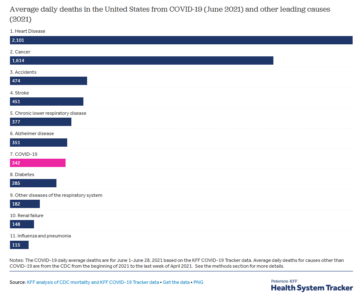
It works against Delta, thankyouverymuch. (This is good, because Delta may already be the most common variant in the country.) Immunity seems, so far, to be long-lasting; no booster necessary. This is also good because the J&J vaccine is a different animal than the mRNA vaccines that have already been shown to last at least a year. This is a Pretty Big Deal, assuming it’s true. British researchers, looking at the data from 118 studies (of 250,000 patients) concluded that aspirin, taken as part of cancer treatment, can cut patients’ risk of death by a whopping 20 percent. “Our research suggests that not only does aspirin help to cut risk of death, but it has also been shown to reduce the spread of cancer within the body — so-called metastatic spread. There is now a considerable body of evidence to suggest a significant reduction in mortality in patients with cancer who take aspirin – and that benefit appears to not be restricted to one or a few cancers.” Normally it appears in the fall, but respiratory syncytial virus is popping up early this year in the South as Covid mask mandates are lifted. The number of RSV cases declined rapidly in April 2020 in the U.S., when public health measures were put in place to combat COVID-19, and cases remained low until March 2021. But data reported to the National Respiratory and Enteric Virus Surveillance System now indicate that cases of RSV are rising in parts of the southern U.S., including the Carolinas, Florida, and Texas. This isn’t entirely unexpected. The logic is that seasonal viruses are still out there but were kept at bay by Covid precautions, and now “may surge at unexpected times.” (And our immunity might be a bit lower, too.) Meh, why reinvent the wheel? — I’ll let the University at Buffalo’s lede say it for me: “Patients with Type 2 diabetes who were prescribed SGLT2 inhibitors lost more weight than patients who received GLP-1 receptor agonists.” Sure, both are good for treating type 2 diabetes, but if Invokana does a better job at weight loss … well, that’s worth keeping in mind. Oh, and in case you were wondering, “No significant differences were found in blood pressure, blood sugar levels and kidney function after use of the medications.” Opioid prescriptions for young folks are going down, with one odd exception. Overall, for kids and younger teens, fewer scripts are being written, especially of the long duration/high dosage type. The exception? Kids 0 to five years old. Make of that what you will. Covid-19 is now the #7 cause of death in the U.S. —it had hit #1, briefly, ahead of both cancer and heart disease. Now it’s settled between Alzheimer’s and diabetes. It’s bad enough that drug-resistant C. Auris infections are spreading and killing people. Making it worse is that hospitals and the government are keeping outbreaks secret. With bacteria and fungi alike, hospitals and local governments are reluctant to disclose outbreaks for fear of being seen as infection hubs. Even the C.D.C., under its agreement with states, is not allowed to make public the location or name of hospitals involved in outbreaks. State governments have in many cases declined to publicly share information beyond acknowledging that they have had cases. Secret fungus killer, aspirin stops cancer, Covid’s now in 7th place, and more
J&J vaccine news
More aspirin goodness
RSV showing up early
SGLT2 vs GLP-1 cage match
Kids and opioids
Covid drops to seventh place
The Long Read: Secret fungus
July 02, 2021 ✒ Andrew Kantor
If you thought your cat was trying to kill you by tripping you on the stairs, wait till you get a load of this. Pet owners are being warned: If you have Covid, keep away from your pet. Not to save Fluffy, but because Fluffy might get the virus, have no symptoms, and pass it on to other humans. “[T]he potential risk [is] that pets could act as a reservoir of the virus and reintroduce it into the human population.” Despite incentives and, you know, a desire to protect patients, many of Georgia’s hospitals have a high percentage of unvaccinated workers. Georgia Health News reports. The high percentages of unvaccinated hospital workers being reported are “startling,’’ Ebell said. [That’s Dr. Mark Ebell of the University of Georgia College of Public Health]. “They are people who should know better’’ after having lived through the pandemic. They call it “strength training for your breathing muscles,” but the gist is that a particular breathing exercise — a mere five minutes long — can not only lower your blood pressure, but can do it better than exercise can. It’s called “High-Resistance Inspiratory Muscle Strength Training” or IMST. In short, it’s about breathing through a tube that resists you — “Imagine sucking hard through a tube that sucks back” — and was originally designed to help respiratory disease patients. University of Arizona physiologists, though, found it has a big benefit for blood pressure with just 30 inhalations per day (figure about five minutes, tops) at high resistance, six days per week. When assessed after six weeks, the IMST group saw their systolic blood pressure (the top number) dip nine points on average, a reduction which generally exceeds that achieved by walking 30 minutes a day five days a week. That decline is also equal to the effects of some blood pressure-lowering drug regimens. A study out of Spain found that even a year after infection, people still have plenty of antibodies to Covid’s spike protein, and those results, they say, “suggest that vaccine-generated immunity will also be long-lasting.” So maybe no booster shot after all? A team of researchers led by the NIH (and composed of people from a whole lotta agencies (and UNC)) found a way for migraine sufferers to reduce the frequency and intensity of their migraines: Eat a diet with more fish fats and less vegetable fats. Why? It’s all about the immunoglobulin G reactivity — and the fact that linoleic acid (from fruits and veggies) has a different effect than omega-3 fatty acids (from fish). Many people with migraine are highly motivated and interested in dietary changes, and clinicians might want to provide patients with information about the diets described in the study. Those shifty Danes have discovered that, while folks’ sense of smell does decline with age, it’s not every smell that fades. Old folks are still good at smelling orange, raspberry, and vanilla, but not so much fried meat, onions, or mushrooms. Sadly, the ability to enjoy the smell of coffee also declined. “[A] declining sense of smell in older adults seems rather odor specific. What is really interesting is that how much you like an odor is not necessarily dependent on the intensity perception.” What’s the most over-the-top solution to stopping zoogenic viruses from jumping from bats to humans? How about… Amid the devastating Covid-19 pandemic, two researchers are proposing a drastic way to stop future pandemics: using a technology called a gene drive to rewrite the DNA of bats to prevent them from becoming infected with coronaviruses. Get your movie quotes ready! With the last pharmacy in town now a barbecue restaurant, the nearest drugstore is an hour away through mountain passes — bad for three seasons, impassible in winter. The townsfolk have some solutions.The migraine diet, death by Fluffy, what you’ll always smell, and more
Awww, who’s a widdle virus weservoir?
Bad vaccine news
Breathe deep (for your BP)
Good vaccine news
Fighting migraines with oil
Scent of a raspberry
Ockham’s chainsaw
The Long Read/Elsewhere: Walden, Colorado
July 01, 2021 ✒ Andrew Kantor
Yesterday we told you how Walmart will be offering Novo Nordisk’s human analog insulin at a cheap, cheap price: $73 for vials and $86 for FlexPens. Awful nice of it. But in case you’re worried about either company’s profits, don’t be. A 2018 study published in the BMJ found that the cost to manufacture that insulin was no more than about $72 a year per patient for regular human insulin, and no more than $133 for analogues. So that 1,000% markup will help keep the company in business for a while. Proctor & Gamble is launching its Nervive nerve-pain-relief pills in the U.S. — “a line of daily supplements meant to address nerve care and pain relief.” That is all. The pandemic has got people to think about what they’re breathing, but it’s also got them thinking about health in general. And, apparently, they read enough to have learned the importance of the gut biome. (Possibly because “Considering the events of the past year [medical professionals] are not surprised that the number of people dealing with digestive issues is on the rise.”) Which is to say that they’re looking past antacids and at broader gut health in the form of pre- and pro-biotics. What this means for you, dear pharmacy professional, is that sales are likely to go up (if they haven’t already). Time to get some of those products on the end caps, perhaps. “Single bee is making an immortal clone army thanks to a genetic fluke”. (Bonus: It’s exactly what it says on the tin. As one researcher said, “It’s incredible. It’s also incredibly dysfunctional.”) How do you take the body’s natural-born killer cells and make them better? If you’re McMaster University medical researchers, you take them out of the body and train them to kill only who you want them to kill. The T-cells in “normal” CAR-T therapy are great killers, but they can’t distinguish friend from foe, so they can’t be used for every type of cancer. So the Canadians took natural killer cells from breast cancer patients and then trained them to recognize cancer — i.e., “genetically modified them to target specific receptors on cancer cells.” The result are “CAR-NK” cells. “These cells have a sober second thought that says, ‘I recognize this target, but is this target part of a healthy cell or a cancer cell?’ They are able to leave the healthy cells alone and kill the cancer cells.” …that removing wisdom teeth can have a long-term positive effect on your sense of taste. “This new study shows us that taste function can actually slightly improve between the time patients have surgery and up to 20 years later.” Lung damage, heart damage, brain shrinkage, even messing around, um, down yonder. Is there anything Covid-19 isn’t hurting? Welp, now you can add blood cells to the list. As in, the SARS-CoV-2 virus seems to damage them long term, as German researchers discovered. And they ain’t minor: We found significant changes in lymphocyte stiffness, monocyte size, neutrophil size and deformability, and heterogeneity of erythrocyte deformation and size. While some of these changes recovered to normal values after hospitalization, others persisted for months after hospital discharge. White blood cells kill infections; that’s 4th grade biology. But it turns out that the kidneys have their own type of killers: “intercalated cells” that eat bacteria and poop acid — just like white blood cells. “A-ha!” said Illinois University researchers, if you want to treat a kidney infection, why get the whole body involved when you can just activate these guys? “[S]ince we found these cells work the same way but are only present in the kidney, the long-term potential would be the ability to activate these cells to prevent or clear an infection from the kidney. The idea is that with this approach we will eventually be able to replace or complement antibiotic therapy.” First they thought the capital-P-Plague was caused by rats. Then they realized it was fleas. Then they figured it was fleas on gerbils that probably did it. But wait, there’s more. Now the earliest known Plague victim looks to be from 5,000 years ago (not in 1346), and he got it from … a beaver. Because this early strain of Y. pestis was not yet flea-borne, the scientists think that the bacteria originally entered the hunter-gatherer’s body through a rodent bite, possibly from a beaver, a common carrier of the plague predecessor Y. pseudotuberculosis. New products, new technologies, new delivery systems, and more — “Fecal Microbiota Transplantation Is Poised for a Makeover”Training better killers, Covid ruins blood, beavers and the Plague, and more!
No good deed goes uncalculated
P&G tackles nerve pain
The digestive-aids trend
Headlines that make you look twice
Natural-trained killers
Today I learned
What else does Covid do?
Kidney, heal thyself
It was a beaver all along
The Long Read: Our Number Two Story
Do you want to send your members the daily Buzz email newsletter (customized for your state and organization, perhaps)? Let’s talk — just drop me a note at andrew@gphabuzz.com!


- As Lung Disease Threatens Workers, Lawmakers Seek Protections for Countertop Manufacturers
- Republicans Fret Over RFK Jr.’s Anti-Vaccine Policies While MAHA Moms Stew
- Primary Care Is in Trouble. So Doctors Band Together To Boost Their Market Power.
- Cosmetic Surgery Investigation Prompts Warnings for Patients, and a Push for Tighter Safety Standards
- Listen to the Latest ‘KFF Health News Minute’
- Banks Are Becoming Bulwarks Against Scams for Vulnerable Seniors
- January 2025
- December 2024
- November 2024
- October 2024
- September 2024
- August 2024
- July 2024
- June 2024
- May 2024
- April 2024
- March 2024
- February 2024
- January 2024
- December 2023
- November 2023
- October 2023
- September 2023
- August 2023
- July 2023
- June 2023
- May 2023
- April 2023
- March 2023
- February 2023
- January 2023
- December 2022
- November 2022
- October 2022
- September 2022
- August 2022
- July 2022
- June 2022
- May 2022
- April 2022
- March 2022
- February 2022
- January 2022
- December 2021
- November 2021
- October 2021
- September 2021
- August 2021
- July 2021
- June 2021
- May 2021
- April 2021
- March 2021
- February 2021
- January 2021
- December 2020
- November 2020
- October 2020
- August 2020
- July 2020
- March 2020
- February 2020
- January 2020
- December 2019
- November 2019
- October 2019
- September 2019
- August 2019
- July 2019
- June 2019
- May 2019
- April 2019
- March 2019
- February 2019
- January 2019
- December 2018
- November 2018
- October 2018
- April 2017
