
June 16, 2021 ✒ Andrew Kantor
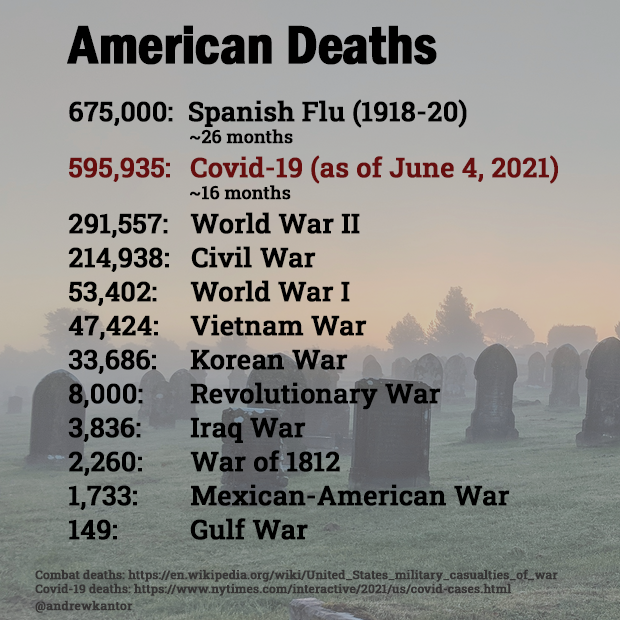
For post-op pain, not only are OTC meds like ibuprofen and naproxen as good as opioids, but McMaster University researchers found that they’re actually better. “We found that patients randomised to NSAIDs following outpatient surgical procedures reported better pain scores, better global assessment scores, fewer adverse effects, and no difference in bleeding events, compared with those receiving codeine.” Dark milestone: The U.S. has officially crossed 600,000 Covid-19 deaths. The actual total is undoubtedly higher. Pfizer, AZ vaccines vs. the delta variant: It works. A real world study conducted by Public Health England shows that two doses of the vaccines produced by Pfizer-BioNTech and AstraZeneca are highly effective in preventing hospitalizations due to the troublesome Delta variant. Gesundheit: Having the common cold when you contract Covid-19 can make the virus less severe. [T]he common respiratory virus jump-starts the activity of interferon-stimulated genes, early-response molecules in the immune system which can halt replication of the SARS-CoV-2 virus within airway tissues infected with the cold. You know those Chinese finger traps? Put your fingers in and you can’t pull them out because stretching the toy changes its shape? This is really why Ben an J Lo got back together There’s a similar object that can be made using a Japanese art called kirigami. It’s a tube that expands when stretched — and MIT engineers figured that it could be used as a stent to deliver drugs to the GI tract. Insert the tube to the precise location, stretch it to deliver the payload, remove it. The stents are coated in a smooth layer of plastic etched with small “needles” that pop up when the tube is stretched, allowing the needles to penetrate tissue and deliver a payload of drug-containing microparticles. Those drugs are then released over an extended period of time after the stent is removed. Killer T cells want to kill cancer, hence the name. But sometimes they can’t, and what’s to blame? Fat. Tumors (Salk researchers found) take in oxidized fat molecules and feed them to the T cells, which acts like loading them up on junk food: ““We found that when the T cells get ‘stressed out’ by oxidized lipids, they shut down their anti-tumor functions.” Then, to add insult to injury, the same chemicals make them hungrier … and they consume more of that oxidized fat. Upside: The same process — lipid oxidation stress — also hurts tumors. “Now that we’ve uncovered this vulnerability of T cells to lipid oxidation stress, we may need to find more selective approaches to inducing lipid oxidation in the tumor cells but not in the T cells.” Medicare beneficiaries are likely the big customers for the company’s Aduhelm maybe-it-works Alzheimer’s drug. It’s the same-old, same-old: Medicare can neither decline to cover Alzheimer’s drug Aduhelm, nor negotiate the price … unless Congress changes that law. “If 1 million Medicare beneficiaries receive Aduhelm, which may even be on the low end of Biogen’s expectations, spending on Aduhelm alone would exceed $57 billion” a year, the group said, “far surpassing spending on all other Part B-covered drugs combined.” A group of senators — a bipartisan group — introduced a bill that would make permanent some of the telehealth coverage provided by Medicare. It’s aimed at rural areas, but is really for anyone who might have trouble physically getting to a physician. And — because the whole infrastructure thing is still in the works — it would cover audio-only visits as well, for people who don’t have broadband. “Our bill ensures that rural telehealth providers can give rural Americans the quality care they deserve by eliminating restrictions on the use of telehealth options and ensuring doctors can be reimbursed for services they provide to patients from the comfort of their homes.” Old thinking: DNA send messages to RNA by using polymerases as a messenger. It goes one way, of course — the DNA changes the RNA, not the other way around. That would be silly! Why, it would mean that DNA could be changed by RNA, which would upend a whole lotta biology thinking … and textbooks. Guess what? Thomas Jefferson University researchers provide the first evidence that RNA segments can be written back into DNA, which potentially challenges the central dogma in biology and could have wide implications affecting many fields of biology. The state’s attorney general is suing both drug manufacturers and PBMs for working together to inflate insulin prices. [T]he defendant companies raised the reported prices of their respective insulin products by up to 1,000 percent over the course of the last decade through an unlawful conspiracy between the PBMs and manufacturers, in which the manufacturer defendants used the artificially raised prices to pay kick-backs to PBMs through rebates, discounts, credits, and administrative fees.Beating Delta, oragami(ish) drug delivery, fattening T cells, and more
No opioids necessary
Covid quick notes
Precise drug delivery via paper-folding

Junk food for T cells
Biogen is ready to make bank … from taxpayers
Telehealth forever?
RNA to DNA: Back atcha
Elsewhere: Mississippi double-taps
June 15, 2021 ✒ Andrew Kantor
Cases aren’t falling anymore, because vaccinations have hit a plateau. Deaths are falling, but that probably won’t last as the delta variant spreads. Vaccinated people are likely safe from even that delta variant, but unvaccinated people are at serious risk. “If you’re fully vaxxed, I wouldn’t be too worried, especially if you’re in a highly vaxxed region. If you’re not vaccinated: I’d be afraid. Maybe even very afraid.” The CDC is warning that there’s ‘Increased inter-seasonal Respiratory Syncytial Virus (RSV) activity in parts of the southern United States.’ And that’s not a virus you want to get, especially if you’re very young or very old. To make things worse, it’s spreading (via droplets in the air) just as people are able to remove their masks — and it presents like Covid-19, too. So the CDC wants more RSV testing for patients “presenting with acute respiratory illness” if they test negative for Covid. I.e., don’t let them walk out thinking it’s just a cold. Novavax’s two-shot Covid-19 vaccine was more than 90 percent effective in a large phase 3 trial, meaning it’s likely to become the fourth vaccine available in the U.S. The approval of Aduhelm brings up a big issue for healthcare folks: How do you explain the nuance of the drug to potentially desperate patients and their families? There’s little proof it works, but it seems to be mostly safe (except for the whole brain-swelling thing*). There’s no guidance for monitoring patients who take it. And, of course, Biogen is charging $56,000 a year for it —and it has to be taken forever. Oh, and it’s not even available yet. “There are people that are so desperate, they’re going to try anything. I want to make sure that we’re doing it as safely as possible. We’re still in the process of figuring that all out. There were no guidelines yet released that help us understand the infrastructure we have to have in place.” Humans are so screwy… (How screwy are they?) They’re so screwy, that mandating vaccines can backfire (according to German researchers) because people become like petulant children told to eat a new food. “If you tell me to eat it, it’s gotta taste awful.” Among our many running themes is the importance of vitamin D. When I was in school, we learned in science* class that vitamin D deficiency led to rickets — full stop. Now we know better, and how little vitamin D can cause all sorts of issues. The latest: A vitamin D deficiency can lead to cravings for opioids. Oh, and also for UV light. If your reaction is “Wait, what?” you’re not alone. Read on. A Mass General study found it’s all about the endorphin. Exposure to ultraviolet (UV) rays (specifically the form called UVB), causes the skin to produce the hormone endorphin, which is chemically related to morphine, heroin and other opioids — in fact, all activate the same receptors in the brain. So when you’re low on D, you’re low on the endorphin, and you might crave the sun. But it also raises your sensitivity to opioids (like being hungry makes the local bakery smell even better). These findings […] suggest that addressing the common problem of vitamin D deficiency with inexpensive supplements could play a part in combating the ongoing scourge of opioid addiction. Could it be time to consider adding vitamin D to more than just milk — kind of like we did with iodine starting in 1924? Earworms, that is. “Involuntary musical imagery.” The songs you can’t get out of your head. A Baylor University researcher and team discovered that earworms in your head before you go to sleep can also persist while you sleep. In fact, they found, “individuals who frequently listen to music reported persistent nighttime earworms, which were associated with worse sleep quality.” The more you listen to music, the more likely you are to catch an earworm that won’t go away at bedtime. When that happens, chances are your sleep is going to suffer.” Not only is the company recalling its rice cereal baby food, it’s getting out of the rice-baby-food business altogether. It’s for the same reason: arsenic. It tends to contaminate rice more than other grains, and since the company can’t guarantee an arsenic-free supply (and isn’t in the baby-poisoning business), it’ll stick with other grains. Click the link for the recall details. Your smartphone is always listening, even when you’re not using it. So researchers from companies like Burger King, Coors, and Xbox had an idea: What if your phone could listen for when you fell asleep — maybe by tracking your smartwatch data, or just listening for snoring. And then, what if it quietly played ads designed to influence your bleepin’ dreams? Not a joke. In fact, the possibility is serious enough that a group of sleep researchers signed an op-ed calling for some kind of regulation before it gets out of hand. (And we’re not just talking about, say, alcoholics or vegetarians.) [Targeted dream incubation] advertising is not some fun gimmick, but a slippery slope with real consequences. Planting dreams in people’s minds for the purpose of selling products, not to mention addictive substances, raises important ethical questions. The moral line dividing companies selling relaxing rain soundtracks to help people sleep from those embedding targeted dreams to influence consumer behavior is admittedly unclear at the moment. Worms in your ears, ads in your dreams, a new virus in your future, and more
Super-quick Covid update
A different respiratory virus is making the rounds
And now there are four (or is it five?)
What do you tell your Alzheimer’s patients?
* “More than one-third of trial participants developed brain swelling and 17% to 19% had small bleeds in their brains.”
Obtuse psychology
Vitamin D, opioids, and sun addiction
* Back then it was called “natural philosophy”.
While you sleep, worms crawl in your head
I would walk 500 miles…
And I would walk 500 more…
Just to be the man who walked a thousand…
…miles to fall down at your door.
ICYMI: Beech-Nut Recall
Crazy non-pharma science story
June 12, 2021 ✒ Andrew Kantor
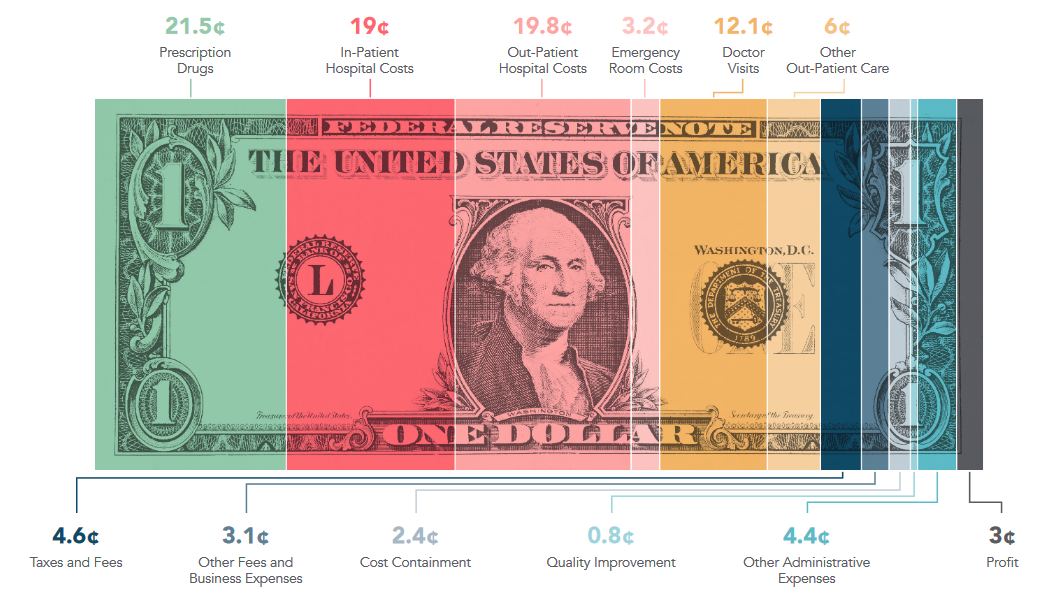
First: A human woman was infected with cowpox she got from her cat. That is not something (thankfully) you read every day. Today, cowpox is rare in cattle, and the main reservoir is rodents, according to the Merck Veterinary Manual. Cats can become infected when they kill rodents carrying cowpox, but transmission from cats to people is rare, WARNING: Article contains photo. Second: Wales is reporting its second case of a human with monkeypox. How rare is that? Rare enough that my spell-checker doesn’t recognize (or even recognise) “monkeybox.” WARNING: Article also contains photo. The good news: The Johnson & Johnson vaccine* can keep safe and effective for six weeks longer than originally thought. That means millions of doses won’t need to be destroyed, and can be shipped around the country (or the world) instead of being destroyed. The bad news: The company will have to destroy several more batches from its Emergent BioSolutions Baltimore plant because the FDA determined they were “not suitable for use.” Kind of like what’s printed on the food cartons in high school cafeterias. Three, count ’em, three members of the FDA’s 11-member advisory committee have now resigned over the agency’s rather surprising* approval of the Alzheimer’s drug Aduhelm. “This might be the worst approval decision that the F.D.A. has made that I can remember,” said Dr. Aaron Kesselheim, a professor of medicine at Harvard Medical School and Brigham and Women’s Hospital, who submitted his resignation Thursday after six years on the committee. I guess it’s not a total surprise: A new study out of Fargo, Minneapolis, and other cold places found that girls who take pills for weight control today — diet pills and laxatives — had about a 60% greater chance of being diagnosed with an eating disorder within five years than those who didn’t use them. Good news: We’re talking about 4.0% vs. 2.6%, so it’s not like an epidemic … at least until “60 Minutes” gets hold of it. Meet Sherri Tenpenny, a doctor (of osteopathy) who was invited to testify in front of the Ohio legislature about coronavirus vaccines. She claimed that Covid vaccines made people “magnetic,” among other totally crazy ideas. She was thanked (!) by legislators who oppose vaccination efforts for being “enlightening in terms of thinking.” “There’s been people who have long suspected that there’s been some sort of an interface, ‘yet to be defined’ interface, between what’s being injected in these shots and all of the 5G towers.” —Sherry Tenpenny A new report from America’s Health Insurance Plans found that prescription-drug spending makes up the single largest item from every premium dollar paid. (The plurality, if you will.) It edged out both in- and out-patient hospital costs. What’s interesting is that this cuts through all the discounts and programs and whatnot, at least in theory. It’s based on what insurers actually paid, not list prices, although it is “estimated.” That link above was to the news story. Here’s the report itself, a lovely five-page PDF. “Electric shock device boosts focus and energy in sleep deprived soldiers”. But seriously, folks, once you get past the headline, it’s actually interesting. It’s a hand-held device that sends electrical current to the vagus nerve through the skin of the neck. [T]hose who received vagus nerve stimulation performed better at tasks testing focus and multi-tasking abilities. They also reported less fatigue and higher energy than those who received placebo stimulation. These effects peaked at 12 hours after stimulation, with improvements in alertness lasting for up to 19 hours. Yes, the obvious question: What is “placebo stimulation”? Congrats to two Pulitzer Prize winners whose work related to healthcare. Ed Yong of the Atlantic for “a series of lucid, definitive pieces on the COVID-19 pandemic that anticipated the course of the disease, synthesized the complex challenges the country faced, illuminated the U.S. government’s failures, and provided clear and accessible context for the scientific and human challenges it posed.” The New York Times for “courageous, prescient, and sweeping coverage of the coronavirus pandemic that exposed racial and economic inequities, government failures in the U.S. and beyond, and filled a data vacuum that helped local governments, healthcare providers, businesses, and individuals to be better prepared and protected.”Cowpox from cats, doctor-induced facepalm, pharma’s bite of the insurance dollar, and more
Pox News
J&J vaccine ups and downs
* Funny how I don’t need to specify which vaccine we’re talking about.
ICYMI
Diet now, disorder later
Elsewhere/ICYMI: A few fries short of a Happy Meal
Where health insurance dollars go
I bet it does!
Pulitzer winners tackled the pandemic
June 11, 2021 ✒ Andrew Kantor
The delta variant of Covid-19, that is — aka B.1.617.2 or “the one discovered in India” — has appeared in Georgia, according to DPH. “It’s more contagious, probably about 40-50% more likely to spread from one person to the next,” Director of the National Institutes of Health Dr. Francis Collins said. “It particularly can affect younger people. And it looks like it also may be more dangerous when it comes to the severity of the disease.” (That last part is still unconfirmed.) And everything else you wanted to know about showering — from a dermatology perspective. File under “Nifty”: MIT engineers have found a way to pack the same drugs into tinier packages. For hydrophobic drugs, at least, forget milling with methylcellulose. Instead, they create an emulsion, then crystallize it. Using their nanoemulsion technique, the researchers were able to achieve drug loading of about 60 percent. In contrast, the currently available formulations of fenofibrate have a drug concentration of about 25 percent. The technique could be easily adapted to load even higher concentrations by increasing the ratio of oil to water in the emulsion. And we swear this is from the press release, not a 1960s Star Trek script: “The particle formation is nearly instantaneous, so everything that was in your liquid drop gets converted to a solid particle without any loss. After drying, we have nanocrystals of fenofibrate uniformly distributed in the methylcellulose matrix.” Contrary to what you might believe from the dating scene, drinking alcohol actually reduces your chance of getting pregnant. Heavy drinking will cut your chances all the time, but during the second half of the menstrual cycle even moderate consumption will affect it. “At the time of ovulation, usually around day 14 of the cycle, consuming a lot of alcohol — either heavy or binge drinking — was significantly associated with reduced chances of conception.” So you’ve got some mice. They’re depressed, possibly because they have cancer. Good news: A UCLA research team found that MAOIs might encourage the immune system to fight cancer. Looking for ways the immune systems in sick and healthy animals compare, they examined the “immune cells from the mice’s melanoma tumors — immune cells that weren’t really working. And that’s where they found the MAOI connection: Immune cells that had infiltrated tumors had much higher activity of a gene called monoamine oxidase A, or MAOA. MAOA’s corresponding protein, called MAO-A, controls levels of serotonin and is targeted by MAOI drugs. You can see where this is going. It’s not a therapy yet, but it is a new avenue for research. “What’s especially exciting is that this is a very well-studied and safe class of drug, so repurposing it for cancer isn’t as challenging as developing a completely new drug would be.” Sure, it’s called “continuous glucose monitoring,” but it can be intermittent. If you want the best for your diabetic patients, though, a Belgian study found that they should switch to legit CGM: “Adults with type 1 diabetes who switched from intermittently scanned to real-time continuous glucose monitoring saw improved time in range and quality of life.” Granted it wasn’t a gigantic difference, but it’s 2021 and even those small changes (59.6% time in range vs. 51.9%) can add up over time. Singaporean biomedical engineers have developed a blood test that can tell if target cancer therapy is working … in only 24 hours. (Note that this is for targeted therapy, not general chemotherapy.) This method requires only a tiny amount of blood sample for the analysis and each test takes less than one hour to complete. So, it is less invasive and yet more informative. In this way, doctors could monitor a patient’s response to treatment more regularly during the course of the treatment, and make timely adjustments to customise the treatment for better outcomes.” And why yes, it does use nanoparticles: millions of gold nanorings that capture the extracellular vesicles secreted by cancer cells. Want quick treatment for depression that resists treatment, and aren’t willing to mess with psychedelics? Not only did University of Chicago and Washington University researchers find that nitrous oxide can help, you don’t even need that much. [A] single inhalation session with 25% nitrous oxide gas was nearly as effective as 50% nitrous oxide at rapidly relieving symptoms of treatment-resistant depression, with fewer adverse side effects. And get this: Those few huffs can last, in some cases, for up to two weeks. What types of meds are most likely to cause headaches? Apparently (according to Rutgers researchers), no one has bothered to actually look … but they were up to the task. They examined 2,673,081 records in the FDA’s Adverse Event Reporting System, found 86,086 with “headache” listed, and did some magic to determine which meds were most likely culprits. The answer seems to be … all of them: According to the researchers, the most common entries included some nitrates, contraceptives, antihistamines, anxiolytics/sedatives, antifungals/antibiotics, antineoplastics, pulmonary hypertension directed vasodilators, immunosuppressants, and antidiabetic medications.Showering smart, drinking and pregnancy, huffing to happiness, and more
Delta is in Georgia
Why “squeaky clean” is bad for you
A pharmaceutical’s a pharmaceutical, no matter how small
How I met your mother at the soda bar
Happier and cancer-free
Impatience news
The “C” in CGM
Is it working?
We called ’em “Whip-Its”
Not tonight, dear, I took my meds
June 10, 2021 ✒ Andrew Kantor
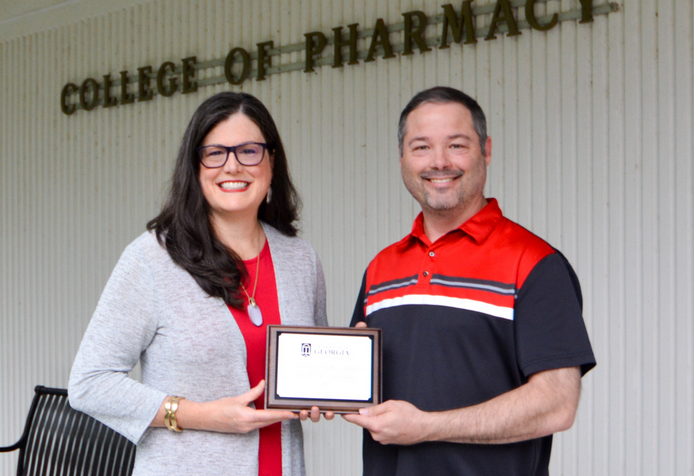
Georgia ranks second to last — behind only Oklahoma — in a nationwide ranking of quality of care for Medicare recipients. (What hurt the state’s ranking is lack of access to, and quality of, care. For cost, Georgia did pretty well.) MedicareGuide looked at multiple factors such as prescription drug prices, doctors per capita, and life expectancy to determine which states offered the best (and worst) healthcare for adults over 65. The vaccines. Bigly. “CDC CoviD-19 Study Shows mRNA Vaccines Reduce Risk of Infection by 91 Percent for Fully Vaccinated People” (and if you do get it, it’s mild). Biogen’s Aduhelm Alzheimer’s drug, recently and controversially approved by the FDA despite unclear evidence that it works. The advisory panel voted 10-1 against approval, but the agency gave a thumbs-up anyway, prompting one member to resign. [T]he decision also raised questions about the role of the advisory committees — and what it meant that the agency, in its final adjudication, bucked the very panel it had convened. That’s not stopping the company from going all out to get people to start paying… er, to start taking it. Here’s hoping it really does make a difference and doesn’t just bring false hope. Oh, and because it’s FDA approved and Medicare can neither refuse to cover it nor negotiate the price*, guess who’s going to be paying the $56,000 annual list price Biogen has decided to charge for it? The delta variant of CoviD-19 (remember, it’s no longer “the Indian variant”) now accounts for about one out of every 17 new cases. It’s more virulent, but the jury is still out on whether it’s more dangerous. Good news: The Pfizer and Moderna mRNA vaccines are about 88 percent effective against it, but only after both doses. Summertime, when young researchers’ fancy turns to thoughts of … brain-eating amoebae. Let’s cross our collective fingers for UGA’s Christopher Rice, who’s received a grant from the Jordan Smelski Foundation (established in 2014 by the parents of a victim of Naegleria fowleri) to continue his research. If stock art is any indication, it’s especially dangerous for Dave Bautista. One of the largest and heavily regulated industries in the country donated money to many members of Congress. Seventy-two senators and 302 members of the House of Representatives cashed a check from the pharmaceutical industry ahead of the 2020 election — representing more than two-thirds of Congress. High-five* to UGA’s Brad Brown, named College of Pharmacy Employee of the Year for the second time! Aussie researchers: “Children who consume too much sugar could be at greater risk of becoming obese, hyperactive, and cognitively impaired.” It’s good for you. Looking at the workings of the brains of people learning a skill NIH researchers found that “during rest the volunteers’ brains rapidly and repeatedly replayed faster versions of the activity.” “Our results support the idea that wakeful rest plays just as important a role as practice in learning a new skill. It appears to be the period when our brains compress and consolidate memories of what we just practiced.” And, as cool as building your own transcranial direct current stimulator may sound, “taking a short break” seems a heck of a lot safer. Remember that anti-vax pharmacist in Wisconsin who deliberately spoiled batches of the Covid-19 vaccine? He’ll be making all sorts of new friends in prison for the next three years. Then comes three years of supervised release; he also has to pay $83,800 in restitution to the hospital.Working on brain eaters, pharmacist to prison, Georgia’s Medicare woe, and more
Room for improvement
What works
What doesn’t work
What may or may not work
* Capitalism fail!
Delta force
Braaaaaaaaains

This is news?
BB is UGA CoP EoY
* Only if you’re vaccinated.
Captain Obvious admits his “hedonistic desire for palatable food”
To learn best, take a rest
Elsewhere: Bad Pharmacist Follow-up edition
June 09, 2021 ✒ Andrew Kantor
Here at Buzz we love phages — the idea that the world has a built-in way to kill bacteria. They have a bunch of advantages over chemicals (notably the ability to evolve along with the bacteria, making resistance futile, at least in the long run). But they could still be better, and a grad student at UC San Diego is all over that. His idea is to train the phages, Rocky style, to be better prepared. And whatd’yaknow: The bacteria […] predictably moved to counter the phage attack. The difference was in preparation. Phages trained for 28 days, the study showed, were able to suppress bacteria 1,000 times more effectively and three- to eight-times longer than untrained phage. Just eight days (!) to go till the biggest event all year for Georgia pharmacy pros! And a big announcement: We’re offering the Georgia Pharmacy Convention both LIVE and VIRTUALLY! That’s right! We learned a lot over the last year, and we’ve got this virtual thing down pat. So … Can’t travel to Amelia Island? NO worries! You can still participate in the general sessions and nab those 30¾ hours of sweet, sweet, continuing ed. In fact, the content will be available through Bastille Day (July 14). It’s only $425 for GPhA members or $595 for non-members*. Head over to GPhAconvention.com/virtual for the details! Israeli researchers decided to figure out — sorry, to study — the answer to the question, “How much does all the SARS-CoV-2 in the world weigh?” Saving you a click: No more than 22 pounds. [A]ll of the SARS-CoV-2 viruses currently infecting people around the world — which has been about 1 million to 10 million infections at any given time during the course of the pandemic — have a collective mass of somewhere between 0.22 and 22 pounds (0.1 and 10 kilograms). We know you don’t like to hear about the gorillas, but you ought to know what they’re up to: “Amazon and Walmart try—again—to upend prescription drug prices [but] Prescription drug market has proven hard to change”. As we move out of the Covid-19 pandemic and can turn to eradicating AIDS, some good news: Leronlimab — “An experimental, lab-made antibody” — completely prevented rhesus macaques from infection with SIV (the simian equivalent of HIV). Leronlimab is already in phase three trials as an AIDS treatment, but this new info shows it might work as a pre-exposure prophylactic instead (or in addition). Unlike some existing PrEPs, this would be self-injected every three months — and hopefully have fewer side effects. Human trials are expected to start soon. Well, (whew)! It seems we’ve got it right. Asking yesterday about the mix of pharma and non-pharma stories in Buzz, about 87% of people said we’ve got the right mix. (A bit less than 5% want more non-pharma stories, and about 3.5% want just pharmacy.) Thank you for taking that worry away. A German study found that “E-Scooter Accidents Most Common on Summer Weekends”. (They also noted that, when it comes to scooters, “Alcohol consumption was associated with traumatic brain injury.”) Meet Robin Cavendish. “Paralyzed By Polio, This British Tea Broker Changed the Course Of Medical History Forever”.The mass of the virus, Amazon’s plans, e-scooter shocker, and more
Bro, do you even phage?
Convention: Live or virtual — your choice!

* We love you anyway!
This is not useful information
Behemoth Watch
AIDS prep
Poll results

Captain Obvious zips along
The Long Read: Uplift edition
June 08, 2021 ✒ Andrew Kantor
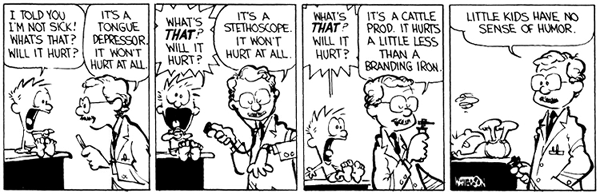
In a controversial decision, the FDA has approved Biogen’s aducanumab Alzheimers-drug. Controversial because it’s questionable how well it works — although it’s not unsafe. Biogen’s drug had been hailed by patient advocates and some neurologists eager to have an effective option for patients with the lethal disease. Other doctors said clinical trial results were inconsistent and more proof was needed. Here’s a tidbit: “The FDA said Biogen must conduct a post-approval clinical trial to verify the drug’s clinical benefit.” As friend-of-Buzz quipped, “Aren’t they supposed to do that first?” Read about the controversy (written before the approval) here. The agency also approved semaglutide, the once-weekly injection for chronic weight management in obese adults. That’s been shown to have amazing results, so this wasn’t unexpected. Warning: Some news stories call it a “game-changer.” Ugh. Buzz often includes non-pharmacy health/medicine stories. What do you think? |SURVEY: I think you have a decent mix of pharma and other medical stories. | |SURVEY: Honestly, I’d prefer you stick to mostly pharmacy stuff. | |SURVEY: I read pharmacy news all the time, I’d like MORE stories from other practice areas. | |SURVEY: I have no opinion either way. I just enjoy taking surveys. | Who doesn’t like to scare a little kid? Of course, not all of them have the same reaction to fear as you might hope, but it turns out there’s an interesting reason: gut bacteria. Yeah, them again. Researchers from Michigan State University and UNC did some tests on 30 infants (with parents’ consent, of course) after sampling their gut bacteria. They found that the types and amount bacteria determines how the kids react to being scared. Compiling all the data, the researchers saw significant associations between specific features of the gut microbiome and the strength of infant fear responses. For example, children with uneven microbiomes at 1 month of age were more fearful at 1 year of age. Uneven microbiomes are dominated by a small set of bacteria, whereas even microbiomes are more balanced. There’s a Goldilocks zone for fear, it seems. If kids are too afraid “they may be at heightened risk to develop anxiety and depression.” But if they have “exceptionally muted fear responses,” you might be looking at the next Genghis Khan* — a kid who “may go on to develop callous, unemotional traits associated with antisocial behavior.” Tests on AstraZeneca’s Lynparza found that, for patients with triple-negative breast cancer — the kind that’s almost impossible to treat — it can extend their lives and possibly keep the cancer from recurring. Results show 86 percent of the patients taking Lynparza were still alive with no cancer recurrence after three years, in comparison to 77 percent of the placebo group. Overall, study authors find Lynparza reduced the risk of cancer recurrence by 42 percent. When it comes to fat, white is bad and brown is good. Pretty simple. (Technically it’s white adipose tissue and brown adipose tissue, but we’re not messing with “WAT” and “BAT” when we have “fat”.) Brown fat is very good at turning sugar into heat, so it’s been a target for weight loss and diabetes treatment. In fact, some folks are skinny simply because they have a higher ratio of brown to white fat. (shakes fist) All that said, University of Texas researchers have found that mice with higher levels of a protein called perilipin 5 (PLIN5) in their brown fat cells maintained a healthier glucose level. And when they increased that PLIN5 level even more, “the animals maintained significantly lower blood sugar concentrations and higher insulin sensitivity.” Even better, though, is that increasing the brown fat’s PLIN5 levels had a side effect: It reduced the size of the white fat cells, and also cut down on inflammation. It was as if when the good fat cells were pumped up, they intimidated the bad fat cells into shrinking and shutting up. No complaints. The company is recalling its 4-in-1 Rock ’n’ Glide Soothers because they can kill children. We all read that people — experts in these things — are trying to discover the origins of Covid-19. Did it jump to humans naturally, or were scientists in Wuhan working with it and had an accident? In movies, the answers are easy to find. In real life … not so much. Read on, in “How virus detectives trace the origins of an outbreak – and why it’s so tricky”.Scaring the kids (for science!), plus FDA’s latest brouhaha, and more
FDA at work
Alzheimer’s drug gets nod, but not everyone is happy
Weight loss drug approved, and everyone is happy
Quickie poll
Buzz often includes non-pharmacy health/medicine stories. What do you think?
*|SURVEY: I think you have a decent mix of pharma and other medical stories. |*
*|SURVEY: Honestly, I'd prefer you stick to mostly pharmacy stuff. |*
*|SURVEY: I read pharmacy news all the time, I'd like MORE stories from other practice areas. |*
*|SURVEY: I have no opinion either way. I just enjoy taking surveys. |*
Our chief weapon is surprise! Surprise and fear!
* Yes, we know his name was Temüjin. Don’t be That Guy.
Good news for triple-neg
What brown can do for you

FYI: Fisher-Price recall
The Long Read: This Ain’t Sherlock Homes edition
June 05, 2021 ✒ Andrew Kantor
The silver: Covid-19 infections in the U.S. are at their lowest level since March 2020. They’re down about 30 percent from the previous week. The cloud: By the time you read this, more than 600,000 Americans will have died from the coronoavirus — that is more than the population of Atlanta. Researchers at the University of Toronto and Florida State have found that guppies given methylphenidate are not only affected by it, they pass those effects to their offspring. In fact, they pass it at least three generations down the line. The researchers say the paternal effect of behavioural change may be transmitted to descendants via non-genetic modifications to the sperm of male ancestors exposed to Ritalin. Such molecular changes that don’t affect DNA are a potential mechanism for males to transmit information about their environment – including exposure to drugs or pollutants — to future offspring. Of course, Lamarck didn’t say anything about traits being passed down via DNA, just that parents can pass on physical characteristics obtained during life. But still, let’s file this under “epigenetics.” So you know that bacteriophages are viruses that kill bacteria. They’re one of the ways we might be able to overcome antibacterial resistance. But what if — and this is a scary thought — there were bacteria that were immune to phages? Luckily there aren’t, and the only way we could get one is if some idiots decided to build one. On Thursday, [a] group of researchers at the Medical Research Council Laboratory of Molecular Biology reported in Science that with continued tinkering, they’ve made [an] artificial life form virtually invincible to viral infection. And if that’s not enough, these chuckleheads, who obviously have never read a drop of science-fiction, went further: Other adjustments to the bacteria’s designer genome endowed the bug with the ability to string together non-natural amino acids to produce proteins never before seen inside a living cell. “Don’t worry, the lab is secure. We’ve got, like, a deadbolt lock we almost always use*.” …via the nose. Heck, why not? A new nasal spray — Oyster Point Pharma’s varenicline — worked well at treating dry eyes in a phase-3 study. How does it work? It’s obvious when the lead researcher explains it: “[It’s a] highly selective nicotinic acetylcholine receptor agonist that activates the trigeminal parasympathetic pathway that stimulates the lacrimal functional unit to reestablish the natural tear film.” Typically, when you give someone a medication, the idea is that it will help with their ‘problem’ — not make it worse. And yet an article in The American Journal of Psychiatry explains that many psychotropic medications can make schizophrenia worse because they “also have anticholinergic properties and inhibit acetylcholine, a neurotransmitter critical for brain signaling.” “Brain health in schizophrenia is a game of inches, and even small negative effects on cognitive functioning through anticholinergic medication burden may have large impacts on patients’ lives.” You can’t really laugh at herbal or traditional medicines because there’s a good chance they were chosen for a reason. (Looking at you, willow bark.) So biologists at George Mason University decided to see if an herbal drink called “Respiratory Detox Shot*” that contains “nine herbal ingredients traditionally used in Eastern medicine” could affect … I dunno, pick a respiratory disease in the news. Lo and behold, it seemed to work. No, it’s not a cure, but whatever was in that RDS… …inhibited the infection of target cells by SARS-CoV and SARS-CoV-2 pseudoviruses and by infectious wild-type SARS-CoV-2. Their results suggest that RDS might broadly inhibit respiratory viruses, such as influenza. Right now it’s strictly lab work, and chances are your local hospital won’t be administering it any time soon. But it does tell us that there’s an avenue to explore, especially if they can isolate the chemicals involved. Meanwhile, an international team of researchers looking at existing-drug treatments for Covid-19 found a combo that worked well to suppress the disease: cepharanthine and nelfinavir. Both are already FDA-approved individually, so some more testing might make this a good tool to have. Plus: Does not use the phrase “game changer.” Minus: Does call it “Dream team.” Gentlemen, the next time a woman makes a snide remark about ‘where you’re thinking from,’ tell her, “Didn’t you read ‘The Long Read’ in GPhA Buzz about that paper published by the Royal Society?” It seems when it comes to proteins, men’s bodies have some unexpected similarities.Lamarck and Ritalin, stupid science idea, the brain protein down there, and more
Clouds and silver linings
None dare call it Lamarckism
Today’s facepalm

* Not a real quote. I hope.
Treating dry eyes…
When psychotropics backfire
An herbal treatment for Covid
*You’re allowed to laugh at the overused word “detox”.
A chemical treatment for Covid
The Long Read: Brains and other bits
June 04, 2021 ✒ Andrew Kantor
The U.S. has a huge supply of Covid-19 vaccine, and the rest of the world has been getting more and more annoyed that we’re hoarding it without (at this point) any good reason. But now it’s changing, as the Biden administration is finally making moves to share the vaccines with the rest of the world — especially when there are states with vaccines that could expire soon. Secretary of State Antony Blinken* said yes, yes, we’ll be giving them away, notably to Latin America where Chinese and Russian vaccines are already being distributed. President Biden is pulling out all the stops in an effort to hit his goal of a 70 percent vaccination rate. He’s got some incentives from private companies ranging from the “That oughta work” (free Budweiser for everyone once we hit 70%, Super Bowl tickets to see the Bills and Bucs) to the “Um, thank you?” (United Airlines tickets, as if anyone wants to fly United). As of Wednesday, about 63 percent of American adults have received at least one coronavirus shot, according to the [CDC], and 12 states have passed the 70 percent mark; California and Maryland are the latest to do so. But a number of states, particularly in the South, are far short of that goal. According to an APhA survey, 88% of pharmacists say they’re fully vaccinated, and another 4% are planning to be. Today, drinking milk is (flips coin) good for you. That’s right, an Aussie/British group of researchers say “people who regularly consume milk have a lower risk of heart disease.” Assessing genetic biomarkers among 400,000+ people, the study found that greater milk consumption was associated with lower blood cholesterol, lower blood lipid levels, and a lower risk of heart disease. Why? They think it might be the calcium, which helps break down fats. Another week, another microbiome — and another avenue for research. The newest microbiome to attract attention from researchers is … the breast microbiome. Apparently it can be affect by various supplements (e.g., fish oil). But what got the attention of researchers at Wake Forest is that the breast microbiome can apparently also affect breast tumors. Put another way, diet and supplements don’t just affect the tissue directly, they also affect the microorganisms, which in turn impact any tumors. Results showed that fish oil supplementation significantly modified the breast microbiome in both non-cancerous and malignant breast tissue. For example, scientists found longer-term administration of fish oil supplements (four weeks) increased the proportional abundance of Lactobacillus in the normal tumor-adjacent breast tissue. The usual mantra: More research to be done. A new European study found that children whose mothers took acetaminophen while they were pregnant were slightly more likely to either have ADHD or be on the autism spectrum — we’re talking an odds ratio of about 1.2, aka about a two percent increased risk. After the kids are born, though, there doesn’t seem to be any additional risk. “Considering all evidence on acetaminophen and neurodevelopment, we agree with previous recommendations indicating that while acetaminophen should not be suppressed in pregnant women or children, it should be used only when necessary.” Last week, we asked you to respond to an NCPA survey asking if you were having trouble finding or recruiting pharmacy technicians. It seems the answer was a resounding “yes!” The results: “This is a major challenge for community pharmacies that are seeing many more patients because of the pandemic,” NCPA CEO Douglas Hoey said. “Finding qualified workers is tough under normal circumstances. This is an acute problem for local pharmacies that should be at full strength now.” “Older adults with functional impairments may be more likely to misuse prescription drugs” — they’re also more likely to use medical cannabis. If you’re thinking of eating cicadas — and, really, who isn’t? — hol’ up. The FDA is warning that if you’re allergic to seafood, you shouldn’t indulge — and that includes putting them on your pizza. (Also note that they are neither kosher nor halal, so clearly someone was thinking ahead.)Cicada-cooking no-no, a cup or two of biomes, Tylenol and ADHD, and more
Giving it away (finally)
* Winken, Nod, not available for comment.
Vaccine incentives go high gear
Pharmacists are ahead of the game
Latest milk news
This could have been a juvenile headline
Now we can blame Tylenol
There IS a technician shortage!
Captain Obvious puts on “Matlock” reruns
Stop before you crunch
June 03, 2021 ✒ Andrew Kantor
The state still has some work to do when it comes to virus deaths per 100,000 people (we’re #44 out of 50, to be specific), but we’re seeing a big decline in cases along with the rest of the country — down 43 percent over the last 14 days. Deaths usually lag cases by a few weeks. One odd outlier is Chattahoochee County, where cases remain high and haven’t been leveling off. Whether there’s something going on there medically or just with reporting is hard to say. Okay, this is pretty impressive. A team of diabetes specialists and biomedical engineers has developed a sci-fi way to pretty much cure mice of diabetes. First they “take a person’s skin or fat cells, make them into stem cells and then grow those stem cells into insulin-secreting cells.” “But,” I hear you say, “If someone has diabetes, the immune system will attack those cells.” Good point! That’s where the biomed engineers come in. They take those insulin producers and implant them in a cage made of nanoscale fibers. The ‘bars’ of the cage are large enough to let insulin out, but small enough to keep immune cells away. So the cells live happy lives in their nanoscale cages, releasing insulin in response to blood sugar levels. At this point, you are allowed to say, “Holy wow.” The cells in the implants continued to secrete insulin and control blood sugar in the mice for up to 200 days. And those cells continued to function despite the fact that the mice were not treated with anything to suppress their immune systems. This time it’s cancer, and it can be sniffed out from blood samples with an electronic nose. (Yes, you have been reading a lot about dogs and machines using smell to detect diseases. It’s a thing.) The “nose,” developed by oncology researchers at UPenn, has been trained with artificial intelligence to identify the various volatile organic compounds given off by certain kinds of cells — cancer, in this case. Previous studies from the researchers demonstrated that VOCs released from tissue and plasma from ovarian cancer patients are distinct from those released from samples of patients with benign tumors. Because every cell gives off certain VOCs, the technique could potentially be used to detect other diseases and conditions. Why, combined with devices like Duke’s analytical toilet (see May 26), employers and parents will know exactly what’s wrong with you! If you know someone pregnant with a zebrafish, tell her to avoid cannabis. Canadian researchers found that exposing gestating zebrafish to cannabinoids made them “suffer a significant drop in neural activity later in life.” And this was both THC and CBD. [A]ctivity decreased by 60 to 70 per cent in the group bathed in THC and by more than 70 per cent in the group immersed in CBD. The decrease was even more pronounced in zebrafish that developed in a solution containing both compounds. You might have noticed the use of the word “bathed.” That gives you an idea of how much drug we’re talking about: “The amount of drug used would be equivalent to someone consuming cannabis or the active compounds every day for two to three weeks at the very start of a pregnancy.” Since 2012, the H3N2 flu has been changing, with different versions — clades, not variants — splitting from the main line. Problem: The further they drifted, the more likely we’d develop an ineffective vaccine. But, thanks to Covid prevention measures, the flu hasn’t been able to spread. And not only has influenza been a non-factor this year… … it appears that one of the H3N2 clades may have disappeared — gone extinct. The same phenomenon may also have occurred with one of the two lineages of influenza B viruses, known as B/Yamagata. Take that you rotten flu variant. Scynexis’s ibrexafungerp (now “Brexafemme”) is the first new kind of antifungal in more than 20 years. It’s just been approved by the FDA to treat vaginal yeast infections — one tablet a day. Its only competitor is Pfizer’s Diflucan (fluconazole). That is all. Way-cool diabetes treatment, fishy pregnancies, scratch one flu clade, and more
Georgia virus update

I know why the caged cells secretes
Again with the smell
Marijuana on the fishy brain
We killed a clade!
New yeast-infection treatment
Do you want to send your members the daily Buzz email newsletter (customized for your state and organization, perhaps)? Let’s talk — just drop me a note at andrew@gphabuzz.com!


- As Lung Disease Threatens Workers, Lawmakers Seek Protections for Countertop Manufacturers
- Republicans Fret Over RFK Jr.’s Anti-Vaccine Policies While MAHA Moms Stew
- Primary Care Is in Trouble. So Doctors Band Together To Boost Their Market Power.
- Cosmetic Surgery Investigation Prompts Warnings for Patients, and a Push for Tighter Safety Standards
- Listen to the Latest ‘KFF Health News Minute’
- Banks Are Becoming Bulwarks Against Scams for Vulnerable Seniors
- January 2025
- December 2024
- November 2024
- October 2024
- September 2024
- August 2024
- July 2024
- June 2024
- May 2024
- April 2024
- March 2024
- February 2024
- January 2024
- December 2023
- November 2023
- October 2023
- September 2023
- August 2023
- July 2023
- June 2023
- May 2023
- April 2023
- March 2023
- February 2023
- January 2023
- December 2022
- November 2022
- October 2022
- September 2022
- August 2022
- July 2022
- June 2022
- May 2022
- April 2022
- March 2022
- February 2022
- January 2022
- December 2021
- November 2021
- October 2021
- September 2021
- August 2021
- July 2021
- June 2021
- May 2021
- April 2021
- March 2021
- February 2021
- January 2021
- December 2020
- November 2020
- October 2020
- August 2020
- July 2020
- March 2020
- February 2020
- January 2020
- December 2019
- November 2019
- October 2019
- September 2019
- August 2019
- July 2019
- June 2019
- May 2019
- April 2019
- March 2019
- February 2019
- January 2019
- December 2018
- November 2018
- October 2018
- April 2017
