March 20, 2021 ✒ Andrew Kantor
Good news: Most Georgians are now eligible for a Covid-19 vaccine. Bad news: It’s not for a great reason. In Georgia, that poundage could have one immediate benefit. It qualifies adults to get the COVID-19 vaccine now. Recipients don’t have to be clinically obese to meet the criteria. As of March 8, Georgia expanded eligibility to adults with many underlying conditions, including those who are obese and overweight. Don’t let up: Although vaccines are slowing the spread, a combination of premature relaxation, new variants, and asymptomatic spreading has slowed the recovery, and more places are seeing a resurgence. Even with vaccines, we still need to protect against the virus spreading, explain Georgetown researchers. Three feet: On the off chance you missed it, the CDC now says that kids in schools can (probably) be safely only three feet apart — if they’re wearing masks and observing common sense. Adults, who are more vulnerable to the SARS-CoV-2 virus, still need to keep six feet away. When you throw everything you have at a problem, some are bound to stick. So why not a leprosy drug for treating Covid-19 at home? A team of US and Chinese researchers found that “clofazimine may help reduce the impact of the disease,” especially as there really isn’t much in the way of outpatient treatment. “Clofazimine is an ideal candidate for a COVID-19 treatment. It is safe, affordable, easy to make, taken as a pill and can be made globally available.” If you had “malaria” in the “Oh Sheesh, What Next?” pool, congrats! Apparently (per the CDC) in 2017 the U.S. had the highest number of malaria cases since 1971. More and more insurers (like, two-thirds) are using “copay accumulators” — basically, it means those medication discount cards don’t count toward patients’ deductibles. So, certainly at the beginning of the year, patients aren’t really getting a discount … the money is just going to the insurance company. Not that the insurers don’t need the cash — UnitedHealthCare had a paltry $257.1 billion in 2020 revenue — but as one policy wonk put it: As the number of high-deductible plans rises, and drug costs soar, Hengst said these policies are particularly harmful to patients who suffer from chronic diseases that cannot substitute generic medications. Your memories may literally be leaking out of your brain, according to University of Washington researchers. Apparently, they concluded, as we age the blood-brain barrier begins to leak pericytes — and that people with Alzheimer’s may leak more due to premature aging. Recent work suggests that preserving pericyte function […] or even transplanting them could lead to a healthier blood-brain barrier. The singing, dancing, and medical stylings of Vax’n 8, a group of physicians from Northern California who adapted “My Shot” from “Hamilton”:Brain drain, malaria’s back, “Hamilton” homage, and more
Big news
Covid quickies
Give these folks a hand
Guess what’s back?
Something’s being accumulated, for sure
Brain like a sieve?
Enjoy!

March 19, 2021 ✒ Andrew Kantor
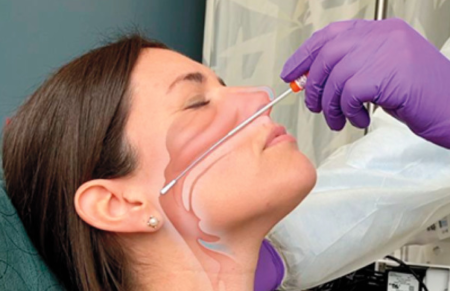
Mad cow disease, and its human equivalent (Creutzfeldt-Jakob disease) are caused by misfolded prions. You probably know that. They’re untreatable, incurable, and deadly. But now European researchers have made a breakthrough: They’ve “identif[ied] the molecular mechanism at work when the prion misfolds.” Then they created antibodies to target that mechanism and “were successfully able to block prions transitioning from the normal to the pathogenic form.” Right now it’s all in the lab, but… [T]he study shows it is possible to disrupt the mechanism, allowing researchers to move forward with designing new drugs. For the US as a whole, Covid-19 infections are holding steady at about 55,000 new cases a day (about a five percent drop since last week) — not great, not terrible. Infections were up in 13 states, down in 13 states, and steady everywhere else. Good news: The biggest improvements came in Alabama, Arizona, California, and Georgia, each of which saw a decline of over 30% in new cases per day. Georgia is opening more mass vaccinations sites — five more, in fact (Columbus, Emerson, Sandersville, Savannah, and Waycross), for a total of nine. The goal, of course, is to try to get the state’s last-in-the-nation vaccine rates higher. The next issue likely to confront state health officials: vaccine hesitancy. Hopefully appeals from health officials and random celebrities will help … unless someone can think of who else might convince people to get a vaccine. Any ideas? Apparently research was needed to conclude that the nasal-swab Covid-19 test poses risks for people who have had sinus surgery. Hard to imagine why The Georgia Pharmacy Foundation will have three open seats on its board of directors in June — why not apply? The foundation does a lot of good for Georgia pharmacy, and it needs good leaders to keep that up. From public welfare to promoting education and research, scholarships to advocacy, the Georgia Pharmacy Foundation keeps a lot on its plate. Be a part of the great work it does. Applying is simple: Send a message to Teresa Tatum at ttatum@gpha.org no later than Friday, March 26, 2021 with a short statement of interest describing why you would like to be considered for this position — be sure to include a résumé or CV. (You can also ask her any questions before applying.) And learn more about the foundation at GPhA.org/foundation. A Florida woman who had been vaccinated gave birth to a child who also had Covid antibodies. “Thus, there is potential for protection and infection risk reduction from Sars-CoV-2 with maternal vaccination.” Those shifty Danes have determined that, while it’s possible to catch Covid-19 twice, those reinfections are rare and usually mild. Apparently you can outrun it: “[S]low walkers four times more likely to die from Covid-19”. The Senate confirmed Xavier Becerra as Secretary of Health and Human Services. That is all. Only two companies make Covid test swabs. One’s in Maine, so “America’s Covid Swab Supply Depends on Two Cousins Who Hate Each Other” Outrunning Covid, Captain Obvious goes nasal, angry cousins jeopardize testing, and more
Mad cow breakthrough
Georgia cases dropping — fast
Eight wasn’t enough after all
Captain Obvious gives the thumbs-up
Call for candidates: Georgia Pharmacy Foundation
Covid notes
ICYMI
The Long (and Somewhat Amusing) Read: Family Feud edition
March 18, 2021 ✒ Andrew Kantor
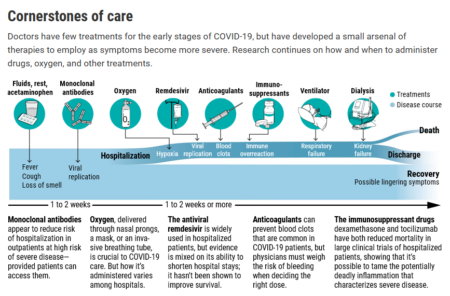
If you’re feeling a bit (or more than a bit) overwhelmed, for what it’s worth, you aren’t alone. Pharmacists, pharmacy managers, and pharmacy technicians across the country are saying they’re exhausted. And worried. From 12-hour shifts so busy they don’t have time to go to the bathroom or eat to crying in their cars every day after work or lying awake at night worrying about mistakes they might have made while rushing, they described an industry of health care professionals at the breaking point. GPhA’s first female president, Frances Lipscomb, passed away on February 26, 2021 at age 89. Born in Alabama, she quickly rectified that, earning her pharmacy degree from UGA — as one of only three women in her graduating class! — and later moving to Atlanta. She helped establish Georgia’s Medicaid program, and was an lifelong advocate of expansion; she served as head of its Pharmacy Division until her retirement in 1995. In lieu of flowers, memorial donations may be made to Epworth United Methodist Church at 675 South Third Street, Jesup, Georgia 31545; share your memories or send a condolence to the family at andersonunderwood.com. Johns Creek pharmacist, GPhA board member, and all around great person Jennifer Shannon got more vaccines than she thought she could handle at her little Lily’s Pharmacy. So she did a simple thing: She asked for community volunteers to help run a vaccine clinic in her parking lot. And she got them. Tuesday morning, more than 200 people got their shot in the pharmacy parking lot. Shannon said it was pleased with how it went and said what stands out the most is the gratitude from those who got the shot. When you need help, you call the firefighters! A new variant of Covid-19 has been identified in Brittany, France, and “Initially [patients] tested negative with gold-standard PCR tests, despite presenting with typical symptoms of Covid-19.” Only blood and tissue analysis confirmed the infection. An earlier, Finnish variant is also not detected by some PCR tests, but this one hides from all of them. To add to the problem, calling it “the Brittany variant” (or the French “le variant breton”) might confuse it with the British variant. At the moment, Georgia is ranking pretty low for percentage of people vaccinated (last among the states, in fact). The AP looks at the reasons that happened — and how the state is starting to turn the numbers around. The FDA is revisiting the question of drug names. The issue: Giving meds names that imply they do something they don’t. “For example, a proposed proprietary name that contains cure or that sounds like cure for a drug that treats the symptoms associated with a chronic disease would be concerning.” Older folks were prescribed a heck of a lot of meds that could make it easier for them to fall (found a study out of the University of Buffalo). In 2017, a whopping 94 percent of seniors were prescribed drugs like anticonvulsants, antipsychotics, sedative hypnotics, and benzos — that’s compared to only 57 percent in 1999. And to add injury to insult, “The research also revealed that the rate of death caused by falls in older adults more than doubled during the same time period.” If you’re wondering what the latest treatment regimen is, Science magazine has the overview, from steroids and anti-inflammatories to convalescent plasma. Getting vaccinated seems to help long haulers: Some of the many people suffering from a variety of issues after recovering from Covid have found that getting the vaccine eases those symptoms. A peek at what’s next: The Cherokee Nation is ahead of the rest of the US when it comes to giving out vaccines, but it’s running into another problem: Convincing people to get the shots. One shot of the Pfizer/BioNTech vaccine is estimated to be 63 percent effective. AstraZeneca’s vaccine doesn’t work against the South African variant — it’s only about 10.4 percent effective. You’ve got to be kidding: Somehow, some way, getting vaccinated has become a partisan issue. 🤦♂️Old folks falling, evil science in a dish, undetectable variant, and more
Pharmacists at the breaking point
Passing of Frances Lipscomb
A community effort in Johns Creek

Oh, great: New variant is harder to detect
Georgia starts the turnaround
Zerpexin, by any other name, would smell as sweet
Down goes grandpa
The Long Read: The latest ways to treat Covid
Vaccine notes

If this isn’t evil, what is?
March 17, 2021 ✒ Andrew Kantor
Big news, especially for independent pharmacies. The other day we told you they’d been getting getting the short end of the stick when it came to Covid vaccine reimbursement. Guess what? The Biden administration has almost doubled (!) Medicare reimbursement from $23 to $40 per shot. In the space of just a couple of months, the U.S. went from lagging the world in Covid-19 response to just about leading it*. What happened? It wasn’t just us doing things right — it was Europe screwing up. Bureaucracy (“the E.U. first tried to make sure all 27 of its member countries agreed on how to approach the negotiations”), poor spending choices (“A single additional lockdown, like the one Italy announced this week, could wipe out any savings”), and vaccine skepticism. Who knew how popular these sessions would be? Good news: We’ve added a tech vaccination training session: Saturday, March 20, from 9:00 am to noon at GPhA’s World Headquarters in Sandy Springs. Help end the pandemic! Get officially trained to vaccinate so you can (under a pharmacist’s supervision, of course) give out Covid-19 vaccines. Click here for details — and see you there! Psst: There’s self-study involved, so do it quickly and get ahead of the game. Georgia Health News reports on how “Many Georgians to get insurance price break thanks to Covid bill”: The subsidy boost could be especially helpful for people in southwest Georgia, an area that has some of the highest premiums in the nation, said Laura Colbert of the consumer advocacy group Georgians for a Healthy Future. “Every consumer who shops for coverage will get a better deal than they were able to get even a few weeks ago,’’ she said. If you were staring into the fridge thinking, “What three things can an independent pharmacy do to compete with Amazon?” you’re in luck: Forbes has an answer. Purdue Pharma’s latest offer to end the thousands of opioid-crisis lawsuits it’s facing: The Sackler family has offered to pay about $4.3 billion — a billion more than its last offer — “to reimburse states, cities, and tribes for the costs associated with the long-running opioid crisis in the U.S.” But it would be on an undetermined schedule and wouldn’t start until 2024. The plan would effectively dissolve the company, but the people responsible would not be help criminally liable. “Two dozen state attorneys general immediately rejected the plan.” The company has begun testing its mRNA vaccine on young children. If it’s effective, imagine schools going back to normal. If Covid-19 becomes like the flu — requiring regular shots — well, Pfizer is ready. [Pfizer execs] said there would be a chance for Pfizer to raise prices for the vaccine when Covid moves from a pandemic state to an endemic situation and the virus circulates continually in pockets around the globe. [W]ith the resumption of “normal market conditions” over time, there would then be a chance for the company to take advantage of opportunities from “a demand…and pricing perspective.” So it’s like this: Something like 90 percent of pancreatic cancers are resistant to immunotherapy. Why? Stony Brook University researchers think they’ve figured it out. Apparently it’s all about a gene called KRAS, which does double-nasty-duty for the tumor — they help it grow, and they help it evade the cytoxic T-cells trying to attack it. That means they’ve just found a juicy target for research: “[T]reatment of cancer will be improved by simultaneously inhibiting KRAS and activating immune pathways suppressed by the cancer.” The new mRNA vaccines from Pfizer and Moderna are an entirely new kind of vaccine. So what’s the deal, why are they different, and why do you need a second dose? Answers, courtesy of the Conversation.US poised to lead, Pfizer ready to cash in, good news for indy pharmacies, and more
Mo money, mo money
Look at Mills! Look at Mills!
* Israel, the UAE, and Britain are a bit ahead
Techs: Don’t miss your chance for that hot vaccination training
More Georgians can afford healthcare
Three easy pieces
How about we throw you some more money?
Moderna begins testing on kids
Pfizer is ready to hike its vaccine prices
A target for pancreatic cancer
The Long(ish) Read: mRNA Explainer edition
March 16, 2021 ✒ Andrew Kantor
Apparently some Covid survivors (recoverers?) have reported yet another disturbing symptom: Parosmia, where everything smells rotten. Literally, rotten. The condition can cause one to lose the intensity of their smell. But, more frequently, it can cause one to experience an overpowering rancid scent. It can happen either around smells that are normally pleasant or around nothing at all, just lingering in the air. Big ol’ caveat: There is only a single news story about this (from a single TV station in North Carolina), although it’s been picked up in a few places. So keep your grain of salt handy. It was crossover day at the Georgia legislature, which means bills either pass one house and move to the other, or they die*. GPhA’s legislative priority, SB 46 (pharmacist vaccine expansion), had already crossed over, as had another bill central to pharmacy, HB 316 (increasing the pharmacist-to-technician ratio). Other bills weren’t so lucky. Greg Reybold has all the details, of course, of what made it (extending Covid-19 immunity protections) and what didn’t (insulin copay cap) — check it out! Hundreds of pharmacists, pharmacy owners, technicians, and students from across Georgia will come to Amelia Island to grow, play, and connect*. Be sure to check out all the courses and events — and the ways to have fun, including the new clothing-optional beaches and We’ll see you at the beach! Room block is open! Registration is open! Don’t wait! Go to GPhAConvention.com now! Novavax says its vaccine is 86 percent effective against the UK “B.1.1.7” variant. It’s not yet approved (in the UK, the US, or Europe). Bad news: It’s only 55.4 percent effective against the South African variant. The WHO reviewed the data and says there isn’t a connection between blood clots and the AstraZeneca vaccine. (Denmark, Iceland, and Norway had paused using it while they investigated reports.) The EU would like the US to share its stockpile of that AZ vaccine (it’s not yet approved here), but President Biden said, “No.” Instead, Biden said, the US will help expand vaccine manufacturing overseas to alleviate shortages. If you catch — sorry, if you diagnose — syphilis early, oral cefixime twice a day can cure it 90 percent of the time. And it’s a lot less expensive than injectable penicillin. As usual, more research is needed, but the first result is promising, and other cephalosporins are probably worth looking into. Eating fish, especially oily fish, is supposed to be good for heart health. But the latest twist: It seems to make a much bigger difference for people who have already had some kind of cardiovascular disease. For them, it can help lower the risk for another “event,” but for the general population … meh. Or, in more science-y terms: [B]eneficial effects on triglyceride levels are more pronounced in people with elevated triglyceride levels, a common characteristic of people at high risk for vascular disease. For folks taking statins, adding a dash of icosapent ethyl — aka Vascepa — seems to cut the risk of a first stroke by an additional 36 percent. It’s not for everyone, of course, and these data are still preliminary, but it’s certainly worth keeping in the back of your mind. Wondering whether beta blockers cause depression? Wonder no more: No, they don’t. At least not according to the latest research from the American Heart Association. BUT (there’s always a but) they do seem to cause “sleep-related symptoms such as unusual dreams or insomnia” for some patients. How they classify “unusual” dreams is beyond me. BUT that doesn’t mean those patients aren’t affected by depression or other psychological issues: “Patients with a history of cardiovascular events such as a heart attack or stroke were prone to develop psychological complications. Though we found beta-blockers were not causally linked, these patients should be monitored.” Lilly’s experimental donanemab seems to slow the effects of Alzheimer’s disease — although it’s still from an early phase 2 trial. “Out of 18 months, in comparison to the people that did not get the drug, these folks were declining six months slower. That’s six more months of better cognition, better memories, better enjoyable times with your family.” What’s notable is that, while other Alzheimer’s trials are looking for ways to cure the disease, the goal of donanemab is to actually slow cognitive decline. When all this is over, and we examine what went wrong with America’s response to the pandemic, one place to put the blame, argues the Atlantic — whose Covid Tracking Project found itself as the country’s de facto source of pandemic data — is the lack of data. [D]ata are how our leaders apprehend reality. In a sense, data are the federal government’s reality. As a gap opened between the data that leaders imagined should exist and the data that actually did exist, it swallowed the country’s pandemic planning and response.The stench of recovery, when fish work (and don’t), beta blockers and depression, and more
Do you smell something?
Breaking on through to the other side (Legislative Update, Week 9)
* If you think about it, either one could be “crossing over.”
Registration is OPEN!

The 2021 Georgia Pharmacy Convention is the biggest gathering of Georgia’s pharmacy professionals all year.
* Georgia Pharmacy Convention — Grow Play Connect. Get it?
Covid vaccine quickies
A better syphilis treatment?
A twist to eating fish
While we’re talking triglycerides…
The latest on beta blockers
ICYMI: Lilly drug could help with Alzheimer’s
The Long Read: Looking back
March 13, 2021 ✒ Andrew Kantor
Those shifty Danes (as well as the Norwegians and Icelanders) have temporarily suspended use of AstraZeneca’s Covid vaccine after a 60-year-old woman died from a blood clot that appeared soon after being vaccinated. There have been enough other reports of blood clots that the EMA is investigating. Independent pharmacies seem to be getting the short end of the stick when it comes to giving Covid-19 vaccines. The issue isn’t with the vaccine, but with the insurance companies. The vaccine may come free — paid for by the federal government — and administering it is fairly easy, but the work behind those shots is monumental, the reimbursement rates from insurers can be low and the effort to get paid is a major undertaking. The problem is mostly with private insurers, although Medicare (which still won’t recognize pharmacists as providers) has had issues, too. Even Georgia’s Rep. Buddy Carter seemed to support the idea of single-payer health coverage, as he “roundly criticized the billing nightmares pharmacists have undergone at the hands of private insurers.” Georgia is among the eight states where Medicaid pays less than Medicare, compounding the problem. And as more patients with private insurance are eligible for the vaccine, the problem is likely to get worse. Since the 1980s, the rate of twin births worldwide has increased by more than 30 percent. In the early ’80s it was about 9 twin births per 1,000 deliveries. By the 2010s it was closer to to 12 twin births per 1,000 deliveries. Let off a little steam and hang out with folks are all also burning the candle on both ends at GPhA’s Academy of Employee Pharmacists’ (almost) St. Patrick’s Day Meet & Drink (and Eat): March 15, from 6:00 – 7:30 p.m. The fun includes a FREE virtual cooking show with Chef Tony Lassic — learn to make bangers & mash, chocolate Guinness mousse, and a Drunken Leprechaun* cocktail to wash it all down. We’ll send you the recipes and ingredient lists ahead of time, so you can enjoy a taste of Ireland at home. All you have to do is register — but extra credit for anyone dressed as a pot of gold. Another mRNA Covid-19 vaccine, this one from Sanofi, is starting in human trials. Novavax says its Covid vaccine —nanoparticle, not mRNA — is 96 percent effective against the original strain, but less effective against the newer ones (86% vs the UK’s B.1.1.7 strain, and only 55% vs the South African B1.351 variant). Be a part of the future — apply to be on the 2021-22 GPhA Board of Directors. Go to GPhA.org/2021-board-of-directors-nomination for info and to apply before it’s too late! (In answer to a reader question, no, board members no longer receive a ceremonial sword.) Had an issue with the equipment in the ancillary kits that came with a federal vaccine order? There are four steps to reporting to ensure the right folks have enough information to identify any trends: Be prepared to provide photos, lot number, order number, date ordered, and dates received when filing a report for a deficient ancillary kit. Pharmacy researchers at the University of Texas found that people who were giving opioids in the ER for migraines “were more likely to return to the ED in the next 6 months,” at least based on medical records of 788 people. (They probably returned because of migraines, but it could have been for other reasons.) It all goes to the pattern, they say, of ‘opioid use leads to more health resource use.’ After, we assume, months of testing on unsuspecting grad students, aerospace engineers at an Ohio State University have determined that “Electricity could help speed wound healing”. Specifically, electric stimulation makes the blood vessels more permeable, allowing white blood cells and oxygen to get to wounds more easily. Even better, they don’t know why that happens, giving them good reason to continue their testing. Do not self medicate It sure looks like mRNA vaccines are pretty darned good. So what’s next, once this pandemic is over? Axios looks at that in “Covid-19 brings a new dawn for messenger RNA vaccines”. Lots more twins, zapping to heal, indy pharmacies paying the price, and more
Over there
Indy pharmacies paying a high price
Fast fast fact fact
Reminder: Monday Meet ’n’ Greet
* Is there any other kind?
Comin’ down the pike
Apply to be on the GPhA board!
Ancillary kit deficiency reporting
Migraine + opioids = ER
Electric wound healing

The Long Read: mRNA edition
March 12, 2021 ✒ Andrew Kantor
Starting Monday, March 15, people 55 and older, those with disabilities, and those with any of a list of medical conditions will be eligible. (See the DPH site for the list.) And as you may have heard, everyone will be eligible by May 1. The good news: Eli Lilly’s antibody combo (bamlanivimab-etesevimab) gives Covid-19 infections a one-two punch — “cutting hospitalizations and deaths by a whopping 87%.” The bad news: Obesity is perhaps the largest factor in the severity of a Covid-19 infection, and “High Obesity Rates in Southern States Magnify Covid Threat”. (Note that obesity is one of the medical conditions that allow Georgians under 55 to get the vaccine.) “It’s just math. If the population is more obese and obesity clearly contributes to worse outcomes, then neighborhoods, cities, states and countries that are more obese will have a greater toll from Covid.” The important news: You know how even one shot of either the Pfizer or Moderna vaccines conveys a lot of protection? There’s an exception: cancer patients. “[T]he vaccine ‘can clearly bring immense benefit to cancer patients too, but in most cases this is only after boosting’.” There’s a little protein called AEG12 that mosquitoes make. It’s got an interesting property: It destabilizes the viral envelope of flaviviruses — the type of viruses that cause dengue, West Nile, yellow fever, and Zika. “It is as if AEG12 is hungry for the lipids that are in the virus membrane, so it gets rid of some of the lipids it has and exchanges them for the ones it really prefers.” Well now. That gives AEG12 “great killing power,” and with great killing power comes … never mind. But there’s one big downside: AEG12 also breaks opens red blood cells, which research says we need to, you know, live. But still, it’s an interesting discovery with the potential to fight a whole bunch of nasty viruses. Between Lilly’s antibodies and the vaccine rollout, the biggest vestige of the pandemic might be Long Covid. But don’t you worry — pharmaceutical companies are ready to cash in. Overall the companies most likely to benefit from COVID-19 are Sanofi, Novartis, AstraZeneca and GlaxoSmithKline who have a range of products that will be in demand as the pandemic recedes. Here’s something you probably didn’t expect: Sociologists (!) at the University of Oxford found that long-term use of psychedelics — notably tryptamines — seemed to be connected with lower blood pressure. … lifetime classic psychedelic use was associated with a 14% lower odds of hypertension in the past year and that lifetime tryptamine use was associated with a 20% lower odds of hypertension in the past year. The researchers caution that it’s too early to infer causality and, of course, more research is needed. Researchers at Australia’s Murdoch Children’s Research Institute made a surprising — and important — discovery. Before treating kids for hypertension (or deciding not to treat them), check their blood pressure in both arms. At least one in four kids “had an inter-arm difference that could lead to misdiagnosis,” they found, and it’s even higher with those who had aortic surgery as infants. Ketamine is in the news as a possible treatment for major depression, but (as you know) it’s also a painkiller. And it turns out, according to Loyola University researchers, that — when it comes to IV ketamine — you might be able to cut the dose in half. As they put it, “Our data did not detect a large difference in analgesia or adverse effect profile between 0.15 mg/kg IV ketamine and 0.30 mg/kg in the short-term treatment of acute pain in the ED.” All of America’s living* presidents (with one exception) — and their wives — joined in an ad campaign promoting Covid vaccinations. Left to right… oh, sheesh, you know who they are Fearing accusations of line-cutting, or having to reveal a diagnosis, “People Are Keeping Their Vaccines Secret.”Useful mosquitoes, the acid (BP) drop, keeping vaccinations secret, and more
Georgia expanding vaccine eligibility
ICYMI
Mosquitos might be useful after all
They’re ready to help
This may explain why hippies are so chill
Sinister news about kids’ blood pressure
Half the ketamine
“Roll up your sleeve and do your part”

* Yes, they specified “living” — although reports said the ghost of Millard Fillmore was hanging around the set grumbling about the decline of the Whig party.
The Long Read: Vaccine secrecy
March 11, 2021 ✒ Andrew Kantor
On the one hand, “Biden will announce he intends to secure another 100 million doses of Johnson & Johnson’s vaccine.” On the other hand, “J&J manufacturing delays hit US vaccine rollout”. Immunologists at the Dental College of Georgia, working with other researchers, found that high doses of CDB seems to help patients with Alzheimer’s — it restores the TREM2 and IL-33 proteins, which are key to cleaning up the disease’s trademark beta-amyloid plaque. They found CBD appears to normalize levels of IL-33, a protein whose highest expression in humans is normally in the brain, where it helps sound the alarm that there is an invader like the beta-amyloid accumulation. These tests were done on mice in the late stages of the disease; next steps “include determining optimal doses and giving CBD earlier in the disease process.” The Pfizer/BioNTech Covid-19 vaccine works against both the UK and Brazilian variants (in the lab, at least), meaning it’s only the South African variant that might — emphasis on might — evade the vaccine to some extent. We all know grandma was wrong when she said that being cold made you sick. There are a lot of reasons sickness seems to spread in the cold: more time indoors, less vitamin D, even less UV radiation to kill germs. It’s a multi-variable situation, making patterns hard to predict. So let’s add another: pollen. Could pollen help disease spread? Why yes, yes it could. German researchers figured out the “could” part — the question is just how much an impact it might have. [P]ollen could be a culprit in respiratory infections, not because the viruses hitch a ride on pollen grains and travel into our mouth, eyes, and nose, but because pollen seems to perturb our immune defenses, even if a person isn’t allergic to it. “When we inhale pollen, they end up on our nasal mucosa and here, they diminish the expression of genes that are important for the defense against airborne viruses.” BUT… Dutch researchers struck back, pointing out that “the arrival of pollen season in the Netherlands coincides with the end of flu season.” Meaning — you know the drill: More research is needed. If you have patients with breast cancer, here’s a surprising bit of news: Epidemiologists at the University at Buffalo have found that drinking sugar-sweetened soda (i.e., not diet) is particularly dangerous for them. Compared to women who never or rarely drank non-diet soda, those who reported drinking non-diet soda five times or more per week had a 62% higher likelihood of dying from any causes, and were 85% more likely to die from breast cancer specifically. Why soda specifically? Per the researchers, “Non-diet sodas are the highest contributors of sugar and extra calories to the diet, but they do not bring anything else that is nutritionally beneficial.” Dr. B (as reported in the New York Times) is a website that will match patients who want a Covid-19 vaccine with providers who have extra that will go to waste. Answer some basic questions for eligibility (medical conditions, age, etc.) and you’ll get a text if and when there’s a vaccine near you. If you can make it in two hours, reserve your spot. The signup process takes about 90 seconds. (Yours truly probably has a bit of a wait, but who knows?) And if you have extra vaccines on hand, sign up as well so you can give them out! I think I’m in for a wait. Eli Lilly’s Olumiant, which treats rheumatoid arthritis, might work against Alzheimer’s. Why do Harvard/MIT researchers think so? Because an artificial intelligence algorithm suggested it. The machine-learning system, called DRIAD (Drug Repurposing In Alzheimer’s Disease), reviewed information about 80 FDA-approved drugs and the mRNA expression profiles from human brains, and it determined that JAK inhibitors (like Olumiant) just might work. Next up: “Clinical investigation.” Pro tip: If someone is already afraid of needles, showing them dozens and dozens of pictures and videos of people getting vaccines … well, that’s not going to make them more comfortable. More than causing squeamish people to look away or change the channel, researchers say such illustrations could hamper efforts to get a broad swath of U.S. residents vaccinated. Don’t even go there.Needle phobia, dust in the wind, surprising Alzheimer’s treatment, and more
The best-laid plans
CBD vs Alzheimer’s
So it’s only South Africa that’s a problem
The pollen-virus connection
Coke doesn’t add life
Sharing leftovers
Welcome to the future
Pins and needles, but mostly needles

March 10, 2021 ✒ Andrew Kantor
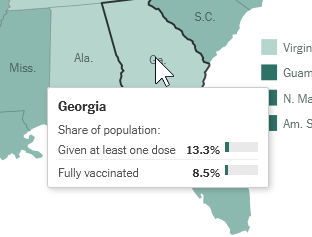
As Americans worry about their out-of-pocket prescription costs, guess who they’re turning to for help? That’s right. According to the 2021 Medication Access Report from CoverMyMeds, 67% of patients reported learning that their prescription would cost more than they expected when they went to pick it up. Of those, 55% asked their pharmacist or provider for cheaper alternatives. Not all that much happening — the big news being that HB 653 (allowing pharmacists to order and administer COVID-19 tests) made it out of committee just before cross-over day. A compromise in the bill means, if passed, it will be in effect for 12 months after the federal emergency ends. At that point discussions will take place about the future of pharmacist testing. But don’t take our word for it — read the details about that bill and more from Greg Reybold himself. And don’t forget the Legislative Update Drinking Game: Every time Greg uses the word “contemplates” or “pursuant,” take a shot. In case you’re curious, about 8.5 percent of Georgians are now fully vaccinated, while another 4.8 percent have received their first of two shots. Who knew how popular these sessions would be? Good news: We’ve added a tech vaccination training session: Saturday, March 20, from 9:00 am to noon at GPhA’s World Headquarters in Sandy Springs. Help end the pandemic! Get officially trained to vaccinate so you can (under a pharmacist’s supervision, of course) give out Covid-19 vaccines. Click here for details — and see you there! Psst: There’s self-study involved, so do it quickly and get ahead of the game. A 91-year-old Ohio man is in the hospital after getting two Covid-19 vaccinations in one day — the second shot he was supposed to get, and then a third that was meant for someone with the same name. Apparently he’s recovering. Bacteria seem to be good at developing resistance to quinolones, but now researchers at the UK’s John Innes Centre think they know how: The bacteria learn to create pentapeptide repeat proteins, and one of them (MfpA, if you feel like Googling) made the bacteria resistant*. The point being, by learning how these bugs get their resistance, we might figure out how to prevent that from happening in the first place. Thanks to the Covid-19 pandemic, the FDA has been cutting back on its inspections, but “critics say inspectors should be considered essential workers and do their jobs.” The F.D.A. conducted 52 inspections of domestic pharmaceutical plants between March 2020, when the pandemic took hold in the U.S., and Oct. 1, compared with 400 during the same months in 2019 […] Inspections of foreign manufacturing facilities have been at a virtual standstill for months. You hopefully know the recommendation: Older folks shouldn’t take more than two meds that affect the central nervous system because of the potential for nasty interactions. Despite that, the reality — according to a study of 1.2 million people with dementia (!) by University of Michigan geriatric psychiatrists — “1 in 7 people with dementia who live outside nursing homes are taking at least three of these drugs.” [T]he evidence supporting the use of many of them in people with dementia is pretty thin, while there is a lot of evidence about the risks, especially when there are multiple medications layered on top of one another.” Which pharmacies are the largest in the country? The list is a total shock. Not. Walgreens (i.e., Walgreens Boots Alliance) tops the list, followed by CVS (retail), Express Scripts/Cigna, OptumRx/UnitedHealth, and Walmart. Back in the Before Times — November 2018, in fact — we told you how researchers were hoping to use llamas’ antibodies to create a universal flu vaccine. (Llamas are like alpacas but with anger management issues.) Now a Belgian company is hoping to use those antibodies as a treatment for Covid-19. And, just as with the potential flu vaccine, the drug could be effective against both existing and emerging strains.A third shot is bad news, llamas might fight Covid, too many brain meds, and more
Pharmacists help people save
It’s your week 8 legislative update!
Vaccinations: Rollin’ rollin rollin’
Techs: Another chance to get that sweet, sweet vaccination training
Yikes!
Resistance is futile?
* By inhibiting the supercoiling reaction of DNA gyrase, obviously — but you probably knew that.
FDA: Playing it safe or slacking off?
“CNS-active polypharmacy”
800-lb. gorillas
Llamas take on Covid

Huge bigly Covid-19 news
March 09, 2021 ✒ Andrew Kantor
An experimental drug — molnupiravir — seems to work like Tamiflu, helping people who have been infected recover more quickly. It doesn’t cure Covid-19, but it seems to lessen the symptoms and keep people out of the hospital. We only say seems because it’s still in a phase-2 trial, but go ahead and add “molnupiravir” to your spell-checker’s dictionary. Infection test: The FDA has authorized a new ‘Did you ever have Covid?’ test. What’s different about this one isn’t the results (antibody tests can show if you’ve been infected), but the fact that it looks at T cells, which “[reflect] the diseases they’ve encountered, in many cases years later.” That means it can detect past infection even when antibodies are no longer present. It also means this test can act as a proof-of-concept for future tests and future viruses. No more testing lines: The FDA has also authorized Cue Health’s at-home Covid-19 test. The company calls it ‘laboratory-grade testing at home.’ Eye test: It could become another option: “[T]he eye is not only a potential entry site for Covid-19 infections, but also a site of replication of coronavirus in an infected individual.” Definitely better than what China is using. Great news if you have mice with high cholesterol: An experimental treatment out of Tufts University can cut LDL cholesterol by up to 56.8 percent in a single shot. The trick? It gives mice a mutated version of the Angiopoietin-like 3 (Angptl3) gene — a mutation that turns off the gene, allowing the breakdown of more fats in the bloodstream … and lowering LDL cholesterol. Even better, no side effects: “Importantly, no evidence of off-target mutagenesis at nine top-predicted sites was observed nor any apparent liver toxicity.” Human testing is just around the corner — assuming that corner is years away. More than 16,000 Georgians now have new or better health insurance. They signed up for coverage on the state’s Obamacare exchange during the ongoing special enrollment period. Per Georgia Health News: That’s the third-highest total of any state, behind Florida and Texas, among the 36 states that let the federal government run their exchanges. Per the CDC: If a group of people has all been vaccinated against Covid-19, they can hang out together indoors even if one of them was exposed to the virus. (How long this advice will last is anyone’s guess.) Canadian researchers have determined that kids with pneumonia don’t need a 10-day course of antibiotics — five days is just as good. The study, involving 281 Ontario children, found that 85.7% of those who received the short course of antibiotics and 84.1% of those who received the longer course of medication were cured two to three weeks later. The European anti-smoking drug cytisine seems, per Texas A&M researchers, to treat Parkinson’s in women. It reduces the loss of dopamine neurons, but works much better when there’s estrogen present as well. “At the face of it, this drug is ready to be used today in women with Parkinson’s, but as is true for all drugs, you cannot get approval for a drug until you understand what the mechanism of the actual drug is exactly.” Inflammation, especially caused by runaway cytokines, is a Bad Thing; we all know that. But now Irish immunologists think they’ve found a viable target to keep the cytokine storm at bay: a protein called Arginase-2, which can limit the inflammation caused by cytokines. Specifically they have shown for the first time that Arginase-2 is critical for decreasing a potent inflammatory cytokine called IL-1. This discovery could allow researchers to develop new treatments that target the Arginase-2 protein and protect the body from unchecked damage caused by inflammatory diseases. “Dining Restrictions, Mask Mandates Tied to Less Illness, Death, CDC Reaffirms” Kentucky became the latest state to put a cap in insulin prices: $30 a month for people with “state-regulated, comprehensive, private health insurance plans.” It doesn’t apply to Medicare or Medicaid. (Both the state house and senate voted unanimously to pass the bill.) L.A.-based Bionaut Labs has developed a crazy cancer-drug-delivery system: It uses tiny robots sent into the bloodstream and steered to a target (e.g., a brain stem gliomas). There they’re instructed to release their medicinal payload right at the target rather than “flooding a body with therapeutics.” A set of magnets positioned around the head and neck generates an external magnetic field that the doctor can control to prod the devices up the spinal column and into the affected area of the brainstem. Once they’re in the right position, another magnetic signal activates a tiny plunger in each device’s cargo bay, ejecting the drug. Then, the doctor can drive the devices back to where they entered the spine and remove them. Fun fact: The company could make the devices even smaller, but kept them larger to make them easier to track.Microscopic drug delivery, one-shot LDL killer, the five-day pneumonia solution, and more
A new Covid treatment?
Covid testing quickies
CRISPR vs cholesterol
Quick follow up
This makes sense
Five is enough
A surprising, and odd, Parkinson’s breakthrough
Taming the cytokine storm?
Captain Obvious shrugs
Elsewhere: Ol’ Kentuck edition
If for no other reason, just because you can

Do you want to send your members the daily Buzz email newsletter (customized for your state and organization, perhaps)? Let’s talk — just drop me a note at andrew@gphabuzz.com!

- As Lung Disease Threatens Workers, Lawmakers Seek Protections for Countertop Manufacturers
- Republicans Fret Over RFK Jr.’s Anti-Vaccine Policies While MAHA Moms Stew
- Primary Care Is in Trouble. So Doctors Band Together To Boost Their Market Power.
- Cosmetic Surgery Investigation Prompts Warnings for Patients, and a Push for Tighter Safety Standards
- Listen to the Latest ‘KFF Health News Minute’
- Banks Are Becoming Bulwarks Against Scams for Vulnerable Seniors
- January 2025
- December 2024
- November 2024
- October 2024
- September 2024
- August 2024
- July 2024
- June 2024
- May 2024
- April 2024
- March 2024
- February 2024
- January 2024
- December 2023
- November 2023
- October 2023
- September 2023
- August 2023
- July 2023
- June 2023
- May 2023
- April 2023
- March 2023
- February 2023
- January 2023
- December 2022
- November 2022
- October 2022
- September 2022
- August 2022
- July 2022
- June 2022
- May 2022
- April 2022
- March 2022
- February 2022
- January 2022
- December 2021
- November 2021
- October 2021
- September 2021
- August 2021
- July 2021
- June 2021
- May 2021
- April 2021
- March 2021
- February 2021
- January 2021
- December 2020
- November 2020
- October 2020
- August 2020
- July 2020
- March 2020
- February 2020
- January 2020
- December 2019
- November 2019
- October 2019
- September 2019
- August 2019
- July 2019
- June 2019
- May 2019
- April 2019
- March 2019
- February 2019
- January 2019
- December 2018
- November 2018
- October 2018
- April 2017
