
March 06, 2021 ✒ Andrew Kantor
Ivermectin was Yet Another Drug being pushed as a Covid-19 treatment. And it’s Yet Another Drug that — after an actual study — turns out not to be effective. It’s not that it doesn’t suppress SARS-CoV-2, it’s that “effectively inhibiting the coronavirus may require extremely high, potentially unsafe doses.” The FDA has gone so far as to issue an update on the drug: “Taking ivermectin for this purpose is dangerous and can cause serious harm.” After weeks of Covid-19 cases dropping, the U.S. hit a plateau — and that might be bad news. It could be a harbinger of a fourth wave of the virus, and one fueled by variants. Luckily, Georgia’s caseload was flat week to week. The two states with the biggest jump: Texas and Mississippi. Time to let off a little steam and hang out with folks are all also burning the candle on both ends. GPhA’s Academy of Employee Pharmacists presents … an (almost) St. Patrick’s Day Meet & Drink (and Eat): March 15, from 6:00 – 7:30 p.m. Here’s the twist: It includes a FREE virtual cooking show with Chef Tony Lassic showing us how to make bangers & mash, chocolate Guinness mousse, and a Drunken Leprechaun cocktail to wash it all down. We’ll send you the recipes and ingredient lists ahead of time, so you can enjoy a taste of Ireland at home. All you have to do is register — but extra credit for anyone dressed as a leprechaun. Maybe not Mad Sweeney We’re learning every day how important all our various microbiomes are. So when you read that “Vaping Changes Your Oral Microbiome,” you need to take pause. A study out of an Ohio State University found, among other things, that the bacteria in the mouths of e-cig users were not only stressed, they were stressed to the point of “secret[ing] toxins that destroy host cells and prevent other bacteria from colonizing.” Scientists also know that the oral microbiome is associated with chronic diseases that affect other parts of the body. When something disrupts the balance of microbes in the oral microbiome (a disturbance called dysbiosis), those microbes release large amounts of toxins, triggering inflammation. As part of the inflammatory response, blood vessels become leaky, allowing the bacteria and toxins to enter the bloodstream. Retail pharmacists have been having it rough, for sure. But take a moment to think of your brethren in critical care settings. With hospitals still seeing record use rates and ICUs being filled, “it may not be a surprise that about 60% of critical care pharmacists reported feeling burned out in a recent national survey.” (Shout-out to UGA assistant professor Susan Smith, PharmD, who was quoted in the article.) As part of the Cares Act, Congress gave tax breaks to companies that were hit hard by the pandemic. But some companies, it seems, are trying to use that law to get tax breaks for the losses they incurred not from Covid, but from the opioid settlement. Yep, that’s right. They’re trying to claim the billions they had to pay for their roles in the opioid crisis as pandemic losses. And Congress ain’t having it. Genetic engineers have found what may be a key to allowing the body to repair spinal cord damage: “Putting a protein into overdrive.” Researchers at the University of Texas and Indiana University figured out that, after a spinal-cord injury, cells called NG2 glia start acting like immature neurons (with the help of a protein called SOX2). In effect, NG2 can regenerate neurons — just not enough to actually heal the spinal cord. Hmm, said the researchers. What if they tweaked those NG2 cells to produce more SOX2? You know, just to see. Bingo. Those cells went into overdrive. [M]ice with this manipulation produced tens of thousands of new mature neurons. Further investigation showed that these neurons integrated into the injured area, making the new connections with existing neurons that are necessary to relay signals between the brain and body. Apparently some companies like to show a picture of the FDA logo with their products, or even an “FDA Registration Certificate,” and the agency isn’t happy. Unauthorized use of the FDA logo is bad enough. Worse is trying to trick people by saying you’re registered with the FDA as if it means you have an approved product. Any chucklehead can register, but that doesn’t mean their snake oil treats anything. Fourth-wave danger, FDA gets cranky, pharma company tax shenanigans, and more
Cross another treatment off the list
And while we’re on the subject…
Irish for a day

You kiss your mother with that mouth
Raise a glass for the pharmacists ‘down inside’
The word is “chutzpah”
Spinal cord, heal thyself — take 2
Certifiable

March 05, 2021 ✒ Andrew Kantor
You might think that being stuck inside during a year of on-and-off quarantine would lead to a lot of babies being born — there’s only so much Netflix you can binge, after all. But you’d be wrong. Apparently affairs of the pocketbook take precedence over affairs of the heart. Do you want to shape the future of Georgia pharmacy, rather than sit back and hope for the best? Good! You need to apply to be on the 2021-2022 GPhA Board of Directors. What’s it mean? What’s it take (besides being smart, driven, dedicated, and a GPhA member)? Find out more — and then apply — right here. Got even more questions? No worries! GPhA Governance Manager Ashton Sullivan will be happy to answer them. Drop her a note at asullivan@gpha.org. Psst: The deadline for applications is 11:59 p.m. EST on Saturday, March 13, 2021. Note: A previous version of this story reported that board members are presented with a “golden hat of office.” This turns out not to be the case. We regret the error. Unlucky A: People with type A blood are more susceptible (because the SARS-CoV-19 virus happens to bind to type A antigens). Double the fun: Yes, you can be infected with two strains at once, although it’s rare. Good news: It doesn’t seem to be any more severe. Take a mulligan: Nope, Covid-19 doesn’t increase someone’s risk of stroke, but people who do suffer one while infected tend to be a lot worse off. Safe apes: Four orangutans and five bonobos at the San Diego Zoo are the first great apes to receive an experimental Covid-19 vaccine for animals. Opening up the Obamacare exchange — healthcare.gov — seems to have been popular. More than 206,000 people have signed up for coverage during the special enrollment period, and that number doesn’t include the 14 states with their own marketplaces. Enrollment is open through May 15. I love how the headline of this article is a question: “BPH Medications Linked to Increased Heart-Failure Risk in Men?” It seems that some meds to treat benign prostatic hyperplasia may increase the risk a “small but significant” amount — but not all meds. Alpha blockers seem to be the riskiest. Study authors calculated that the risk of developing heart failure increased 22% in men taking ABs alone, 16% for those taking combination therapy, and 9% for those taking [5-alpha reductase inhibitors] alone. The takeaway seems to be “Make a mental note of this until there are more studies.” Yale researchers have figured a way to (maybe) repair a damaged spinal cord: Using a patient’s own stem cells — specifically, stem cells derived from the bone marrow. For more than half of the patients, substantial improvements in key functions — such as ability to walk, or to use their hands — were observed within weeks of stem cell injection, the researchers report. No substantial side effects were reported. Important caveats: These spinal cords were injured, not broken. And this wasn’t a scientific study — more of a proof of concept. But still: Cool. Researchers at the Lundquist Institute in L.A. say that the chemical triptonide — which plays a part in traditional Chinese medicine — is an effective male contraceptive (at least in mice). Single daily oral doses of triptonide induce altered sperm having minimal or no forward motility with close to 100% penetrance and consequently male infertility in 3-4 and 5-6 weeks. Once the treatment is stopped, the males become fertile again in ~4-6 weeks, and can produce healthy offspring. The paper is published in Nature. The CDC is prepared for 2021 — [and wants you to be, too.Another male pill, no one’s making babies, apes get a shot, and more
Baby bust
You’ve got what it takes, so why not be a leader?
Covid-19 Quickies
I guess that was the right call
Question about a prostate drug
Spinal cord, heal thyself
Another contestant in “Who Wants a Male Contraceptive Pill?”
ICYMI: Braiiins edition
March 04, 2021 ✒ Andrew Kantor
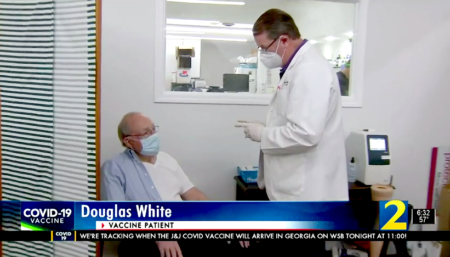
It looks like the U.S. will have enough vaccines for everyone — and a few months ahead of schedule. President Biden’s “100 million vaccinations in 100 days” once sounded like a long shot, but now it seems to be aiming low. The trick, of course, will be turning available vaccines into injected vaccines before one of the nasty variants gets a foothold. But techs can have a better one — by getting out and getting trained in immunization delivery. Join GPhA on Monday, March 8, from 9:00 am to noon at Southern Crescent Technical College in McDonough [map] for “Immunization Delivery Training for Pharmacy Technicians,” a 5.75-hour CE program consisting of both home-study and live training. HHS says you can give the Covid-19 vaccines*. If you’re south of Atlanta, get yourself trained do you can do your part! Click here — then read up, sign up, and show up! If you’re exposed at home to someone carrying the virus, there’s a one in 10 chance of catching it yourself — and that’s when you take precautions. “A 10% transmission rate is actually high by many infectious disease standards’ — for example, “Household transmission of the flu can be as low as 1%.” The Brazilian* variant (P.1) seems to be able to infect people who have already recovered from Covid. By modulating an enzyme instead of inhibiting it completely, a group of researchers (at the University of California and Mass General) have found they can reduce the formation of Alzheimer’s nasty amyloid plaques. The trick was to get the γ-secretase enzyme to do the work it’s supposed to do, but produce fewer of the peptides that cause the plaques to form. (Shutting the enzyme down completely is bad news, because it does do important work.) They found that repeated, low doses of the [treatment] eliminated Aβ42 production in mice and rats, without causing any toxic side effects. The drug was also safe and effective in macaques, reducing Aβ42 levels by up to 70 percent. Kids born to mothers who use opioids are not at risk for birth defects or fetal malformations — at least no more than anyone else. (That’s according to a study out of the University of Texas’s Women’s Health Institute.) So we know the placebo effect is real — people given placebos for pain (“placebo analgesia”) actually do report less pain. But the question: Are they feeling less pain, or do they just think they’re feeling it. Spoiler: They’re actually feeling less pain. Dartmouth College neuroscientists, working with a team in Germany, did a meta-analysis of studies, and they perused fMRI brain images to see what the brain was actually doing when it got a placebo. The results showed that parts of the thalamus that are most important for pain sensation were most strongly affected by the placebo. In addition, parts of the somatosensory cortex that are integral to the early processing of painful experiences were also affected. On the other hand… microdosing on LSD has (apparently) become a fad of sorts. It doesn’t let you visit with rocking-horse people or smell the crimson radio stations, but users claim it can “boost the mood, sharpen the mind and get the creative juices flowing.” But does it really? Why yes, it does. BUT, according to the neuroscientists at Britain’s Centre for Psychedelic Research… That was only half of the results, however. When the researchers examined what trial volunteers took, they found placebos worked equally as well as the drug. In short, the uplift reported by microdosers might be nothing more than the placebo effect. (Emphasis ours.) Prescribing brand-name drugs instead of generics costs Medicare — i.e., you and me — an additional $1.7 billion a year. Granted, there are cases when generics don’t work as well for some people, but setting that aside, here’s perspective: That $1.7 billion could pay the average private health insurance premium ($440/month) for 322,000 million people. GPhA past-president and media celebrity Jonathan Marquess is at it again — this time appearing on WSB-TV, shown giving out the Covid-19 vaccine in a story on J&J’s vaccine coming soon to Georgia. Here he is, doing well and doing goodThe 10% risk, opioids and moms, when placebos work, and more
The wind is at our backs
Nobody likes Mondays
Covid-19 quickies
* I know we’re not supposed to use geographic names, but the real designations are hard to keep track of — “ B.1.1.7” “B.1.351” “VOC-202102/02” “Cluster 5.” WHO is working on a better naming scheme, apparently.
Another Alzheimer’s breakthrough
Some good opioid news
It’s not in your head (it’s all in your head)
Short trip
* You can still eat marshmallow pies, though
It’s not ketchup!
Buzz shout-out
March 03, 2021 ✒ Andrew Kantor
Insulin has to be refrigerated after it’s opened, right? Guess what? No, no it doesn’t. In parts of the world where electricity is a luxury, “patients’ lives have practically revolved around going to and from the hospital to receive insulin.” But researchers working in and with a Kenyan refugee camp decided to test that idea, storing insulin between 77 and 99 degrees for weeks. Good thing they did. They discovered that even without refrigeration, insulin kept at the camp’s tropical temperatures was safe to use for four weeks — a revelation that could be life-changing for diabetes patients around the world. How it that possible? One researcher explained: “Every protein goes towards degradation when it’s heated, but there are proteins that can go back when you cool them down again, and insulin seems to be one of them.” Those aren’t voices in your head — that’s Amelia Island calling you! The Georgia Pharmacy Convention room block is open at the Omni Amelia Island Don’t-Call-It-A-Plantation! Remember: You have to book your room separately from convention registration, so get that reservation in ASAP. (Convention registration opens March 15.) Get the info, the links, and the GPhA room rate at GPhAConvention.com! The FDA has approved PLx Pharma’s Vazalore liquid-filled aspirin capsule. The selling point: It can deliver the aspirin to a specific spot in the GI tract and “prevent the ulceration and other issues that arise in people who take daily low doses of the drug.” Persistent UTIs are a big problem for a lot of folks. There’s treatment, but not a vaccine … until now (maybe). Duke researchers say they’ve found a way to eliminate persistent UTIs. Actually, it’s not as much about a new vaccine as about an new way to administer it. Right now, immune systems will repair a UTI’s damage, but not (for whatever reason) actually kill the infection. “This causes bacteria to never fully clear, living on in the bladder to attack again.” So the immunologists did what seems obvious: They administered the vaccine directly into the bladder. And … bingo. The researchers reported that bladder-immunized mice effectively fought off infecting E. coli and eliminated all residual bladder bacteria, suggesting the site of administration could be an important consideration in determining the effectiveness of a vaccine. (And because the vaccine itself is already approved, clinical studies could happen much faster.) Our most important legislation — vaccine expansion — awaits its turn in the House, but some other interesting bills were introduced: Think “pharmacy care,” cannabis and THC legislation, and more. Read all about it in Greg Reybold’s Week 7 Legislative Update. Don’t panic: Swollen lymph nodes after Covid vaccination are fairly common, sparking cancer fears. More variants* than Spider-Man reboots: Today’s scary Covid variant is from … Brazil. Dogs and cats, living together: Merck will use two of its facilities to produce the Johnson & Johnson vaccine, with logistical support from the DoD. Francisco Franco is still dead: “WHO expert panel strongly advises against use of hydroxychloroquine to prevent Covid-19.” Telling someone “eat your fruits and veggies” is sooooo 2019. We need specifics! Thankfully, the American Heart Association has them. Ready? [insert drumroll here] Two servings of fruit, three of vegetables. Now, go debate how to classify tomatoes. Here’s an unexpected pandemic side effect: When dorms are empty, other residents move in. Hot insulin news, counting fruits and veggies, a UTI vaccine, and more
An insulin surprise
Listen closely
Liquid aspirin? What will they think of next?
All in the delivery
What’s up in Atlanta
Covid-19 quickies
Variant? Mutation? Strain? Know the difference.
It’s all plants to me
Non-pharma story to make your hair stand on end
March 02, 2021 ✒ Andrew Kantor
As the rollout for the newly approved Johnson & Johnson one-shot vaccine begins, you can expect the rollout to be a little slow at first before it kicks into high gear. But what about the children? Vaccine makers are testing theirs now, but little ones shouldn’t expect theirs until early next year. Cases had been dropping, but now the drop has leveled off — vaccines don’t protect against some variants as well, and people’s attitudes have been relaxing. Not a good combo. Expected result: Yet another surge. As the more transmissible variant is expected to become widespread and dominant in Georgia in March, this is a precarious position for the state to be in right now. We likely have at least one more surge to go before enough people are vaccinated to start our steady march down for good — even if the more transmissible variant wasn’t here. Want tons and tons of data and analysis? Amber Schmidtke’s Georgia Covid-19 Updates site is the place to go. Mark your calendars for GPhA’s Spring Region Meeting (singular!): Tuesday, April 13, 2021, from 7:00-8:00 p.m. EDT. Due to Covid-19 concerns, it will be held virtually via Zoom, but will cover all 12 regions (and even the mysterious 13th region). Details coming soon! Why don’t drugs for cystic fibrosis infections always work? The answer is both interesting and disgusting: “carbohydrate slime.” Ironically, this slime not only reduces the effectiveness of the drugs meant to kill the P. aeruginosa bacteria, it also affects the drugs meant to reduce the signature cystic fibrosis mucus. Now they have to figure out why the slime forms … and how to stop it. The solution was simple. According to the 105-year-old woman (Lucia DeClerck of New Jersey) who survived both the 1918 flu and Covid-19, the answer is gin-soaked raisins. Patches to deliver medication are old hat, and newer ones promise to be more sophisticated — delivering more kinds of meds, and even adjusting the dosage. But here’s a new twist: Engineers at Japan’s Tohoku University have developed a patch that goes both ways. It can not only inject medication — including large molecules like vaccines — it can extract fluids for diagnosis. Oh, and it’s biodegradable. When a low-grade voltage is applied […] the flow of liquid is generated like when a syringe plunger is deployed. Called electroosmotic flow, it can increase the transmission rate of drugs across the skin barrier or the extraction speed of interstitial fluid to be tested for such things as glucose levels. https://www.tohoku.ac.jp/en/press/biobatter_powered_microneed_deliver_drugs.html Apparently older folks are saving their antibiotics, probably in the same drawer with all those aluminum pans and Tupperware lids. Among U.S. residents over age 50, in 2019… “Gwyneth Paltrow’s wacky Covid-19 treatments have no medical justification”. In 2007, parents were told to avoid giving their kids peanuts until they were older. But in 2008, the advice changed to “introduce peanuts early, but slowly.” The goal, of course, was to prevent peanut allergies. The change worked. Aussie researchers compared kids enrolled in a 2007 study vs. kids enrolled in 2018 one: The research found the peanut allergy prevalence in 2018-2019 was 2.6 per cent compared to 3.1 per cent in 2007-2011, which amounted to a 16 per cent decrease after accounting for migration and population changes. They also found that the kids in the later study who didn’t get peanuts until they were a year old had an even higher rate of peanut allergy: 4.8 percent. So bottom line: Introduce those nuts as soon as possible. “Why drug prescriptions should include diagnoses” — by the acting HHS inspector general, and its chief medical officer. Hemp is legal (federally, thanks to the 2018 farm bill). Marijuana is not (federally) because of Delta-9-THC, the ingredient that gets you high. But what about its cousin, Delta-8-THC? [T]hat small distinction, it turns out, may make a big difference in the eyes of the law. Under federal law, psychoactive Delta 9 is explicitly outlawed. But Delta-8-THC from hemp is not, a loophole that some entrepreneurs say allows them to sell it in many states where hemp possession is legal. One Georgia firm, the Georgia Hemp Company, sells Delta 8 both in-state and nationwide. That Delta-8 hemp, owner Joe Salome says, is “very similar to its psychoactive brother THC,” but (he says) “without the same anxiety-producing high that some can experience with THC.” Mr. Salome said that he didn’t need to buy an expensive state license to sell medical marijuana because he felt protected by the farm bill. “It’s all right there,” he said. Or is it? Let’s just say — no offense to Mr. Salome — that we’d prefer to talk to an attorney before making any decisions. (Other than reading the article. That seems safe.)Peanut allergy prevention, Covid cures (not), what’s in grandma’s drawer, and more
Vaccine update
Covid need-to-know
Region meeting. April 13. Be there.
Slimed
COVID CURED!

In patch, out patch
Holding on to antibiotics
* The rest presumably gave them to someone else.
Captain Obvious didn’t even blink
Go nuts (early)
The Long Read
The Devil in the details
February 27, 2021 ✒ Andrew Kantor
Sears — the poster child for hedge fund management — may see some new life even as it teeters on being a footnote in the history books. Well, sort of. Its abandoned stores, including some in Georgia, are becoming Covid-19 vaccination sites. Starting March 8: Teachers (pre-K to 12), school staff (public or private, including preschool), adults with intellectual and developmental disabilities, their caregivers, parents of children with complex medical conditions. So here we are, with the virus in retreat and normalcy on the summer horizon. In the name of all that’s holy, say the folks who know better, don’t let down your guard. In one scenario, lots of people get vaccinated while the folks waiting keep their masks on and their distance social. We get to enjoy a mostly normal summer. But in the other, too many people skip the vaccine and too many others stop masking up — and that gives the Covid-19 variants a chance to take hold, giving us a fourth wave and another lockdown… and, of course, people shocked that it could happen. Got a patient with a UTI? Maybe pay a little extra attention to her scripts. Because, found Washington University School of Medicine, almost half of them — at least those with uncomplicated UTIs — were prescribed the “wrong” antibiotics and, especially in rural areas, for longer than necessary. What’s the “wrong” antibiotic? According to the study, too many patients were giving broad-acting drugs rather than the more-appropriate narrow-spectrum antibiotics. So let’s say you’re interested in how Pfizer and BioNTech developed their Covid-19 vaccine so quickly, but you really don’t feel like reading or listening about it. You’re in luck: National Geographic’s got a new movie that follows that very story. “Mission: Possible” premieres March 11, the one-year anniversary of WHO’s official pandemic declaration, on the National Geographic channel. Caveat: This is “branded content,” so don’t expect an objective look. The halos you see on the scientists are CGI. Chlortetracycline, demeclocycline, and minocycline walk into a bar. The bartender* says, “Hey, together you guys can treat chronic pain by binding to and inactivating the EphB1 protein!” Time to put the Claritin on the endcaps: Here comes the pollen. (“Thursday’s pollen count from Atlanta Allergy & Asthma jumped to 682, the highest reading since last April.”)A new use for Sears, don’t back down now, sneezing is coming, and more
The pointier side of Sears

Next in line for the Covid-19 vaccine in Georgia
The crossroads
Too much, too long
Vaccine: The Movie
Another potential opioid replacement
* University of Texas researchers — the bartending is a side gig
Bless you
February 26, 2021 ✒ Andrew Kantor
Sure, the single dose is great. So it the fact that it doesn’t need a crazy cold freezer for storage. Oh, and the side effects are milder. But what’s seemingly glossed over in the coverage is this: It seems not only to protect the vaccinated, but also reduce their ability to infect others. According to the FDA, the J&J vaccine results in “a 74% lower likelihood of asymptomatic transmission to others at 71 days compared to placebo.” It seems that one in three people who recover from Covid-19 become “long haulers” — experiencing symptoms long after the virus is gone. Brain fog is one of the scariest, but fatigue. muscle weakness, and insomnia are also common. Good news: Not only have these long haulers gone from “occasional anecdotes” to acceptance as the real deal (the NIH is calling the condition “PASC” for “Post-Acute Sequelae of SARS-CoV-2 infection”), but now NIH is launching a four-year initiative to study it — and maybe find answers. Those shifty Danes might have taken the first step to understanding the cause of brain fog: capillary damage. Specifically, damage to capillaries (“widespread cerebral microvascular flow disturbances”) leads to reduced blood flow in the brain, which can lead to inflammation. Then both the reduced oxygen and increased cytokines can hamper the production of serotonin. Presto: mood changes and brain fog. With more than 28 million Americans having been infected, that means millions of people will be dealing with those long-hauler symptoms. Popping up now are clinics to help them. Patients usually have a one-hour long intake appointment to review their medical history before looking at their current coronavirus-induced symptoms. “From that point, the post COVID office will make appropriate referrals. So that would be, for example, to cardiology, neurology, rehab medicine, or psychiatry.” Have you heard people who take statins complain that it gives them muscle aches? British researchers decided to test this. What they found: It ain’t the statins. It’s the people taking them. After the trial ended, there was no difference in the frequency or severity of muscle symptoms scored by participants, even though they had previously said they had severe muscle symptoms when taking statins. Said the authors: “While in these older age groups, aches and pains are indeed common, we convincingly show they are not made worse by statins and their pain is not caused by statins.” If someone has had Covid-19, should they still get vaccinated? Yes. Looking for something new to research? Biologists at the UK’s Wellcome Sanger Institute opened a whole new doorway. They discovered more than 70,000 never-before-seen gut viruses. (These bacteriophages come from 28,000 people, so it’s not like we all have the same 70,000.) Gut bacteria are clearly important, but now there’s a whole new virus ecosystem to explore. Wheeee! “As bacterial communities are a critical component of our gut, it’s not difficult to imagine that phages could be paying a key role in maintaining a healthy equilibrium in our intestine.” The latest CDC data say that 57.6 percent of Americans 20 years and older used a dietary supplement in the previous 30 days. Of note, use was higher among women than men (63.8 versus 50.8 percent). Then again, this was based on information from the Before Times — 2017 and 2018 — so it may be different today. Diarrhea kills 120,000 kids a year worldwide, caused by a particular type of E.coli bacteria. In fact, there’s a specific variant of this bacteria emerging — called atypical enteropathic Escherichia coli (aEPEC) — that is “increasingly associated with diarrheal disease in humans and in kittens.” Yep, this same bacteria kills human children and kittens. And when we say “the same bacteria,” we mean it has identical genetics. That’s unusual, but lucky, because, researchers at North Carolina State say… The findings point to kittens as a potentially invaluable model for further exploration of aEPEC on the molecular level to inform treatment approaches for both humans and felines.Statin surprise, hope for long haulers, what’s in your guts, and more
The most important thing about Johnson & Johnson’s vaccine
Hope for Covid long-haulers
About that brain fog
Clinics are opening
No, statins don’t cause muscle pain; age does
Saving you a click
It’s busy in your guts
In case you were wondering
Sick kittens can help sick children
February 25, 2021 ✒ Andrew Kantor
In-hospital remote continuous glucose monitoring — allowed during the pandemic — worked a treat. So maybe it’s time to move from the jury-rigged* CGM devices nurses were using to a more permanent system. While the FDA hasn’t approved CGMs for that purpose, data being collected on their use during the pandemic could help establish in-hospital remote glucose monitoring as the standard of care, ushering in a whole new market for manufacturers of those devices. Johnson & Johnson’s one-shot Covid-19 vaccine “meets requirements for emergency use authorization” according to an FDA committee. Tomorrow, Friday, the agency’s Vaccines and related Biological Products Advisory Committee will make a formal recommendation about whether to authorize the vaccine. The company is ready to ship about four million doses, another 25 million by the end of March, and says it can deliver 100 million by the end of June. Pfizer and Moderna both say “to expect a big jump in the delivery of [vaccine] doses over the coming month,” as production and delivery efficiencies kick in. The chances of getting to ‘Covid zero’ are slim, but what number can we use to say the pandemic is over? There’s actually a consensus of sorts: fewer than 100 deaths a day — and fewer than 5,000 new cases. That latter threshold, of 100 Covid-19 deaths a day, was repeated by other experts, following the logic that it approximates the nation’s average death toll from influenza. In most recent years, the flu has killed 20,000 to 50,000 Americans annually, which averages out to 55 to 140 deaths a day. Where are we now? Not close — 2,328 deaths on February 23; there were 88 in Georgia alone. Good news: The daily number is dropping. Bad news: Hitting a high enough vaccination rate may be tough. Got patients at risk for preeclampsia? The US Preventive Services Task Force issued a draft recommendation for the use of low-dose aspirin “as preventive medication after 12 weeks of gestation for persons at high risk for preeclampsia.” (It’s still in draft form, so you can comment on it until March 22.) Too much fructose — think high-fructose corn syrup — can lead to obesity, type 2 diabetes, fatty liver disease, and rotted teeth. Now a new study out of Sweden’s Swansea University found that it may also mess with the immune system “in ways that has, until now, largely been unknown.” The new study […] shows that fructose causes the immune system to become inflamed and that process produces more reactive molecules which are associated with inflammation. If fructose is so bad, why do you keep making these, you hypocrites? There is no longer a shortage of antibody therapies (i.e., bamlanivimab and casirivimab/imdevimab), according to HHS, so it’s cool to order it directly from your favorite distributor. The American Society of Health-System Pharmacists says, in its 2021 Pharmacy Forecast, that there are likely to be a lot of shortages thanks to “The Certainty of Uncertainty for a Global Supply Chain.” That links to the full report. For a much quicker overview, Becker’s Hospital Review has you covered. Canadians are the masters of stealing strange things (e.g., maple syrup). But did you know about the Great Canadian Polio Vaccine Heist of 1959?Historical heist, vaccines around the corner, CGM comes of age, and more
Should you buy stock in Abbott or Dexcom?
* Don’t go down the “jury-rigged” vs “jerry-rigged” rabbit hole. Trust me.
ICYMI
The cavalry is coming
When is it over?
Aspirin vs preeclampsia
Sugar is even worse

Antibody shortage: over
That said…
Those thieving Canadians

February 24, 2021 ✒ Andrew Kantor
Atlanta is the fourth least expensive city for prescription drugs, according to the latest data from GoodRx. (Most expensive, by far, New York City. Least expensive, by far, Denver.) Why the price differences? Lots of “maybes” not many answers: cost of living? Big box stores? Markup? Ley lines? The Marietta school district in Cobb County was the focus of a CDC investigation — not for wrongdoing, but to study how the SARS-CoV-19 virus spreads. The issues it found included “less than ideal physical distancing,” “inadequate mask use by students*,” “a high number of in-person students” as well as “small group instruction” (!). But the most interesting finding was that teachers played the bigger role in transmission — not students. In four of the clusters, an educator was the “index patient,” or initial case, and a student was the index patient in just one cluster. In the other four clusters, the index patient was not determined. Eight of the nine clusters involved likely transmission from educators to students. Georgia officials are considering adding teachers to the list of people eligible for the Covid-19 vaccination. Now there’s yet another Covid-19 variant — this one from Japan, and “nearly identical to the Brazilian variant and carries similar mutations to the infamous United Kingdom and South Africa [variants].” This new variant carries two mutations. One mutation (N501Y) increases transmissibility, while the other (E484K) “increases the virus’s resistance to neutralizing antibodies.” Joy. When it comes to type-2 diabetes, a new study out of Louisiana’s Pennington Biomedical Research Center found that it’s the variability of a person’s A1C that’s a better predictor of a cardiovascular disease than the number itself. “Our findings suggest that measuring the swings in blood hemoglobin A1c levels over a specific time — six months to a year, for example — could serve as a supplemental blood sugar target.” It’s better this way Pharma companies are working to update their Covid-19 vaccines to work against the new variants coming out, but luckily the FDA says they don’t have to put each new version through the same large, randomized control trials as the original vaccine. Instead, the FDA said it recommended companies submit data from small trials comparing a person’s immune response to a vaccine that has already been authorized. And if you’re wondering “Will these variants mean we may need new tests, too?” The answer is … not yet, but maybe. The FDA is issuing (and updating) guidance. The FDA has already issued a safety alert to caution that the presence of viral genetic mutations in a patient sample can potentially change the performance of a diagnostic test. The FDA identified a few tests that are known to be impacted by emerging viral mutations, though at this time the impact does not appear to be significant. She was Gainesville’s first female pharmacist, the original co-owner of Riverside Pharmacy, and a UGA graduate (1947). She passed away February 16, at 93, the first of at least three generations of female pharmacists. Jo Ann Adams with daughter Jane Hall (right), and granddaughter Margie Curry; all three are pharmacists. Photo courtesy Jane Hall.Teachers as spreaders, cheap meds in Atlanta, swingers at risk, and more
Keeping it cheap in ATL
Teachers as virus spreaders
* Marietta has a mask mandate in its schools, although Cobb County does not
Oh, sheesh, another one?
To stay healthy, don’t be a swinger

Tweaked Covid vaccines don’t need the full trial
Testing with variants
RIP, Jo Ann Adams

February 23, 2021 ✒ Andrew Kantor
Thank you if you previously supplied your contact information to volunteer to assist with Covid-19 immunizations in the state. Today, we have a specific request from Georgia Emergency Management Agency (GEMA) for volunteers to assist with mass immunizations in four locations (Atlanta, Macon, Albany, and Habersham/Cornelia) in the state. Volunteers need only be qualified to draw syringes, not administer the vaccine. There is a short time frame on this request as they need volunteers who can be available by Weds, February 24th If you are interested in volunteering, please click here and fill out the form — GPhA will forward your information to GEMA. They need 2 to 3 volunteers at each location. As season 1 winds down, the writers have been teasing the villain for season 2. Could it be murder hornets? (We haven’t heard from them in a while.) Covid-20? Martian germs? The latest tease comes from Russia, which is reporting the first known case of the avian flu in humans. At the moment it was just bird to human transmission; there’s no evidence of it jumping from human to human. Yet. Still, better set up a Google alert for “H5N8”. You’ve probably been wondering “Do pills still work after being in space?” What with radiation, wild temperature swings, microgravity, and the potential of being fried by one of Marjorie Taylor Greene’s space lasers — who knows what would happen? Lucky for us, the Aussies have stepped up. They’ve sent to the International Space Station a package of 60 pills that will be duct-taped to the outside of the station* for six months “to discover how exposure to microgravity and space radiation affects the stability of pharmaceutical tablet formulations.” Materials used in the tablets being tested, which are packaged in blister packs as they would be if available commercially, include ibuprofen as a pharmaceutical active ingredient and vitamin C, and excipients which are found in abundance in the lunar surface such as silica, magnesium silicate (talcum) and calcium phosphate. The other day we told you about how the state seized Elberton Medical Center’s Covid-19 vaccines because the clinic had been vaccinating teachers with its leftover supplies. (It was following CDC guidelines, but at the time the state had removed teachers from the vaccination list.) But now the state has taken a step back. It’s reduced Elberton’s penalty — the medical center will be able to offer vaccinations again in mid-March, instead of late July. Anyone who’s read comic books knows that, when in doubt, a super soldier is always helpful. Canadian cancer researchers want to modify the DNA of T-cells and “[turn them] into ‘super soldiers’ by boosting their ability to kill cancer cells.” They discovered that in some cases where a tumor was being treated with epigenetic therapy, the T-cells — also affected by the therapy — were helping it work better. So why not treat those T-cells directly? “We imagine a future clinical trial where we collect T-cells from the patient for treatment with epigenetic therapy in the lab. This could expand the army of cancer killing cells effectively creating an ‘army of super soldiers.’ These cells can then be re-infused into the patient, to potentially enhance their built-in immune response to the tumour.” Every year, Medicare announces which hospitals are being penalized with payment cuts for high rates of readmissions or high numbers of infections and patient injuries. For 2021-22, a big shout out to Emory Hillandale Hospital, Emory University Hospital Midtown, Grady General Hospital, Habersham County Medical Center, and University McDuffie County Regional Medical Center. — for the first time in five years, each of those hospitals has avoided a Medicare penalty for readmissions or infections/patient injuries. A bunch of others in Georgia have never had a penalty, and several have been penalized just about every year. You can look up which is which at the KHN site. Seniors looking to avoid heart issues may be relying on aspirin too much, when statins are a better choice — at least, according to University of Connecticut researchers. Looking at the medical records of more than 11,000 people, they found that not enough of them (looking to reduce their risk of heart attack or stroke) were taking statins: “Only about 70% of adults over age 60 who were eligible for statins were taking them, and less than 70% of adults over 75.” While adults aged ≥75 do not benefit from the use of aspirin to prevent the first CVD, many continue to take aspirin on a regular basis. In spite of the clear benefit of statin use to prevent a subsequent CVD event, many older adults in this risk category are not taking a statin. Writing in the Atlantic, Sarah Zhang points out “that things would have gone better in the pandemic if we still believed in miasma theory.” Who would have thought that the key to fighting this novel coronavirus would be as simple as fresh air? Only everyone 100 years ago.Russian birds (sick), Aussie pills (spaced), Georgia hospitals (punished), and much more
Urgent! GEMA Request for Mass Immunization Volunteers
Encore! Encore!
Pills … in spaaaaace
*Or however they actually do the attaching
State eases clinic punishment
Building a better T-cell
Small pharmacies: Thank you for your service
Georgia hospitals rated, some penalized
Think statins, not aspirin
The air in here
Do you want to send your members the daily Buzz email newsletter (customized for your state and organization, perhaps)? Let’s talk — just drop me a note at andrew@gphabuzz.com!

- As Lung Disease Threatens Workers, Lawmakers Seek Protections for Countertop Manufacturers
- Republicans Fret Over RFK Jr.’s Anti-Vaccine Policies While MAHA Moms Stew
- Primary Care Is in Trouble. So Doctors Band Together To Boost Their Market Power.
- Cosmetic Surgery Investigation Prompts Warnings for Patients, and a Push for Tighter Safety Standards
- Listen to the Latest ‘KFF Health News Minute’
- Banks Are Becoming Bulwarks Against Scams for Vulnerable Seniors
- January 2025
- December 2024
- November 2024
- October 2024
- September 2024
- August 2024
- July 2024
- June 2024
- May 2024
- April 2024
- March 2024
- February 2024
- January 2024
- December 2023
- November 2023
- October 2023
- September 2023
- August 2023
- July 2023
- June 2023
- May 2023
- April 2023
- March 2023
- February 2023
- January 2023
- December 2022
- November 2022
- October 2022
- September 2022
- August 2022
- July 2022
- June 2022
- May 2022
- April 2022
- March 2022
- February 2022
- January 2022
- December 2021
- November 2021
- October 2021
- September 2021
- August 2021
- July 2021
- June 2021
- May 2021
- April 2021
- March 2021
- February 2021
- January 2021
- December 2020
- November 2020
- October 2020
- August 2020
- July 2020
- March 2020
- February 2020
- January 2020
- December 2019
- November 2019
- October 2019
- September 2019
- August 2019
- July 2019
- June 2019
- May 2019
- April 2019
- March 2019
- February 2019
- January 2019
- December 2018
- November 2018
- October 2018
- April 2017
