February 20, 2021 ✒ Andrew Kantor
You would think this would be a bit more prominent: Pfizer says its Covid-19 vaccine does not need to be stored in ultra-cold freezers. Typical pharmaceutical freezers (-13° to 5° F*) will do fine for two weeks, and the company is asking for official FDA approval of that labeling. It seems that, in the real world, a single dose of the Pfizer Covid-19 vaccine is about 85 percent effective. That raises the question: Should we prioritize getting more people their first doses, rather than holding back the vaccine for the second shot? And if you’ve had Covid-19… Yes, you should still get vaccinated. But you only need a single shot. [T]he research suggests that for these people just one dose of the vaccine is enough to turbocharge their antibodies and destroy the coronavirus — and even some more infectious variants. Common sense would seem to say that someone with a lung condition like asthma have more to fear from a respiratory disease like Covid-19. But guess what? Aussie researchers found that people with asthma had a 14 percent lower risk of getting Covid-19 “and were significantly less likely to be hospitalized with the virus.” What’s the deal? Deals, actually — plural. “Chemical receptors in the lungs that the virus binds to are less active in people with a particular type of asthma and some studies suggest that inhaled corticosteroids – commonly used to treat asthma – can reduce their activity even further.” If your 11-year-old boy is spending all his free time playing video games, fear not. Researchers at the University College London found that his risk of depression is lower. (Caveat: Assuming that he otherwise had a sedentary lifestyle, and that the game requires social interaction.) BUT! If your 11-year-old girl is spending all her free time on social media, the opposite is true. What about girls who play video games? No effect (the study says). Taken together, the findings demonstrate how different types of screen time can positively or negatively influence young people’s mental health, and may also impact boys and girls differently. The picture of happiness If you woke up today and thought, “Is there any good use for cone snail venom?” — good news! Apparently (per the folks at Florida Atlantic University) it can be used to treat malaria. I know what you’re thinking: “What about the persistent cyto-adhesion of infected erythrocytes?” Apparently, the snail’s conopeptides can “disrupt protein-protein and protein-polysaccharide interactions that directly contribute to the disease.” (I will leave it to people smarter than me to decide if that last paragraph makes any sense.) Bottom line: The FAU people think those peptides could have a wide range of applications — “the potential to treat countless diseases using blockage therapies.” It looks a lot prettier before it stings you. You might think that the long, long list of potential side effects in drug ads covers everything. But in reality, common, debilitating side effects aren’t always clear: “What Americans Don’t Know About Their Medications”. “Irregular Sleep Connected to Bad Moods and Depression, Study Shows” [P]eople whose waking time varies from day to day may find themselves in as much of a foul mood as those who stayed up extra late the night before, or got up extra early that morning, A bill to keep Georgia on standard time all year has passed a state senate committee. That is all. (Almost all. Fun fact: Federal law prohibits states from going to 100 percent Daylight Saving Time.)Boys and their games, snail venom meds, great news for Pfizer vax, and more
Pfizer vaccine doesn’t need to be that cold after all
* Or -25° to -15° C in that quaint metric system
One and done?
Good news for asthmatics
Screen time is fun time (for boys)

Snail power

The Long Read: side effects
Shocker out of Michigan
ICYMI
February 19, 2021 ✒ Andrew Kantor
Who really should be first (well, second) in line to get the Covid-19 vaccine? Cancer organizations say it should be cancer patients. “Experts” and mental-health organizations say it should be patients with mental illness. Schools (in Atlanta and elsewhere) say it should be teachers. It’s almost as if there’s a pattern there. One of the biggest issues with all these Covid-19 variants popping up is that the U.S. isn’t tracking them. We don’t do enough genetic sequencing to know who’s got what. That’s about to change, as the CDC says it will make a $200 million “down payment” on a broader program of virus tracking, “the administration’s most significant effort to date to address the looming danger of more contagious variants of the virus.” While we’ve been worried about Covid-19, Ebola has been making a comeback in Africa. The Biden administration says it wants to help quickly “to avoid catastrophic consequences.” “[E]ven as we battle COVID, we must ensure capacity and financing for health security worldwide.” I wouldn’t think these would be necessary now, what with so many vaccines working, but what do I know? Yep, the British government has given the go-ahead for a human challenge experiment to start within a month. [It will] as a first step, determine the lowest level of the pandemic coronavirus, SARS-CoV-2, needed to infect the healthy, young volunteers. The researchers then plan to vaccinate additional volunteers and expose them to that “challenge dose” to assess protection and the immune responses that correlate with it. We’ve known for a while that dogs can smell a Covid-infected person. (Those shifty Danes are using them in airports, in fact.) They can also detect cancer and other illnesses. So an international group of researchers figured, why not build a better dog’s nose? That part, actually, was easy: “The miniaturized detection system […] is actually 200 times more sensitive than a dog’s nose in terms of being able to detect and identify tiny traces of different molecules.” What’s tricky is interpreting the molecules. “The dogs don’t know any chemistry,” but they’ve been trained to identify that odor means “alert my handler.” So the engineers turn to artificial intelligence — using a dog to teach a computer to identify diseases. The goodest of bois Irish researchers have found an interesting correlation: It seems that your personality has a strong relationship with how long you might live. Thanks to its effect on the immune system, “people who are more conscientious tend to live longer.” It has been shown that people scoring lower on the personality trait of conscientiousness (a tendency to be responsible, organized, and capable of self-control) can be at a 40% increased risk of future death compared to their higher scoring counterparts. President Biden will nominate (tap? pick? assign?) former CMS official Chiquita Brooks-LaSure to oversee the agency. One of her initial jobs will be “reversing many of the policies put in place by her predecessor.” “Canadian Study Confirms COVID-19 More Serious Than Influenza” Elberton Medical Center in Elbert County began vaccinating teachers, unaware that the state had changed its guidelines. Result: The state seized its vaccine supply and stopped shipments until July.Stopping Ebola, be nice or die, a better nose for disease, and more
Priorities
Time to track those variants
Ebola tries to take the field
Brits will start challenge trials
A better, smarter nose

Nice guys die last
ICYMI
Captain Obvious is at Tim Horton’s today
The Long Read — and reminder to keep up with the state regs
February 18, 2021 ✒ Andrew Kantor
Indiana University researchers, reviewing 11 years’ and 50 states’ worth of data, found a disturbing surprise: State programs designed to reduce opioid use have resulted in fewer prescriptions … but more overdoses, more cases of opioid abuse, and more deaths. [T]he study found that all overdose deaths increased following the implementation of naloxone access laws, especially deaths attributable to heroin, synthetic opioids, and cocaine. Good Samaritan laws were also associated with increases in overall overdose deaths. There are real masks and there are fake masks. You probably want the real ones, but a lot of what’s on Amazon (even with great reviews) is fake (as are the reviews). So the New York Times’s Brian Chen goes hunting for the real deal, and explains how to find it, with “it” being genuine N95 or KN95* masks. Yes, they come in black too. Covid-19 cases are going down. Social distancing is a huge factor (“Americans withdrew into their homes after the winter holidays and hunkered down during the subsequent spike in cases that grew out of all that yuletide socializing”) but the vaccine is a bigger and bigger factor. Good news and more good news: So hang in there. Maybe all we need is a little Perseverance. GPhA occasionally receives requests for vaccination volunteers, especially during the pandemic. If you’d like to be on the call list for the next time we get a request, let us know — just complete this quick Google form. Easy! Anti-vaxxers are trying — and so far failing — to pass laws forbidding businesses from requiring Covid-19 or other vaccinations. (These are a lot of the same folks who didn’t want mask requirements either.) In the U.S. there are no federal vaccine requirements, but states obviously have them — notably for kids to attend school. States also have workplace-safety laws (think hairnets or gloves). And employers can mandate whatever they want, as long as they don’t run afoul of anti-discrimination laws (think dress codes). So far it’s too early to know if some businesses (think restaurants) might require employees to be vaccinated, but you can see the battle lines being drawn. University of Michigan dentists have shown that oral naltrexone — more commonly thought of as an alternative to naloxone — can be used as a non-addictive treatment for chronic pain. Using naltrexone for pain isn’t new; it’s been used that way off-label for years. But, claims the paper’s lead author, “this is the first in-depth, systematic review of the literature to determine if the drug is indeed a good option for patients.” “We found a reduction in pain intensity and improvement in quality of life, and a reduction in opioid use for patients with chronic pain.” Overuse of SABA inhalers for asthma is a significant cause of greenhouse gas emissions in the UK, “similar to driving an average diesel car for about 900 million miles [a year].” Georgia’s Medicaid waiver plan has apparently been nixed by the Biden administration, which said that the plan’s work requirements, especially during the pandemic, are unacceptable. State officials are considering their options. “As Pot Legalization Spreads, More Teens Are Lighting Up”. (Note: Other studies have shown that more people are trying marijuana after legalization, but not continuing to use it.)Opioid policies backfire, surprising greenhouse gas source, anti-vaxxers’ next move, and more
The opioid-death surprise
Looking to buy some good masks?
* The K just means they’re made in China, but the quality is as good — unless you’re walking through a Covid clinic.

First and goal at the 9
You can help
Anti-vaxxers targeting Covid
Naltrexone as an opioid alternative
Wait, what?
ICYMI
Captain Obvious abides
February 17, 2021 ✒ Andrew Kantor
They’re calling it MIS-C — for Multisystem Inflammatory Syndrome in Children. It’s a result of Covid-19, but it’s still in the “mystifying” stage. And it’s affecting kids across the country. Symptoms of the syndrome can include fever, rash, red eyes or gastrointestinal problems. Those can progress to heart dysfunction, including cardiogenic shock […]. Some patients develop cardiomyopathy, which stiffens the heart muscle, or abnormal rhythm. It’s rare, percentage-wise, but there have been more than 2,000 cases (and 30 deaths) including more than 50 in Georgia — and scariest of all, most require ICU treatment. If you’re expecting shipments of Covid-19 vaccines, don’t be surprised if they’re late. According to DPH, the vaccine-shipping companies have said to expect “significant delays” because of the crazy weather all over the country. More info will be coming soon, hopefully. Like every other state, slow and bumpy to start, but now moving along well*. DPH even has a new dashboard (updated daily at 3:00pm) showing detailed vaccine progress. Overdose deaths have skyrocketed, what with loneliness, financial troubles, and the stress of the pandemic. So please, don’t forget to keep an eye on your patients who might need help. It may be harder to get, but it’s still there. (Start with the Georgia Crisis & Access Line: (800) 715-4225, or the Georgia Department of Behavioral Health and Developmental Disabilities.) Addiction specialists across the country told STAT the overlapping health disasters — the historic Covid-19 pandemic colliding with a preexisting drug epidemic made deadlier by the potent synthetic opioid fentanyl — have been devastating for their patients. Many have simply disappeared; some have died; others have relapsed. Many immigrants in the South won’t get immunized because they’ve learned not to trust the government. Unfortunately, that poses a danger to everyone: Vaccines aren’t perfect, new strains of Covid-19 are popping up, and even mild cases can have life-long effects. But for legal and illegal immigrants (and those in the process of immigrating)… “If they have to risk their immigration status to have the Covid vaccine, they will not have it. I don’t blame them. They go by risk: ‘What is my biggest risk? Being deported or to have Covid?’” How much caffeine is safe for pregnant women? The consensus sets the limit at about 200mg per day (figure a cup or two of coffee). Beyond that — roll the dice, because no one can agree. There are some effects on babies (probably), but is it enough to worry about. This is probably too much. If you know people who’ve lost their health insurance, remind them that the Healthcare.gov marketplace is open as of Monday and will be open through mid-May. Anyone who is uninsured can get a policy now, with a good chance of federal subsidies. Speaking of which, Aetna will be returning to the federal Obamacare market for 2022. It was a vaccine entrepreneur’s meeting, and it was held partially in person in late January. Anyone attending live had to have a negative Covid-19 test result 72 hours before arriving. Attendees were giving daily tests while on site. It was supposed to be a bubble of safety; about 80 people showed up, meeting all the requirements. Two days after the conference, the first cases were reported. A week later it was 16 people. Eventually it was “dozens” of cases, plus family members who weren’t there. If a phone that counts your steps is old hat, and your smartwatch doesn’t seem so smart, don’t worry. UC San Diego engineers are this close to a wearable health monitor: …a soft, stretchy skin patch that can be worn on the neck to continuously track blood pressure and heart rate while measuring the wearer’s levels of glucose as well as lactate, alcohol or caffeine. Sure, they say “This type of wearable would be very helpful for people with underlying medical conditions,” but you know it wouldn’t be long before parents slapped one on their teens’ necks before sending them off to prom. “I can see your heartbeat, honey. What are you doing?” New, ground-breaking research published in the prestigious journal Heart finds that “Drinking, smoking, and drug use linked to premature heart disease in the young.”Vaccine weather delays, entrepreneur screw-up, health patch that monitors you, and more
A new Covid syndrome in kids
Vaccine delays
How’s the Georgia rollout going?
* Not as good as Utah, not as bad as Kansas.
While we were all distracted
Herd-immunity roadblock
Caffeine, pregnancy, and no clear answers

Reminder: The exchange is open
No plan survives contact with the enemy*

* “No plan of operations extends with certainty beyond the first encounter with the main hostile force” is the actual quote. The more you know.
Every breath you take

Hard to believe
February 16, 2021 ✒ Andrew Kantor
That breastfeeding moms apparently pass Covid-19 antibodies to their kids? Now you do. (Well, they likely pass them on. About two-thirds did in a study at the University of Rochester.) Get this: Some people tried to tell Georgia’s state senators that SB46, which would expand the vaccinations pharmacists are allowed to give, would require people to get vaccinations? It doesn’t. You can read about that and more in the week 5 Legislative Update from GPhA’s Greg Reybold. What makes herpes simplex go from “lurking” to “popping out cold sores”? Stress or sunburn, for example, can cause flare-ups, and now we know the reason: excited neurons. The virus, it seems inserts itself into a particular immune pathway — one that gets activated “in response to prolonged periods of inflammation or stress.” So when UV light or stress activates those pathways, it also causes the virus to wake up. “It is really remarkable that the virus has hijacked this pathway that is part of our body’s immune response. It highlights how some viruses have evolved to take advantage of what should be part of our infection-fighting machinery.” File this away: If one of your patients is a kid who had heart surgery, aspirin may be a better choice than warfarin to prevent blood clots. So found Aussie researchers at the Murdoch Children’s Research Institute. Besides having to monitor warfarin levels… [S]troke was common regardless of which medication the patient took. But patients on warfarin had poorer bone mineral density and were at a higher risk of bleeding. Pfizer, Moderna, or J&J? Live Science will happily use 823 words to tell you “It doesn’t matter.” Covid is evolving in the U.S., and what’s interesting (and possibly a bit scary) is that the seven new lineages all “have evolved a mutation in the same genetic letter.” It’s unclear whether it makes the variants more contagious. But because the mutation appears in a gene that influences how the virus enters human cells, the scientists are highly suspicious. Meaning, they see that there must be a clear benefit to this mutation, but whether that’s a problem or not remains to be seen. Oh, and the U.S. sequences genomes from fewer than one percent of coronavirus test samples. A urine test seems to be a better option for detecting prostate cancer than a biopsy is. Well, not better — but a way to potentially avoid the biopsy. If a PSA test shows potential prostate cancer, instead of going right for a biopsy to confirm, this urine test — soon to be commercialized as “MyProstateScore” — could save the pain and trouble. Masks during Covid-19 are to protect other people in case you’re infected, and they can also help protect you. Here’s a new (small) twist: It seems that the humidity that builds up inside a mask can also help protect you from the virus. “We found that face masks strongly increase the humidity in inhaled air and propose that the resulting hydration of the respiratory tract could be responsible for the documented finding that links lower Covid-19 disease severity to wearing a mask.”Cold sores explained, lying to the senate, simple vaccine choices, and more
Did you know….
Liar, liar and more from this week’s Legislative Update
The lurking virus
When aspirin beats warfarin
Which vaccine should you get?
We haven’t seen its final form
A kinder test for prostate cancer
The moist air in there
February 13, 2021 ✒ Andrew Kantor
“CVS and Walmart Decide Who Gets Leftover Covid-19 Vaccine Doses”. (Well, more like pharmacies and grocers have to decide what to do with them.) Retail pharmacies are taking varied approaches to extra doses, with some saying they’ll give priority to their employees while others say they’ll try to find takers among the public and only vaccinate employees as a last resort, if at all. GPhA’s added another vaccination training session. Get trained, give vaccines, save the world, be home for dinner. “Immunization Delivery Training for Pharmacy Technicians” gives 5.75 hours of CE (home study + live training) — the live part is on Friday, March 5. Space is limited due to social distancing guidelines. The Biden administration says there’ll be enough vaccine for 300 million Americans by July. Also “This won’t hurt a bit,” “I’ll still respect you in the morning,” and “The check’s in the mail.” (We’re hopeful, but we’ll believe it when we see it.) What happens if people have a reaction to the vaccine? Unfortunately, the reporting system for adverse effects is a bit of a patchwork affair at the moment, with no central repository. The government is now relying most on a 30-year-old safety monitoring system that the F.D.A. shares with the Centers for Disease Control and Prevention, and a new smartphone app that people who get vaccinated can download and use to report problems if they wish. Kids’ vaccines are being tested, but Junior probably won’t be able to get one until summer. [I]t made sense for coronavirus vaccines to be first tested in and authorized for adults because the risk of severe illness and death from Covid-19 increases sharply with age. As I tell Son of Buzz, “Nothing is simple.” All these statements appear to be true; make of that what you will: No, apparently neither zinc nor vitamin C helps patients infected with SARS-CoV-2 — not even in high doses: “[B]ased on the current study, these supplements cannot be recommended to reduce symptom morbidity.” This is a bit disturbing, although it could be worse. Apparently “Prolonged Use of Synthetic Progestogen Strongly Linked to Brain Tumors.” In this case, “prolonged use” means at least five years of taking cyproterone acetate, according to data from more than 250,000 women and girls, and going back to 2007. [The] higher the dose and the longer the drug is taken for, the greater the risk of meningioma, a mostly noncancerous brain tumor arising in the meninges that surround and protect the brain and spinal cord. Yet another study shows that ketamine can reduce or eliminate chronic suicidal thoughts — this time, the oral version. (A ketamine nasal spray is already in use.) No, we still don’t know how it works, just that that it works. Science Vs: “Magic Mushrooms: Trip Through the Science” (December 10). A cool episode looking at the emergence of psilocybin as a potential depression treatment.Mask confusion, lack of reaction tracking, shroom science, and more
What happens to extra doses?
Psst, techs
Trust, but also keep your fingers crossed
Is it safe?
Won’t someone think of the children?
Mask mess
Thanks for playing
Synthetic progesterone danger
Another study, another thumbs-up for ketamine
Podcast Episode of the Week
February 12, 2021 ✒ Andrew Kantor
We’re winning. The good news is that yes, the pandemic is slowing — “in retreat” as the New York Times calls it. Yes, there will be a surge of cases and deaths from Super Bowl parties in a few weeks, but if we’re smart this time we can be patient and keep the momentum. Just so you know, while hypertension doesn’t seem to lead to glaucoma, a new study found that systemic beta blockers seems to be associated with a slightly higher risk. To be precise, patients who take a beta-blocker while having low [mean arterial pressure] (less than 93) have approximately a 4% increase in the odds of having glaucoma. The diabetes drug semaglutide is being called (wait for it) a game-changer for weight loss. Also a “new era” and “significant advance.” A major international trial — we’re talking 2,000 people in 16 countries— found that patients who took it for 68 weeks lost an average of 15 percent of their body weight. That’s 15kg (33 pounds in Freedom Units, or 2.4 stone if you’re British). And for almost a third of people, it was better: They lost an average of 20-bleepin’-percent. No other meds come close; bariatric surgery is the only option that gets results like that. The downsides? It’s a weekly injection. Also, it suppresses appetite by mimicking the GLP1 hormone, so when you stop taking it, your appetite returns. No quarantine necessary: The CDC says that fully vaccinated people don’t need to quarantine if exposed to Covid-19. But they still need to wear a mask to avoid spreading the virus to others. Just you wait: The latest data suggests that delaying the second dose of the AstraZeneca vaccine could provide more protection. “The protective effect of the first dose doesn’t appear to wane during these 12 weeks, and leaving a longer gap between doses ultimately seems to make the second more protective.” Wait even longer: AstraZeneca says the updated version of its vaccine should be available this fall. All these Covid-19 precautions have helped keep the flu from being a thing this year, but there’s good news for those of you who need something to fret about. It’s possible that lack of exposure this year will mean a worse season next year. Yay! Per the Atlantic, the world’s most depressing magazine: [T]he flu’s absence is also unsettling. Without flu cases to study, researchers have been starved of data crucial for developing vaccines and forecasting the next outbreak. Flu viruses haven’t gone extinct. They’re temporarily in hiding. And no one’s quite sure when, or how, they will return. In case you were wondering, the effectiveness of the flu vaccine seems to decline about 10 percent per month. That means that earlier isn’t necessarily better. You want to time your shot so you’re not losing protection just as the season is going full-tilt. “[I]t’s important to consider whether early vaccination — for example, in July or August — may result in reduced immune protection against flu before the end of the season between March and May, especially among older adults.” Texas A&M researchers have discovered that drinking a mix of sugar, caffeine, and more caffeine is probably bad for your heart. If you have someone ask and you’re not sure what to say, “Rutgers Experts Available to Discuss the Use of Gorilla Glue as Hair Spray, Its Dangers”. Pandemic endgame, weight-loss breakthrough, next year’s flu worries, and more
Saratoga, Midway, Stalingrad — choose your metaphor
Beta blockers and glaucoma
Casting stones
Covid vaccine notes
Here, have something to worry about
Timing your flu shot
Shocking news from Texas
Just in case
February 11, 2021 ✒ Andrew Kantor
Now that we’ve got this mRNA vaccine thing down, it’s time to start looking at what else we might use it for. How about, oh, every coronavirus? When the next pandemic starts, let’s be ready. And we’re not talking years: Now researchers are starting to develop prototypes of a so-called pancoronavirus vaccine, with some promising, if early, results from experiments on animals. Dr. Eric Topol, a professor of molecular medicine at the Scripps Research Institute in San Diego, thinks scientists should join together in another large-scale vaccine-creation project immediately. “We have to get a real work force to accelerate this, so we can have it this year,” he said. How old are your bones? Aussie researchers have figured out a way to calculate their age (oddly, it’s not necessarily the same as the rest of you). The idea is that each time you fracture a bone, your skeletal “age” increases, which can help predict if you’re likely to break another … and also how long you might live. And it’s a bit scary: “[W]e for instance estimated that a typical 70 year old man who had sustained a fracture had a skeletal age of 75 years. But when the man had a second fracture his skeletal age rose to 87 years. This means the individual now has the same fracture risk profile as an 87 year old man who has a healthy risk profile.” A whole lot of healthcare groups including the American Medical Association, American Hospital Association, BCBS — and now the U.S. Chamber of Commerce (!) — are now all calling for Obamacare to be expanded “to reach the long elusive goal of universal coverage” that the rest of the developed world enjoys. Inflation may be only two percent or so. People are out of work. The government is spending trillions to fight the pandemic and help Americans stay afloat. But don’t you worry, drug makers are raising their prices again — an average of 4.6 percent in January (more than double the annual rate of inflation), with some companies raising them by more than 30 percent. Yes, these are list prices, which are the equivalent of the hotel price on the back of the room door. They may not be what individuals pay, but they are what those prices are based on. Researchers at Geisinger — who clearly know how to ruin a family gathering — have developed a computer algorithm that can look at an EKG and tell you if you’ll die within a year. So you know how pharmacists discovered you can get an extra dose of vaccine from the Pfizer vials? Great news — except that now there’s a shortage of the “low dead-space” syringes needed to get it. (They’re a niche product, “used when dealing with drugs like fertility treatments, where medication waste can be especially costly.”) Right now, according to the White House, “about 80% of Pfizer kits contain low-dead space syringes, while the rest contain other syringe types that could be used to extract the sixth dose.” Let’s say you know a teen who’s totally into the pharmacy vibe, but is more interested in the “build it” side of things. UGA is offering a nifty program: a combined B.S. in biochemical engineering and M.S. in pharmacy dual degree “[that] will prepare them for a career as a biopharmaceutical engineer.” They call it … “the Double Dawg program.” It’s a five-year (+one summer) program that could land them a job at a pharmaceutical company, in researcher, or, in theory, working for a supervillain looking to conquer the world. The Triple Dawg program still has some kinks to work out. Chain pharmacies are hiring like mad, thanks to the Covid-19 vaccination push. Phones are ringing with plentiful job opportunities. Prospective employers are dangling five-figure signing bonuses. Businesses are hounding universities for potential recruits. Sounds great, right? Of course, what happens when These Trying Times end, hopefully later this year? “Leave Your Antibodies Alone” — sure, they’re great for getting a broad picture of what you’ve been exposed to, but they aren’t a crystal-clear crystal ball.Predicting death, the ACA bandwagon, syringe shortage, and more
What’s the next target?
Dem bones, dem bones
All together now
Here we go again
This isn’t scary at all
A different kind of shortage
Double Dawg dare

The pharmacy hiring spree
The Long-ish Read: Antibody tests
February 10, 2021 ✒ Andrew Kantor
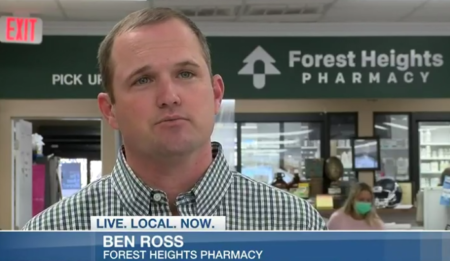
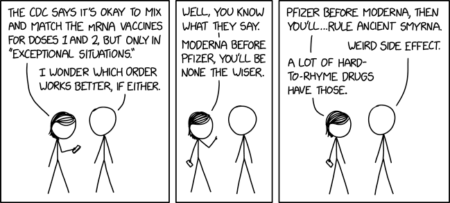
For the first time since November 2, the U.S. had fewer than 100,000 new Covid-19 cases in a day — 96,003 on February 7. Georgia is considering extending tax credits for another year to pharmacies (and other businesses) that make hand sanitizer. Bonus: The article features GPhA member Ben Ross of Statesboro. The idea seems perfectly reasonable: If people have to pay something for their healthcare, they’re less likely to use it willy-nilly, and would be smart about ‘shopping’ for it. They would save themselves money while saving taxpayers, too. In reality, though, that doesn’t work. Few people compare prices or quality of service; they use the most convenient healthcare facilities. Even fewer think they can negotiate prices. Healthcare isn’t like other goods — it’s hard (or impossible) to compare, and when you need it, you need it. So what’s obvious to economists in general simply doesn’t apply here … and has people skipping meds or procedures that they really need. Vaccine misinformation has been spreading unchecked on social media for years, but now Facebook claims it’s going to crack down on “erroneous claims about vaccines”. Amazing what the spectre of government oversight will do. The SARS-CoV-2 virus did not originate in a lab. It came from an animal. Once again, coffee seems to have some nice benefits — assuming you consider “not having a heart attack” to be a benefit. A new meta-analysis from the American Heart Association found that “drinking one or more cups of caffeinated coffee was associated with decreased heart failure risk.” Surprise downside: “Drinking decaffeinated coffee did not have the same benefit and may be associated with an increased risk for heart failure.” Depending on the size of your head (no offense, Charlie Brown or Stewie Griffin), your ears hear sounds at different times, and yet — aside from being able to determine the direction — our brain gives us a single sound. Neurolinguists in Switzerland, where synchronicity is a way of life, figured out why. Your brain uses measurable oscillations called gamma waves; it can tell if the left and right waves are in synch of not, and compensate for the difference. What makes this interesting? Understanding how the brain processes sound — and it’s obviously a bit unexpected — could lead to treatment for heretofore untreatable tinnitus: “[T]he connection between the two hemispheres of the brain can be successfully modulated by electric stimulation.” As one prong in the attack on antibiotic resistance, phage therapy (matching killer bacteriophages to the invading bacteria) is slowly picking up steam. Normally those phages need to be delivered directly to the site of the infection, but now the Israeli company Biomx says it’s been able to deliver phage therapy orally — to the lower gastrointestinal tract, no less. This (it says) is the first time phage therapy has been accomplished that way, and it could be a major stepping stone to the treatment becoming more widespread. (Click to go to xkcd and read it.)Good news about coffee, about Covid, about tax credits, and more!
Good news
More good news
When the skin game doesn’t work
Facebook to close the barn door

For the umteenth time….
Coffee comes through … again
The effect of gamma waves on hearing and perception
Phages by mouth
Smile
February 09, 2021 ✒ Andrew Kantor
Know any undergraduate chemistry major at Georgia College and State University? If they’re interested in a career in pharmacy (and really, who wouldn’t be?), there’s a slightly smoother path — a “guided pathway,” they call it, into UGA’s four-year PharmD curriculum. GCSU students in their junior year who maintain certain academic criteria and successfully fulfill all admissions requirements will receive a guaranteed admission interview at UGA. Those admitted then can complete their bachelor’s degree with transferred credits earned through the Pharm.D. program. Further, aspiring pharmacists will be eligible to receive structured guidance directly from UGA faculty, staff, and current Pharm.D. student mentors as early as their freshman year. Why are there so many allergies these days? And so much inflammation? Could it be that we don’t have hookworms in our guts any more? In developed countries, these parasitic worms — helminths — are all but eliminated. Which sounds good, because most of us prefer not to have millions of worms in our guts. Thing is, “Helminths have infected humans throughout our evolutionary history, and as a result have become master manipulators of our immune response. Humans, in turn, have evolved levels of tolerance to their presence.” Meaning that it’s possible the lack of gut worms is one cause of what researchers at University College London call “inflammageing.” Bad news for the company: The latest results show that it’s Covid-19 vaccine is only minimally effective against the South African variant of the SARS-CoV-2 virus, prompting the South African government to stop using the vaccine. But it’s not just AZ’s vaccine — that South African variant (B.1.351) seems to be troublesome all around, and it’s not clear that other vaccines will be more effective against it. For their part, AstraZeneca and its Oxford partner are working to update the vaccine to tackle that South African variant. (One peek into the crystal ball imagines getting a ‘main’ Covid-19 shot, then boosters if particular variants emerge.) The British variant of SARS-CoV-2, B.1.1.7, is likely to become the dominant strain here in the U.S. It spreads 30 percent faster and may — may — have a 35 percent greater risk of death. And there’s already a sub-variant of B.1.1.7 that’s less susceptible to current vaccines. Current vaccines, including AstraZeneca’s, appear to work against most B.1.1.7 strains — so that’s good news. Well, not kill — but they might be associated with a higher risk of thyroid cancer. Maybe. University of Arkansas researchers looked at areas with high artificial light at night (“LAN” they call it — perhaps for the French “lumière artificielle la nuit”). They found that the more lumière artificielle la nuit, the greater the incidence of thyroid cancer. Of course, they point out that there’s not necessarily a causal connection, but it still gives us a chance for a scary headline. Now that it’s got the vaccine production process down pat, Pfizer says it expects to cut production time by almost half. Here’s hoping that vaccine keeps working. “We just went right to commercial production,” [Pfizer VP Chaz] Calitri said. As soon as vials of vaccine began coming off the production line, engineers started analyzing how production could work faster and better. “We made a lot of really slick enhancements.” Get this: You can get your kid started on all the benefits of caffeine before it’s even born! Yep, University of Rochester neuroscientists found that “caffeine consumed during pregnancy can change important brain pathways”. Oh, wait — did I say “benefits”? In fact, they’re less benefits than “really annoying issues.” Caffeine in utero, they say, seems to lead to “Elevated behavioral issues, attention difficulties, and hyperactivity” when the kids turn nine or 10. So maybe they need to wait a bit before hitting the sauce. Saving you a click: It’s probably best to avoid NSAIDs to deal with any side effects of a Covid-19 vaccination, because they could potentially reduce the vaccine’s effectiveness. [A]s detailed in a publication in the Journal of Virology, laboratory studies using human cells in culture dishes and mice have suggested that NSAIDs may reduce antibody production against SARS-CoV-2 and dampen your immune system’s inflammatory response. What, you want to read the whole article in Forbes? No problem. One thing we’ve all learned since 2020 is that many of the people around us are germ-spewing monsters. That in mind, a lot of Americans — 72 percent, if you can believe it — say they’ll continue to wear a mask in public even after the Covid-19 pandemic is over. The operative word is “say.”Wormless guts, death by night light, caffeine in the womb, and more
From GCSU to UGA
Chasing the worm
Covid variant news
AstraZeneca’s vaccine fails against South African variant
British invasion
Night lights can kill
Pfizer ramping up production
Caffeinated kids
Post-vaccine, avoid NSAIDs
After it’s over
Do you want to send your members the daily Buzz email newsletter (customized for your state and organization, perhaps)? Let’s talk — just drop me a note at andrew@gphabuzz.com!

- As Lung Disease Threatens Workers, Lawmakers Seek Protections for Countertop Manufacturers
- Republicans Fret Over RFK Jr.’s Anti-Vaccine Policies While MAHA Moms Stew
- Primary Care Is in Trouble. So Doctors Band Together To Boost Their Market Power.
- Cosmetic Surgery Investigation Prompts Warnings for Patients, and a Push for Tighter Safety Standards
- Listen to the Latest ‘KFF Health News Minute’
- Banks Are Becoming Bulwarks Against Scams for Vulnerable Seniors
- January 2025
- December 2024
- November 2024
- October 2024
- September 2024
- August 2024
- July 2024
- June 2024
- May 2024
- April 2024
- March 2024
- February 2024
- January 2024
- December 2023
- November 2023
- October 2023
- September 2023
- August 2023
- July 2023
- June 2023
- May 2023
- April 2023
- March 2023
- February 2023
- January 2023
- December 2022
- November 2022
- October 2022
- September 2022
- August 2022
- July 2022
- June 2022
- May 2022
- April 2022
- March 2022
- February 2022
- January 2022
- December 2021
- November 2021
- October 2021
- September 2021
- August 2021
- July 2021
- June 2021
- May 2021
- April 2021
- March 2021
- February 2021
- January 2021
- December 2020
- November 2020
- October 2020
- August 2020
- July 2020
- March 2020
- February 2020
- January 2020
- December 2019
- November 2019
- October 2019
- September 2019
- August 2019
- July 2019
- June 2019
- May 2019
- April 2019
- March 2019
- February 2019
- January 2019
- December 2018
- November 2018
- October 2018
- April 2017
