
February 06, 2021 ✒ Andrew Kantor
It’s apparently a thing after getting a vaccination — enough so that dermatologists are taking note. There’s a potential for a “vaccine passport” — some form of travel document that would be proof of vaccination and thus allow you to travel by air. Those shifty Danes are rolling one out, and other countries are considering them … including the U.S. of A. Johnson & Johnson has formally submitted its one-shot, no-freezer-needed vaccine for FDA approval. If given the green light by the agency, J&J’s vaccine will likely start being used in late February or early March, though initial supplies are expected to be extremely limited. People will have questions after they’re vaccinated. The folks at Fierce Healthcare have some answers you can give them. (Spoiler: Yes, they still need to wear a mask.) That once opened, insulin can be safety stored for up to a month, even in warm conditions? Now you do. The research by the medical charity Doctors Without Borders and the University of Geneva showed that a vial of insulin could be stored for four weeks after opening at temperatures fluctuating between […] 77 and 98.6 degrees Fahrenheit. Injecting liquid pharmaceuticals is so 2020. Stanford researchers are working on injectable gels, and they’ve made the first big step to keeping them from turning liquid at body temperatures. Why gels, you ask? Because they work like patches — releasing the active pharmaceutical ingredient “over a period of months to avoid weekly or daily needle sticks.” They’ve got a bit of a way to go, though. The current gels use particles derived from polystyrene, “which is commonly used to make disposable cutlery.” NFL to Biden: All 30 stadiums* will be available as Covid-19 vaccination sites. This coming Tuesday, February 9, join a half-hour Covid vaccine Q&A with DPH, “Pharmacists & COVID-19 vaccinations”. It’s 8:00 – 8:30am, 100 percent virtual, but space is limited. Click here to register for the special Q&A session. And you can even click here to email your questions in advance! The FDA really doesn’t think it’s a great idea for you to compound remdesivir, and it’s released an alert explaining why. (Scroll down to “Discussion of Risks” for the important stuff.) Today I learned that England’s University of Huddersfield has a dedicated Scalp Cooling Research Centre, and since 2019 it’s been investigating how cooling the scalp during chemotherapy can protect against hair loss. “We were able to measure how much chemotherapy drug goes into the cultured cells from hair follicles and what we have found is cooling actually dramatically reduces the amount of chemotherapy drug being absorbed by the rapidly-diving cells of the hair follicle.” Next time you see some chucklehead wearing a mask wrong, take heart — apparently that can tell you how honest they are. Israeli economists did a study, recruiting people who wore their masks properly and improperly. It turned out that the improper-mask wearers were significantly more willing to lie about their score on a test. This second group as a whole was willing to break the rules when it came to Covid-19 safety, and it was also willing to break the rules in another situation as well. But wait! What of people who didn’t wear a mask at all? They scored in between the honest and dishonest folks. Make of that what you will. No, the mask will not make you look like the Lone Ranger.Scalp cooling, liars in masks, long-lasting insulin, and more
Quick Covid updates
“Covid arm”
Anti-vaxxers might have to stay home
J&J says it’s ready for prime time
Vaccine questions
Did you know…
A different kind of Jell-o shot
Making good use of Mercedes-Benz Stadium
* The headline says 32 stadiums, but the Giants and Jets share one, as do the Rams and Chargers.
Get vaccine answers from DPH
Compounders: Take note!
There’s a research center for that
You can’t hide those lyin’ eyes

February 05, 2021 ✒ Andrew Kantor
Britain is looking at the possibility of mixing and matching Covid-19 vaccines — to see if a first dose of the AstraZeneca/Oxford would work with a second dose of the Pfizer/BioNTech version. That might make getting those second doses a lot simpler. Some vaccines work better if a different vaccine is used for the booster shot, which is known as heterologous boosting. Russia’s Sputnik V vaccine, which early studies indicate to be 92% effective at preventing Covid-19, makes use of the principle. It uses of a different modified virus in each shot to carry the immunity-conveying instructions into the body. A new pharmacy’s been opened in DeKalb, but it’s a bit different. The Charitable Community Pharmacy is meant to help people who can’t afford their medications. It’s run by volunteers and… …plans to stock medications to address diabetes, cardiovascular conditions and mental health conditions. It’ll also have medications for chronic conditions such as asthma and chronic obstructive pulmonary disease. Picture the scene: A small, wooded island. Log cabin. Smoke from the chimney. In front, a person is chopping wood on a stump, wearing plaid and a well-worn baseball cap. Suddenly, a helicopter appears and lands in the open field. A soldier jumps out, holding his hat down against the draft from the chopper. “Hey, doc!” he shouts, “We know you’re retired, but we need you to come back! Your country needs you!” So you’ve got patients with melanoma who responded well to immunotherapy. And you’ve also got patients who didn’t respond to it. Get this: According to University of Pittsburgh immunologists, transplanting poop from the first group to the second could allow immunotherapy to work on those ‘non-responsive’ people . After the transplant, six of the 15 patients responded to immunotherapy for the first time, showing either tumor reduction or disease stabilization that lasted more than a year. But why? The answer might be — might be — in having gut bacteria that promote the secretion of the interleukin-8 (IL-8) protein. The fact that gut bugs made such a difference, though, opens up a whole new avenue for research. President Biden’s potential pick for FDA commish was a senior regulator at the agency for two decades, right when all those opioids were being approved, leading to the crisis. And that’s got a lot of health folks concerned. But while Dr Woodcock is widely respected as a scientist and doctor, many campaigners say she failed to take into account the public safety implications of new opioids that were approved under her watch. Consulting firm McKinsey & Co will be paying at least $573 million to more than 40 states for its role in advising Purdue Pharma on how to increase OxyContin sales. Of course, this is still just a speck compared to the 3,200+ lawsuits that are still pending. Newly unsealed documents show that Propecia seems to have a long record of causing both sexual dysfunction and suicidal thoughts — including at least 100 deaths. The drug’s label was updated in 2011, but without mention of potential suicide, although both EU and Canadian versions of finasteride do require a warning of suicidal thoughts. And Merck’s take? It’s not the Propecia, it’s the hair loss that’s the problem. It also has argued in court that “premature hair loss itself, the very condition for which Propecia is prescribed, is associated with low self-esteem, poor body image, and depression.” The FDA is a bit concerned about Xeljanz (and not just because saying it three times under a full moon can awaken evil spirits). It seems that… [P]reliminary results from a safety clinical trial show an increased risk of serious heart-related problems and cancer with the arthritis and ulcerative colitis medicine Xeljanz. The final results, which will also include testing for the risk of blood clots in the lungs and death, are not yet available. Remember that “mysterious polio-like syndrome” that was affecting some kids back in the Before Times? Acute flaccid myelitis? Likely caused by an enterovirus, it showed up every other year since 2014 — but not in 2020. But then came masks, physical distancing, activity restrictions, and, in many communities, still-shuttered schools. The result: There were just 30 confirmed AFM cases in 2020, compared to 238 in 2018 and 153 in 2016. What does that tell us? First, that Covid restrictions seem to keep other diseases at bay, but also that Covid-19 is “just so much more contagious.”Blaming the bald, mixing the vaccines, bringing back retirees, and more
Mixing and matching vaccines?
Charitable pharmacy opens in DeKalb
Mrs Peel, we’re needed

Our number two story
Was that you?
It’s not just pharma companies on the hook
Propecia problems
Xeljanz problems
One mysterious disease is missing this year
February 04, 2021 ✒ Andrew Kantor
Next Thursday, February 11 (happy birthday, Leo Szilard), the Biden administration will start shipping Covid-19 vaccines directly to pharmacies as the federal government begins handling the bulk of the nation’s Covid-19 response. Currently pharmacies have to get them from individual states. The initial 6500 pharmacies will be chosen based on their ability to help distribute the vaccine more equitably, he said. Most of the major pharmacy and grocery chains, including Walgreens, CVS, Walmart, Rite Aid, Kroger, Publix, and Albertsons, along with independent pharmacies, will be participating. Which pharmacies will be getting them? Click here (and scroll down) for the list. … is currently “pausing” some vaccination appointments because of a lack of vaccines, according to Governor Kemp’s office. Next week’s fed rollout should ease that issue. A “stress test” for pharmacies and grocery stores, as the Wall Street Journal explains. Read the story of one Philly pharmacy’s experience — “a vial of tears and troubles” but “no regrets.” “We got a lot of calls saying: ‘I’ve been a loyal customer. You owe me a vaccine,’ But there’s not enough vaccine, not enough vaccinators, and not enough time. We’re doing the best we can to be fair. We all have to be patient.” Super Bowl parties. Just say no — or, rather, “cool it.” If you have to wait to get your vaccine, there’s an upside. The new, better ones (that protect against more variants) should be coming out in the fall. When it comes to fighting leukemia, MDM2 inhibitors are so-so. BET inhibitors are so-so. But put them together, Wonder Twins-style, and BAM! “Our study shows that two types of drugs, MDM2 inhibitors and BET inhibitors, work synergistically to promote significant anti-leukemia activity. The results were surprising because previous research had shown that each drug on its own had modest benefit against AML.” Form of … a p53 suppressor! It seems that long-term aspirin use may increase your chances of survival if you’re diagnosed with colorectal cancer. The operative word is “may,” of course, and there are downsides to daily aspirin, so … you guessed it: “more evidence is needed.” This is not a quote from Star Trek. Instead of surgery for skin cancer, Yale researchers say they can inject tumors with ‘bioadhesive polymer-based nanoparticles carrying a chemotherapy agent.’ The trick is that these nanoparticles remain attached to the tumors “long enough to kill a significant number of the cancer cells.” “When you inject our nanoparticles into a tumor, it turns out that they’re retained within that tumor very well. They accumulate and bind to the tumor matrix, so one single injection lasts for a very long time — the particles stay there and slowly release the compounds. You need that to get rid of the lesion.” “All right, xylazine, you’re on deck!” A type of animal tranquilizer, xylazine, is now showing up in almost a third of fatal heroin and fentanyl overdoses in Philadelphia, according to research published today. Oh, and because it’s not an opioid, naloxone doesn’t help. University of Washington oral health researchers — clearly having missed their history lessons — analyzed published studies, looked at data of 9,350 people, and concluded that “Bleeding gums may be a sign you need more vitamin C in your diet.”Nano attack on tumors, vaccines coming next week, the next drug crisis, and more
Here come the vaccines
Georgia…
What to expect
Yet another chance to do something foolish
Vaccine wait silver lining
It takes two

An aspirin a day could keep the gastrointestinal oncologist away
Sticking it to tumors
The next overdose crisis
I’m almost embarrassed to tell them
February 03, 2021 ✒ Andrew Kantor
More people have been vaccinated against Covid-19 than have tested positive. As of Monday afternoon, 26.5 million Americans had received one or both doses of the current vaccines […] Since the first U.S. patient tested positive outside of Seattle a year ago, 26.3 million people in the country have tested positive. What, you want more? How ’bout this: The U.S. is now giving vaccines faster than any other country in the world — about 1.3 million doses per day. The Russian Covid-19 vaccine is 91.6 percent effective in peer-reviewed tests and as published in the Lancet. “But the outcome reported here is clear,” British scientists Ian Jones and Polly Roy wrote in an accompanying commentary. “Another vaccine can now join the fight to reduce the incidence of Covid-19.” The U.S. government is spending $230 million to ramp up manufacturing of over-the-counter COVID-19 test kits made by Australia-based Ellume. The tests give results in 15 minutes, and is between 96 and 100 percent accurate. Hospital folks: Meitheal Pharmaceuticals is recalling its cisatracurium besylate injection, USP 10mg per 5mL due to major mislabeling. [A] product complaint revealed that a portion of Lot C11507A of cartons labeled as Cisatracurium Besylate Injection, USP 10mg per 5mL, containing 10-vials per carton, contained 10-vials mis-labeled as Phenylephrine Hydrochloride Injection, USP 100mg per 10mL. Lot number: C11507A; NDC number: 71288-712-05 and -06. New session added! GPhA’s added a session to it’s hot course: “Immunization Delivery Training for Pharmacy Technicians” — a 5.75-hour CE program (home-study and live training). You know trained pharmacy technicians can administer vaccines (under the supervision and authorization of a pharmacist), so why not be sure you’ve got the training? GPhA is offering the live training on Friday, March 5, 2021. Space is limited — there’s a pandemic, in case you hadn’t heard — so don’t wait. Click here for the details and to register now! One of the bright lights of the battle against Covid-19 has been remdesivir, which has worked pretty well, especially with new and milder cases. Fun fact: No one was quite sure how it worked — it just did. You know what’s coming: “Until now.” Yep, University of Texas molecular bioscientists figured out exactly how remdesivir does its magic: Study co-author David Taylor likens the trick the team identified to a paper jam in the virus’s photocopier. Remdesivir shuts down this photocopier — called an RNA polymerase — by preventing copying of the virus’s genetic code and its ability to churn out duplicates and spread through the body. The team detected where the drug manages to gum up the gears, grinding the machine to a halt. What’s great about this is that it might allow drug companies to “develop new and improved antivirals to take advantage of the same trick.” You know, for the next time. The second dose of the Covid-19 vaccine is likely to have side effects, especially in younger people. That’s OK. “Side effects are just a sign that protection is kicking in as it should.” Drugs for mental illnesses and conditions don’t work uniformly — ask anyone who’s had to play “try this one” SSRI game. Notably, though, men and women seem to react differently to the same medications. What’s with that? University of Colorado integrative physiologists found a key: The brain protein AKT “may function differently in males than females.” And there are several versions of AKT, ‘not all created equal.’ And they’re particularly unequal between sexes: For instance, male mice whose AKT1 was functioning normally were much better than those missing the protein when it came to “extinction learning” — replacing an old memory, or association, that’s not useful any more. For female mice, it didn’t make much of a difference. You know the mantra by now: “More research is needed,” but learning about the difference is a significant breakthrough. Having lots of data lets you find some interesting correlations. German researchers, for example, compared antidepressant prescription rates for 9,700 people with the number of trees in an area. The surprising find: They reported that more local foliage within 100 metres (328 feet) of the home was associated with a reduced likelihood of being prescribed antidepressants – findings that could be very useful indeed for city planners, health professionals, and governments. You may have heard about how much bacteria comes out of a toilet when you flush — it was big news in 2018, and there’s even a Wikipedia page about it. But fear not! Northwestern engineers did a test — they called it “Operation Pottymouth” — and found that the microbes on toothbrushes, by and large, came from people’s mouths, not … somewhere else. This was true no matter where the toothbrushes had been stored, including shielded behind a closed medicine cabinet door or out in the open on the edge of a sink.Lots of good news, plus the trees you need, your toothbrush is safe, and more
A positive Covid milestone
More good news
And even more
Nimbex recall
More tech training
How stuff works: Remdesivir
About that second dose
Men’s brains are from Mars…
The Lorax’s “I told you so”
In case you were worried
February 02, 2021 ✒ Andrew Kantor
Sure, it’s easy to complain that states aren’t spending enough to fight the pandemic, but now it turns out there’s one good reason for the lack of cash: Trump administration officials said they argued to withhold money from states out of fear those states would use the cash for other things. Much of the lobbying push came from Paul Mango, the former deputy chief of staff for policy at the Department of Health and Human Services. He argued, repeatedly, that states hadn’t demonstrated they needed additional funding because, at least as of last October, they hadn’t spent the $200 million that the Centers for Disease Control and Prevention sent to states in September. “I’m sure they could use money — that’s not in dispute — what’s in dispute is whether they needed money given all they hadn’t used to actually administer vaccines,” Mango added. Why hadn’t states spent that cash? According to state health departments, they wanted to first use other, expiring funds, and — presciently — “because they were unsure when new funding would be appropriated by Congress.” Mark your calendars for GPhA’s Spring Region Meeting! It’s Tuesday, April 13, 2021, from 7:00-8:00 p.m. for every region — via Zoom, of course, because of These Trying Times. Details to come, so watch your mailbox! In Georgia, one of them is an ex-lawyer programmer — a guy who created a way you can get a text message when Covid-19 vaccinations are available in your area. https://www.wabe.org/georgia-vaccine-appointment-alert-system-grew-out-of-sing-up-frustration/ Just text vax to 844-554-4024, and answer a couple of questions. No app to download! At the moment it works for Clayton, Cobb, DeKalb, Douglas, Gwinnett, Rockdale, and Newton, counties (the only ones that currently post info online). Until the other counties are online, people there will get a text message with info on how to register with that county. The headline says it all: “Frequent cannabis use by young people linked to decline in IQ”. That’s according to an psychiatric epidemiologist at the Royal College of Surgeons in Ireland. The results revealed that there were declines of approximately two IQ points over time in those who use cannabis frequently compared to those who didn’t use cannabis. Further analysis suggested that this decline in IQ points was primarily related to reduction in verbal IQ. You’ve got questions about the scariest of the Covid-19 strains — Live Science has answers. Things are tough these days, but folks — remember to take a break and take care of your mental health. We know bacteria can evolve resistance to antibiotics, but we’re* still working on the how part. Carnegie Mellon physicists found one trick: Bacteria can change their shape — in one case (after chloramphenicol exposure) “the researchers found that the bacteria dramatically changed their shape by becoming wider and more curved.” … these physical changes allow the bacteria to attain a higher curvature and lower surface-to-volume ratio, which would allow fewer antibiotic particles to pass through their cellular surfaces as they grow. Someone who’s taking opioids for chronic pain is going to have trouble finding a primary care physician. University of Michigan researchers did a nationwide “secret shopper” study to see if PCPs would take on a patient who used opioids. All of the clinics included in the study said they were taking new patients, but when the patient mentioned wanting to receive opioids, 43% of the clinics said they were no longer willing to schedule the appointment. One “trick” they learned: Simulated patients who said their doctor or other primary care provider had retired were more likely to be told they could be accepted as new patients. Want to live forever, or at least look like you can? The secret (at least according to Purdue researchers) might be … chia seeds. Specifically “a protein-rich chia seed flour that can “provide new options for anti-aging products, nutritional foods and medicine capsules.” Of note, they think peptides can be extracted from the chia seeds “to inhibit enzymes that play a role in the aging of skin.” Forget a clinical diagnosis — when it comes to ADHD, a University of Buffalo psychologist says there’s a way to determine ADHD with 99 percent accuracy: http://www.buffalo.edu/news/releases/2021/01/022.html. “A patient may be exhibiting behavioral symptoms consistent with ADHD one day, but even days later, might not present those symptoms, or to the same degree. It could just be the difference between a good day and a bad day. “But the brain connectivity signature of ADHD appears to be more stable. We don’t see the diagnostic flip-flop.” “The vaccine news continues to be better than many people realize.” All five vaccines with public results have eliminated Covid-19 deaths. They have also drastically reduced hospitalizations. “They’re all good trial results,” Caitlin Rivers, an epidemiologist at Johns Hopkins University, told me. “It’s great news.” The Forbes list of “The 10 Best Medical Parody Music Videos”. Shape-shifting bacteria, Georgia’s vaccine hero, what “secret shoppers” found, and more
Following the Benjamins
Mark thy calendars: Region meetings are coming!
Not all heroes wear capes
Trope comes to life
Answers: the South African Covid-19 variant
The sky’s not the limit
For shape-shifters, resistance isn’t futile

* Well, you. Not me. I just write this stuff.
Patients on opioids are having a tough time
Ch-ch-ch-chia

Proof of ADHD
The Long Read: Cup Half Full edition
Finally, enjoy
January 30, 2021 ✒ Andrew Kantor
Also, across the pond, the European Medicines Agency has approved the AstraZeneca/Oxford vaccine “despite a lack of data about efficacy in older people.” Big shout-out to GPhA member Ben Ross and the staff at Forest Heights Pharmacy in Statesboro — it got 300 doses of the Moderna Covid-19 vaccine and immediately got them out to the community, hitting a milestone of 1,000 vaccines given … so far. Remind your patients who have lost health coverage: The Healthcare.gov exchange is open, and they can enroll now — there’s a good chance they’ll qualify for subsidized coverage, and they’ll also learn if they’re eligible for Medicaid. That import-from-Canada effort is not dead yet! Several states are still hoping to get the go-ahead to buy from Canadian distributors at lower prices. Right now, pharmacy makers are suing to stop those plans. Donald Trump said he supported it, but what about the Biden administration? No one knows. Yet. Here’s the latest twist (of sorts): Canada had been opposed to the whole idea, meaning all the politicking here seemed like a waste of time. But now Colorado health officials say they’ve spoken to the Great White North… … and that officials there are mainly concerned about shortages of generic drugs rather than brand-name drugs, which is what her state is most interested in importing since they are among the most costly medicines in the U.S. You may have been taught that the immune system pretty much ignores the brain — it’s “immunoprivileged.” But several nasty conditions — Alzheimer’s, MS, autism — seem to result from brain inflammation. So the immune system must know what’s going on. Here’s how, according to Washington University researchers, and it’s pretty darned cool: Immune cells are stationed in the meninges — the tissue that covers the brain and spinal cord — where they sample fluid as it washes out of the brain. If the cells detect signs of infection, disease or injury, they are prepared to initiate an immune response to confront the problem. So even if they can’t get inside the house, they can at least have someone sitting by the doorway. British researchers concluded that doing some basic genetic testing on patients could help millions of people (even in the relatively tiny U.K.) get better, more effective medication. They looked at just nine genetic markers they say are known to affect 56 common medicines — e.g., weak opioids, antidepressants, and proton-pump inhibitors. Pharmacists and specially-trained GPs, they say, could give the tests and make better medication recommendations. “Better selection of medicines based on a patient’s genetic information could mean less side-effects and better treatment outcomes. This not only benefits the patient but also the [National Health Service], as patients may not need to return to their GP so often to change their medication.” The first case of the rather scary South African variant of Covid-19 has appeared in the U.S. — in South Carolina. It’s more virulent, the vaccines don’t work as well against it, and it may be deadlier as well. With so many folks stuck inside for so long, you might expect a bit of a baby boom when this is all over. Don’t count on it. It could be that Covid-19 reduces fertility in men, although it seems that any decline is temporary. “Female partners of men recovering from the disease should decide not to conceive until a specialist carefully examines and certifies their fertility status.”The immune system is watching, Canadians are considering, variants are spreading, and more
Quickies on the next Covid vaccines
Doing their part
The exchange is open
What’s going on with Canadian drugs?
Keeping tabs on the brain
Choose the best meds, 21st century style
Out of South Africa
Inconceivable
January 29, 2021 ✒ Andrew Kantor
HHS shenanigans, bumpy-tongue worries, flies’ de-cyst, and more
January 28, 2021 ✒ Andrew Kantor
A contraceptive gel developed at North Carolina State not only prevents pregnancy 100 percent of the time (!), it has an antiviral component to protect against STDs, and an male-libido enhancer. Whether it can act as a dessert topping or floor cleaner is still under investigation. Combining three FDA-approved and marketed agents together, our trifunctional TGN gel has a great potential for further translation and commercialization. You must have thought, “I know what we should do.” Then step forward! GPhA is looking for the team that will shape the future of pharmacy in Georgia — we’re now accepting applications for the 2021-2022 GPhA Board of Directors. Serving on the board is the opportunity to affect the biggest issues facing Georgia pharmacy and make a lasting contribution to the industry. We encourage you to apply. Click here for the application, or — if you have questions — contact Governance Manager Ashton Sullivan, at asullivan@gpha.org. Reminder: DPH has a vaccine-finder for pharmacists and other healthcare workers. It also has one for patients. Pfizer says it’s going to deliver its U.S. doses faster than expected. Why? Because of that extra dose pharmacists found in each bottle. It’s not sending more, it’s just counting more. Covid-19 hospitalizations are down for 14 straight days — in Georgia, they’re down about 13 percent from last week. That’s a good sign. The CDC says K-12 schools can reopen safely — but only the ones that are “requiring universal face mask use, increasing physical distance … increasing room air ventilation, and expanding screening.” Looking at you, Cobb County. “[T]the type of rapid spread that was frequently observed in congregate living facilities or high-density worksites has not been reported in education settings in schools.” First there was the nasty “deep dive” nasal swab. Then came the more-merciful (and just as accurate) throat swabs. Now China is using what it says is an even more accurate test. Acceptance is a bit of an issue, though. If you have patients on erenumab for migraines, take note: There seems to be a notable chance of their developing hypertension. “My gosh,” I bet you said, “I wish The Scientist would publish an easy-to-understand chart of all the SARS-CoV-2 variants out there!” The editors must have heard you: Here it is. Lithium is old, effective, and the go-to treatment for bipolar disorder … but it doesn’t always work, and there can be side effects bad enough to convince people to quit. But who it will work for and how well it will work can often be a crapshoot. As Jerry Seinfeld would say, “What’s up with that?” In what can’t be a shock, it’s all in the genes — specifically the expression of the LEF1 gene. (It was low in lithium-resistant patients.) That means it’s something that can be tested before starting a patient on lithium, and it could lead to more-specific drugs targeted directly at that gene. Our friends at the National Community Pharmacists Association say they supports the Biden administration’s Covid-19 national strategy. That is all.A gel that does it all, plus the Covid test you may not want, what’s wrong with lithium, and more
It’s a miracle drug
You oughta be a leader
Covid vaccine notes
All in the marketing
Some general Covid notes
More accurate testing
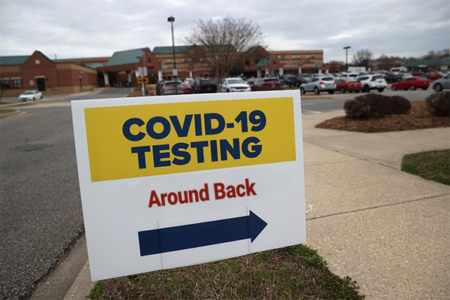
Headache, erenumab, and hypertension
All those viruses
Why doesn’t lithium always work?
NCPA gives a thumbs up
January 27, 2021 ✒ Andrew Kantor
Southern states seem to be under-counting their Covid-19 deaths — at least according to a new study out of Boston University. The gist: After analyzing deaths in 787 U.S. counties (including 50 in Georgia), the study found that there were a lot of “excess deaths” from February through October 2020, and… The researchers estimated that 31 percent of excess deaths attributable to the COVID-19 pandemic were not reported as COVID on death certificates. In other words, something caused a jump in deaths in 2020 (compared to other years), but these states say it wasn’t Covid-19. Instead, whatever pre-existing condition* they had was listed as the cause of death. A virtual high-five to student pharmacists from PCOM — Zach Dykes, Macy Biddulph, Nakoasha Dillard — who volunteered at Suwanee Pharmacy to help coordinate the pharmacy’s Covid-19 clinic this past weekend. Suwanee Pharmacy’s Covid vaccine team When it comes to the flu vaccine, older folks like to worry about whether they should get the standard flu vaccine (“aIIV3”) or the high-dose version (“HD-IIV3”). Is there a risk of a reaction to one or the other? Nope — not according to a new study by researchers at Duke, Stanford, and the CDC. When it comes to adverse reactions, either one is good. “These findings suggest that from a safety standpoint, aIIV3 or HD-IIV3 is an acceptable option to prevent influenza in older adults,” they conclude. The Biden administration is going to temporarily reopen the HealthCare.gov insurance marketplace to allow people who have lost their coverage to sign up for a plan outside the normal open-enrollment period. But it’s also considering rolling back a last-minute Trump administration plan that allowed physicians to prescribe buprenorphine for opioid addiction without first getting a day’s training, saying that HHS lacked the authority to issue those guidelines. A miscarriage — or even several — is awful, but it obviously doesn’t mean you can’t have a child. One way to improve your chances of conceiving, Emory epidemiologists confirmed, seems to be a low-dose aspirin regimen. I say “confirmed” because there was some previous evidence that “preconception-initiated low-dose aspirin was associated with a 10% increase in live births.” But now the data have been more rigorously analyzed. Result: [R]elative to placebo, low-dose aspirin adherence for 5 of 7 days weekly led to eight more positive pregnancy tests, 15 more live births, and six fewer pregnancy losses for every 100 women in the trial. There are risks with taking low-dose aspirin regularly, so don’t take or give medical advice from an email newsletter. Some cancer drugs target enzymes known as HDACs — they’re critical to cell division, so if you mess with them in cancer, you can stop it from growing. But HDAC inhibitors (like belinosta, romidepsin, or vorinostat) can have some nasty side effects. Now those shifty Danes may have figured out a way around that. They’ve determined how those HDACs interact with histones at a molecular level. That means that drugs might be made that, rather than target all 11 HDACs, might be able to target one or two. Because HDACs affect more than cancer cells, that kind of selective targeting might cut side effects and make the meds more effective. Afternoon naps, say Australian researchers, are good for your brain. [T]hose who enjoyed a post-lunch kip had significantly higher cognitive performance than the non-nappers. The study also found “afternoon napping was strongly associated with orientation, language function and memory”. Pro tips: The nap should be between lunch and about 2:00 p.m., and only last about 10 to 20 minutes — not long enough to go into deep sleep. Caveat: The study only looked at people over 60 who slept about 6-½ hours a night. In the space between a Covid-19 vaccine and a treatment live … monoclonal antibodies, according to Regeneron. It says that its monoclonal antibody cocktail prevented Covid-19 in people who were exposed to the SARS-CoV-2 virus. The volunteers were at high risk of infection because they lived in the same household as a Covid-19 patient. Half the patients received a placebo, and the other half received 1.2 grams of casirivimab and imdevimab, Regeneron’s antibodies. While eight of the 223 patients in the placebo group developed Covid symptoms and tested positive for the virus, none of the 186 patients who received the antibody did. The more-contagious variants of Covid-19 are starting to spread in the U.S. (the first case of the South African version has appeared), so governors in some states — California, Illinois, Massachusetts, New York — are … lifting restrictions? Health experts are sighing deeply. “We’re just asking to go backwards by easing restrictions without focusing on achieving herd immunity with vaccination.”Justify that nap, aspirin preventing miscarriages, backwards on buprenorphine, and more
States may be underreporting Covid deaths
* “He was hit by a car, but we’ll put his heart condition down as cause of death.”
PCOM students help vaccinate
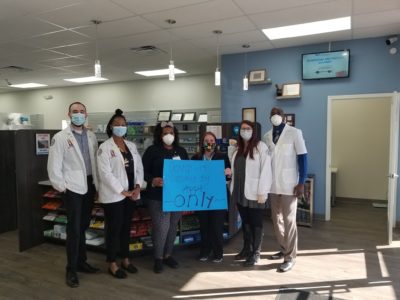
Flu vaccine: regular or hi-test?
One step forward, one step back
An aspirin a day to save a pregnancy?
A path to better cancer drugs
Sleep on it, baby baby lemme sleep on it
Between light and shadow…
Today’s Covid facepalm
January 26, 2021 ✒ Andrew Kantor
Georgia state health employees have been reluctant to get vaccinated for Covid-19, and DPH commissioner Kathleen Toomey is not happy. “Only about 30% of our own staff in our own health departments wanted to be vaccinated — which means 70% did not,” Toomey said. “The same was true in hospitals.” The state had such a “disappointing” response to the vaccine by medical workers that officials decided to move forward with opening eligibility for all Georgians 65 and older. Do you have questions for Georgia DPH on Pharmacists and COVID-19 vaccines? You should plan to join GPhA and a panel of professionals from the Georgia Department of Public Health (DPH) for this rapid-paced Q & A session just for pharmacists and pharmacy staff. Pharmacists & COVID-19 Vaccinations: A Q&A Session with Georgia DPH. Tuesday, January 26, 2021; 8:00 – 8:30am CLICK HERE to register, or CLICK HERE to submit your questions in advance. It seems that the SARS-CoV-2 virus needs cholesterol to get into cells (report Princeton scientists), which explains why people taking statins might do better if they get infected. The work may also shed light on a strange feature of the disease: the formation of giant, compound cells found in the lungs of COVID-19 patients. It found its trial vaccines just weren’t good enough. In these studies, both V590 and V591 were generally well tolerated, but the immune responses were inferior to those seen following natural infection and those reported for other SARS-CoV-2/COVID-19 vaccines. It’s going to publish its research, though, and “continue to evaluate the potential of the measles-virus vector and vesicular stomatitis virus vector-based platforms” for possible use during the next pandemic. Concerned that its existing vaccine might not work as well on the South African variant of the virus, Moderna is working on a tweak that will protect against that as well. “I don’t know if we need it, and I hope we don’t.” If calories and protein are equal, which is better — a low-fat diet or a low-carb diet? Since the 1960s, when the sugar industry paid Harvard scientists to say that ‘sugar good, fat bad,’ the concept of low-fat foods are healthier has spread … and we just ignored the sugar. Recently we’ve shifted the blame back to carbs. So the National Institutes of Health decided to test which is healthier, cutting fats or cutting sugars. The answer might surprise you. Cutting fats seems to be better than cutting carbs … if you’re willing to put up with “pronounced swings in blood glucose and insulin”: [P]eople eating the plant-based, low-fat diet showed a significant reduction in calorie intake and loss of body fat, which challenges the idea that high-carb diets per se lead people to overeat. On the other hand, the animal-based, low-carb diet did not result in weight gain despite being high in fat.” (Emphasis ours.) “Covid-19 warnings were on Twitter well before the outbreak of the pandemic” found Italian researchers. When they looked back at tweets at the end of 2019 and beginning of 2020 — they decided on the keyword “pneumonia” — it’s clear something was up: [The study] has identified tracks of increasing concern about pneumonia cases on posts published on Twitter in seven countries, between the end of 2019 and the beginning of 2020. The analysis of the posts shows that the “whistleblowing” came precisely from the geographical regions where the primary outbreaks later developed. Eating fish can cut your diabetes risk (according to researchers at the Albert Einstein College of Medicine), but only oily fish. Why is that? Heck, they don’t know — they confirmed a connection, but not yet a cause. And what, you may wonder, constitutes an “oily fish”? Think anchovies, herring, and sardines, as well as mackerel, salmon, swordfish, trout and tuna. The opposite (“whitefish”) like cod, flatfish, and haddock. At least according to Wikipedia. It’s been known for a while that eating a lot less (“carefully balanced but restricted diets”) can increase your lifespan considerably. But why? Harvard scientists found that one step toward the answer is sulphur amino acids: Cutting out foods that contain a lot of them — like red meat, dairy, eggs*, and even soy — “can reduce the risk of chronic diseases like diabetes and heart disease, and promote healthy aging.” Doing so causes the body to produce more hydrogen sulfide, “a gas that’s poisonous if inhaled and smells like rotten eggs, but promotes health inside the body.” For the first time in 37 years, Budweiser won’t be advertising during the Super Bowl. Not because no one cares about Tampa or Kansas City, but because it’s giving the money to “Covid-19 vaccine awareness efforts.” Being lonely because of a pandemic lockdown leads to depression, say British researchers.Oily fish, sugary weight loss, plus the quiet Covid warning we missed, and more
Do as I say…
DPH will answer pharmacists’ vaccine questions
Statins vs Covid
Merck quits Covid vaccine game…
…while Moderna works on an update
Diet war: Fat vs. sugar
20/20 hindsight
At your local greasy spoon
Eat less, smell bad, live forever
* Do you really want to argue whether eggs count as “dairy”?
This Bud’s for your vaccine
Captain Obvious’s quick take
Do you want to send your members the daily Buzz email newsletter (customized for your state and organization, perhaps)? Let’s talk — just drop me a note at andrew@gphabuzz.com!


- As Lung Disease Threatens Workers, Lawmakers Seek Protections for Countertop Manufacturers
- Republicans Fret Over RFK Jr.’s Anti-Vaccine Policies While MAHA Moms Stew
- Primary Care Is in Trouble. So Doctors Band Together To Boost Their Market Power.
- Cosmetic Surgery Investigation Prompts Warnings for Patients, and a Push for Tighter Safety Standards
- Listen to the Latest ‘KFF Health News Minute’
- Banks Are Becoming Bulwarks Against Scams for Vulnerable Seniors
- January 2025
- December 2024
- November 2024
- October 2024
- September 2024
- August 2024
- July 2024
- June 2024
- May 2024
- April 2024
- March 2024
- February 2024
- January 2024
- December 2023
- November 2023
- October 2023
- September 2023
- August 2023
- July 2023
- June 2023
- May 2023
- April 2023
- March 2023
- February 2023
- January 2023
- December 2022
- November 2022
- October 2022
- September 2022
- August 2022
- July 2022
- June 2022
- May 2022
- April 2022
- March 2022
- February 2022
- January 2022
- December 2021
- November 2021
- October 2021
- September 2021
- August 2021
- July 2021
- June 2021
- May 2021
- April 2021
- March 2021
- February 2021
- January 2021
- December 2020
- November 2020
- October 2020
- August 2020
- July 2020
- March 2020
- February 2020
- January 2020
- December 2019
- November 2019
- October 2019
- September 2019
- August 2019
- July 2019
- June 2019
- May 2019
- April 2019
- March 2019
- February 2019
- January 2019
- December 2018
- November 2018
- October 2018
- April 2017
