
January 09, 2021 ✒ Andrew Kantor
Can existing drugs be used off-label for other conditions? Of course. But it’s not always easy (or obvious) to figure out which drugs might yield surprises. Unless, that is, you’ve got millions of medical and insurance records and a high-powered computer at your disposal. In that case, let artificial intelligence (aka “deep learning”) take a whack at it. That’s what OSU scientists are working on: “…a framework that combines enormous patient care-related datasets with high-powered computation to arrive at repurposed drug candidates and the estimated effects of those existing medications on a defined set of outcomes. In other words, the computer can find correlations that mere humans might not realize. Maybe “A lot of Hispanic men between 25 and 45 taking azithromycin also saw their risk of prostate cancer go down” or whatever. By teasing out potential connections, the system might speed the discovery of new uses for existing drugs. Japanese researchers checked out the anecdotal evidence for both senna and magnesium oxide as laxatives. Either, they found, “improves bowel movements in patients with constipation.” The response rate for overall improvement in the placebo was 11.7% compared with 69.2% in the senna group and 68.3% in the magnesium oxide group. President-elect Joe Biden will release all available vaccine stockpiles, rather than hold some back for second doses. [T]he Biden team believes that vaccine manufacturers will be able to produce enough second doses in a timely fashion while administering first doses to more Americans. He also said he’ll use the Defense Production Act “to produce vaccine materials and other supplies in order to ensure there’s enough vaccine for both doses.” Know this: The five things the CDC wants clinicians to know about the vaccine. The Pfizer vaccine seems to work against not only the U.K. strain, but the South African one as well. We’re learning a lot from this practice pandemic. Like, “Unexpected weak link in supply chains: A shortage of workers“. Here come the side effects — a “tidal wave” of reports of adverse reactions, especially because vulnerable people on multiple meds are top of the list to get the vaccines. On Thursday, GPhA hosted a webinar, “COVID-19 Vaccine: Ensuring Pharmacy Compliance in Just 30 Minutes!” We knew it would be popular, but it got a little crazy — we even ran out of time for Q&A. So… If you missed the presentation, you can view a recording of this program HERE. (Sorry, there’s no CE involved.) Even better, we’ve scheduled a follow-up Q&A session for next week with GPhA and a panel of professionals from the Georgia DPH. Tuesday, January 12, 2021; 8:00 – 8:30am. (Save your spot; space is limited. CLICK HERE to register for the special Q&A session.) Slow talkers had better practice, because this is going to be fast-paced to get as many answers as possible. Pro tip: CLICK HERE to send your questions in advance to GPhA’s Teresa “Mach 5” Tatum. Wondering about the drug habits of ancient people? (Who isn’t?) Here’s a fun place to look: The tartar on their teeth. Washington State University archaeologists — with some help from those shifty Danes (at Aarhus University) are using mass spectrometry on the tartar of skeletons to learn how Dutch farmers may have self-medicated. Fun fact: “Tartar traps bits of food, drink, and other substances while a person is living, and it can survive more than 1 million years on fossils.” And there are some modern uses, too: Because tartar seems to keep a long-term record of drug intake, it could be used in place of hair samples when criminal investigators need to test for substance use after drugs leave the bloodstream. Identical twins, it seems, aren’t identical — at least not more than briefly. Enough mutations occur in the embryonic stage that those ‘nature-vs.-nurture’ studies might need to be thrown out. They measured mutations that occurred during embryonic growth and found that identical twins differed by an average of 5.2 early developmental mutations. In 15% of twins, the number of diverging mutations was higher. As one of the Icelandic researchers put it: “So if you take identical twins raised apart and one of them developed autism, the classic interpretation has been that that is caused by the environment. But that is an extraordinarily dangerous conclusion.” “Covid-19 spiked in US counties where universities held in-person classes” Covid-19 incidence increased by 56.2% in counties with in-person instruction, compared with a decrease of 17.9% in counties with remote learning. 3D science artist Joanna Kobierska created this image of what a velociraptor might actually have looked like: Click to see the full image she posted on Twitter. When twins aren’t twins, what your teeth can say, good vaccine news, and more
“Computer, identify some new treatments”
When it’s time to go
Five vaccine tidbits
30 minutes to vaccination compliance
A million years of plaque
So many police procedural episodes just got ruined
Why did the pharmacist cross the road?

Captain Obvious surrenders
Allow me to mess with your world today

January 08, 2021 ✒ Andrew Kantor
With the Covid-19 vaccine rollout still slow in many places, the federal government — although it’s not directly involved with the distribution — is doing what it can to help states get more people vaccinated. Nostrum Labs is recalling its 750 mg metformin HCl extended release tablets: NDC 29033-056-01, lot number MET200501. That is all. Losing sense of smell post-Covid isn’t a rare thing, it seems. In fact, it affects a whopping 85.9 percent of people with mild cases (according to Belgian researchers). The good news: 75 to 85 percent of them recover their senses after two months. Medications and therapies can to a lot to help with mental health, but for people who are in a facility, architecture matters. Getting rid of the feeling of a hospital (or worse) is crucial. Nature plays a big role: Windows provide views of greenery, landscapes decorate walls, and outdoor areas give patients and staff access to fresh air and sunlight. The new approach, promoted as healing and therapeutic, has produced environments that are more calming and supportive. And it feels particularly timely, given the surge in mental health issues created by the pandemic. First blood plasma transfusions from recovered patients were thought to be a great treatment for Covid-19. Then it seemed it didn’t help much. Now Argentinian researchers think they’ve found the sweet spot: Convalescent plasma works, but only if given early — “within days of the onset of the illness.” Administering the therapy too late in the course of disease […] is akin to allowing a burglar to ransack a home for hours before deciding to call the police. So you know that one treatment for osteoporosis is the hormone calcitonin. But the kind that’s given to people is salmon calcitonin, because the human version essentially breaks down in solution and isn’t very effective. Unfortunately, the salmon version isn’t very potent and can have some nasty side effects. Enter Purdue researchers, who have found a way to make a stable, prodrug form of human calcitonin, which they say is more effective than the salmon variety with fewer side effects. “Our approach will increase the therapeutic potential of human calcitonin, promising a more effective option to replace salmon calcitonin for osteoporosis and related disorders.” Pollen doesn’t just trigger allergies. Apparently, Washington University researchers found, high pollen counts can trigger flare-ups of urologic pain in people with Urological Chronic Pelvic Pain Syndrome. Of note: The cause of UCPPS isn’t known, so this allergen connection might provide clues to the condition. (It’s already known that allergy and asthma medications relieve UCPPS symptoms.) What might Joe Biden and the Democrats do for healthcare? Short version: Try to expand access and coverage, and reduce prices. Long version: a bit more complicated.Can’t smell this, when plasma works, what comes next, and more
Ramping up vaccinations
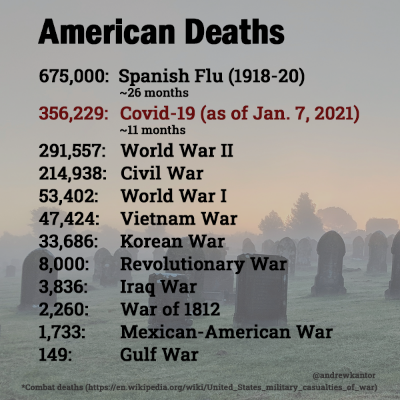
Yet another metformin recall
Smell ya later
Goodbye, “institutional green”
The early bird gets the plasma
The human way
Pollen and urinary pain
The Long Read: What-Could-Happen edition
January 07, 2021 ✒ Andrew Kantor
The first case of the more-virulent U.K. strain of the virus has been reported in Georgia. The South, including (obviously) Georgia, is now the nation’s hotspot for the coronavirus. South Dakota, West Virginia, and the Northeast are currently the farthest along distributing the vaccines. Innovation Compounding in Kennesaw is doing what it can to help get the Covid-19 vaccine to as many Georgians as possible. It’s giving drive-through vaccinations and set up a website — vaxgeorgia.com — to take appointments from healthcare workers who are eligible for the vaccine. It’s also getting help from volunteers from Mercer University College of Pharmacy. “We are honored to help administer vaccines to Georgia’s heroes in health care,” said the pharmacy’s president and CEO — and GPhA member — Shawn Hodges. “The more health care workers we can vaccinate, the faster they can safely return to work and vaccinate our communities.” Across the country other small pharmacies are rising to the challenge of vaccination. As one independent pharmacy owner put it, his whole career has, in a way, led to this point. “It’s like the Super Bowl, man,” said pharmacist Steven Hoffart. “It was talked up, talked up, talked up. That day is here.” They said that contact-tracing apps could be used to stop the spread of Covid-19. Privacy concerns? Don’t worry — this is just about the virus, nothing else. Oopsie: “Singapore’s police now have access to contact tracing data“. Well, so much for getting people to use an app the next time around. Here’s a neat finding out of University College London: If chemotherapy drugs can also heat cancer cells (using magnetic iron oxide nanoparticles and a magnetic field, of course), those drugs are more effective — up to 34 percent more effective, in fact. [O]nce the nanoparticles have accumulated in the tumour area, an alternating magnetic field can be applied from outside the body, allowing heat and chemotherapy to be delivered simultaneously. The effects of the two treatments were synergistic — that is, each treatment enhanced the effectiveness of the other, meaning they were more potent when combined than when separate. Apparently it can protect people from a variety of cardiac and metabolic disorders, including type 2 diabetes and coronary artery disease. The downside: Most people don’t have much, and it’s not clear anyone can actually get it. They found that several common and chronic diseases were less prevalent among people with detectable brown fat. For example, only 4.6% had type 2 diabetes, compared with 9.5% of people who did not have detectable brown fat. Similarly, 18.9% of individuals who carried brown fat had abnormal cholesterol, compared with 22.2% of those without brown fat. by Phuoc Anne Nguyen PharmD, MS, BCPS and Tracy Nell Dabbs, PharmD, EP Pharmacist When the COVID-19 vaccines first arrived, there was a lot of excitement and some nervousness among pharmacists. In just 8 short months, we have started to #endCOVID with the initial COVID-19 vaccines and have begun planning to ensure a smooth process. The final goal is to vaccinate as many people as possible. For this article, Tracy and I collaborated to share our two different perspectives. We want to provide a roadmap for pharmacists leading their COVID-19 vaccination programs. Our hope is to share our lessons learned and strategies to help guide you on your vaccination journey. Now more than ever, mass immunization will be a healthcare team endeavor to #endCOVID. Close collaboration among interprofessional teams, such as employee health, hospital leadership, supply chain, IT Teams, etc. is the key that will open the door to success! We welcome your comments and invite you to share your lessons learned as well. We want to provide a roadmap for pharmacists leading their COVID-19 vaccination programs. Our hope is to share our lessons learned and strategies to help guide you on your vaccination journey. READ OUR ARTICLE ON LINKEDIN This time it seems that “a few organisms in the gut microbiome play a key role in type 2 diabetes,” according to Oregon State University researchers. It’s all about glucose metabolism, and there are four type of bacteria that apparently affect it — two for the better (Lactobacillus johnsonii and Lactobacillus gasseri), two for the worse (Romboutsia ilealis and Ruminococcus gnavus). “Our study reveals potential probiotic strains for treatment of type 2 diabetes and obesity as well as insights into the mechanisms of their action. That means an opportunity to develop targeted therapies rather than attempting to restore ‘healthy’ microbiota in general.” A Covid-19 vaccine for them is on the way, and is expected to be approved later this year. Downside: [B]ecause the vaccine requires a complex delivery method called electroporation — using a brief pulse of electricity to allow the vaccine to enter cells more easily — it’s likely it will initially only be available at larger clinics with the right tools to administer it. “U.S. Is Blind to Contagious New Virus Variant, Scientists Warn” — specifically, they’re saying we’re not (yet) equipped to do enough genetic sequencing: “The United States has no large-scale, nationwide system for checking coronavirus genomes for new mutations.”Cat vaccine, brown fat benefits, indy pharmacy Super Bowl, and more
Local Covid news
Shout out to Cobb County pharmacy
Speaking of independent pharmacies….
This is why we can’t have nice things
Hot chemo news
Brown fat, brown fat, what do you do?
A Roadmap for Pharmacy Leaders on the COVID-19 Vaccination Journey
The gut biome is at it again
Don’t worry about your cats
But do worry* about what’s coming
*But don’t panic
January 06, 2021 ✒ Andrew Kantor
As America’s sputtering Covid vaccine rollout* continues, questions are coming up about changing the schedule of doses, or even cutting them in half. Don’t do this, says the FDA. Those changes “are premature and not rooted solidly in the available evidence.” “If people do not truly know how protective a vaccine is, there is the potential for harm because they may assume that they are fully protected when they are not, and accordingly, alter their behavior to take unnecessary risks.” The latest numbers show a frightening 20 percent positivity rate in Covid-19 tests. The submission deadline is February 1, 2021! Do you know a Georgia pharmacist who deserves recognition for his or her work? Perhaps an amazing young pharmacist, an outstanding innovator, or someone who has worked hard to fight drug abuse? Or maybe it’s someone who has spent a lifetime in service of others and the profession of pharmacy. It’s that time of year — time to start choosing the best of the best in Georgia pharmacy, and that means we need your nominations for the 2021 awards. They’ll be presented at the 2021 Georgia Pharmacy Convention in Amelia Island, Florida. Who are we looking for? Check out the details on that awards page, including criteria and a link to nominate. These are GPhA awards, but the nominations come from you — and that’s what gives them meaning! Remember: The deadline for submissions is February 1, 2021. Like a neighbor borrowing your chainsaw to cut down your favorite tree, it seems that P. gingivalis bacteria likes to borrow growth molecules from V. parvula, a “common yet harmless bacteria in the mouth” and then destroy your gums. The stronger the friendly(ish) V. parvula gets, the more power it gives to the nasty gingivitis-causing bacteria. It’s a totally one-sided relationship, too, as “V. parvula received no obvious benefit from sharing its growth molecules,” according to University at Buffalo researchers. So the U.K. variant of Covid-19 spreads faster than its more-common cousin, but the current vaccines should prevent it. But then there’s the South African version, which, it seems, may not be as vulnerable to the vaccine. Specifically, the variant found in South Africa has more mutations in its spike protein. […] If the spike protein accumulates too many mutations, it may become unrecognizable to the immune system, allowing the virus to avoid detection in the body; this is the potential concern with the new variant. Set your Google Alert to keep an eye on “501.V2”. Were you worried about drug companies’ not making enough money? After all, demand has dropped during the pandemic (and there are those pesky drug-pricing rules from HHS). Fear not! They’ve already begun raising prices for 2021 — on average at more than twice the rate of inflation. Why isn’t there a vaccine for fentanyl? Yes, it’s possible, and yes, it’s being researched. The prototypes for these vaccines were established 50 years ago by chemically coupling heroin or fentanyl derivatives that are too small to induce antibodies to antigenic carriers —such as tetanus or diphtheria toxoids. Injecting this combination can produce antibodies against fentanyl within 6 weeks. And yes, they work: “proven to reduce brain fentanyl levels by 50% to 80% depending on the dose of fentanyl taken”. But right now, only the government is researching the potential of an opioid vaccine to help rein in the epidemic — why not private industry? (Hint: Could it be the profit potential?) The U.S. Preventive Services Task Force gave a grade-A rating to preexposure prophylaxis for HIV. That means that, starting this year, the Affordable Care Act requires all private insurers to cover PrEP treatment (e.g., with Descovy or Truvada) with no out-of-pocket costs to patients. Note: Those drugs can also be used to treat HIV, but the law only requires them to be free for prevention. Please, folks, take care of your mental health. We’re all a bit stressed these days, but the end is in sight (in a good way). Not even Walmart. Facing a lawsuit from the U.S. government for its role in the opioid crisis, now former Walmart pharmacists say they were raising red flags for years. “They told me, ‘Do not reach out to the DEA, do not call the police. If you do so, your employment is going to be terminated immediately,’ ” [pharmacist Ashwani] Sheoran said, describing a warning he said was issued by his supervisor. Haven, the healthcare “venture” from Amazon, Berkshire Hathaway, and JPMorgan, is shutting down. It lasted three years. Floyd’s scary numbers, when good bacteria do nothing, the virus to worry about, and more
Don’t mess with the vaccine: FDA
* Actually 50+ separate rollouts
Floyd County: Wear your masks and wash your hands
Reminder: Nominate Someone for a 2021 GPhA Award
No good deed…
Be very afraid
The rising
A different vaccine question
Free PrEP has started
Don’t end up like this guy
Nobody puts pharmacists in the corner
ICYMI
January 05, 2021 ✒ Andrew Kantor
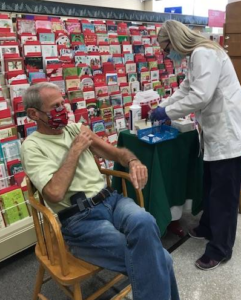
So many numbers — deaths, hospitalizations, positive tests — which one will tell you whether the pandemic is getting better or worse? Hospitalization counts, says the Covid Tracking Project, because it’s the one metric not affected by testing slowdowns or reporting delays. * * * In Georgia: As of January 3 there were 4,921 hospitalized with Covid-19 — that’s about 30.5 percent of all hospitalized patients … and 20 percent higher than the previous week. Scary: Today, 89.8% of the state’s ICU beds are full. As of yesterday’s HHS Community Profile Report, 41% of those beds are held by a COVID-19 patient, nearing half of all ICU beds in use. * * * Georgia adds more people to “you can get the vaccine” list: people aged 65 and older, law enforcement officers, firefighters, and first responders are now on the list. (It previously only included healthcare workers and staff and residents of long-term care facilities.) Here’s GPhA’s Jeff Lurey getting his from pharmacist (and GPhA past president) Pamela Marquess: That in mind, county health departments in North Georgia are switching their focus from testing to vaccinations. Beginning January 11, testing will be offered at health departments in Fannin, Gilmer, Murray and Pickens counties Monday through Friday between 8:00 AM to 9:00 AM for symptomatic first responders, school employees and court staff. In Cherokee and Whitfield counties, COVID-19 testing will continue to be provided to anyone who needs it Monday through Friday from 8 AM to 11 AM, but by appointment only. To make an appointment for testing in Cherokee and Whitfield counties, call 1-888-881-1474. * * * Outpatient antibody treatments, which can work well for Covid patients, have been sitting unused — they’re not FDA-approved for Covid-19, and they take time and effort to administer (not good for overwhelmed hospitals). But now dialysis centers are stepping up to give them — which makes sense, because their patients are among the highest risk (and dialysis centers are also perfectly equipped for that kind of outpatient procedure. * * * Hesitancy: A lot of frontline healthcare workers — we’re talking 29 percent — are hesitant about or outright refusing the vaccines. Why? Fears of it having been rushed, lack of testing on Black and Hispanic people, and distrust of the government. Ironically, those frontline workers are disproportionately people of color — a group most at risk from the virus, but also one with memories of “past atrocities, such as the unethical surgeries performed by J. Marion Sims and the Tuskegee Syphilis Study.” * * * Trust the long-haulers: A lot of people who recover from the coronavirus find themselves experiencing a host of nasty symptoms, from breathing trouble to “brain fog.” No one is quite sure what’s up with these “long haulers,” but healthcare pros are being told clearly not to dismiss these complaints. Clearly something is going on. How the problems play out in different people is unpredictable, doctors say, with some gradually getting better and others not. Multiple organs are involved, so multiple biological mechanisms might be at play. If you’re already taking vitamin D and drinking three to four cups of coffee a day, you might want to add glucosamine/chondroitin to your daily regimen. West Virginia University researchers found that … …individuals who took glucosamine/chondroitin […] on a daily basis for at least 1 year saw a 39% reduction in mortality from all causes of death and a 65% reduction in the likelihood of death from cardiovascular disease. This was an epidemiological study, not a clinical trial, so don’t read too much into it yet. But still, worth a mental note. Remember the administration’s plan to tie Medicare reimbursements to certain drugs to what other countries are paying? It’s hit a speed bump, with the U.S. District Court of Maryland issuing a 14-day injunction. Why? “The rule was promulgated based on an executive order, not a congressional act, and standard notice and comment procedures were not followed.” It’s called kambo, and it’s the newest craze in — you guessed it — California (and elsewhere). It’s been touted to help ailments such as depression, chronic pain, hypertension, migraine headaches, thyroid disorders, diabetes, and alcohol addiction. But… Those who’ve experienced it describe it as one of the worst experiences of their lives, while, at the same time, they also voice plans to undertake the experience again.Hesitant healthcare workers, latest hot supplement, frog poison antics, and more
Let’s do the Covid-19 bullet points
The latest way to live forever
Medicare pricing change won’t be coming anytime soon
There are no words
December 30, 2020 ✒ Andrew Kantor
Israeli scientists have cured a type of deafness using a virus to deliver a genetic treatment. The bad news: It’s only one particular type of deafness (and a rare type at that); it’s also only been done in mice The good news: “[T]his novel therapy could lead to a breakthrough in treating children born with various mutations that eventually cause deafness.” In case you haven’t noticed, there’s been a bit of news about vaccines these days. Soon enough you’re going to have a lot more people getting one in particular. You know there’s paperwork, but are you sure you know the latest rules and regs? Yes, this is a promo for a GPhA CPE class — and an important one: The Vaccine Protocol Update presented by the terrific Johnathan Hamrick, PharmD. Get this: It’s now available for home-study CPE. Yep, you don’t need to step out of your home, and you can still get the same great education (minus the Q&A, to be fair). Learn the protocols, what you can deliver, how things have changed, even storage, handling, and disposal. It’s a mere $20 for GPhA members. Click here for info and to register today! You know how newspapers black out someone’s eyes to hide their identity? What happens when you can’t see someone’s nose or mouth because they’re wearing a mask? York University researchers wondered that — how hard is it to recognize someone when you can only see their eyes. Turns out, it’s about 15 percent harder. “[F]ace perception typically relies on holistic processing, that is the processing of the face as whole. However, for masked faces, this form of perception is not as efficient, and observers process different face features separately,” And if you’re wondering what it means to process faces holistically, may we introduce you to the “Thatcher Effect“? Andy Miller of Georgia Health News has a list of “The Top 10 Georgia health care stories in 2020,” and no, they aren’t all about Covid. “Clowns Make Hospitals Less Scary For Young Patients.” (Says Son of Buzz: “Maybe little kids who don’t know any better.”) Timmy went to sleep real fast! If you have patients with chronic kidney disease who are taking RAS inhibitors, there’s a chance their prescribers will want to stop those meds. Some small-scale studies found that cutting out RAS inhibitors can improve kidney function. What you might need to know: It ain’t that simple. Especially when the kidney disease is advanced, the dangers of stopping might outweigh the benefits. Swedish researchers looking at the issue found there isn’t enough information to support discontinuing the meds: “Rather than routinely discontinuing treatment, our results show that the issue is a complex one and that doctors must carefully weigh the protective effects of RAS inhibitors on the cardiovascular system against the potential harms on the kidneys.” …does a facepalm: “Privileged White U.S. Citizens Have Better Health Outcomes” …and then a double-take: “White US citizens in the 1% and 5% highest-income counties […] had worse outcomes for infant and maternal mortality, colon cancer, childhood acute lymphocytic leukemia, and acute myocardial infarction compared with average citizens of other developed countries.” The coronavirus relief bill that Congress passed (and that was signed into law) includes lifetime coverage of kidney transplant drugs for people on Medicare. It’s expected to save about 375 lives — and $40 million — per year.Who was that masked man? Plus surprising clown news, Captain Obvious is confused, and more!
A step toward a deafness cure*
* I refuse to use headlines like “Can you hear me now?” or “Now hear this” — too easy
Get ready to vaccinate
Face the face

It’s the time of year for top-10 lists
Can’t possibly be true

Don’t (necessarily) stop those CV meds
Captain Obvious…
ICYMI
December 29, 2020 ✒ Andrew Kantor
Overuse of azithromycin to treat Covid-19 (hint: it doesn’t work) — as well as a slowdown in STD testing — has helped lead to the spread of “super gonorrhea” that’s just about untreatable. =AND= To be filed under the ever-growing list of post-Covid issues is now psychosis: “Most had no history of mental illness and became psychotic weeks after contracting the virus. ” Here’s an interesting tidbit: “The owners of dogs with diabetes are more likely to acquire type 2 diabetes themselves.” Or, more accurately, it’s the other way around: The link is not a total surprise, as previous research has found that people with overweight who own dogs tend to have overweight canines as well, perhaps due to a shared sedentary lifestyle. Having overweight increases a person’s risk of developing type 2 diabetes. It’s hard not to make jokes about minks and Covid — “Zombie Danish Minks” is both a perfect headline and a great name for a rock band — but the Atlantic* would like to tell you that “The Mink Pandemic Is No Joke.” If the virus keeps spilling over into wild animals, it could circulate in parallel and keep reseeding outbreaks among humans. We know ketamine works as a virtually instant treatment for major depression, but it’s not entirely clear why. Kiwi researchers think they have an idea, though. In short, ketamine seems to help reprogram the brain to be, in a sense, more willing to accept new ideas — specifically, new ideas about yourself. So if the idea that you’re a failure is too deeply ingrained, ketamine can help your brain get out of the rut. For all the stories about how people are hesitant to get a Covid-19 vaccination, that doesn’t mean they’re above stealing it. And that means pharmacies have to install all sorts of security measures. [H]ealthcare systems have learned from the opioid epidemic, where threats of theft can come from both outside the hospital — and from the people working there. The new stimulus bill just passed by Congress includes a continuation and expansion of Paycheck Protection Program loans. Could your pharmacy be eligible? Maybe — small businesses are included this time. It might be worth talking to your financial advisor or the Small Business Administration. One of the biggest questions about the Covid-19 vaccine is how long immunity lasts. Would it be permanent, like the measles vaccine, or would it require annual shots like the flu? The latest: An Aussie study finds that it seems to last at least eight months. What that means: Assuming it’s true, we have at least an eight-month window to achieve herd immunity. For the pandemic to be brought well under control, if not eradicated altogether, we’ll need at least 70 percent of a population to be immune within the same window of time. Only then can we be sure the virus will have so few places to hide, it just might vanish. You can attack pathogens with a chemical, and the body can attack as well. Scientists at the Wistar Institute says they’ve got a way to use both at once. This “creative, double-pronged strategy” not only kills the bacteria directly, but summons a rapid immune response. Together, they figure, it can overcome antimicrobial resistance. “We believe this innovative [dual-acting immuno-antibiotics] strategy may represent a potential landmark in the world’s fight against [anti-microbial resistance], creating a synergy between the direct killing ability of antibiotics and the natural power of the immune system.”Diabetic dogs, no laughing minks, a new way to fight bacteria, and more
Covid-19 just keeps on giving
Diabetes and your dog
Think mink
* “World’s Most Depressing Magazine”
Ketamine loosens your brain
Securing those vaccines
You might be eligible for a PPP loan now
An eight-month window
Winning the war on two fronts
December 24, 2020 ✒ Andrew Kantor
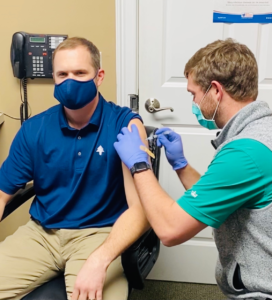
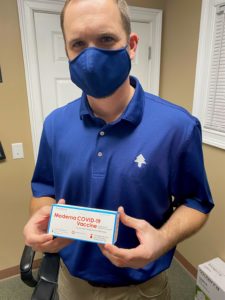
Pfizer has reached a deal with the U.S. government to supply an additional 100 million doses (i.e., enough for 50 million people). BUT check it out: Here’s GPhA member Ben Ross, owner of Forest Heights Pharmacy in Statesboro, getting vaccinated by his business partner, pharmacist Pete Nagel. (And yes, you can and should admire their coordinated masks and shirts.) And here’s Ben holding a box that can potentially save a lot of lives: What, you thought the opioid crisis lawsuits were all over? Nope. The feds’ suit against Walmart is a little different, than the other ones, though: The Justice Department’s lawsuit claims that Walmart sought to boost profits by understaffing its pharmacies and pressuring employees to fill prescriptions quickly. That made it difficult for pharmacists to reject invalid prescriptions, enabling widespread drug abuse nationwide, the suit alleges. Yeah, U.S. life expectancy had gone up in 2019, but that’s behind us now. No hyperbole; 2020 is the deadliest year in American history. (And with one American dying from Covid every 30 seconds, the few days left in the year are just awful icing on the cake.) If you have Black or dark-skinned patients, here’s an important piece of info: Fingertip blood oximeters are less reliable when used with dark skin. We’re talking three times more errors. With blood oxygenation being used to determine how severe a case of Covid-19 someone has, this is a scary bit of news. “I think most of the medical community has been operating on the assumption that pulse oximetry is quite accurate,” said Dr. Michael W. Sjoding […] “I’m a trained pulmonologist and critical care physician, and I had no understanding that the pulse ox was potentially inaccurate — and that I was missing hypoxemia in a certain minority of patients.” A pair of researchers have found a way to alter the genes of gut bacteria so they respond to light. Why would you want to do this? Because if you alter the right genes, you can use light to make the bacteria to behave the way you want it to. For example, you could engineer a bacteria to produce more colanic acid, which seems to improve lifespan (at least in nematode worms). But you only want the acid in the small intestine, and you don’t want to overdo it. Make that bacteria respond to green light, though, and you can control when and where it happens. Presto: Immortality! (Well, possibly better health at least.) The new Covid-19 strain from Britain is probably already here. It’s more virulent, but not (it seems) more deadly … although a different variant (in South Africa) does seem more dangerous. The vaccines we have should work against it. Most of Europe has closed their borders with the U.K. The U.S. is still taking travellers from there, but the CDC is at least a little worried. Black-footed ferrets are cute, endangered, capable of getting Covid-19 … and potentially spreading it to humans (possibly after helping it mutate). So scientists in Colorado aren’t waiting for a commercial vaccine — they’re acting now. As one put it: “If the virus returns to the animal host and mutates, or changes, in such a way that it could be reintroduced to humans, then the humans would no longer have that immunity. That makes me very concerned.”Saving the ferrets, pharmacists get shots, the dark side of pulse ox, and more
More vaccines a-comin’
U.S. sues Walmart for understaffing pharmacies
Deadliest year in history
You can’t always trust pulse oximeters
Green means go
British invasion in five sentences
Ferrets get protection

December 23, 2020 ✒ Andrew Kantor
No more hiding in the back, pharmacists. Rite Aid’s new “RxEvolution” strategy will take pharmacists from the back of the store and put ’em right out front. The Store of the Future is designed so that pharmacists sit behind the registers, so that they can easily come out to the customers and can bring them over to their consultation area, streamlining the entire experience. This is clearly great news for pharmacists, who will now be able to “address mind, body and spirit of each of [Rite Aid’s] customers.” In the movies, the moment a cure is discovered it’s quick and easy to get it to everyone. Despite the evidence, this isn’t actually a movie, and vaccine distribution is tricky. Chaotic, you might say. In rural areas (and yes, the article specifically mentions Georgia) it’s even trickier. Storage requirements, federal hiccups, questions of who gets it, weather issues — it all adds up to a bumpy road, but one that’s at least going in the right direction. “It’s day to day and even then hour by hour or minute by minute — what we know and how we plan for it. We’re building the plane while flying it.” In all the excitement of having one, two, three vaccines that seem to work against Covid-19, there’s one huge question: How long will it last? The answer could very well be “Not as long as we hope.” From ” Labeling, Packaging, and Nomenclature” to “Order Communication and Documentation” to mixups, bad labels, and more, check out the Pharmacy Practice News list of 2019’s* medication errors. If you woke up thinking “Degrading the endoplasmic reticulum of cancer cells is one way to fight them!”, German researchers are right there with you. They found that loperamide — yes, the anti-diarrhea drug — seems to cause the cells in glioblastoma brain tumors to self-destruct. It’s only in the lab at the moment, but they’re optimistic, as only Germans can be. The loperamide-induced death of glioblastoma cells could help in the development of new therapeutic approaches for the treatment of this severe form of cancer. Let’s say you have diabetic mice. And let’s say you’re treating them with GLP-1 agonists. So far, so good, but get this: Indian researchers found that combining the anti-cancer drug entinostat (aka MS-275) with a GLP-1 agonist like Trulicity, [does an even better job with diabetes and glucose control]( [M]ice treated with the combination of GLP-1 agonist and MS-275 had a much lower fasting glucose level than control mice that were sustained with repeat dosing. Where a high-fat diet increased fasting blood sugar in the untreated mice, the mice on the combination treatment remained in control. University of Bristol researchers are thrilled to announce that, after detailed study of more than 1,400 genes and the use of sophisticated computer algorithms, they have determined where fleas fit on the tree of life. Harvard biologists have made a detailed genetic and bioinformatic study of the bacteria living in the human mouth and have concluded ‘there are a lot of different kinds.’ “The Mysterious Link Between COVID-19 and Sleep,” from the Atlantic. There’s definitely some connection between Covid-19 and sleep, and researchers are working to figure it out. Some data points: Roughly three-quarters of people in the United Kingdom have had a change in their sleep during the pandemic, according to the British Sleep Society, and less than half are getting refreshing sleep. “In the summer, we were calling it ‘COVID-somnia’.”What’s in your mouth? Plus vaccine chaos, the sleep/Covid connection, and more
Come out, come out, wherever you are
Land of confusion (but getting better)
It may not last
Last year had some problems too
* The Institute for Safe Medication Practices takes some time to compiles them, obviously.
A diarrhea drug fights cancer…
…and a cancer drug fights diabetes
Biologists at work
The Long Read: Sleeping through Covid
December 22, 2020 ✒ Andrew Kantor
Covid-19 cases were up 14.5 percent in Georgia last week, as the post-Thanksgiving virus surge continued with more than 44,000 people testing positive. And no, it’s not about the number of tests — the percentage of positive results is going up. Wondering how the two current Covid-19 vaccines stack up, side by side? Stat has the overview, from storage requirements to side effects to dosage. Opioid overdoses are on the rise again. Remember: Pharmacists have a role to play. Stock and dispense naloxone to save lives. It can be that simple. The CDC Official Health Advisory issued a warning about the increase in fatal drug overdoses across the United States driven by synthetic opioids before and during the COVID-19 pandemic. What’s in the advisory? The issue: Rapid increases in overdose deaths involving synthetic opioids excluding methadone — especially illicitly manufactured fentanyl. Why the advisory: “A concerning acceleration of the increase in drug overdose deaths,” especially from March to May 2020. Yes, that coincides with the first wave of the pandemic. What’s changed: Recommendations for communities, including pharmacists and other healthcare providers. The big news out of Europe is the emergence of a new strain of Covid-19 in Britain. It (seems to) spreads faster, but the vaccine (seems to) still work on it. Why the “seems to”? Because all the testing so far has been in a lab. Short version: This isn’t unexpected, isn’t a huge deal, but it bears watching. It’s not just your blood pressure that can foretell a risk of heart attack or stroke — it’s the difference in blood pressure between your two arms. So found a global study out of the University of Exeter, using the records of almost 54,000 people. “[T]he higher the difference in blood pressure between arms, the greater the cardiovascular risk, so it really is critical to measure both arms to establish which patients may be at significantly increased risk. Patients who require a blood pressure check should now expect that it’s checked in both arms, at least once.” The company is making the leap from pharmacy discounts to … telemedicine? Yep. As a means to augment its existing prescription medication savings offerings, the new Gold plan will provide members with the ability to: “See a doctor or healthcare provider online for as little as $10 per visit; Get treatments and prescriptions for conditions ranging from acne to high cholesterol;” And, of course, the usual pharmacy savings stuff. “Sleep, Diet or Exercise? Here’s The Factor Most Linked to Better Mental Health“. It’s sleep. [W]hile physical activity was the second clearest indicator of wellbeing, it was sleep quality that outranked them all as the strongest predictor of good mental health. Aminoglycosides: powerful and common … but with a potential side effect of deafness. Now Stanford scientists have developed a new type, based on sisomicin, that works as well, but without the side effects. The trick was to take into account how the ear’s sensory cells work: They open ion channels to get signals to the brain. Aminoglycosides can get into those channels and kill the cells, causing hearing loss. By tweaking the non-clinical side of the antibiotic’s molecule, they were able to make a version that didn’t enter those ion channels. Bonus: The same tweaking also prevents aminoglycosides from affecting the kidneys — another common side effect. Novartis expected its new inclisiran cholesterol drug to be a blockbuster. But it didn’t expect a worldwide pandemic that would keep its factories from being inspected by the FDA. But that’s what happened. The agency rejected approval for inclisiran not because there was anything wrong with the European factory, but because it couldn’t get to the plant because of Covid travel restrictions. At least one ophthalmologist is sounding the warning: Don’t get over-eager on New Year’s Eve and pop a champagne cork into someone’s eye. “We want people to find some joy in these difficult times, but if you’re going to introduce a pressurized bottle with a potential flying projectile, an unguided little missile, do it with caution and be aware that there is a risk.”Flying cork danger, blood pressure balance, virus mutation panic, and more
Georgia’s getting clobbered
Pfizer/Moderna cage match
CDC issues opioid-overdose health advisory
Oh no, it’s mutating! (Don’t panic)
You want it perfectly balanced, as all things should be
GoodRx expands
Saving you a click
Building a better antibiotic
Nobody expects a pandemic-nixed inspection
You’ll put your eye out!
Do you want to send your members the daily Buzz email newsletter (customized for your state and organization, perhaps)? Let’s talk — just drop me a note at andrew@gphabuzz.com!

- As Lung Disease Threatens Workers, Lawmakers Seek Protections for Countertop Manufacturers
- Republicans Fret Over RFK Jr.’s Anti-Vaccine Policies While MAHA Moms Stew
- Primary Care Is in Trouble. So Doctors Band Together To Boost Their Market Power.
- Cosmetic Surgery Investigation Prompts Warnings for Patients, and a Push for Tighter Safety Standards
- Listen to the Latest ‘KFF Health News Minute’
- Banks Are Becoming Bulwarks Against Scams for Vulnerable Seniors
- January 2025
- December 2024
- November 2024
- October 2024
- September 2024
- August 2024
- July 2024
- June 2024
- May 2024
- April 2024
- March 2024
- February 2024
- January 2024
- December 2023
- November 2023
- October 2023
- September 2023
- August 2023
- July 2023
- June 2023
- May 2023
- April 2023
- March 2023
- February 2023
- January 2023
- December 2022
- November 2022
- October 2022
- September 2022
- August 2022
- July 2022
- June 2022
- May 2022
- April 2022
- March 2022
- February 2022
- January 2022
- December 2021
- November 2021
- October 2021
- September 2021
- August 2021
- July 2021
- June 2021
- May 2021
- April 2021
- March 2021
- February 2021
- January 2021
- December 2020
- November 2020
- October 2020
- August 2020
- July 2020
- March 2020
- February 2020
- January 2020
- December 2019
- November 2019
- October 2019
- September 2019
- August 2019
- July 2019
- June 2019
- May 2019
- April 2019
- March 2019
- February 2019
- January 2019
- December 2018
- November 2018
- October 2018
- April 2017
