November 20, 2020 ✒ Andrew Kantor
It seems that kids have a secret superpower: They can carry the malaria parasite, be asymptomatic, and then pass it on to mosquitoes. If you’re thinking, “Ha! Serves those skeeters right!” don’t. “Since this disease is passed from humans to mosquitoes and then back again, rather than from person to person, this finding is worrisome.” Gestational diabetes: Women who’ve had it are at high risk for type 2 diabetes even after 20 years (according to Finnish research). The good news: Their risk of type 1 diabetes only lasts seven years. If you woke up this morning and thought, “Yeah, but what do chromosomes really look like?” I’ve got some great news for you. Using multiplexed fluorescence in situ hybridisation and super-resolution microscopy*, Harvard researchers got some lovely 3-D images of chromatin. And it doesn’t look like what your high school bio text said it does. Another excuse to release a new, more expensive textbook In a surprise move, CMS will require health insurers not only to tell patients how much their out-of-pocket drugs costs will be, but also how much they pay for the drugs. The idea is that it will be easier for patients to consider alternative, less-expensive medication, and ” may even enable health plans to buy drugs more cheaply for their members.” It’s the departing Trump administration’s most ambitious effort to illuminate the complex, secret and lucrative system of prescription drug pricing, in which health plans, drug manufacturers and pharmacy benefit management firms agree on prices. Caveats: The rate of HIV-related deaths in the U.S. fell a whopping 48 percent from 2010 to 2017, according to the CDC. Lots of people suffer from tinnitus, but here’s the thing: No one has found the physical reason it actually happens, so we all just take one another’s word that “my ears are ringing.” Until now. Maybe. Scientists in Australia — where it’s critical to hear any of the thousands of deadly predators sneaking up on you — think they’ve found the first way to ‘see’ and measure tinnitus. It’s called functional near-infrared spectroscopy (fNIRS), and it “allows scientists to measure brain blood flow activity related to sound.” And there, in the right auditory cortex, seems to be the smoking gun. Unfortunately, “An objective measurement may not change the reality for many patients today, but it could help those in the future get help sooner.” Sertraline, found Belgian researchers, seems to inhibit the growth of cancer cells. Many cancers secrete and then become “addicted” to serine and glycine, which stimulates tumor growth. But sertraline “inhibits the production of serine and glycine, causing decreased growth of cancer cells.” People who took vitamin D supplements, found Harvard researchers, “had a significant reduction in advanced cancers” — but only among people who weren’t overweight. Pancreatic cancer is a nasty beast that creates connective tissue that can protect the tumor from attack. But now researchers at Fox Chase Cancer Center in Philly made an interesting discovery. It seems a protein called Netrin-G1, which is important for brain development, is (for some reason) also produced by pancreatic cancer cells — and those cells seem to need it to spread. So not only could this mean earlier diagnosis of pancreatic cancer (via monitoring Netrin-G1 levels), it “could provide the starting point for the design of new treatments in a type of cancer that is in dire need of effective therapies.” They recreate the smell of 16th-century Europe. (Hint: sweat, manure, and despair.) “I find it particularly interesting to make the audience get acquainted with a whole range of scents such as a stinky canal,” said Caro Verbeek, a scent historian at The Vrije Universiteit Amsterdam.Proof of tinnitus, first pic of a chromosome, the smell of history, and more
I believe the children are our future … if our future includes malaria
The diabetes risk that sticks around
Chromosomes: ready for their close-ups

* As one does
No one expects the insurance information
10 seconds of good news
Right auditory cortex, right auditory cortex, what do you hear?
Two potential cancer fighters
…and a pancreatic cancer breakthrough
When scientists get bored
November 19, 2020 ✒ Andrew Kantor
Pfizer and BioNTech say the final analysis of their Covid-19 vaccine shows it’s 95 percent effective — take that Moderna, with your measly 94.5% effectiveness. More people say they’ll get it, too. And in case it matters, Moderna has the Dolly Parton seal of approval. There’s always that guy who has to spoil the party. For today, the role will be played by The New York Times, Politico, and Bloomberg. NYT: “The Vaccines Will Probably Work. Making Them Fast Will Be the Hard Part*.” Politico: “Inoculations by December? States aren’t so sure.” Bloomberg: “Vaccine Safety to Remain Unclear Until Millions Get Their Shots” While it looks like we’re heading to the pandemic endgame (the “last big surge“), don’t forget that the situation is still six shades of awful. A vaccine won’t help anyone who gets Covid-19 over the holidays. Is the Joy of Family™ worth the risk of permanent heart, lung, and even brain damage? Georgia’s case numbers are going up, if you haven’t heard — we’re not being spared this latest wave. If it helps, Zoom is removing the 40-minute time limit for free meetings on Thanksgiving. So prop up that cam and keep it virtual just this once. Two studies seem to show that Covid-19 immunity will last months. “An Emerging Ebola-Like Virus in Bolivia Can Spread Between Humans, Scientists Find” Kudos to WellStar’s Laura Pearson — the oncologist, surgeon, and breast program medical director was featured in the Cobb County Courier talking about breast cancer awareness. “[T]he good news in all of this is we’re actually really good at taking care of breast cancer. And so even if somebody is diagnosed with breast cancer, the likelihood of them getting through treatment and going on to live a long productive life is, is really good.” It’s not just Op Warp Speed. Basic research paid for by the government over decades — from lipids and proteins to mRNA — paved the way for nearly all the Covid-19 vaccines in development. Covid endgame (and nay-sayers), next year’s scary threat, and more
Looks like we got this one
Can we please just enjoy the moment?
* America has plenty of faults, but when it comes to doing the impossible and doing it quickly — we got this.
Darkest before the dawn
More good news
Foreshadowing for season 2?
WellStar shout out
Tomorrow is World Toilet Day
The Long Read: Your Tax Dollars at Work edition
November 18, 2020 ✒ Andrew Kantor
Once this Covid nightmare is over, you know what’s coming? No, not just the murder hornets. Measles. That’s the prediction in an article in the Lancet. A combination of vaccines being put off, plus poor nutrition during lockdowns — especially vitamin A deficiency — means that “All these factors create the environment for severe measles outbreaks in 2021, accompanied by increased death rates and the serious consequences of measles that were common decades ago.” A daily pill combining atenolol, ramipril, hydrochlorothiazide, and a statin — plus aspirin — “cut the risk of heart attacks, strokes and heart-related deaths by nearly one third in a large international study.” After just over four years on average, aspirin alone did not make a significant difference, and the polypill alone showed a trend toward modest benefit. However, the polypill plus aspirin showed clear value, reducing the heart-related problems and deaths by 31%. Hydroxychloroquine still does not help treat Covid-19. Vanderbilt University researchers are the latest to prove it. Empagliflozin, which is supposed to be for diabetes, can “effectively treat and reverse heart failure in both diabetic and non-diabetic patients” — at least, according to researchers at Mount Sinai. Their clinical trial showed that this medication can improve the heart’s size, shape, and function, leading to better exercise capacity and quality of life, which will reduce hospitalizations for heart failure patients. If you have a rat with a broken leg that needs a titanium implant to heal, coating that implant with Lactobacillus casei bacteria — yes, that’s the same L. casei in yogurt — can make that bone heal faster. Researchers in Wuhan, China — yes, that Wuhan — “found there was a 27 per cent increase in bone tissue in the rats with the bacteria-covered implants compared with a 16 per cent increase in rats with regular implants.” Even better, not only did the bone heal faster, it was also more resistant to MRSA infection. Nifty! New York decided to add a tax to opioids — the idea was to both punish opioid manufacturers and generate revenue to treat addiction. But manufacturers and wholesalers simply decided not to sell opioids in New York, and the ones that still do increased their prices to above what Medicaid and Medicare will reimburse. “[Independent pharmacies] have little choice but to eat the cost, drop certain prescriptions or pass the expense along.” The U.S. may be bungling its response to Covid-19, but within our borders the Cherokee Nation is doing the opposite. It’s got the virus under control. How? “We acknowledged early on we should defer to the expertise of our public health staff to let them do what they do best.” That means mask mandates, “free drive-through testing, hospitals well-stocked with PPE, and a small army of public health officers fully supported by their chief.” The result: [T]he Cherokee Nation has seen no cases of workplace transmission; Sequoyah High School, with rapid testing and masks, reopened for in-person learning this fall; and elective medical and dental procedures have been widely restored. PFAs — chemicals used in a gadzillion products, from non-stick pans to pizza boxes — are in most Americans’ bodies. There’s evidence they cause all sorts of health issues (and, let’s face it, will probably be banned eventually). But here’s the thing: Kids exposed to PFAS had “significantly reduced antibody concentrations after given tetanus and diphtheria vaccinations.” You know where this is going. But one more tidbit: One particular kind of PFA likes to accumulate in the lungs. So… all that said, how much of an effect will PFAs have when the Covid-19 vaccine rolls around? (Optimist: There’s a good chance that the people in the human trials have as much PFA exposure as anyone, so those 90+ percent numbers should hold.) In what is a surprise to absolutely no one, Amazon has launched its online pharmacy.Reversing heart failure, healing with yogurt, the Cherokee solution, and more
Something to look forward to (not)
A simple polypill saves lives
Francisco Franco is still dead
When an off-label use is ‘reversing heart failure,’ pay attention
Bacterial bone healing
Elsewhere: Bad Move edition
Elsewhere: Good Move edition
So about that Covid vaccine…
ICYMI
November 17, 2020 ✒ Andrew Kantor
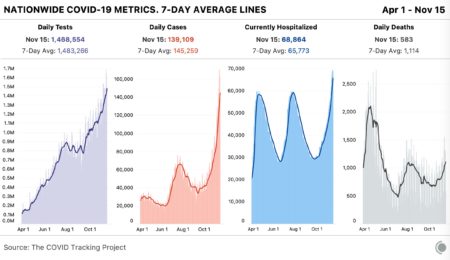
First Pfizer and BioNTech announced a Covid-19 vaccine with 90% effectiveness. Then the Russians bragged that their Sputnik vaccine was 92 percent effective. And now comes even more good news from Moderna, with a vaccine candidate that the company says is 94.5 percent effective against Covid-19. Like Pfizer’s, it’s also a messenger RNA vaccine, but the big difference: Moderna’s can be stored in a normal refrigerator — 36 to 48°F — for 30 days. (Pfizer’s needs to be stored at -70°C (-94° in Freedom Units), and can only last five days in a refrigerator.) That’s huge news for rural areas, where medical facilities usually don’t have those deep freezers. Still hanging over the whole vaccine issue, though, is the question of how states will pay to distribute it. Right now there’s not enough federal money set aside for the effort. Sure, President-elect Joe Biden promises* the money will be there, but that’s months away — and states are making plans now. There’s not only shipping, but tracking, reallocating, monitoring who got the first dose and who needs the second, training healthcare workers, collecting data, even finding safe locations for mass vaccination events — not to mention the effort to convince people to get the vaccine. There are myriad other costs too — including […] paying for secure convoys to transport the vaccine once it gets to states. “We can’t just throw it into Bob’s pickup truck and drive it down the road.” Hey pharmacy techs — it’s time to mingle! Like, tomorrow night! GPhA’s Academy of Pharmacy Technicians is hosting a networking event exclusively for technicians to let their (virtual) hair down (and, yes get some good ideas). It’s tomorrow, November 18, 2020 from 6:30 – 8:00 pm, via Zoom. Why mingle? All this plus fun, prizes, and a great chance to bond. Don’t miss out — register today! You probably know that copper is pretty good at killing bacteria. So do the folks at Corning, and they get paid to do something with that knowledge. In this case, the company has invented a paint additive that kills viruses and bacteria, thanks to a copper-based chemical that’s included. Once its registered with the EPA, Corning partner PPG will begin selling virus-killing paints. And we suspect other companies will follow. [Research shows that Corning Guardiant kills] other bacteria and viruses with greater than 99.9% efficacy in under two hours, including gram positive bacteria (such as Staphylococcus aureus), gram negative bacteria (such as Pseudomonas aeruginosa), and non-enveloped viruses (such as murine norovirus, which belongs to the hardest-to-kill class of viruses in terms of its susceptibility to disinfectants). Every day, the U.S. sets new records for infections and hospitalizations. More than 70,000 Americans are currently hospitalized for Covid-19. “It’s not one or two hotspots, the entire country is a hotspot of coronavirus infection.” And yet there are still people who consider wearing a mask to protect other people to be some kind of political statement. Hospitals and healthcare services across the country are overwhelmed — and it’s worse than March. In some hospitals, the staffing is so dire that asymptomatic doctors and nurses infected with coronavirus are allowed to keep working in Covid-19 units. “In previous waves, health-care workers from less-affected areas were deployed to New York and the South. It isn’t possible to send an army of health-care personnel into hot zones when the entire country is a hot zone,” wrote Former FDA Commissioner Scott Gottlieb and former CMS Administrator Mark McClellan in the Wall Street Journal. ICU beds are being rationed, even for heart-attack victims. Elective surgeries are being cancelled — and the definition of “elective” is being stretched. “In Idaho, some patients needing hysterectomies or joint replacements will have to wait.” In the absence of federal rules, states are enacting their own: closing schools, restricting or eliminating indoor dining, prohibiting or restricting social gatherings (including religious services). “We have legitimate reason to be very, very concerned about our health system at a national level,” says Lauren Sauer, an assistant professor of emergency medicine at Johns Hopkins University who studies hospital surge capacity. And if you think it’s bad now, wait till after Thanksgiving… Statins sometimes have side effects: fatigue, muscle aches, the condition known as hot dog fingers, joint pain, nausea. But get this: Researchers in London found that those side effects could be the “nocebo” effect — patients got the side effects even when taking a placebo. And not just some. “The researchers found 90% of symptoms experienced by the patients were present when they took placebo tablets. ” So maybe try telling patients taking a statin, “Oh, this is a new formulation. No muscle aches” or “You’ll be able to speak to the dead.” Can’t hurt. Check this out: It turns out that mask mandates are good for local economies. It’s both kind of obvious … and a study from Washington University in St. Louis. Essentially, when the virus is hitting hard, people are understandably concerned about going out — especially if there will be others who refuse to wear a mask. (Remember, masks primarily protect others from the virus.) But, WashU found: In communities where masks were mandated, consumer spending increased by 5% on average […] Researchers found the effect was greatest among non-essential businesses, including those in the retail and entertainment industries — such as restaurants and bars — that were hit hard by the pandemic. So wear masks, make others safer, and do your part for the local economy. “When people feel safer to spend, or more importantly, when the pandemic is kept at bay, the economy is more likely to have a quick recovery. Not to mention the lives that will be saved.”Virus-killing paint, imaginary side effects, Covid still out of control, and more
Moderna ups the ante — and takes some heat
But there’s the question of money
* The check’s in the mail. Honest.
Techs: This is tomorrow!
Virus-killing paint
The pandemic is a firestorm and it’s not under control
WSJ: “It’s Now Up to Governors to Slow the Spread”
Statins side effects — mostly in the head?
Masks: good for the economy
November 14, 2020 ✒ Andrew Kantor
Yesterday’s reminder about the November 17 region meetings had a broken link for registering. Sorry about that! Here is the correct link to register — don’t miss the meeting and the easy CE! More reasons not to vape: “E-cigarette users have a roughly 30% higher risk for developing respiratory illness, such as chronic obstructive pulmonary disease, emphysema, chronic bronchitis and asthma.” A bittersweet congratulations to GPhA past president Liza Chapman, who has taken over as chair of the Georgia Pharmacy Foundation. Alongside her volunteer work with GPhA and the foundation, Liza is currently VP of partnership development for PTCB. Liza follows in the footsteps of Jim Bartling, who passed away in September. (And while we’re talking foundations, congrats also to Wellstar’s Julie Teer, named president of the Wellstar Foundation.) Eventually — probably soon — there will be a Covid-19 vaccine ready to ship to the teeming millions. How’s that gonna go? It’s a big country, the virus has to be stored correctly, and there are other issues that states — which will be handling the bulk of the distribution — will need to deal with. When you’re looking to keep something cool, there are worse places to look than camel fur*. And that’s just what MIT researchers did, coming up with a combination hydrogel and aerogel that both insulates and cools whatever it’s wrapped around. The hydrogel layer is like the camel’s sweat gland, allowing water to evaporate and provide a cooling effect, whereas the aerogel layer plays the same role as the camel’s fur, providing crucial insulation to keep out heat from the surroundings, while still allowing water from the hydrogel to escape through it. (Honestly, the only reason they say “inspired by camel fur” is as an excuse to include a camel photo.) You come home from a long day on your feet. You take off your shoes. And as the air fills with the acrid tang of a terrifying miasma, you wonder if you’re in violation of an EPA reg … or the Geneva Conventions. Fear not. Survivors in your home might soon be able to help. Dermatologists in Thailand have found that socks coated with a zinc oxide nanoparticle produced significantly less foot odor. Study results showed cadets in the coated sock group demonstrated less foot odor compared with baseline, while cadets in the uncoated sock group produced more intense foot odor with a greater negative effect on daily life. (To be fair, though, when your foot odor has “a negative effect on daily life,” you really have to start rethinking your hygiene habits.) By the end of that time [15 days], none of the patients who took the drug had seen their infection progress to serious illness, compared with six (8.3%) of the patients who took the placebo. The CDC’s lovingly titled Morbidity and Mortality Weekly Report says that only 26.4 percent of U.S. adults meet the combined goals for preventing or at least delaying complications of diabetes: control of glucose, blood pressure, cholesterol, and smoking. We’ve heard over and over how Americans’ drug spending is crazy high. And it certainly is higher than in the rest of the world. But what if, argues one economic strategist, it’s not just the list price, but the amount of drugs? Using federal data, he found that “Starting in their mid-30s, Americans tend to fill 5% to 6% more prescriptions each year, including refills.” This 150% increase in the number of prescriptions as people age corresponds to an equivalent rise in prescription drug spending. […] In other words, the very usefulness of medicines to fight the ills of aging, combined with the copayment insurance model, translates into rising spending for individuals. One obvious problem, though: He didn’t compare these numbers with other OECD countries to see whether Americans use more drugs than folks in, say, Scandinavia. You’ve heard about some female spiders killing their mates right after makin’ whoopie? Well some other male spiders must have heard about it. They’re not taking chances.Camel fur, spider bondage, less-smelly feet, and more (really!)
CORRECTION! Region meetings — 2020 style!
E-cigs do just what you might expect
Chapman to head foundation
Distributing that Pfizer vaccine
Keeping cool, camel style
Share this item with someone you love
Today’s potential Covid treatment is…
Diabetes control is “suboptimal”
Drug pricing may not be the problem
Today’s non-pharma-but-really-cool science story
November 13, 2020 ✒ Andrew Kantor
The answer: gut bacteria. Apparently, according to research from Sweden’s University of Gothenburg, certain bacteria cause an an increase in the production of imidazole propionate. That molecule happens to interact with AMP-activated protein kinase (AMPK) — the same molecule that metformin is meant to target. What can be done? Well, as everyone knows, imidazole propionate needs the p38gamma protein in order to interact with AMPK, so all you have to do is block p38gamma. Obviously. Researchers at BYU have created a test for three different superbugs that takes less than an hour. This, they explain, is critical because “Every hour the disease is untreated, survivability drops by about 7%.” That means patients only have about 14 hours to live, and current tests take at least 24 hours, which, they explain for the math-challenged, “is often too late for the person, and can lead to irreversible damage.” Mark Your Calendars: It’s almost time for the fall (virtual!) Region Meetings: Tuesday, November 17, from 7:00 to 8:00 p.m. Don’t miss this important membership meeting (and the 1 hour of CE you get for attending). We’ll be talking about: That’s right! In addition to all this great information (and a chance to check out everyone’s Zoom setup), you’ll receive one hour of CPE credit for attending. The meeting will be conducted via Zoom. Click here to register. See you there! What if we didn’t have to refrigerate vaccines? Scary fact: Half of all vaccines are wasted every year because of lack of refrigeration. The inactive viruses in the vaccine with unfold and literally tear themselves apart unless kept cold … or crowded. Chemical engineers at Michigan Tech are looking at that second option. They’ve created a protein “burrito” that can wrap around the virus particles in a vaccine, no refrigeration required. If it can be scaled up and out of the lab, it could be a (wait for it) game-changer for world health. Between hours of mask wearing and tons of hand washing, dermatitis is a common issue. What can help? Aloe vera. You’re welcome. If you want to live forever, one step to take: Eat chili peppers … that’s according to the American Heart Association, based on a study of the health and dietary records of more than 570,000 people around the world. Compared to individuals who rarely or never ate chili pepper, the analysis found that people who ate chili pepper had “a 26% relative reduction in cardiovascular mortality; a 23% relative reduction in cancer mortality; and a 25% relative reduction in all-cause mortality.” Older people — used to yelling at people to get off their lawns — are statistically the least lonely these days, while 20-somethings, despite that new-fangled Internet of theirs, have the highest loneliness levels. So reports researchers at UC San Diego. Why? They’re busy, busy, busy: “The survey suggested that people in their 20s were dealing with high stress and pressure while trying to establish a career and find a life partner.” Interesting twist: The people who were least lonely are the ones who are the most empathetic and compassionate. When you’re compassionate, apparently, you’re more likely to feel good about yourself and more connected with others. In case you forgot about the murder hornets — they were briefly mentioned in episode 1 of “2020: The Year” — the screenwriters haven’t. Two weeks ago, crews in Washington state destroyed the first nest found in the U.S. … but only now revealed that “the next included nearly 200 queens that had the potential to start their own nests.” Well that’s that! Oh, wait: “Scientists think other nests already exist and say it’s impossible to know if any queens escaped before the first nest was destroyed.”Why metformin fails, chili for life, those lonely kids, and more
Why doesn’t metformin always work?
Superbug detector
Region meetings — 2020 style!
Stable vaccines, no cold required
Aloe, I love you
ICYMI
Young are the loneliest numbers
Quick non-pharma update

November 12, 2020 ✒ Andrew Kantor
It’s no surprise (is it?) that PBMs and insurance companies are still steering patients even though it’s effectively illegal* in Georgia. GPhA’s Greg Reybold and board member/pharmacy owner Jennifer Shannon were featured on a WSB-TV investigation talking about the problems with steering — for patients and pharmacies. As the Covid pandemic’s third wave continues to wreak havoc across the country, states are … well, they’re not actually requiring people to do much, but they’re strongly encouraging everyone to act safely and stay at home. “It’s not safe to go out, it’s not safe to have others over,” said Wisconsin’s governor. “Please, cancel the happy hours, dinner parties, sleepovers, and playdates at your home.” The U.S. passed the 10 million mark for infections, with one million in Texas alone. Meanwhile, Utah and North Dakota are at the point of having to ration hospital beds. Oklahoma’s ICUs are at 93 percent capacity. In Georgia, more than 8,264 people have died from Covid-19 — including 41 just on November 10. Until now, the purpose of masks was to protect others in case you were infected. Now the CDC has confirmed that wearing a mask also offers protection for the wearer. A study out of Australia’s Monash University found that “obstructive sleep apnea has been linked to an increased risk of dementia” by increasing the amount of amyloids in the brain. =AND= Sleep apnea correlates strongly with floppy eyelid syndrome. “Any time you see someone with floppy eyelid, it should be your first documentation in their chart as well as a discussion with the patient to make sure they have an evaluation for obstructive sleep apnea.” Russia claims its Sputnik V Covid-19 vaccine is 92 percent effective, — even better than BioNTech/Pfizer’s vaccine (a mere 90 percent effective). The country will begin vaccinating people in the next few weeks. As with Pfizer’s vaccine, full data from the tests hasn’t been released yet. [O]nly the top-line data is available, and medical experts are waiting anxiously for a full look at the data sets, to see for example if the vaccines are able to reduce the rate of severe COVID-19, prevent asymptomatic infection with SARS-CoV-2, and cut viral transmission rates. The pessimist: “You can’t trust dem Russkies.” The optimist: “Two vaccines that effective? It looks like the virus has a real vulnerability we can exploit.” Quebecois researchers have found a way to use nanoparticles to deliver drugs across the blood-brain barrier — well, in zebrafish, anyway. But still, it’s kind of a big deal, because if it works on humans, the technique could allow smaller doses of medication (and fewer side effects) when treating neurodegenerative diseases. =AND= University of Michigan chemical engineers have developed “a new synthetic protein nanoparticle” that can also slip through the blood-brain barrier — in mice, anyway. They hope to use to for brain cancer treatment. Seems we never stop learning what a nasty little bugger SARS-CoV-2 is. The latest: Apparently it’s got at least one “hidden” gene (more accurately “overlapping gene”) that does … well, something. Researchers aren’t sure what, other than elicit an antibody response. One thing’s for sure. In a virus that only has about 15 known genes, the discovery of another one – let alone an overlapping gene – is a significant development. Just how significant, scientists will now try to find out. How’s it hidden? It overlaps other genes, so it’s easy to miss. Kind of like this: ANDREWINDUSTRY You might see “Andrew” and “Industry” but miss “Rewind,” which overlaps those two. It’s the same with SARS-CoV-2, but with A-C-G-T instead. Shout out to GPhA member (and convention social-media star) William Huang, who has joined the staff at UGA’s College of Pharmacy where he’ll be teaching clinical and administrative pharmacy. Melatonin. “The hormone, which regulates the body’s circadian rhythm and sleep-wake cycle, was associated with a 30% reduced likelihood of testing positive for COVID-19.” But — say it with me, folks — “additional studies are needed, the researchers said.” Those shifty Danes have shifted again — deciding now not to cull the country’s 17 million minks out of fear of a coronavirus mutation (as we wrote about earlier this month). “Massive doubts over whether this cull is properly scientifically based [have] come to light now.”Mink reprieve, floppy eyelids and apnea, a sneaky Covid gene, and more
Greg, Jen, and PBM steering in the news
* Greg would throw a fit if we just said “illegal” — the law has some nuance, and we really don’t want to get a lawyer angry.
Strongly worded press conferences
CDC: Masks also protect you
Sleep apnea news
We’ll see your 90% and raise you 2%
Breaking the blood-brain barrier x2
“Hidden” Covid gene
Huang joins UGA
And the latest common drug that might treat Covid-19 is…
Danes spare minks after all
November 11, 2020 ✒ Andrew Kantor
…and noise (according to Boston University researchers) might increase your risk of dementia. [A] new study co-led by a School of Public Health researcher finds that 10 decibels more daytime neighborhood noise is associated with 36 percent higher odds of mild cognitive impairment and 30 percent higher odds of Alzheimer’s disease. The usual caveat: “We remain in early stages in researching noise and dementia.” President-elect Biden released an updated plan for tackling Covid-19 that includes expanded contact tracing, more rive-through testing sites, unambiguous messaging, mask mandates, greater PPE production, and money to ensure quick vaccine distribution. It also includes reinstating the Obama-era pandemic preparedness council* and and financial aid for businesses and schools. Downside: There’s still 10 weeks before any of it can be put into effect, and the U.S. continues to set records — more than 59,000 people are currently hospitalized, and Monday was the sixth consecutive day with more than 100,000 new cases. The country has passed the 10 million case mark, with more than 237,600 deaths. Several vaccines are in the works; Pfizer’s is getting the most attention. Interestingly, it’s the only one that’s not part of the Trump administration’s Operation Warp Speed. Some of the other vaccines, which are part of the program, target the same spike protein as Pfizer’s — that’s good news. Any next step will come after next week, when new safety data will be available. Business Insider has a great overview of timing and logistics. (Spoiler: 25 million people worldwide could get it this year.) Mark Your Calendars: It’s the fall (virtual!) Region Presidents’ Briefing — Tuesday, November 17, from 7:00 to 8:00 p.m. Don’t miss this important membership meeting (and the 1 hour of CE you get for attending). We’ll be talking about: That’s right! In addition to all this great information (and a chance to check out everyone’s Zoom setup), you’ll receive one hour of CPE credit for attending. The meeting will be conducted via Zoom. Click here to register. See you there! You don’t hear a lot out of Lithuania, but researchers there have developed a computer system that can diagnose skin tumors and identify melanoma more than 90 percent of the time. Get this: Physicians deciding whether to operate are only 65 percent accurate. The Lithuanian system uses a database of tumors collected by a variety of techniques — including optical spectrophotometry and ultrasound — to differentiate melanoma from benign moles or birthmarks. I don’t know about you, but if someone is gonna be taking chunks of skin out of me, I would prefer they be 90 percent sure. In case you were wondering Got vegetarian or vegan patients? They might know to keep an eye on their vitamin B12, but German researchers found that low iodine levels might be a bigger issue. The deficiency was significantly more pronounced among vegans — in one third of them, the level was below 20 micrograms per litre (μg/L), the limit defined by the World Health Organization; anything below this represents a serious shortage. How important is iodine? When it was added to salt in 1924, it literally raised Americans’ IQs. A new species of Rickettsia bacteria “that may cause significant disease in dogs and humans.” It was found by researchers at North Carolina State University and published in the CDC’s *Emerging Infectious Diseases (which is not a journal you want to read if you tend to stress a lot). “Chemicals in your living room cause diabetes.” Reality check: Mice exposed to common flame retardants (PBDEs) had babies with “glucose intolerance, high fasting glucose levels, insulin insensitivity, and low blood insulin levels.” But what about humans? “We need to know if human babies exposed to PBDEs both before and after birth go on to become diabetic children and adults.”Balkan tumor spotter, new nasty bacteria, noise hurts your brain, and more
Silence is golden

The best-laid plans
* The White House National Security Council Directorate for Global Health Security and Biodefense — WHNSCDGHSB, pronounced “pandemic task force.”
Vaccine notes
Region meetings — 2020 style!
A damn smart thing in the Balkans

Get smart; get iodized
Here’s the next thing to worry about
This headline isn’t sensational at all
November 10, 2020 ✒ Andrew Kantor
First results show that Pfizer’s Covid-19 vaccine is more than 90 percent effective. Perspective: “Scientists are hoping for a coronavirus vaccine that is at least 75% effective, while White House coronavirus advisor Dr. Anthony Fauci has said one that is 50% or 60% effective would be acceptable.” Caveat: This is just the first set of results from the study. Details: The vaccine takes 28 days to become effective and requires two doses. And there’s the question of how people can prove they’ve been vaccinated. President-elect Joe Biden announced his 13-member coronavirus task force will be different — “composed largely of doctors and public health experts.” The U.S. has had five days in a row with more than 100,000 new cases each. The House of Representatives will begin regular testing of its 435 members* (courtesy of the U.S. Air Force) — up to 2,000 tests per week. Aspirin? As a Covid-19 treatment? Yep, it’s being investigated because of patients’ risk of blood clots. “Smoking bans don’t work when not enforced, study finds” CDC: Working from home reduces your risk of catching Covid-19 When contraception costs less, fewer kids are born Despite what seemed to be positive reviews from reviewers, an FDA advisory panel has given the thumbs-down to aducanumab, Biogen’s potential Alzheimer’s drug. “There are literally a dozen different red threads that suggest concerns about the consistency of evidence,” said one [panel] member […] He said he could not understand “how the F.D.A. could conclude that there is substantial evidence of effectiveness.” Two big trials phase-3 are underway for a potential flu vaccine grown in tobacco plants, rather than in eggs. The benefits could be huge, as plants are quicker to grow and wouldn’t present some of the complications seen in egg-made vaccines. The researchers concluded, based on data collected during 2017-2018, that their plant-derived vaccine provided a “broadly similar” level of protection as commercial vaccines used in that particularly long flu season, which is a fair result. Got pregnant patients? You probably know that high blood pressure isn’t unusual during pregnancy, but this might be a surprise: High blood pressure complications nearly doubled since 2007 — and it’s especially a problem in rural areas. “We were surprised to see the dramatic increase in the percentage over the last 10 years of women entering pregnancy with hypertension. It was also shocking to see women as young as 15 to 24 years old with high blood pressure.” Earlier this year, a scientist submitted to the American Journal of Biomedical Science & Research a paper that claimed “eating a bat-like Pokémon sparked the spread of COVID-19.” Four days after submission, editor Catherine Nichols was “cheerful to inform” me via email that it had “received positive review comments” and was accepted for publication. Read all about “predatory journals” and the spread of misinformation. “Avocado hand,” and the “gruesome rise” thereof. Vaccine from tobacco, “avocado hand,” predatory journals, and more
ICYMI
Other Covid notes
* Actually 438, if you count the three non-voters from D.C.
Captain Obvious is working overtime
FDA advisory panel says no to Alzheimer’s drug
Growing a flu vaccine
Hypertension is getting more hyper
A fun read that really isn’t that fun at all
The next crisis
November 07, 2020 ✒ Andrew Kantor
AmerisourceBergen, Cardinal Health, Johnson & Johnson, and McKesson could be near a settlement in the Big Opioid Case — a $26 billion settlement. It will still need judges’ approval. Payouts to states and local jurisdictions would take place over 18 years “and diminish if communities do not sign on,” and there’s a separate $2 billion fund for the lawyers to insure that opioid money actually goes to … well, not necessarily the people who were hurt, but to their states and communities. Oh, and this settlement “does not include pharmacies and some manufacturers, which still face legal challenges.” The show must go on. Apparently analyzing someone’s ear wax can tell you how stressed they are. Well… how stressed they were before you started collecting their ear wax, that is. Researchers at University College London found a non-painful way to collect and measure cortisol levels in ear wax. The benefit: It shows longer-term results that saliva or blood, is cheaper to process than hair (and everyone has ear wax), and doesn’t require a needle. “[I]f our device holds up to further scrutiny in larger trials, we hope to transform diagnostics and care for millions of people with depression or cortisol-related conditions such as Addison’s disease and Cushing syndrome.” FDA reviewers have given the thumbs-up to aducanumab as a treatment for early-stage Alzheimer’s. But … there is some controversy about its effectiveness, so more tests might be required before advisory committee recommends the agency approve it. If approved, aducanumab would be the first new treatment for Alzheimer’s in almost 20 years. If you’re worried about your ferrets getting Covid-19, you may not have to worry much longer. No, no, they’re not being culled by the shifty Danes. A (small) study by a team from Columbia University and Erasmus medical centers and Cornell University found that the nasal spray they developed “blocks the absorption of the SARS-CoV-2 virus has completely protected ferrets it was tested on.” The spray attacks the virus directly. It contains a lipopeptide, a cholesterol particle linked to a chain of amino acids, the building blocks of proteins. This particular lipopeptide exactly matches a stretch of amino acids in the spike protein of the virus, which the pathogen uses to attach to a human airway or lung cell. More testing, as always, is needed. New research published in the BMJ finds that “Every month delayed in cancer treatment can raise risk of death by around 10%.” Canadian and UK researchers found there was a significant impact on a person’s mortality if their treatment was delayed, whether that be surgical, systemic therapy (such as chemotherapy), or radiotherapy for seven types of cancer. The headline says it: Researchers from Nebraska, Northwestern’s, and Tufts universities have developed a genetically edited form of a herpes simplex virus that generates an immune response without sticking around in the nervous system. When challenged with a virulent strain of herpes simplex virus, the vaccinated animals displayed fewer genital lesions, less viral replication, and less of the viral shedding that most readily spreads infection to others. Obviously this is a ways away from being a routine human vaccine, but it’s the first potential vaccine against a virus that afflicts half a billion people, not to mention billions of livestock. “Even if you’re asymptomatic, COVID-19 can harm your heart, study shows — here’s what student athletes need to know,” by West Virginia University Cardiology Professor Abnash Jain. What’s in YOUR ear wax? Plus saving the ferrets, cancer moves fast, and more
Opioid settlement looms
The ears have it (wax, that is)
Alzheimer’s treatment could be approved
Save the ferrets
Cancer: Don’t wait
Potential herpes simplex vaccine in the works
The Long Read: A warning for student athletes
Do you want to send your members the daily Buzz email newsletter (customized for your state and organization, perhaps)? Let’s talk — just drop me a note at andrew@gphabuzz.com!


- Doctors Warn of a Deadly Complication From Measles Outbreaks
- Medicare Advantage ‘Dark Money’ Group Attempts To Win Higher Payments for Insurance Companies
- Families Scramble To Pay Five-Figure Bills as Clock Ticks on Promised Preauthorization Reforms
- As Lung Disease Threatens Workers, Lawmakers Seek Protections for Countertop Manufacturers
- Republicans Fret Over RFK Jr.’s Anti-Vaccine Policies While MAHA Moms Stew
- Primary Care Is in Trouble. So Doctors Band Together To Boost Their Market Power.
- January 2025
- December 2024
- November 2024
- October 2024
- September 2024
- August 2024
- July 2024
- June 2024
- May 2024
- April 2024
- March 2024
- February 2024
- January 2024
- December 2023
- November 2023
- October 2023
- September 2023
- August 2023
- July 2023
- June 2023
- May 2023
- April 2023
- March 2023
- February 2023
- January 2023
- December 2022
- November 2022
- October 2022
- September 2022
- August 2022
- July 2022
- June 2022
- May 2022
- April 2022
- March 2022
- February 2022
- January 2022
- December 2021
- November 2021
- October 2021
- September 2021
- August 2021
- July 2021
- June 2021
- May 2021
- April 2021
- March 2021
- February 2021
- January 2021
- December 2020
- November 2020
- October 2020
- August 2020
- July 2020
- March 2020
- February 2020
- January 2020
- December 2019
- November 2019
- October 2019
- September 2019
- August 2019
- July 2019
- June 2019
- May 2019
- April 2019
- March 2019
- February 2019
- January 2019
- December 2018
- November 2018
- October 2018
- April 2017
