November 06, 2018 ✒ Andrew Kantor
Tuberculosis is particularly good at evolving resistance to antibiotics, tweaking the receptor that those antibiotics (typically rifamycin) target. But now researchers have found a group of bacteria that produce similar antibiotics … but that are just different enough to beat TB at its own game. Thanks to the new tax law, the company has been able to cut its tax bill by 96 percent. Researchers have found a potential antidote to botulism. Adding to Mylan and Pfizer’s ongoing Epi-Pen woes, now there’s a problem with the labels. The labels of some injectors may have been placed incorrectly, causing the injector to get stuck to the package. “In some cases,” said the FDA, “the patient or caregiver may not be able to quickly remove the epinephrine auto-injector from the carrier tube.” A new report finds that a lot of parents — we’re talking almost half — save unused antibiotics to give to their kids ‘next time,’ or to give to other people. The issue isn’t “you should finish the entire course” (which is not necessarily true), but that the drugs are being given to others without dosage considerations or medical supervision. In 2017, 49,060 Americans died from opioid-related drug overdoses — that’s up more than 16 percent over 2016 … and the news comes just a week after HHS Secretary Alex Azar claimed overdose deaths were beginning to level off. Awkward. In the midst of the opioid crisis, the FDA just approved a new, more powerful opioid called Dsuvia (based on sufentanil, which has been around for a while) made by AcelRx in California. Why? Military use. One factor that weighed heavily in the Dsuvia decision is military interest in the drug, [FDA commish Scott] Gottlieb said in his statement. The military wants to explore whether the pill can be used as a battlefield painkiller that is less cumbersome than liquid analgesics. The Pentagon has spent millions of dollars helping to fund AcelRx’s research, public documents show. Dsuvia won’t be available in retail pharmacies — only in ERs and in battlefield testing in a single-dose form. Saving those extra antibiotics, a new TB killer, battling botulism, and more
Sauce for the TB gander
Great news for AbbVie!
Here’s hoping to see some of those savings translate to more research and potentially lower drug prices in the future.Great news for 200 people a year!
Potential Epi-Pen problem
Use it or lose it, please
Opioid deaths hit new high
FDA approves new opioid, but with controversy
November 03, 2018 ✒ Andrew Kantor
Correction: In the November 2 edition of Buzz, we implied that Hyrimoz is the first biosimilar version of Humira. It is the latest biosimilar. Sorry for any confusion. Epidiolex — the first FDA-approved drug derived from the marijuana plant. (Approved for use in patients two years old and older with Dravet or Lennox-Gastaut syndrome.) The latest candidate for a universal flu vaccine requires llamas (the bigger, nastier cousins of alpacas). It creates a bigger, nastier antibody. Hope for a better vaccine emerged when scientists discovered that people sometimes produce rare antibodies that work against a range of flu strains. […] The authors of the new study wondered if they could string together these broadly neutralizing antibodies into a sort of mega-antibody. They isolated four of them, and then they created a gene that manufactured all four as a single mega-antibody. So you know marijuana’s two cannabidiol compounds — CBD and THC, right? Now there’s a new* kid on the block: PET, or perrottetinene. It comes from a relative of the liverwort moss of all things, and it seems to be a lot like THC. Notably, though… Although PET’s psychoactive effects were less potent, it reduced certain molecules associated with inflammation, says study author Michael Schafroth, currently a postdoctoral researcher at The Scripps Research Institute. *Not really new, ’cause it’s been known since the mid-’90s, but it’s now that its relationship to THC is being examined …you could think about buying Pfizer’s women’s health business. You probably have to worry more about sore feet, but think about your patients who sit a lot. Apparently "Dead Butt Syndrome" is now a thing. Americans are sitting so long that their butts are literally falling asleep. “Dead butt syndrome,” or gluteal amnesia, is a condition that occurs when your gluteus medius gets inflamed and forgets to function normally. But the best comment: “If you imagine making a panini sandwich where you take high pressure and high temperature and make a grilled cheese, sitting on your glutes all day is a little like this.” Fall back.THC gets a new friend, llama-based flu vaccine, the penalty for sitting too long, and more
It’s here!
Llama-based flu vaccine?
The Rolling Stones would probably like this moss
If you have $2 billion lying around…
Stand and deliver
Obligatory reminder that Daylight Savings Time ends Sunday morning
November 02, 2018 ✒ Andrew Kantor
A poll from the American Society of Clinical Oncology found that 40 percent of Americans “believe cancer can be cured with the use of alternative therapies alone.” We’re talking “enzyme and oxygen therapy, certain diets, and vitamins and minerals.” Yeah, genetic tests are cool for finding out that you’re 75 percent Golden Horde or whatever, but the FDA would like to remind you that no, they can’t predict your response to a particular medication. (Probably. We just don’t know yet.) Our friends at NCPA have been working hard, and they’ve had some success to show for it. In fact, they made a short video to tell you about it : https://youtu.be/C6iX-k2vlNs CVS is testing an Amazon-Prime-like membership program called CarePass. The test is in Boston, the fee is $48 a year, and it includes free delivery, “access to a pharmacist helpline, a 20 percent discount on all CVS-branded products and a monthly $10 coupon.” Blue Cross Blue Shield has a new, retroactive policy that might deny payments to people who use the ER if the insurer doesn’t think it was an emergency. If you know of any patients affected by this policy, would you drop a quick note to Greg Reybold at greybold@gpha.org (or simply reply to this message)? Got a patient who’s giving her kids acid suppressants? Offer a warning: It could lead to obesity later. (How? By messing with gut microbes, of course.) Half of little kids are afraid of the doctor. New York-based Schrödinger announced it is forming a new drug discovery venture with a Chinese company. It may or may not have results soon. Oncology facepalm, CVS’s Prime fighter, terrifying physicians, and more
Three pieces of Humira news
Looking at you, Steve Jobs
Keep it in your genes
NCPA turns up the heat on PBMs
CVS tests next weapon in its war with Amazon
Looking for patients affected by BCBS policy
Just let him burp
I bet they like the pharmacist just fine
Maybe news, maybe not
November 01, 2018 ✒ Andrew Kantor
Almost half, in fact, if the out-of-pocket cost of a med is too high. And almost three-quarters would switch pharmacies because of cost. (Obviously this doesn’t apply to consumers whose insurance has a set co-pay.) The takeaway: Don’t be a commodity. Educate patients on cost-saving options (coupons, paying out of pocket, etc.), and on the other services you can provide. Be aware: Some lots of irbesartan made by ScieGen — labeled as Westminster Pharmaceuticals or as GSMS Incorporate — have been recalled. Remind your patients: If they get their health insurance through the federal ACA exchange, open enrollment begins today, November 1. And remember that the enrollment period has been shortened to only six weeks. Enrollment ends December 15. Remember when Donald Trump said drug makers were going to be voluntarily lowering their prices? Not many did, but many — including Pfizer — held off on price hikes. Now Pfizer has announced that it will return to “business as normal.” Per the CEO: “[W]hat I’m trying to indicate is that we did voluntarily agree to defer price increases until the (Trump administration) blueprint (on pricing) was implemented over the end of this year. We’ve been working with the president on parts of the blueprint. And I expect our approach by the end of year will be, what I would characterize as business as normal. We price to the marketplace.” Some smaller hospitals are joining together to offer their facilities to drug makers for clinical trials. Why? How about $10,000 per patient (or more)? Gut bacteria, is there anything you don’t do? (tl;dr: Gut bacteria can control the neurons responsible for movement.) What happens when you only allow medical exemptions for children’s vaccines? As California is learning, it means physicians pop up offering to write them for your kids without even an examination. In fact, California has seen a 250 percent increase in medical exemptions for required vaccinations since it outlawed “philosophical” exemptions. Health officials are onto the game, though. It’s kind of obvious when the exemptions come from cardiologists, dermatologists, surgeons, and in at least one case a marijuana dispenser. In one case, a study participant said a doctor charged patients to watch a video in exchange for signing an exemption. Another told of a physician who charged for medical tests before vouching for an exemption. In some cases, doctors openly advertised their willingness to sign exemptions for a fee.Cash for drug trials, patients who walk away, Pfizer gets back on course, and more
Patients will walk away
Irbesartan recall
Open enrollment begins today
“We price to the marketplace”
Small hospitals woo drug trials
I, for one, welcome our new microbiota overlords
Elsewhere: Mother Necessity™ edition
October 31, 2018 ✒ Andrew Kantor
At least four Georgia kids have been hit with acute flaccid myelitis — the ‘mysterious, polio-like illness’ that’s been popping up all over the country. And now the CDC’s own medical advisors are criticizing the agency’s handling of the issue. [CDC advisor and neurology professor] Dr. Keith Van Haren and other doctors who care for these children say the agency has been slow to gather data and to guide pediatricians and emergency room physicians on how to diagnose and treat the children struck with the disease. The Trump administration is waiting until after the mid-terms to announce its next proposal for cutting drug pricing. Read into that what you will. Meanwhile, with House control still a toss-up, Nancy Pelosi’s come-to-Jesus moment may be coming for drug makers. A lawsuit says they didn’t do their duty to protect patients, and that allowed Mylan jack up the price of Epi-Pens. (A judge just ruled that yes, the class-action suit can continue.) A major factor in dementia risk: loneliness. A new Florida State University College of Medicine study involving data from 12,000 participants collected over 10 years confirms the heavy toll that loneliness can take on your health: It increases your risk of dementia by 40 percent. Suboxone helps opioid addicts fight withdrawal, but it can also be abused. And that means cracking down on it might end up hurting more than helping. The FDA is considering requiring allergy warnings for foods containing sesame. Can we bring up the hygiene hypothesis now? It’s actually important — early treatment means a much higher survival rate. We need to find some story with a pharmacy/Halloween twist, and we got it. There’s this discussion out there: “What Are Your Favorite CBD Gummies?“More food warnings, PBMs on the hook for Epi-Pen prices, which candy NOT to give out, and more
AFM in Georgia, concerns
Please stand by
PBMs blamed for Epi-Pen prices
You’re a social creature
Babies, bathwater, and the throwing out of both*
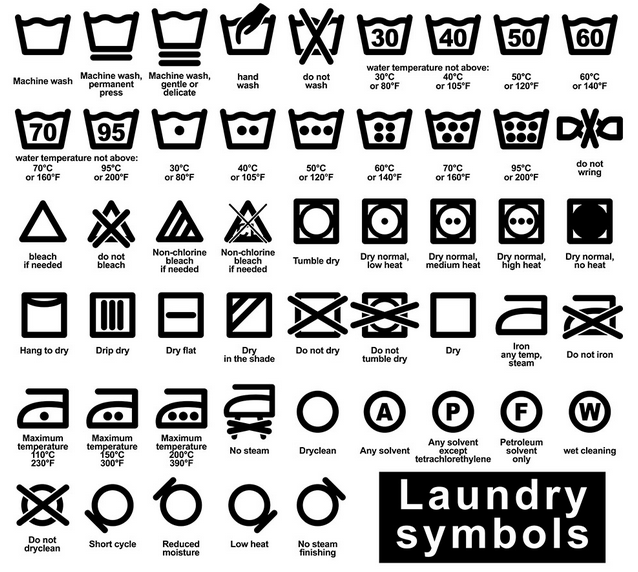
At some point food labels are gonna look like laundry-care tags
Dogs can sniff out malaria
Don’t give these out tonight
October 22, 2018 ✒ Andrew Kantor
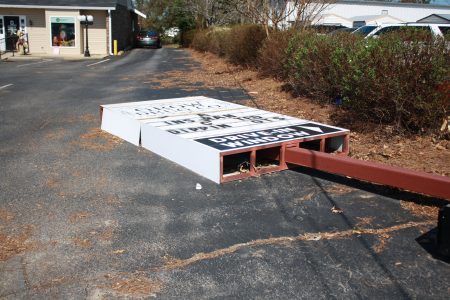
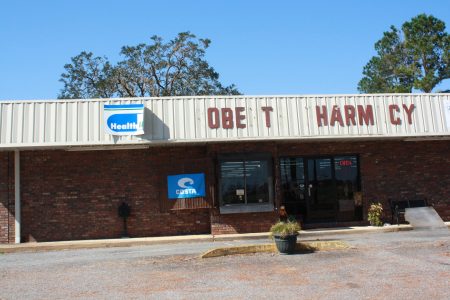
When’s the last time you had to hand-write your labels? Or run your practice without Internet — or without power or even a working phone? That’s what’s facing your colleagues in South Georgia in the wake of Hurricane Michael. It may be out of the headlines, but the devastation is still on the ground. The Georgia Pharmacy Foundation has set up a fund to help GPhA members in South Georgia who are trying to keep their practices open while they wait for help — and for the towns around them to be repaired. Many of them have suffered damage to both their homes and pharmacies. Yet they are standing by their patients. Please help by donating the the Georgia Pharmacy Foundation Hurricane Michael Relief Fund. 100 percent of your (tax-deductible) donation will go to help Georgia pharmacists affected by the hurricane. GPhA’s Rhonda Bonner visited the area last week and saw the damage. Donalsonville, especially, was hit hard. Scott Hartzog’s Seminole Hartzog Pharmacy lost its roof — adding insult to injury, it’s lying in the road next to the pharmacy. Electricity and phone service was out. Scott’s home was also severely damaged, but he’s at the pharmacy, running a generator and filling scripts as best he can. That means handwriting prescription labels — there aren’t any typewriters around any more — and saving the paperwork (emphasis on paper) to submit to insurance companies. Community comes first. “I need to take care of my patients,” he said. “I really haven’t had time to absorb everything that’s happened.” He went on, “I’m so overwhelmed. I have have no Internet, phone, or fax. I lost my roof. It’s lying in the road outside the store. I lost so much personal property, but need to take care of my patients. I really haven’t had time to absorb everything that’s happened.” Then he went back to the line of patients who were waiting for their medication. While Roberts Pharmacy, owned by Susan Mills, didn’t suffer the kind of structural damage that Seminole Hartzog did, Susan is just as overwhelmed. She’s also running a generator (as long as she can get fuel), and her daughter Mary, also a pharmacist, was able to hook up a label printer to their computer — even if it’s not hooked up to the Internet. Still, she can’t fill prescriptions the way she normally would. Instead, she’s keeping a written record of what’s she’s filled and for whom. Patients, she said, need their medication — they can’t wait until she’s reconnected with the insurance companies. Instead, Susan’s hoping her records will be enough to be reimbursed by those insurers once they’re back online. (Nor is she charging patients any co-pays. She’s hoping they’ll come back and pay that part, but so many have lost their homes she’ll understand if they can’t.) “We are hoping we will be able to recoup some,” said Mary, “[We’re hoping] that the insurance will go through for the patients who have it.” Adding to Susan and Mary’s workload is the fact that the Fred’s Pharmacy in town has not opened, so they’re filling scripts for those patients as well. “We’re dispensing meds to other stores’ patients because we know these folks need their medicine,” Susan said. “We are here to help our community, and this community needs a lot of help right now.” “This community is in bad shape right now,” Mary said. “We feel blessed that we had no more damage than we did here at our store. We are doing what needs to be done and we’re praying for the best.” These are two of the stories. There are others GPhA members in Southwest Georgia that we simply haven’t been able to reach yet. Michael was an unprecedented storm for the state — the strongest hurricane to hit Georgia since record-keeping began and the first major hurricane to hit the state since the 1800s. Pharmacists like Scott Hartzog and Susan Mills need your help. The Georgia pharmacists who need your help
The Georgia pharmacists who need your help


Please give to the Hurricane Michael Relief Fund. Help those pharmacists — and those communities — get back on their feet. 100% of your donation will go to GPhA/AIP members in the area.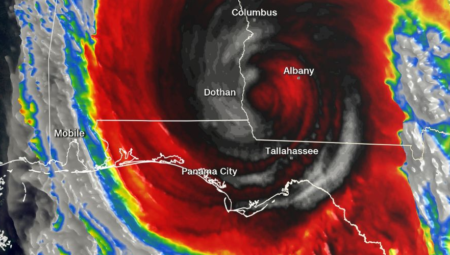
April 21, 2017 ✒ Andrew Kantor
BuzzFeed News* explains how the ‘painkiller epidemic’ in the U.S. is actually two separate but equally important events: Prescription painkillers are hitting the middle-age and older crowd, while heroin is killing the young. Remember Addyi, aka flibanserin, the “female Viagra” that never really caught on? It’s still out there — and now it’s appearing in those creepy OTC supplements we like to make fun of (e.g., LabidaMAX, Monkey Business). The latest National Health Security Preparedness Index is out — it measures how well states (and the country) are prepared for a public health emergency. It took into account factors such as detecting health threats early; communication between government, community, and individuals; and healthcare delivery. The good news: “Consistent National Progress: The U.S. posted a fourth consecutive year of gains in health security for disease outbreaks, disasters and other large-scale health emergencies.” The not-as-good news: We’re still behind the rest of the developed world. The bad news: If something happens in Georgia, head to North Carolina. We’re below average, N.C. is above it. Georgia hospitals play a huge role in the state’s economy. How big? To the tune of bringing $47.8 billion each year in the form of healthcare spending and jobs. Despite that, according to the latest DCH figures, almost half of all hospitals — and more than two-thirds of rural ones — lost money in 2015, mostly due to uncompensated care. And that’s expected to increase in the future. The enrollment window for GPhA’s voluntary insurance — life, accident, and critical illness products, offered through UNUM — is open through April 28. Look for your e-mail from Enroll VB or visit EnrollVB.com/GPhA. These policies supplement your medical coverage — they take care of things your medical plan does not cover. Check ’em out! Yesterday it was an anti-viral from frog mucus. Today it’s an antibiotic from dragon’s blood. Really.April 21, 2017
It’s two, two, two epidemics in one
There is no headline I can use here that the boss will approve
Are you ready for the next pandemic?
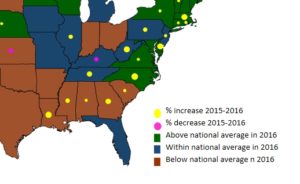
Georgia hospitals and the economy
Remember to check out our insurance products
Tomorrow, eye of newt

Do you want to send your members the daily Buzz email newsletter (customized for your state and organization, perhaps)? Let’s talk — just drop me a note at andrew@gphabuzz.com!

- Doctors Warn of a Deadly Complication From Measles Outbreaks
- Medicare Advantage ‘Dark Money’ Group Attempts To Win Higher Payments for Insurance Companies
- Families Scramble To Pay Five-Figure Bills as Clock Ticks on Promised Preauthorization Reforms
- As Lung Disease Threatens Workers, Lawmakers Seek Protections for Countertop Manufacturers
- Republicans Fret Over RFK Jr.’s Anti-Vaccine Policies While MAHA Moms Stew
- Primary Care Is in Trouble. So Doctors Band Together To Boost Their Market Power.
- January 2025
- December 2024
- November 2024
- October 2024
- September 2024
- August 2024
- July 2024
- June 2024
- May 2024
- April 2024
- March 2024
- February 2024
- January 2024
- December 2023
- November 2023
- October 2023
- September 2023
- August 2023
- July 2023
- June 2023
- May 2023
- April 2023
- March 2023
- February 2023
- January 2023
- December 2022
- November 2022
- October 2022
- September 2022
- August 2022
- July 2022
- June 2022
- May 2022
- April 2022
- March 2022
- February 2022
- January 2022
- December 2021
- November 2021
- October 2021
- September 2021
- August 2021
- July 2021
- June 2021
- May 2021
- April 2021
- March 2021
- February 2021
- January 2021
- December 2020
- November 2020
- October 2020
- August 2020
- July 2020
- March 2020
- February 2020
- January 2020
- December 2019
- November 2019
- October 2019
- September 2019
- August 2019
- July 2019
- June 2019
- May 2019
- April 2019
- March 2019
- February 2019
- January 2019
- December 2018
- November 2018
- October 2018
- April 2017
