
November 06, 2020 ✒ Andrew Kantor
Every drug-legalization initiative up for vote this year passed. A trial out of Johns Hopkins University found that psilocybin plus psychotherapy yielded “large, rapid, and sustained antidepressant effects in patients with major depressive disorder.” Even better: The drug also doesn’t require taking a pill every single day, nor does it come with nearly as many side effects as antidepressants or ketamine. Apart from occasional mild to moderate headaches and a few emotional moments, volunteers in the study tolerated psilocybin quite well and there were no serious dangers. Sure, the antibodies that guard the brain’s perimeter are all in your head (literally), but they got their training elsewhere. In the gut, of course. American and British researchers found that IgA antibodies, normally associated with the gut (where they “learn to defend against infections that may enter our stomach and intestine”) were also present in in the outer meninges — the membranes that cover the brain and spinal cord. The team was able to confirm that the gut microbiome influenced brain IgA by testing mice that had no gut bacteria. These mice did not have cells that produced IgA near the brain, potentially because the gut IgA cells could not learn how to recognise harmful gut bacteria. Kids who have to wake up earlier [are more likely to be a bit chubbier when they’re adolescents](https://www.healio.com/news/endocrinology/20201105/earlier-wake-time-may-lead-to-increased-body-fat-mass-in-adolescents ). So found researchers at the Uniformed Services University of the Health Sciences in Maryland. They looked at all sorts of sleep data — “including sleep duration, sleep duration variability, weekend catch-up sleep, wake time and sleep midpoint time” and found that… …children who had an earlier mean wakeup time, an earlier average wakeup time on the weekends, and a greater waketime shift between the weekend and weekday, were more likely to have larger fat mass gains at follow-up. Interesting twist: It didn’t matter how long they slept, when they went to bed, or if those times shifted. Just the wakeup time. We want you to want us … and we will give you $100! (Well … at least one of you.) We want to deliver top-quality content, and we’ll definitely give one of you a $100 Visa gift card just for telling us what’s important to you so we can offer GPhA members the most current and very best CPE on the planet: topics vital to your practice, engaging formats, led by the state’s most important speakers. Help us help you! Take just a few minutes (literally three) to complete a survey about the CPE you want us to offer in 2021. Do it by Friday, December 4, 2020 and you’ll be entered into a drawing to win a $100 Visa gift card. Even if you don’t win, you win. Your feedback will shape the CPE we offer during the year and at the 2021 Georgia Pharmacy Convention. We’re counting on you to help us help you. CLICK HERE to get started. Those shifty Danes are culling 15 million of the country’s minks out of fear of a viral mutation that could turn into the next coronavirus pandemic. They’re also considering shutting down the northern part of the country, as 12 people are already infected with the new strain. “This variant can develop further, so that it becomes completely resistant, and then a vaccine does not matter. Therefore, we need to take [the mutation] out of the equation. So it’s serious.” How serious? Danes don’t have a sense of humor, you know. “The worst-case scenario is that we would start off a new pandemic in Denmark. There’s a risk that this mutated virus is so different from the others that we’d have to put new things in a vaccine and therefore [the mutation] would slam us all in the whole world back to the start,” said Denmark’s equivalent of Anthony Fauci (Kåre Mølbak, of Denmark’s State Serum Institute). Congrats to compounding pharmacist Diana Harshbarger (TN-1), who will become the first compounder in Congress with her victory Tuesday. Our own Buddy Carter, of course, currently the only pharmacist in Congress (but not for long!), was reelected as well. And congrats to Alabama pharmacy owner Jerry Carl on winning Alabama’s 1st district seat.Mink slaughter, mushroom magic, let the kids sleep, and more
Drug laws, they are a changin’
Speaking of psilocybin
The gut as training ground
Stay asleep, little Suzie
Tell us what you want, what you really really want
Danes slaughter minks to prevent pandemic
Pharmacist-friendly winners
November 05, 2020 ✒ Andrew Kantor
Today ends in a Y, so there must be another metformin recall. And there is! This time it’s from Nostrum Laboratories in Missouri, recalling it for the same NDMA contamination as all the other recalls. When you want to design a drug-delivery system for the gut, where do you turn? For Johns Hopkins researchers the answer was clearly “parasitic worms.” The worm’s trick of clamping onto a host’s intestine lets it get to the right spot before opening and delivering its payload. Each is the size of a speck of dust, and thousands are released at once. Sorry, no banana available for scale Why that’s cool: The GI tract (as you may have noticed) tends to move, making it difficult for a drug-delivery system to stay in one spot long enough. But “these small drug carriers […] can autonomously latch onto the intestinal mucosa and keep the drug load inside the GI tract for a desired duration of time.” Look, everyone likes a happy ending. but that may not make us happy. Learn to focus on the entire experience, says a University of Cambridge neuroscientist. Our brains measure the pleasure of an experience in two different ways. The amygdala considers the overall experience, while the anterior insula handles negative feelings — like disgust at an unhappy ending. Imagine playing 10 hands of poker, losing badly in seven in the middle, but winning a bit back in the last two. The overall loss would get a thumbs-down from the amygdala, while the anterior insula would focus on those wins at the end — making the losing game feel better than it should. In the gambling experiment, good decision makers […] showed a strong representation of the overall value in the amygdala, whereas suboptimal decision makers had stronger activity in the anterior insula. In other words, good decision makers need to be able to overrule a displeasing impression of an experience, such as an unhappy end. Focusing on the end could make us make bad decisions — like choosing a restaurant with lousy food and amazing desserts. CMS has approved Georgia’s plan to change the way Peach Staters buy insurance through the Affordable Care Act. Starting in 2023, instead of being able to go to Healthcare.gov to shop for a health insurance plan, Georgia consumers “will need to rely on private brokers, insurance companies, agents and commercial websites.” The government-run Healthcare.gov will be replaced by private brokers who are paid based on which plans consumers choose; e.g., they earn about 22 percent more to steer people to low-coverage “short-term” plans, according to the state. The plan faced opposition from both sides. [T]here has been almost no public support for the plan, even among people within Georgia’s insurance and brokerage industries. Seventy-two of 75 organizations submitting formal comments opposed the change. As one analyst pointed out, says “[B]rokers already exist. The waiver doesn’t enable new options; it just takes away healthcare.gov.” “The payoff doesn’t strike me as being there,” said Joseph Antos, a health care expert at the American Enterprise Institute, a right-leaning think tank in Washington, D.C. The U.S. had more than 90,000 new Covid-19 cases and more than 1,000 deaths on Tuesday alone. Ants not only use the formic acid they generate as a weapon (it can disable prey or ward off predators) and to disinfect their nests — they apparently also use it to disinfect their food before eating it. The result is not only safer food, but a gut biome that’s both very acidic and home to select species of acid-loving bacteria. The paper is “Formicine ants swallow their highly acidic poison for gut microbial selection and control” in eLife.Gut robots, happy endings, disgusting ants, and more
Another metformin recall
Drug delivery with microscopic robots

Don’t obsess over happy endings
Georgia insurance marketplace going away in two years
Quick Covid numbers
Crazy science: Ants manage their own gut biomes — but it’s disgusting
November 04, 2020 ✒ Andrew Kantor
84 of Georgia’s 145 hospitals have been penalized for high readmission rates by CMS, meaning their Medicare reimbursement will be lower. (Note: This does not include Covid-19 patients.) Only 12 hospitals in the state were not punished (49 were exempt). The link above will let you explore county by county, but here’s the list of the 12 that won’t face penalties: Stephens County Hospital, Toccoa MIT researchers have developed an artificial intelligence that can listen to a recorded cough — even a forced one — and determine if the cougher has Covid-19. Even if they’re asymptomatic. With 97 percent accuracy. Across around 2,500 captured cough recordings of people confirmed to have COVID-19, the AI correctly identified 97.1 percent of them — and 100 percent of the asymptomatic cases. Obviously it’s detecting differences that mere humans can’t hear, but the system doesn’t require special recording equipment, and might be incorporated into a smartphone. The first blood test for Alzheimer’s is now available nationwide. It measures biomarkers “that frequently reflect the presence of amyloid plaques in the brain” and it test for a gene variant that increases the risk of the disease. Downside: The company charges $1,250 for the test, but some patients may qualify for financial assistance. “Health insurance companies don’t currently pay for the test.” Hey pharmacy techs — it’s time to mingle! GPhA’s Academy of Pharmacy Technicians is hosting a networking event exclusively for technicians to let their (virtual) hair down (and, yes get some good ideas). It’s Wednesday, November 18, 2020 from 6:30 – 8:00 pm, via Zoom. Why mingle? All this plus fun, prizes, and a great chance to bond. Don’t miss out — register today! Be careful of pregnant patients who are taking valproic acid during pregnancy. The epilepsy drug has been linked to a higher risk of kids with autism or ADHD in a study of 15,000 kids born between 1996 and 2011. The good news: “We didn’t find an association with the antiseizure medications lamotrigine and carbamazepine.” At one point, we hoped that the hot weather would help kill off the SARS-CoV-2 virus. Or maybe the cold would slow it down. Either way, no joy. A study out of the University of Texas found that the “whether it’s hot or cold outside, the transmission of COVID-19 from one person to the next depends almost entirely on human behavior.” So while the coming cold weather itself won’t affect the virus, more time indoors in stagnant air will help it spread. We’re almost at the point where reporting U.S. Covid-19 infections and deaths is futile. The country sets records every day, with a notable portion of the population believing it’s a hoax or overblown and refusing to take even the most basic precautions to stop the spread to their neighbors. Perspective: Total killed in the Civil War: 214,938. Total U.S. military deaths in all of WWII: 291,557. The fact that social media is slowly destroying the world and causing untold cases of depression isn’t new. But researchers at the University of British Columbia have figured out that it’s not the existence of social media, but how you use it that impacts your well-being. Cutting to the chase: Passive browsing = bad. Participating in discussions = good. Just scrolling through exposes you to lies, lies, lies — that is, “updates that selectively portray others positively” and “may lead social media users to underestimate how much others actually experience negative emotions.” But when you interact, you learn that behind those photos, everyone else is just as mixed up as you.Covid cough detector, big party for techs, how not to be depressed by social media, and more
Georgia hospitals penalized for readmissions
Arrow Regional Medical Center, Winder
Dodge County Hospital, Eastman
Jefferson Hospital, Louisville
Emanuel Medical Center, Swainsboro
University McDuffie County Regional Medical Center, Thomson
Burke Medical Center, Waynesboro
Meadows Regional Medical Center, Vidalia
Irwin County Hospital, Ocilla
Memorial Hospital And Manor, Bainbridge
SGMC Berrien Campus, Nashville
Chi Memorial Hospital – Georgia, Fort OglethorpeTurn your head and cough
First Alzheimer’s blood test
Techs: Let’s get ready to mingllllllllllllllllllle!
Valproic acid — not while pregnant
Weather doesn’t (directly) affect Covid
Many, many, many, lots
Latest numbers (courtesy of Stat)
* Georgia is one of 14 states does not positive results from antigen tests in the total, so the actual number is higher.
“Just browsing”? Don’t be that guy

November 03, 2020 ✒ Andrew Kantor
According to the CDC’s “interim playbook” for planning vaccine distribution, Costco, CVS, Kroger, Publix, Walgreens, and Walmart plan to have their pharmacies participate in Covid-19 vaccine distribution, as soon as one is available. Once healthcare workers had been vaccinated and vaccines distributed to hospitals and clinics… Pharmacies would become involved during a second phase of vaccine rollout. The pharmacies would order the Covid-19 vaccines from the federal government, which would then supply them, according to the CDC’s plan. The CDC says the vaccine itself will be free to individuals, but they may be required to pay a fee to actually have it injected. Statins reduce cholesterol production in cells, but a side effect can be muscle pain. The current theory is that statins can limit energy production in mitochondria, which can lead to that pain from weakened muscles. But those shifty Danes have found something odd: Statins, it seems, actually increase energy production in blood cells. “We can see that long-term treatment with statins at the recommended dose increases the blood cells’ ability to produce energy. These are surprising results. We had expected statins to behave the same way that they do in muscle cells, but in fact they do the exact opposite.” So does this mean that statins cause muscle pain for an entirely different reason? You know the mantra: More studies are needed. Mothers, it seems, can pass on allergies to their kids. Well, mouse mothers for sure. A study out of Singapore… …shows that the key antibody responsible for triggering allergic reactions, immunoglobulin E (IgE), can cross the placenta and enter the foetus. When inside the foetus, the antibody binds to foetal mast cells, a type of immune cell that releases chemicals that trigger allergic reactions, from runny noses to asthma. It gets cooler: The researchers then had mice moms develop an allergy to ragweed. Lo and behold, their kids also had an allergic reaction to ragweed. Of note, “The sensitivity is allergen-specific; the offspring did not react to dust mites, another common allergen.” Somewhere, Jean-Baptiste Lamarck is snickering. The latest: They can protect against radiation. Really. A study out of the University of North Carolina found that mice with Lachnospiraceae and Enterococcaceae in their guts not only survived what should have been lethal radiation exposure, but saw their blood cell production recover “as well as repair of the gastrointestinal tract.” Side note: They also found that humans who had the least GI trouble after radiation treatment for leukemia also had the highest amount of these two bacteria — so it seems to protect us as well. Take it easy — CPEasy! We’ve got a new home-study education session available as a CPEasy course: “Probiotic Considerations.” Simple title, big implications. Presented by Shirin Madzhidova, PharmD, “Probiotic Considerations” will explain the critical differences between available probiotic strains so you can educated your patients better. With the role of gut bacteria becoming clearer every day (see above!), this is a topic you want to be up to date on! As always, GPhA members receive a discounted rate — just $20 for an hour of CE credit. Non-members are welcome ($42) but you will be given the side-eye. Want to avoid fat kids? Make sure they’ve got enough vitamin D, and quickly. A University of Michigan study found that kids who had low D levels in their first year were more likely to have metabolic syndrome (e.g., “high blood sugar, excess body fat around the waist and abnormal cholesterol or triglyceride levels”). Causation or correlation? The Michiganders aren’t sure, but “at least from a predictive point of view, the fact that a single measure of vitamin D in early life predicts cardiovascular risk over such a long period is compelling.” After you’ve given your newborn that vitamin D (see above), you’ll want to head to the farm for a while. German researchers found that children who were exposed to plenty of that fresh farm air* had gut microbiomes that protected them from asthma — particularly bacteria such as Roseburia and Coprococcus that produce short chain fatty acids. The trick, though: Do it early. Gut bacteria tends to stabilize in the first year, so that’s when you’ve got to get Junior to the pig pen. The virus spreads indoors a lot more than some folks believed. Here are your bullet points, courtesy of a Vanderbilt University study: What can be done? Air circulation. Open those windows and damn the heating bill! Why was the 2017-18 flu so bad? In part, the vaccine. The heavy hitter that year was H3N2, but the vaccine — which included an H3N2 component — didn’t do a great job of protecting from it. Why not? Because, dear reader, every H3N2 isn’t alike. In 2017, there were two variants: 3C.2a2 and 3C.3a. That year’s vaccine was made from the 3C.2a clade. For some reason, people who got the flu vaccine that was made from eggs (“egg-adapted”) developed fewer antibodies for the 3C.2a2 version. Said the researchers: “[W]e still have much to improve upon in terms of how we manufacture [vaccines] and predict their efficacy.” Finally, today’s crazy health and science story comes courtesy of Australia, where apparently they’ve been reading a little too much post-apocalyptic fiction: “[T]he larvae of a waste-eating fly could become a new alternative protein source for humans“. The lead researcher recognizes that more work is required, including figuring “the best ways to process the fly to preserve its nutritional value.”Blame mom for the sniffles, radiation-proof guts, healthy stinky air, and more
Pharmacy chains plan to offer Covid vaccines
Statins are weird
For allergies, like mother, like son (or daughter)
Gut bacteria can do anything
Know your probiotics!
Newborns need their vitamin D
To the farm with you!
* Maybe not so fresh — it includes “stays in animal sheds”.
Today’s Covid-19 info
Learning from flu failures
Crunchy on the outside
October 31, 2020 ✒ Andrew Kantor
Good: “Death Rates Have Dropped for Seriously Ill Covid Patients” Bad: “U.S. Reports 90,000 New Daily Cases, the Equivalent of More Than One Per Second” Good: “Schools haven’t become COVID hotspots,” but bars and restaurants are Bad: “Deaths usually lag behind cases by a few weeks” and cases are way up Good: A potential new, rapid coronavirus breathalyzer test is being tested at the University of Miami Bad: “States say they lack federal funds to distribute coronavirus vaccine” Hey, all: Just a reminder that, if you want to be able to administer the Covid-19 vaccine in Georgia when it becomes available, you must first enroll with the state. (Enrolling also helps the DPH plan for eventual vaccine distribution.) Got questions? Need help? Ask away: DPH-COVID19Vaccine@dph.ga.gov! Another great reason to give to the Georgia Pharmacy Foundation: You can double your impact. This coming week only, November 1 through 7, the Georgia Pharmacy Foundation Board of Directors will match every donation — up to $4,000! Take advantage of an easy way to grow your donation and make an even bigger impact. To have your donation matched, donate by November 7 at GPha.org/foundation2020. First, from the University of Texas: If you feed your mouse a diet with a lot of sugar, you’ll get a fat mouse. But it seems you might also get a mouse with inflammatory bowel disease — specifically colitis. The reason? Gut bacteria, of course. It seems that too much sugar means too much of a particular bacteria in the large intestine that damages the mucus layer. And if we learned anything from “The Penguins of Madagascar,” it’s “Without mucus your stomach would digest itself.” Then, from the University of New South Wales: A newly discovered strain of the usually-in-the-mouth bacteria Campylobacter concisus — one carrying the pSma1 plasmid — has been linked to severe ulcerative colitis. “Linked” meaning it was found in a significant number of patients with this inflammatory bowel disease. Was it a cause or an effect of the disease? Say it with me: Further study is necessary. Wait, what? Yep, a Colorado man suffered anaphylactic shock from the cold air after stepping out of the shower. Doctors diagnosed him with cold urticaria, an allergic reaction of the skin after exposure to cold temperatures, including cold air or cold water […] People can also develop symptoms after consuming cold food or drinks. So we know Covid-19 can be spread via large droplets, like from people shouting or singing, but the question of aerosol transmission is up in the air. (Ha.) Aerosols, because they’re so small, won’t drop to the ground quickly (and won’t obey that six-feet-apart recommendation). But can aerosols transmit Covid-19? Researchers at Virginia Tech turned to ferrets to find out, with a nifty apparatus that placed the infected ferret in a cage beneath a uninfected one, connected by ductwork that would not allow large droplets to travel up. If COVID-19 transmission were only possible via large droplets, the researchers hypothesized that no indirect recipient ferrets should become infected, as the steel mesh, the duct’s right-angle turns, the one-meter distance between animals, and gravity should all work against large droplets rising to the top cage. In less than two weeks, the top ferrets were infected. So there you have it. “If I were someone who thought that large droplets were the way [that SARS-CoV-2 was transmitted] and if I were skeptical about aerosols, this study might make me rethink my assumptions.” It’s that time again — time to play everyone’s favorite pharmaceutical game! Five of these are novel drugs approved by the FDA in 2020. Five are villages in Azerbaijan. Do you know which is which?Cold allergy, ferret experiment, the truth about Muradxan, and more
Covid news, good and bad
Enroll to vaccinate
A(nother) reason to give
Bacteria and colitis
Might as well face it, you’re allergic to cold
Six feet ain’t gonna help you
Medication … or Azerbaijani Village?
October 30, 2020 ✒ Andrew Kantor
It might sound like good news — STD rates have plummeted lately in the U.S. But it ain’t. Probably. That’s because the drop is not because people are so sick of each other that they’re refraining from you-know-what*. It’s more likely that they’re just not getting tested or they’re avoiding getting treatment in These Troubled Times. Take it easy — CPEasy! We’ve got a new home-study education session* available as a CPEasy course. Interested in MTM? Interested in diabetes management? Meet their love child: “Diabetes MTM: Best Practices for the community setting” featuring the terrific Jonathan Marquess, PharmD, CDE, FAPhA. Diabetes MTM: Best Practices for the community setting – a review of diabetes guidelines & medications will teach you what you need to know to help patients manage their type 2 diabetes, from glycemic control to treatment algorithms, to new products and much more. As always, GPhA members receive a discounted rate — just $20 for an hour of CE credit. Non-members are welcome ($42) but you will be pitied. “What’s the average human body temperature in Fahrenheit?” “Ninety-eight p—” “WRONG!” Further proof that 98.6° (or 37°, if you’re using that quaint metric system) is old news. Yet Another Study, this one out of UC Santa Barbara, found that today’s “normal” temperature is about 97.7°. Interesting wrinkle: It took the U.S. about 150 years to drop that low, but it took the Tsimane, “an indigenous population of forager-horticulturists in the Bolivian Amazon” only 20 years. The likely culprit: Better medical care. It could be that people are in better condition, so their bodies might be working less to fight infection […] Or greater access to antibiotics and other treatments means the duration of infection is shorter now than in the past. Back in 2003, Swiss folks could start getting 1000mg paracetamol pills at the pharmacy (acetaminophen in the Language of Freedom™), rather than just the 500mg version. But since then, found researchers from ETH Zurich*, the high-dose version has gained in popularity … and so have cases of paracetamol poisoning. It’s very easy to exceed the maximum daily dosage by taking just a few extra of the 1,000 milligram tablets, whereas, with the lower-dose 500 milligram tablets, the risk of accidental overdose isn’t as great. Says the study’s author, “[I]f paracetamol doesn’t have the desired effect, it’s important not to simply take more tablets.” The feds — the F.B.I., HHS, and Homeland Security — are all warning hospital and clinic administrators that Russian hackers are conducting and planning cyberattacks on medical facilities in the U.S. in an effort to create panic just before the election. The attacks on American hospitals, clinics, and medical complexes are intended to take those facilities offline and hold their data hostage in exchange for multimillion-dollar ransom payments, just as coronavirus cases spike across the United States. CMS is proposing changes “that could expand Medicare coverage for continuous glucose monitors and insulin pumps.” Under the proposed rule change […] CMS would expand the interpretation regarding when external infusion pumps are appropriate for use in the home and can be covered as durable medical equipment under Medicare Part B. If you woke up today and thought, “I’d love to be able to control monkey brains with light, but it’s so tough,” we’ve got good news: Researchers from 45 primate labs in nine countries have launched the Nonhuman Primate Optogenetics Open Database, which aims to help share information (“minute details of successes and failures”) on using light to control animal brains. By the way, you’re right that it’s a tough job: Delivering light to large brains is a hurdle as well. “Say I am using a 200-micron-diameter fiber optic for stimulating my mouse brain,” [neuroscientist Arash] Afraz explains. “To scale that up, I’d have to stick a flashlight in the monkey’s head.”Monkey brains, Swiss poisoning, Russian attacks, and more
If you don’t test, rates go down
* Birds, bees, flowers, trees
It doesn’t have to be hard
* Or “home-education study session” — either way. We’re easy.
…and you’re so cold
Tylenol is poisoning the Swiss
* Eidgenössische Technische Hochschule Zürich
Russia is attacking U.S. hospitals
Medicare may cover more insulin devices
Today’s funky science story: monkey brains
October 29, 2020 ✒ Andrew Kantor
“Having more than 5 coronavirus symptoms is a sign you could be at risk of a long-term case, new research shows.” And if you have these five in particular, it’s even more likely: fatigue, headache, difficulty breathing, a hoarse voice, and muscle or body aches. Prunes, schmunes — if you want to treat constipation, you want kiwis. (To be clear: the fruit, not the bird.) “Two peeled kiwi fruit per day improved chronic constipation while being better tolerated than other traditional natural remedies,” according to University of Michigan researchers. Of the participants who received kiwi, 0% reported abdominal pain or gas compared with 18% for both in the prunes group and 33% pain and 19% gas in the psyllium group. Stool consistency improved with kiwi and prunes and straining significantly improved with kiwi, prunes, and psyllium. Adverse events were most common with psyllium and least common with kiwi. At the end of treatment, a smaller proportion of patients were dissatisfied with kiwi compared with prunes or psyllium. In case, for some reason, you thought otherwise — the pandemic is getting worse. Much worse. The Midwest is being hit hardest, but the entire country is seeing a surge in cases, a surge in hospitalizations (with some rural hospitals running out of space), and, soon, a surge in deaths. Just in the last week, in fact the U.S. had a record number of cases — nearly half a million, and at least 5,600 have died. And if you think it’s because of more testing … no. Hospitalizations have risen 46 percent in the past month; right now, about 46,000 people are hospitalized with Covid-19. If and when one is ready to distribute to the teeming millions, HHS said that it will allow pharmacy techs to give it — subject to certain requirements, of course. We’ll give you the details when the time comes. Of note, for non-Georgians: Some states don’t require techs to be licensed or registered. In those cases, HHS says, to be allowed to vaccinate, those techs “must have a Certified Pharmacy Technician (CPhT) certification from either the Pharmacy Technician Certification Board or National Healthcareer Association.” Researchers from Switzerland and the University of California have treated brain tumors in mice with radiation … but without side effects. The trick? The same dose, but concentrated. Traditional radiation therapy exposes a tumor and nearby normal tissue to radiation for several minutes at a time, but FLASH radiation therapy (FLASH-RT) allows delivery of the same dose in only tenths of seconds. The speed eliminates many of the toxicities that normally plague cancer survivors long after radiation treatments, significantly decreasing side effects such as inflammation and impairments to cognition. The headline speaks for itself: “Study finds over 80 percent of COVID-19 patients have vitamin D deficiency“. A new meta-study out of NYU found that statins are linked to a 20 percent lower colorectal cancer risk. Oh, and if you have inflammatory bowel disease, how’s a 60 percent reduction sound? Caveat, of sorts: This is a meta-analysis of 52 studies, so — wait for it — more research is required. (On the other hand, it did take into account more than 11 million patients.) When it comes to Covid-19 tests, nasal swaps (as fun as they may be) are so last month. And saliva tests? Sooooo last week. What’s up next: the gargle test, courtesy of a University of Arizona virologist. That is, swish and gargle a special mouth rinse, spit it into a specimen cup, and run a test. [T]he mouth rinse test is more sensitive than a nasopharyngeal swab test. It also appears to be considerably more sensitive than a test based solely on saliva samples, where test subjects simply spit into a cup. [Possibly] due to the fact that virus particles are pulled from the throat during the gargle phase in addition to the saliva collected during the mouth rinse procedure. Even when people stop smoking, those with COPD find that the inflammation doesn’t go away. It should, so what’s up? It’s genetic. With COPD, cigarette smoke has ‘reprogrammed’ the cells of their lungs so they don’t produce enough of an antibody called secretory IgA. In patients with COPD, lower levels of the polymeric immunoglobulin receptor and secretory IgA allow bacteria easier access to the airway surface, triggering an inflammatory response that persists after the patient quits smoking. That causes another domino to fall: “increased numbers of a relatively uncommon type of cell called monocyte-derived dendritic cells, or moDCs,” which trigger an immune response … and inflammation. The good news: The discovery of these moDCs might open a new pathway to treatment. The younger you start, the greater your risk of “CV mortality.” (And the younger you are when you quit, the more you lower your risk.)Gargle test, statin power, a kiwi a day keeps the gastroenterologist away, and more
“Long Covid”
Our number two story

Of course we’d have some bad news today
HHS: Techs will be able to give Covid-19 vaccine
Zapping cancer faster, better
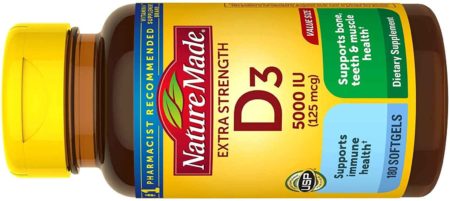
Vitamin D — again
Statins vs colorectal cancer
Don’t swallow
Why COPD won’t go away
Speaking of smoking…
October 28, 2020 ✒ Andrew Kantor
In August, pharmacists nationwide — and yes, that includes Georgia — were given the go-ahead to give all ACPI-recommended childhood vaccines to anyone aged 3 and over, regardless of state law; that was later extended to the flu vaccine. Apparently, despite having written about this in GPhA Buzz, not everyone got the memo. Pharmacists, it seems, don’t realize that they’re allowed to give kids flu shots. Georgia in particular is called out. Even though the August federal declaration supersedes those state laws, most of those states did not directly let pharmacies know about the new rule, and many of the pharmacies contacted by CNN were not aware of it. Most health insurers aren’t raising their Obamacare-exchange premiums because of Covid. Not that they don’t think it’ll be an issue, but because they think that “healthcare use” in general will remain lower in 2021: People will still be iffy about sitting in a doctor’s office next to that twitchy guy with … was that a cough? Kaiser’s study found that the most common ways COVID-19 could drive up costs were through COVID-19 testing, the costs of covering a vaccine and the rebounding of medical services delayed due to the pandemic. But at the same time, insurers believe that healthcare use will remain lower than usual in the next year, which could offset the increased COVID-19 costs. Big congrats to GPhA board member and pharmacy advocate Jennifer Shannon, who was named Independent Woman Pharmacist of the Year by the Pharmacist Moms Group (and sponsored by First Financial Bank). “My most favorite title in the world is ‘mom,’” Shannon said, “so to be recognized by other moms — and for my children to see it — was an incredible honor on Women Pharmacist Day.” Note: An earlier version of this story reported that Shannon received the award at a reception in Stockholm. In fact it was mailed to her in Johns Creek. Speaking of vaccine trials, a big shout-out to Georgia congressman Buddy Carter (you may have heard of him), who is one of 45,000 people who volunteered to be part of the phase 2 test through Meridian Clinical Research. Johnson & Johnson, which had paused its Covid-19 vaccine trial after an unexplained illness, still has not explained it (“no clear cause has been identified”), but is now confident it’s unrelated to the vaccine and is planning to resume the trial. The Trump Administration will soon announce that Medicare and Medicaid will cover any out-of-pocket costs for the eventual Covid-19 vaccine. (Because the vaccine will probably be approved with an Emergency Use Authorization, Medicare and Medicaid typically wouldn’t cover it without this change in policy.) I like Forbes’s Bruce Lee. He cut through the potential hype from a study that implied aspirin might reduce the risk of death from Covid-19. Sure, there seems to be a correlation, but it could simply be that the kind of person who takes daily aspirin (i.e., health-conscious) is less likely to die from the virus. For example, the rise of the Kardashians during the 2010’s has correlated with a rise in the stock market. So has the rise in “ugly shoes.” Does this mean that either have been responsible for what’s happened with the stock market? Does this mean that Kim Kardashian in Crocs will be the key if you are an investor? Not necessarily, unless that happens to be your thing. Just because two things happened at once, doesn’t mean that one caused the other. Sure, these days it’s all about Covid-19. But that doesn’t mean other issues have gone away — and they might be getting worse. Take diabetes. With patients wary of medical offices, pharmacists are the front lines* for keeping it at bay. Be the best pharmacist you can be — be at the top of your game for helping people with diabetes. GPhA is presenting the blockbuster CE certificate program, APhA’s The Pharmacist and Patient-Centered Diabetes Care Certificate Training Program on Sunday, November 8, 2020 from 8:00 a.m. – 5:00 p.m. at the GPhA headquarters in Sandy Springs. [map] With the home study, the course provides 23.0 contact hours (!) of CE credit, and a lovely certificate (aka, something to show your patients … or employers). Most importantly, it will equip you with the latest knowledge and skills for helping patients manage their diabetes. Everyone’s welcome, but GPhA members get a discount. Click here or visit GPhA.org/diabetes2020 for more info and to register today! A study of treating Covid-19 with a combination of remdesivir and Eli Lilly’s antibody treatment has been called off for not showing any clinical benefit. (This is the same study that had been paused earlier this month due to safety concerns.) The feds are preparing to sue Walmart for its role in the opioid epidemic, but Walmart is striking first. It’s suing the Department of Justice, demanding clarification of the law — “a judicial declaration to resolve a dispute with the U.S. Department of Justice (DOJ) and the U.S. Drug Enforcement Administration (DEA) about the obligations of pharmacists and pharmacies under the Controlled Substances Act (CSA).” The issue, the company says, is that its pharmacists are caught between a rock and a hard place: On one hand, DOJ is criticizing Walmart for not taking further actions to second-guess opioid prescriptions; on the other, state health regulators argue that Walmart is unnecessarily meddling with physician-patient relationships. Those shifty Danes are thinking just a bit out of the box when it comes to new sources of food. Using an enzyme found in the papaya fruit, researchers from the University of Copenhagen’s Department of Food Science have developed a method to extract protein from pig blood. The result is a fine, white, neutral tasting powder with a 90 percent protein content. One that can be used as a supplement in a wide variety of foods. But … why? Because, you see, “Pig blood protein has a higher nutritional value than any other plant or dairy-based protein on the market.”Walmart sues DoJ, Buddy Carter tests a vaccine, a flu shot reminder, and more
Reminder: You can give flu shots to kids
What health insurers are betting on
Moms name Shannon Pharmacist of the Year
Vaccine news
Way to go, Buddy!
J&J vaccine trial to continue
Medicare and Medicaid will cover it
Aspirin vs. Covid; correlation vs. causation
For diabetics, pharmacists are the people to see
* Cliché and overused, but still true
Lilly study stopped
Walmart sues DOJ
Today’s eyebrow-raising science story
October 27, 2020 ✒ Andrew Kantor
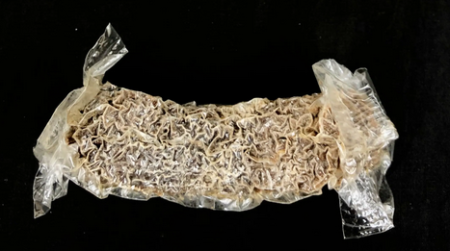
A new poll finds that more than 90% of Americans wear masks in public to prevent spreading Covid-19 to others. More than nine in 10 U.S. adults (93%) said they sometimes, often or always wear a mask or face covering when they leave their home and are unable to socially distance, including more than seven in 10 — 72% — who said they always do so. Data from the National Immunization Survey shows (after some math by researchers) that “Approximately 70% of U.S. adolescents are not up to date on routine vaccinations for HPV, meningococcal disease and tetanus, diphtheria and pertussis by the age of 17 years.” New numbers from statisticians studying Covid-19 find that — with winter coming and the country in the next wave of the virus — if everyone wore a mask while in public, it could save 130,000 lives. Specifically, the paper projected that there could be some half a million Covid-19-related deaths in the U.S. by the end of February, and that some 130,000 of those tragedies might be forestalled with universal mask use. Of course, “The exact numbers are impossible to predict,” but the point is pretty clear. So after all the hubbub about importing drugs from Canada, the law was passed, and Florida asked for bids to participate in the program. Not a single company is interested. A spokesperson for the Florida Agency for Health Care Administration said the state is exploring its options. “The agency remains confident it will find a qualified vendor soon.” We’ll probably know by early December if at least one Covid-19 vaccine is safe and effective. Of course, it will take a while to get it out to most people. But… keep in mind, this Conversation article reminds us, that because of the way the trials are set up, knowing a vaccine is “safe and effective” doesn’t mean “effective against severe and fatal cases.” It’s possible a vaccine will only protect people from mild cases. Trials testing severe disease or death alone as an endpoint would need much more time and money to be completed. So designing these first phase 3 trials has been a balancing act: being able to show whether some degree of protection is achieved while delivering these results in the most timely manner. AstraZeneca/Oxford University’s vaccine is looking good: It “prompts immune response among old as well as young adults.” The U.S. has seen three record-setting (or close-to-record-setting) days of Covid-19 cases in a row. “[H]ospitalizations are rising, too, and deaths, which lag furthest behind those other indicators, are beginning to tick up.” The average new cases per day over a seven-day period was 68,954 on Sunday, according to the Covid Tracking Project, beating the previous record of 66,844 set on July 23. Former Food and Drug Administration Commissioner Scott Gottlieb said, “I think we are right now at the cusp of what is going to be exponential spread in parts of the country.” White House Chief of Staff Mark Meadows said, “We are not going to control the pandemic. We are going to control the fact that we get vaccines, therapeutics, and other mitigation areas.” Donald Trump tweeted that the current outbreak is a “Fake News Media Conspiracy.” “If You Can Smell This, You’re Drinking Too Much Caffeine, Study Finds” — the answer: a weak cup of coffee. Yep, if you’re olfactory sense can detect even a weak cup of coffee nearby (like a dog smelling bacon from six miles away), it means you might be drinking too much coffee. Note: Like many articles, this one uses “caffeine” and “coffee” interchangeably. Biologists and mycologists analyzed some very, very old Twinkies. [T]he new research suggests that even when fungi colonise Twinkies’ outsides, they don’t necessarily eat through their insides […] likely because the fluff part is so sugary that it wasn’t hospitable to the type of fungi that ate the Twinkie’s slightly less sweet golden shell. Diamonds are forever, not TwinkiesCan you smell this? Plus old Twinkies, Florida’s miscalculation, and more
Good news: masks
Bad news: Teen vaccines
130,000 reasons wearing masks is important
Didn’t anybody ask first?
Impending Covid-19 vaccine: a grain of salt
That said, some good vaccine news
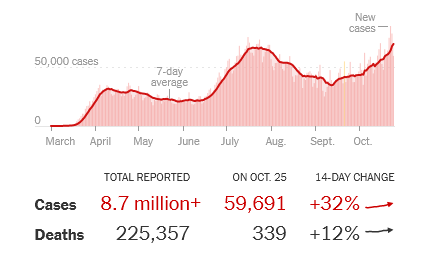
Record after record
Saving you a click
Mythbusting, Twinkie-style
October 24, 2020 ✒ Andrew Kantor
Georgia has the country’s sixth worst flu vaccination rate, at least over the last three years. Even Texas is ranked higher. (It’s #10.) So, you know, get those “Flu Shot Here” signs out, make a pitch to the local radio station for a PSA, or do whatever it takes. It would be nice to avoid a “twindemic” … if for no other reason than I hate that word. Perspective: An average of 42.6% of Georgians have gotten vaccinated each year — not great, not terrible. States rank from 57.1% (Rhode Island) to 40.3% (Florida). You’re not alone. This American Pharmacists Month, your colleagues need YOU. While pharmacists care for patients so beautifully, sometimes it’s hard for pharmacists to take care of themselves, isn’t it? That’s why our mission to advance healthcare includes PharmWell, a program to help Georgia pharmacists stay mentally healthy. The program addresses burnout, drug misuse, depression, and suicide. Visit GPhA.org/foundation to make a donation or to see the programs PharmWell offers. It’s common knowledge (and common sense) that bad things happen to your brain when it doesn’t get enough oxygen. Just ask a SCUBA diver — but be sure to speak slowly and use small words. But why does that happen? The answer could help treat people suffering from hypoxia (including, of course, hypoxia from Covid-19). The nickel tour: Hypoxia triggers “hypoxia-inducible factors” (HIFs) — proteins that instruct cells to cut oxygen consumption. But it turns out those HIFs also activate other genes that can block formation of oligodendrocytes: in other words, they can cause brain damage (or lack of brain repair). The cool news: Researchers at Case Western Reserve University say they’ve found a way to suppress that negative effect of HIFs while keeping the beneficial ones. That’s the news story, click here for the paper in Cell Stem Cell. The death rate is going down as we learn how to fight the virus. The study, which was of a single health system, finds that mortality has dropped among hospitalized patients by 18 percentage points since the pandemic began. Patients in the study had a 25.6% chance of dying at the start of the pandemic; they now have a 7.6% chance. The bad news: That 7.6% chance of death is still frighteningly high — much higher than the flu, for example. And the post-infection heart, lung, and brain damage will cause long-term problems for a lot of people. Airplanes, thanks to their disinfectant protocols, are virtually virus-free. So as long as people wear masks, it’s reasonably safe to fly. You’ll take your chances in the cab ride over, though. Deep cleaning aircraft between flights is one of many tactics the airline industry is using to try to restore public confidence in flying during the pandemic. The researchers say their study proves there is virtually no risk of transmission from touching objects including armrests, tray tables, overhead bins or lavatory handles on a plane. Even with compounders filling the gaps, a lot of drugs used to treat Covid patients are in short supply. And with winter coming it’s going to get worse. Across the U.S. and Europe, 29 out of 40 drugs used to combat the coronavirus are currently in short supply. And those shortages are expected to grow even worse as the number of Covid-19 cases and hospitalizations surge in the coming winter months. What’s in short supply? Here’s one of the more recent lists. The other day we learned that remdesivir doesn’t help severely ill Covid patients (although it’s just been approved by FDA for treating the virus). Today we find that one of the other treatment hopefuls, blood plasma transfusions from recovered patients, also showed little or no benefit. But others say it’s too early to dismiss it, because the study wasn’t deep or comprehensive enough. And both it and remdesivir do work to some extent for people with milder cases. Yesterday we told you how a computer can detect Alzheimer’s from a person’s writing. Now comes Penn State, with a smartphone app that can diagnose a stroke. It’s 79 percent accurate — as good as an ER doc with a CT scan. How? Having learned from actual stroke victims, the app analyzes facial motion and speech patterns “to identify abnormalities in a patient’s face or voice, such as a drooping cheek or slurred speech.” Many coronaviruses are good at causing damage, but this one spreads a lot more easily. Apparently SARS-CoV-19 got a few genes from some particular nasty friends. “Compared to its older relative, the new coronavirus had acquired an ‘extra piece’ on its surface proteins, which is also found in the spikes of many devastating human viruses, including Ebola, HIV, and highly pathogenic strains of avian influenza, among others.”Why planes are safe, an app to detect strokes, Georgia needs flu shots, and more
Looks like you’ve got some work to do
Pharmacists, help yourselves

Why does lack of oxygen damage the brain?
Good Covid news
More good Covid news
That’s enough — now the bad news: shortages
And a little more bad news: Convalescent plasma strikes out
Pocket stroke identifier
The Long Read: What makes SARS-CoV-19 so virulent?
Do you want to send your members the daily Buzz email newsletter (customized for your state and organization, perhaps)? Let’s talk — just drop me a note at andrew@gphabuzz.com!


- Doctors Warn of a Deadly Complication From Measles Outbreaks
- Medicare Advantage ‘Dark Money’ Group Attempts To Win Higher Payments for Insurance Companies
- Families Scramble To Pay Five-Figure Bills as Clock Ticks on Promised Preauthorization Reforms
- As Lung Disease Threatens Workers, Lawmakers Seek Protections for Countertop Manufacturers
- Republicans Fret Over RFK Jr.’s Anti-Vaccine Policies While MAHA Moms Stew
- Primary Care Is in Trouble. So Doctors Band Together To Boost Their Market Power.
- January 2025
- December 2024
- November 2024
- October 2024
- September 2024
- August 2024
- July 2024
- June 2024
- May 2024
- April 2024
- March 2024
- February 2024
- January 2024
- December 2023
- November 2023
- October 2023
- September 2023
- August 2023
- July 2023
- June 2023
- May 2023
- April 2023
- March 2023
- February 2023
- January 2023
- December 2022
- November 2022
- October 2022
- September 2022
- August 2022
- July 2022
- June 2022
- May 2022
- April 2022
- March 2022
- February 2022
- January 2022
- December 2021
- November 2021
- October 2021
- September 2021
- August 2021
- July 2021
- June 2021
- May 2021
- April 2021
- March 2021
- February 2021
- January 2021
- December 2020
- November 2020
- October 2020
- August 2020
- July 2020
- March 2020
- February 2020
- January 2020
- December 2019
- November 2019
- October 2019
- September 2019
- August 2019
- July 2019
- June 2019
- May 2019
- April 2019
- March 2019
- February 2019
- January 2019
- December 2018
- November 2018
- October 2018
- April 2017
