
October 05, 2022 ✒ Andrew Kantor
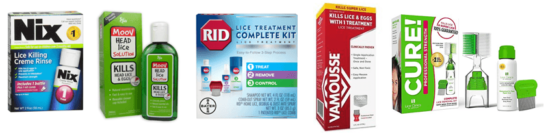
Drug-delivery eye lenses (from SpyGlass Pharma) have passed their first human test. They were able to deliver bimatoprost to treat glaucoma, resulting in “a 45% reduction in intraocular pressure.” These are intraocular lenses — the kind that are implanted to replace the eyes’ natural lenses, usually to correct vision. But natural lenses also don’t deliver drugs, so take a back seat there, Mother Nature. Super cool: They deliver the drug for years, eliminating the need for eye drops. “SpyGlass envisages physicians implanting the device during routine cataract surgery.” Women in a family way who have severe preeclampsia will do well to take extended-release nifedipine daily — that’s from new research out of an Ohio State University and released by the good folks at the American Heart Association. Women treated with the medicine were less likely to experience dangerously high blood pressure that would require treatment with fast-acting medicines. We learned in 2020 that the US relies a bit too much on foreign manufacturers for some of our essential meds and ingredients. We need to make more, here. And it turns out we can — and not in a “We’re America!” way. We actually have a ton of unused capacity. The folks at Washington University in St. Louis wanted to see exactly how much we could ramp up production if push came to shove, so they looked at 37 generic pharmaceutical manufacturing sites. They found the sites are producing at just half of their production capacity annually, with an aggregate excess capacity of nearly 50%. If the sites got up and running, nearly 30 billion additional doses of essential and critical medicines could be produced in the U.S. without the expense and effort of building new manufacturing plants. Even better, if — as President Biden has said — we want to actually use that capacity now (rather than just know it’s available), within two years 87% of them could be churning out meds at full steam. Federal Trade Commission Chair Lina Khan told NCPA CEO Douglas Hoey that yes, the agency would be looking closely at PBM practices. (If you can’t get to that story, here’s a PDF of it.) “We’re kind of looking at middlemen across the board to try to understand, how could we be making sure that these markets are really serving people and not just the narrow self interests of gatekeepers.” While she obviously can’t make promises about specific actions, Khan did say that there were at least two laws on the books that could be brought to bear, and the agency ‘has the work underway to reactivate* them.’ What laws, you ask, Google at the ready? There’s “Section Five — unfair methods of competition authority” and the Robinson-Patman Act (passed in the 1930s!). Let’s say you wanted to diagnose Parkinson’s quickly. Four minutes wasn’t quick enough — you want to do it in three. I know what you’re thinking. Use paper spray ionisation mass spectrometry combined with ion mobility separation, right? Of course, and that’s just what chemists at the University of Manchester, England, England did. Their new tests uses sebum, which it processes through a mass spectrometer to identify any of the 500 biomarkers of people with Parkinson’s. The test takes three minutes, and can confirm a diagnosis more quickly, leading to an earlier start for treatment. Buried toward the end of a new report from the American Academy of Pediatrics is a surprising recommendation: Don’t bother checking kids for lice in the classroom. The dreaded letter home — “Someone in your child’s class has head lice, and he or she will tell you who” — is a rite of passage for parents. But the AAP says it’s just not worth the time for teachers to check. Seeing those white nits (eew) doesn’t actually mean the kid will have lice. (“Only 18% of those with nits alone converted to having an active infestation during 14 days of observation.”) Teachers have better things to do. Screening for nits alone is not an accurate way of predicting which children or adolescents are or will become infested, and screening for head lice has not been proven to have a significant effect on the incidence of head lice in a school community over time. Just put these in your Back to School section. Some people swear by weighted blankets as a cozy way to combat insomnia. No one knows why it works, just that it does. Well now we know, thanks to the work of Uppsala University pharmaceutical bioscience researchers. The answer: Using one increases the body’s melatonin … provided the body is a young adult (because that’s all they tested it on). And they ruled out other factors. “Using a weighted blanket increased melatonin concentrations in saliva by about 30%. However, no differences in oxytocin, cortisol, and the activity of the sympathetic nervous system were observed.” Of course the sample size was small, so — you know what comes next: More research is needed. TikTok, Facebook, Insta … not only do they feel depressing, it turns out they are depressing. That is, “young adults who use more social media are significantly more likely to develop depression within six months regardless of personality type.” The issue? “Problematic social comparison” — actually believing that the people on your feed are happier and more successful than you. (Pro tip: They aren’t.) And the negative stuff, i.e., the YouTube comments section, doesn’t help.Do we need lice checks? Plus, three-minute Parkinson’s test, social-media depression, and more
The eyes might soon have it
For your pregnant patients
Can we make it? Yes we can!
[…]FTC to NCPA: Yeah, we’re going after PBMs
* In July 2021, the FTC rescinded its previous guidance about Section Five, signalling that it “may take action against a broader range of conduct it deems to be unfair.”
Fast Parkinson’s test
The lice man doesn’t need to cometh
How weighted blankets work
Social woes (almost a Captain Obvious file)
October 04, 2022 ✒ Andrew Kantor
Not long ago we told you about an app that can test blood oxygen level with a cell phone. How ’bout this: Researchers at Georgia’s Kennesaw State University have developed a way to test blood sugar with one, and it’s 90% accurate. Called GlucoCheck, it uses light shone through either the ear or finger, which a camera captures and a computer (e.g., one in a phone) analyzes. It’s still in development, but they’ve filed a patent and now plan to expand testing on people with different skin colors. Meanwhile, they’re also working on an app that will work with Amazon’s Alexa, presumably so it can automatically order you Diabetes for Dummies. Drug maker Biogen is paying $900 million to the US and several states to settle a False Claims Act lawsuit that said the company was paying kickbacks to prescribers in the form of lavish speaking and consulting arrangements. Interestingly, the government didn’t actually do anything; the payment is a result of a whistleblower lawsuit. The feds just stood on the sidelines, clearing their throats menacingly. Biogen supposedly paid doctors for services that had no legitimate business purpose and no demand from doctors, and were unlikely to be conducted. For example, he [the whistleblower] claimed that Biogen paid “hundreds of customers” and HCPs [healthcare professionals] for consulting advice on topics that the company did not need, never intended to use, could not use, or for which Biogen already had all the information it required. (Actually, the whistleblower didn’t just claim those things. He had recorded conversations to back him up.) The company denied the allegations, of course … while writing a $900 million check. Take a moment to sign our Change.org petition! Ask the Defense Health Agency to amend its current PBM contract immediately so Tricare families’ don’t lose access to their trusted pharmacists, and then prove that the estimated “cost savings” is worth the risk to Tricare patients. Click below or go to GPhA.org/StopESI! The latest study says … [chicken pecks on chart] … not drinking at all increases your risk of dementia. Using data from almost 25,000 people over 60 (from 15 epidemiological cohort studies), Australian researchers concluded: Abstinence from alcohol appears to be associated with an increased risk for all-cause dementia. Among current drinkers, there appears to be no consistent evidence to suggest that the amount of alcohol consumed in later life is associated with dementia risk. Take that, teetotalers! One simple supplement for people dealing with severe depression could save their lives: folic acid. [P]atients who filled prescriptions for folic acid, also known as vitamin B9, experienced a 44% reduction in suicidal events (suicide attempts and intentional self-harm). University of Chicago researchers first thought folic acid appearing in their subjects’ blood was a result of their taking it during pregnancy. “So we just did a quick analysis to restrict it to men. But we saw exactly the same effect in men.” Recommendation: People at risk for suicide should start taking folic acid supplements, because “the longer a person took folic acid, the lower their risk of suicide attempt tended to be.” Fecal microbiota transplants (FMTs) — replacing a person’s gut biome with that of a healthy person to treat a C. difficile infection — is pretty effective, although a bit gross. But now University of Minnesota researchers say that patients can avoid the, er, back-room deal of a colonoscopy by simply taking a capsule. The capsule isn’t even disgusting; it only contains the necessary microbes (freeze-dried) to fix the biome. And the U of M folks’ study found “There was no difference in the one-month or two-month cure rate between capsule and colonoscopic FMT.” An “obscure family of viruses” that kills monkeys the way Ebola does (i.e., horrifically) is “is ‘poised for spillover’ to humans” according to the glass-half-empty folks at the University of Colorado. “This animal virus has figured out how to gain access to human cells, multiply itself, and escape some of the important immune mechanisms we would expect to protect us from an animal virus. That’s pretty rare.” No cases have been reported, and they aren’t sure what would have to happen for it to make the jump. But it could happen, and it’s been a week since we had a “New Virus Will Kill Us All” news story. “The authors stress that another pandemic is not imminent, and the public need not be alarmed.” Anti-suicide supplement, Biogen pays up big, new monkey virus, and more
Lighting up blood sugar
Bad Biogen! No cookie!
Don’t forget to sign!

Today’s “Alcohol good or bad?” answer
A supplement that stops suicide
Now you tell me
“The public need not be alarmed”
October 01, 2022 ✒ Andrew Kantor
The US Senate has unanimously passed the FDA Modernization Act, which among other things is meant to cut back on animal testing of drugs. Unanimously? Really? Yep. The bill — sponsored by Democrat Cory Booker (NJ) and Republican Rand Paul (KY) — removes a lot of the requirements for drug makers to test products on animals, allowing instead in vitro, in silico, and other non-clinical tests. (The House already passed its version of the bill.) Lighter regs, fewer dead animals — everyone wins! Drug makers looking to sell prescription constipation meds (well, anti-constipation meds) have a problem: Patients need to know when it’s time to throw in the towel on OTC products and talk to a physician. Television commercials are supposed to help, but people look away if they’re too direct, sometimes making an “Eeew!” sound. So they opt for humor. Now they’re finding that humor has the opposite effect: People don’t take the condition seriously when products drugs are pitched by something cutesy. You thought we were kidding? Result: Patients aren’t going to the doctor when they need to, and fewer than half could name any brand-name constipation meds. (The best was AbbVie’s Linzess, which 24% knew about. Only 4% knew Braintree’s GoLYTELY, which seems surprising.) One expert’s advice: “[Marketing] needs to start earlier in the funnel talking about the health risks of constipation.” It’s a day of socializing, networking, and learning — developed by pharmacy techs for pharmacy techs. One registration fee covers — get this! — breakfast, lunch, 4 hours of CE, a professional headshot, and the networking event at Iron Hill Brewery! Click here or visit GPhA.org/techu for the details! It may not be a game-changer, but Novo Nordisk’s once-a-week insulin injection, icodec, “may redefine diabetes management” according a company researcher. The big deal: The drug passed its first phase-3 trial where it “significantly reduces A1c without increasing hypoglycemia in people with type 2 diabetes.” “For type 2, I think there’s enough data now to feel comfortable that it’s going to be good, especially for people who are on once-weekly [glucagon-like peptide-1 (GLP-1) agonists].” Of note: An earlier study found icodec did not work well for type-1 diabetes. First: “F.D.A. Approves A.L.S. Treatment Despite Questions About Effectiveness” reads the New York Times headline. The experimental treatment — Amylyx’s $158,000/year Relyvrio — was greeting with enthusiasm, as ALS patients don’t have a lot of options. But is it effective? Maybe. The trials were small and the results were limited; a larger trial is underway. Pushback has already begun, especially as the company said it might not pull the drug even if it fails in later trials. Second: “Five big questions about the new Alzheimer’s treatment” is the Science magazine headline about lecanemab, the just-approved drug from Biogen and Eisai. But the (small) trial that got it approved showed only that it slowed cognitive decline a bit. The side effects mean that patients not only have to come in for infusions of lecanemab, they need CT imaging available to monitor them for brain hemorrhages. Thus today’s The Long Read: “Pharma-Funded FDA Gets Drugs Out Faster, But Some Work Only ‘Marginally’ and Most Are Pricey” — about how the FDA is approving drugs not always based on whether they work, but on whether they show signs that they might be working — surrogate markers. Well, it’s a lot more than five, but there are five the good folks at the American Society of Health-System Pharmacists consider the most urgent. “Supply chain” is one of the words and phrases Merriam-Webster added to its dictionary for 2022. Also added: “subvariant” and “booster dose.” (How are words chosen? The Indicator podcast from September 26 has the explanation.) “What position should I sleep in,” ask University, Bond University researchers, “and is there a ‘right’ way to sleep?” The answer, 750 words later: “There is no quality research providing clear evidence for an ‘optimal sleep position’.” (Just be sure you have a bit of room to move around. And get a good pillow.Weekly insulin, the right way to sleep, constipation marketing troubles, and more
An animal-testing win-win
Our number two story: Funny, not funny
Are you ready for 2022’s biggest event for Georgia pharmacy technicians?
Mark your calendar for November 12!
Once-weekly insulin passes big test
The Long Read: Too Fast, Too Furious? edition
Five drugs in shortage
Fun fact
Your weekend non-pharma sort-of health story
September 30, 2022 ✒ Andrew Kantor
The short version: Go to Change.org right now, please, and sign GPhA’s petition to put the brakes on the Express Scripts/Tricare contact before anyone loses access to their medication. Veterans and current servicemen and -women could be cut off from their neighborhood pharmacies when Tricare’s new contract with Express Scripts takes effect in just a few weeks. (It’s supposed to be January, but Express Scripts is telling patients to switch pharmacies by October 24.) More than 15,000 independent pharmacies around the country will no longer accept Tricare. Congress has the power to intervene, and Georgia’s Buddy Carter is already circulating a letter demanding an explanation. And we need to spread the word. We need you to sign that petition — call attention to the dangers faced by pulling the pharmacy rug out from under Tricare patients and their families, and spread the word. More signatures means more clout. Click here or go to GPhA.org/StopESI and sign it now! NOW! Psychedelics for depression: Not news. The trick is to keep the dose low enough (and the monitoring careful enough) to avoid seeing singing dandelions and kittens that smell like the number 6. But in the age of molecular chemistry, why not separate the shroom’s anti-depressant effects from its psychedelic effects? And that’s what a coast-to-coast team of researchers did — created a compound that hits serotonin receptors, but doesn’t send Lucy into the sky, with or without diamonds. In mice, anyway. They’re looking ahead, though, while using our favorite phrase: “We don’t know if we’ll see the same effects in people. But we hope to find out. It would be a game changer to create a one-dose, long-acting therapy to help people with treatment-resistant depression and other conditions.” The other day we told you that loneliness can make you age faster. Bad … but it gets worse. Norwegian researchers have now found that being lonely can double a person’s risk of getting type 2 diabetes. The mechanism isn’t clear (yet) but they think it’s related to loneliness stress elevating the body’s cortisol levels, which increases insulin resistance. And it seems to be loneliness specifically. The loneliness/diabetes relationship “was not altered by the presence of depression, sleep-onset insomnia or terminal insomnia.” Employee pharmacists: Fight loneliness on Saturday, October 22 at AEP’s shindig at Atlanta’s Monday Night Brewing! Just $10 gets you two drinks and all the socializing (or networking, if that’s your jam) you can handle. Check out GPhA.org/mondaynight for the details! Enough pharmacists are already getting it wrong, according to Pharmacy Times. The issue is that 1) “Paxlovid” is actually two tablets — nirmatrelvir and ritonavir, and 2) there are two versions: one for patients with normal renal function, and one for patients with moderate renal impairment. (Those with severe impairment shouldn’t take it at all.) Dispensing for that second group meant removing some of the nirmatrelvir tablets. Some pharmacists didn’t do that, or removed the ritonavir instead. So Pfizer made separate versions depending on renal function. Problem solved! At least until patients got hold of it. They take the wrong pills or at the wrong time. So… Viagra, it seems, might be able to help people with lung diseases. Opening blood vessels is opening blood vessels — no matter where those blood vessels are. Thus, found Canadian researchers… The vasodilation caused by sildenafil can be beneficial in lung diseases such as pulmonary arterial hypertension (PAH) or idiopathic pulmonary fibrosis (IPF) Some interesting stats came out of a survey of independent-pharmacy patients by Prescryptive Health, a healthcare technology company without a spell-checker. What’s interesting: Takeaway: Keep an eye on the cash price for the meds you dispense — you might be able to save your patients some money, and surprise them at the same time. But also keep this in mind: The headline reads “Man flu is not a thing.” And by “man flu,” Austrian researchers mean “hypersensitivity to acute rhinosinusitis,” i.e., that men are more senstive to the sniffles. That’s the headline. But when you read the study, the conclusion is the opposite. While women, they found, “showed a significantly higher symptom load at baseline,” they also improved significantly faster. And men and women had equal nasal, otological, and sleep symptoms. But here’s the kicker they buried — the sentence that refutes that headline: [A] significant time/gender effect was only found for emotional symptoms. That’s right — men have significantly greater emotional symptoms. So unless you’re willing to say that feelings don’t matter, man flu is real. Science says so. Bonus: the symptom reporting system is called the Sino-Nasal Outcome Test-22 — SNOT-22. Really. You don’t want gum disease for obvious reasons — bad breath and looking British, for starters. But periodontitis is being linked more and more to other health conditions: Alzheimer’s, cardiovascular disease, type 2 diabetes, and even cancer. Some oral drugs have trouble being absorbed before they’re ruined by the digestive system. Insulin in particular can’t be taken by mouth because of that. (You already know this.) Normal scientists: “Let’s see if we can find a way to neutralize the acids, or maybe use chemicals to weaken the stomach lining.” MIT engineers: Forget that. Let’s build a pill-sized robot that drills through the stomach lining and then delivers the drugs. Meet RoboCap. It is literally a capsule the size of a large vitamin, covered with a special coating, with a drill inside. When the coating dissolves, the change in pH triggers a tiny motor inside the RoboCap capsule to start spinning. This motion helps the capsule to tunnel into the mucus and displace it. The capsule is also coated with small studs that brush mucus away, similar to the action of a toothbrush. The spinning motion also helps to erode the compartment that carries the drug, which is gradually released into the digestive tract. An early prototype at MIT’s Newton, Mass., proving grounds Man-flu reality check, stop the Express Scripts/Tricare contract, a pill that drills, and more
Help stop Express Scripts from forcing Tricare patients away from community pharmacies

What a short normal trip it’ll be
Another reason to be sociable
Shameless plug
Avoid those Paxlovid errors
It’s so I can breathe better
Consumers and drug pricing — surprises
Man flu is real
The Long(ish) read: Brush Your Teeth edition
[Gum disease photo removed for potential violation of the Geneva Conventions.]
A literal pill drill

September 29, 2022 ✒ Andrew Kantor
A new drug, Eisai and Biogen’s lecanemab, was successful in a clinical trial, showing that it could slow the rate of patients’ cognitive decline from Alzheimer’s by 27%. But, unlike Biogen’s last Alzheimer’s drug, Aduhelm, the lecanemab trial shows the drug does improve health outcomes (and the trial met the CMS diversity criteria). That means its approval would probably not have the controversy that Aduhelm’s did. It also means that Eisai/Biogen could charge whatever it wanted, knowing that Medicare would have to pay it (remember, no price negotiating allowed). Eisai has said it values the drug at $10,400 to $38,053 per patient per year*. Seniors who just learned their premiums were going down for 2023 might be in for a shock next year. In areas where Covid isn’t spreading as fast — that’s a little more than a quarter of US counties — the CDC says staff at healthcare facilities can remove their masks when not working with patients, i.e., “when they are in well-defined areas that are restricted from patient access (e.g., staff meeting rooms).” The good news: A bunch of Georgia counties fall into that 25%. (Click here for the interactive map.)
Mice with Alzheimer’s can improve their cognition by changing to a fasting-mimicking diet — one “high in unsaturated fats and low in overall calories, protein, and carbohydrates” (basically providing only necessary nutrients for survival). Mice on that diet, USC gerontologists found, “appeared to reduce inflammation and delay cognitive decline.” The researchers are also testing the diet on humans — right now just to make sure it’s safe. An interesting outgrowth of the pandemic: more interest in at-home, point-of-care tests by both consumers and healthcare providers. As one UMass researcher put it: “Point of care was really a backwater for a long time. Now, having the Covid experience, everybody knows what an at-home test is and the benefits of being able to test themselves.” We’ve gone from needing PoC tests because of Covid to wanting them “because health care is becoming more decentralized.” Some people just aren’t good at doing those those colonoscopy alternatives — the fecal immunochemical tests (FITs) like ColoGuard that require patients to, um, collect a sample at home. Specifically (say University of Iowa medical researchers), having less education, showing cognitive impairment, or — and there is no explanation for this — being female, are all associated with collection errors. As much fun as it may be to speculate on the nature of these “errors,” most are actually clerical: waiting too long to collect a sample (so the test expires) or not labeling the sample correctly (e.g., leaving off the date). GPhA is offering the “NASPA Pharmacy-based Point-of-Care Test & Treat Certificate Program” on Sunday, October 2 from 8:30 am – 12:30 pm, at the GPhA classroom in Sandy Springs. There’s still (limited) space, so check it out at GPhA.org/pointofcare. The full program — classroom and home study — is worth a whopping 20 hours of CPE! “Similar medications cost more for humans compared to pets” say medical researchers from the US and Canada. They looked at 120 meds available for both humans and pets, and concluded that the discounted cash price for humans (from Costco) was higher than that for pets (based on a Google search) for 64% of them. Sometimes, they said, humans without insurance paid 10 times more for the same meds, even with available discounts. Yikes! But a quick and dirty GPhA Buzz check of cash prices* found at least some of those claims to be exaggerated. Big caveat: Veterinary-grade and human-grade meds can be of different quality, something the paper calls out. And, of course, most humans have insurance to help pay — something pharmaceutical companies are well aware of. Still, using the same methods they did, we found vastly different results. Ladies, listen up. Fun fact out of Rutgers: Women from 25–28 who have more than four drinks at a sitting “had the highest self-reported prevalence of COVID-19 infection.” Cannabis use, ‘light’ drinking, smoking, or vaping — they didn’t have as much of an effect. But binge drinking made a difference (possibly because that means being “less vigilant in using preventive behaviors”). Swiss researchers studying the evolution of SARS-CoV-2, are seeing it get better and better at skirting human immunity. And that, they say, means the future has plenty of Covid. Whether that means more hospitalizations and death … that’s impossible to say. “We can say with certainty that something is coming. Probably multiple things are coming.” Johnson & Johnson has named its consumer health spinoff “Kenvue.” It’s a combination of ken (the Scottish word for “know”), and vue (which sounds like “view”). “You know it when you see it”Poop tests, pricey Alzheimer’s drug (take 2), drug-pricing study debunked (Buzz-style), and more
Successful test, pricey drug for Alzheimer’s
* About 6.5 million Americans over 65 with Alzheimer’s (source) x $10,400 per year = $67.6 billion a year
CDC relaxes healthcare-facility masking guidelines

A fasting Alzheimer’s treatment?
Covid and point-of-care testing
Speaking of home testing…
Shameless plug
Cool! We get to (sort of) debunk a med-pricing study
* At an unnamed national drug store compared to those at national pet-med chains
Covid this and that
Binge-drinking women are more susceptible
It’s coming … whatever it is
J&J christens spinoff

September 28, 2022 ✒ Andrew Kantor
Next time you sell a sphygmomanometer to someone over 40, make sure to tell ’em to check their BP at night. There are some people — about 15%, according to Oxford researchers — who “may have a form of undiagnosed high blood pressure that occurs only at night-time.” Worse, these “reverse-dippers” are at higher risk of cardiovascular disease (although that might be explained by them not knowing they have the condition.) Grizzard was born October 17, 1938, in Hixson, Tennessee, the oldest of four boys. He was a graduate of Hixson High School and a 1964 graduate of Mercer University’s Southern School of Pharmacy. In 1965, the Grizzards moved to Thomaston where Martin was employed as a staff pharmacist at Upson County Hospital. A year later, he and his friend, the late Bentley Adams, opened Northside Drugs, of which Mr. Grizzard eventually became the sole owner. Grizzard was actively involved in the operation of the business for 52 years. He was appointed to the Georgia State Board of Pharmacy by Governor George Busbee, and served on that board for 10 years, including as president from 1984 to 1985. Another week, another story about how coffee is good for you. This one comes out of Australia, and finds basically the same thing other studies have: “Drinking two to three cups of coffee a day [1–2 typical mugs] is linked with a longer lifespan and lower risk of cardiovascular disease.” And it’s not about the caffeine; this was true even for decaf drinkers. Oddly, it was also true for instant coffee, which can hardly be considered coffee at all. If you want to age faster, smoke. If you want to age faster than that, be lonely and uphappy. A new study out of the US and China found that the molecular damage associated with aging is accelerated by a number of factors — and “Being lonely and unhappy accelerates aging more than smoking.” Other factors linked to aging acceleration include being single and living in a rural area (due to the low availability of medical services). The bad news: You have cancer. The good news: We can treat it. The other news: We’re gonna do it with herpes. A phase-1 trial of a drug made by UK-based Replimune, essentially a modified version of the herpes simplex virus, wasn’t perfect — but it did seem to work in a quarter of patients with skin, oesophageal, or head and neck cancers. The genetically engineered RP2 virus, which is injected directly into the tumours, is designed to have a dual action against tumours. It multiplies inside cancer cells to burst them from within, and it also blocks a protein known as CTLA-4 – releasing the brakes on the immune system and increasing its ability to kill cancer cells. Next up: expanded trials. First the gerbils* brought the Black Death. Now it seems that rodents in general are reservoirs of the kinds of fungus that cause human diseases. The question University of New Mexico biologists we asking: Does the fungus live in the soil (eating plant matter) or does it live in rodents and enter the soil when they day. “We found that many of the rodents we sampled from areas in the Southwestern US were harboring the type of fungi that can cause lung infections in humans, such as the fungus that leads to Valley Fever. Right now the southwest is the hotspot, but don’t you worry. “Valley fever will expand substantially northward and eastward over the next century as a result of climate change impacting environmental conditions.” (If you’ve seen a lot of fungus stories lately, you’re not (necessarily) hallucinating. Last week was Fungal Disease Awareness Week.) Yet another study — this one out of UC San Diego — finds that, despite what drug companies claim, there’s no link between their drug prices and their R&D spending. Looking at 60 drugs approved by the FDA from 2009 to 2018, they found no association between the R&D expense and the price the company charged. Nor was there a connection between the price they charged and the drugs’ therapeutic value. “Our findings provide evidence that drug companies do not set prices based on how much they spent on R&D or how good a drug is. Instead, they charge what the market will bear.” Earlier studies show that most drug profits go instead to shareholder dividends, CEO pay, and stock buybacks. What are rats carrying now? Plus timing your BP measurement, growing old alone, and more!
Blood pressure after dark
RIP Martin Grizzard
 Long time GPhA member and past Board of Pharmacy member and president, Martin Thurman Grizzard, 83, of Thomaston, died Monday, September 12, 2022, at his residence.
Coffee is still good for you
Get out and meet people
Herpes vs cancer
Rats may not be our friends
* What, you thought it was rats? Nope.
R&D still doesn’t cost that much
September 27, 2022 ✒ Andrew Kantor
If you always feel like somebody’s watching you, you’re either listening to ’80s music … or it’s the viruses inside you. Viruses can only infect cells at certain times — when those cells produce appendages called pili and flagella. So (found Canadian microbiologists) the viruses sit inside already-infected cells, watching and waiting until they sense a protein called CtrA, which means nearby bacteria have grown those appendages. Then the viruses burst out like guests at a really bad surprise party. Employee pharmacists: Come join your fellow Academy of Employee Pharmacists members (and students! and friends!) at Atlanta’s amazing Monday Night Brewing for an afternoon of fun, beer, snacks, and comradery! We didn’t bother with a cool name, so we just call it… The whole shebang is just $10 — which even includes two drink tickets. What a deal! It’s on Saturday, October 22, from 3:00 – 6:00 PM. It’s at Monday Night Brewing‘s Hop Hut Lounge: 670 Trabert Avenue, Atlanta (map). (You can check out GPhA.org/mondaynight for a few more details — but really, what more do you need to know?) As fall and it’s cool, dry weather creeps in, European countries are starting to see an uptick in Covid cases. A new wave? Probably. A major new wave? Who knows? But didn’t President Biden say the pandemic was over? Indeed. (Experts say it’s “under control.”) The latest big study of Covid-19 vaccine effectiveness found that the original two doses provides protection for at least 13 months. Yay! But (say the Swedish researchers who did the study) once Omicron arrived, effectiveness “dropped to 43% by week four and [provided] no protection by week 14.” (Emphasis ours.) Normally, fighting fungus means using organic molecules. But a better solution — as fungi get more resistant — might be to use metals. Swiss and Aussie researchers have found “that chemical compounds containing special metals are highly effective in fighting dangerous fungal infections.” But what’s a “special metal”? They’re hoping to narrow that down. Right now they just know that some compounds with metals are very good at killing fungi, so they’re willing to fund a program for chemists worldwide “to test any chemical compound against bacteria and fungi at no cost.” Meanwhile, those initial scientists continue their quest. 21 highly-active metal compounds were tested against various resistant fungal strains. These contained the metals cobalt, nickel, rhodium, palladium, silver, europium, iridium, platinum, molybdenum and gold. “Many of the metal compounds demonstrated a good activity against all fungal strains and were up to 30,000 times more active against fungi than against human cells.” You know where anti-vaxxers have too much influence? Zimbabwe. You know how many children there have died in a recent measles outbreak? More than 700. Based on population size, that’s the equivalent of 15,000 American kids. Let’s not be Zimbabwe. How soon is too soon for someone to stop substance abuse treatment? Their cortisol level can tell. At least according to medical researchers at (We Are) Marshall University. The simple version: Higher initial levels of cortisol means they should probably stay in treatment longer. If this approach is validated, it could enable providers to consider patients’ cortisol levels at the time of admission to treatment to facilitate their retention in treatment and thereby enhance their recovery. Caveats: The study only looked at an abstinence-based program, and only with men. Why bother working out? A simple leg exercise “effectively elevates muscle metabolism for hours, even while sitting,” according to a very excited University of Houston. It calls the research “a groundbreaking discovery set to turn a sedentary lifestyle on its ear.” It’s all about using the leg’s soleus muscle, which is kind of in the back of the calf. Unlike other muscles, the soleus doesn’t fuel itself with glycogen; it uses blood glucose and fats. Exercising it properly doesn’t just get it working, it (apparently) can “easily double, even sometimes triple, the whole-body carbohydrate oxidation.” Exercising the soleus involves an exercise they call a soleus pushup that can be done easily and while seated playing Call of Duty. When the [soleus pushup] was tested, the whole-body effects on blood chemistry included a 52% improvement in the excursion of blood glucose (sugar) and 60% less insulin requirement over three hours. Current satellite data shows that, unless someone has a Sharpie to redirect it, the hurricane will hit Georgia starting with winds Wednesday night, with the bulk of the storm coming Friday and Saturday (luckily as a category 1). There are often pharmacist-specific emergency provisions in effect during a major storm; GPhA will keep you updated. Or a butterfly could flap its wings If you prefer more excited coverage, the Weather Channel’s got you covered. Fighting fungus with metal, the only leg exercise you need, viruses that watch, and more
They watch and wait
Your brewery adventure awaits!

The details

Covid notes
Here we go again
And here’s why you need that Omicron booster
A metal treatment for fungus
Cautionary tale
Predicting addiction treatment
Don’t skip soleus day
Are you ready for Ian?


September 24, 2022 ✒ Andrew Kantor
A virus in Russian bats, named Khosta-2, can infect humans and — despite being the same kind of coronavirus as SARS-CoV-2, is resistant to current vaccines as well as Covid-19 monoclonal antibody treatment. These kinds of pathogens, sarbecoviruses, aren’t new, but so far none were able to infect humans. Until now. The good news (at the moment) is that Khosta-2 is missing a gene that will allow it to go from human infection to human disease. As long as it doesn’t combine with another virus, we’ll be fine. And what are the odds of that? Hoping for a natural 7. A big ol’ high-five to UGA’s Cicely Hemphill and Alaina Lewis, who were both honored at the 20th annual UGA Black Faculty and Staff Organization’s annual luncheon Wednesday. Cicely is the College of Pharmacy’s registrar in the Student Affairs Office and was recognized for her “occupational excellence and commitment to service,” while Alaina is a P-3 PharmD student; she received the BFSO Founders Scholarship. Georgia’s own Buddy Carter is one of the Republican members of Congress who said he’ll work to repeal provisions of the Inflation Reduction Act — the ones that allow Medicare to negotiate the prices of some drugs — if Republicans gain control of Congress this coming January. The GOP concern is that paying pharmaceutical companies less could stifle innovation, while Democrats maintain that paying whatever they ask is a Bad Idea. Stay tuned. Having psoriasis means an increased risk of heart issues and even stroke. Good news: The psoriasis drug apremilast (Otezla to its friends) not only treats the skin condition, but — according to a UPenn study — can also help patients lose weight by decreasing their fat deposits. [S]eeing a drop in visceral fat during apremilast treatment suggests that, over the longer term, psoriasis patients who take apremilast may be on a trajectory toward better cardiovascular health.” Your grain of salt: “This research was supported by Celgene and Amgen, which manufactured/manufacture apremilast, respectively.” CDC data say 107,000 Americans died from drug overdoses in 2021, up 15% from the year before. That in mind … coming soon from a White House near you: $1.5 billion to fight the opioid crisis, in the form of funds for carrots and sticks. Carrots: Funds for substance-use and recovery treatment (including opioids, coke, and meth), easier naloxone access, overdose education efforts, and peer-support specialists in emergency departments. Sticks: $12 million for “law enforcement in areas suffering the worst of drug trafficking” (that’s in addition to $275 million announced in April, “and sanctions on individuals and groups involved with drug cartels.” Drug Store News: “Target kicks off holiday shopping season in October*”. The high from pot comes from THC — specifically, delta-9 tetrahydrocannabinol. But more and more companies are skirting marijuana laws by offering products with the less-potent delta-8 THC. And that’s causing all sorts of health and legal issues. But the THC itself and the way it’s made are more troublesome than you might think. Are these products just a milder cannabis oil, or “synthetic mixtures of unknown garbage”?Psoriasis treatment weight loss, Russian bat virus, opioid-battle cash, and more
The Russians viruses are coming! The Russian viruses are coming!

Congrats to two PharmDawgs

The Medicare price-negotiation battle ain’t over
It’s a psoriasis drug and a weight-loss med!
Fighting opioid abuse: carrots and sticks
And so it begins
* Twist: It’s actually kicking off the 2024 shopping season.
The Long Read: +1 edition
September 23, 2022 ✒ Andrew Kantor
Here’s what’s what: The DoD has a new contract with Express Scripts — one that will likely cut Tricare’s pharmacy network by a third. That could be devastating for servicemembers and their families — the people who trust and rely on their neighborhood community pharmacies for their treatments. Making it worse, Express Scripts is telling patients that their pharmacies will no longer be in-network as of October 24, 2022 — two months before the new contract takes effect. A letter to Defense Health Agency Acting Assistant Secretary Seileen Mullen — one championed by GPhA and the Arkansas Pharmacists Association — has grown into a response by 34 state associations thanks to the efforts of APhA and NASPA. GPhA also helped draft a letter to the DHA from pharmacy champs Congressmen Buddy Carter and US Senator Tom Cotton of Arkansas. They want to know why Express Scripts is being allowed to shrink the retail-pharmacy network and reduce reimbursements — effectively cutting patients off from their community pharmacies. And now we’re calling you to action. Help Rep. Carter and Sen. Cotton get more congressional signatures on their on their letter. You can use NCPA’s simple form to ask your representative (and Georgia senators Jon Ossoff and Raphael Warnock) to sign the letter by the September 28 deadline. Click here, enter your name and address, and NCPA will do the rest. Thank you — greatly! — for using your voice! You start with metformin, usually, but when treating type-2 diabetes, what’s next? Based on a big NIH study, it should be insulin glargine and liraglutide. Those two drugs came out on top after a nine-year study of more than 5,000 patients across with type 2 diabetes. [P]articipants taking metformin plus liraglutide or insulin glargine achieved and maintained their target blood levels for the longest time compared to sitagliptin or glimepiride. This translated into approximately six months more time with blood glucose levels in the target range compared with sitagliptin, which was the least effective in maintaining target levels. The FDA is warning that the communication system used by the Medtronic MiniMed 600 Series Insulin Pump is vulnerable to hackers. In theory, “the pump’s communication protocol could be compromised, which may cause the pump to deliver too much or too little insulin.” Reality check: As cool as this is for a medical-thriller plot… For unauthorized access to occur, a nearby person other than you or your care partner would need to gain access to your pump at the same time that the pump is being paired with other system components. This cannot be done over the internet. Just in case, though, Medtronic has advice for patients. Let’s say you have mice with pneumonia — the really bad kind. If you inject antibiotics, you’ll need a huge dose; the meds will be dispersed throughout the body. It’ll work, but the side effects can be a problem. Obviously, you turn to microscopic robots. They’re small enough to literally swim into the lungs, right where the P. aeruginosa bacteria is, and kill it … with 1/3000th the dose of antibiotics. UC San Diego engineers created these very robots. They’re made of algae coated with antibiotic nanoparticles, and they swim right to the lungs to attack bacteria. They’re also designed to neutralize the inflammatory molecules the bacteria produce, making them both small and mighty. Oh, and they worked: “In mice the microrobots safely eliminated pneumonia-causing bacteria in the lungs and resulted in 100% survival.” Next up: More research and hopefully scaling this up for human trials. A malaria vaccine trial at the University of Washington delivered the vaccine using — wait for it — mosquitoes: “We use the mosquitoes like they’re 1,000 small flying syringes,” as the lead researcher put it. The insects deliver live malaria-causing Plasmodium parasites that have been genetically modified to not get people sick. The body still makes antibodies against the weakened parasite so it’s prepared to fight the real thing. Better you than me: There are 200 mosquitoes in the container, each filled with genetically modified parasites. Why? Because at the early stage, it’s faster to create a parasite that can grow inside a mosquito than it is to create one that can be delivered by needle. Eventually, of course, any actual shot would be given by a human. Probably. STD rates jumped big time in 2021, according to preliminary CDC data. We’re talking a yuge surge: The number of new syphilis infections surged 26% between 2020 and 2021, with 52,354 cases of primary and secondary syphilis reported last year, according to the data. That’s compared to a 7% increase in new syphilis infections from 2019 to 2020. Most of the jump is likely due to Covid disruptions of care centers, plus funding cuts to public health programs that provide STI testing for the uninsured. Research continues on using low-dose ketamine treatment to fight severe depression. Here’s an unusual one: You can prolong the ketamine’s effect by showing patients pictures of people smiling at them. I feel better already Right after treatment, it seems that the brain is a bit more plastic and receptive. That’s when you hit ’em with “positive words and pictures designed to boost self-worth,” according to University of Pittsburgh psychiatry researchers. The strategy […] pairs a single ketamine injection with automated computer-based training that uses positive words and imagery to influence how a person sees themselves. Words like “sweet,” “loveable” and “worthy” appear on the screen along with the patient’s photo and images of people smiling. The result (preliminary, of course) is that that positivity help the treatment last longer than just ushering folks out the door with a handshake. Research, of course, is ongoing. President Biden: “The pandemic is over.” Hospitals across the country: “You know that more than 300 Americans a day are dying from it, right?” Georgians: “And you know there are almost 1,200 Georgians currently in hospital*, and 20 die from it every day, right?” The Atlantic: “The ‘End’ of COVID Is Still Far Worse Than We Imagined”!Microscopic antibiotic robots, vax by mosquito bite, STIs’ big jump, and more
Action stations! Action stations!
Urgent call to action: Stop Express Scripts from Limiting Access for Tricare patients
What GPhA is doing
You can help (and it’s super easy)
The right diabetes drugs
Insulin pump hacker warning
Robot pneumonia fighters
You’ll need a different room if you’re gonna give vaccinations this way
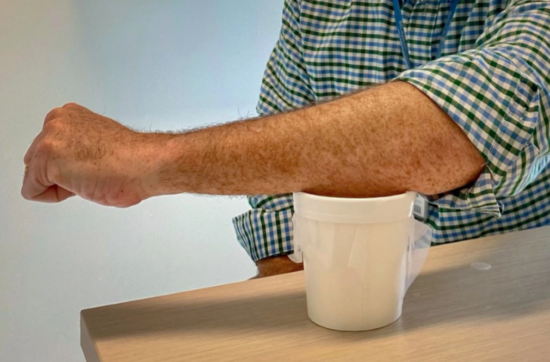
Hold your applause
The world smiles with you, and you smile

Three times as bad as the flu
September 22, 2022 ✒ Andrew Kantor
In an attempt to head off future Darwin Awards, the FDA is issuing what you would think would be an unnecessary warning: If some chucklehead on TikTok suggests a challenge involving over-the-counter drugs, don’t do it. Just don’t. That includes the recent idea: cooking chicken in NyQuil. The fact that the FDA felt it necessary to explain why that’s a stupid idea — rather than just saying, “Cooking chicken in cold medicine is a stupid idea” — tells you something. Chemotherapy and radiotherapy have a lot of nasty side effects, including all sorts of stomach issues. That’s in large part because they kill intestinal stem cells, so the gut lining isn’t replaced. But now Chinese researchers have found a simple way to protect those cells: flumazenil, the already-FDA-approved anti-sedative. In short, a protein called GABRA1 is what dooms those stem cells, and flumazenil keeps it from binding to a particular receptor. Once GABRA1 is out of the picture, the stem cells are more likely to survive — and it also means patients can tolerate higher doses of the medication. (Oh, and flumazenil doesn’t stop the chemo drugs from attacking the cancer, either.) Here at GPhA Buzz, we wish a speedy recovery for Queen Margrethe of Denmark, diagnosed with a second bout of Covid-19 even after being vaccinated. A reminder that when it comes to efficacy, 99% isn’t 100%. The Danes are shifty, but we have a soft spot for Margrethe. (She apparently contracted it at the funeral for Her Majesty Queen Elizabeth II, which makes us wonder if that might have been a superspreader event for international leadership.) The FDA is poised to approve a drug called AMX0035 that’s supposed to treat ALS (aka, Lou Gehrig’s Disease). Problem: An FDA advisory committee voted against its approval because there wasn’t much evidence it actually works. Committee comments included, “The applicant hasn’t provided robust evidence,” “The data isn’t [sic] as strong as we would hope,” ‘The study was problematic,’ and it “did not meet the threshold.” Then the public letter-writing campaign began, essentially saying that AMX0035 should be approved because there was no other drug available and the disease is fatal — i.e., it should be held to a lower standard that typical approvals. And the committee changed its mind. Echoes of the Alzheimer’s drug Aduhelm, also approved without much evidence? You bet. “The message to companies is that you don’t have to show that your drug works. You have to do the bare minimum to show that it might work.” — Penn bioethicist Fernandez Lynch According to a new study out of Britain’s University of Brighton (reported by the North American Menopause Society), “Foot Massage Effective in Improving Sleep Quality and Anxiety in Postmenopausal Women” (PDF). This small study in Turkish women shows how a simple, inexpensive intervention such as foot massage can improve these bothersome symptoms in postmenopausal women. Of course, they say, “Further investigation is indicated.” People with diabetes are more susceptible to urinary tract infections. Apparently, higher glucose levels reduce the amount of psoriasin — a peptide that helps protect the bladder from infection. Combine that with diabetes’ overall weakening of the immune system, and you’ve got a one-two punch to the gut. Or, rather, the bladder. Good news: A possible treatment (being investigated by the same Swedish research team) is estrogen, which “boosted levels of psoriasin and reduced bacterial populations, indicating that the treatment may have an effect also among patients with diabetes.” Insect bites cause all sorts of trouble, but what about insect vomit? Eew, you say? Yeah, and for good reason. As, a UMass entomologist points out, because of flies’ weird digestive system, they, er, ‘expel’ water from what they eat before it’s digested — thus, what comes out of the fly contains all the pathogens from whatever it’s eaten. And thus: While epidemiologists have focused their attention on the biting flies that can spread diseases by transferring infected blood from host to host, it turns out that what the non-biting flies regurgitate is a far greater risk to human health. If you’re middle-aged and you’re having nightmares — like, all the time — British researchers have some bad news: “People who experience frequent bad dreams in middle age are more likely to be diagnosed with dementia later in life.” While more work needs to be done to confirm these links, we believe bad dreams could be a useful way to identify individuals at high risk of developing dementia, and put in place strategies to slow down the onset of disease.” (Sound familiar? You might be thinking of our story from June about how frequent bad dreams seemed to be associated with a higher risk of Parkinson’s.) Fly vomit pathogens, making chemo (more) tolerable, foot rubs for menopause, and more
FDA: Just say No to cooking with NyQuil

Fighting chemo GI problems
Meds save the queen
This sounds familiar
Your possible new income stream?
Diabetes and UTIs (and a possible treatment)
If you’re only going to read one story this week about fly vomit pathogens, why not this one?
Sweet dreams, hopefully

Do you want to send your members the daily Buzz email newsletter (customized for your state and organization, perhaps)? Let’s talk — just drop me a note at andrew@gphabuzz.com!


- Newsom Picks a Dogfight With Trump and RFK Jr. on Public Health
- Florida Hasn’t Expanded Medicaid. Lawmakers Want To Add Work Requirements Anyway.
- Journalists Explain a Spat Over Sugary Coffee and How Measles Fools Doctors
- This Doctor-Senator Who Backed RFK Jr. Now Faces a Fight for His Job — And His Legacy
- The People — And Research — Lost in the NIH Exodus
- Six Federal Scientists Run Out by Trump Talk About the Work Left Undone
- January 2025
- December 2024
- November 2024
- October 2024
- September 2024
- August 2024
- July 2024
- June 2024
- May 2024
- April 2024
- March 2024
- February 2024
- January 2024
- December 2023
- November 2023
- October 2023
- September 2023
- August 2023
- July 2023
- June 2023
- May 2023
- April 2023
- March 2023
- February 2023
- January 2023
- December 2022
- November 2022
- October 2022
- September 2022
- August 2022
- July 2022
- June 2022
- May 2022
- April 2022
- March 2022
- February 2022
- January 2022
- December 2021
- November 2021
- October 2021
- September 2021
- August 2021
- July 2021
- June 2021
- May 2021
- April 2021
- March 2021
- February 2021
- January 2021
- December 2020
- November 2020
- October 2020
- August 2020
- July 2020
- March 2020
- February 2020
- January 2020
- December 2019
- November 2019
- October 2019
- September 2019
- August 2019
- July 2019
- June 2019
- May 2019
- April 2019
- March 2019
- February 2019
- January 2019
- December 2018
- November 2018
- October 2018
- April 2017
